If you search "best fitness app," MyFitnessPal shows up on every list. And fair enough — it's been around since 2005, it has over 280 million registered users, and its food database is genuinely unmatched. There's a reason it became a household name.
But here's the thing: MyFitnessPal isn't really a workout app. It's a nutrition app that happens to have an exercise log. And if you downloaded it hoping it would help you actually exercise more consistently, you probably noticed that gap pretty quickly. You can track that you burned 300 calories on the elliptical. But nobody's telling you what to do, how to do it, or — more importantly — making you want to come back tomorrow.
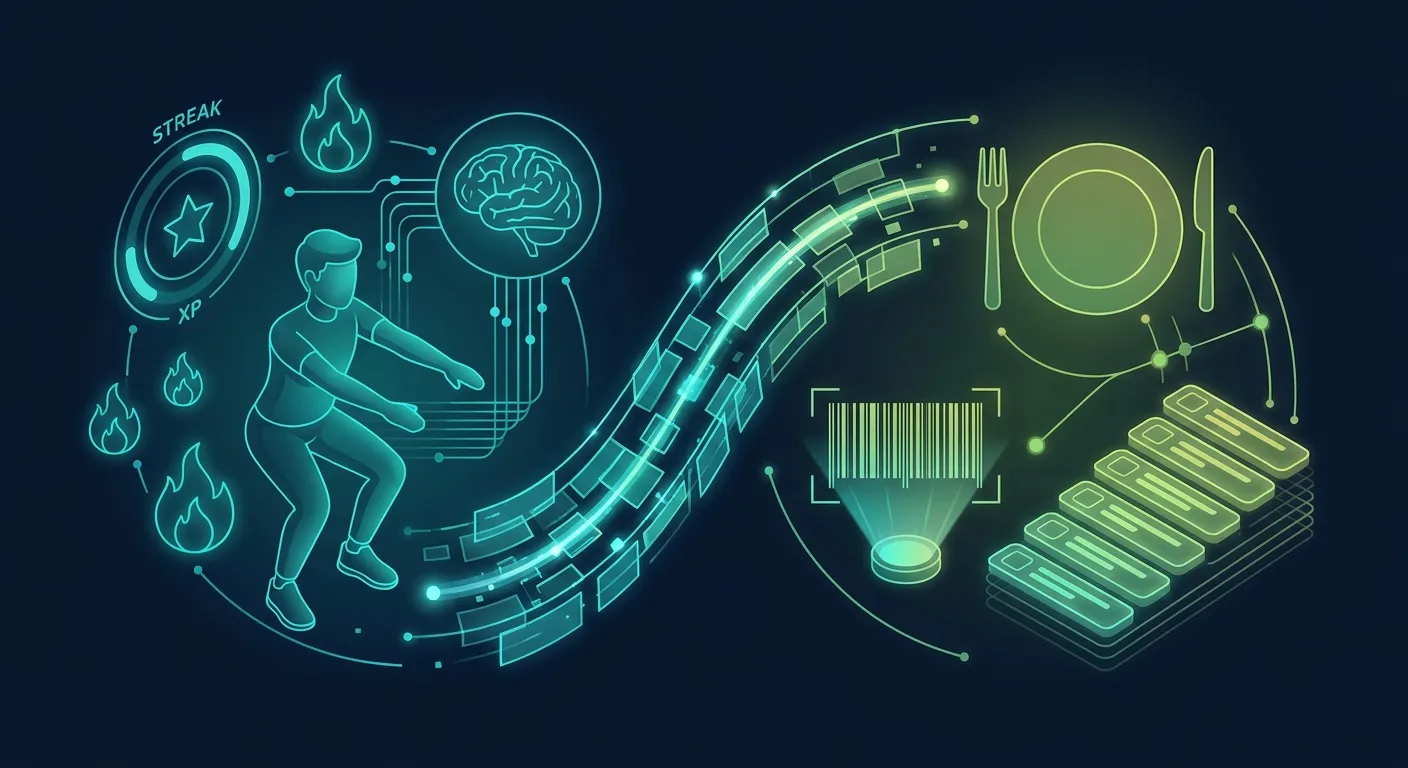
That's where FitCraft comes in. Not as a replacement for MFP, but as the other half of the equation. FitCraft is a gamified AI workout coach with a 3D personal trainer named Ty who builds your entire program, guides you through every exercise, and uses game mechanics to make sure you don't quit in week 3.
Let's break down what each app actually does — and who should use what.
Quick Comparison
| Feature | FitCraft | MyFitnessPal |
|---|---|---|
| Core Focus | Workout coaching + gamification | Calorie & nutrition tracking |
| Primary Use | Exercise programming & consistency | Food logging & macro tracking |
| Personalization | 32-step diagnostic assessment | Calorie/macro goals based on weight target |
| Designed By | Ivy League-trained exercise scientist, NSCA-certified | Under Armour (now Francisco Partners) |
| Best For | People who quit workout apps | People tracking food intake |
| Gamification | Streaks, quests, cards, avatars | Streak counter only |
| AI Coaching | Ty (3D personalized AI coach) | No workout coaching |
| Food Database | No nutrition tracking | 20M+ foods, barcode scanner |
| Workout Programming | Full AI-built programs | Basic exercise log for calorie math |
| Exercise Demos | Interactive 3D demonstrations | None |
| Integrations | Standalone | 50+ apps (Strava, Garmin, etc.) |
| Equipment Needed | Adapts to what you have | N/A (not a workout app) |
| Pricing | Free version + premium (see site) | Free tier + Subscription model |
| Platforms | iOS & Android | iOS, Android, Web |
The Core Difference: Coach vs. Food Diary
Most "FitCraft vs MyFitnessPal" comparisons try to pick a winner. That misses the point entirely. These apps do fundamentally different things.
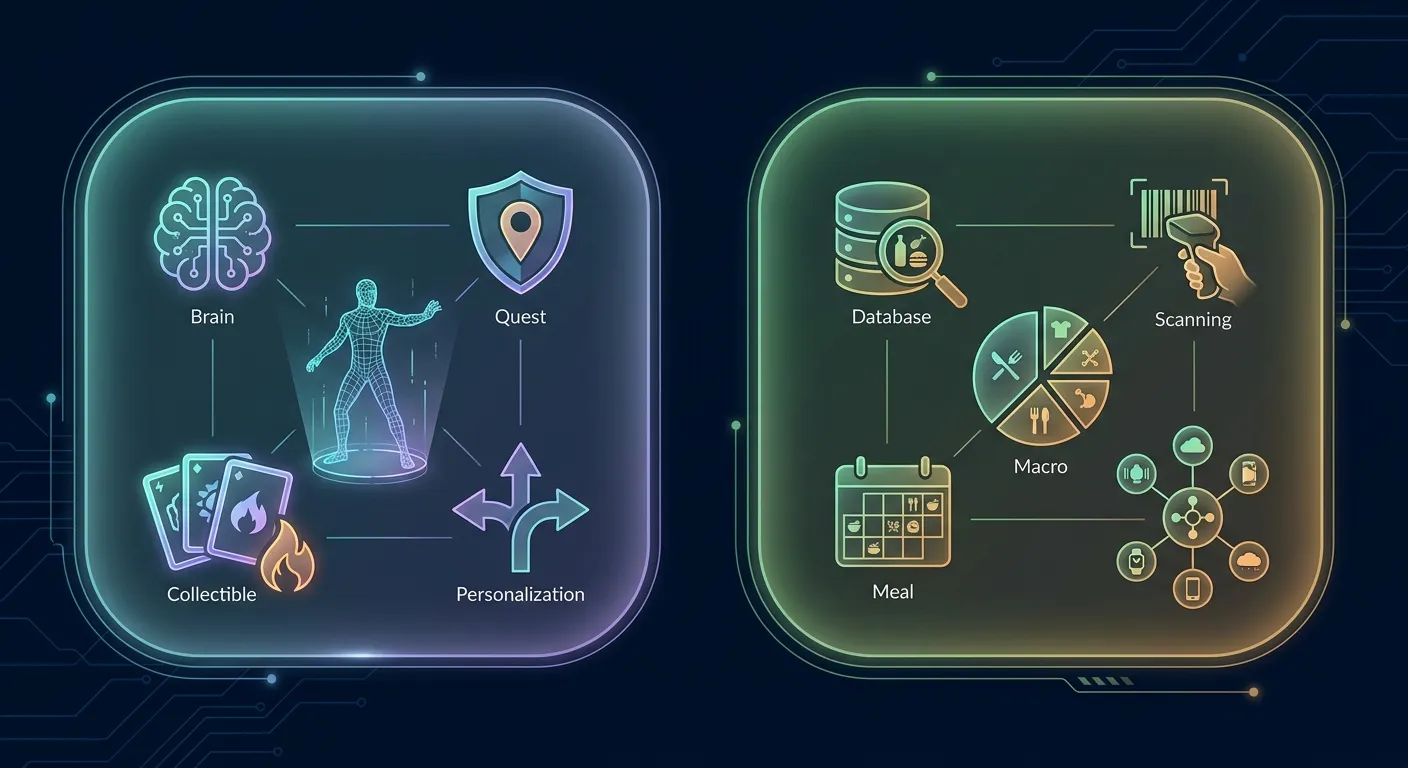
MyFitnessPal is a nutrition tracker. It helps you log what you eat, count calories, track macros, and stay within your daily targets. Its 20-million-entry food database is the largest in the industry. The barcode scanner (Premium feature) makes logging packaged food fast. The meal planner (Premium+) generates weekly meal plans. If the question is "what should I eat and how much?" — MFP answers that question better than any app on the market.
FitCraft is a workout coach. It builds personalized exercise programs based on a 32-step diagnostic assessment, then delivers them through Ty — a 3D AI personal trainer who guides you through every movement. Programs are designed by Domenic Angelino (MS, MPH, CSCS), an Ivy League-trained exercise scientist. And the whole thing is wrapped in gamification — streaks, quests, collectible cards, avatar progression — specifically engineered to keep you consistent past the point where most people quit.
FitCraft doesn't track food. MyFitnessPal doesn't coach workouts. They're not competitors. They're two puzzle pieces.
Where MyFitnessPal Wins
Let's give credit where it's due. MyFitnessPal isn't the most-used fitness app in the world by accident.
- The food database is unrivaled. More than 20 million entries. Barcode scanning for packaged food. Community-verified items. If you eat it, MFP probably has it logged already. No other app comes close to this level of food coverage.
- Macro tracking is genuinely useful. Whether you're cutting, bulking, or managing a medical condition, MFP lets you set custom macro targets and track protein, carbs, and fat down to the gram. Premium users can set different macro goals per meal. That's powerful.
- Integration ecosystem is massive. MFP connects with 50+ fitness apps and devices — Strava, Garmin, Fitbit, Apple Health, Google Fit. Whatever else you're using, MFP probably plugs into it.
- The free tier handles basics. You can log food, track calories, and set goals without paying. The free version has ads and some feature restrictions (the barcode scanner moved behind the paywall), but the core calorie-counting functionality works.
- Brand recognition matters. Your doctor, your nutritionist, your trainer — they've heard of MyFitnessPal. That shared language makes it easier when you need to show someone what you've been eating. It's the Excel of food tracking: not always sexy, but everyone knows how to read it.
A 2014 randomized controlled trial published in the Annals of Internal Medicine found that participants using MyFitnessPal for dietary self-monitoring lost more weight than those receiving usual care alone, though the researchers noted that app engagement dropped significantly after the first few months (Laing et al., 2014). The tool works — when people use it consistently.
Where FitCraft Wins
FitCraft solves the problem MFP doesn't touch — what to actually do in your workout, and how to keep doing it.
- AI-personalized workout programming. FitCraft's 32-step diagnostic maps your fitness level, goals, available equipment, schedule, and motivation patterns. Ty builds a program designed specifically for you and adapts it as you progress. MFP's exercise feature is just a log — you enter what you did so the app can subtract calories. It doesn't tell you what to do or how to do it.
- Gamification that actually drives consistency. A 2022 meta-analysis in the Journal of Medical Internet Research found that gamified fitness interventions produced a statistically significant improvement in physical activity (Hedges g = 0.42) compared to non-gamified approaches (Mazeas et al., 2022). FitCraft's streaks, quests, and card collection systems apply these principles to every session. MFP has a login streak counter. That's it.
- Ty — a 3D personal trainer, not a calorie calculator. Ty guides you through exercises with interactive 3D demonstrations you can rotate and zoom. It's the difference between a trainer showing you proper squat form from every angle and a text entry that says "Squats — 3x10." MyFitnessPal doesn't have exercise demonstrations at all.
- Built for people who've quit before. The BE FIT randomized clinical trial (Patel et al., 2017) showed that gamified exercise interventions significantly improved physical activity levels. The STEP UP trial (Patel et al., 2019) found that gamification elements increased daily step counts by 637 to 920 steps depending on the study arm in previously sedentary adults. FitCraft was designed around these findings — every feature exists to bridge the motivation gap that kills most routines around week 3.
- Expert-designed programs. Every FitCraft program comes from Domenic Angelino (MS, MPH, CSCS) — an Ivy League-trained exercise scientist and NSCA-certified strength coach. You're getting evidence-based programming, not a calorie-burn estimate based on "30 minutes of strength training."
Not sure which app is right for you?
Take the free 2-minute assessment to find out if FitCraft's gamified approach matches how you're wired.
Take the Free Assessment Free · 2 minutes · No credit cardThe Nutrition-Only Trap
Here's a pattern that doesn't get talked about enough: someone downloads MyFitnessPal, diligently logs their food for a few weeks, maybe even loses some weight — and then stalls. Not because the diet stopped working, but because they never built the exercise habit that makes weight management sustainable.
Nutrition tracking alone can create a caloric deficit. That's real. But combining diet changes with structured exercise produces better long-term outcomes — not just for weight loss, but for metabolic health, muscle preservation, and psychological wellbeing. MFP's exercise log treats workouts as a calorie offset. You enter an activity and how many minutes you did it. The app adjusts your daily budget. That's useful for math. Not useful for someone who doesn't know whether to do push-ups or lunges, how many sets, or how to progress when things get easy.
That's the gap FitCraft fills. Not by replacing MFP's nutrition tracking, but by handling the entire workout side — programming, coaching, form guidance, and the behavioral mechanics that make you come back.
Who Should Choose FitCraft
FitCraft is right for you if:
- You need a workout program, not just a food diary. If you've been tracking calories but haven't been exercising consistently (or at all), FitCraft gives you the other half of the equation. Ty builds the program. You follow it.
- You've downloaded fitness apps before and stopped using them. That's not a character flaw — it's a design problem. FitCraft's gamification system creates daily reward loops that keep you engaged before the physical results show up. Streaks. Quests. Card collection. It works on the same psychology that makes you check your phone 80 times a day, pointed at something that actually improves your life.
- You don't want to figure out exercises on your own. Beginner or just busy — either way, FitCraft handles the programming. The AI adapts to your equipment, schedule, and fitness level. No YouTube research required.
- You want accountability without paying for a personal trainer. A decent trainer runs $50–150 per session. FitCraft provides AI-personalized programming designed by an Ivy League-trained exercise scientist at a fraction of the cost.
As Katie, a FitCraft user, put it: "I've tried everything. This is the first time I've stuck with something past two weeks."
Who Should Choose MyFitnessPal
MyFitnessPal is right for you if:
- Nutrition tracking is your primary goal. If you need to count calories, hit specific macro targets, or follow a structured diet — MFP does this better than anything else. The food database is genuinely unmatched.
- You're already exercising consistently. If you've got the workout habit down and your main challenge is dialing in nutrition, MFP is exactly the right tool. You don't need a coach to get you off the couch. You need a way to track what's going into your body.
- You want the integration ecosystem. If your fitness setup includes a Garmin watch, Strava for runs, and a smart scale — MFP ties all of that together. FitCraft is a standalone experience.
- Your doctor or nutritionist asked you to track food intake. MFP is the standard that healthcare professionals know. That shared language is genuinely valuable for clinical conversations.
The Case for Using Both
This might be the most honest thing a fitness app comparison has ever said: you probably need both.
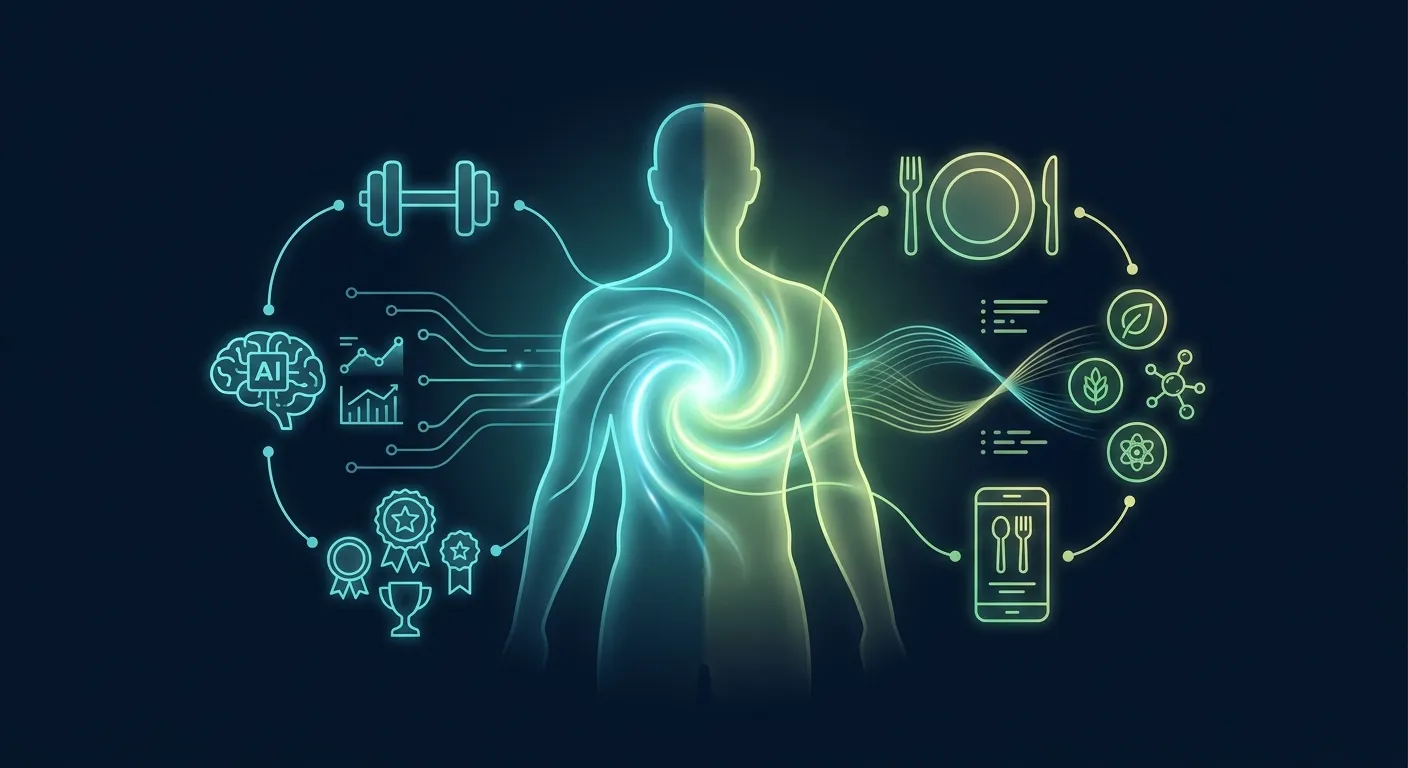
Fitness has two sides — what you do (training) and what you eat (nutrition). Most people default to one. They track food religiously but exercise sporadically. Or they work out hard but eat whatever's convenient. Neither approach alone gets them where they want to go.
MFP handles food. FitCraft handles training. No feature overlap, no redundancy. Use MFP to log meals and hit your macros. Use FitCraft to get your program from Ty and stay consistent with gamification.
As Matt, a FitCraft user, said: "The real win is I actually want to work out now. That's never happened before." Pair that with solid nutrition tracking and you've got both sides covered.
The Bottom Line
The Verdict
MyFitnessPal is the gold standard for nutrition tracking — and it earned that title. More than 20 million foods, barcode scanning, macro customization, meal planning, and integrations with everything. If you need to track what you eat, it's the obvious choice.
But MFP doesn't coach workouts. It doesn't build programs. It doesn't teach you form. And it definitely doesn't solve the consistency problem — the reason most people download a fitness app and delete it three weeks later. That's a different challenge entirely, and it's exactly what FitCraft was engineered to solve.
FitCraft's AI coach Ty builds personalized programs designed by an Ivy League-trained exercise scientist, guides you through every exercise with interactive 3D demos, and wraps the whole experience in gamification backed by peer-reviewed research. FitCraft also offers a free version, so you can try the gamified approach without commitment.
The smartest move? Use both. Let MFP handle your kitchen. Let FitCraft handle your workout. That's the complete picture.
Frequently Asked Questions
Is FitCraft better than MyFitnessPal?
They solve different problems. MyFitnessPal is a nutrition tracker with a 20-million-entry food database — it's the best app for logging calories and macros. FitCraft is a gamified AI workout coach that builds personalized exercise programs and uses streaks, quests, and rewards to keep you consistent. Most people who are serious about fitness actually benefit from using both.
How much does MyFitnessPal cost compared to FitCraft?
MyFitnessPal has a free tier (with ads, limited features) and paid subscription options. FitCraft offers a free version — visit getfitcraft.com for current pricing. Both apps offer genuine value for very different use cases.
Does MyFitnessPal have workout programming?
MyFitnessPal lets you log exercises and create basic workout routines, but it doesn't build personalized workout programs or coach you through exercises. Its exercise tracking exists primarily to calculate calorie expenditure for nutrition goals. FitCraft's AI coach Ty builds fully personalized workout programs from a 32-step diagnostic assessment and guides you through each exercise with interactive 3D demonstrations.
Can I use FitCraft and MyFitnessPal together?
Yes, and many people should. MyFitnessPal handles nutrition tracking — calories, macros, meal planning. FitCraft handles workout coaching — personalized programming, AI guidance, gamified consistency. They cover different sides of the fitness equation without overlapping. Use FitCraft for what to do in your workout, and MyFitnessPal for what to eat after.
Does FitCraft track calories or nutrition?
No. FitCraft focuses entirely on workout coaching, exercise programming, and fitness consistency through gamification. It doesn't have a food database or calorie tracking. If you need nutrition tracking, MyFitnessPal is the industry standard for that. FitCraft and MyFitnessPal are complementary — one for the workout side, one for the nutrition side.