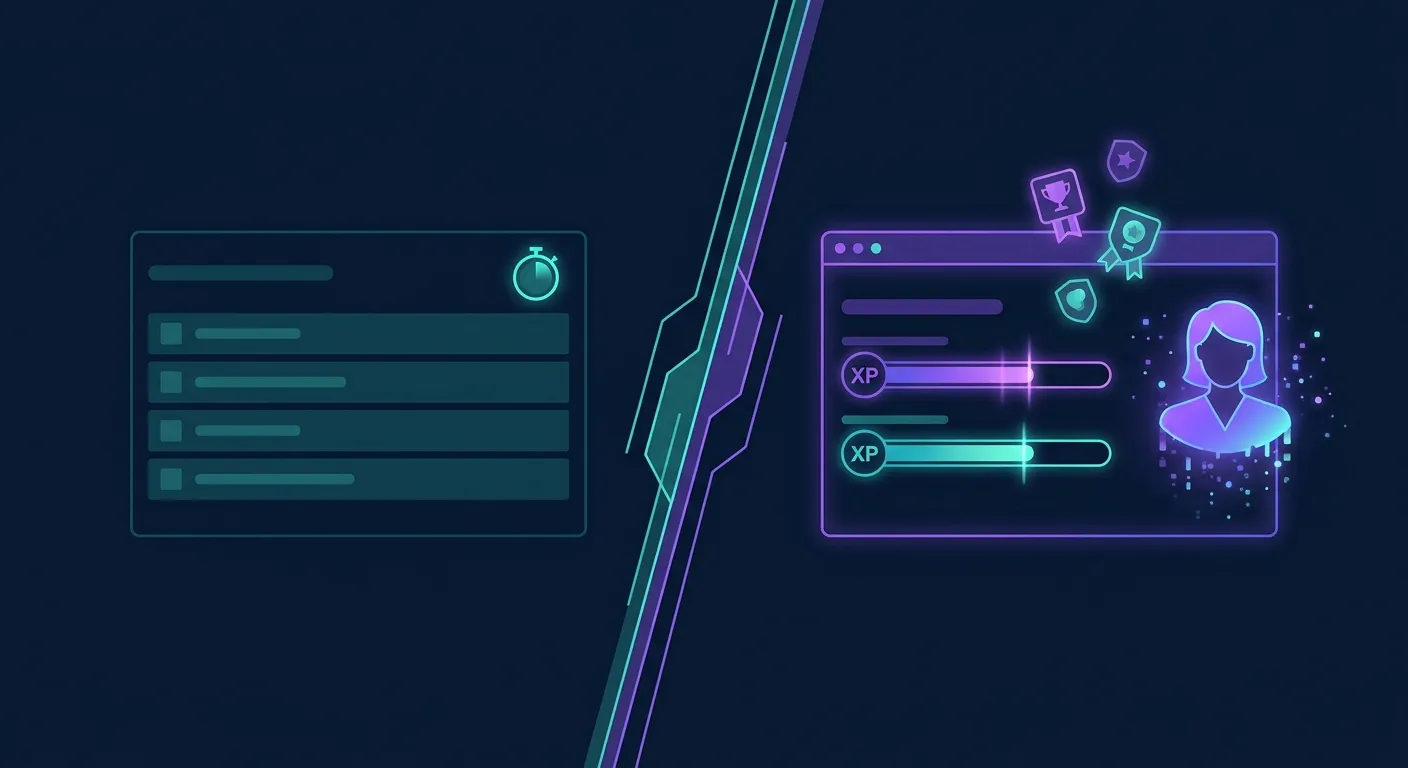
Strong is the app your gym buddy's been using since 2014. It's been around longer than most fitness apps on the market, and there's a reason it's survived this long: it does one thing, and it does it well. Log your sets. Track your weight. See your progress charts. Done.
FitCraft takes the opposite approach. Instead of handing you a blank logbook, it gives you a 3D AI coach named Ty who builds your entire program from a diagnostic assessment, then uses gamification — XP, quests, collectible cards — to make sure you actually follow through.
These two apps aren't really competing with each other. They're solving different problems. And picking the wrong one doesn't just waste money — it wastes the motivation you brought to the table. If you've already quit fitness apps before, that matters.
Quick Comparison
| Feature | FitCraft | Strong |
|---|---|---|
| Core Approach | Gamification + AI coaching | Minimalist workout logging |
| Primary Focus | Workout consistency & behavior change | Set/rep/weight tracking & progress charts |
| Personalization | 32-step diagnostic assessment | User-created routines only |
| Designed By | Ivy League-trained exercise scientist, NSCA-certified | Software engineering team |
| Best For | People who quit workout apps | Experienced lifters who want a pure logbook |
| Gamification | XP, quests, collectible cards, avatars | Personal records only |
| AI Coaching | Ty (3D personalized AI coach) | None |
| Workout Guidance | Interactive 3D exercise demos | Exercise descriptions + some videos |
| Social Features | Limited | Workout sharing only |
| Apple Watch | No | Full standalone app |
| Equipment Needed | Adapts to what you have | You choose (it's a tracker) |
| Pricing | Free trial, see current plans | Free (3 routines) / Pro subscription or lifetime purchase |
| Lifetime Purchase | No | One-time purchase available |
| Platforms | iOS & Android | iOS, Android, Apple Watch |
The Core Difference: Logger vs. Coach
This comparison boils down to one question: do you need a place to write things down, or do you need someone to tell you what to do?
Strong is the digital equivalent of a gym notebook. It doesn't tell you what exercises to do, how many sets to perform, or when to increase the weight. You bring the plan. Strong records it. And honestly? It records it beautifully. The interface is stripped down to exactly what you need mid-set: weight, reps, rest timer, done. No clutter. No distractions. That simplicity is why people have used it for a decade.
FitCraft is a coach. Specifically, it's a 3D AI coach named Ty who builds your entire program based on a 32-step diagnostic assessment. The programs behind Ty are designed by Domenic Angelino, an Ivy League-trained exercise scientist and NSCA-certified strength coach. Ty doesn't wait for you to decide what to do. He tells you. And then the gamification layer — XP, daily quests, collectible cards — makes sure you come back tomorrow.
That's a fundamental philosophical split. Strong trusts you to be self-directed. FitCraft assumes you've been self-directed before and it didn't stick.
Where Strong Wins
Strong has earned its reputation. Here's where it genuinely has the edge:
- The interface is surgeon-clean. No animations. No avatars. No gamification. Just fields for weight, reps, and a rest timer. If you're between sets and breathing hard, you don't want to navigate past quest notifications. Strong respects that. It's fast, it's obvious, and it doesn't try to be anything it's not.
- The lifetime purchase option is rare and valuable. Pay once, and you own Strong Pro forever. No monthly drain, no annual renewal anxiety. In a market dominated by subscriptions, that's genuinely refreshing. If you plan to lift for years (you should), the math works out fast.
- Rock-solid Apple Watch support. Strong's Apple Watch app lets you log entire workouts from your wrist without your phone. Start a routine, see your previous performance, tap to log sets. It syncs in real-time and works standalone. If you leave your phone in the locker, you're still covered. FitCraft doesn't have a smartwatch app.
- Offline reliability. Strong works perfectly without an internet connection. Every workout is stored locally first. This matters more than people think — gym basements with spotty WiFi are real.
- It's been around since 2014. That's over a decade of updates, bug fixes, and stability. Strong isn't trendy. It's proven. The kind of app that just works every time you open it.
- Supersets, custom exercises, CSV export. Power-user features that experienced lifters actually need. Strong lets you build exactly the routine you want, with the exercises you want, and export your data if you ever leave.
Where FitCraft Wins
FitCraft was built for the problem that Strong doesn't even attempt to solve:
- AI-personalized programming from day one. FitCraft's 32-step diagnostic assessment evaluates your fitness level, goals, available equipment, schedule, and motivation patterns. Ty builds a complete program around all of that. Strong gives you a blank slate. If you don't know what program to follow or how to structure progressive overload, a blank slate is just an empty notebook.
- Gamification that creates real consistency. XP, daily quests, collectible cards, and avatar progression aren't window dressing. They're built on the same behavioral mechanics studied in the BE FIT randomized controlled trial (Patel et al., 2017), which found that gamified exercise interventions significantly increased physical activity among families. The STEP UP trial (Patel et al., 2019) showed that gamification elements boosted daily step counts by 637 to 920 steps depending on the study arm in previously sedentary adults. The research is clear: game mechanics create consistency where willpower alone fails.
- Ty isn't a chatbot. He's a 3D personal trainer. Interactive 3D exercise demonstrations you can pinch, zoom, and rotate to see every angle. Ty guides you through movements, adapts your encouragement, and makes the experience feel like having a trainer in your pocket. Strong has exercise descriptions. That's reference material. Not coaching.
- Built for people who quit. This is the core distinction. Strong assumes you'll show up — it just needs you to write down what happened. FitCraft assumes you've hit the wall at week 3 before and engineers the entire experience around preventing that from happening again. The streak mechanics, the daily quests, the XP system — they provide reward hits every session, including the ones where you'd rather stay on the couch.
- Expert-designed exercise programs. Every FitCraft program is designed by Domenic Angelino (MS, MPH, CSCS), an Ivy League-trained exercise scientist. You're getting evidence-based programming, not a blank template you have to figure out yourself.
Not sure which app is right for you?
Take the free 2-minute assessment to find out if FitCraft's gamified approach matches how you're wired.
Take the Free Assessment Free · 2 minutes · No credit cardThe Logging Paradox
Here's something that gets overlooked in every workout app comparison: logging doesn't create the habit. It documents it.
If you're already the kind of person who hits the gym four days a week without fail, Strong is perfect. You know your program. You know your numbers. You just need a clean place to track them. Respect.
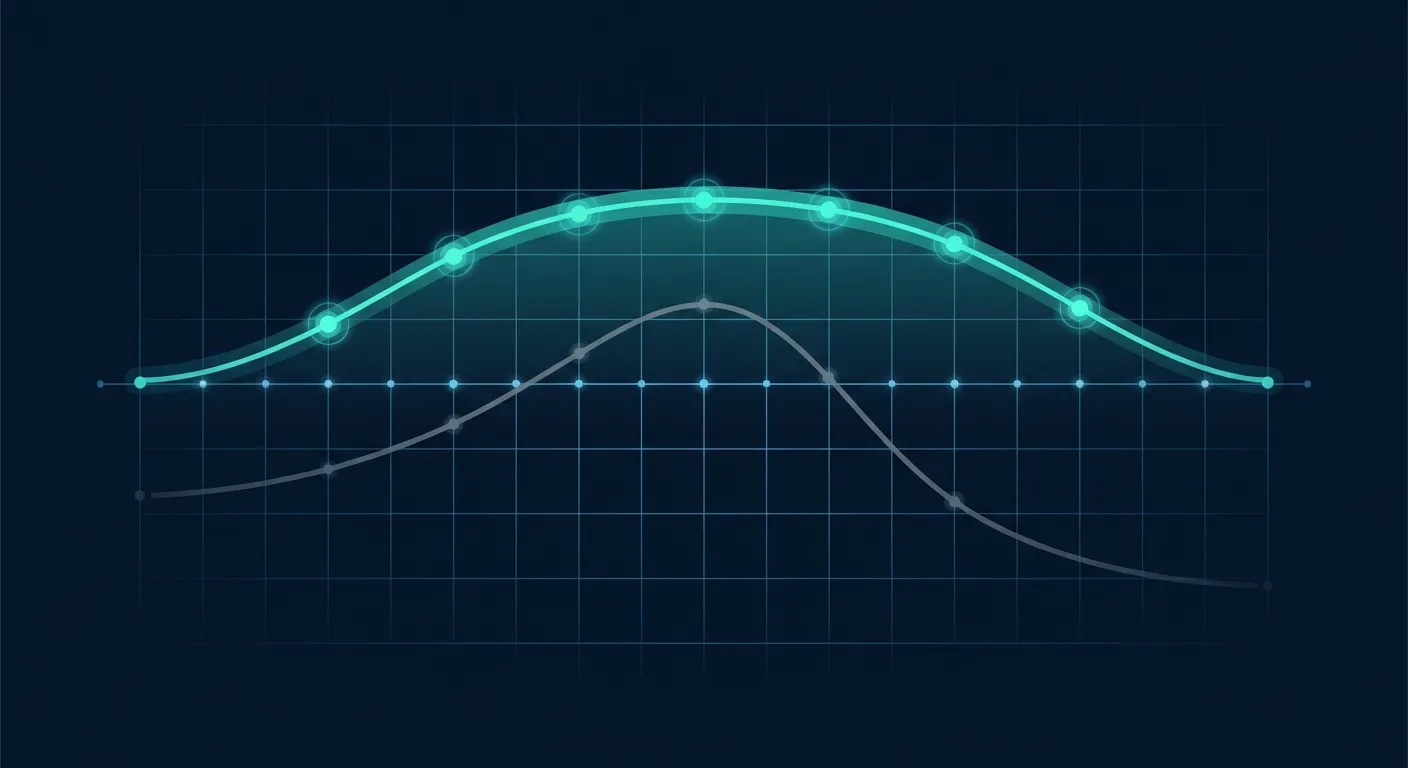
But most people aren't in that position. Research consistently shows that roughly 50% of people who start a new exercise program drop out within the first six months. The pattern is predictable: strong start in week 1, habit formation attempts in week 2, then the dip. Novelty fades. Life gets in the way. You skip Monday, then Wednesday, then quietly stop opening the app altogether.
That's not a discipline problem — it's a design problem. A 2022 meta-analysis in the Journal of Medical Internet Research found that gamified fitness interventions produced a statistically significant improvement in physical activity (Hedges g = 0.42) compared to non-gamified approaches (Mazeas et al., 2022). Critically, these effects weren't just novelty — they persisted after the intervention period ended.
Strong's personal record celebrations are a small form of this. When the app tells you you've hit a new squat PR, it feels great. But PRs happen sporadically, and only if you're already showing up consistently. FitCraft's XP system, quests, and card collection provide that dopamine hit every single session — including the hard ones where you don't feel like training. That's the gap between recording progress and engineering consistency.
Who Should Choose FitCraft
FitCraft is right for you if:
- You've downloaded workout apps before and stopped using them within a month. You don't need another logbook. You need a system that makes showing up feel rewarding before the physical results are visible. That's what FitCraft's gamification does.
- You don't want to figure out your own program. Maybe you're a beginner. Maybe you've been lifting casually but never followed a structured plan. FitCraft's AI coach Ty handles programming, progression, and exercise selection — all based on your diagnostic assessment.
- You're motivated by progression systems. If you've ever gotten hooked on leveling up a character, completing daily challenges in a game, or maintaining a streak on any app — FitCraft channels that exact psychology into your fitness routine.
- You want expert guidance without the personal trainer price tag. A decent trainer runs $50-150 per session. FitCraft gives you AI-personalized programming designed by an Ivy League-trained exercise scientist for a fraction of that cost.
As Katie, a FitCraft user, put it: "I've tried everything. This is the first time I've stuck with something past two weeks."
Who Should Choose Strong
Strong is right for you if:
- You already have a program and just need to record it. Running a 5/3/1 template? Following a PPL split from Reddit? Strong's logging interface is purpose-built for exactly this — fast, clean, no nonsense.
- You hate subscriptions. Strong's lifetime purchase option is genuinely uncommon. Pay once, use forever. If you know you'll be lifting for years, that's hard to beat financially.
- You want to log from your Apple Watch. Strong's smartwatch app is one of the best in the category. Leave your phone in the locker, log everything from your wrist. FitCraft doesn't have a wearable app.
- You value simplicity above everything. Some people don't want XP or quests or collectible cards. They want weight, reps, timer. Done. That's Strong's entire philosophy, and it's a valid one.
- You're an experienced lifter focused on specific metrics. If you care about tracking your one-rep max across specific lifts, supersets, and long-term strength curves, Strong's analytics are built for that. FitCraft focuses on overall consistency and program adherence rather than granular lift-by-lift tracking.
Strong's Simplicity: Feature or Limitation?
Strong has no AI. No workout generation. No smart recommendations. No coaching of any kind. And here's the honest take: for Strong's target user, that's a feature, not a bug.
Experienced lifters who've been training for years don't need an app to tell them what to do. They need an app that stays out of their way while they do it. Strong nails this. The interface hasn't changed dramatically in a decade because it doesn't need to. Tap, enter weight, enter reps, start the timer. That workflow is burned into muscle memory for thousands of users.
But if you're not that person — if you're someone who downloads a fitness app hoping it'll help you become that person — Strong's simplicity becomes a gap. A blank workout log is only useful if you know what to write in it. And if you've tried writing your own program before and still ended up quitting, the issue isn't the notebook. It's the lack of structure, guidance, and something to keep you coming back when motivation dips.
That's the space FitCraft fills. Not as a better logger. As a completely different tool for a completely different problem.
The Bottom Line
The Verdict
Strong is the OG workout logger — and it's still one of the best. If you've got your program dialed in and just want a clean, fast, reliable place to track your lifts, Strong delivers exactly that. The lifetime purchase option is a genuine differentiator. The Apple Watch app is excellent. The decade-long track record speaks for itself.
But logging and coaching solve different problems. If you've been through the cycle of starting a fitness routine, tracking it diligently for two weeks, and then quietly abandoning the app — that's not a logging problem. That's a consistency problem. And consistency is what FitCraft was engineered to solve, using gamification backed by peer-reviewed research and programming designed by an Ivy League-trained exercise scientist.
FitCraft also offers a free version, so you can try the gamified approach without financial commitment.
As Matt, a FitCraft user, said: "The real win is I actually want to work out now. That's never happened before." That's the difference between a place to record what you did and a system that makes you want to do it.
Frequently Asked Questions
Is FitCraft better than Strong?
They serve different purposes. Strong is a minimalist workout logger — ideal if you already follow a program and just need to record sets, reps, and weight. FitCraft is a gamified AI coaching app designed for people who struggle with workout consistency. If you need a clean logbook, Strong is excellent. If you need help actually sticking with exercise, FitCraft is built for that.
How much does Strong cost compared to FitCraft?
Strong's free version limits you to 3 custom routines. Strong Pro is available via monthly, annual, or a one-time lifetime purchase. FitCraft offers a free diagnostic assessment — visit getfitcraft.com for current pricing. Strong also offers a lifetime purchase option that FitCraft does not.
Does Strong have AI workout programming?
No. Strong is a pure workout logger with no AI coaching, no workout generation, and no smart recommendations. That's by design — it focuses on being the best possible tracking tool. FitCraft's AI coach Ty builds fully personalized programs from a 32-step diagnostic assessment and adapts them as you progress.
Can I use FitCraft without a gym?
Yes. FitCraft adapts to your available equipment — home with no equipment, basic home gear like dumbbells and resistance bands, or a full gym. The AI coach Ty personalizes your plan based on what you have access to. Strong also works without a gym since it's a tracker, but you'll need to find or design your own bodyweight routine.
Does Strong have a lifetime purchase option?
Yes. Strong offers a one-time lifetime purchase for Strong Pro, in addition to monthly and yearly subscriptions. This is a genuine advantage for long-term users who dislike recurring subscriptions. FitCraft does not currently offer a lifetime purchase option.