Important: Always consult your healthcare provider before starting a new exercise program.
It's Never Too Late — And the Evidence Proves It
If you're over 60 and thinking about starting an exercise program, you've probably heard a voice in your head say: Isn't it a bit late for this?
It isn't. Not even close.
Over the past decade, researchers have studied exercise interventions specifically designed for older adults — people in their 60s, 70s, and beyond. The results aren't just positive. They're remarkable. Older adults who start structured exercise programs improve their balance, build measurable strength, increase their daily activity levels, and maintain those gains over time.
The question isn't whether exercise works after 60. It does. The question is what kind of program gives you the best chance of sticking with it long enough to see the results. If losing weight is part of the goal, the protein targets and the safe rate of loss change enough in this age range that we covered them separately in our weight loss guide for over 50s.
What the Research Shows
Let's look at what clinical trials tell us about exercise for older adults.
Gamified Balance Training Improves Functional Fitness
A 2017 randomized controlled trial (PMC5316445) studied 30 older veterans over 8 weeks of supervised exergame (exercise + game) sessions. The results were striking: participants who completed the gamified balance program improved their Berg Balance Scale scores by 5.5 points compared to the control group (P<.001). That's a clinically meaningful improvement — the kind that translates directly to fewer falls and greater independence in daily life.
This study demonstrated something important: gamified exercise doesn't just entertain older adults. It produces real, measurable improvements in functional fitness.
Goal Autonomy Works for Older Populations
The ENGAGE trial (2021, n=500, PMC8411363), with a mean participant age of 58.5, tested what happens when people choose their own activity goals rather than following a rigid prescription. The result: participants who selected their own goals achieved +1,384 additional steps per day compared to baseline.
This matters for adults over 60 because it challenges the assumption that older exercisers need rigid, clinical protocols. When people have autonomy over their goals — when they feel ownership of the process — they move more. Period.
Home-Based Gamification Works Even Past 70
The GAMEPAD trial (2025, n=103, PMC12826907) is perhaps the most directly relevant study. It enrolled patients with peripheral arterial disease (PAD) with a mean age around 70 and tested a fully home-based, automated gamification coaching program. The intervention required no gym, no in-person supervision, and no complex equipment.
The results were compelling: participants improved their activity levels, and — critically — the positive effects continued to grow even after the formal intervention ended. This suggests that gamification doesn't just motivate during a program. It builds habits that persist.
Sustained Activity Gains in Middle-Aged and Older Adults
Longitudinal research on gamified walking programs (PMC6379816) found that middle-aged and older adults who engaged with game-based activity tracking maintained higher step counts for months — not just during the initial novelty period, but as a sustained behavioral change.
Why Exercise Is Even More Important After 60
Exercise is beneficial at every age. But after 60, it becomes something closer to essential. Here's why.
Sarcopenia: The Muscle Loss You Can't See
Your body starts losing muscle mass around age 30, at a rate of roughly 3-8% per decade — a process that starts affecting daily life as early as your 40s. After 60, that process accelerates significantly. This age-related muscle loss — called sarcopenia — is responsible for much of the weakness, fatigue, and loss of independence that people associate with "getting old."
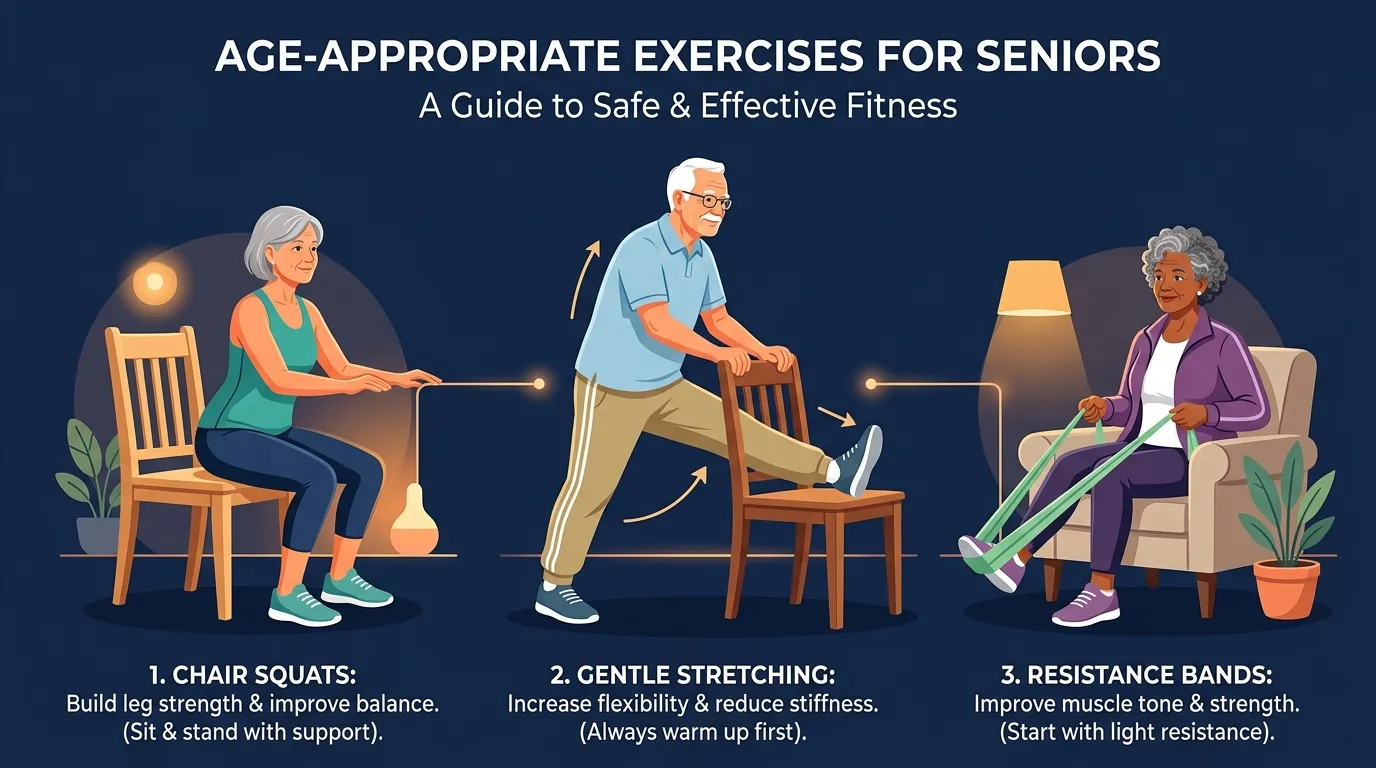
But sarcopenia isn't inevitable. Resistance training directly combats muscle loss at any age. Your muscles retain the ability to grow and strengthen well into your 60s, 70s, and beyond. The key is progressive, consistent training that challenges your muscles enough to trigger adaptation.
Balance and Fall Prevention
Falls are the leading cause of injury in adults over 65. One in four older adults falls each year, and the consequences can be devastating — broken hips, head injuries, loss of independence, and a spiral of fear that leads to even less activity.
The Wii Fit Balance RCT demonstrated that targeted balance training produces clinically significant improvements in just 8 weeks. That 5.5-point improvement on the Berg Balance Scale isn't just a number. It represents the difference between confident movement and fall-risk fragility.
Balance training doesn't require special facilities. It requires a program that incorporates it consistently — which is exactly what a well-designed fitness app can deliver at home. We compared the best fitness apps for adults over 50 on exactly this kind of age-appropriate programming.
Bone Density
Osteoporosis and osteopenia affect millions of adults over 60. Weight-bearing and resistance exercises are among the most effective non-pharmaceutical interventions for maintaining and improving bone density. Every squat, lunge, and push-up sends a signal to your bones: stay strong.
Cognitive Benefits
The link between physical exercise and brain health is one of the most robust findings in modern neuroscience. Regular exercise improves memory, processing speed, and executive function in older adults. It reduces the risk of cognitive decline and dementia. Moving your body isn't just good for your muscles — it's protective medicine for your brain.
Common Concerns Addressed
If you're over 60 and considering starting a fitness program, you probably have some specific concerns. Let's address them directly.
"I have joint pain — won't exercise make it worse?"
It depends on the cause. For some joint conditions, properly programmed exercise — particularly low-impact resistance training and mobility work — can strengthen the muscles that support your joints, which may help reduce pain over time. However, joint pain has many causes, and certain exercises can worsen certain conditions. A physical therapist or physician can help determine what's appropriate for your situation. When exercise is recommended, it can be modified — ranges of motion can be adjusted and intensity can start as low as needed.
"I'm too old to start now"
The GAMEPAD trial enrolled participants with a mean age around 70 — many of whom had significant health conditions — and found meaningful improvements with a home-based gamified program. Research consistently shows that exercise produces benefits regardless of the age at which you start. There is no age cutoff for building strength, improving balance, or establishing better movement habits.
"I'm afraid of getting injured"
This is a reasonable concern — and it's exactly why the right program matters. Injury risk comes from doing too much, too fast, with poor form and no adaptation period. A program that starts at your level, progresses gradually, and adapts to your body eliminates the most common causes of exercise-related injury. The bigger risk, statistically, is not exercising — inactivity is a major contributor to falls, fractures, and functional decline.
How Gamification Keeps Older Adults Moving
Here's a pattern the research reveals: older adults who start exercise programs see real benefits. The problem has never been whether exercise works for this population. The problem is getting people to stick with it.
This is where gamification changes the equation.
Goal Autonomy Drives Engagement
The ENGAGE trial showed that letting people choose their own activity goals — rather than imposing a one-size-fits-all prescription — produced significantly higher activity levels. This principle is especially powerful for older adults, who often feel that health recommendations are being done to them rather than chosen by them. Autonomy builds ownership. Ownership builds consistency.
Home-Based Programs Remove Barriers
Transportation, gym anxiety, mobility limitations, weather — there are a dozen reasons older adults don't make it to a gym. The GAMEPAD trial proved that fully home-based gamification coaching is not just feasible for older adults, it's effective. When the program comes to you, the biggest barrier to exercise disappears.
Adaptive Difficulty Matches Your Level
The best gamified programs don't start at one difficulty and hope you keep up. They start where you are and progress as you improve. This is critical for adults over 60, where starting too hard leads to injury or discouragement, and starting too easy leads to boredom. Adaptive programming threads the needle between challenge and accessibility. If you want app-specific picks, our roundup of the best fitness apps for seniors scores each one on chair-based options, balance work and readability.
Habits That Outlast the Program
Perhaps the most remarkable finding from the GAMEPAD trial: the positive effects grew after the formal intervention ended. Gamification didn't just motivate participants during the study. It built exercise habits that persisted independently. That's the difference between a program that works for 8 weeks and a program that changes your life.
See what a program built for your body looks like
Take the free 2-minute assessment. It maps your fitness level, health considerations, and goals — then shows you exactly where to start.
Take the Free Assessment Free · 2 minutes · No credit card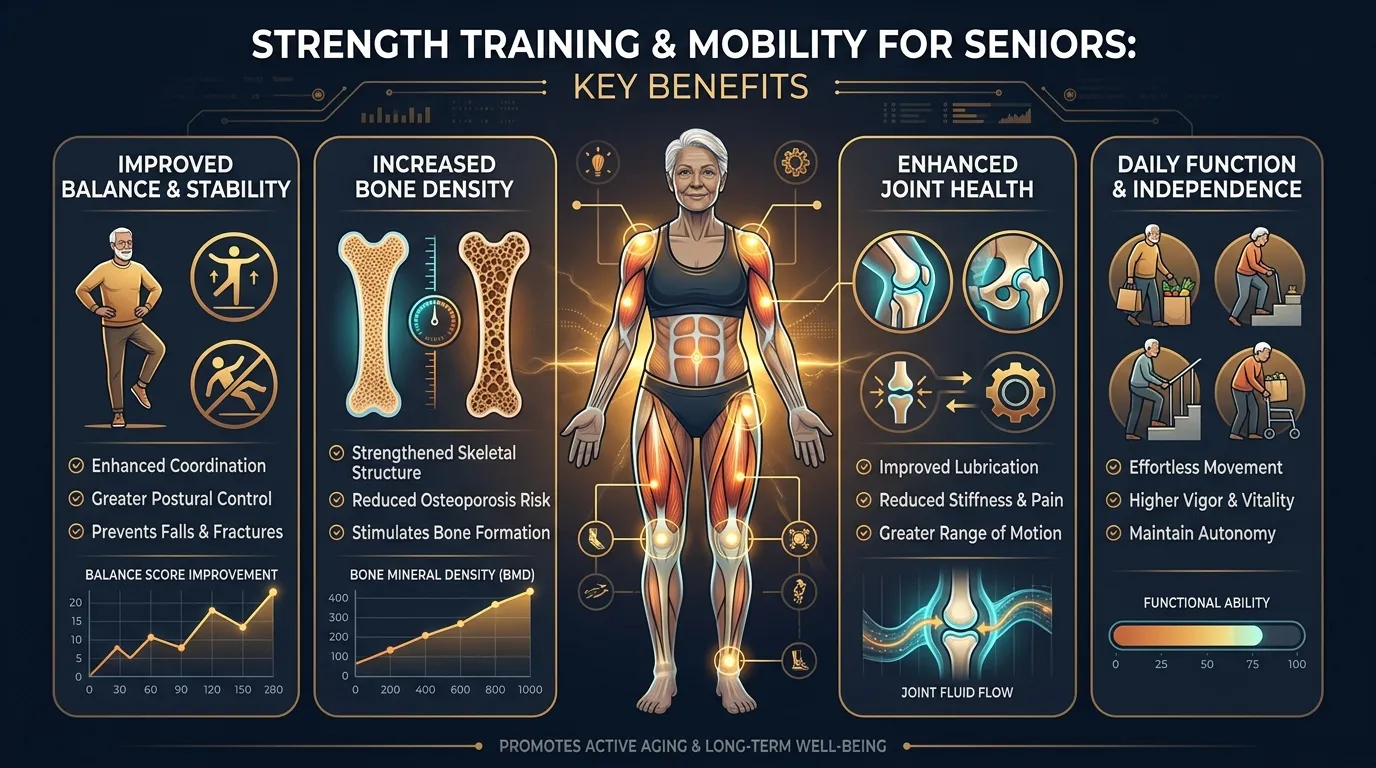
How FitCraft Applies This Research
The clinical evidence points to a clear set of principles for effective exercise after 60: adaptive difficulty, home-based accessibility, gamified motivation, goal autonomy, and progressive programming. FitCraft was built around every one of them.
AI That Adapts to Any Fitness Level
FitCraft's AI coach Ty starts with a comprehensive diagnostic that captures your age, fitness history, health considerations, available equipment, and personal goals. Whether you haven't exercised in decades or you're an active 65-year-old looking to level up, Ty builds a program calibrated to exactly where you are — and adjusts as you progress.
Fully Home-Based — No Gym Required
Just like the GAMEPAD protocol that proved effective for adults around age 70, FitCraft delivers a complete exercise program at home. No commute, no gym membership, no intimidating equipment. If you have a chair and a few feet of floor space, you can start. As you progress and optionally add equipment, the program evolves with you.
Progressive, Gradual Programming
FitCraft uses progressive overload — the gold standard in exercise science — to increase difficulty at a pace your body can handle. For adults over 60, this means smaller, more deliberate progressions that build real strength without overwhelming your joints or recovery capacity. Every workout is designed to challenge you just enough to drive adaptation.
Gamification That Builds Lasting Habits
Streaks create gentle daily accountability. Quests give you meaningful short-term goals. Milestone rewards celebrate your progress. These aren't gimmicks — they're the same gamification principles validated in clinical trials with older adult populations. FitCraft turns "I should exercise" into "I want to keep my streak alive," and that shift is the difference between programs that last three weeks and programs that last three years.
The Bottom Line
What the research tells us
Exercise after 60 isn't just possible — it's one of the most impactful things you can do for your health. Clinical trials demonstrate that older adults improve balance, build strength, increase daily activity, and develop lasting exercise habits through well-designed, gamified programs.
The Wii Fit Balance RCT showed a 5.5-point improvement in balance scores in 8 weeks. The GAMEPAD trial proved home-based gamification works for adults around 70. The ENGAGE trial demonstrated that goal autonomy drives real activity increases in older populations.
You don't need a gym. You don't need to be "fit enough" to start. You need a program that meets you where you are, adapts as you improve, and gives you a reason to show up tomorrow. That's what FitCraft was built to do.
Frequently Asked Questions
Is 60 too old to start exercising?
Not at all. A randomized controlled trial of older veterans (PMC5316445) showed significant balance improvements after just 8 weeks of supervised exercise sessions. Your body retains the ability to build strength, improve balance, and increase endurance well into your 60s, 70s, and beyond.
What kind of exercise is best for adults over 60?
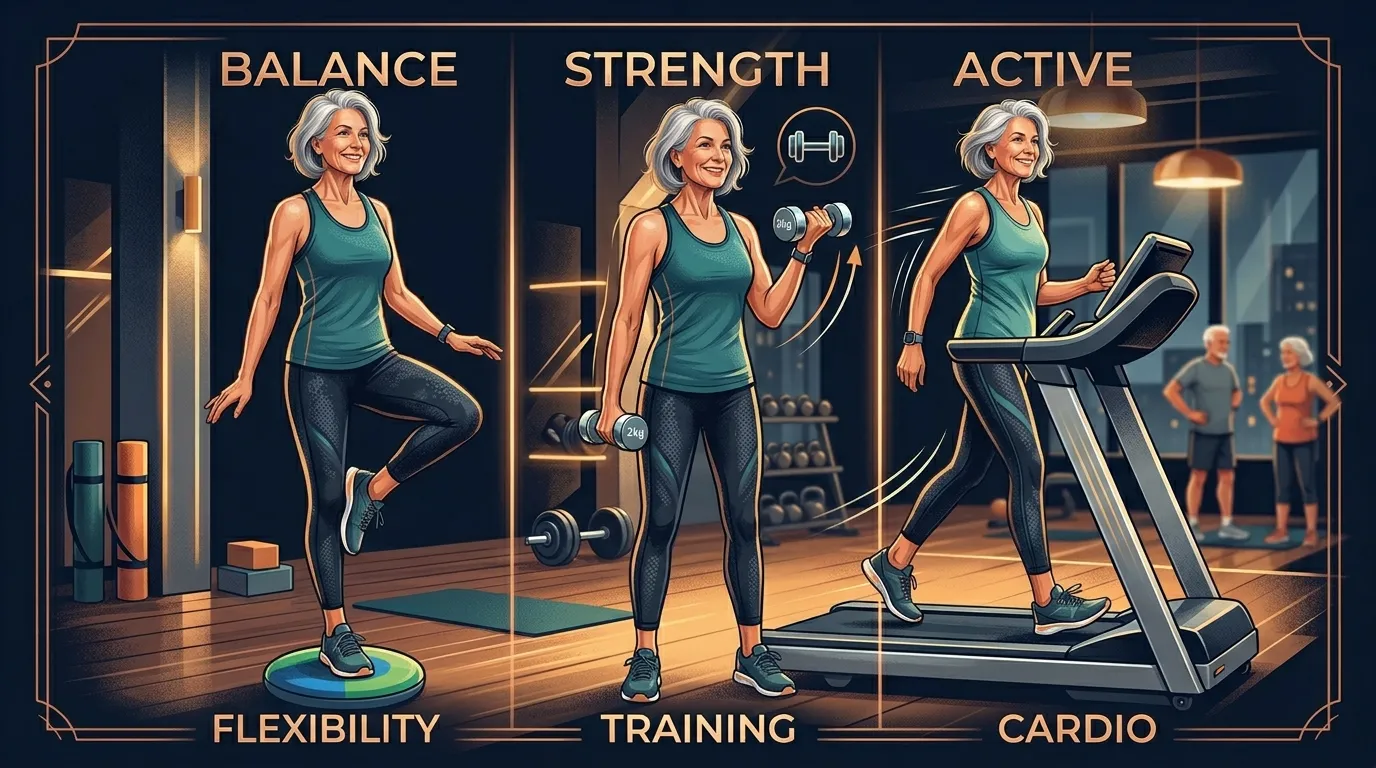
A combination of resistance training, balance work, and moderate cardiovascular exercise is ideal. Resistance training combats sarcopenia (age-related muscle loss), balance training reduces fall risk, and cardiovascular work supports heart and brain health. The best program incorporates all three and adapts to your current fitness level.
Can exercise improve balance and prevent falls after 60?
Yes. Research published in PMC5316445 found that older adults who completed 8 weeks of gamified balance training improved their Berg Balance Scale scores by 5.5 points compared to control — a clinically meaningful improvement that directly reduces fall risk.
Are fitness apps safe for seniors?
The right fitness app can be both safe and effective. The GAMEPAD trial (2025, PMC12826907) demonstrated that fully home-based, automated gamification coaching was feasible and effective for adults with a mean age around 70. The key is an app that adapts to your fitness level, accounts for health considerations, and progresses gradually. Always consult your healthcare provider before starting a new exercise program.
How does FitCraft work for people over 60?
FitCraft's AI coach Ty starts with a comprehensive diagnostic that captures your age, fitness history, health considerations, available equipment, and goals. It then builds a progressive, home-based program that starts at your level and adapts as you improve. Gamification features like streaks, quests, and milestone rewards keep you coming back — the same approach proven effective in clinical trials with older adults.