- Zone 2 is easy aerobic work at the upper edge of fat-burning. Lactate stays below about 2 mmol/L. You can talk in full sentences. For most people, that lands near 60 to 70 percent of max heart rate.
- It maximizes mitochondrial growth in slow-twitch fibers. San-Millán and Brooks (Sports Medicine, 2018) showed Type I fibers do the work at this intensity, and they're the fibers that respond hardest to aerobic training.
- The science isn't new, just rediscovered. Holloszy (1967) documented that endurance training roughly doubles mitochondrial enzyme activity in muscle. Sixty years of follow-up replicated it.
- Elite endurance athletes train roughly 80/20. About 80 percent of their time sits in zone 2, with the rest at much higher intensity. Stöggl and Sperlich (2014) found this polarized mix beat threshold-heavy approaches in head-to-head trials.
- Boring is the feature, not a bug. Zone 2 should feel sustainable, almost too easy. The benefit comes from accumulating volume, not from intensity.

You can't open a fitness podcast right now without hearing about zone 2. Peter Attia talks about it. Andrew Huberman talks about it. Iñigo San Millán, the physiologist who coined the modern framing, talks about it constantly. The buzz makes it sound new and revolutionary. It isn't either of those things.
The underlying science has been settled since the 1960s. What's actually changed is that wearables made it measurable for normal people. So now everyone has a heart rate strap and a question. What is zone 2, why does it matter, and how do you do it without overcomplicating the whole thing?
Here's the short answer. Zone 2 is steady aerobic exercise at a pace you could sustain for hours, with lactate hovering just below the metabolic tipping point. It's the strongest training stimulus for the slow-twitch fibers that drive endurance and metabolic health. And the research backing that claim is unusually deep for fitness science. Let's walk through what it actually shows.
The Research: What Studies Show
Before the practical part, the biology. Three pieces of research carry most of the weight in the zone 2 conversation. They span sixty years of exercise physiology and answer three different questions.
Holloszy 1967: The Foundation
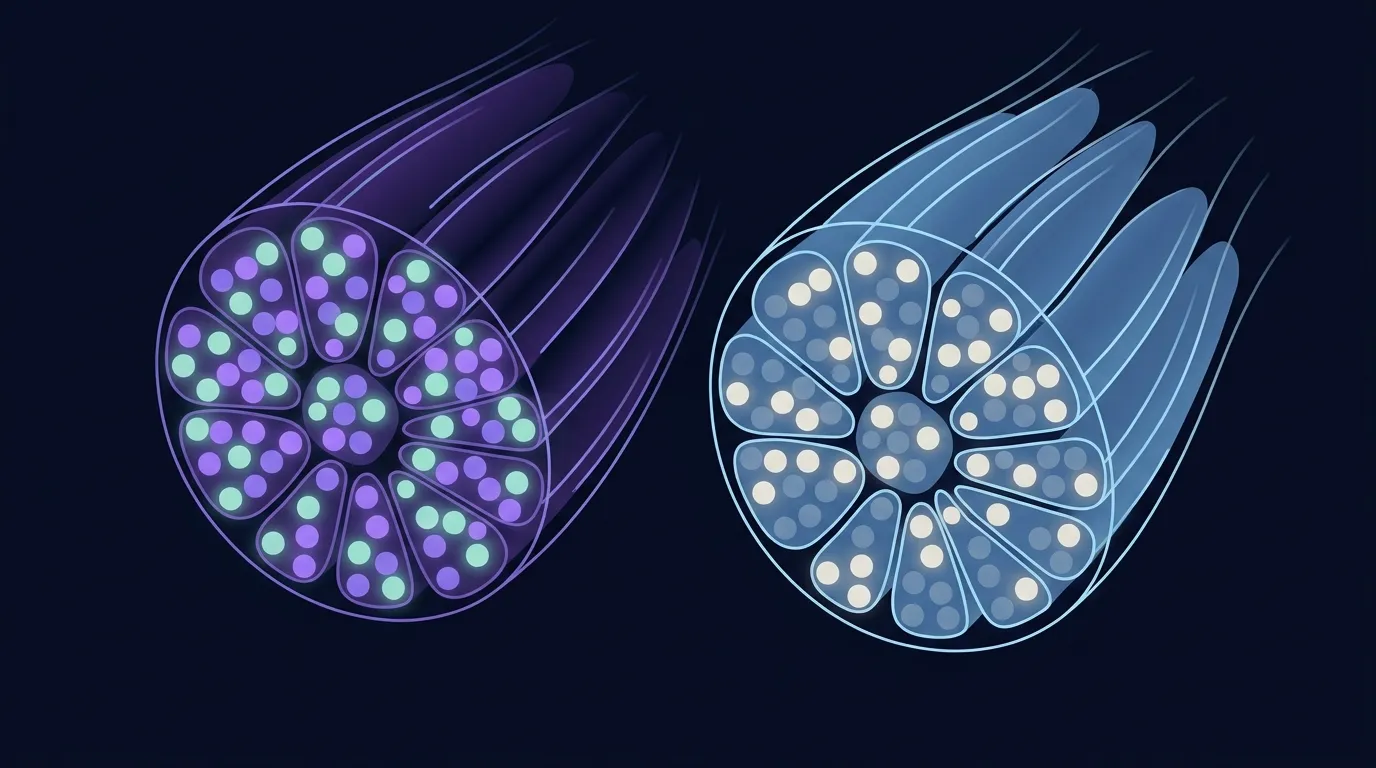
The mitochondrial story starts with John Holloszy's 1967 paper in the Journal of Biological Chemistry. He trained rats on treadmills for 12 weeks and then measured the activity of oxidative enzymes in their leg muscles. The trained animals had roughly double the mitochondrial enzyme activity of sedentary controls. Cytochrome c, succinate oxidase, the whole electron transport chain. All elevated. All durable.
That sounds technical because it is. The practical translation is bigger than it looks. Muscle cells respond to repeated aerobic work by building more mitochondria. More mitochondria means more capacity to burn fat, clear lactate, and produce energy without going anaerobic. The single most important adaptation in endurance training was settled science before most of today's fitness influencers were born.
San-Millán and Brooks 2018: Why Zone 2 Specifically
If Holloszy proved that aerobic training builds mitochondria, San-Millán and Brooks (2018) in Sports Medicine showed why a specific intensity matters most. Their study compared world-class professional cyclists with sedentary adults who had metabolic syndrome. Both groups walked through the same incremental exercise test while researchers measured blood lactate and the ratio of fat to carbohydrate they burned.
The pattern was stark. Pro cyclists could sustain higher absolute power outputs while still keeping lactate below 2 mmol/L, and they burned fat efficiently up to much higher intensities. The metabolic syndrome group hit the lactate threshold almost immediately, even at gentle effort. The intensity at which lactate stayed steady around 2 mmol/L is what San-Millán formally calls zone 2. He argues it's the intensity that maximally stimulates mitochondrial function because Type I (slow-twitch) fibers stay the dominant recruited tissue. Push past that line and Type II fibers take over, which shifts the metabolic signal toward glycolysis instead of oxidative adaptation.
That's a mechanistic claim, not a randomized controlled trial. But it's consistent with decades of muscle physiology and explains why elite endurance athletes spend so much of their training time at what looks like a comically easy pace.
Stöggl and Sperlich 2014: The 80/20 Proof
The clinical proof came from Stöggl and Sperlich (2014) in Frontiers in Physiology. They took 48 well-trained endurance athletes (cyclists, runners, triathletes, cross-country skiers) and randomized them into four training models for nine weeks. High-volume training, threshold training, high-intensity interval training, and polarized training that was about 80 percent low-intensity zone 1 to 2 plus 20 percent high-intensity work.
Polarized won. The polarized group improved VO2 peak by 11.7 percent. Time to exhaustion improved 17.4 percent. Peak velocity or power improved 5.6 percent. All of those changes were larger than the threshold or high-volume groups produced. The high-intensity group made some gains, but with much higher reported strain and a worse training-to-recovery ratio.
This matters. The most measurable, peer-reviewed comparison of training distributions in serious endurance athletes pointed at a model where most training is easy and a small slice is hard. That's the polarized model. And the "most training is easy" part is, by definition, mostly zone 2.
Why This Matters for Your Fitness
The longevity people care about zone 2 for one reason. Aerobic capacity, measured as VO2 max or MET capacity, is one of the strongest predictors of all-cause mortality. We've covered the survival data in detail in our piece on VO2 max and longevity. The takeaway from that research is that fitter people live longer, and the steepest mortality drop happens when you stop being unfit.
Zone 2 is the most efficient way to raise that floor. It's gentle enough to do four or five days a week without injury or burnout. It targets the exact biology, mitochondria and capillary density, that the longevity research keeps pointing at. And it does it without the recovery cost of repeated hard intervals, which means more total volume per week and a more durable training habit.
There's a metabolic angle too. Better mitochondrial function and improved fat oxidation translate to better resting metabolic flexibility, which research links to lower insulin resistance and steadier blood sugar. The San-Millán comparison wasn't subtle. Pro athletes were metabolically flexible. The metabolic syndrome group wasn't. Zone 2 is what closes that gap over months and years.
How Zone 2 Works in Practice
Theory's the easy part. The hard part is figuring out what counts as zone 2 for you, today, on this run or this bike ride. Here's the practical version.
The Talk Test (The Field Method)
You're in zone 2 if you can hold a full conversation in complete sentences but can't comfortably sing. That's it. No watch required. If you're gasping, you're above zone 2. If you can recite a poem without pause, you're probably below it. The conversation test gets within roughly 5 percent of a lab-measured lactate threshold for most people, and it scales naturally with how fit you are on any given day.
Heart Rate Estimates (For When You Want a Number)
The classic 60 to 70 percent of max heart rate works as a starting point. Max heart rate is usually estimated as 220 minus your age, but that formula has roughly ±10 to ±15 beats of individual variance. For a more conservative version, the MAF method uses 180 minus age. Either gives you a usable ballpark. Use it for a few weeks. Then trust the talk test, because your perceived effort updates faster than any formula.
How Often, How Long
The sweet spot for non-athletes is three to five zone 2 sessions per week, 30 to 60 minutes each. That maps to roughly the 150 to 300 minutes of moderate-intensity activity the major health guidelines recommend, with zone 2 sitting at the upper end of "moderate." If you want the polarized mix Stöggl and Sperlich studied, add one short interval session per week on top. Something like the Norwegian 4x4 protocol or a few sprints. The volume of zone 2 still dwarfs the intervals.
Pick the Mode That Lets You Stay Consistent
The research doesn't care whether you bike, run, row, hike, or walk a steep treadmill. The signal is the intensity, not the activity. Pick what you'll actually do on a busy Tuesday. We unpack the comparison between walking and running in our breakdown of walking pad research and the 10,000 steps myth. Both walking and running can land in zone 2 if the intensity is right. So can a recumbent bike during a podcast or a brisk dog walk in a hilly neighborhood.
Get a personalized cardio plan that blends zone 2 and intervals
FitCraft, our mobile fitness app, pairs you with an AI coach who builds you a plan based on your goals, schedule, and fitness level. Every FitCraft program is designed by Domenic Angelino, MPH (Brown University) and NSCA-CSCS, with research published in the Journal of Strength and Conditioning Research and Medicine & Science in Sports & Exercise.
Take the Free Assessment Free • 2 minutes • No credit cardCommon Misconceptions
Misconception 1: "Zone 2 burns fat, so it's better for weight loss than harder cardio."
Half right, in a misleading way. Zone 2 burns a higher percentage of calories from fat compared to glycolytic intensities. But total calories burned per session is what drives weight loss, and a harder session usually burns more total calories. The advantage of zone 2 for body composition isn't that it burns fat in the moment. It's that you can do it more often without breaking down, so the weekly volume adds up. Sustainable beats efficient when the goal is months and years.
Misconception 2: "If I'm not sweating and panting, I'm wasting my time."
This is the most common reason people overshoot zone 2 and turn it into a moderate-but-painful slog. The "no pain no gain" lens doesn't apply to aerobic base work. The whole point is that the intensity is low enough to recover from quickly, which lets you train often. The mitochondrial signal cares about minutes accumulated near the threshold, not about how miserable you felt during them. If your zone 2 session ends and you feel like you could do another one, you did it right.
Misconception 3: "Zone 2 is for endurance athletes. I just want to be healthy."
The opposite is closer to true. Elite athletes do plenty of high-intensity work, because they're already so aerobically developed that intervals are where the marginal gain is. Beginners and middle-aged adults are usually missing the base instead. That makes zone 2 the highest-leverage place to start. The longevity benefit of moving from "unfit" to "moderately fit" is enormous, and zone 2 is exactly the intensity that closes that gap.
What the Research Suggests Going Forward
Step back from the buzzwords and the picture is calm. Aerobic capacity matters for healthspan. Mitochondria are the cellular machinery that drives aerobic capacity. Slow-twitch fibers are where mitochondria live in highest density. Zone 2 is the intensity that most consistently recruits those fibers without crossing into glycolytic work. So if you want to build the biology, you spend time at the intensity that builds it.
Two honest caveats are worth naming. First, "zone 2 specifically" as a uniquely powerful intensity is partly a clinical observation, not a head-to-head randomized claim. We have strong mechanistic evidence (Type I fiber recruitment, lactate dynamics), and we have polarized-training trials (Stöggl & Sperlich, Esteve-Lanao) that support spending most time at low intensity. We don't have a randomized trial that directly pits "zone 1.8" against "zone 2.2" with mortality endpoints. Anyone selling certainty at that resolution is overselling.
Second, the obsession with hitting an exact heart rate is mostly overhead. The talk test gets you 90 percent of the way for none of the cognitive cost. Use a watch if you like data. Don't let the data become the workout.
Going forward, the practical play is unglamorous. Three to five easy aerobic sessions per week. Add one short interval session when your base is steady. Pick the mode you'll actually do. Trust the boring middle of the curve. Months from now, your resting heart rate will be lower, your watch's VO2 max estimate will trend up, and the cardio that used to feel hard will feel like nothing. That's the adaptation working.

References
- San-Millán I, Brooks GA. "Assessment of Metabolic Flexibility by Means of Measuring Blood Lactate, Fat, and Carbohydrate Oxidation Responses to Exercise in Professional Endurance Athletes and Less-Fit Individuals." Sports Medicine 48.2 (2018): 467-479. doi:10.1007/s40279-017-0751-x
- Holloszy JO. "Biochemical adaptations in muscle. Effects of exercise on mitochondrial oxygen uptake and respiratory enzyme activity in skeletal muscle." Journal of Biological Chemistry 242.9 (1967): 2278-2282. PMID: 4290225
- Stöggl T, Sperlich B. "Polarized training has greater impact on key endurance variables than threshold, high intensity, or high volume training." Frontiers in Physiology 5 (2014): 33. doi:10.3389/fphys.2014.00033
- Helgerud J, Hoydal K, Wang E, et al. "Aerobic High-Intensity Intervals Improve VO2max More Than Moderate Training." Medicine & Science in Sports & Exercise 39.4 (2007): 665-671. doi:10.1249/mss.0b013e3180304570
- Esteve-Lanao J, San Juan AF, Earnest CP, et al. "How do endurance runners actually train? Relationship with competition performance." Medicine & Science in Sports & Exercise 37.3 (2005): 496-504. doi:10.1249/01.MSS.0000155393.78744.86
Frequently Asked Questions
What is zone 2 training in simple terms?
Zone 2 is steady aerobic exercise at the highest intensity you can sustain while still able to hold a conversation. Physiologically, it sits at the upper edge of fat-burning, where blood lactate stays stable below about 2 mmol/L. For most people that means roughly 60 to 70 percent of maximum heart rate, or a pace at which talking is possible but singing isn't. San-Millán and Brooks (Sports Medicine, 2018) describe it as the intensity that maximally stimulates mitochondrial function without crossing the lactate threshold.
Why is zone 2 considered the best stimulus for mitochondrial growth?
Slow-twitch (Type I) muscle fibers do most of the work at low intensities, and they're the fibers with the highest density of mitochondria. Training those fibers for sustained periods stimulates mitochondrial biogenesis through the PGC-1α pathway, the same adaptation Holloszy first documented in 1967. San-Millán's work shows that staying below the lactate threshold keeps Type I fibers as the primary recruited tissue. At higher intensities, glycolytic Type II fibers take over and the biochemical signal shifts.
How long does it take to see zone 2 benefits?
Most aerobic adaptations show up within 6 to 12 weeks of consistent training. Mitochondrial enzyme activity can double in 8 to 12 weeks of regular endurance work (Holloszy, 1967, and follow-up trials). Resting heart rate often drops within 4 to 6 weeks. Fat oxidation at submaximal intensities improves over a similar window. Total weekly volume matters more than session length for these adaptations, so three to five sessions of 30 to 60 minutes works better than one long weekly session.
Is zone 2 better than HIIT?
Neither is universally better. They drive different adaptations. HIIT raises VO2 max faster per minute (Helgerud et al., 2007), while zone 2 builds the mitochondrial and capillary base that lets you tolerate hard sessions and recover from them. Stöggl and Sperlich (Frontiers in Physiology, 2014) compared training models in elite endurance athletes and found polarized training, roughly 80 percent low-intensity zone 2 and 20 percent high-intensity, produced the largest gains in VO2 peak, time to exhaustion, and peak power. The optimal mix is both, not one.
How do you find your zone 2 without a lab test?
The talk test is the most practical field method. If you can speak full sentences but can't sing, you're roughly in zone 2. A simple heart rate estimate is 60 to 70 percent of (220 minus your age), but that formula has wide variance. Better: find a sustainable pace where nasal breathing stays possible, or use a heart rate strap and the 180-minus-age MAF method as a starting point. Whichever method you pick, the key signal is sustainability. Zone 2 should feel boring, not hard.
Does FitCraft program zone 2 work?
Yes. The cardio portion of every FitCraft program blends easy zone 2 sessions with a smaller dose of higher-intensity work, matching the polarized model the research supports. An AI coach adjusts session length and intensity to your fitness level, and the 3D demos walk through proper pacing and effort for each session. The free assessment builds the structure around your schedule, not the other way around.