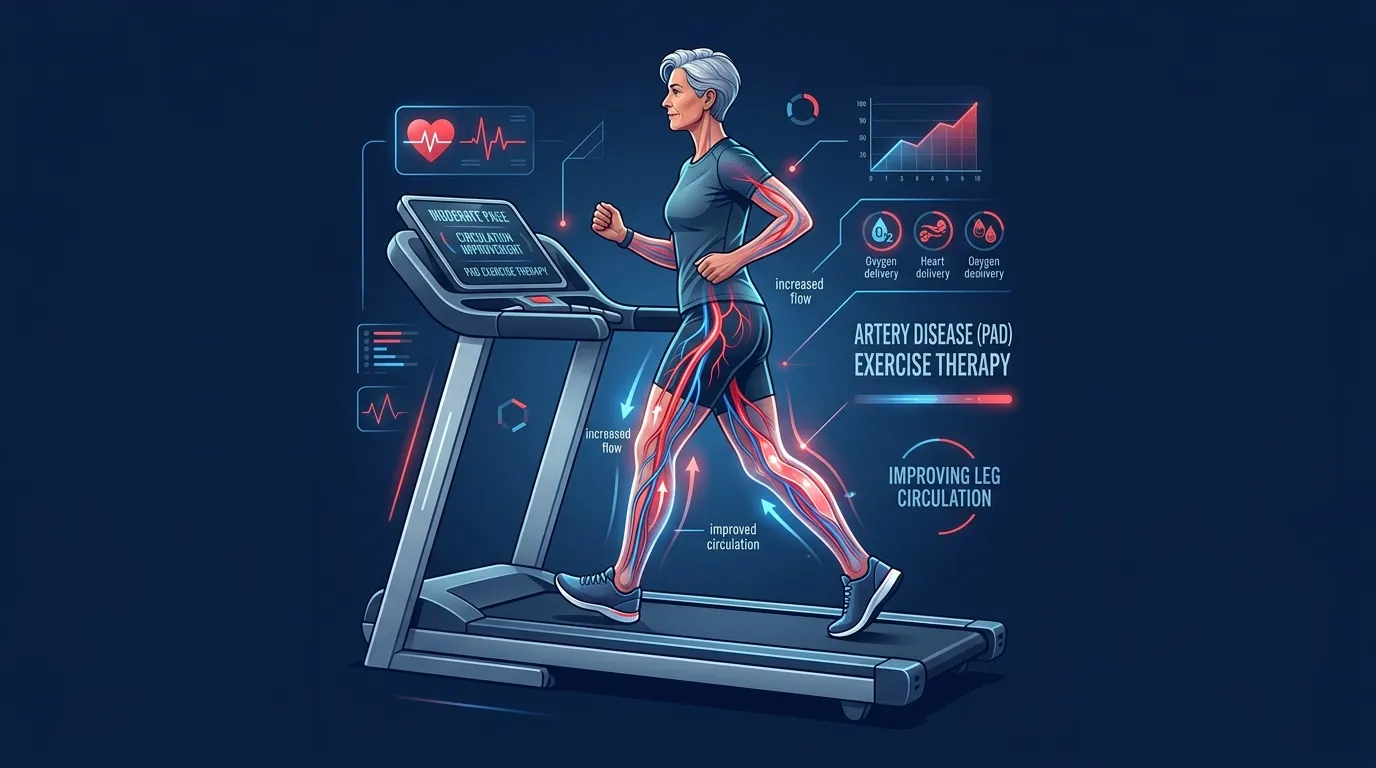
Medical disclaimer: This article is for informational purposes only and does not constitute medical advice. Peripheral artery disease is a serious cardiovascular condition. Always consult your vascular specialist or primary care physician before starting or modifying any exercise program.
Walking Is the Best Medicine for PAD
Peripheral artery disease affects over 8.5 million Americans. The arteries that carry blood to your legs narrow, reducing blood flow and causing pain — especially during walking. The cruel irony: the best treatment for that pain is the very activity that triggers it.
The American Heart Association identifies structured walking programs as a first-line treatment for PAD. Walking improves collateral circulation, builds endurance, increases pain-free walking distance, and reduces the risk of cardiovascular events. For most patients, consistency matters more than intensity. The evidence is overwhelming and has been for decades.
But there's a problem. A big one.
Most PAD patients don't walk enough. Not because they don't know they should. Not because they don't want to. Because the systems designed to help them are almost impossible to access.
The GAMEPAD Trial: Effects That Grew After the Program Ended
In 2025, researchers published the results of the GAMEPAD Trial in the Journal of the American Heart Association (PMC12826907) — and the findings were remarkable.
The study enrolled 103 PAD patients with a mean age of approximately 70 years (52% men). The intervention was a 16-week program built on three pillars:
- Gamification. Behavioral economics-based game design with points, levels, and progress tracking to make daily walking engaging.
- Educational texting. Automated messages reinforcing why walking matters and how to manage symptoms.
- Support partner integration. Each participant identified a support partner who received updates, creating a lightweight accountability structure.
The entire program was fully home-based and fully automated. No clinic visits. No in-person supervision. No expensive equipment. Just a smartphone and the motivation system built around it.
The results during the 16-week intervention were strong: participants increased their daily step count by an average of 920 steps compared to the control group.
But here's what made the GAMEPAD Trial unlike anything before it.
At the 8-week follow-up — after the program had ended and participants were on their own — the step increase didn't fade. It grew. Participants were walking 1,074 more daily steps than the control group (P=.03).
This is the only trial of its kind where the behavioral effects increased after the intervention stopped. The patients didn't just follow instructions while the program was running. They internalized the habit. The gamification and automated coaching had rewired their daily routines in a way that stuck.
This was an NIH-funded, peer-reviewed, randomized controlled trial. Published in one of the top cardiovascular journals in the world. And it demonstrated something encouraging: automated gamified coaching can produce behavior changes that persist beyond the intervention period. Longer-term follow-up would help confirm the durability of these effects, but the initial results are promising.
Why Walking Matters So Much for PAD
For people without PAD, walking is general exercise. For people with PAD, walking is medicine. Here's why:
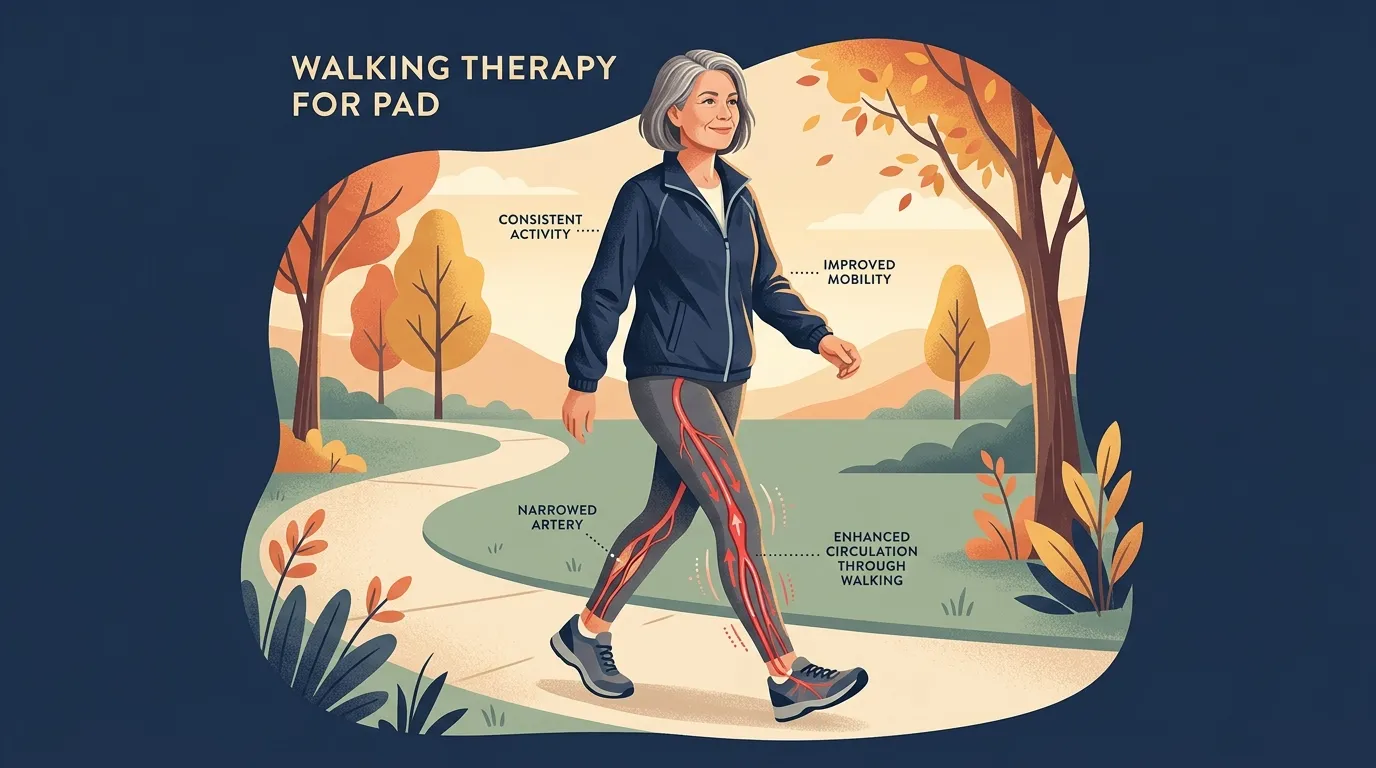
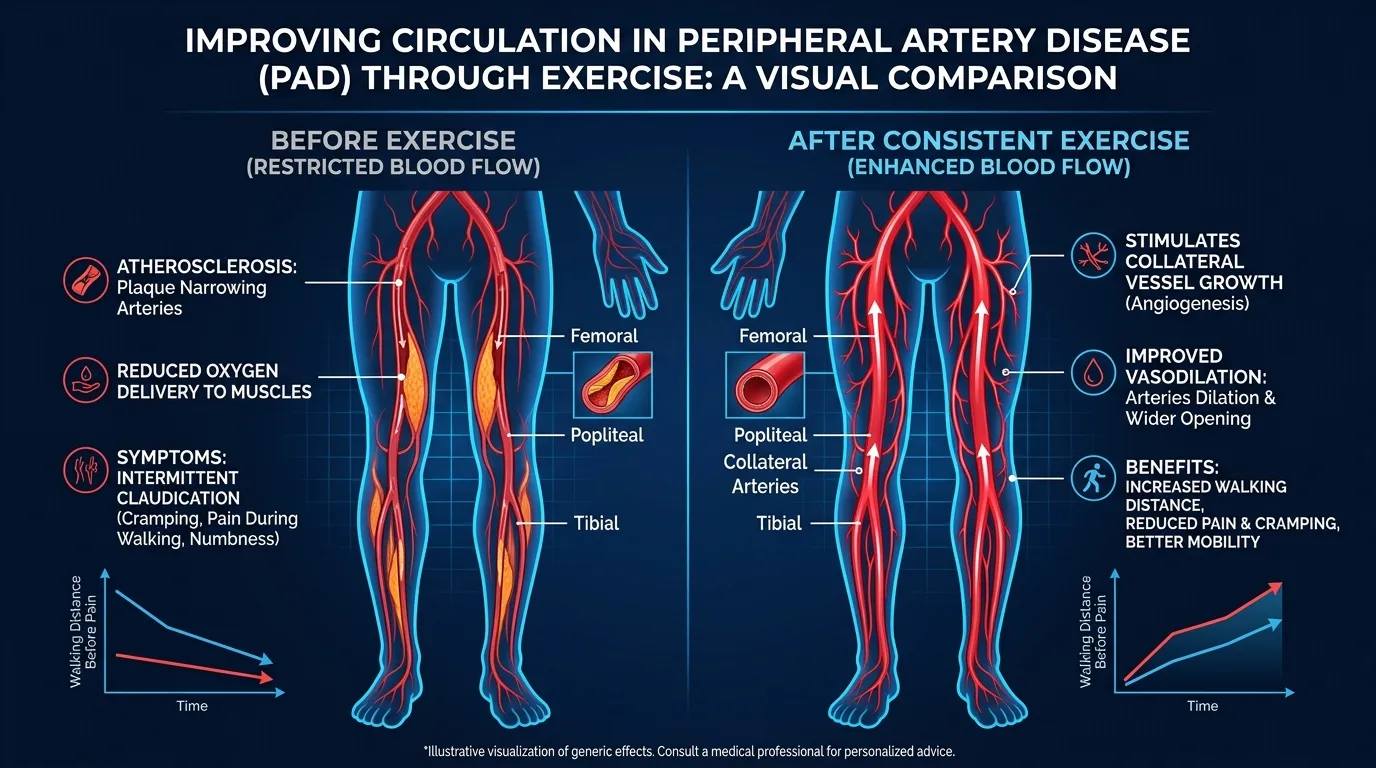
- Collateral circulation. Regular walking stimulates the growth of new, smaller blood vessels that bypass the blocked arteries. Over time, this creates alternative pathways for blood to reach your legs.
- Pain-free walking distance. Structured walking programs have been shown to significantly increase the distance PAD patients can walk before claudication (leg pain) forces them to stop.
- Cardiovascular risk reduction. PAD patients are at elevated risk for heart attack and stroke. Regular walking reduces these risks by improving overall cardiovascular function.
- Functional independence. The ability to walk to the mailbox, through a grocery store, or around the block without stopping isn't just fitness — it's quality of life. It's independence.
The AHA guidelines are clear: every PAD patient who can walk should be walking. The question isn't whether to walk. It's how to make it happen consistently.
The Accessibility Problem
Supervised exercise therapy (SET) is the gold standard for PAD treatment. A trained therapist guides patients through structured walking sessions, typically three times per week for 12 weeks, at a clinical facility.
The evidence for SET is strong. The problem is access.
- Geographic barriers. Many PAD patients live far from facilities that offer supervised programs. Rural patients may have no option within a reasonable driving distance.
- Scheduling constraints. Three clinic visits per week is a massive time commitment for patients who are often elderly, may not drive, or have other health conditions requiring frequent medical appointments.
- Cost. Even with insurance coverage, copays and transportation costs add up over a 12-week program.
- Limited availability. Not all vascular centers offer SET programs, and those that do often have long waitlists.
The result: the majority of PAD patients who would benefit from structured walking programs never access them. The treatment exists. The delivery mechanism is broken.
This is exactly the gap that automated, home-based coaching was designed to fill.
How Automated Gamification Solves This
The GAMEPAD Trial didn't try to replicate a clinical program over Zoom. It built something fundamentally different — a system designed from the ground up to work without any human supervision at all.
Here's why that matters:
- Zero geographic barriers. Home-based means exactly that. Your living room. Your neighborhood. Your pace. No driving to a clinic three times a week.
- Fully automated. The program ran itself. Gamification elements, educational content, and accountability structures were all delivered automatically. No therapist scheduling. No human bottleneck.
- Scalable to any patient population. A supervised program can serve dozens of patients. An automated program can serve thousands — with the same quality of behavioral support.
- Behavioral economics at the core. The gamification wasn't a gimmick layered on top. It was the mechanism of action. Points, streaks, and progress tracking leveraged the same psychological principles that keep people engaged with the most successful consumer apps in the world — applied to a medical context.
And the proof is in the follow-up data. When the program stopped, the patients didn't stop. They walked more. That's not compliance. That's habit formation.
Build a walking habit that sticks
Take the free 2-minute assessment. FitCraft maps your fitness level, goals, and available equipment — then builds a progressive plan with the same gamified accountability that helped PAD patients walk more in the GAMEPAD Trial.
Take the Free Assessment Free · 2 minutes · No credit cardGetting Started Safely
PAD is a cardiovascular condition, and exercise — even walking — needs to be approached with appropriate medical guidance. Before starting any walking program:
- Get medical clearance. Talk to your vascular specialist or primary care physician. They can assess your specific condition, review your medications, and set safe parameters for exercise intensity.
- Understand your claudication threshold. Most PAD patients experience leg pain after a certain distance or duration of walking. Your doctor can help you understand your baseline and set realistic starting goals.
- Start below your limit. The goal is progressive improvement, not pushing through maximum pain. Walk to moderate discomfort, rest until it subsides, then walk again. Over weeks, your threshold will increase.
- Track your progress. Daily step counts, walking duration, and pain-free distance are all valuable metrics. Tracking creates accountability and makes improvement visible — which is exactly what gamification does so effectively.
- Report changes to your doctor. If your symptoms worsen, if you experience pain at rest, or if you notice changes in skin color or temperature in your legs, contact your physician promptly.
The GAMEPAD Trial participants were real PAD patients with a mean age of approximately 70. They weren't elite athletes. They weren't young. They were people with a serious vascular condition who responded to a well-designed, automated program. Medical clearance is essential, but the evidence shows that this population absolutely can benefit from structured, home-based walking programs.
How FitCraft Applies This Science
FitCraft was built on the same principles that made the GAMEPAD Trial successful — automated coaching, gamification rooted in behavioral economics, and progressive programming that meets people where they are.
- AI coaching that adapts. FitCraft's AI coach Ty builds a personalized plan based on a 32-step diagnostic assessment. It accounts for your fitness level, available equipment, schedule, and goals — then adjusts as you progress.
- Fully home-based. No gym required. No clinic visits. No commute. Just your phone and whatever space you have. This is exactly the accessibility model that the GAMEPAD Trial proved works for patients who can't get to a supervised program.
- Gamification that builds habits. Streaks, quests, collectible cards, and progressive challenges tap into the same behavioral economics principles that produced lasting behavior change in the GAMEPAD Trial. The goal isn't to make exercise "fun" for a week — it's to make consistency feel automatic.
- Progressive overload. FitCraft doesn't start you at maximum intensity. It starts where you are and builds gradually — the same approach that's essential for PAD patients working within their claudication threshold.
- Accountability without judgment. No trainer watching you. No clinic full of strangers. Just a system that tracks your consistency, celebrates your progress, and keeps you moving forward.
The GAMEPAD Trial proved that automated gamified coaching can change long-term walking behavior in PAD patients. FitCraft is built on that exact foundation — making evidence-based fitness accessible to everyone, regardless of age, condition, or proximity to a gym.
Frequently Asked Questions
Is walking safe for people with peripheral artery disease?
Yes. Walking is considered the first-line treatment for peripheral artery disease according to AHA guidelines. Structured walking programs are one of the most effective interventions for improving walking distance and reducing symptoms. However, patients should always get medical clearance from their vascular specialist or primary care physician before starting any exercise program.
What is the GAMEPAD Trial?
The GAMEPAD Trial was a 2025 NIH-funded randomized controlled trial published in the Journal of the American Heart Association (JAHA). It studied 103 PAD patients (mean age ~70, 52% men) and found that a 16-week fully automated, home-based gamification program with behavioral economics design increased daily steps by 920 during the intervention — and by 1,074 steps at the 8-week follow-up after the program ended (P=.03). It is the only trial of its kind where the effects grew after the intervention stopped.
Can I exercise at home with PAD instead of going to a clinic?
Yes. While supervised exercise programs have strong evidence, the GAMEPAD Trial demonstrated that fully home-based, fully automated coaching programs can produce significant and sustained improvements in daily walking for PAD patients. Home-based programs remove the barriers of travel, scheduling, and cost that prevent many patients from accessing supervised clinic programs.
How many steps should someone with PAD aim for?
Step goals should be individualized with your doctor, but the key principle is progressive increases from your current baseline. The GAMEPAD Trial showed that even modest increases of around 1,000 additional daily steps produced meaningful benefits for PAD patients. The goal is consistent, gradual improvement — not hitting an arbitrary number on day one.
Why does gamification work for PAD patients?
Gamification leverages behavioral economics principles — streaks, progress tracking, social support, and small daily goals — to make consistent walking feel rewarding rather than burdensome. The GAMEPAD Trial showed that PAD patients (mean age ~70) responded powerfully to these techniques, with step counts continuing to rise even after the formal program ended. This suggests that gamification helps patients internalize the walking habit rather than relying on external motivation.