
If you have ever sprinted home from a long run because your gut decided 5 kilometers from your front door was the moment to stage a protest, you are not alone. Runner's trots is one of the most common and least-discussed problems in endurance running. The Reddit threads about it run thousands of comments long. The Marathon Handbook calls it "the biggest taboo in running". And the research suggests anywhere from 30% to 90% of endurance runners deal with it at some point.
The good news is that this is a tractable problem. Most cases of runner's trots come down to a small handful of fixable inputs: what you ate in the 24 hours before the run, your hydration status, and how trained your gut is for the intensity you are demanding of it. None of those require expensive supplements or pharmaceuticals to solve. They require knowing what the research says works, then experimenting on yourself.
Here is what causes runner's trots, what the studies say actually prevents it, and the order of operations to try if you are dealing with mid-run urgency. If your problem is a sharp pain under the ribs rather than mid-run urgency, that is a different mechanism entirely, and our post on why your stomach hurts when you run separates the four pains and their fixes.
What Actually Causes Runner's Trots
The mechanism is well-described in the literature. A 2014 Sports Medicine review by de Oliveira, Burini, and Jeukendrup lays it out across three categories.
1. Blood flow is shunted away from your gut
When you run, your working muscles need oxygen and glucose. Your body responds by redirecting blood flow from non-essential systems to the legs. The single biggest donor in that redistribution is the splanchnic circulation, which feeds your stomach and intestines. At moderate intensities, gut blood flow can drop 60% to 80% compared to rest. At hard intensities, it drops further.
That ischemia (reduced blood supply) does two things. It slows digestion, which lets undigested food sit in the small intestine and ferment. And it can damage the intestinal lining, which becomes more permeable. The result is cramping, urgency, and sometimes the watery diarrhea that defines the syndrome.
2. The mechanical jostling speeds up transit
Running is the most mechanically violent of all common endurance sports. Every footstrike sends a shock wave up the body. The colon, which sits in the lower abdomen, gets agitated with every stride. That agitation accelerates colonic transit. Stool that would normally sit in the colon for hours gets moved toward the rectum faster than expected.
This is why running causes more GI symptoms than cycling at the same intensity, even though cycling diverts the same amount of blood flow. Cyclists get gut symptoms too, just less often. The pounding is the differentiator. Blood flow explains the upper half of the problem too, which is what our post on why you feel sick after working out digs into.
3. The food in your gut becomes the variable
This is the part you can actually control. Some foods empty out of the stomach quickly and pass through the small intestine without trouble. Others sit. Others ferment. The de Oliveira review identifies fiber, fat, protein, and concentrated sugar solutions (including fructose) as the major nutritional triggers for exercise-induced GI symptoms.
And then there are FODMAPs. These are short-chain fermentable carbohydrates (fermentable oligosaccharides, disaccharides, monosaccharides, and polyols) found in onions, garlic, wheat, apples, pears, beans, lentils, dairy, and many sweeteners. Even in people without IBS, FODMAPs can produce gas and bloating. Under the added stress of exercise, that effect amplifies.
What actually happens to a typical runner is some combination of all three. The blood flow drops, the colon gets shaken, and the pre-run bagel with cream cheese, banana, and coffee is right where the disruption lands.
What the Research Says Actually Helps
The 2020 study of 388 endurance runners
The most informative single dataset on what real runners do comes from Parnell, Wagner-Jones, Madden, and Erdman (2020) in the Journal of the International Society of Sports Nutrition. They surveyed 388 endurance runners about their GI symptoms and what they had changed in their diets to manage them.
The most common symptoms in the cohort:
- Stomach pain or cramping: 42%
- Intestinal pain or discomfort: 23%
- Side ache or stitch: 22%
- Urge to defecate: 22%
- Bloating: 20%
The most common dietary changes runners made on their own to fight symptoms:
- Cutting meat (32%)
- Cutting milk products (31%)
- Cutting fish and seafood (28%)
- Cutting poultry (24%)
- Cutting high-fiber foods (23%)
The pattern is clear. Runners with GI issues self-restrict to lower-residue, lower-fat, easier-to-digest foods. The high-fiber cutoff in particular shows up across the literature as one of the highest-yield changes.
The Lis et al. (2018) FODMAP study
A small but well-designed crossover trial by Lis, Stellingwerff, Kitic, and colleagues in Medicine & Science in Sports & Exercise took 11 recreational runners with chronic exercise-associated GI symptoms and put them on a 6-day low-FODMAP diet, then a 6-day high-FODMAP diet, in randomized order.
The headline finding: 82% of runners (9 out of 11) reported significantly lower daily GI symptoms on the low-FODMAP arm compared to the high-FODMAP arm. The effect on symptoms during the actual prescribed running bouts was not statistically significant in this small sample, but daily life felt much better.
That is actually a useful nuance. A full low-FODMAP elimination diet is not a forever solution and is hard to sustain. But cutting common high-FODMAP foods in the 24 hours before a hard run is low-effort and likely beneficial for the subset of runners who respond.
What to Try, in Order
If you are dealing with runner's trots, work through the inputs in this rough order. Most people find their answer in the first two layers.
Layer 1: Fix the pre-run meal
The single biggest lever for most runners. The default pre-run meal should be:
- Low fiber. Skip whole grains, raw vegetables, beans, lentils, and bran cereals in the 4 to 6 hours before a hard run. White bread, white rice, white pasta, low-fiber cereals, and refined-flour pancakes are all fine.
- Low fat. Fat slows gastric emptying. Skip fried foods, fatty meats, heavy cheese, and high-fat baked goods. A small amount of nut butter or olive oil is usually fine.
- Low FODMAP. Skip the common high-FODMAP foods (onions, garlic, apples, pears, mango, watermelon, beans, lentils, wheat-heavy meals, milk if lactose-sensitive, sugar alcohols, honey in large amounts).
- Moderate carbohydrate. The pre-run meal should be mostly carbs, not protein-heavy and not fat-heavy.
- Timed 2 to 4 hours before the run. Smaller meal closer to start, larger meal further out. Your gut tolerance dictates which side you sit on.
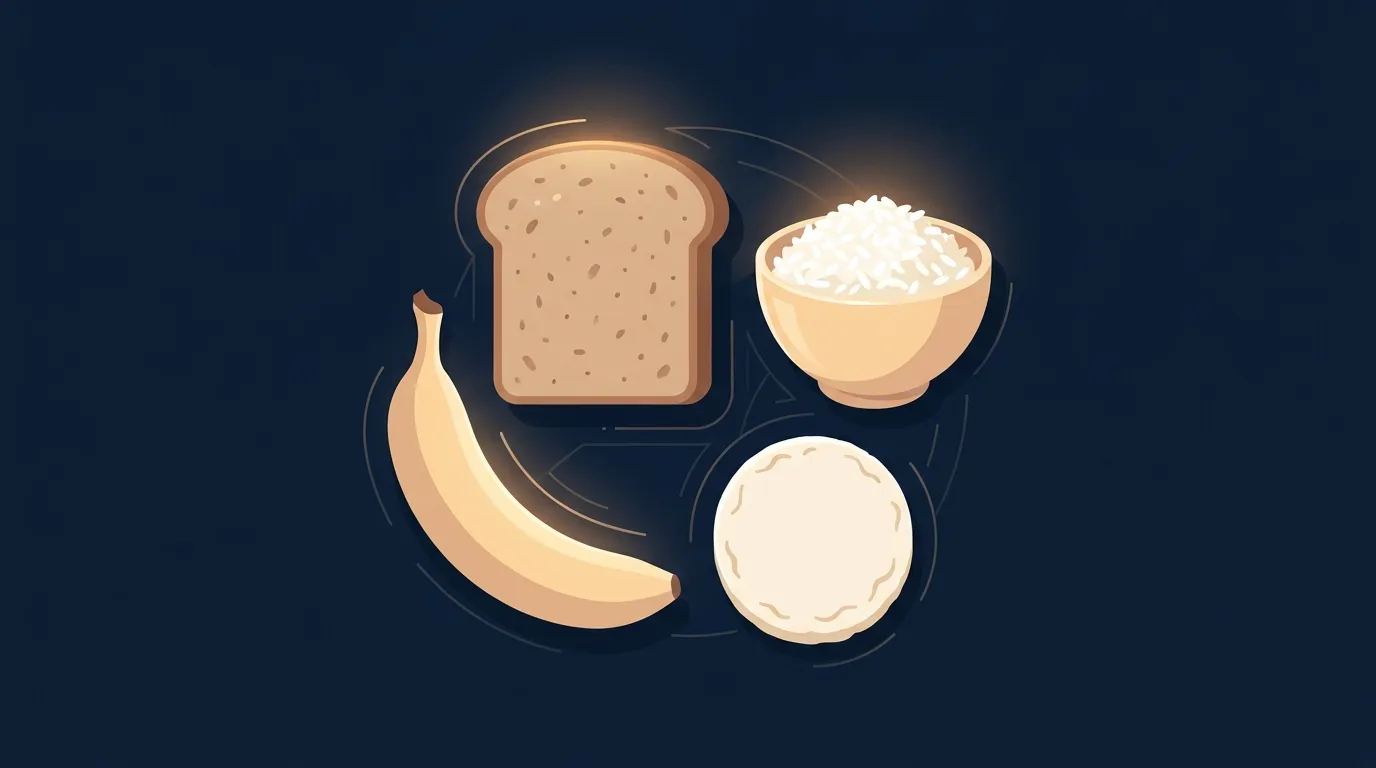
Specific meals that work for most runners: white toast with a thin spread of jam, a banana (yes, even though they have some FODMAPs at fully ripe), plain oatmeal with maple syrup, white rice with a small portion of chicken, a plain bagel with a thin layer of nut butter, or rice cakes.
Layer 2: Audit the day before
If you have already fixed the pre-run meal and symptoms persist, look at what you ate the previous evening. Late-night dairy, big high-FODMAP dinners, heavy alcohol, or unfamiliar food (think travel, restaurants) all show up the next morning. For an important run, simplify the night-before meal. A bowl of pasta with a simple tomato sauce, a chicken breast and rice, or any low-fiber, low-fat, low-FODMAP combination usually does the job.
Layer 3: Hydrate, but not all at once
Dehydration concentrates intestinal contents and aggravates GI symptoms. So does overhydration with plain water right before a run, which dilutes electrolytes and can sit in the stomach. The middle path: be well-hydrated in the 24 hours pre-run (clear-ish urine), then sip 200 to 400 ml of water in the hour before the start, then small sips during the run if it is over 45 minutes. If the run is longer than 90 minutes, include some sodium and a moderate-concentration carb mix, not the super-concentrated sports drinks that can themselves cause symptoms.
Layer 4: Train your gut on long runs
If race-day fueling reliably triggers symptoms, the problem is gut tolerance for in-run nutrition. The solution is to practice. Take whatever gel, chew, or sports drink you plan to use on race day and use it on your long training runs. Start with smaller doses and ramp up. A 6-week progressive protocol of in-run carbohydrate consumption has shown improved GI tolerance in marathon runners. Race day is not the day to try a new product.
Layer 5: Talk to a clinician about loperamide
Loperamide (Imodium) is the last-resort tool many marathon runners carry. It works by slowing gut motility and can prevent mid-race urgency. It is not a fix for the underlying problem and it has downsides: it can mask early signs of dehydration, it does not help with cramping or stitch, and chronic use is not advisable. Use it as an occasional race-day insurance policy after the first four layers are dialed in, not as a regular substitute for them. And run it past a clinician before adding it to your routine, especially if you take other medications.
Knowing what to do is the easy part.
FitCraft, our mobile fitness app, pairs you with an AI coach who builds you a personalized plan around your goals, schedule, and fitness level. Every FitCraft program is designed by Domenic Angelino, MPH (Brown University) and NSCA-CSCS, with research published in the Journal of Strength and Conditioning Research and Medicine & Science in Sports & Exercise.
Take the Free Assessment Free • 2 minutes • No credit cardThings That Sound Like They Should Help But Don't
"Just take probiotics"
The evidence for probiotics specifically for runner's trots is mixed and underwhelming. Some small studies show modest reductions in upper GI symptoms with certain strains. Others show no effect. If your daily life GI symptoms improve with a probiotic, fine. As a targeted intervention for mid-run urgency, it should not be your first move.
"Drink coffee to clear yourself out before the run"
This works for some people and absolutely backfires for others. Coffee stimulates colonic motility, which can either flush you out before the run (good) or trigger urgency during the run (bad). Personal experimentation only. Standard advice: if coffee is part of your routine, keep it consistent. If you do not normally drink coffee, do not introduce it on race day.
"Eat a big high-protein breakfast for staying power"
No. Protein takes longer to digest than carbs and sits in the stomach. Big pre-run protein loads correlate with more GI symptoms, not fewer. Keep protein modest in the pre-run meal and load up at other times of the day.
When Runner's Trots Is Something Else
Most runner's trots is mechanical and nutritional and clears up with the layers above. A small percentage of cases are something else and deserve a clinical workup:
- Symptoms outside of running. If you have daily diarrhea, blood in stool, unexplained weight loss, or persistent abdominal pain when not exercising, see a clinician. That is not runner's trots.
- Severe FODMAP sensitivity and IBS overlap. If symptoms are intense and pervasive, a gastroenterologist or a dietitian familiar with sports nutrition can help work through a structured low-FODMAP trial. The DIY version of low-FODMAP can be hard to do correctly.
- Lactose intolerance, celiac disease, or other diagnoses. All can mimic or amplify exercise-induced symptoms. Pre-run nutrition tweaks will not fix them on their own.
The boring truth most of the time is that runner's trots is a manageable, almost solvable problem for the majority of runners willing to do the food experimentation. The Reddit threads make it seem mysterious because the people who solved it stop posting about it. The people still asking are usually one or two adjustments away from being fine.

The Bottom Line
Runner's trots is common, well-studied, and mostly fixable. The mechanisms are real: gut blood flow drops during exercise, mechanical jostling speeds transit, and nutrition determines what is in there to make trouble. The fix is layered: dial in the pre-run meal first, audit the day-before food second, get hydration right third, train your gut for race fuel fourth, and use loperamide only as a clinician-approved fallback.
The two studies most worth knowing about: Parnell 2020 surveyed 388 runners and showed what real people change to feel better (mostly cutting fiber, fat, and dairy). Lis 2018 showed that 82% of symptomatic runners felt better on a low-FODMAP protocol. Combined with the de Oliveira 2014 mechanism review, you have a research foundation for any reasonable experiment with your own gut.
None of this requires you to abandon running. Consistency comes from removing friction. Solving the GI problem so you can train without dread is one of the higher-yield investments a frustrated runner can make.
If you are coming back to running after a break and want a structured ramp that does not punish you, we built a free assessment that gives you a personalized plan. The general principles in this post are universal. The specific dose of running, walking, strength work, and recovery is where one-size-fits-all advice falls short. Worth pairing this post with our guides on starting running when out of shape and the science of walking pace and longevity if you are early in your running journey.
References
- Parnell JA, Wagner-Jones K, Madden RF, Erdman KA. "Dietary restrictions in endurance runners to mitigate exercise-induced gastrointestinal symptoms." Journal of the International Society of Sports Nutrition 17 (2020): 32. doi:10.1186/s12970-020-00361-w
- Lis DM, Stellingwerff T, Kitic CM, et al. "Low FODMAP: a preliminary strategy to reduce gastrointestinal distress in athletes." Medicine & Science in Sports & Exercise 50.1 (2018): 116-123. doi:10.1249/MSS.0000000000001419
- de Oliveira EP, Burini RC, Jeukendrup A. "Gastrointestinal complaints during exercise: prevalence, etiology, and nutritional recommendations." Sports Medicine 44 Suppl 1 (2014): 79-85. doi:10.1007/s40279-014-0153-2
Frequently Asked Questions
What causes runner's trots?
Runner's trots is caused by a combination of mechanical, vascular, and nutritional factors. During running, blood flow is shunted away from the gut to working muscles, reducing intestinal perfusion. The repetitive vertical jostling speeds up gut transit. And certain pre-run foods (high fiber, high fat, high FODMAP, concentrated sugars) compound the effect. The de Oliveira 2014 Sports Medicine review identifies all three categories as contributors.
What percentage of runners get runner's trots?
Estimates range from 30% to 90% of endurance runners, depending on how symptoms are measured. A 2020 study of 388 endurance runners (Parnell et al., Journal of the International Society of Sports Nutrition) found 42% reported stomach pain or cramping, 23% reported intestinal pain, and 22% reported an urge to defecate during runs. Higher prevalence shows up at higher intensities and longer durations.
What should I eat before a run to avoid runner's trots?
Keep the pre-run meal small, low in fiber, low in fat, and low in FODMAPs. Examples that work for most runners: white toast with a thin spread of jam, a banana, plain rice with a small amount of chicken, or rice cakes. Avoid in the 4 to 6 hours before a hard run: high-fiber cereals, raw vegetables, beans, dairy if you are sensitive, fatty meats, fried foods, and sugar alcohols. Eat your last solid meal 2 to 4 hours before the run, depending on what your gut tolerates.
Does a low-FODMAP diet help runner's trots?
The preliminary evidence says yes for some runners. Lis et al. (2018) in Medicine & Science in Sports & Exercise studied 11 runners with chronic exercise-related GI symptoms. After 6 days on a low-FODMAP diet, 82% (9 of 11) reported significantly fewer daily GI symptoms compared to a high-FODMAP diet. Symptoms during the actual running bouts did not differ significantly in that small sample. Most runners do not need a full low-FODMAP elimination diet, but cutting common FODMAP foods in the 24 hours before a hard effort is a reasonable experiment.
Should I take Imodium before a marathon?
Many runners do, but it is a band-aid rather than a fix. Loperamide (Imodium) slows gut motility and can prevent mid-race urgency, but it does not address the root cause. It can also mask early signs of dehydration and make post-race recovery harder. Most sports nutritionists recommend treating the underlying nutrition and training cause first, with loperamide as a race-day fallback if everything else has been dialed in. Always consult a clinician before adding any medication to your race routine.
Will runner's trots go away with training?
Often, partially. Studies of marathon runners show GI tolerance can adapt over weeks with progressive carbohydrate intake during training runs. A 6-week protocol of gradually increasing in-run carbohydrates has been shown to improve gut tolerance and reduce symptoms in subsequent events. Newer runners hit GI symptoms more often than seasoned ones, partly because the gut, like every other system, adapts to the demand. Practice your race-day fueling on long runs, not race day.