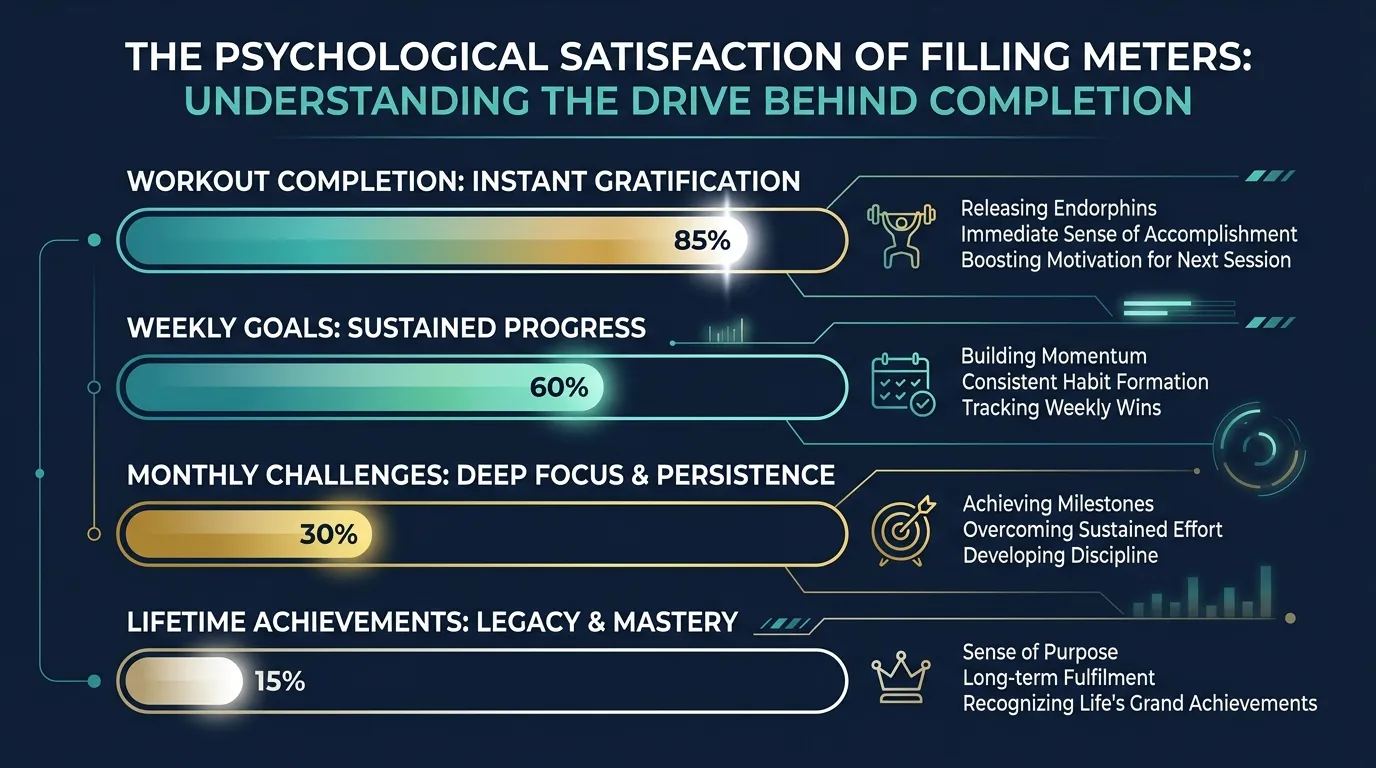
Every fitness app you've ever used has points. Earn XP for a workout. Watch a bar fill up. Hit the next level. It's so universal it feels like wallpaper — just something apps do because other apps do it.
But here's the thing: those numbers going up on your screen aren't decoration. They're pulling levers in your brain that have been studied for nearly a century — from B.F. Skinner's rat labs in the 1930s to randomized clinical trials published in the last two years. And when the system is designed well, the effects are measurable: more workouts, more consistency, better results.
Most apps have points. Very few understand why they work. The difference matters more than you'd think.
Operant Conditioning: The Foundation of Every Point System
In the 1930s, psychologist B.F. Skinner placed rats in a box with a lever. Press the lever, get a food pellet. The rats learned to press the lever. A lot.
Skinner called this operant conditioning — the principle that behaviors followed by rewards are more likely to be repeated. It's the same cue-routine-reward loop that drives all habit formation. It's the single most replicated finding in behavioral psychology, and it's the foundation of every point system in every app you've ever used.
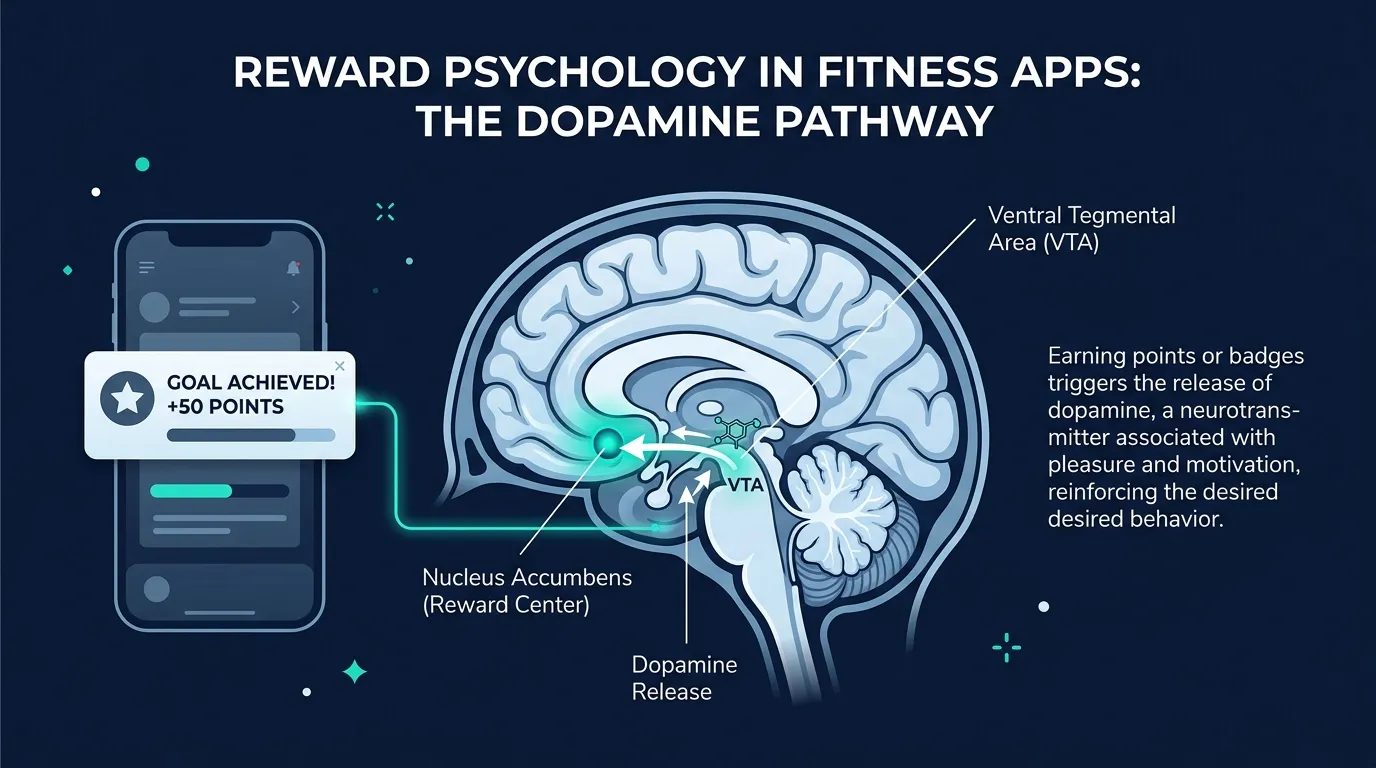
When you finish a workout and see "+150 XP" flash on screen, your brain does exactly what Skinner's rats did: it connects the effort you just made with a tangible outcome. Finish workout, get points. Repeat. Over time, the anticipation of the reward starts driving the behavior — you're motivated before the workout even begins because your brain already knows the payoff is coming.
The BE FIT trial (published in JMIR mHealth and uHealth, PMC5710273) put this to the test with real people. Participants using a system with points, levels, and daily feedback achieved their physical activity goals 53% of the time, compared to 32% in the control group. Same exercises. Same goals. The only difference was immediate, visible reinforcement.
The Goal-Gradient Effect: Why You Push Harder Near the Next Level
Have you noticed that you'll do an extra set — or squeeze in one more workout — when you're close to leveling up? That's not random motivation. It's a documented psychological phenomenon called the goal-gradient effect.
First demonstrated by Clark Hull in the 1930s with rats running faster as they approached food at the end of a maze, the goal-gradient effect shows that effort naturally accelerates as you get closer to a goal. Researchers have since replicated this in loyalty programs, video games, and fitness interventions.
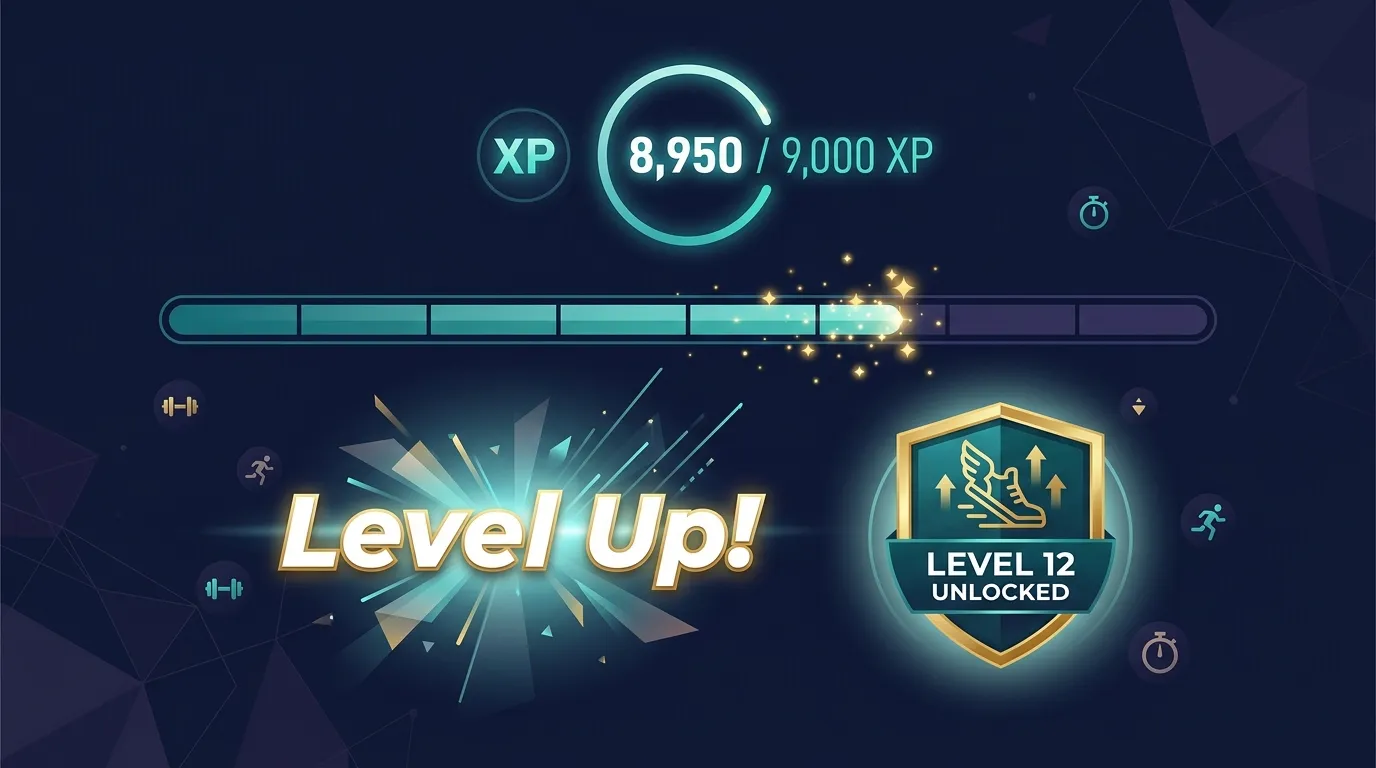
In a fitness app, levels create a series of finish lines. Each one is close enough to feel achievable, far enough to require real effort. And as you approach each threshold, the goal-gradient effect kicks in — you train a little harder, show up a little more consistently, because the next level is right there.
This is why well-designed level systems don't space milestones evenly. Early levels come fast to build momentum. Later levels take longer but offer bigger rewards. The system matches the psychology: give people quick wins early, then leverage the goal-gradient effect to sustain effort over time.
Loss-Framed Points: Why Losing Hurts More Than Gaining
Standard points work: do something, earn a reward. But research shows there's a more powerful version — and it flips the script.
Loss-framed points give you a full point allocation at the start of each period, then take points away when you don't hit your goals. Instead of earning 100 points for a workout, you start with 100 points and lose them if you skip.
The difference sounds trivial. The results are anything but.
The ALLSTAR trial (PMC12805409) and a separate stroke rehabilitation RCT both tested loss-framed versus gain-framed point systems for physical activity. The loss-framed groups increased their daily step counts by 759 to 981 steps per day more than gain-framed participants. Same point values. Same activities. The only change was framing.
This works because of loss aversion — the principle discovered by Kahneman and Tversky showing that losses feel roughly twice as painful as equivalent gains feel good. It's the same mechanism that makes breaking a streak feel devastating. When points are framed as something you already have, skipping a workout doesn't just mean missing a reward. It means losing something that's yours. And that's a fundamentally different motivational force.
Variable Rewards: Why Unpredictability Keeps You Coming Back
Skinner discovered something else in those rat experiments that changed everything: variable ratio reinforcement schedules produce the strongest, most persistent behavior.
When rats received a pellet every single time they pressed the lever, they pressed steadily but stopped quickly once rewards ceased. When they received pellets on an unpredictable schedule — sometimes after 3 presses, sometimes after 15, sometimes after 7 — they pressed faster and for far longer, even after rewards stopped entirely.
This is why slot machines are more addictive than vending machines. The vending machine gives you exactly what you expect. The slot machine might give you something amazing — and that uncertainty is what keeps you pulling the lever.
Applied to fitness, variable rewards mean that some workouts earn you bonus points, surprise achievements, or rare collectibles — and you never quite know when. Each workout carries the possibility of something unexpected, which means the anticipation never fully fades. Your brain stays engaged because it can't predict exactly what's coming next.
The Clinical Evidence: It Actually Works
This isn't theoretical. A meta-analysis across interventions using points and levels as core mechanics found a combined effect size of g=0.42 — a moderate and clinically meaningful improvement in physical activity outcomes. Points and levels appeared as baseline mechanics in nearly all 15 randomized controlled trials on gamified exercise.
That effect size means people using these systems exercised meaningfully and measurably more than those without them. Not because they were more disciplined. Not because they wanted it more. Because the system was designed to work with their psychology instead of against it.
Ready to put this into practice?
FitCraft's point and level system is built on this research. Take the free 2-minute assessment to see how it works.
Take the Free Assessment Free · 2 minutes · No credit cardHow FitCraft Uses All of This
FitCraft doesn't just hand you points. It layers every mechanism the research supports into a single system designed to keep you moving.
XP for every workout. Operant conditioning at work — immediate, visible reinforcement the moment you finish. Your brain connects effort to outcome, and the anticipation builds before you even start your next session.
Loss-framed streaks. FitCraft's streak system leverages loss aversion. Your streak is something you own — something you've built — and the prospect of losing it creates the same powerful motivational asymmetry that produced 759 to 981 extra steps per day in clinical trials.
Variable-rarity collectible cards. After workouts, you earn cards of varying rarity — common, rare, and epic. You never know exactly what you'll get, which is precisely the variable ratio reinforcement that Skinner identified as the most powerful schedule for sustaining behavior.
Level progression. A structured level system with milestones designed to trigger the goal-gradient effect. Early levels come quickly. Later levels require more effort but unlock bigger rewards. Every time you get close to the next threshold, you naturally push a little harder.
The result is a system where multiple psychological forces reinforce each other. Points make each workout feel rewarding. Levels make progress visible. Loss framing makes consistency feel important. Variable rewards keep things fresh. Together, they create something that feels less like a chore and more like a game you're winning.
Why the Numbers Going Up Actually Matter
Points and levels look simple on the surface. A number goes up. A bar fills in. You hit the next milestone. But underneath that simplicity is nearly a century of behavioral research — from Skinner's lever-pressing rats to Kahneman's Nobel Prize-winning work on loss aversion to modern randomized controlled trials showing real, measurable changes in physical activity.
The apps that understand this science build systems where every workout feels like it counts. Where progress is visible. Where the next level is always just within reach. Where you never quite know what reward is coming next.
Those numbers going up aren't just satisfying. They're doing exactly what they were designed to do — making you someone who exercises consistently.
Points and levels only matter when they sit on top of real programming, which is what the gamified side of FitCraft is built around.
Frequently Asked Questions
Why do points in fitness apps make you exercise more?
Points work because of operant conditioning — the same principle B.F. Skinner discovered in the 1930s. When you receive points immediately after completing a workout, your brain associates the effort with a tangible reward. Over time, this creates a reinforcement loop where the anticipation of earning points becomes a motivator in itself. Clinical trials show that point-based fitness interventions improve goal achievement by up to 66% compared to interventions without them.
What is the goal-gradient effect in fitness apps?
The goal-gradient effect is a psychological phenomenon where people accelerate their effort as they get closer to a goal. In a fitness app, this means you naturally push harder when you are close to reaching the next level. Researchers have documented this effect across loyalty programs, video games, and fitness interventions — the closer you are to the finish line, the more motivated you become to cross it.
What are loss-framed points and why do they work?
Loss-framed points give you a full allocation of points at the start of each day or week, then deduct points when you miss your goals. Because loss aversion makes losses feel roughly twice as painful as equivalent gains feel good, this framing produces stronger behavior change. Randomized controlled trials have shown that loss-framed point systems increase daily step counts by 759 to 981 steps per day compared to gain-framed alternatives.
Does FitCraft use points and levels?
Yes. FitCraft uses a multi-layered point and level system grounded in behavioral science. You earn XP for every workout, with loss-framed streak mechanics that tap into loss aversion. A level progression system leverages the goal-gradient effect, and variable-rarity collectible cards provide unpredictable rewards that sustain engagement over time. The entire system is designed to make consistency feel genuinely rewarding.