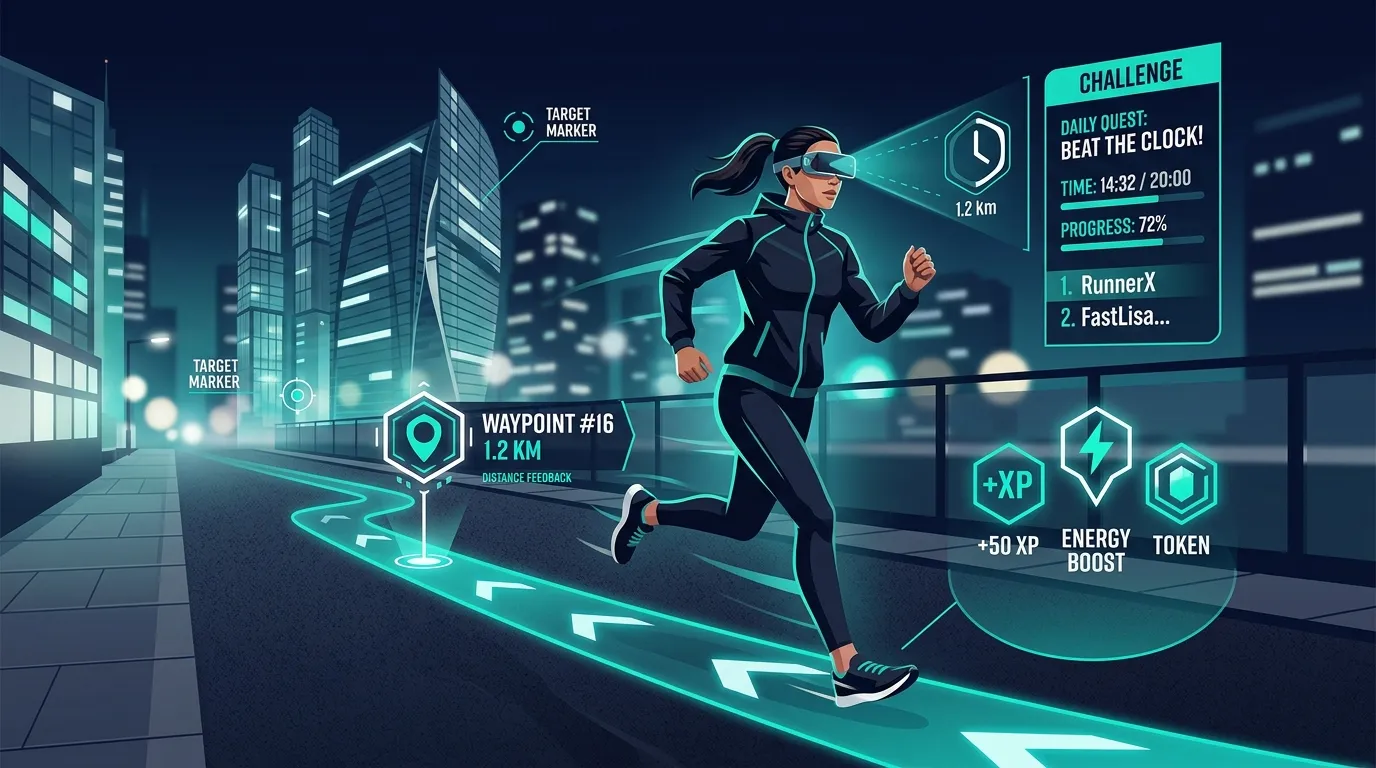
Remember Summer 2016?
For about six weeks in the summer of 2016, something genuinely strange happened. Parks were full. Sidewalks were crowded. People who hadn't walked anywhere voluntarily in years were suddenly covering miles — eyes glued to their phones, hunting for a Pikachu near the local library.
Pokémon GO didn't market itself as a fitness app. It was a game. But by layering virtual rewards on top of real-world movement, it accidentally ran the largest natural experiment in exercise motivation the world had ever seen.
The question researchers have been picking apart ever since: did it actually make anyone healthier?
What the Research Actually Found
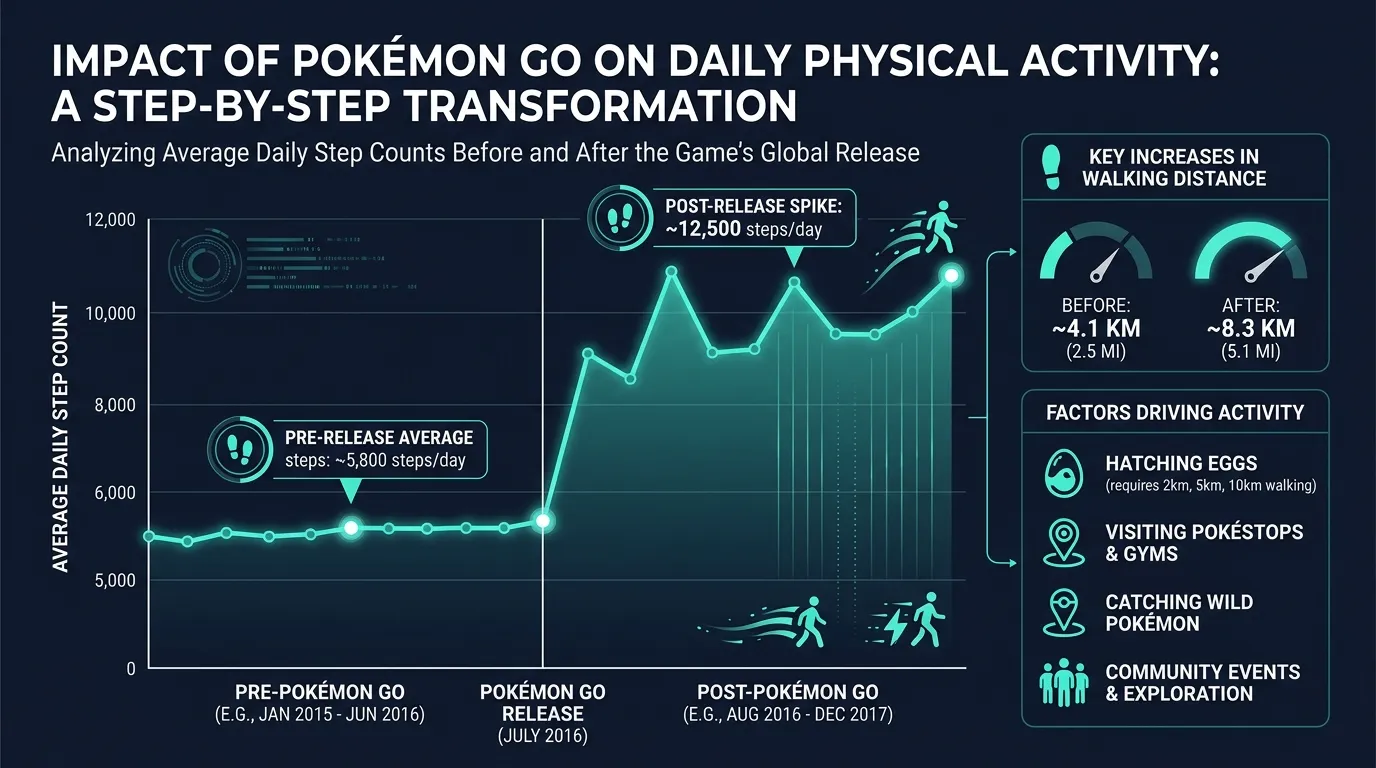
The most cited study comes from a large cohort tracked through smartphone accelerometers (PMC5174727). The headline number is underwhelming: across all players, Pokémon GO added an average of about 192 steps per day. That's barely a walk to the fridge and back.
But that average hides something important. When the researchers split the data by engagement level, the picture changed dramatically. Highly engaged players — the ones who played regularly and kept at it — gained roughly 1,473 extra steps per day. That's a 26% increase over their baseline, and it puts them solidly into "clinically meaningful" territory for reducing cardiovascular risk.
A separate longitudinal study (PMC6379816) found that middle-aged and older adults — the demographic that benefits most from additional walking — tended to sustain their higher step counts for months, not just weeks. A 2020 meta-analysis confirmed the overall pattern: real increases in physical activity, but with enormous variability depending on how much people actually engaged with the game.
The data tells a clear story: Pokémon GO worked. But only for the people who kept playing.
Why Engaged Players Got Way More Benefit
This isn't surprising when you understand the psychology. Pokémon GO's core mechanic was simple: walk around in the real world to find, catch, and collect virtual creatures. The more you walked, the more you found. That's a textbook variable reward loop — the same mechanism that makes slot machines and social media feeds so compelling.
For engaged players, the loop was powerful. Every walk held the possibility of a rare find. Hatching eggs required hitting specific distance thresholds. Gym battles incentivized visiting specific locations. The game turned a walk around the block into an adventure with tangible, visible progress.
The casual players, though, never locked into that loop. They downloaded the app, caught a few Pokémon, posted about it on Instagram, and moved on. For them, the game was a novelty — not a system.
Why It Faded
Here's where the story gets instructive for anyone thinking about fitness and gamification. Pokémon GO's engagement decay was steep. Within weeks of launch, daily active users started dropping. Within months, the cultural moment had passed.
The reason? Pokémon GO had no structured fitness progression.
Think about what was missing. There were no escalating physical challenges. No periodized difficulty. No progressive overload. No feedback on whether you were getting fitter, stronger, or more consistent. The game treated a 2-mile walk and a 2-mile run the same — both were just "distance." There was no system saying, "You've been walking 4 miles a week consistently. Let's push to 5."
The gamification was layered on top of movement. It wasn't built around fitness. Once the novelty of the game wore off, there was nothing fitness-specific to keep people going. No progressive overload. No adaptive programming. No coach saying, "Here's what comes next."
That's the critical gap between organic play and structured gamification.
What if the game was built around your workouts?
FitCraft combines RPG-style progression with structured fitness programming — so every workout levels you up. Take the free 2-minute assessment.
Take the Free Assessment Free · 2 minutes · No credit card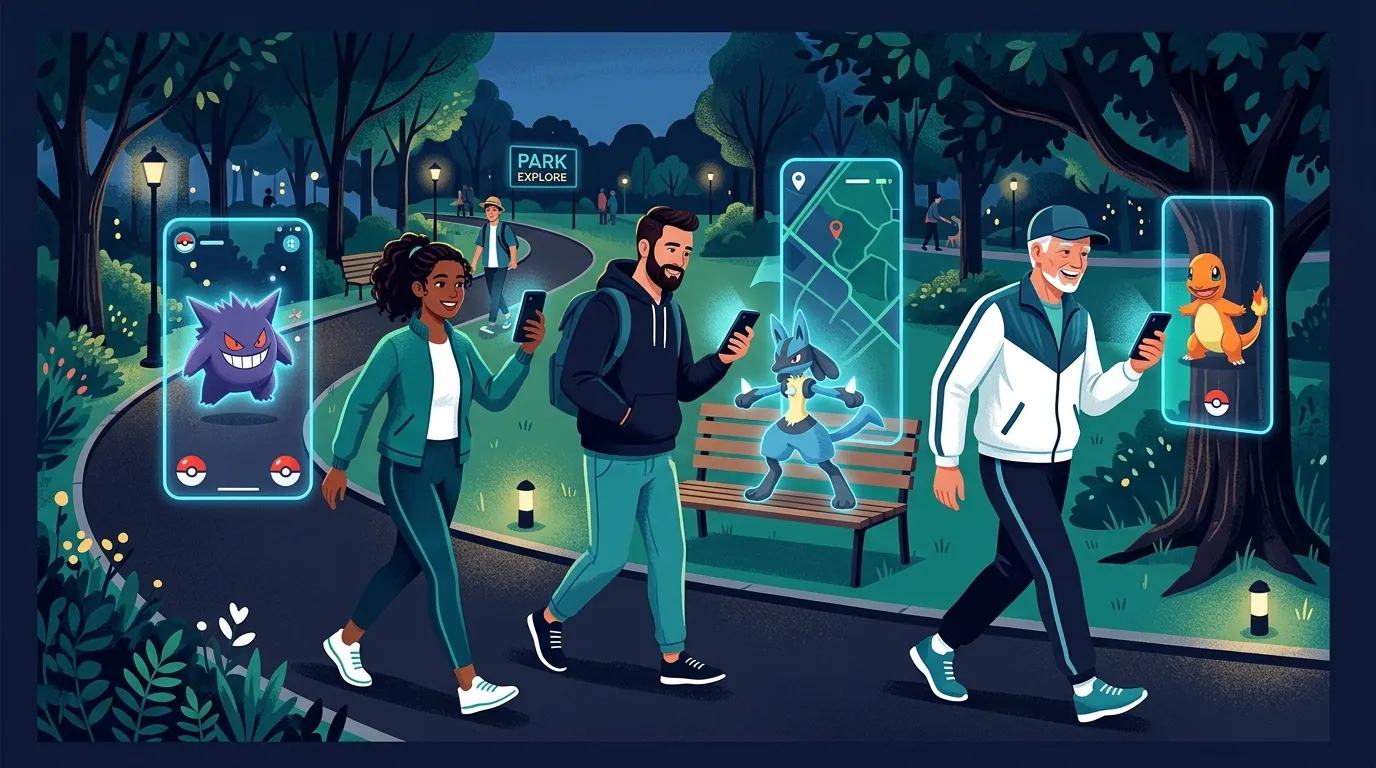
The Lesson for Fitness Apps
Pokémon GO proved something that the fitness industry had debated for years: gamification can absolutely get sedentary people moving. That's not a small thing. Getting someone off the couch is the hardest problem in fitness. And a mobile game did it at a scale no gym, trainer, or public health campaign had ever achieved.
But it also proved the corollary: gamification built around novelty fades. If the game mechanics aren't tied to actual fitness progression — if catching a Charizard doesn't require you to get stronger, faster, or more consistent — then the physical activity is just a side effect. And side effects disappear when the primary effect (fun) wears off.
The takeaway isn't that gamification failed. It's that unstructured gamification has a shelf life — a pattern researchers call the week 20 problem. A newer generation of apps has tried to close that gap, and our roundup of the best gamified fitness apps looks at which ones tie game mechanics to real training progression.
How FitCraft Applies This
FitCraft was built on the principle that Pokémon GO half-proved: games change behavior. The missing piece was structure.
In FitCraft, the gamification is the fitness. Every workout you complete earns XP, progresses your quests, and levels up your avatar — but the workouts themselves are programmed by an AI coach that adapts to your fitness level, schedule, and goals. The progression system doesn't just reward you for moving. It rewards you for getting better.
That means the game can't fade the way Pokémon GO did, because the challenges scale with you. Week 4 is harder than week 1 — and the rewards match. The dopamine loop is tied directly to real fitness gains, so the motivation and the results reinforce each other instead of diverging.
Pokémon GO showed that millions of people will walk extra miles for a virtual creature. FitCraft takes that same insight and asks: what if the virtual creature only evolved when you actually got fitter?
The same loop, pointed at training instead of catching creatures, is what this side of FitCraft is built on.
Frequently Asked Questions
Did Pokémon GO actually make people healthier?
Yes, but the effect varied dramatically by engagement level. A large cohort study (PMC5174727) found the average player gained only about 192 extra steps per day. However, highly engaged players saw an increase of roughly 1,473 steps per day — a 26% boost. The challenge was that for most players, the activity benefits faded within weeks as novelty wore off.
Why did Pokémon GO's fitness effects fade over time?
Pokémon GO relied on novelty and exploration as its primary motivators. Once players had explored their local area and the initial excitement wore off, there was no structured progression system to keep them walking. Without escalating goals, personalized challenges, or fitness-specific feedback loops, the physical activity boost naturally attenuated.
Can a fitness app that uses gamification keep people active long-term?
Yes — if the gamification is structured around fitness progression rather than novelty. The key difference is building game mechanics directly into the workout experience: escalating challenges tied to real performance, progression systems that reward consistency, and adaptive difficulty that grows with the user. This is the approach apps like FitCraft take, combining RPG-style progression with personalized workout programming.
How many extra steps did Pokémon GO players actually take?
Research from a Harvard cohort study found the average increase was about 192 steps per day across all players. Highly engaged players averaged roughly 1,473 additional steps per day, representing a 26% increase over baseline. A separate longitudinal study found that middle-aged and older adults tended to sustain higher step counts for longer periods than younger players.