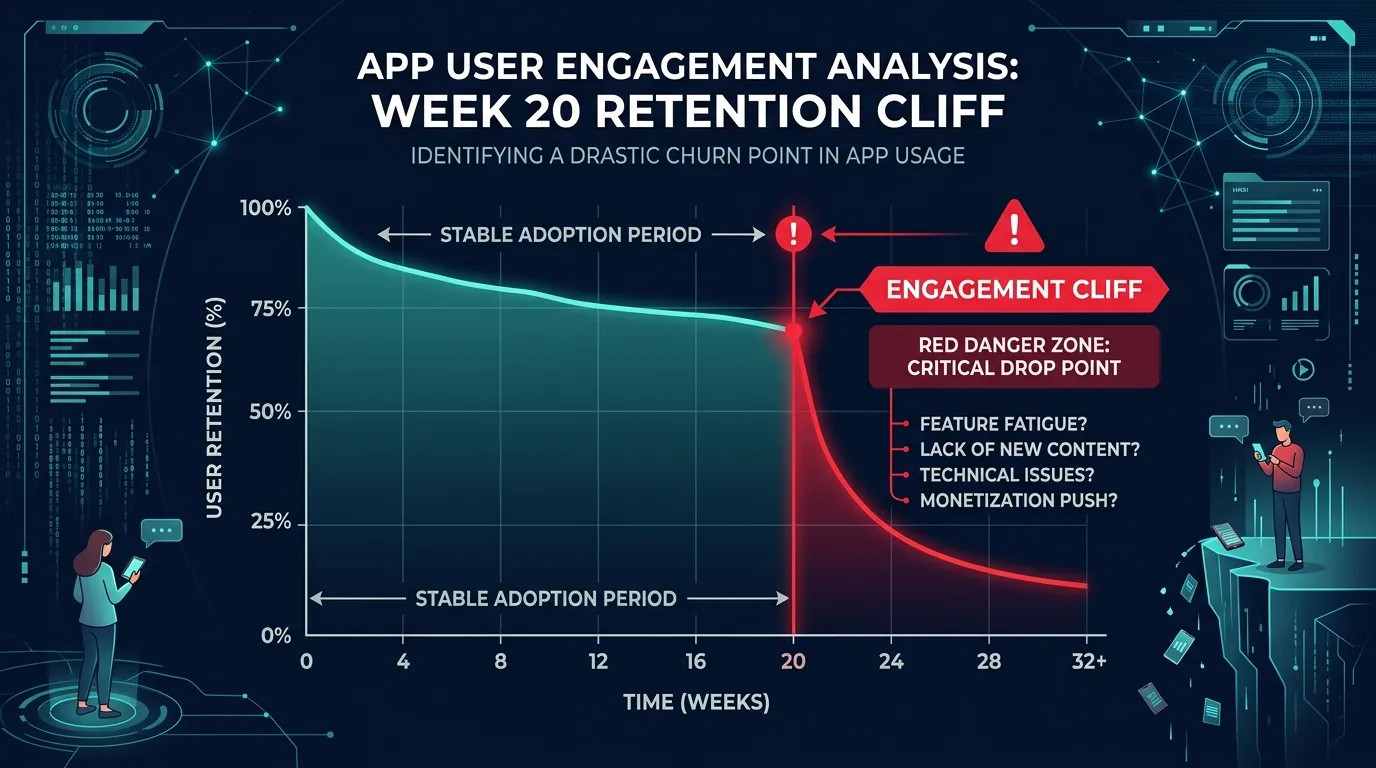
You know the feeling. Five months ago you downloaded a fitness app, and it was electric. New workouts, progress charts climbing, badges popping. You were showing up consistently, maybe for the first time in years.
Then somewhere around month five, something shifted. The workouts started feeling repetitive. The badges stopped meaning anything. The notifications went from motivating to annoying. You didn't consciously decide to quit — you just... opened the app less. Then not at all.
You probably blamed yourself. You shouldn't have. This is a documented phenomenon, and it has nothing to do with your discipline.
The Pattern That Shows Up in Clinical Trials
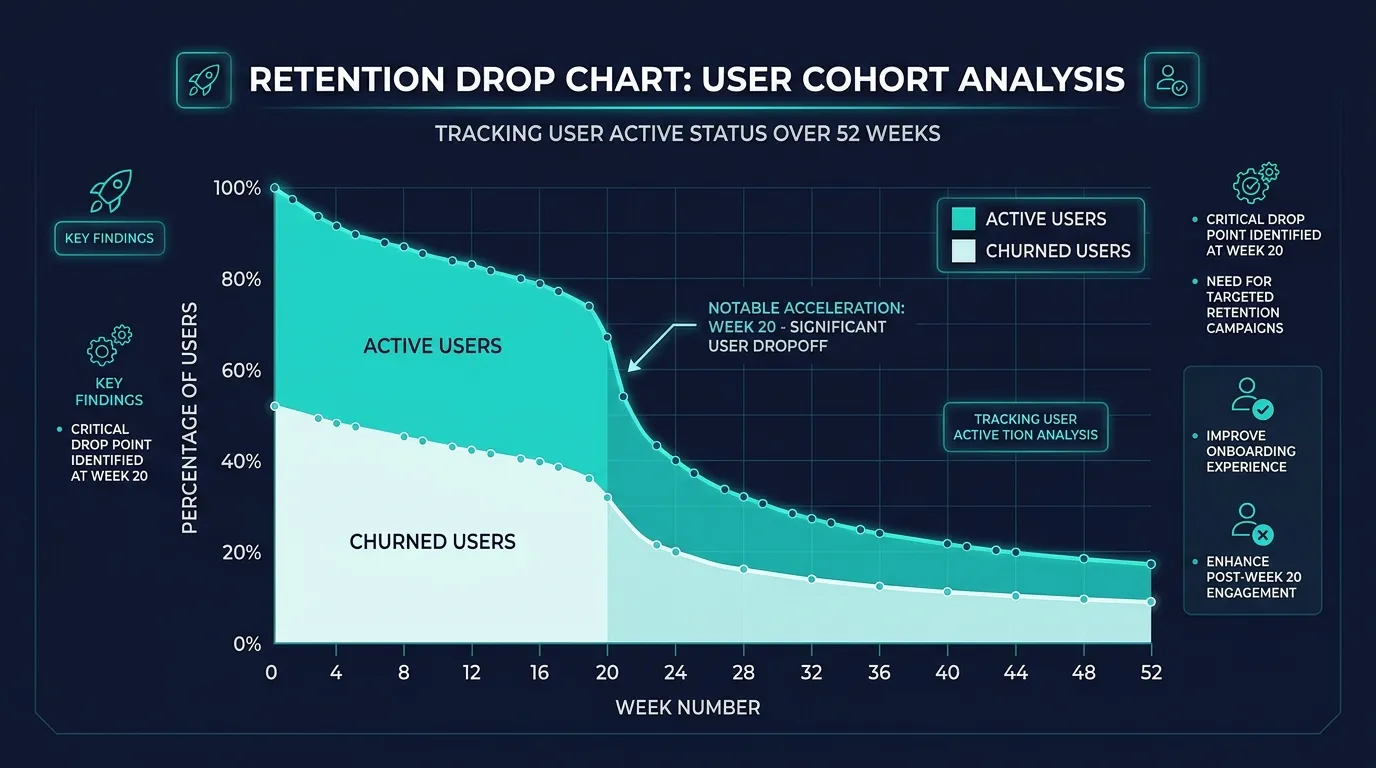
Researchers have been studying digital fitness interventions for years, and the same pattern keeps emerging: engagement peaks early, then decays around the 20-week mark.
The BE FIT trial — a large-scale study of app-based fitness interventions — identified a clear sustainability challenge at week 20. Initial engagement gains began to flatten or reverse as participants habituated to the intervention. The STEP UP trial, published in the Annals of Internal Medicine, documented the same attenuation pattern: standard app-based step interventions that produced significant early gains saw those gains weaken over time.
This isn't a single-study fluke. It's a recurring finding across digital health research. And it maps perfectly to what millions of app users experience every year — that invisible wall where the app just stops working.
The fitness app industry doesn't talk about this much. It's easier to let you believe you lacked willpower than to admit the product has a shelf life.
Why It Happens: Novelty Fades, Rewards Habituate
The mechanism behind the week 20 problem is well understood in behavioral science. It's called hedonic adaptation — your brain's tendency to return to a baseline emotional state after repeated exposure to the same stimulus. (The science behind this is covered in depth in our engagement decay research.)
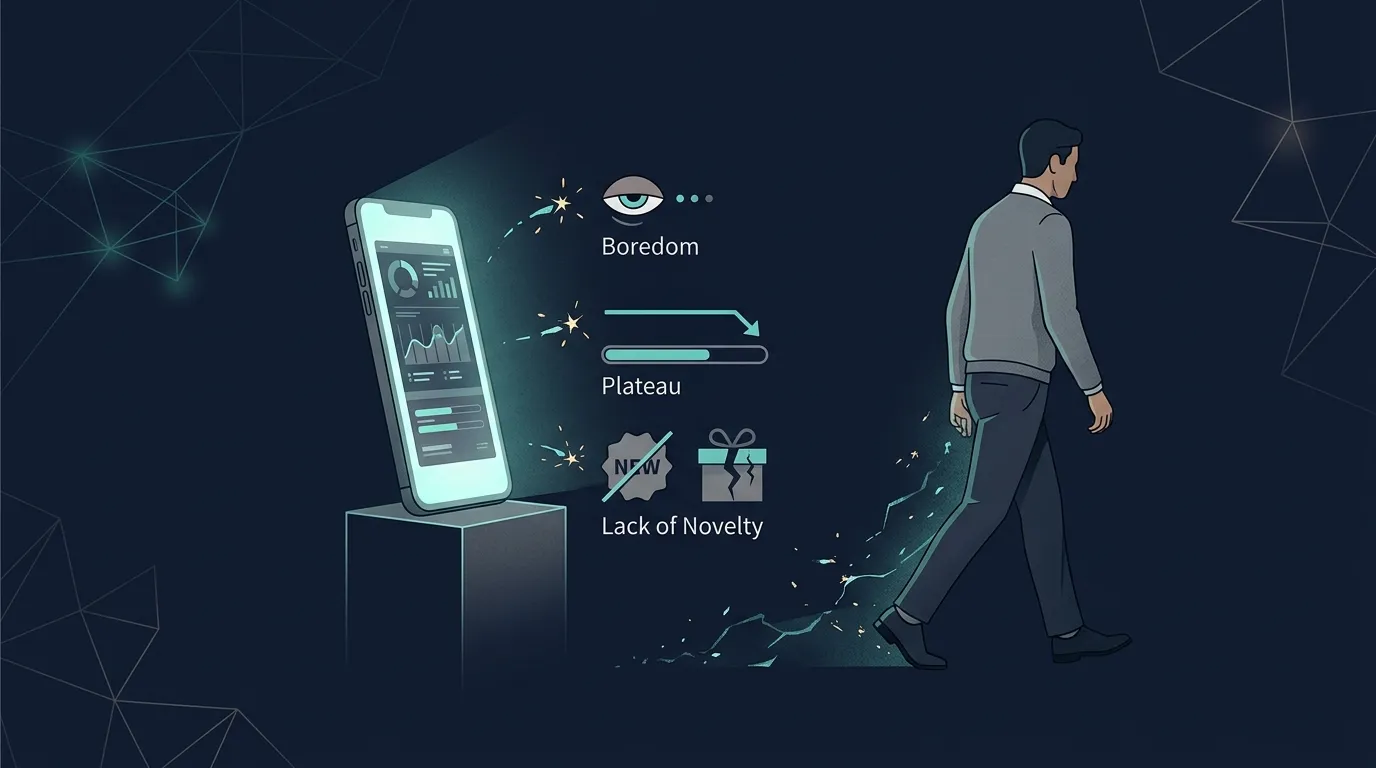
The first time you earn a badge, it's exciting. The tenth time? Mildly satisfying. The fiftieth? You barely notice. This isn't a design flaw in your brain — it's a feature. Hedonic adaptation is what prevents you from being overwhelmed by constant stimuli. But it's devastating for apps built on static reward systems.
Most fitness apps work like this:
- Fixed challenge libraries — the same 30-day programs recycled with different names
- Static badges and achievements — collect them all by month three, then what?
- Unchanging feedback loops — the same congratulations screen, the same weekly summary, the same push notification
- One-size progression — no adaptation to how you're actually changing
These systems are designed to hook you. They're not designed to keep you. And around week 20, the difference becomes obvious.
What Doesn't Decay: Adaptive Systems and Self-Chosen Goals
Here's where the clinical data gets interesting — because not everything falls off that cliff.
The BE FIT trial found that participants in conditions with self-chosen goals maintained their activity gains through week 24. While the static intervention arms decayed, the self-chosen goal group held steady — moving from +1,384 daily steps at the earlier measurement to +1,391 at week 24. No decay. No attenuation. The engagement held because the system let users define what mattered to them, and adapted accordingly.
Even more striking: the STEP UP trial found that gaming-based interventions actually grew stronger over time. Participants in the gamification arm went from +920 daily steps at week 16 to +1,074 at week 24. The effects didn't attenuate — they amplified. While standard interventions were losing steam, the adaptive gaming system was building momentum.
The pattern is clear. Static systems decay. Adaptive systems sustain — or grow.
The difference comes down to architecture. Static apps give you the same experience on day 140 as day 14. Adaptive apps evolve alongside you — new challenges matched to your current abilities, goals that shift as you progress, reward systems that deepen instead of repeating.
Built to keep working at month 5 and beyond
FitCraft's adaptive system evolves with you — so the experience at week 20 is richer than week 2. Take the free assessment to see the difference.
Take the Free Assessment Free · 2 minutes · No credit cardHow FitCraft Fights the Week 20 Problem
We built FitCraft knowing this data. The entire system is designed around one principle: the app should get better the longer you use it, not worse.
Here's how that works in practice:
Your AI coach Ty adapts your programming continuously. Every workout generates data — what you lifted, how it compared to last time, where you're progressing and where you're plateauing. Ty uses that data to adjust your plan in real time. The program you're doing at week 20 looks nothing like week 2, because you've changed and Ty has changed with you.
New quests and challenges unlock as you advance. Instead of recycling the same 30-day challenge, FitCraft's quest system expands as your fitness level grows. The challenges at month five are genuinely harder and more engaging than the ones at month one — because they're matched to who you've become, not who you were.
The reward system deepens, not repeats. Early on, you're earning your first collectible cards and building basic streaks. By month five, you're unlocking rare cards, pursuing multi-week quest chains, and watching your avatar evolve in ways that reflect months of real progress. The system has layers that reveal themselves over time.
Your goals evolve with you. Inspired by the self-chosen goals research, FitCraft lets you shape your own targets as you grow. What motivated you at week 1 — maybe just showing up three times — isn't what motivates you at week 20. The system recognizes that and adapts.
The result: FitCraft doesn't have a week 20 wall. It has a week 20 unlock — where the experience gets richer because you've earned access to deeper features.
The Real Takeaway
If you've ever downloaded a fitness app, crushed it for a few months, and then quietly abandoned it — you didn't lack discipline. You were using a system that was never built to last past the honeymoon phase. It's the same reason most fitness apps get motivation wrong.
The clinical evidence is unambiguous: static digital fitness interventions decay around week 20. The novelty wears off, the rewards habituate, and the app becomes background noise. This isn't a user problem. It's an architecture problem.
But the same research shows that adaptive systems — ones that evolve with you, let you choose meaningful goals, and deepen their engagement mechanics over time — don't just maintain. They grow. We ranked the apps built on that kind of architecture in our roundup of the best fitness apps for consistency.
The question isn't whether you can stick with a fitness app. It's whether the app can stick with you.
Designing for month five rather than week one is the point of FitCraft's motivation page.
Frequently Asked Questions
Why do most fitness apps stop working after a few months?
Most fitness apps rely on static reward systems — the same badges, the same challenges, the same feedback loops month after month. Clinical research shows that novelty-driven motivation fades around week 20 as users habituate to unchanging stimuli. Without adaptive systems that evolve alongside you, the app feels stale and engagement collapses.
What is the week 20 problem in fitness apps?
The week 20 problem refers to a well-documented pattern in clinical trials where engagement with static fitness interventions begins to decay significantly around the 20-week mark. The STEP UP trial and BE FIT trial both observed this attenuation pattern — initial gains in activity plateau or decline as users habituate to the app's fixed reward and feedback systems.
Do gamified fitness apps also lose engagement over time?
Static gamification — where the same points, badges, and challenges repeat without evolving — can absolutely decay. However, adaptive gamification that introduces new challenges, evolves with user progress, and lets users set self-chosen goals shows sustained or even growing engagement. In the BE FIT trial, self-chosen goal conditions maintained their gains through week 24, and the STEP UP trial found that gaming effects actually grew from +920 to +1,074 daily steps between weeks 16 and 24.
How does FitCraft prevent the week 20 engagement drop?
FitCraft uses an adaptive gamification system that evolves as you progress. Your AI coach Ty adjusts programming based on your performance data, new quests and challenges unlock as you advance, and the reward system deepens over time rather than repeating. Because the experience keeps changing to match your growth, the novelty-habituation cycle that kills static apps doesn't apply.