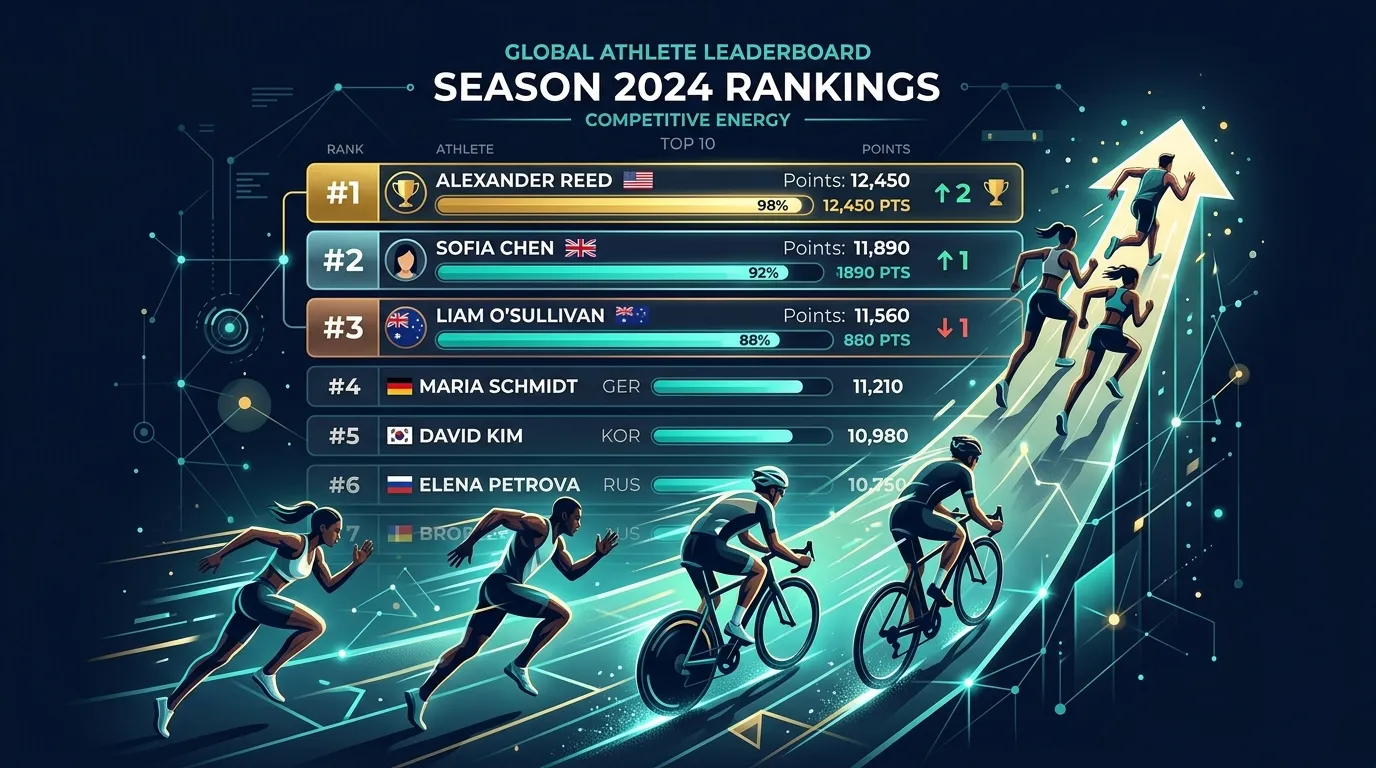
Your friend just posted their workout. Maybe it's a screenshot of their step count. Maybe it's a completed quest in a fitness app. Maybe it's just a sweaty selfie with a caption that says "Day 14."
And now — even though you were perfectly happy on the couch five seconds ago — you want to do yours.
That impulse isn't petty. It isn't shallow. It's one of the most powerful drivers of physical activity ever measured in a clinical trial. And there's a specific number attached to it: 920 extra steps per day.
The STEP UP Trial: Competition Wins, and It's Not Close
In 2019, researchers at the University of Pennsylvania published the STEP UP trial — one of the largest randomized controlled trials ever conducted on gamification and physical activity. They enrolled 602 overweight and obese adults and split them into four groups: a control group, a support (collaboration) group, a competition group, and a combined group.
Everyone got a wearable step tracker. Everyone got the same baseline goals. The only difference was the social mechanic layered on top.
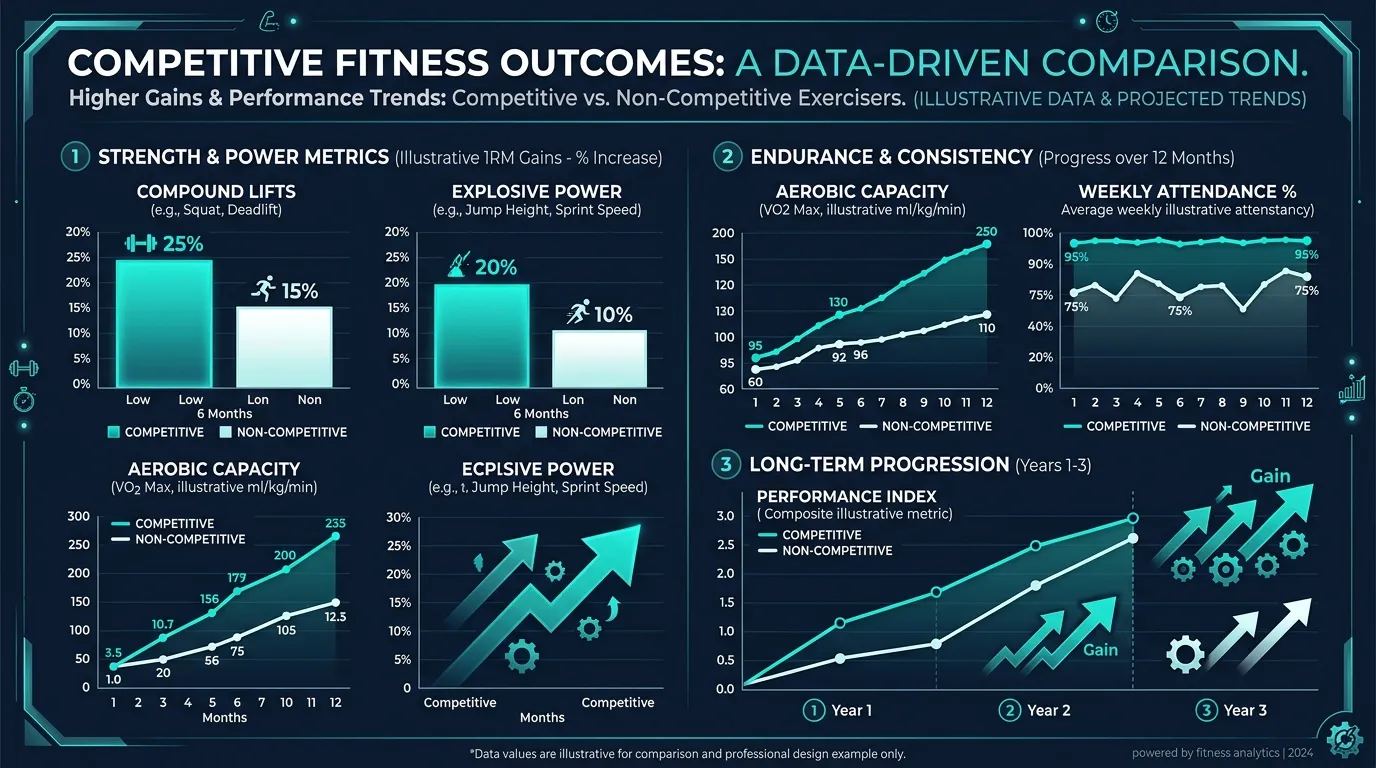
The results were striking. The competition group walked 920 more steps per day than the control group. That was the largest effect of any arm in the trial. Collaboration was less effective at moving the needle. (For the full dataset across 15 trials, see gamification: what 15 studies actually found.)
But here's what makes this really interesting: the competition effect lasted. At the 13-week follow-up — after the intervention had ended — the competition group was still walking 569 more steps per day than controls (P=.009). The competitive drive didn't just spike activity temporarily. It built a higher baseline that stuck.
Why Competition Works: Your Brain Can't Help It
In 1954, psychologist Leon Festinger published his theory of social comparison — the idea that humans have a fundamental drive to evaluate their own abilities by comparing themselves to others. It's not optional. It's how we're wired.
When you see a friend's step count, your brain does something automatic: it compares. They walked 8,200 steps. I walked 6,400. That's a gap. And gaps create tension. Your brain wants to close them.
This is fundamentally different from setting a goal in isolation. "Walk 10,000 steps" is abstract. "Beat Sarah" is concrete, emotional, and immediate. Competition transforms exercise from a vague health intention into a game with real stakes — even when the stakes are nothing more than bragging rights.
The iDiabetes trial (n=361) confirmed exactly this pattern. Participants with type 2 diabetes were randomized into competition, collaboration, or control groups. The competition arm produced the strongest gains — +606 steps per day — outperforming every other condition.
The Key: Personalized Competition Works Best
There's a catch with generic leaderboards. If you're a beginner and the top of the board is dominated by marathon runners, competition doesn't motivate — it demoralizes. The gap feels impossible to close, so you stop trying.
That's why the most effective competition is personalized.
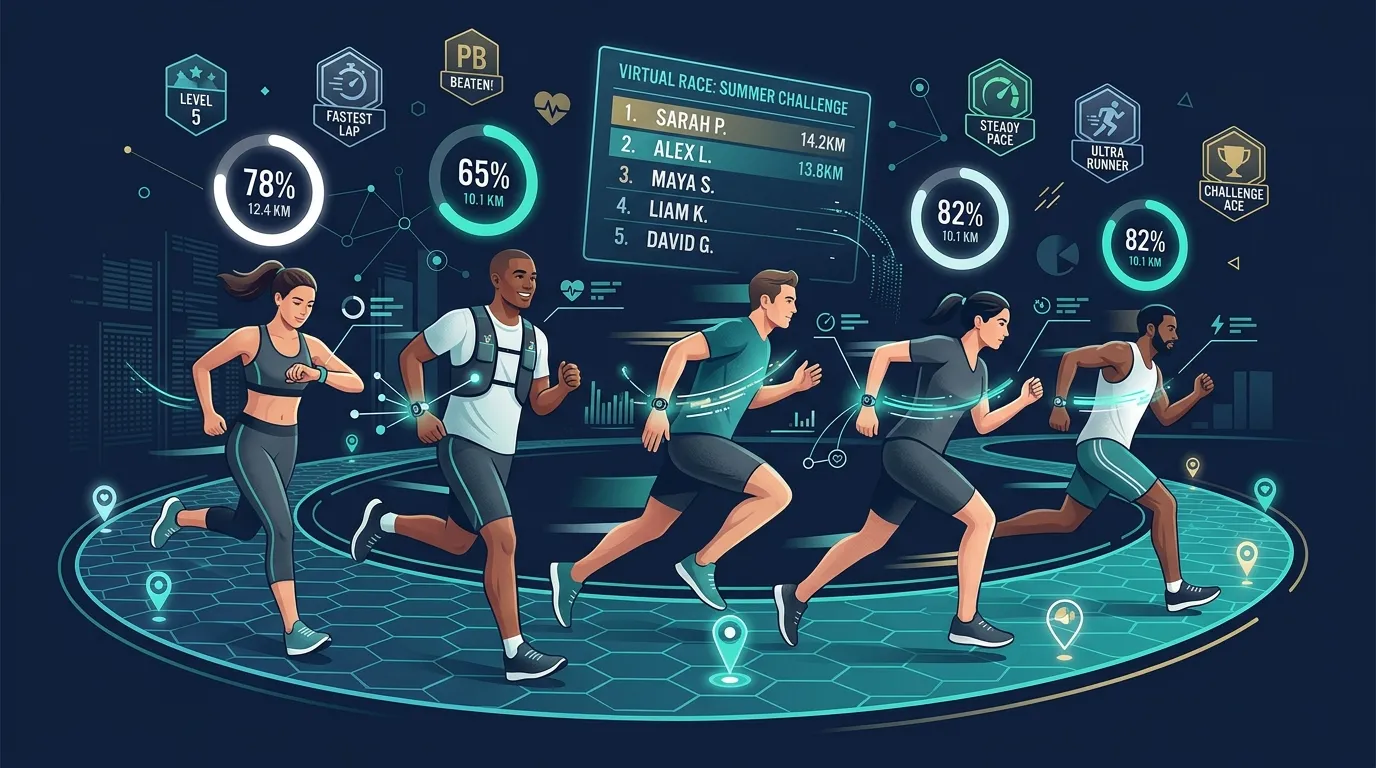
A 2023 study analyzing Fitbit leaderboard data found that when sedentary users were matched against peers at a similar level, the results were even more dramatic: +1,300 steps per day. That's nearly double the STEP UP result — and it happened specifically because the competition felt winnable.
This makes intuitive sense. The sweet spot for motivation is a challenge that stretches you but doesn't crush you. You need to believe you can win. When competition is calibrated to your level, every day feels like a race you have a shot at — and that keeps you coming back. If you want an app that engineers those stakes for you, we compared the best workout accountability apps on exactly this dimension.
How FitCraft Channels This
This research is exactly why FitCraft builds competitive psychology into its gamification system. Instead of leaderboards, FitCraft gives you quests, XP, leveling up, and collectible cards — turning every workout into a challenge against your own personal bests. Your AI trainer Ty sets adaptive targets based on your progress, so you always have a goal that stretches you without crushing you.
Streaks and calendar rewards add daily stakes — miss a day and you break the chain, which taps into the same loss aversion that makes competition so powerful. Avatar progression gives you a visible record of how far you've come, and collectible cards create the "just one more" pull that keeps you coming back.
Because Ty adapts your workouts as you improve, the challenge stays calibrated to your level. You're always competing against a slightly better version of yourself. The result is a system that taps into that 920-step competitive instinct — while making sure it stays fun instead of frustrating.
Ready to put this into practice?
Take the free 2-minute FitCraft assessment and see how gamification keeps you moving.
Take the Free Assessment Free · 2 minutes · No credit cardCompetition is one of the loops we lean on, alongside the rest of what makes FitCraft feel like a game.
Frequently Asked Questions
Does competing with friends actually make you fitter?
Yes. A large randomized controlled trial (the STEP UP trial, n=602) found that participants in a competition arm walked an extra 920 steps per day compared to a control group. The effect was the strongest of all interventions tested, and it persisted even after the trial ended — participants were still walking 569 more steps per day at the 13-week follow-up.
Why does competition work better than working out alone?
Competition activates social comparison — a deeply wired psychological mechanism described by Leon Festinger in 1954. When you see a friend's progress, your brain automatically evaluates your own performance relative to theirs. This creates an internal drive to close the gap that is far more motivating than abstract goals like "get healthier." Competition also adds stakes and urgency that solo exercise lacks.
Is competition or collaboration better for fitness motivation?
Research consistently shows that competition outperforms collaboration for fitness outcomes. In the STEP UP trial, collaboration was less effective than competition at increasing physical activity. The key reason: competition creates clear, measurable stakes (winning or losing a ranking), while collaboration can lead to diffusion of responsibility where individuals rely on the group rather than pushing themselves.
How does FitCraft use competitive psychology to keep you motivated?
FitCraft channels competitive drive through gamification — quests, XP, leveling up, collectible cards, and streak rewards that let you compete against your own previous performance. Research shows personalized competition produces even larger gains (up to +1,300 steps per day for sedentary users). FitCraft's AI trainer Ty adapts your workouts to your progress so every session feels like a challenge you can win.