Quick Comparison: Reddit's Workout App Picks
| App | Best for | Price | The honest catch |
|---|---|---|---|
| Hevy | Logging without paying | Genuinely usable free tier | Won't notice if you stop |
| Strong | Fastest set logging | Free-forever tier | Won't get you to the gym |
| Boostcamp | Following structured programs | Large free library | Motivation is your job |
| MacroFactor | Adaptive macro tracking | - | Nutrition only, no training |
| Caliber | Free structured strength plans | Free plan, paid coaching | Relies on you to drive |
| FitCraft | People who quit trackers | - | Less logging control |
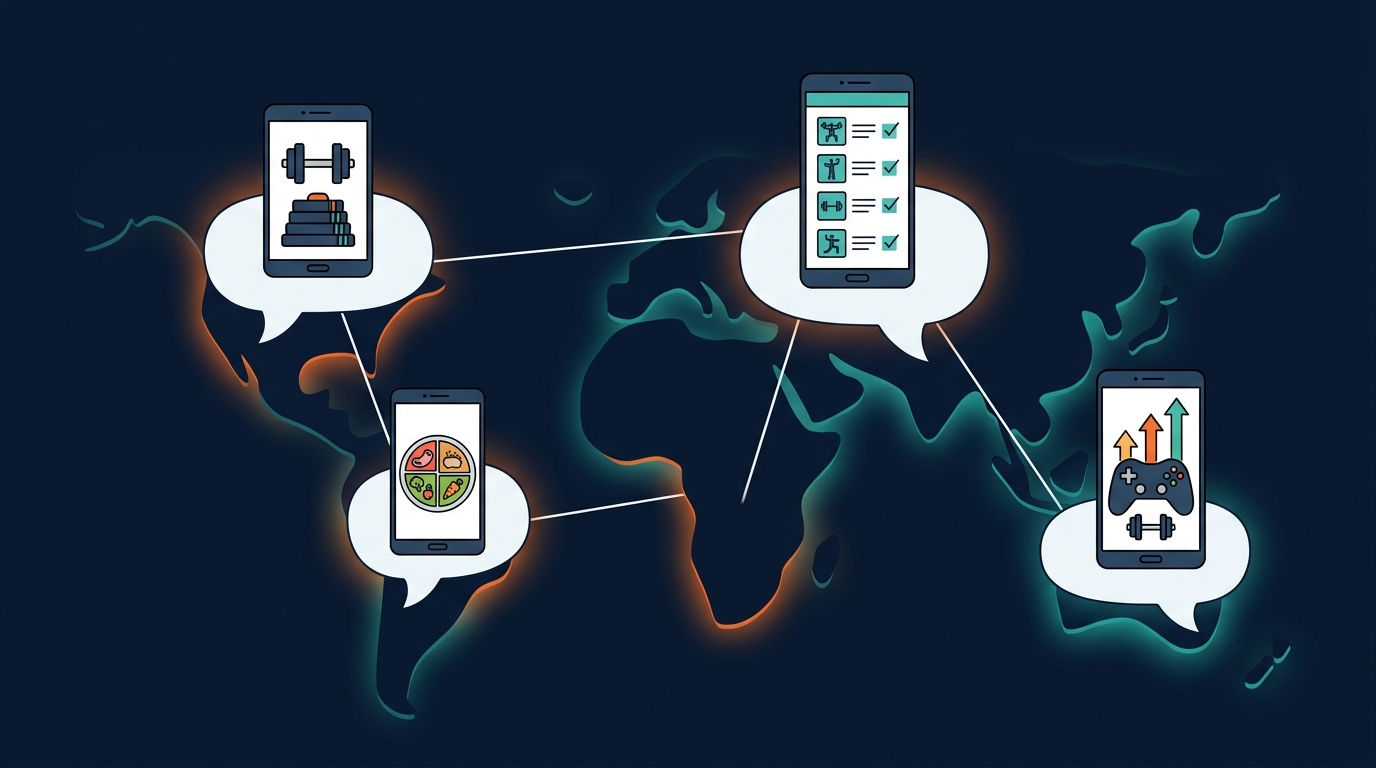
People add "reddit" to a search for the best workout app for one reason: they're tired of affiliate listicles ranking whichever app pays the highest commission. Reddit threads are blunt. They'll tell you an app hid its barbell feature behind a paywall, that an update broke the rest timer, and that the "AI" in some apps is a random workout generator wearing a lab coat.
So we did the homework. We went through the recommendation threads that keep resurfacing across r/fitness, r/weightroom, and the app-specific subreddits, cross-checked them against two independent analyses that mapped this territory (Cora's review of 200+ Reddit threads and Setgraph's roundup of what lifters actually recommend), and verified every feature claim against the apps' own current listings.
One honest note before the list. We make FitCraft, so we have skin in this game. That's exactly why we're being careful to report the consensus as it exists, not as we'd like it to be. FitCraft is not the app Reddit's lifting subs recommend for logging sets. It plays a different position, and we'll be specific about what that position is.
What Reddit Actually Recommends for Workout Apps
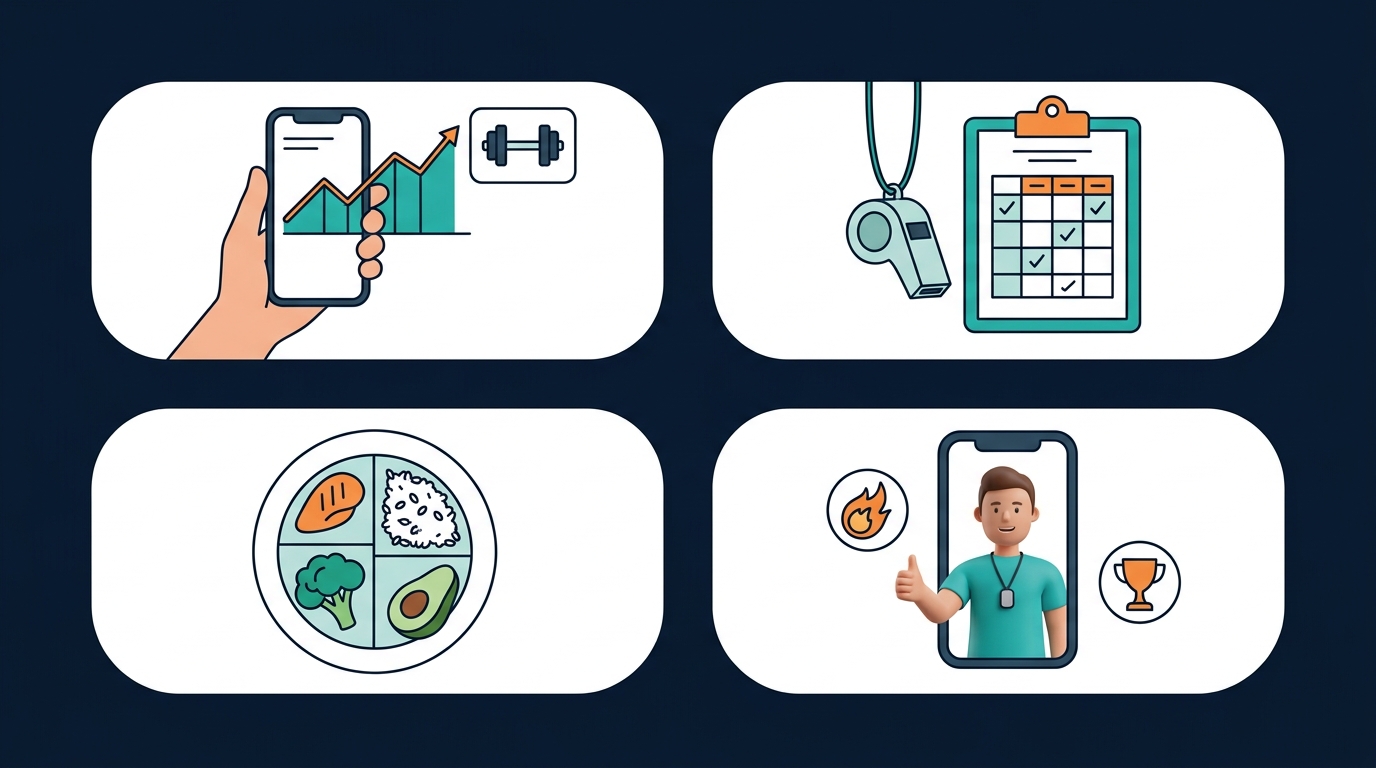
The first thing you notice reading these threads: there's no single best workout app according to Reddit, and no single best fitness app either. There are four separate conversations, and each has its own winner.
- The logging conversation. "What do I use to track my lifts?" Dominated by Strong and Hevy.
- The programming conversation. "What program should I run, and where do I follow it?" Dominated by Boostcamp.
- The nutrition conversation. "What should I use to track macros?" Increasingly dominated by MacroFactor.
- The consistency conversation. "How do I stop quitting?" This one rarely gets an app recommendation at all, and that gap matters. We'll come back to it.
Here's the category-by-category breakdown.
The Best Workout Apps Reddit Recommends, by Category
Hevy: the free-tier favorite for logging
Best for: tracking your own workouts without paying
Hevy is the most mentioned app in general r/fitness recommendation threads, and the reason is simple: the free tier is genuinely usable. Unlimited workout logging, exercise history, personal records, and progress charts without a paywall ambush. Hevy's own site claims over 14 million users, with apps for iOS, Android, Apple Watch, Wear OS, and the web.
The social layer (following friends, seeing their workouts, likes and comments) is the polarizing part. Some redditors credit it for accountability. Others call it Instagram for gym logs and turn it off. Either way, the core logbook is fast and clean.
The catch: Hevy records what you do. It doesn't tell you what to do, and it won't notice or care if you stop showing up. If the missing piece is the program itself, our free workout planner builds a starting week you can log in Hevy or any other tracker.
Strong: the minimalist's default
Best for: the fastest possible set logging
Strong is the long-standing default in strength-sport communities like r/weightroom and r/powerlifting. Setgraph's thread analysis puts it well: no social feed, no AI suggestions, no bloat. You open it, log a set, and close it. Strong's site lists a free-forever account tier, an Apple Watch app, a warm-up calculator, RPE tracking, and CSV export for the spreadsheet crowd.
The catch: same as Hevy, by design. Strong assumes you arrive at the gym knowing your program and needing nothing but a notebook that does math. If that's you, it's excellent. If your problem is getting to the gym at all, a faster notebook won't fix it.
Boostcamp: real coaches' programs, free
Best for: following a structured program without buying a PDF
Boostcamp solved a very Reddit-specific problem: the sidebar programs everyone recommends (GZCLP and friends) used to live in janky spreadsheets. Boostcamp turned them into followable, trackable in-app programs, with routines from coaches like Cody Lefever and Dr. Eric Helms, auto-progression that adjusts based on your logged performance, and a large free library. Boostcamp's site claims over 1.2 million users and bills itself as "Reddit's most recommended workout app," which is genuinely what it's optimized for: the r/fitness user who wants a proven program and a tracker in one place.
The catch: Boostcamp gives you a great program and expects you to bring the discipline. Progression is handled; motivation is your job.
MacroFactor: the nutrition consensus
Best for: macro tracking that adjusts to you
Ask a Reddit lifting or nutrition thread about macro trackers in 2026 and MacroFactor is the answer you'll see most. Two design choices earned that: the algorithm continuously re-estimates your energy expenditure from your weight trend and food logs instead of trusting a static calculator, and the app is deliberately "adherence-neutral": it adjusts your plan based on what you actually ate rather than shaming you for missing targets.
The catch: it's a nutrition app, full stop. It's the companion to your training app, not a replacement for one.
Caliber: free structured strength training
Best for: a science-based strength plan at zero cost
Caliber comes up in threads asking for free structured training. The free plan includes structured strength programs, a solid exercise library with technique video, and tracking, with optional paid human coaching layered on top for people who want a real person checking their logs.
The catch: without the paid coach, Caliber relies on you to drive. The same consistency gap that sinks most free-app users applies here too.
See what FitCraft would build for you
FitCraft, our mobile fitness app, pairs you with an AI coach who builds you a personalized plan around your goals, schedule, and fitness level. Every FitCraft program is designed by Domenic Angelino, MPH (Brown University) and NSCA-CSCS, with research published in the Journal of Strength and Conditioning Research and Medicine & Science in Sports & Exercise.
Take the Free Assessment Free • 2 minutes • No credit card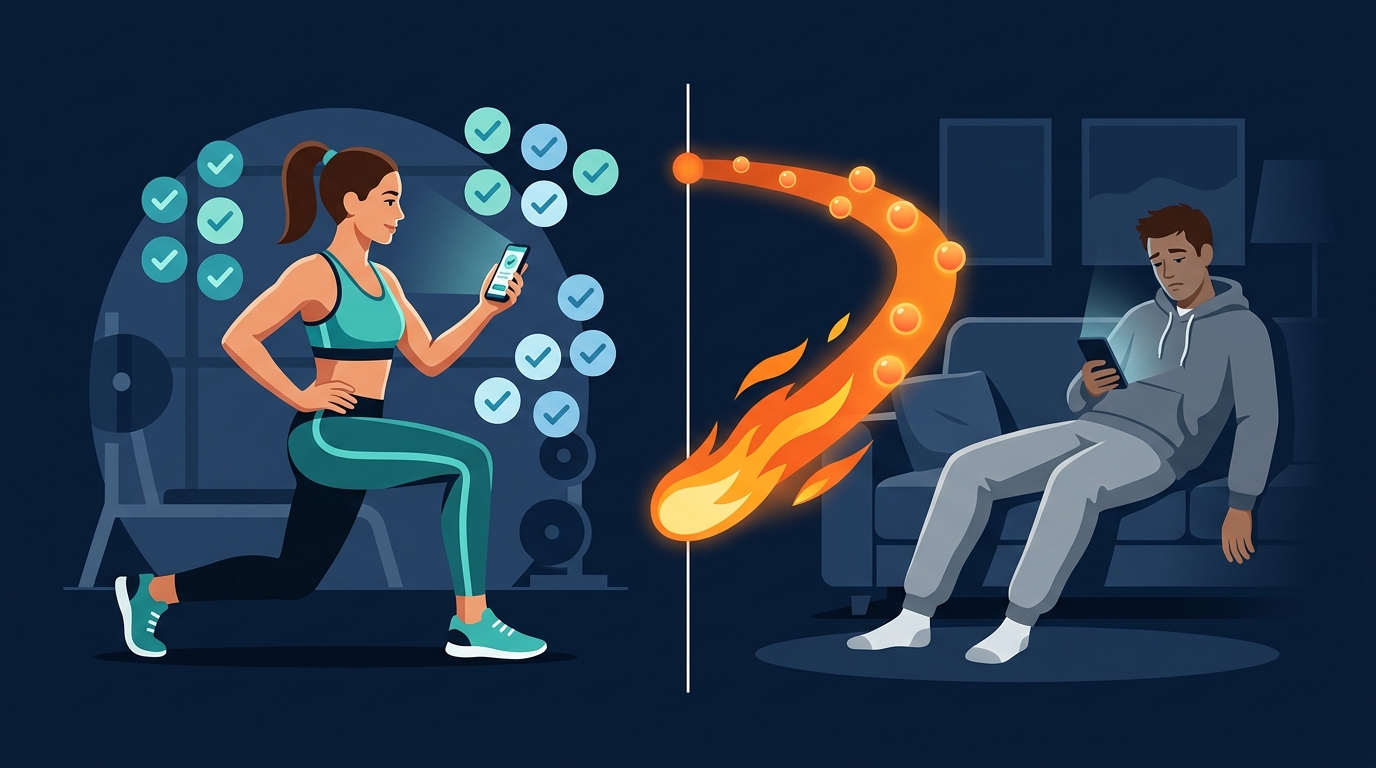
What Reddit's Workout App Consensus Misses
Every app above deserves its reputation. And yet there's a pattern hiding in plain sight: the entire consensus is built by survivors.
Think about who answers a "best workout tracker" thread on r/weightroom. Someone who trains three to five days a week, has done so for years, and needs software to record what they were going to do anyway. For that person, the right answer really is Strong, Hevy, or Boostcamp. Their bottleneck is logging friction, so they recommend the app that minimizes it.
Most people who download a fitness app have a different bottleneck. They don't need faster set entry. They need to still be exercising in week 6. Industry engagement data consistently shows most fitness-app users drop off within weeks of installing, a pattern we break down in our review of engagement decay research. The people that happens to don't show up in recommendation threads eight months later. Survivorship bias, working exactly as advertised.
This is the slot FitCraft was built for, and we'll describe it honestly rather than pretend it beats Strong at being Strong.
FitCraft: the motivation and adherence slot
Best for: people who have downloaded trackers before and quit
FitCraft starts from the opposite assumption as the apps above: showing up is the hard part. So the design centers on making you want to come back. Your workouts are led by an AI coach, a 3D character who talks to you, demonstrates every exercise on an interactive 3D model you can rotate and zoom, and encourages you by name. Around that sits a gamification layer: XP and levels, streaks, collectible cards, and calendar rewards for consistency. Multi-week programs are designed by Domenic Angelino, an exercise scientist with an MPH from Brown University and NSCA-CSCS certification, and workouts adapt as your logged progress advances.
The evidence for the approach is real, not vibes. A 2022 meta-analysis of 16 randomized controlled trials by Mazeas et al. in the Journal of Medical Internet Research found gamified physical-activity interventions meaningfully increased daily steps versus controls, with effects that persisted after the interventions ended. The STEP UP trial (2019) in JAMA Internal Medicine found competition-based gamification added roughly 920 steps per day in overweight and obese adults, and the BE FIT trial (2017) found gamified families hit their step goals on 53% of days versus 32% for controls. Game mechanics move real-world exercise behavior; we cover the full literature in our gamification research explainer.
The honest catch: FitCraft is not the tool for a powerlifter who wants granular control of their own programming and a two-tap logbook. Hevy and Strong are better at that, and Boostcamp is better if you want to run GZCLP to the letter. FitCraft trades that control for guidance and motivation design. Which trade you want depends entirely on which problem keeps beating you.
How to Pick From Reddit's Best Fitness Apps
- You already train consistently and want a fast logbook: Strong for pure minimalism, Hevy if you want the free tier plus a social layer.
- You want a proven program from a real coach, free: Boostcamp.
- Your gap is nutrition, not training: MacroFactor, paired with any tracker here.
- You want structured strength work at zero cost: Caliber's free plan.
- You've quit two or more fitness apps and the pattern is the problem: FitCraft. The gamification and AI coaching exist specifically for the stretch where you usually stop.
If you're still not sure which problem is yours, our guide on how to choose a fitness app walks through the decision, and why you quit your last fitness app is the fastest way to diagnose the pattern.
The Bottom Line
The Verdict
Reddit's workout app consensus is right about what it measures. Hevy and Strong are the best logbooks. Boostcamp is the best way to follow a real coach's program. MacroFactor is the best macro tracker. If you already have the habit, pick from those and you'll be well served.
But the consensus is answered by people who already show up. If your history is three downloaded trackers and three quiet uninstalls, the recommendation that fits lifters five years into training doesn't fit you yet. Randomized trials show gamified design measurably increases activity and goal adherence. That's the slot FitCraft plays: not a faster logbook, a reason to keep opening the app.
Frequently Asked Questions
What is the best workout app according to Reddit?
It depends on the subreddit. Strong is the default recommendation in strength-sport communities like r/weightroom because it logs sets fast with zero bloat. Hevy is the most mentioned app in general r/fitness recommendation threads thanks to its generous free tier. Boostcamp markets itself as Reddit's most recommended workout app for following structured programs from real coaches. There is no single winner because Reddit is answering several different questions at once.
What workout apps do Redditors actually use?
Reddit's workout app recommendations split into four conversations with four different winners. For logging lifts, Strong and Hevy. For following a structured program from a real coach, Boostcamp. For tracking macros alongside training, MacroFactor. For free structured strength work, Caliber's free plan. The fourth conversation, how to stop quitting, rarely produces an app recommendation at all, which is the gap gamified coaching apps like FitCraft are built for.
What nutrition app does Reddit recommend most?
MacroFactor comes up more than any other macro tracker in Reddit nutrition threads. Its adaptive algorithm recalculates your calorie targets from your actual weight trend and logging data, and its adherence-neutral design means the app adjusts your plan instead of scolding you when you go over.
Is FitCraft recommended on Reddit?
FitCraft appears far less often in Reddit tracker threads than Hevy or Strong, and there's a structural reason: those threads are written by people who already train consistently and mostly want a fast logbook. FitCraft is a gamified AI fitness coach app built for the much larger group who download trackers and quit within weeks. Different problem, different tool.
Why does Reddit prefer simple trackers over AI fitness apps?
Reddit's lifting communities skew toward experienced, already-consistent lifters. For them, an app only needs to record sets quickly and stay out of the way, so minimal trackers like Strong and Hevy win. AI coaching and gamification solve a different problem: getting inconsistent exercisers to show up at all. That problem is underrepresented in subreddits made up of people who already show up.
Are Reddit fitness app recommendations trustworthy?
Mostly yes, with one caveat. Reddit threads are unsponsored and brutally honest about paywalls and bugs, which makes them more reliable than affiliate listicles. But they carry survivorship bias: the people answering are the ones who stuck with training, so the advice underweights the consistency problem that stops most beginners.