Sideways flutters look small, but they expose a big gap in a lot of training plans: lateral hip control. If your pelvis tips when you walk, run, squat, or stand on one leg, the glute medius often needs more focused work.
The setup is simple. Lie on your side, stack your hips, and move the top leg with control. The challenge is keeping the rest of your body quiet while the leg works.
Quick Facts: Sideways Flutters
- Equipment needed: None (exercise mat optional)
- Difficulty: Beginner to Intermediate
- Modality: Core and hip stability
- Body region: Core, hips, and glutes
- FitCraft quest category: Core
Muscles Worked
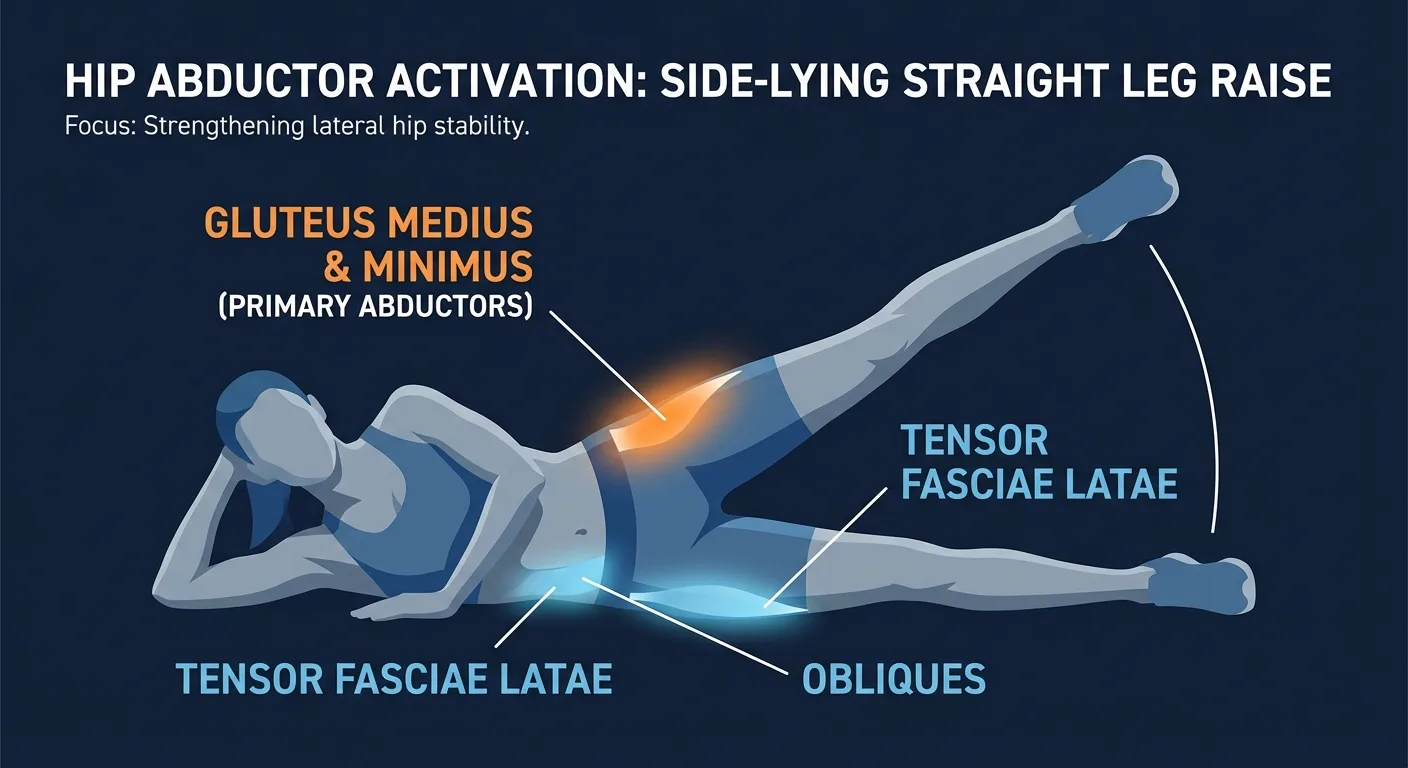
Primary movers: the gluteus medius, gluteus minimus, and tensor fasciae latae. These muscles abduct the hip, which means they move the top leg away from the midline. They shorten as the leg lifts and lengthen under control as the leg lowers.
Secondary movers: the upper fibers of the gluteus maximus and smaller deep hip rotators assist the leg path. If you keep the toes slightly down and lead with the outer heel, the outer hip does more of the work and the hip flexors do less.
Stabilizers: the obliques, transverse abdominis, spinal erectors, diaphragm, pelvic floor, and bottom-side hip stabilizers work isometrically. Their job is to stop your ribs and pelvis from rolling backward while the top leg moves.
Why the movement works: lying on your side turns hip abduction into a gravity-resisted movement. A straight leg creates a long lever, so even bodyweight can create a strong outer-hip stimulus. The small flutter range keeps tension high because the leg never fully rests between reps.
Step-by-Step: How to Do a Sideways Flutter
Step 1: Set Your Side-Lying Position
Lie on one side with your legs stacked and extended straight. Rest your head on your bottom arm, or prop it gently if that keeps your neck neutral. Place your top hand on the floor in front of your chest for balance.
Coach Ty's cue: "Stack your hips like one hip is sitting directly on top of the other."
Step 2: Brace Your Trunk
Lightly tighten your abs so your ribs, pelvis, and shoulders stay stacked. Keep your hips from rolling backward before the first rep starts. This brace keeps the work in the side of the hip instead of the lower back.
Coach Ty's cue: "Make the top leg move while everything else stays quiet."
Step 3: Lift the Top Leg
Raise the top leg in a smooth arc while keeping the knee straight and the toes pointed forward or slightly down. Stop when you feel strong tension along the side of the hip, usually before the leg gets very high.
Coach Ty's cue: "Lead with your outer heel, not your toes."
Step 4: Lower Without Resting
Lower the leg slowly until it hovers just above the bottom leg. Don't let it fully rest between reps. The hover keeps continuous tension on the hip abductors.
Coach Ty's cue: "Hover at the bottom. Keep the muscle on."
Step 5: Keep the Rhythm Even and Switch Sides
Repeat with a steady, controlled tempo instead of fast kicks. Finish every planned rep or timed interval on one side, then roll over and repeat the same amount of work on the other side.
Coach Ty's cue: "Same range, same speed, both sides."
Get this exercise in a personalized workout
FitCraft, our mobile fitness app, uses its AI coach Ty to program core stability work like this into your plan at the right volume and intensity, based on your level, goals, and equipment. Ty was designed and trained by Domenic Angelino, MPH (Brown University) and NSCA-CSCS, with research published in the Journal of Strength and Conditioning Research and Medicine & Science in Sports & Exercise.
Take the Free Assessment Free • 2 minutes • No credit card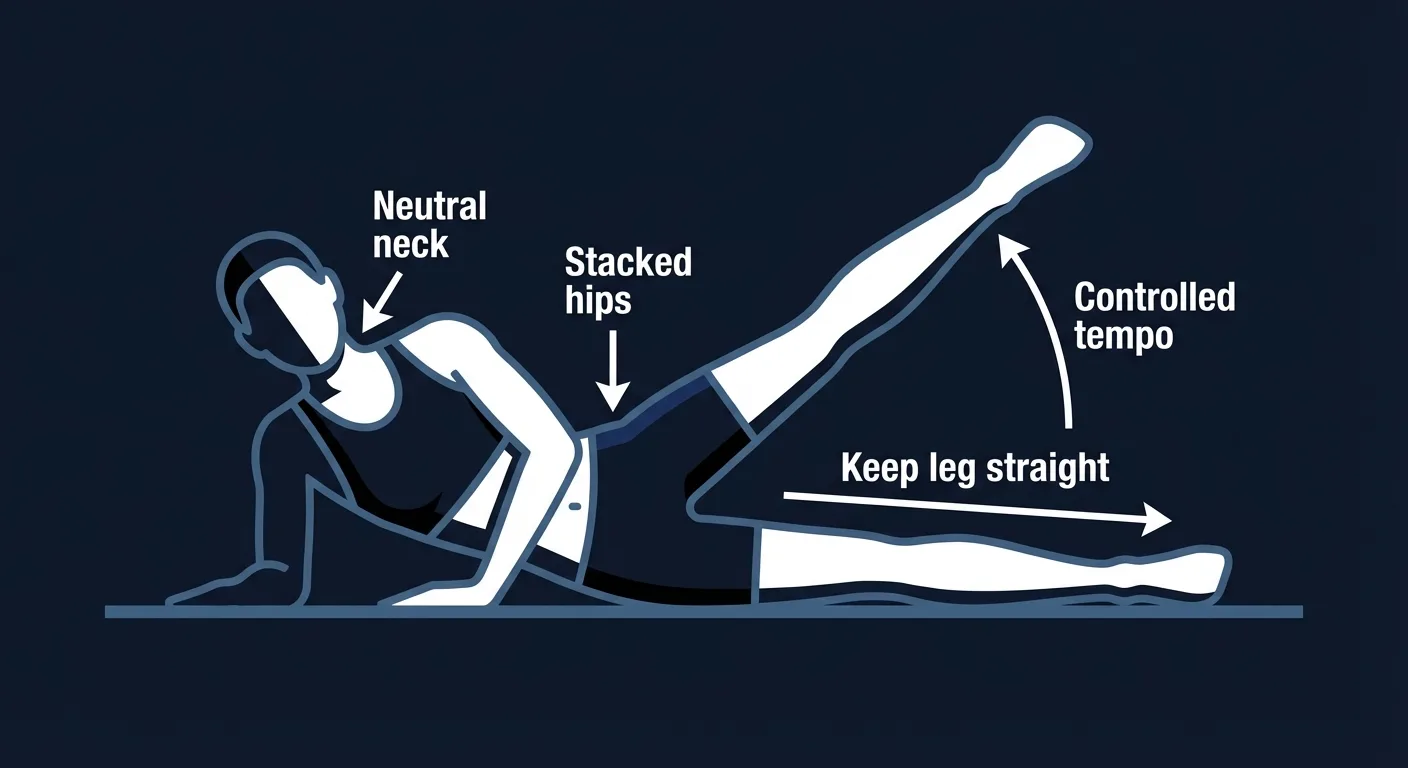
Common Mistakes (and How to Fix Them)
- Rolling the torso backward. This turns the movement into a hip-flexor raise. Fix it by stacking the hips and keeping your top hand lightly on the floor for balance.
- Bending the knee to finish reps. A bent knee shortens the lever and makes the exercise much easier. Use fewer reps or switch to the bent-knee regression on purpose.
- Turning the toes toward the ceiling. That position often shifts work toward the front of the hip. Keep the toes forward or slightly down and lead with the outer heel.
- Using a huge range of motion. Higher is not always better. Stop where the outer hip is loaded and the pelvis stays still.
- Rushing the flutter. Fast kicks hide compensation. Slow the tempo until you can feel the same target muscle on every rep.
- Letting the top leg rest at the bottom. Full contact removes tension. Hover just above the bottom leg before lifting again.
Sideways Flutter Variations: Regressions and Progressions
Use the version that lets you keep the hips stacked and the leg path clean. The right variation should burn the outer hip without pinching the front of the hip or tugging on the lower back.
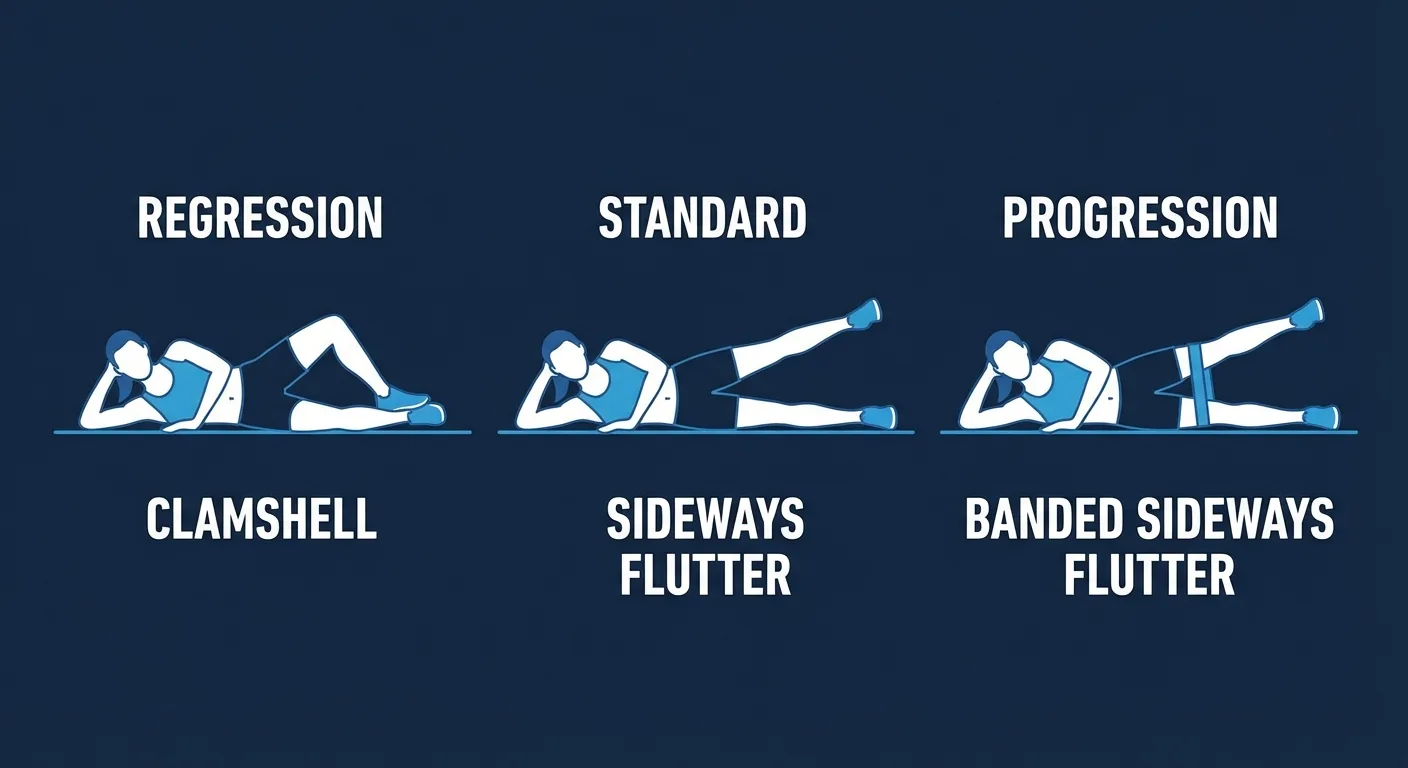
Bent-Knee Sideways Flutter (Beginner Regression)
Bend the top knee slightly to shorten the lever arm. This keeps the same side-lying hip-abduction pattern but lowers the load so beginners can control the pelvis.
Standard Sideways Flutter
Keep both legs straight and move the top leg through small controlled reps. This is the default version for most people.
Mini-Band Sideways Flutter
Place a light mini band above the knees or around the ankles. Use a smaller range at first, because band tension can make the hip flexors try to take over.
Ankle-Weighted Sideways Flutter
Add a light ankle weight only after the bodyweight version feels smooth. Start small. A long straight leg magnifies even a little extra load.
When to Avoid or Modify Sideways Flutters
Sideways flutters are safe for most healthy adults, but a few situations call for a smaller range, an easier variation, or a different core drill. Always consult your physician or physical therapist for personalized guidance.
- Hip pinching or lateral hip pain. Reduce the range of motion, bend the top knee, and keep the toes slightly down. If the pinch stays, switch to glute bridges or bird-dogs for the session.
- Acute lower-back pain or known disc pathology. Rolling backward or lifting too high can irritate the lumbar spine. Build bracing first with deadbugs and bird-dogs.
- First 6-8 weeks postpartum or active diastasis recti. Side-lying work may be useful later, but start with diaphragmatic breathing, gentle transverse abdominis activation, and clinician-cleared progressions.
- Recent abdominal surgery, hernia repair, or C-section. Get medical clearance before adding trunk bracing or repeated hip-abduction work.
- Pregnancy in the second or third trimester. Side-lying positions are often more comfortable than supine drills, but fatigue, pelvic pressure, or symptoms should end the set immediately.
- Pelvic-floor dysfunction or pelvic-organ prolapse. Keep the effort easy, avoid breath-holding, and work with a pelvic-floor physical therapist if pressure symptoms appear.
Related Exercises
If sideways flutters fit your plan, these movements build the same hip-control and trunk-stability base:
- Same lateral-core plane: Side Planks train anti-lateral-flexion strength without leg movement.
- Foundation for spinal bracing: Deadbugs and Bird-Dogs teach the ribs-and-pelvis control that keeps flutters clean.
- Glute foundation: Glute Bridges build hip-extension strength that pairs well with outer-hip work.
- Core endurance base: Forearm Planks develop trunk stiffness without asking the hips to move.
- Compound pattern that needs hip control: Squats rely on lateral hip stability to keep the knees tracking well.
How to Program Sideways Flutters
Sideways flutters are a rep-based dynamic core and hip-stability drill. The American College of Sports Medicine Position Stand on resistance training supports progressive volume, controlled technique, and adequate recovery between sessions for strength and muscular endurance work (Ratamess et al., 2009).
| Level | Sets x Reps | Rest between sets | Frequency |
|---|---|---|---|
| Beginner | 2-3 x 8-12 per side | 45-60 seconds | 2-4 sessions/week |
| Intermediate | 3 x 10-20 per side | 45-60 seconds | 3-5 sessions/week |
| Advanced | 3-4 x 15-30 per side, slow tempo | 60 seconds | 4-6 sessions/week |
Where in your workout: use sideways flutters near the end of a lower-body or core session, as a hip-stability accessory after squats or lunges, or as a low-fatigue activation drill before a workout. If your outer hips fatigue enough to change your squat or lunge mechanics, move flutters to the end.
Form floor over rep targets: stop when your hips roll, your knee bends unintentionally, or the work shifts to the front of the hip. Clean reps beat a longer set with compensation.
How FitCraft Programs This Exercise
FitCraft uses the free assessment to place core stability work at a level that matches your current strength, goals, and equipment. Ty can demonstrate movements in the app and cue the positions that matter most, including stacked hips, controlled tempo, and an even workload on both sides.
As your control improves, FitCraft can adjust the variation and volume to keep the exercise useful without turning it into a lower-back or hip-flexor compensation drill.
Frequently Asked Questions
What muscles do sideways flutters work?
Sideways flutters primarily work the gluteus medius, gluteus minimus, and tensor fasciae latae. The obliques, transverse abdominis, spinal erectors, and deep hip stabilizers work isometrically to keep your torso stacked while the top leg moves.
How are sideways flutters different from side leg raises?
A side leg raise usually uses distinct reps with a full reset. A sideways flutter uses smaller, continuous reps that keep the top leg hovering, which makes the set feel more like hip-abductor endurance work.
Can I do sideways flutters with hip or lower-back pain?
Modify or skip sideways flutters if they increase hip pinching, sciatic symptoms, or lower-back pain. Try a smaller range of motion, bend the top knee to shorten the lever, or switch to bird-dogs or deadbugs until you can brace without symptoms. If pain persists, work with a qualified clinician.
How many sideways flutters should I do per set?
Most people do well with 2 to 3 sets of 10 to 20 controlled reps per side, or 20 to 40 seconds per side. Stop the set when your torso starts rolling or your leg bends to chase extra reps.
Should I point my toes up or forward during sideways flutters?
Keep your toes pointed forward or slightly down. Turning the toes up can shift the movement toward the hip flexors. The cleaner cue is to lead with the outer heel while keeping the pelvis stacked.