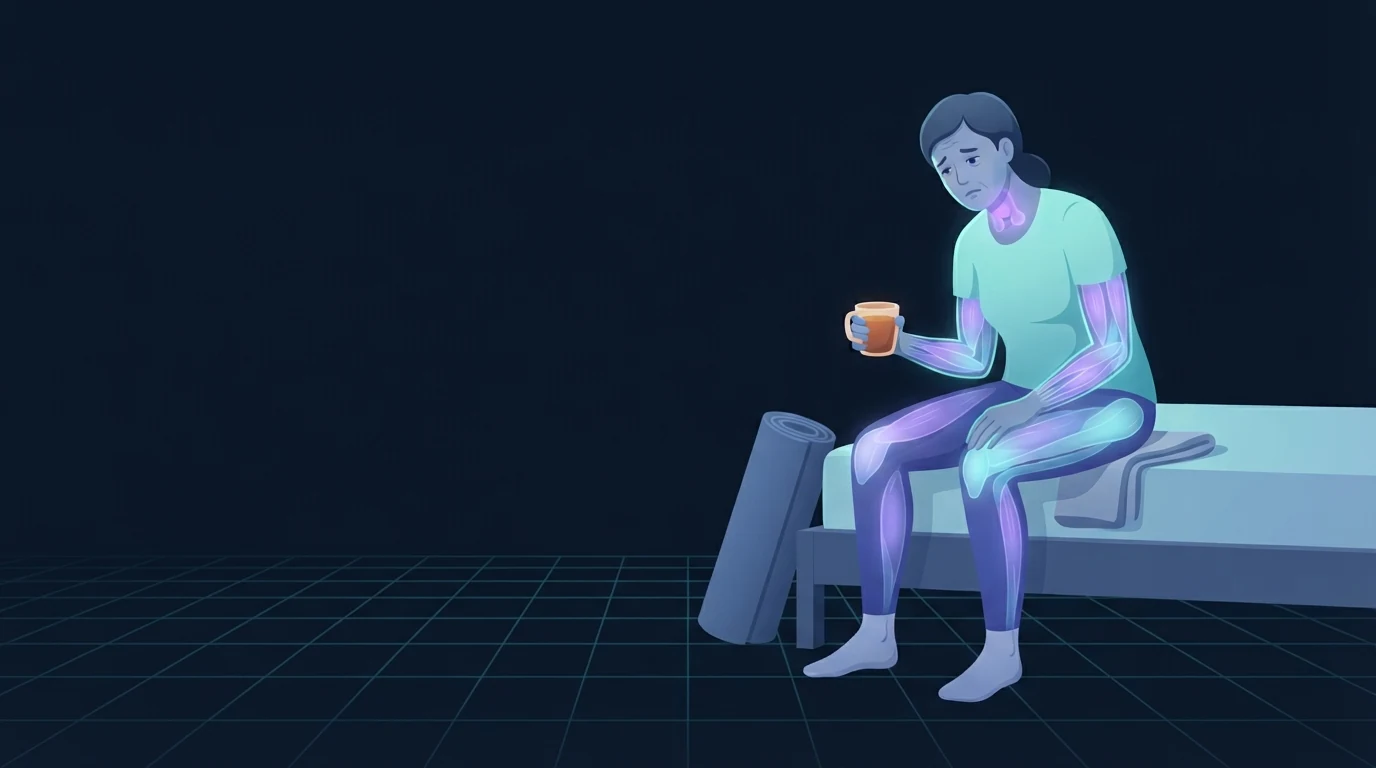
It's 6:40am, your throat feels like sandpaper, and your gym bag is by the door. You already know both answers. One of them says a workout will sweat it out. The other says you'll make it worse and lose the week anyway.
Underneath that is something more uncomfortable: you've broken streaks before, and you know what happens next. One rest day becomes four. Four becomes a month. Missing a session because you're genuinely ill is the most reasonable thing in the world, and it's still the thing that quietly ends more training habits than injuries do.
So the question isn't really "can I work out while sick". It's "what's the smallest honest version of today, and how do I make sure this is a pause and not an exit". Here's what the research supports on both halves of that.
The Neck Rule, and What It's Actually Worth
The rule you've heard goes like this. Symptoms above the neck, meaning a runny nose, a scratchy throat, sneezing and mild congestion, mean you can train. Symptoms below the neck, meaning chest congestion, a hacking cough, body aches, fever, nausea or diarrhea, mean you rest.
It came from a 1993 article in The Physician and Sportsmedicine by E. Randy Eichner, MD, written as practical advice for clinicians fielding the question from runners. It was a clinical heuristic offered in good faith, not the output of a trial, and it has been repeated for three decades as though it were one.
That matters, because it has never been validated. A 2022 review in Sports Medicine put it bluntly: the neck-check rule "lacks supporting scientific evidence, may even be hazardous, and should be abandoned" (Ruuskanen et al., 2022). The authors' objection isn't that the rule is upside down. It's that the same virus can produce mild nasal symptoms in one person and myocardial involvement in another, and a checklist above your collarbone can't tell you which one you are.
Keep it as a first filter. It sorts the obvious cases in about four seconds. Then add three checks it doesn't include:
- Temperature. Any fever is an automatic no, regardless of where the symptoms sit.
- Resting heart rate. If your morning resting heart rate is up by more than about 8 to 10 beats, your body is fighting something systemic even if your nose is the only thing complaining.
- The five-minute test. Warm up easy for five minutes. If you feel better, continue at reduced load. If you feel worse, that's your answer, and it's a more reliable signal than any rule.
What Happened When Researchers Gave People a Cold on Purpose
The cleanest evidence on the "above the neck" side comes from a study that did the thing you can't do observationally: it controlled the infection.
Researchers inoculated 50 adults aged 18 to 29 with rhinovirus on two consecutive days. Thirty-four of them were randomly assigned to exercise, completing 40 minutes of supervised training every other day at 70 percent of heart rate reserve across a 10-day period. Sixteen served as a non-exercising control group. At no point during the illness were there significant differences in symptom severity or in mucus weights between the two groups (Weidner et al., 1998).
Read that carefully, because it says less than people claim. Moderate exercise during a common cold didn't make the cold worse and didn't make it shorter. It was neutral. That's genuinely useful, and it's a long way from "sweating it out helps".
Two limits are worth holding onto. The participants were young and of moderate fitness, and the illness was a rhinovirus, one of the mildest things that will ever put you in this position. Influenza, COVID and a dozen other viruses behave differently, and none of them announce themselves by name on the morning you have to decide.
When to Stop: Fever, Chest Symptoms and the Heart
Here's the part that makes this a safety question rather than a preference one.
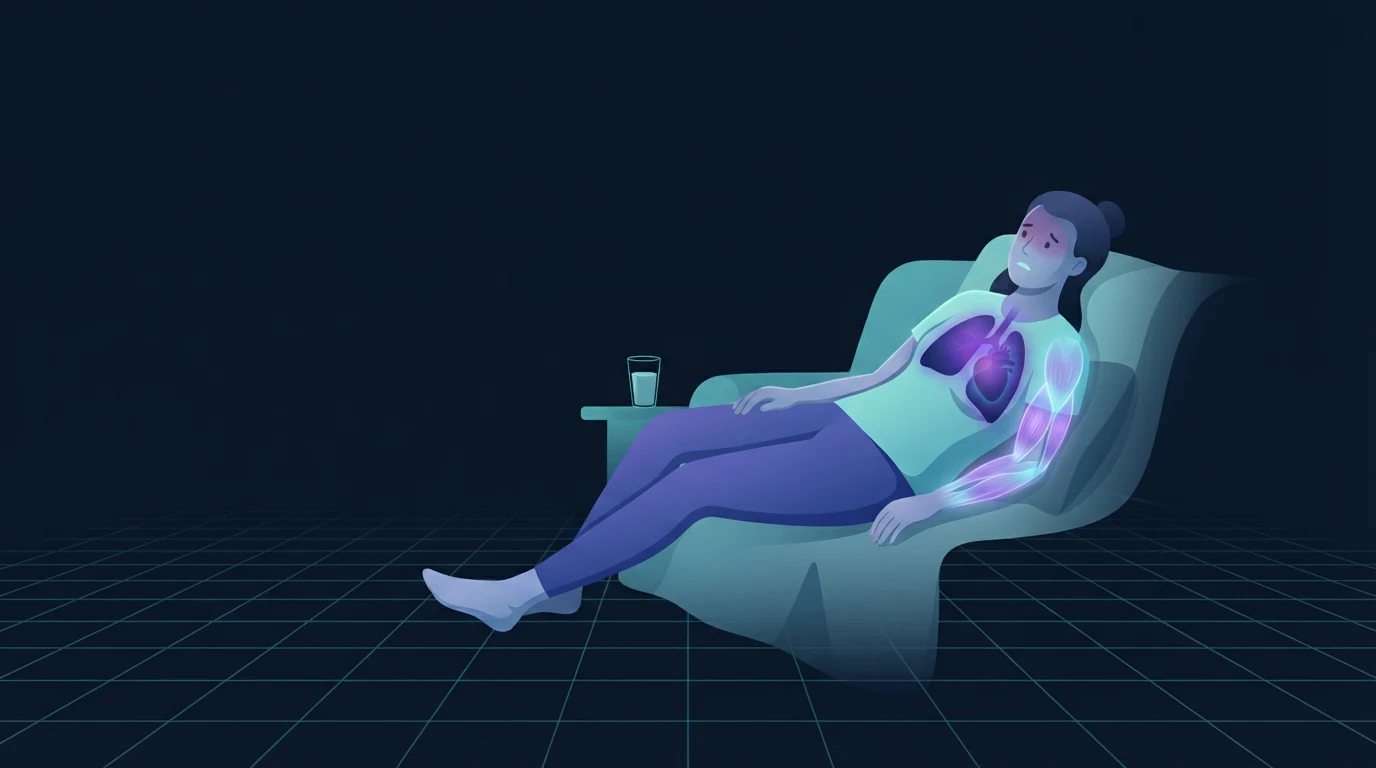
Common viruses can inflame the heart muscle. Myocarditis is uncommon, and it's not trivial: in a German registry of sports-related sudden cardiac arrest in young adults, myocarditis accounted for 3.7 percent of cases, typically preceded by an upper respiratory infection, and over a 27-year US series, 3.9 percent of sudden cardiac deaths in athletes were attributed to myocarditis (Ruuskanen et al., 2022). Exercise during active myocardial inflammation is the specific thing that turns a survivable illness into an emergency.
You can't diagnose this at your front door, which is exactly why the stop list is conservative. Skip the session, and speak to a clinician if any of these are present:
- Fever, chills or a temperature you haven't checked but suspect
- Widespread body aches or deep fatigue that feels different from being tired
- A productive or chest-based cough, wheeze, or tightness in the chest
- Chest pain, palpitations, or a resting heart rate well above your normal
- Breathlessness at rest or when walking across a room
- Vomiting, diarrhea or anything that has you meaningfully dehydrated
- Light-headedness or fainting, at any point
Where myocarditis is confirmed or suspected, the guidance is measured in months rather than days: the AHA and ACC recommend that athletes with probable or definite myocarditis withdraw from competitive sport for three to six months and be re-evaluated before returning (Maron et al., 2015). That's not a number you negotiate with.
Find out what's really holding you back
FitCraft, our mobile fitness app, pairs you with an AI coach who builds you a personalized plan around your goals, schedule, and fitness level. Every FitCraft program is designed by Domenic Angelino, MPH (Brown University) and NSCA-CSCS, with research published in the Journal of Strength and Conditioning Research and Medicine & Science in Sports & Exercise.
Take the Free Assessment Free • 2 minutes • No credit cardA Decision Table for the Morning You Wake Up Sick
Find the row that matches what you actually have, not the one you'd prefer to have.
| What you've got | Verdict | What today looks like |
|---|---|---|
| Runny nose, sneezing, mild sore throat, no fever | Train, reduced | 50 to 70 percent of usual volume, easy intensity, stop early if it worsens |
| Blocked nose and low energy, no fever | Swap | A 20 to 30 minute easy walk or mobility work instead of the session |
| Sore throat plus swollen glands | Rest | Nothing structured. Walk if you want to leave the house. |
| Any fever, chills or body aches | Rest | No training until 24 hours fever free without medication |
| Chest cough, wheeze or tightness | Rest and check in | Speak to a clinician before you train again |
| Chest pain, palpitations, breathlessness at rest | Stop and seek care | This is a medical question, not a training one |
| Vomiting or diarrhea | Rest | Rehydrate. Train again 24 to 48 hours after it settles. |
The middle rows are the useful ones. Most sick mornings aren't a binary between a full session and the couch, and treating them that way is how people end up doing neither for two weeks.
How to Scale the Workout Down Instead of Skipping It
If you land in the "train, reduced" row, the goal is to keep the habit alive without asking your body for adaptation it can't currently pay for. Reduce in this order:
- Cut intensity first. Drop to an effort you could hold a conversation through. Nothing above roughly 6 out of 10. No intervals, no sprints, no sets taken anywhere near failure.
- Then cut volume. Half the sets, or half the time. Two sets instead of four, 20 minutes instead of 45.
- Then cut complexity. Skip anything where a dizzy moment is expensive. Overhead dumbbell work, single-leg balance, heavy hinges and anything explosive can wait.
- Keep the pattern, not the numbers. Same time, same place, same first exercise. That's the part worth protecting.
- Hydrate more than feels necessary. Fever, congestion and mouth breathing all cost you fluid before you start.
A walk is a complete answer here, not a consolation prize. Twenty easy minutes outside preserves the routine, costs almost nothing in recovery, and gets you daylight, which is worth more to sleep quality than the session you skipped. If you want a framework for what a genuinely light week should look like, our guide to how many rest days a week covers the same arithmetic without the virus.
Coming Back Without Restarting From Zero
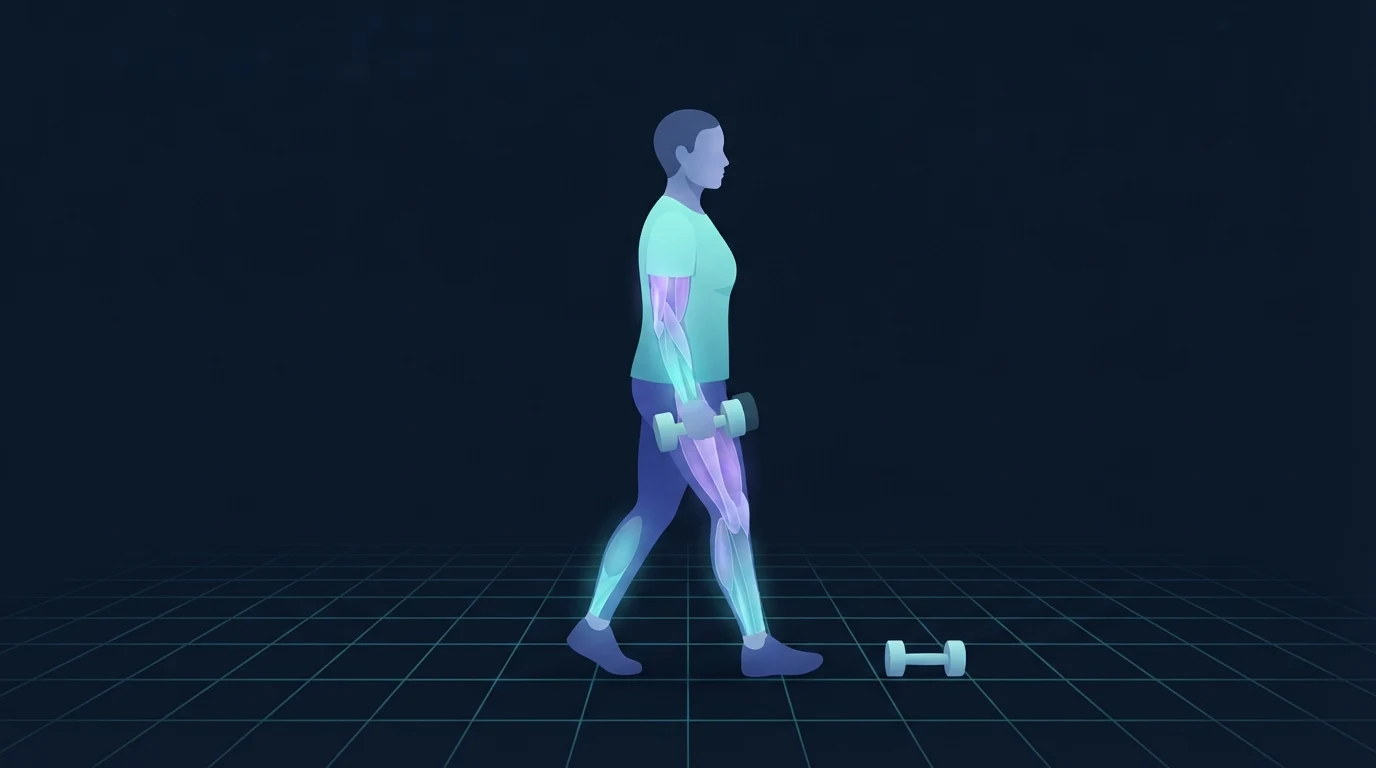
The most common way to lose a fortnight is to feel better on Thursday and train at Monday's numbers on Friday. You feel fine at rest and rough under load, because the systemic cost of an infection outlasts the symptoms.
The most detailed public framework for this came out of COVID, and its structure generalizes well. The graduated return-to-play guidance published in the British Journal of Sports Medicine asked athletes to have at least 10 days of rest from symptom onset and 7 symptom-free days before starting, to be able to walk 500 meters on the flat without excessive fatigue or breathlessness, and to drop back a stage and wait at least 24 more symptom-free hours if anything returned during the progression (Elliott et al., 2020). That was written for one virus in one context, and the shape of it, stage, check, progress or repeat, is the right shape for any illness.
A practical version for a normal week off:
- Day 1 back: half the volume, half the intensity. If it feels easy, that's correct.
- Day 2 back: repeat day 1 rather than jumping. Two easy sessions beat one heroic one.
- Days 3 to 5: about 70 percent of your usual load. Still no intervals or top sets.
- Second week: return to normal volume. Add intensity last, once volume feels routine again.
- Any day symptoms come back: go back a step and hold there for 48 hours.
And the fitness you're worried about losing mostly isn't going anywhere. Meaningful detraining in cardiorespiratory fitness takes roughly two to four weeks of doing nothing, and strength holds on longer than that. A week costs you a few rusty days. Our guide on what to do after a missed workout deals with the part that's actually fragile, which is the habit.
What Exercise Actually Does to Your Immune System
There's a folk belief buried under all of this, and it's worth pulling out, because it makes people train through things they shouldn't and avoid training when they should.
The old model was the "open window": hard exercise drops circulating immune cells for a few hours afterwards and leaves you exposed to infection. A 2018 review in Frontiers in Immunology re-examined that interpretation and argued the drop reflects immune cells being redeployed to peripheral tissues where they're likely to encounter a pathogen, not immune cells being destroyed or suppressed (Campbell and Turner, 2018). Exercise, in that reading, is immune surveillance in motion.
The population data points the same way. A 2021 systematic review and meta-analysis found that regular physical activity was associated with roughly 31 percent lower risk of community-acquired infectious disease, lower infectious-disease mortality, and a stronger antibody response to vaccination (Chastin et al., 2021). We go through the full body of evidence in our review of exercise and immune function.
So the honest summary is two-sided. Being a regular exerciser makes you less likely to get sick in the first place. Exercising hard while you're already sick doesn't help you get better and can occasionally hurt you. Those aren't in tension; they're describing different weeks.
The Bottom Line
Head cold and no fever: train at half volume and easy effort, or walk instead, and stop if five minutes in you feel worse. Fever, chest symptoms, body aches or anything cardiac: rest, and get it looked at if it doesn't settle. Coming back: start lower than feels dignified and add intensity last. That's the whole protocol.
The part nobody warns you about is what happens on day four, when you're better but out of rhythm and the session has stopped being automatic. That's the real risk in getting sick, and it's a design problem rather than a willpower one. Katie put it well: "I've tried everything. This is the first time I've stuck with something past two weeks." A system that expects interruptions survives them. One that depends on a perfect streak doesn't.
You're not starting over. You're resuming, on a body that spent the week doing something more important.
Frequently Asked Questions
Is it OK to work out while sick?
With a mild head cold and no fever, light to moderate exercise appears to be safe. In a 1998 trial, 50 adults were deliberately inoculated with a cold virus and the group that trained for 40 minutes every other day at 70 percent of heart rate reserve had no worse symptoms and no longer illness than the group that rested. With a fever, body aches, a chest cough, vomiting or diarrhea, the answer is no.
Is the neck rule for exercising while sick accurate?
It's a rough sorting tool with no validation behind it. The above-the-neck and below-the-neck split was published as clinical advice in 1993 and never tested as a decision rule. A 2022 review in Sports Medicine concluded that the neck-check rule lacks supporting scientific evidence, may even be hazardous, and should be abandoned. Use it as a first filter, then check fever, resting heart rate and how you feel after five easy minutes.
Can you exercise with a fever?
No. A fever means a systemic infection, and exercising during one adds cardiovascular strain, dehydration and heat load on top of an already raised core temperature. Fever is also the point where the risk of viral inflammation of the heart muscle stops being theoretical. Wait until you have been fever free without medication for at least 24 hours before you do anything, then start easy.
How long should I wait to work out after being sick?
For a simple head cold, you can start as soon as symptoms are fading, at roughly half your usual volume. For anything with fever or chest involvement, wait until you have been symptom free for several days and then rebuild over one to two weeks. The graduated return framework published in the British Journal of Sports Medicine in 2020 asked for at least 10 days of rest from symptom onset and 7 symptom-free days before the first stage, then a drop back a stage if symptoms return.
Does exercise weaken your immune system?
Regular moderate exercise does the opposite. A 2021 meta-analysis found that habitual physical activity was associated with about a 31 percent lower risk of community-acquired infectious disease and a better antibody response to vaccination. The old open-window theory, that immune cells drop after hard exercise and leave you exposed, has been reinterpreted: those cells are redeploying to tissues, not disappearing.
Will I lose fitness if I take a week off sick?
Almost none that matters. Measurable losses in cardiorespiratory fitness take roughly two to four weeks of complete inactivity, and strength holds on even longer. A week off costs you a few days of feeling rusty and nothing else. Training through a real illness and extending it by a week costs far more.