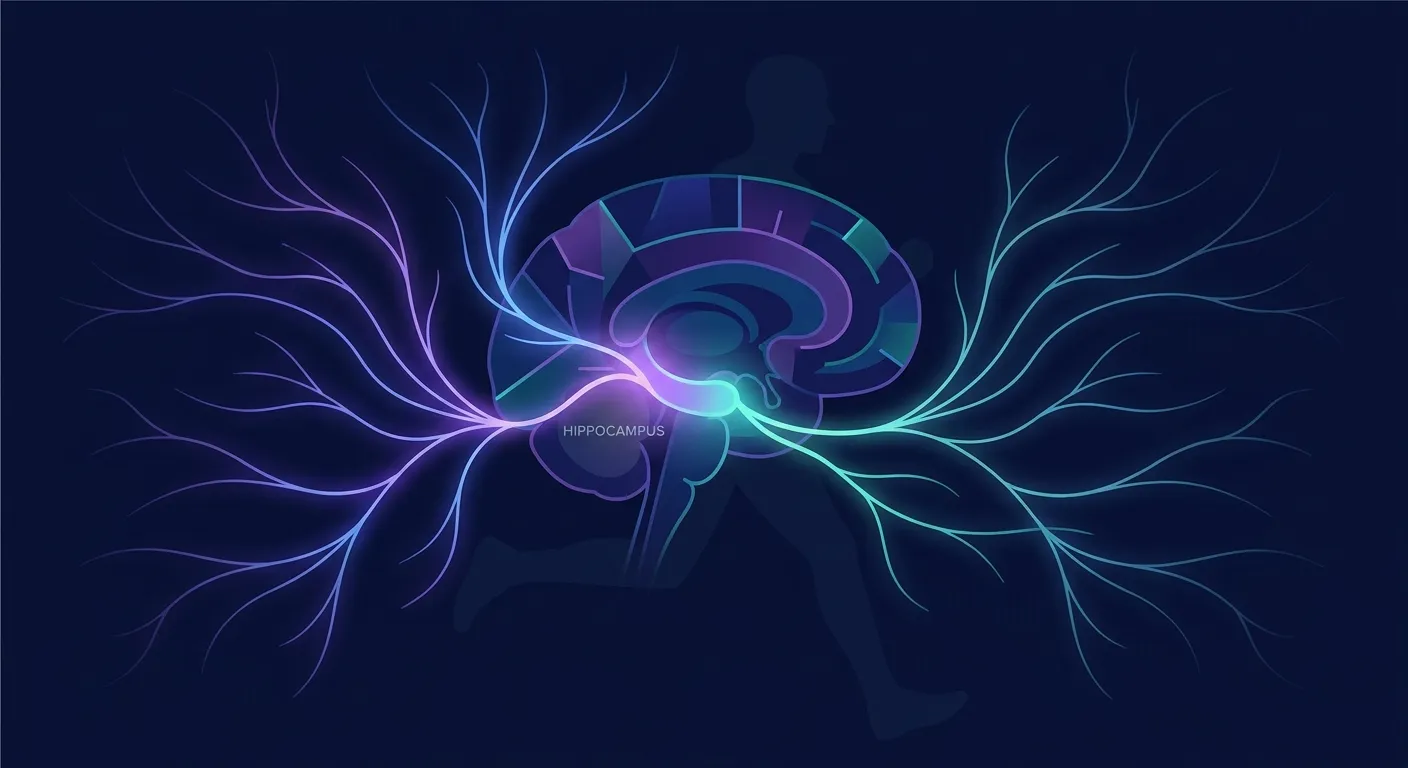
Your brain shrinks as you age. About 1-2% of hippocampal volume disappears every year after you turn 55. That's not a metaphor. MRI scans show the tissue literally getting smaller, and the hippocampus, the part of your brain responsible for learning and forming new memories, takes the biggest hit.
But here's something most people don't know: you can reverse that shrinkage. Not with supplements, not with brain training apps, not with crossword puzzles. With exercise.
That's not wishful thinking or pop-science clickbait. It's what a landmark randomized controlled trial proved back in 2011, and a growing body of research has confirmed since. Let's walk through what the studies actually found.
The Landmark Trial: Walking Grew the Hippocampus by 2%
In 2011, Kirk Erickson and colleagues at the University of Pittsburgh published a study in Proceedings of the National Academy of Sciences that changed how neuroscientists think about exercise and the brain.
Here's what they did. They took 120 sedentary older adults (ages 55-80), randomized them into two groups, and followed them for a full year. One group did moderate aerobic exercise, mainly walking, for 40 minutes three times per week. The other group did stretching and toning exercises on the same schedule.
Both groups got MRI brain scans at baseline, six months, and twelve months. The researchers measured hippocampal volume at each point.
The results were striking.
The exercise group's anterior hippocampus grew by 2%. The stretching group's hippocampus shrank by about 1.4%, which is the normal trajectory for people that age. In other words, one year of walking three times a week reversed roughly 1-2 years of age-related brain shrinkage.
This wasn't a small pilot study. It was a properly randomized, controlled trial with MRI-confirmed structural changes. And the effect wasn't subtle or debatable. The hippocampus physically got bigger.
Citation: Erickson KI, Voss MW, Prakash RS, et al. Exercise training increases size of hippocampus and improves memory. Proc Natl Acad Sci U S A. 2011;108(7):3017-3022.
The Molecule Behind It: BDNF
So how does walking make your hippocampus grow? The answer involves a protein called brain-derived neurotrophic factor, or BDNF.
Think of BDNF as fertilizer for your brain cells. It supports the survival of existing neurons, promotes the growth of new ones (a process called neurogenesis), and strengthens the connections between them. Your brain produces BDNF naturally, but levels decline with age, stress, and inactivity.
In the Erickson trial, the researchers measured serum BDNF levels alongside the brain scans. What they found: higher BDNF levels predicted larger hippocampal volume increases and better spatial memory performance. Exercise didn't just randomly grow brain tissue. It triggered a specific biological cascade: exercise raised BDNF, BDNF fueled neurogenesis in the hippocampus, and the hippocampus got larger and worked better.
This finding wasn't an isolated result. A 2015 meta-analysis by Szuhany, Bugatti, and Otto examined 29 studies (N=1,111) and found consistent evidence that exercise boosts BDNF across multiple conditions:
- A single workout produces a moderate BDNF increase (Hedges' g = 0.46)
- A single workout after a regular training program produces an even larger increase (g = 0.58), meaning your brain gets better at producing BDNF the more consistently you train
- Resting BDNF levels rise modestly with chronic exercise (g = 0.28), suggesting a lasting baseline shift
The practical translation: every time you exercise, you flood your brain with a growth-promoting protein. Train consistently, and the effect compounds. Your brain doesn't just get a temporary boost. Its baseline capacity for growth and repair increases over time.
Citation: Szuhany KL, Bugatti M, Otto MW. A meta-analytic review of the effects of exercise on brain-derived neurotrophic factor. J Psychiatr Res. 2015;60:56-64.
The Big Picture: 10,125 Brain Scans Confirm the Pattern
One trial with 120 people is compelling. But is the effect real across a massive, diverse population?
A 2024 study by Raji and colleagues, published in the Journal of Alzheimer's Disease, answered that question with a dataset of 10,125 brain MRI scans. They used deep learning to analyze brain volumes and correlated them with participants' physical activity levels.
The findings held up. People who exercised regularly had significantly larger brain volumes across multiple regions:
- Larger total gray matter volume
- Larger white matter volume
- Larger hippocampal volume
- Larger frontal, parietal, and occipital lobe volumes
The average participant was about 53 years old, and 75% reported engaging in moderate or vigorous physical activity. Even moderate activity, like regular walking, was linked to measurably bigger brains.
This matters because it moves the conversation beyond "one well-designed trial." When you see the same relationship between exercise and brain volume in over ten thousand people, across different ages, backgrounds, and activity levels, the signal is hard to dismiss.
Citation: Raji CA, Meysami S, Hashemi S, et al. Exercise-Related Physical Activity Relates to Brain Volumes in 10,125 Individuals. J Alzheimers Dis. 2024;97(2):829-839.
Which Type of Exercise Works Best?
The Erickson trial used moderate walking. Does that mean walking is the "best" exercise for brain growth? Not necessarily.
A 2022 Bayesian network meta-analysis (Zhou et al., published in Frontiers in Aging Neuroscience) ranked exercise types by their effect on BDNF levels:
- Resistance training had the strongest effect on BDNF
- High-intensity interval training (HIIT) came second
- Combined cardio and strength training ranked third
- Aerobic training alone came in fourth
That ranking might surprise you if you assumed cardio was king for brain benefits. But it makes physiological sense. Resistance training creates intense metabolic demand on the nervous system, and that demand triggers BDNF release. Your brain responds to challenge, not just elevated heart rate.
The honest answer on "what's best" is probably: both. Aerobic exercise has the most direct evidence for hippocampal growth (from the Erickson trial). Resistance training has the strongest evidence for BDNF elevation. A program that combines both likely covers the most ground.
And here's the part that actually matters: the best type of exercise for your brain is the type you'll actually do. Consistently. For months and years, not just a few weeks. A walking routine you stick with for a year will outperform an intense gym program you abandon after three weeks.
Citation: Zhou B, Wang Z, Zhu L, et al. Effects of different physical activities on brain-derived neurotrophic factor: a systematic review and Bayesian network meta-analysis. Front Aging Neurosci. 2022;14:981002.
Want a brain-boosting workout plan you'll actually stick with?
FitCraft's AI trainer Ty builds adaptive workouts that combine cardio and strength training, scaled to your fitness level and schedule. The gamification keeps you consistent, which is the variable that matters most for brain benefits.
Take the Free Assessment Free · 2 minutes · No credit cardExercise, Depression, and the Brain Growth Connection
This gets more interesting when you connect the dots to mental health research.
Depression is associated with reduced hippocampal volume and lower BDNF levels. It's one of the most consistent findings in psychiatric neuroimaging. People with chronic depression tend to have smaller hippocampi than people without it.
Exercise raises BDNF and grows the hippocampus. Depression shrinks the hippocampus and lowers BDNF. That's not a coincidence. It's the same pathway running in opposite directions.
We covered the research on exercise and depression in a separate deep dive, but the short version: multiple meta-analyses now show that exercise produces antidepressant effects comparable to medication for mild-to-moderate depression. The BDNF-hippocampal pathway is one of the leading explanations for why.
There's also a dopamine component to the exercise-mood connection. Exercise triggers dopamine release in the reward circuitry, which is partly why a workout can shift your mood within 20 minutes. But the BDNF-driven structural changes are slower and deeper. They're not about feeling good after one run. They're about your brain literally rebuilding itself over weeks and months of consistent training.
The Consistency Problem (and How to Solve It)
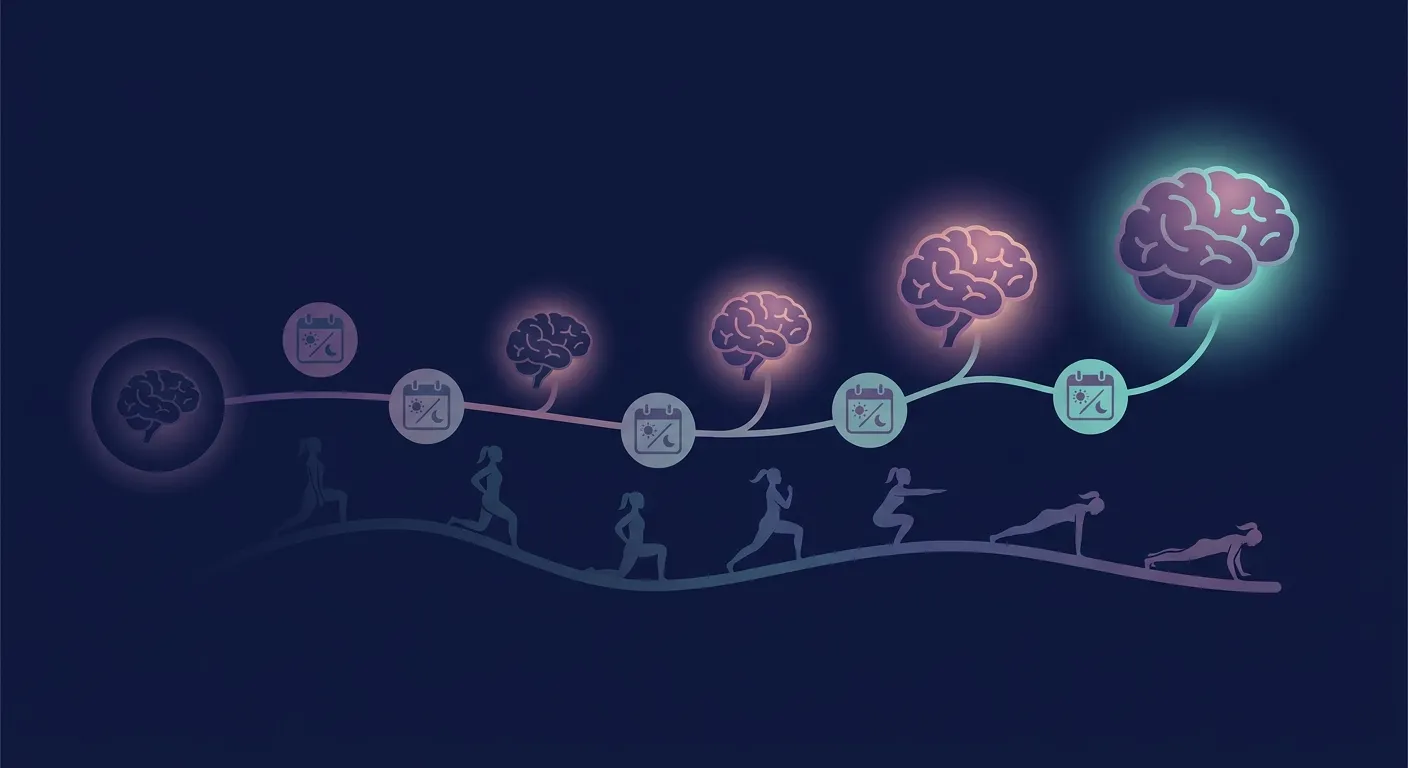
Here's the uncomfortable part of the brain growth research: the effects require consistency. Erickson's participants walked three times a week for an entire year. The control group, who did stretching instead, saw their hippocampi shrink on schedule.
There's no shortcut. One intense workout won't grow your hippocampus. A great month followed by three months off won't either. The BDNF cascade and the structural brain changes it produces depend on repeated, sustained stimulus.
This is exactly why engagement decay matters so much. If your exercise routine dies at week 6, you lose the brain benefits before they've had time to materialize. The Erickson trial didn't see significant volume changes at the six-month mark in some regions. The full 2% growth showed up at twelve months.
This is also why the research on gamification and fitness connects directly to brain health. Clinical trials have shown that gamified fitness apps maintain adherence significantly longer than standard programs. And adherence, not intensity, is the variable that determines whether you get the brain growth benefits or not.
What About Young People?
The Erickson trial studied adults ages 55-80. But brain growth from exercise isn't limited to older populations.
The Szuhany meta-analysis included studies across a wide age range and found consistent BDNF responses to exercise regardless of age. The 2024 MRI study by Raji included participants from age 18 to 97, with the exercise-brain volume relationship holding across the full spectrum.
The difference is context. Younger brains aren't shrinking yet, so the benefit isn't "reversing decline." It's building a larger reserve. Neuroscientists call this "cognitive reserve," the idea that a bigger, more connected brain can absorb more damage before showing symptoms of decline. A 30-year-old who exercises regularly is building a buffer against the brain shrinkage that starts in middle age.
Think of it like a retirement account for your brain. Starting early doesn't just help now. It protects you decades down the road.
Honest Limitations
We'd be doing bad science communication if we didn't flag the caveats.
The Erickson trial is one study. It's well-designed and widely cited, but a single RCT with 120 participants isn't the end of the conversation. A 2024 meta-analysis of aerobic exercise RCTs on hippocampal volume found mixed results across trials, with some failing to replicate the 2% growth. The relationship is real, but the magnitude probably varies depending on age, baseline fitness, exercise dose, and individual genetics.
Brain volume isn't everything. A bigger hippocampus doesn't automatically mean better memory. Volume is a proxy, and a useful one, but the relationship between structure and function is complicated. Some studies that found volume increases didn't find corresponding memory improvements, and vice versa.
BDNF is a piece, not the whole puzzle. Exercise affects the brain through multiple pathways: increased cerebral blood flow, reduced inflammation, improved insulin sensitivity, better sleep quality, and stress hormone regulation. BDNF gets the most attention because it's measurable and directly linked to neurogenesis, but it's one mechanism among several.
Most studies are 6-12 months. We don't have great data on what happens at year 3, year 5, or year 10 of consistent exercise. The assumption is that benefits continue or at least stabilize, but long-term RCTs in this space are rare and expensive to run.
Correlation in the large MRI study. The Raji 2024 study with 10,125 participants is cross-sectional, not experimental. It shows that exercisers have bigger brains. It can't prove exercise caused the difference. People with bigger brains might be more likely to exercise. The causal arrow comes from trials like Erickson's, and the observational data strengthens the pattern.
What This Means for You
Here's the bottom line, pulled directly from the research:
Exercise grows your brain. The hippocampus, your memory center, physically increases in size with regular aerobic activity. A year of walking three times per week produced a 2% volume increase in a randomized trial.
BDNF is the key mechanism. Exercise triggers BDNF release, which promotes neurogenesis and strengthens neural connections. Every single workout produces a measurable BDNF spike, and regular training elevates your baseline.
Consistency matters more than intensity. Moderate walking worked in the landmark trial. You don't need to crush yourself in the gym. You need to show up regularly for months, not weeks.
Both cardio and strength training help. Aerobic exercise has the strongest evidence for hippocampal growth. Resistance training has the strongest evidence for BDNF elevation. Combining both is probably the best strategy.
The hardest part isn't knowing what to do. It's doing it consistently. That's where the psychology of streaks and commitment comes in, and it's why workout design that keeps you engaged over months (not just the first week) matters as much as the exercises themselves.
How FitCraft Applies This Research
FitCraft was designed around a simple insight from this research: brain benefits require consistency, and consistency requires engagement. Here's how the app addresses both sides of that equation.
- Adaptive AI workouts from Ty combine cardio and strength training, scaled to your current fitness level. As you improve, the difficulty adjusts automatically, keeping workouts in the zone between too easy and too hard.
- Gamification for long-term adherence uses XP, leveling, and collectible cards with variable rarity to maintain engagement past the critical dropout window. The clinical literature on gamified fitness apps shows they sustain adherence significantly longer than static programs.
- Multiple training styles across yoga, mobility, bodyweight strength, dumbbell work, resistance bands, cardio, and dynamic movement. Variety reduces boredom and covers both the aerobic and resistance training pathways that benefit the brain.
- Calendar tracking and streak rewards leverage commitment consistency, the same psychological principle that makes habit maintenance easier once you've built a visible chain of completed workouts.
- Interactive 3D exercise demos with pinch-and-zoom camera control help you learn proper form, reducing injury risk and building confidence that keeps you training longer.
We haven't run a clinical trial on FitCraft's brain benefits. That would require MRI scans, and we're a fitness app, not a neuroimaging lab. But the mechanisms the research identifies as effective for brain growth, consistent moderate-to-vigorous exercise sustained over months, are exactly what the app is built to help you do.
Medical disclaimer: This article summarizes published peer-reviewed research for educational purposes. It is not medical advice. Consult your physician before starting any exercise program, especially if you have neurological conditions or concerns about cognitive decline.
Frequently Asked Questions
Does exercise actually grow your brain?
Yes. A landmark 2011 randomized controlled trial by Erickson et al. in PNAS found that one year of moderate aerobic exercise increased hippocampal volume by 2% in older adults, effectively reversing 1-2 years of age-related brain shrinkage. A 2024 study of 10,125 brain MRI scans confirmed that people who exercise regularly have larger total gray matter, white matter, and hippocampal volumes compared to sedentary individuals.
What is BDNF and how does exercise increase it?
BDNF (brain-derived neurotrophic factor) is a protein that supports the survival of existing neurons and encourages the growth of new ones. A 2015 meta-analysis of 29 studies found that a single exercise session produces a moderate increase in BDNF (Hedges' g = 0.46), and regular exercise amplifies this effect further (g = 0.58). BDNF acts like fertilizer for brain cells, promoting neurogenesis primarily in the hippocampus, the brain region responsible for learning and memory.
How much exercise do you need for brain benefits?
The Erickson 2011 trial used 40 minutes of moderate walking, three times per week, for one year. That produced a measurable 2% increase in hippocampal volume. The 2024 MRI study of 10,125 people found that even moderate activity like regular walking was linked to larger brain volumes. You don't need extreme training. Consistent moderate exercise, roughly 120 minutes per week, appears sufficient for structural brain benefits.
Does exercise help prevent Alzheimer's and dementia?
The evidence is promising but not conclusive. The hippocampus, the brain region that exercise grows, is also the first region to shrink in Alzheimer's disease. A 2022 meta-analysis found that exercise significantly increases BDNF levels in Alzheimer's disease models, with swimming and treadmill exercise showing the strongest effects. Observational studies consistently link higher fitness levels to lower dementia risk, though randomized trial evidence for outright prevention is still limited.
What type of exercise is best for brain health?
Aerobic exercise has the strongest evidence for brain growth. The Erickson trial used moderate walking. A 2022 Bayesian meta-analysis found that for BDNF increases specifically, the ranking is resistance training > HIIT > combined training > aerobic plus resistance > aerobic alone. The practical takeaway: any exercise that gets your heart rate up consistently is good for your brain. A mix of cardio and strength training likely gives the broadest benefits.