
You've heard it a thousand times: exercise prevents cancer. And every time, you probably thought the same thing. I know. But I don't have time for the gym.
That response is so common it might as well be a reflex. And for most people, it's genuine. Between work, commuting, kids, cooking, and the fourteen other things competing for every waking hour, blocking out 45 minutes for a structured workout feels like a fantasy.
But what if the threshold for protection is wildly lower than you think?
In 2023, a team of researchers led by Emmanuel Stamatakis at the University of Sydney published a study that should have rewritten the conversation about exercise and cancer risk. They tracked over 22,000 people who reported doing zero structured exercise and found that tiny bursts of vigorous daily movement, most lasting under a minute, were tied to dramatically lower cancer rates.
Not running. Not CrossFit. Not even a brisk 30-minute walk. Taking the stairs instead of the elevator. Walking fast to catch the bus. Hauling groceries from the car. That kind of thing.
Here's what they found, why it matters, and what it means for you.
The Study: 22,398 People Who Never Exercise
Stamatakis and colleagues pulled their data from the UK Biobank, a massive prospective cohort study that has been tracking the health of hundreds of thousands of British adults since 2006. For this particular analysis, they focused on a very specific population: people who self-reported doing no leisure-time exercise and walked recreationally no more than once per week.
These were not fitness enthusiasts. They were people who, by their own description, didn't work out at all.
Each participant wore a wrist-mounted accelerometer (similar to a Fitbit or Apple Watch) for seven days. The researchers used validated algorithms to identify bouts of vigorous activity from the accelerometer data. Then they followed up for a median of 6.7 years, tracking cancer diagnoses through linked health records.
What They Measured
The study introduced a concept called vigorous intermittent lifestyle physical activity (VILPA). This is any brief burst of intense effort that happens naturally during daily life, not during a planned workout. Think of it as the physical effort that's already baked into your day, if you let it happen.
Examples of VILPA:
- Climbing a flight of stairs briskly (instead of waiting for the elevator)
- Power walking to make a bus or train
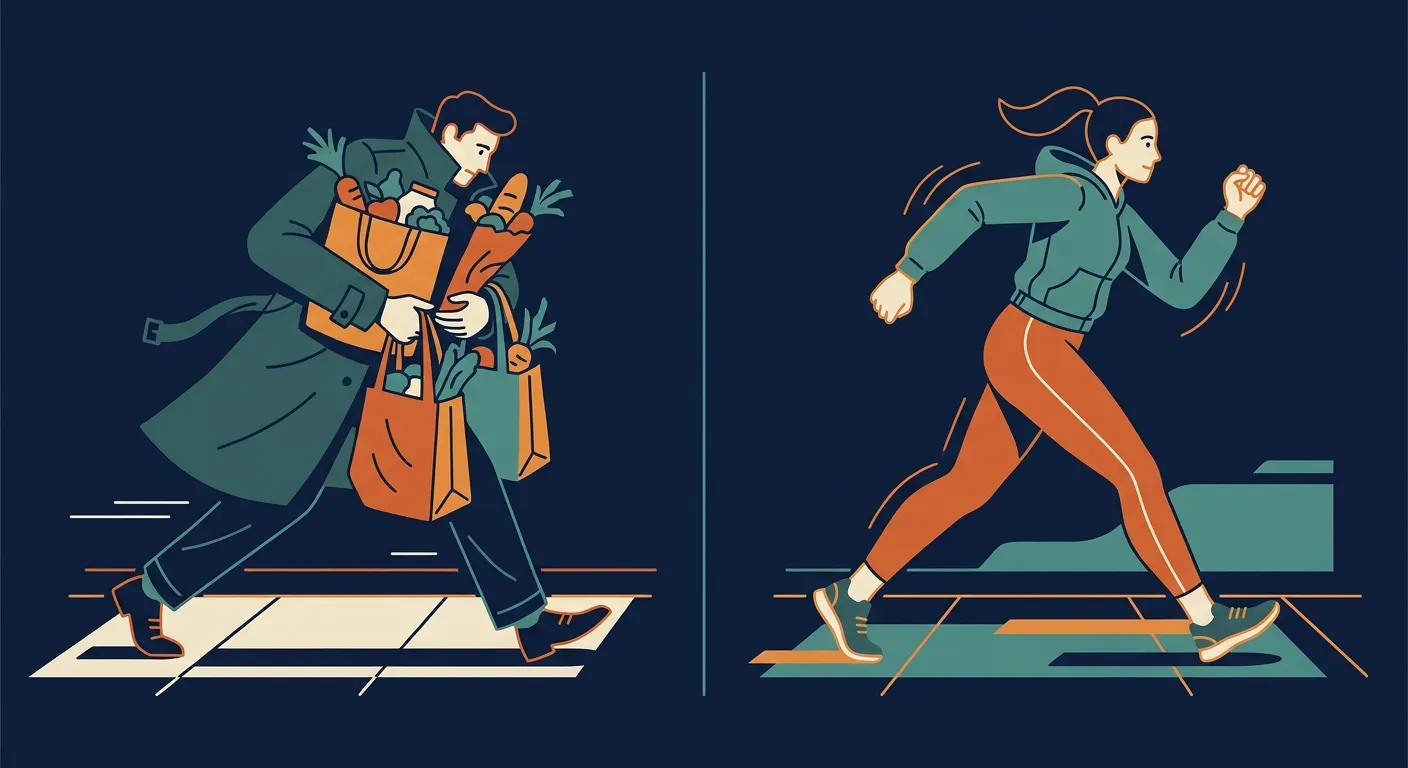
- Carrying heavy grocery bags from the car to the kitchen
- Vigorous vacuuming, mopping, or scrubbing
- Playing actively with your kids at the park
- Walking uphill during a commute
- Gardening tasks that require digging, lifting, or raking
The researchers found that 94% of the non-exercisers in the study still recorded some VILPA during their week of monitoring. And 92% of those bouts lasted one minute or less. These people weren't sneaking in secret workouts. They were just living their lives with occasional bursts of effort.
The Results
Here's where it gets remarkable.
Participants who accumulated a median of 4.5 minutes per day of VILPA had a 31-32% lower incidence of physical activity-related cancers (breast, colon, endometrial, kidney, bladder, stomach, and esophageal cancers) compared to those with no VILPA.
Even smaller doses made a difference. A minimum of 3.4 to 3.6 minutes per day was associated with a 17-18% reduction in total cancer incidence across all types.
To put that in context: the minimum effective dose for exercise keeps getting revised downward as researchers look more carefully at what "counts." This study pushed it lower than almost anyone expected.
Citation: Stamatakis E, Ahmadi MN, Gill JMR, et al. Association of Wearable Device-Measured Vigorous Intermittent Lifestyle Physical Activity With Cancer Incidence. JAMA Oncol. 2023;9(9):1255-1259. doi:10.1001/jamaoncol.2023.1830
It Gets Better: The Mortality Data
The cancer study didn't come out of nowhere. A year earlier, the same research team published a companion study in Nature Medicine that looked at VILPA and death from all causes.
Using 25,241 non-exercisers from the same UK Biobank cohort, they found that participants who performed a median of three short VILPA bouts per day (each lasting one to two minutes) had:
- 38-40% lower all-cause and cancer mortality
- 48-49% lower cardiovascular mortality
Those are not small numbers. For context, statin drugs, which millions of people take daily, reduce cardiovascular mortality by about 15-20% in primary prevention. These non-exercisers got double that protection from taking the stairs a few times a day.
The relationship was nearly linear, too. More VILPA meant more protection, with no obvious ceiling within the range the study measured. The researchers didn't find a point where additional short bouts stopped helping.
Citation: Stamatakis E, Ahmadi MN, Gill JMR, et al. Association of wearable device-measured vigorous intermittent lifestyle physical activity with mortality. Nat Med. 2022;28(12):2521-2529. doi:10.1038/s41591-022-02100-x
Why Short Bursts Work (the Physiology)
If you're skeptical that one-minute bursts of stair climbing can meaningfully affect cancer risk, that's fair. Here's why the physiology actually supports it.
Acute Hormonal and Metabolic Responses
Even very brief vigorous exercise triggers a cascade of physiological responses. Your heart rate spikes. Blood flow increases to working muscles. Insulin sensitivity improves for hours afterward. Inflammatory markers shift. Growth factors get released. Each of these responses has a documented connection to cancer-protective pathways.
A 2023 systematic review in The Journal of Physiology specifically examined exercise snacks (discrete bouts of vigorous effort lasting one minute or less, performed throughout the day) and found that they produced measurable improvements in postprandial glucose metabolism, cardiorespiratory fitness, and cardiometabolic risk markers. The review noted that these brief bouts activated many of the same molecular pathways as longer exercise sessions.
Citation: Jenkins EM, Nairn LN, Skelly LE, et al. Benefits beyond cardiometabolic health: the potential of frequent high intensity "exercise snacks." J Physiol. 2023;601(16):3525-3540.
Stair Climbing: The Unsung Intervention
Stair climbing shows up repeatedly in this research for a reason. It's vigorous, it's available almost everywhere, and it's over quickly. A 2021 randomized controlled trial found that brief vigorous stair climbing (three bouts of 20 seconds, separated by two-minute recovery periods) significantly improved cardiorespiratory fitness in previously sedentary adults after just four weeks.
Research presented at ESC Preventive Cardiology 2024 went even further, finding that regular stair climbing was associated with a 24% reduced risk of dying from any cause and a 39% reduced risk of dying from cardiovascular disease. These findings tracked across age groups, sexes, and baseline fitness levels.
Think about that the next time you're waiting for an elevator to go up two floors.
How This Connects to HIIT Research
If the idea of short, intense effort sounds familiar, it should. The VILPA research shares DNA with high-intensity interval training (HIIT) research, which has consistently shown that brief bursts of vigorous effort produce outsized fitness gains per minute invested. The difference is that VILPA doesn't require you to schedule a workout or put on athletic shoes. It's HIIT that happens naturally, scattered across your day in one-minute fragments.
What "No Time to Exercise" Actually Means
Here's the uncomfortable truth the VILPA research exposes: most people who say they don't have time to exercise are telling the truth about one thing and missing another.
They genuinely don't have 45 minutes to drive to a gym, change clothes, work out, shower, and drive home. That's a real constraint, and dismissing it as "laziness" is both wrong and unhelpful.
But almost everyone has one minute. Multiple times per day.
The participants in the Stamatakis study weren't finding extra time. They were just doing things they already needed to do with a little more intensity. Walking up stairs instead of riding the escalator. Carrying bags instead of using a cart. Walking briskly for one block instead of strolling.
The total investment? About four and a half minutes spread across the entire day. Not in one block. Not scheduled. Just scattered across moments that already exist.
Building VILPA Into Your Day (Practical Examples)
You don't need a program for this. You need awareness. Here are some ways to accumulate vigorous daily movement without changing your schedule by a single minute:
At home:
- Take the stairs when doing laundry (carry the basket, don't leave it at the bottom)
- Vacuum or mop with actual effort, using your legs and core
- Play actively with your kids or pets for a few minutes instead of watching from the bench
- Carry groceries in from the car in fewer trips (heavier loads)
During your commute:
- Walk briskly (not strolling) to and from your car, bus stop, or train platform
- Take stairs instead of escalators or elevators at every opportunity
- If you ride transit, stand instead of sitting and brace against the movement
At work:
- Use a bathroom on a different floor and take the stairs both ways
- Walk meetings instead of sitting, and keep the pace brisk enough that talking takes slight effort
- During phone calls, pace or climb stairs
The threshold for "vigorous" is lower than most people assume. If you're slightly breathless and your heart rate is noticeably elevated, it counts. You don't need to be gasping or sweating through your shirt.

The Limits of VILPA (What It Won't Do)
This research is genuinely exciting, but it has boundaries. Being honest about them matters.
Study Limitations
The Stamatakis studies are observational, not randomized controlled trials. That means they can show associations, not prove causation. It's possible (though the researchers controlled for many confounders) that people who engage in more VILPA differ from those who don't in ways that independently affect cancer risk.
The accelerometer data covers just seven days per participant. The researchers assumed that week was representative of habitual behavior, which is reasonable but not certain. Activity patterns can vary by season, work schedule, and health status.
The study population was predominantly white British adults with a median age of 62. Whether the same dose-response relationship holds across younger populations, different ethnicities, and different environments hasn't been tested directly.
Physical Limitations
VILPA delivers cardiovascular and metabolic benefits. It won't build meaningful muscle mass. It won't improve your flexibility or mobility. It won't develop coordination, balance, or movement skills. For those outcomes, you need structured training, something our guide on dopamine and exercise motivation explores from the behavioral side.
Think of VILPA as the floor of physical activity, not the ceiling. It's the baseline that protects against the worst consequences of inactivity. Layering structured exercise on top of it, even short sessions, adds benefits that VILPA alone can't provide. Gamification research suggests that the right app design can help bridge that gap from "I don't exercise at all" to "I exercise regularly."
The Honesty Check
We'd be hypocrites if we presented VILPA as the only thing you need. FitCraft is a workout app. We want you to exercise. But we'd rather you start with four minutes of stair climbing today than spend another year planning a gym routine that never happens.
The research is clear: doing something vigorous, even briefly, even unstructured, provides massive protection compared to doing nothing. That's not a consolation prize. That's a genuine, evidence-backed health strategy for people who've written off exercise entirely.
Ready to go beyond 4 minutes?
FitCraft's AI trainer Ty builds workouts around your schedule, starting as short as 10 minutes. Bodyweight, dumbbells, yoga, cardio. Your call.
Take the Free Assessment Free · 2 minutes · No credit cardHow VILPA Fits Into the Bigger Picture
The Stamatakis findings don't exist in isolation. They're part of a growing body of research that keeps finding health benefits at doses far below traditional exercise guidelines.
The World Health Organization recommends 150-300 minutes of moderate-intensity or 75-150 minutes of vigorous-intensity activity per week. Most adults fall short of those targets. Way short. According to WHO data, roughly 1.4 billion adults worldwide are insufficiently active.
What the VILPA research adds to the conversation is a fallback position that actually works. You don't have to choose between "meeting WHO guidelines" and "doing nothing." There's a middle ground, and it turns out that middle ground provides serious protection.
A 2024 scoping review of exercise snack interventions across diverse populations (published in PMC) found consistent evidence that brief, scattered bouts of vigorous activity improve cardiorespiratory fitness, glucose regulation, and self-reported energy levels. The review noted that exercise snacks were particularly effective for populations with low baseline fitness, because the relative intensity of everyday activities like stair climbing is genuinely vigorous for someone who's been sedentary.
That last point is worth sitting with. If you haven't exercised in years, climbing two flights of stairs IS a vigorous workout for you. You're not "too unfit to benefit." You're exactly the person this research is about.
The Bottom Line
Four and a half minutes of vigorous daily movement. Scattered across your day in one-minute bursts. Not scheduled. Not at a gym. Not in workout clothes. Just choosing stairs over elevators, brisk walks over slow ones, and active effort over passive convenience.
That's what the Stamatakis team found was associated with a 32% lower cancer risk and a 40% lower mortality risk in people who don't exercise at all.
This doesn't replace structured exercise for those who want to build strength, improve endurance, or develop specific fitness qualities. But for the millions of people who've decided they "can't" exercise, it removes the last credible excuse.
You have four minutes. You've always had four minutes. Now you know what those minutes are worth.
Frequently Asked Questions
Can 4 minutes of exercise really reduce cancer risk?
Yes, according to a 2023 JAMA Oncology study of 22,398 non-exercisers tracked with wrist-worn accelerometers. Participants who accumulated a median of 4.5 minutes per day of vigorous intermittent lifestyle physical activity (VILPA) had a 31-32% lower incidence of physical activity-related cancers compared to those with no VILPA. These weren't structured workouts. They were everyday activities like climbing stairs, walking fast to catch a bus, or carrying heavy groceries.
What counts as vigorous intermittent lifestyle physical activity (VILPA)?
VILPA includes any brief burst of vigorous effort woven into daily life. Examples include climbing stairs briskly, power walking to catch public transport, carrying heavy shopping bags, vigorous housework or gardening, and energetic playing with children. In the UK Biobank study, 92% of recorded VILPA bouts lasted one minute or less. The key is intensity, not duration. These activities need to get your heart rate up and leave you slightly breathless.
How does VILPA compare to structured exercise for cancer prevention?
The Stamatakis et al. research found that VILPA in non-exercisers produced cancer risk reductions comparable to those seen in studies of structured vigorous exercise in regular exercisers. A companion study in Nature Medicine (2022) found that VILPA was also associated with 38-40% lower all-cause mortality and 48-49% lower cardiovascular mortality. The researchers concluded that VILPA may be a suitable physical activity target for people who are unable or unwilling to exercise in structured settings.
What types of cancer does VILPA help prevent?
The JAMA Oncology study specifically measured physical activity-related cancers, which include breast, colon, endometrial, kidney, bladder, stomach, and esophageal cancers among others. The 31-32% risk reduction applied to this category of cancers collectively. For total incident cancer (all types), a minimum dose of 3.4-3.6 minutes of daily VILPA was associated with a 17-18% reduction.
Do I still need to exercise if I get enough VILPA throughout the day?
VILPA is a powerful starting point, but it has limits. It primarily delivers cardiovascular and metabolic benefits. It won't build significant muscle mass, improve flexibility, or develop movement skills the way structured training does. Think of VILPA as the floor, not the ceiling. If you currently do zero structured exercise, adding 4-5 minutes of vigorous daily movement through everyday activities provides substantial health protection. As you build capacity and confidence, layering in structured workouts can deliver additional benefits that VILPA alone can't provide.