Quick Comparison
| Feature | Why it matters | What to look for | Where most apps fail |
|---|---|---|---|
| Adaptive workouts | Two different fitness levels | AI-calibrated sets and reps | Identical workouts fail both |
| Workout variety | Different workout preferences | Yoga, strength, cardio, mobility | Staleness kills the habit |
| Shared progress tracking | Makes the habit visible | Side-by-side calendars | Bolted-on social features |
| Interactive exercise guidance | The less experienced partner | 3D demos, any angle | Flat one-perspective videos |
You've both said it. Probably more than once. "We should start working out together." It sounds simple — pick an app, press play, get fit as a team.
But here's what usually happens: one of you is stronger or more experienced. The workouts feel too easy for one person and too hard for the other. Within two weeks, someone's frustrated, someone feels guilty, and the whole plan quietly dies.
That's not a motivation problem. It's a design problem. Most fitness apps are built for individuals. They don't account for two people with different bodies, different fitness levels, and different goals trying to build a shared habit. The apps that do get this right leverage something powerful: the research showing that partner accountability fundamentally changes exercise adherence.
This article covers what the science actually says about couples and exercise, what features make an app genuinely couple-friendly, and how gamification creates the shared goals that keep both partners coming back.
The Research: Why Couples Who Train Together Stay Together (in Fitness)
The most striking data on partner exercise comes from a 1995 study by Wallace, Raglin, and Jastremski published in the Journal of Sports Medicine and Physical Fitness. They tracked married adults who joined a fitness program — some with their spouse, some without.
The results weren't subtle. After 12 months, only 6.3% of couples who exercised together had dropped out. Among married individuals who joined alone, the dropout rate was 43%. That's not a marginal improvement. Exercising with a partner reduced the quit rate by more than six times.
More recent research confirms the pattern. Sackett-Fox, Gere, and Updegraff published a 2021 study in the Journal of Social and Personal Relationships that tracked 95 adults in romantic relationships over 14 days. They found that on days when participants exercised with their partner, they reported better mood during the workout, better mood for the rest of the day, and higher relationship satisfaction compared to days they exercised alone.
Why Does Partner Exercise Work So Well?
Three mechanisms explain the effect:
- Accountability without pressure. When your partner expects to work out with you at 7 a.m., skipping feels different than skipping alone. It's not guilt — it's the natural pull of a shared commitment. You show up because someone you care about is counting on you.
- Emotional contagion. Effort is contagious. When you see your partner pushing through a tough set, your own perceived effort drops. Research on the Kohler motivation gain effect shows that people working alongside a more capable partner increase their effort by up to 24% without consciously deciding to.
- Shared identity formation. When "we work out together" becomes part of your identity as a couple, skipping isn't just missing exercise — it's breaking a shared routine. That identity-level attachment is what transforms exercise from a task into a default behavior.
What Makes a Fitness App Actually Couple-Friendly
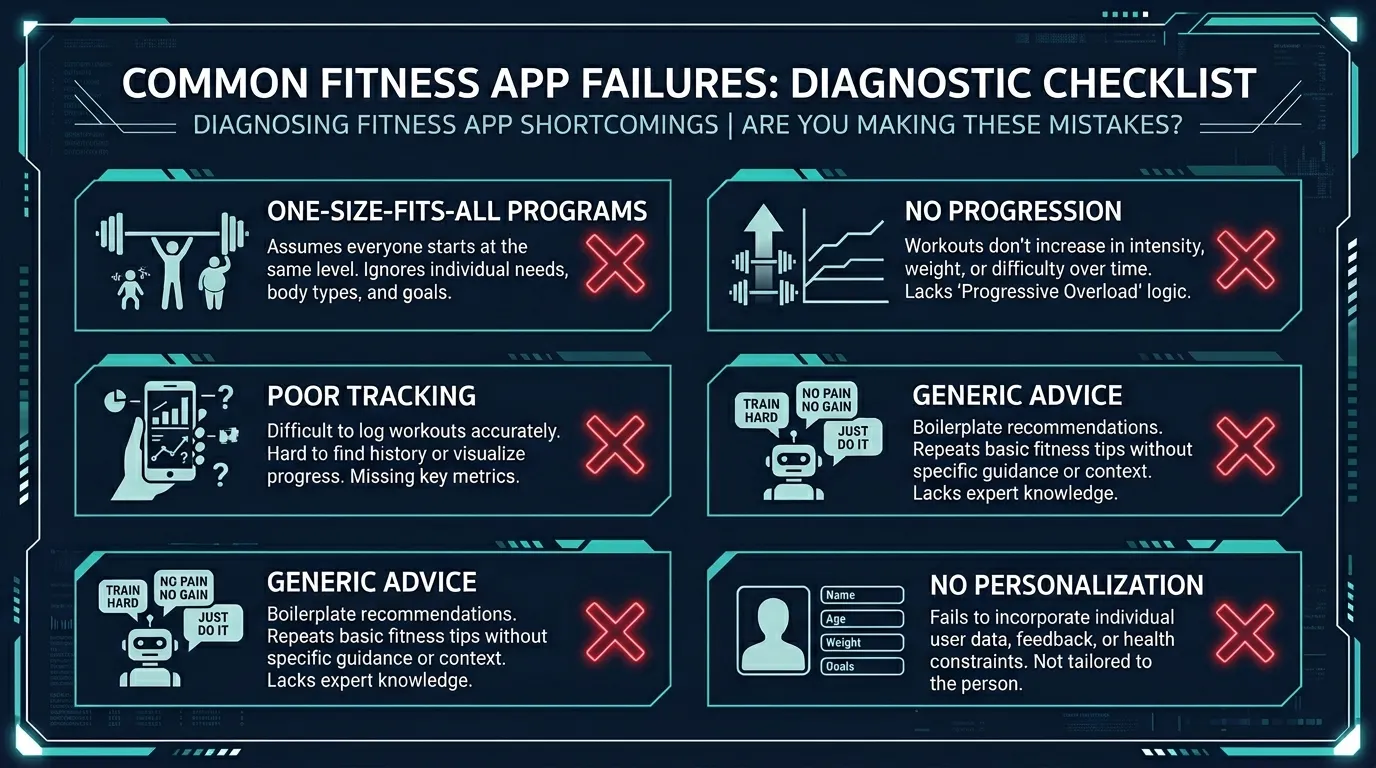
Not every app that lets you "add a friend" qualifies as couple-friendly. Many fitness apps bolt social features onto an individual experience — you can see your partner's stats, maybe send an emoji, but the actual workouts remain completely separate.
A genuinely couple-friendly fitness app solves the core problem: two people with different bodies, different fitness levels, and potentially different goals need to build a consistent shared habit.
Adaptive Workouts for Different Fitness Levels
This is the most important feature and the one most apps get wrong. If one partner has been training for years and the other is starting from scratch, identical workouts fail both people. The stronger partner gets bored. The newer partner gets overwhelmed.
Look for apps that use AI to personalize the workout to each individual. Both partners can train at the same time — even doing the same movement patterns — but with sets, reps, and difficulty calibrated to their own level. An AI trainer that adapts based on your progress ensures the workouts evolve as each person improves, without either partner feeling left behind.
Workout Variety That Matches Different Preferences
Couples rarely have identical workout preferences. One person might love strength training with dumbbells and resistance bands. The other might prefer yoga or mobility work. A good couples app offers multiple workout types — yoga, mobility, strength, cardio, and dynamic movement — so both partners can find sessions they genuinely enjoy.
Variety also prevents the staleness that kills long-term habits. When you can switch between bodyweight circuits on Monday, a yoga flow on Wednesday, and a dumbbell session on Friday, the routine stays fresh for both of you.
Shared Progress Tracking
Individual progress tracking is standard. Shared progress tracking is what makes a couple's fitness habit visible and tangible. Look for apps with calendar-based tracking that shows both partners' consistency, and rewards that acknowledge showing up together.
The visual element matters more than you might think. Seeing two calendars side by side — both filling up with completed workouts — creates a shared narrative. You're not just tracking your own progress. You're watching your joint commitment grow.
Interactive Exercise Guidance
When one partner is less experienced, clear exercise instruction is essential. Interactive 3D exercise demos with pinch-and-zoom camera control let both partners study proper form from any angle — far more useful than a flat video that shows one perspective. This reduces injury risk and builds confidence, especially for the partner who's newer to training.
Ready to put this into practice?
Take the free FitCraft assessment and get a personalized plan based on behavioral science, not willpower. Both you and your partner can take it — each plan adapts to your individual level.
Take the Free Assessment Free · 2 minutes · No credit card
How Gamification Creates Shared Goals for Couples
Here's where the science of motivation meets the reality of two busy people trying to exercise consistently. Gamification — XP systems, leveling up, collectible rewards, and calendar-based challenges — works particularly well for couples because it satisfies a psychological need called relatedness.
Self-Determination Theory, developed by Deci and Ryan, identifies three core psychological needs that drive sustained motivation: autonomy (feeling in control), competence (feeling capable), and relatedness (feeling connected to others). Most individual fitness apps address autonomy and competence. Gamification adds the relatedness layer that makes partner fitness stick.
XP and Leveling Up: Shared Progress You Can See
When both partners earn XP for completing workouts and watch their levels climb, exercise stops being an obligation and becomes a shared project. You're not just "working out." You're building something together — and that shift in framing changes how the habit feels.
The level system gives couples a shared language around fitness. "I hit Level 12 today" is more engaging conversation than "I did 30 minutes on the treadmill." It creates talking points, small celebrations, and visible evidence that your joint commitment is paying off.
Collectible Cards: Small Rewards That Compound
Collectible cards earned through workout completion tap into a powerful behavioral principle: variable reward schedules. You know you'll earn something after each session, but the specific card is a surprise. This uncertainty makes the reward system more engaging than a predictable badge.
For couples, collecting creates a shared experience. Comparing what you've each earned, working toward complete sets, and celebrating rare pulls together turns post-workout conversation into something genuinely fun.
Calendar Rewards: Making Consistency Visible
Calendar-based tracking with rewards for consistency gives couples a daily visual representation of their shared commitment. When both partners can see their calendars filling up with completed workouts, the pattern itself becomes motivating. Missing a day isn't just about that one session — it's a visible gap in something you're building together.
This visual accountability is gentle but effective. No one is nagging. The calendar simply shows what happened. And when both calendars show consistent effort, that shared pattern reinforces the identity of being "a couple that works out."
What This Means for You
If you and your partner have talked about getting fit together — or tried before and it didn't stick — the issue probably wasn't motivation. The research is clear: couples who exercise together don't need more willpower. They need a system designed for how two different people actually train.
That means an app that adapts to each of you individually, offers enough variety to match your different tastes, and uses gamification to turn consistency into something you're building together rather than suffering through alone.
As Katie, a FitCraft user, put it: "I've tried everything. This is the first time I've stuck with something past two weeks." When you add a partner to that equation — someone who shares the habit, shares the progress, and shares the rewards — "past two weeks" turns into a permanent part of your routine.
You've seen the pattern. Start strong, lose momentum, quietly stop. What changes when you do it together, with a system built for both of you, is that the momentum becomes self-reinforcing. Your partner's consistency motivates yours. Your progress motivates theirs. The gamification gives you both something to show for it beyond sore muscles.
That's the difference between another fitness attempt and a fitness habit that lasts.
Frequently Asked Questions
Do couples who exercise together actually stick with it longer?
Yes. A landmark 1995 study published in the Journal of Sports Medicine and Physical Fitness found that only 6.3% of married couples who joined a fitness program together dropped out over 12 months, compared to 43% of married individuals who joined alone. Partner accountability and shared routine create a powerful adherence effect.
What features should a couples fitness app have?
An effective couples fitness app should offer adaptive workouts that adjust to each partner's fitness level, shared progress tracking like calendars and streaks, gamification elements that create shared goals, and workout variety including yoga, strength, and cardio so both partners stay engaged regardless of their preferences.
Can couples with different fitness levels use the same workout app?
Yes. The best fitness apps for couples use AI-driven personalization to adapt each workout to the individual. Both partners can train at the same time with exercises calibrated to their own strength, mobility, and experience level — so neither person feels held back or overwhelmed.
How does gamification help couples stay consistent with exercise?
Gamification satisfies the psychological need for relatedness — one of three core drivers in Self-Determination Theory. Features like shared XP, collectible cards, and calendar-based rewards give couples a visible, shared progress system. When both partners earn rewards for consistency, exercise becomes a collaborative game rather than an individual obligation.