Yes. Lifting weights is the single most effective thing you can do to keep muscle while you lose fat on Ozempic. GLP-1 medications create a large calorie deficit, and a big share of the weight you lose can come from muscle unless you give your body a reason to hold onto it. Resistance training two or three times a week is that reason. And a 2026 study just made it more important, finding that people actually move less after starting these drugs, not more.
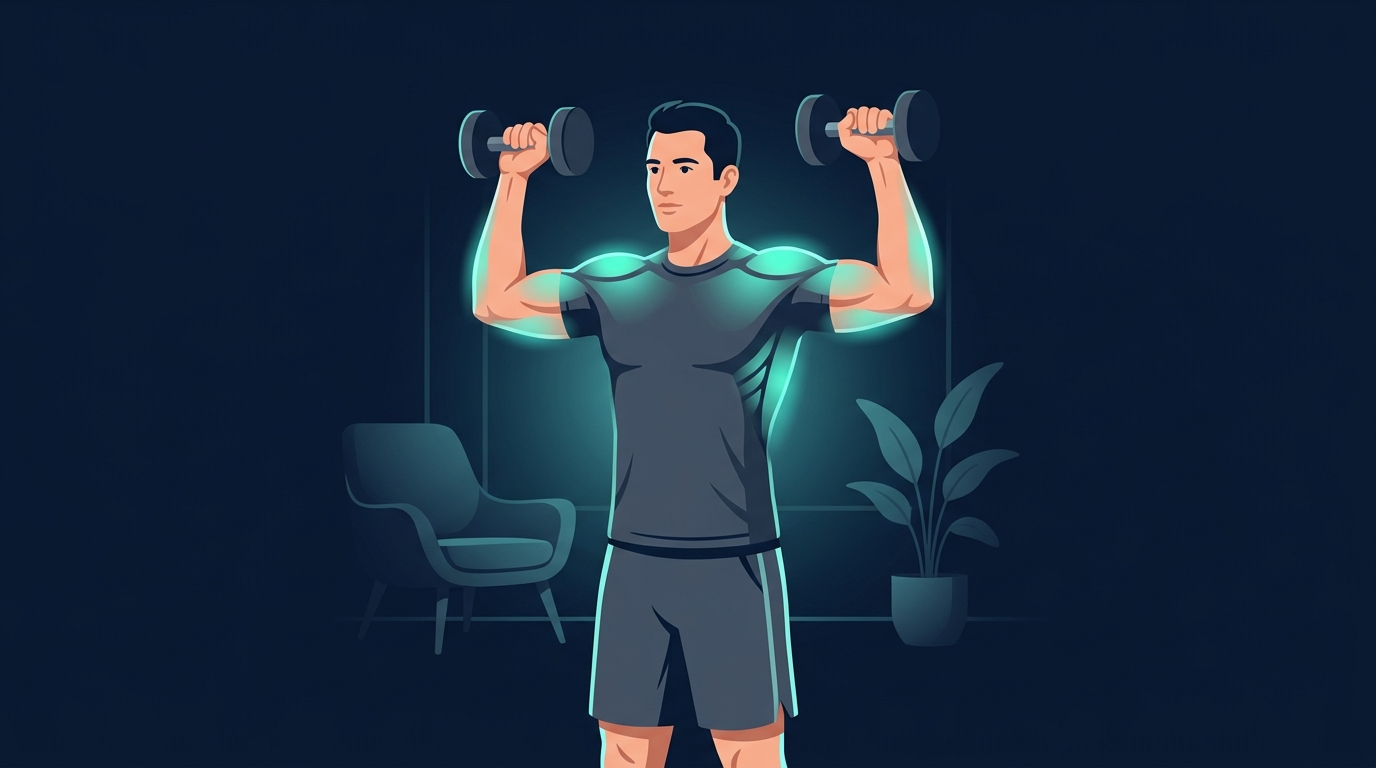
It's a fair question, and a common one. You started Ozempic or Wegovy to lose weight, the weight is dropping, and lifting weights sounds like extra work on top of a process that already seems to be handling itself. So do you actually need to? Let me give you the real answer, then walk through why.
You need to. Not because the scale requires it, but because of what you lose when you don't. The number on the scale can't tell you whether you're losing fat or muscle, and on a GLP-1 the difference is bigger than most people assume.
What you're actually losing when the scale drops
Here's the thing nobody mentions when the prescription gets written. When you lose weight fast, some of it is fat and some of it is muscle. That's true of any large weight loss, from crash diets to bariatric surgery to GLP-1 medications. Your body doesn't only burn fat in a deficit. It burns whatever it can, and muscle is on the menu unless you protect it.
The trial data is specific. In the STEP 1 body composition substudy (Wilding et al., 2021), which put people on semaglutide through DXA scans, roughly 45 percent of the total weight lost came from lean mass. Not fat. Lean tissue, which is mostly muscle. That's for people who weren't following a structured resistance program. Nearly half. We broke down the full picture, including the slightly better tirzepatide numbers, in our science piece on GLP-1 drugs and muscle loss.
Why does losing muscle matter if you're getting smaller anyway? A few reasons. Muscle is what makes you strong and functional, so losing it makes daily life harder as you age. It's metabolically active, so less muscle means a lower resting metabolism, which makes weight easier to regain. And if you ever come off the medication, a body with less muscle tends to put weight back on as fat. You'd be trading the body you want for a smaller version of a weaker one. That's the outcome lifting prevents.
The new wrinkle: people move less on a GLP-1, not more
Here's the finding that changed how I talk about this. You might assume that as people lose weight and feel lighter, they naturally start moving more. A large 2026 study says the opposite happens.
Researchers led by Sajana Maharjan presented the results at ENDO 2026, the Endocrine Society's annual meeting. Using the NIH All of Us Research Program, which links medical records to Fitbit data, they tracked 753 adults with obesity before and after they started a GLP-1. Daily steps dropped from about 5,047 to 4,487, a decline of roughly 560 steps a day. Moderate-to-vigorous activity fell from about 28 minutes a day to 22. The people losing weight were, on average, becoming more sedentary.
Sit with that for a second. The one process you'd hope would kick-start an active lifestyle appears to do the reverse for a lot of people. And that's a problem, because a more sedentary body in a calorie deficit is exactly the recipe for extra muscle loss. The study authors put it plainly: exercise can't be optional for people on these medications. If your activity is quietly drifting down while your appetite is suppressed, muscle is the tissue that pays the price.
Why lifting specifically, and not just walking
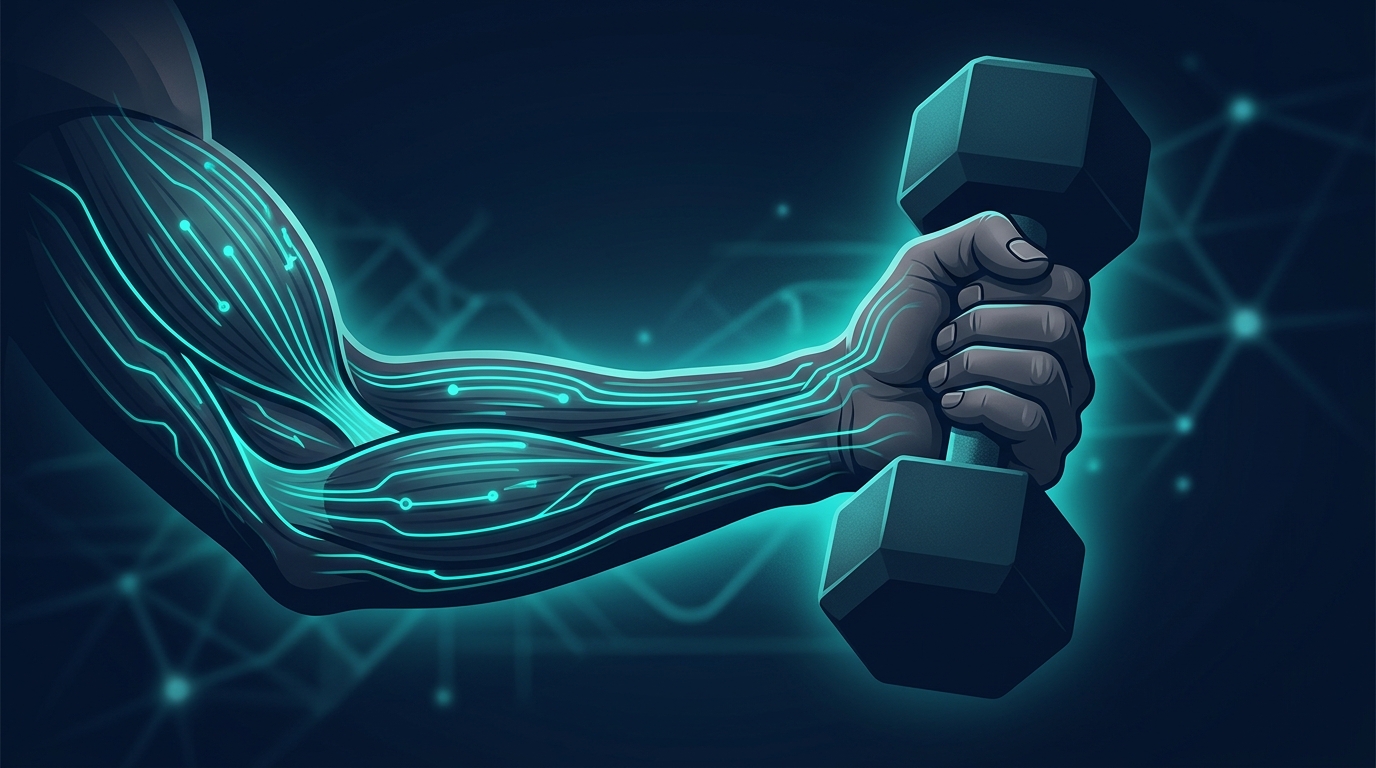
This is the part people get wrong. They hear "move more" and go for a walk, which is genuinely good for you. But walking won't keep your muscle. Only resistance training does that.
The reason is a signal called mechanical loading. When you make a muscle work against resistance, you tell your body "I still need this, keep it." Without that signal, a muscle sitting in a low-fuel, low-demand environment is dead weight your body is happy to break down for energy. Cardio raises your heart rate, but it doesn't send the keep-this-muscle signal. That's why the research on preserving muscle during weight loss always points to lifting.
A 2018 meta-analysis by Sardeli et al. in Nutrients pooled six trials of people in a calorie deficit and found that resistance training preserved almost all of their lean mass while they still lost significant fat. The 2024 review by Neeland and colleagues in Diabetes, Obesity and Metabolism took that evidence and made it a direct recommendation for GLP-1 users: resistance training at least twice a week, paired with enough protein. That's the current clinical playbook, and it works.
Knowing what to do is the easy part.
FitCraft, our mobile fitness app, pairs you with an AI coach who builds you a personalized plan around your goals, schedule, and fitness level. Every FitCraft program is designed by Domenic Angelino, MPH (Brown University) and NSCA-CSCS, with research published in the Journal of Strength and Conditioning Research and Medicine & Science in Sports & Exercise.
Take the Free Assessment Free • 2 minutes • No credit cardBut I have no energy, and I'm barely eating
Fair. This is the real objection, and it deserves a real answer. On a GLP-1, your appetite is down, your energy can be lower, and the idea of a workout feels like a lot. I hear this constantly. So here's the reframe: you're not training to set records. You're training to send a signal, and the signal is cheap.
The dose of lifting that preserves muscle is far lower than the dose that builds it. You don't need an hour. You don't need to be sore. Two short full-body sessions a week, maybe 25 minutes each, hitting the major muscle groups with a couple of sets each, is enough to flip your body from shedding muscle to keeping it. That's it. On a low-energy day, a shorter version still counts. Showing up at 60 percent beats skipping.
And you don't need a gym. Bodyweight squats, push-ups against a wall or the floor, resistance-band rows, and a pair of dumbbells cover everything. If you want the actual day-by-day layout, we put together a full GLP-1 muscle preservation workout plan that maps out the whole week. The point is that the barrier here is smaller than it feels.
Don't forget the protein
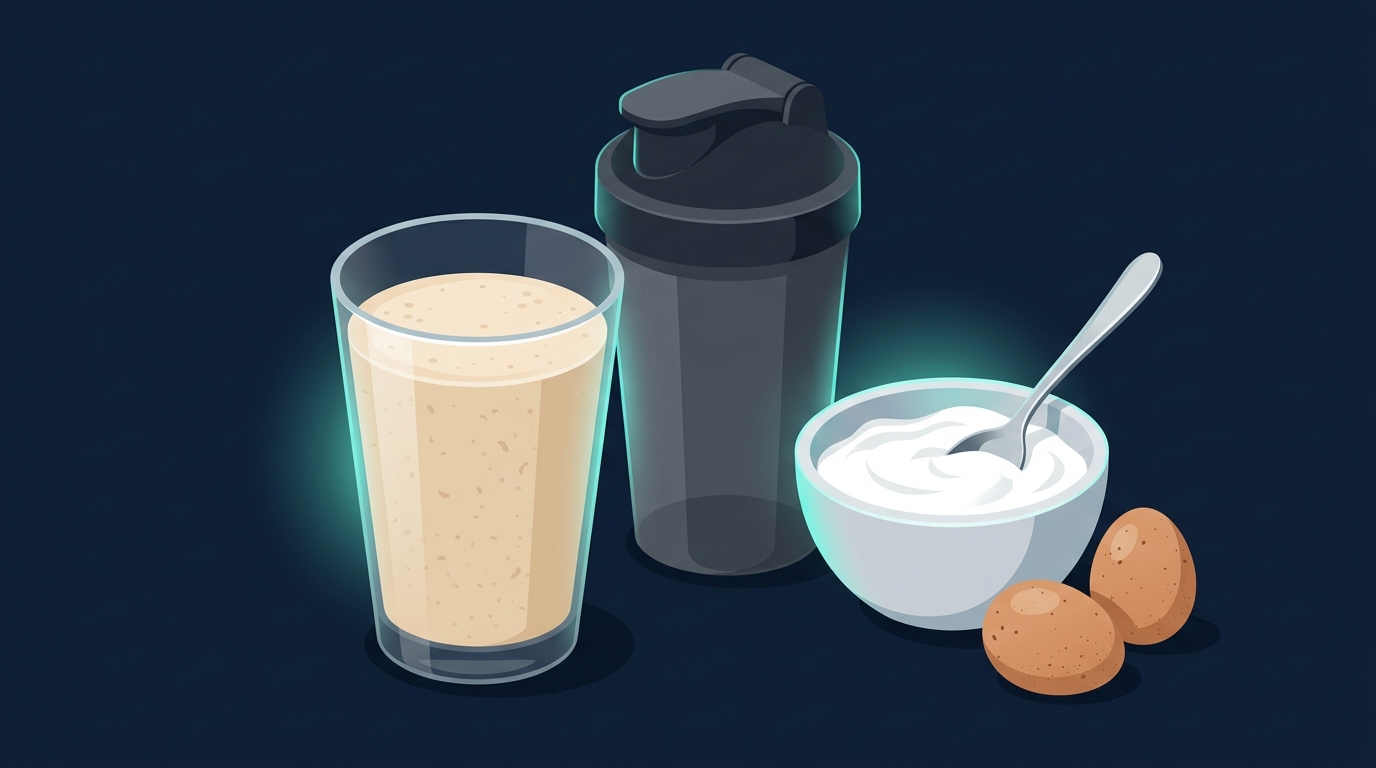
Lifting is half the equation. Protein is the other half, and on a GLP-1 it's usually the harder half. Muscle needs amino acids to hold itself together, and if your protein falls too low, your body pulls it from muscle instead. The problem is that a suppressed appetite makes protein easy to shortchange, because high-protein foods are filling and you're already not hungry.
The target across the research is 1.2 to 1.6 grams of protein per kilogram of body weight per day during active weight loss. The Morton et al. (2018) meta-analysis in the British Journal of Sports Medicine, which pooled 49 studies, found total daily protein was the biggest dietary driver of strength and muscle results, with the benefit leveling off around 1.62 g per kg. So there's a real target, and a point past which more doesn't help. The trick is simply hitting it: put protein on the plate first at every meal, and lean on protein-dense, low-volume options like Greek yogurt or a protein shake when your stomach can't handle a full meal.
So, do you need to lift?
Yes. If you take one thing from this, make it this: the medication controls your weight, but you control what that weight is made of. Lifting two or three times a week plus enough protein is how you make sure the pounds leaving your body are fat and not the muscle you'll want for the rest of your life. The 2026 activity data only sharpens the point, because if you're moving less without noticing, muscle is quietly on the line.
Start light, start early, and keep it simple. Your future self, the strong and capable one, is built in these next few months. For more on training day to day while on the medication, our blog on Ozempic and exercise covers the practical side, and if you want an app to structure those lifting sessions for you, we compared the fitness apps that work best alongside GLP-1 medication.
Frequently Asked Questions
Do I really need to lift weights on Ozempic?
Yes. Lifting weights is the single most effective thing you can do to keep muscle while losing weight on Ozempic or any GLP-1. Because these medications create a large calorie deficit, a meaningful share of the weight you lose can come from muscle unless you give your body a reason to keep it. Resistance training two to three times a week provides that signal. It does not require a gym, and the dose needed to preserve muscle is much lower than the dose needed to build it.
Is cardio or walking enough to keep muscle on a GLP-1?
No. Walking and cardio are good for your heart and help control how sedentary you become, but they do not send the mechanical-loading signal that tells your body to preserve muscle. Only resistance training does that. Walking is a valuable supporting habit on a GLP-1, especially since a 2026 study found people tend to move less after starting these drugs, but it cannot replace lifting for muscle preservation.
What happens if I don't lift weights while losing weight on Ozempic?
You will likely lose more muscle than necessary. In the STEP 1 body composition substudy, roughly 45 percent of the weight lost on semaglutide came from lean mass when people were not doing structured resistance training. Losing muscle can lower your strength, slow your metabolism, and increase the risk that weight comes back as fat if you stop the medication. Resistance training plus adequate protein closes most of that gap.
How soon after starting Ozempic should I start lifting?
As early as your clinician approves, ideally the same week you start. The 2024 Neeland review recommends beginning resistance training during the dose-escalation phase rather than waiting for weight loss to slow down, because the muscle lost in the first few months is the hardest to regain later. Start light and build up gradually.
References
- Maharjan S, et al. "Physical activity changes in adults with obesity after initiating GLP-1 receptor agonist therapy." Presented at ENDO 2026, Endocrine Society Annual Meeting, Chicago, IL. June 2026. Endocrine Society press release
- Wilding JPH, Batterham RL, Davies M, et al. "Impact of Semaglutide on Body Composition in Adults With Overweight or Obesity: Exploratory Analysis of the STEP 1 Study." Diabetes, Obesity and Metabolism. 2021. PMC8089287
- Sardeli AV, Komatsu TR, Mori MA, Gaspari AF, Chacon-Mikahil MPT. "Resistance Training Prevents Muscle Loss Induced by Caloric Restriction in Obese Elderly Individuals: A Systematic Review and Meta-Analysis." Nutrients. 2018;10(4):423. PMID: 29596307
- Neeland IJ, Linge J, Birkenfeld AL. "Changes in lean body mass with glucagon-like peptide-1-based therapies and mitigation strategies." Diabetes, Obesity and Metabolism. 2024;26(Suppl 4):16-27. DOI: 10.1111/dom.15728
- Morton RW, Murphy KT, McKellar SR, et al. "A systematic review, meta-analysis and meta-regression of the effect of protein supplementation on resistance training-induced gains in muscle mass and strength in healthy adults." British Journal of Sports Medicine. 2018;52(6):376-384. PMID: 28698222