- GLP-1 drugs cause real lean mass loss. The STEP 1 body composition substudy found roughly 45 percent of total weight lost on semaglutide came from lean tissue. The SURMOUNT-1 substudy found about 25 percent for tirzepatide.
- That ratio is normal for rapid weight loss. The absolute numbers are larger because the weight loss is larger. The mechanism is not unique to GLP-1s.
- Resistance training plus protein closes most of the gap. Sardeli et al. (2018) pooled 6 trials in obese older adults and found resistance training preserved nearly all lean mass during caloric restriction.
- The protein target is 1.2 to 1.6 g per kg per day during active loss. Appetite suppression makes hitting it hard. Anchor every meal around a protein source.
- You do not need a gym. Bodyweight progressions, bands, and dumbbells produce the muscle-preserving signal at the dose most people on a GLP-1 need.
The GLP-1 weight loss drugs (semaglutide as Ozempic and Wegovy, tirzepatide as Mounjaro and Zepbound) work. The headline numbers from the registration trials are real. Average users lose 15 percent of their body weight on semaglutide and as much as 22 percent on tirzepatide over a year or so. Those are pharmacological numbers nobody had access to a decade ago.
The quieter half of that picture is body composition. Some of what comes off is fat. Some of it is muscle, bone, organ tissue, and connective tissue. That second bucket (lean mass on a DXA scan) matters for strength, metabolic health, fall risk in older adults, and the rate at which weight regains if therapy stops. The trial substudies have now reported their lean-mass numbers, and the popular conversation has gone from "Ozempic causes muscle wasting" to "actually it preserves muscle" depending on who is talking. The truth sits between those two camps.
This article walks through the five trials and reviews that anchor the modern picture (Wilding 2021 for STEP 1, the STEP 1 body composition substudy, Look 2025 for SURMOUNT-1, the Neeland 2024 review on lean mass with GLP-1s, and the older Cava 2017 protein-during-weight-loss synthesis). We will close with the lifestyle plan the 2024 and 2025 reviews actually recommend.
Do you lose muscle on Ozempic?
Yes. You lose muscle on Ozempic, and on every other GLP-1 in this class. Some fraction of the weight that comes off is lean tissue rather than fat, and the DXA substudies put that fraction somewhere between a quarter and just under half of total weight lost depending on the drug and the population.
That answer needs one immediate qualifier, because the internet tends to drop it. Losing lean mass during weight loss is not a GLP-1 phenomenon. It happens in any sustained caloric deficit, whether the deficit comes from a drug, a diet, or bariatric surgery. The largest and best-powered synthesis to date is the network meta-analysis by Karakasis et al. (2025) in Metabolism, which pooled 22 randomized trials and 2,258 participants. It found that lean mass made up roughly 25 percent of total weight lost across GLP-1 based therapies. That is close to what you would expect from diet-driven weight loss of similar size.
One finding in that meta-analysis is worth pulling out. Liraglutide was the only agent that produced significant weight reduction without a statistically significant reduction in lean mass. The more potent drugs, semaglutide and tirzepatide, produced far more total weight loss and correspondingly larger absolute lean mass reductions. That pattern is the whole story in one line: the lean mass cost tracks the size and speed of the weight loss, not something uniquely destructive about the molecule.
So the honest framing is neither "Ozempic causes muscle wasting" nor "Ozempic preserves muscle". You lose muscle in proportion to how much and how fast you lose weight, and how you eat and train while it happens determines where in that range you land. The rest of this article walks through the trial data, then the two levers that actually move the number.
The Research: What Studies Show
Three trial-level papers and two reviews carry most of the weight here. We will go in order of strength. The table below puts the two body composition substudies side by side, and the sections that follow unpack each one.
| Substudy (drug) | Total weight loss | Fat mass change | Lean mass change | Lean fraction of loss |
|---|---|---|---|---|
| STEP 1 (semaglutide) | ~15% | -19.3% | -9.7% | ~45% |
| SURMOUNT-1 (tirzepatide) | ~22% | -33.9% | -10.9% | ~25% |
STEP 1 (Wilding et al. 2021): The Headline Semaglutide Result
The pivotal trial for semaglutide in obesity was Wilding et al. (2021), published in the New England Journal of Medicine. The team randomized 1,961 adults with obesity (or overweight plus a weight-related condition) to once-weekly subcutaneous semaglutide 2.4 mg or placebo for 68 weeks. Both arms also got lifestyle counseling at each visit.
The primary outcome was clear. Semaglutide produced a mean weight loss of 14.9 percent versus 2.4 percent for placebo. About 86 percent of the semaglutide group lost at least 5 percent of body weight. The trial established the modern era of pharmacological weight loss and led directly to FDA approval of Wegovy.
What it did not establish was what tissue the weight came from. That question went to a substudy.
STEP 1 Body Composition Substudy (Wilding et al. 2021): The Lean Mass Question
A subset of 140 participants (95 on semaglutide, 45 on placebo) got DXA scans at baseline and at week 68. The results were published as a companion paper in Diabetes, Obesity and Metabolism (Wilding et al. 2021, PMC8089287).
Total fat mass dropped 19.3 percent. Visceral fat dropped 27.4 percent. Lean body mass dropped 9.7 percent. The proportion of total body mass made up of lean tissue actually went up by 3.0 percentage points, which is the metric the manufacturer highlighted. But the absolute lean mass loss was meaningful. About 6.9 kg of the average 15.3 kg lost was lean tissue. That is roughly 45 percent of total weight lost coming from lean mass.
The framing matters. A 45 percent lean-mass fraction is on the high side for rapid weight loss but is not categorically different from what a very low calorie diet without resistance training produces. It is the size of the weight loss multiplied by that ratio, not the ratio itself, that drives the absolute kilograms of muscle lost.
SURMOUNT-1 Body Composition Substudy (Look et al. 2025)
The parallel question for tirzepatide came from Look et al. (2025), published in Diabetes, Obesity and Metabolism. The substudy reported DXA changes from baseline to week 72 in the SURMOUNT-1 cohort, where average total weight loss approached 22 percent on the highest dose.
Total fat mass dropped 33.9 percent. Total lean mass dropped 10.9 percent. The fat-mass to lean-mass ratio improved substantially. Of the total kilograms lost, approximately 75 percent came from fat and 25 percent from lean tissue. That 25 percent lean-mass fraction is roughly in line with what you would see from supervised diet plus exercise in a controlled trial.
The cleaner ratio in SURMOUNT-1 versus STEP 1 is genuinely interesting. Tirzepatide is a dual GIP/GLP-1 agonist, and the GIP component may affect fat versus lean partitioning slightly differently. The honest read is that the two drugs are closer than the marketing makes them sound, and the lean-mass fraction depends as much on lifestyle context (protein, activity) as on the molecule. The Karakasis network meta-analysis reinforces that reading. Pooled across 22 trials, both semaglutide and tirzepatide showed significant absolute lean mass reductions, and the agent that spared lean mass best (liraglutide) was also the one that produced the least total weight loss.
Neeland et al. 2024: The Review That Sets Expectations
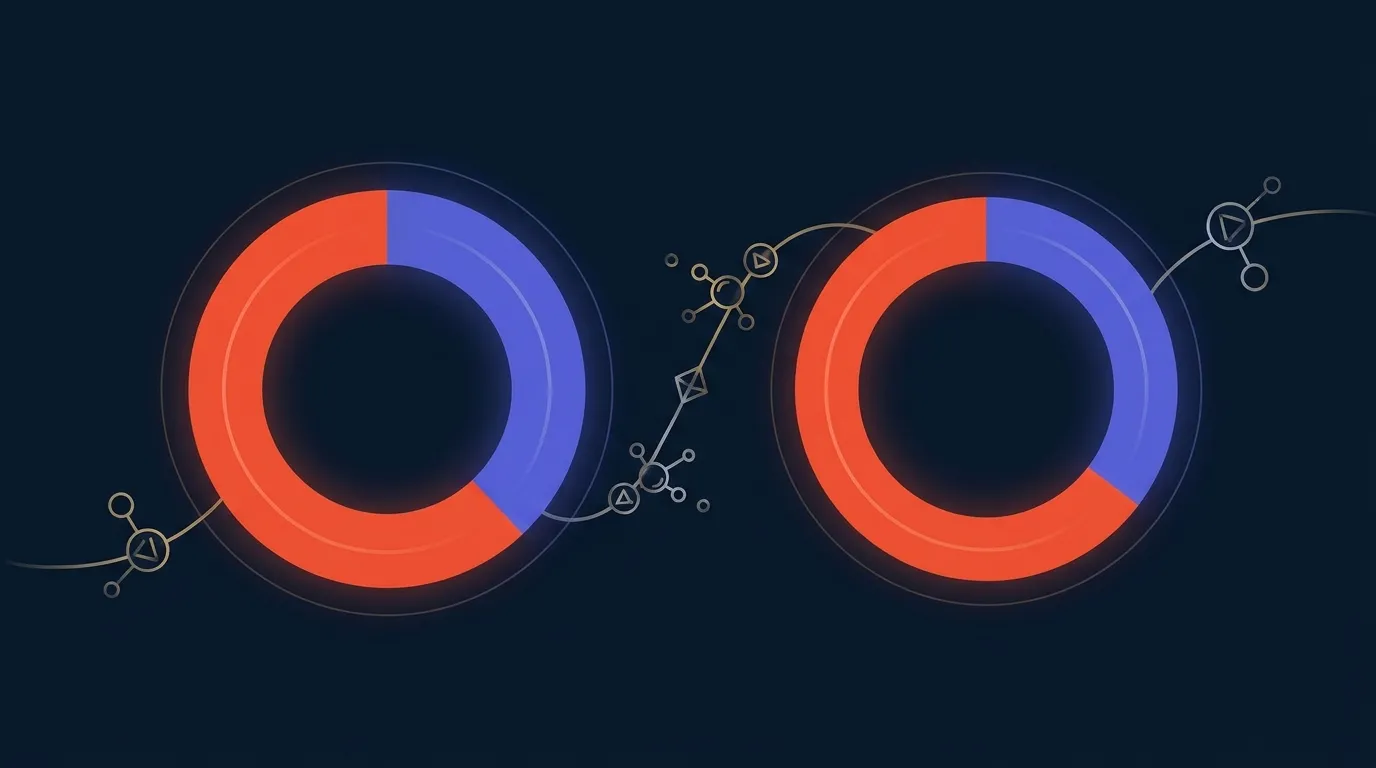
The cleanest synthesis of the lean-mass question is Neeland, Linge, and Birkenfeld (2024) in Diabetes, Obesity and Metabolism. The authors reviewed the available GLP-1 trials with body composition data and concluded that the lean-mass loss seen in GLP-1 therapy is in the expected range for the magnitude of weight loss observed. Across studies, roughly 20 to 40 percent of total weight lost came from lean tissue, depending on the population, baseline body composition, and lifestyle conditions.
The same review emphasizes the lifestyle lever. It recommends resistance training at least twice per week and protein intakes in the 1.2 to 1.6 g per kg per day range for anyone on GLP-1 therapy, especially older adults and anyone at risk of sarcopenia. The review is the basis for the current clinical practice guidance most endocrinology departments now give patients starting GLP-1 therapy.
Cava et al. 2017: The Protein-During-Weight-Loss Reference
The protein guidance is not new. Cava, Yeat, and Mittendorfer (2017) in Advances in Nutrition reviewed the muscle-preservation-during-weight-loss literature long before GLP-1s were on the public radar. Their conclusion held up. A hypocaloric diet with adequate protein (above the RDA, typically 1.2 to 1.6 g per kg per day) combined with resistance training preserves muscle mass and strength better than diet alone. Bone density and physical function track the same direction.
That paper, plus Sardeli et al. (2018) in Nutrients, are the reference points the 2024 Neeland review cites when it makes the resistance-training-plus-protein recommendation. Nothing about the GLP-1 era invalidated the older literature. It just made the recommendation more urgent because the weight loss is faster and larger.
Why does GLP-1 weight loss pull muscle along with fat?
It pulls muscle along because a large, fast caloric deficit always costs some lean tissue, not because the drug attacks muscle directly. This is where the popular discussion goes sideways. The drugs themselves do not directly catabolize muscle. They suppress appetite and slow gastric emptying. That produces a sustained caloric deficit, often 500 to 1,000 calories per day. The body responds to that deficit the way it always has. Fat tissue gets oxidized for fuel. So does some lean tissue. The ratio depends on three things, in order of importance.
First, protein intake. The body needs amino acids to maintain skeletal muscle. If dietary protein falls below the maintenance threshold (around 0.8 g per kg per day for sedentary adults, higher during weight loss), the body cannibalizes muscle to supply those amino acids. GLP-1 users frequently eat less than usual across the board, and protein gets shortchanged because high-protein foods tend to be filling and the appetite is already gone.
Second, mechanical loading. Muscle responds to use. If a muscle is not stimulated by resistance work, the body has no signal to maintain it during a deficit. This is why even modest resistance training preserves lean mass during weight loss. The signal does not need to be intense. It needs to be present.
Third, rate of weight loss. The faster the loss, the more lean tissue gets dragged along for the ride. GLP-1 users routinely lose weight faster than what behavioral interventions alone produce, which pushes the lean-mass fraction up. That is unavoidable without slowing the dose or pausing the medication, neither of which most users want to do.
The mechanism is the same as detraining. Muscle held in a low-stimulus, low-fuel environment shrinks. Adding resistance work and adequate protein flips both signals. It is a deeply unsurprising story when you strip away the brand-name framing.
For the broader context on how exercise interacts with GLP-1 therapy, our blog on Ozempic and exercise covers the practical side of training while on the medication. The piece on resistance training and mortality covers why preserving lean mass matters far beyond weight loss.
How do you preserve muscle while on a GLP-1?
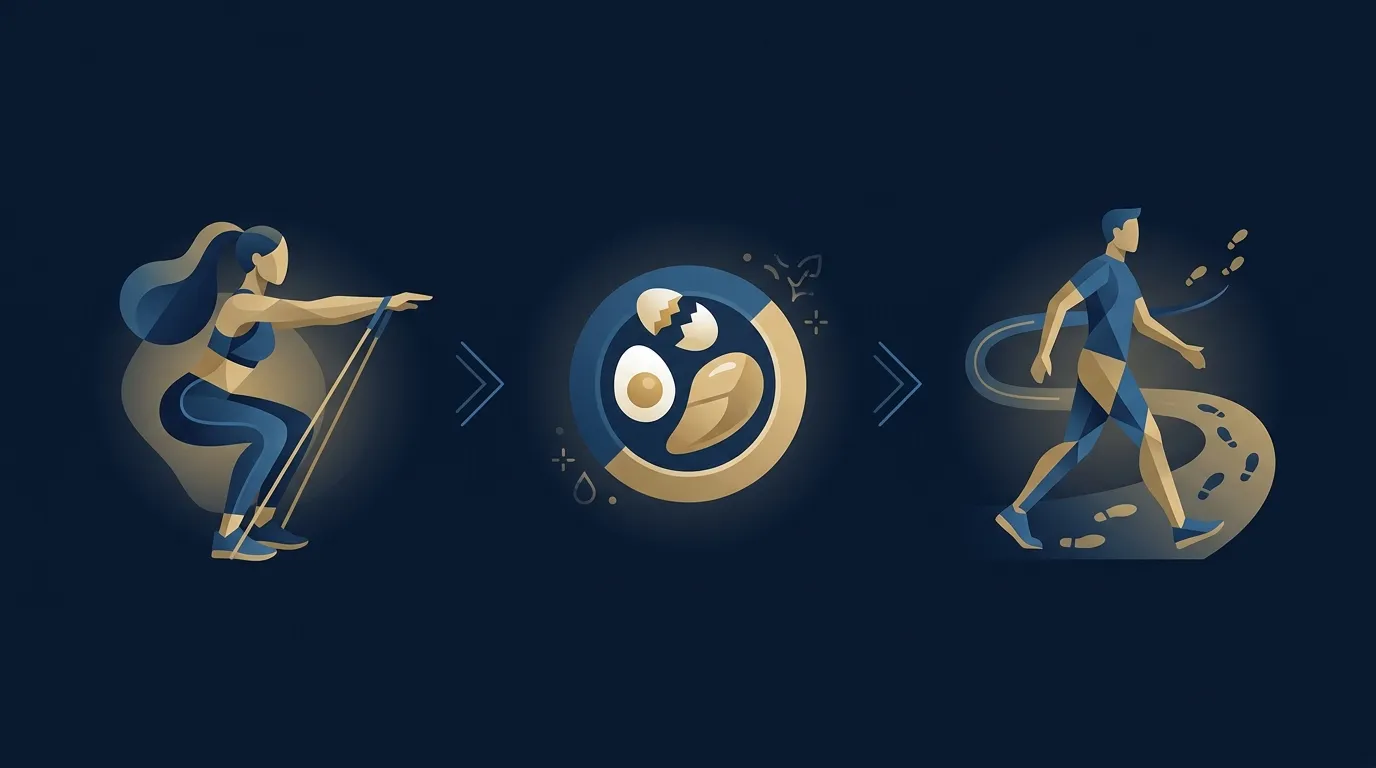
You preserve it by adding resistance training, adequate protein, and daily walking to the medication. The 2024 and 2025 reviews converge on that simple three-part plan. None of it requires a gym, expensive equipment, or a personal trainer. If you want an app to structure the training side, we compared the best fitness apps for GLP-1 users against exactly this three-part checklist.
Resistance training two or three times a week. Hit the major muscle groups (legs, hips, chest, back, shoulders, arms, core) with two or three working sets per exercise. Use bodyweight progressions, resistance bands, or dumbbells. The dose that preserves muscle is much lower than the dose that builds new muscle. Around 10 hard sets per major muscle group per week is enough during a deficit, which is comfortably in reach for a 25-minute home session three times a week. For the schedule logic behind that number, see our piece on training frequency for muscle growth.
Protein at 1.2 to 1.6 g per kg per day. For someone weighing 80 kg (176 lb), that is 96 to 128 grams of protein per day. Anchor every meal around a protein source. Eggs, Greek yogurt, cottage cheese, chicken, fish, tofu, tempeh, lentils, and protein powder are the workhorses. If appetite is the bottleneck (and on a GLP-1 it usually is), prioritize protein-dense foods over volume foods. A scoop of protein powder in coffee or a Greek yogurt can replace an entire meal's worth of protein with very little stomach load.
Daily walking on top of the resistance work. The 2024 Neeland review notes that overall daily activity matters, and the strongest trial evidence for combining exercise with a GLP-1 comes from Lundgren et al. (2021) in the New England Journal of Medicine, where adding a structured exercise program to liraglutide preserved fat-free mass and roughly doubled the drop in body fat percentage compared with either treatment alone. Walking does not preserve muscle the way resistance work does, but it preserves cardiovascular fitness and supports the energy availability that makes the higher protein intake actually contribute to lean mass. Aim for the equivalent of 7,000 to 10,000 steps a day, less if you are starting from a lower baseline.
If you are over 60 or already at risk for sarcopenia, the same plan applies, just earlier in the dose-escalation phase. The 2024 review specifically recommends starting resistance training the same week you start the GLP-1, not waiting until weight loss plateaus. The lean tissue that comes off in the first three months is the hardest to recover later.
GLP-1 strength training: what the protocol actually looks like
GLP-1 strength training is not a special modality. It is ordinary progressive resistance training, applied earlier and more consistently than most people bother with. There is no GLP-1 specific exercise, no proprietary protocol, and nothing you need to buy. What follows is the prescription the 2024 Neeland review points to, made concrete.
Frequency: two to three sessions per week. Two is the floor that shows up in the muscle-preservation literature. Three is better if it fits. More than four adds little during a deficit and tends to be the first thing that gets dropped when energy is low, which on a GLP-1 it often is.
Movements: cover the five patterns. A squat, a hinge, a push, a pull, and a carry or core exercise. That is the whole map. In practice that can be goblet squats, Romanian deadlifts, push-ups, bent-over rows, and forearm planks. Five movements, two or three sets each, and you have covered every major muscle group in about 25 minutes.
Volume: around 10 hard sets per major muscle group per week. That is the maintenance dose, and it is meaningfully lower than the dose that builds new muscle in a surplus. Two or three working sets per exercise, roughly 8 to 15 reps, stopping a rep or two short of failure.
Progression: add a little, regularly. This is the part people skip. Strength training only keeps its muscle-preserving signal if it stays challenging relative to what you can currently do. Add a rep, add a little load, or slow the lowering phase. On a GLP-1 your body weight is falling, so bodyweight movements get easier week over week even when nothing else changes. Progression is what keeps the stimulus honest.
Timing: start in week one. The 2024 review specifically recommends starting resistance training the same week you start the medication rather than waiting for a plateau. Lean tissue lost in the first three months is the hardest to recover later.
Worth saying plainly: preserving muscle and adding muscle are different goals with different requirements. If you are wondering whether the second one is on the table, we covered that separately in can you build muscle on a GLP-1.
Get an evidence-based plan built for you
FitCraft, our mobile fitness app, pairs you with an AI coach who builds you a personalized plan around your goals, schedule, and fitness level. Every FitCraft program is designed by Domenic Angelino, MPH (Brown University) and NSCA-CSCS, with research published in the Journal of Strength and Conditioning Research and Medicine & Science in Sports & Exercise.
Take the Free Assessment Free • 2 minutes • No credit cardCommon Misconceptions
Misconception 1: "GLP-1 drugs uniquely destroy muscle."
They do not. The body composition substudies put the lean-mass fraction at roughly 25 to 45 percent of total weight lost, depending on the drug and the population. That range is well within what unsupervised diet-only weight loss produces. What is unique is the magnitude. Losing 15 percent of body weight in a year produces more absolute kilograms of lean tissue loss than losing 5 percent, even at the same fractional ratio. The drug is not the villain. The deficit is, and the lifestyle around the deficit is what determines the outcome.
Misconception 2: "If lean mass percentage goes up, muscle is being preserved."
Sponsors often report the proportion of body mass that is lean tissue, which improves on GLP-1s because fat mass falls faster than lean mass. That metric is genuinely good news in one sense (the user is leaner overall) but it is not the same as preserving muscle. Absolute lean mass still went down in both STEP 1 and SURMOUNT-1. A user can have a better body-composition ratio and less skeletal muscle at the same time. The clinically relevant question is whether absolute lean mass and function are preserved, and the substudies say partly, not fully.
Misconception 3: "I need a gym to preserve muscle on a GLP-1."
You do not. The Sardeli 2018 meta-analysis pooled trials that used machines and free weights, but the muscle-preserving mechanism (mechanical loading at a meaningful dose, two or three times a week) is reproducible with bodyweight squats, push-up progressions, single-leg work, resistance band rows, and dumbbell variations. The barrier to muscle preservation on a GLP-1 is consistency and protein, not equipment access. A 25-minute home session three times a week is enough to flip the body's signal from "shed this tissue" to "maintain this tissue".
What the Research Suggests Going Forward
Pull back the camera and the GLP-1 lean-mass picture is mostly settled at the trial level. The drugs work for weight loss. They also pull lean tissue along at roughly the proportion you would expect for the magnitude of loss. The 2024 Neeland review and the 2021 Lundgren trial together make the case that the lifestyle prescription (strength training plus protein) is well-established and should be paired with every GLP-1 prescription, not held in reserve for users who plateau or regain.
Three caveats stay in play. First, the substudies are short. STEP 1 and SURMOUNT-1 ran 68 to 72 weeks. Long-term users on these drugs for five or ten years are an open question. Whether the early lean-mass loss is recovered, stable, or worsens slowly over years has not been characterized at the trial level. Second, the participant pool skews younger and lower-risk than the real-world GLP-1 user base. Adults over 65, frail adults, and adults with sarcopenia at baseline are underrepresented. The 2024 review flags that group as the one most in need of structured exercise support. Third, the absolute magnitude of lean mass loss in trials masks substantial individual variation. Some users lose much less than the trial average. Others lose substantially more. The honest takeaway is that average outcomes are okay, individual outcomes can be much worse, and the lifestyle factors that close that variance are well-known and accessible.
The practical advice is genuinely simple. Pair the medication with resistance training two or three times a week, protein at 1.2 to 1.6 g per kg per day, and daily walking. Track grip strength, walking speed, or your ability to stand up from a chair without using your hands. If those numbers hold over the months of weight loss, the muscle that came off was metabolically acceptable. If they decline, the dose of training and protein has to go up.
References
- Wilding JPH, Batterham RL, Calanna S, et al. "Once-Weekly Semaglutide in Adults with Overweight or Obesity." New England Journal of Medicine 384.11 (2021): 989-1002. PMID: 33567185
- Wilding JPH, Batterham RL, Davies M, et al. "Impact of Semaglutide on Body Composition in Adults With Overweight or Obesity: Exploratory Analysis of the STEP 1 Study." Diabetes, Obesity and Metabolism (2021). PMC8089287
- Look M, Dunn JP, Kushner RF, et al. "Body composition changes during weight reduction with tirzepatide in the SURMOUNT-1 study of adults with obesity or overweight." Diabetes, Obesity and Metabolism 27.5 (2025): 2720-2729. DOI: 10.1111/dom.16275
- Neeland IJ, Linge J, Birkenfeld AL. "Changes in lean body mass with glucagon-like peptide-1-based therapies and mitigation strategies." Diabetes, Obesity and Metabolism 26.Suppl 4 (2024): 16-27. DOI: 10.1111/dom.15728
- Cava E, Yeat NC, Mittendorfer B. "Preserving Healthy Muscle during Weight Loss." Advances in Nutrition 8.3 (2017): 511-519. PMC5421125
- Sardeli AV, Komatsu TR, Mori MA, Gáspari AF, Chacon-Mikahil MPT. "Resistance Training Prevents Muscle Loss Induced by Caloric Restriction in Obese Elderly Individuals: A Systematic Review and Meta-Analysis." Nutrients 10.4 (2018): 423. PMID: 29596307
- Karakasis P, Patoulias D, Fragakis N, Mantzoros CS. "Effect of glucagon-like peptide-1 receptor agonists and co-agonists on body composition: Systematic review and network meta-analysis." Metabolism 164 (2025): 156113. PMID: 39719170
- Lundgren JR, Janus C, Jensen SBK, et al. "Healthy Weight Loss Maintenance with Exercise, Liraglutide, or Both Combined." New England Journal of Medicine 384.18 (2021): 1719-1730. PMID: 33951361
- Prokopidis K. "Glucagon-like peptide-1 receptor agonists and muscle strength changes in older adults: Risks beyond muscle mass reductions." British Journal of Pharmacology (2026). DOI: 10.1111/bph.70355
Frequently Asked Questions
Do you lose muscle on Ozempic?
Yes. Some of the weight lost on Ozempic (semaglutide) is lean mass, and the same is true of Wegovy, Mounjaro, and Zepbound. The STEP 1 body composition substudy (Wilding et al. 2021) found that semaglutide produced about 15 percent body weight loss with roughly 45 percent of that loss coming from lean mass on DXA. In the SURMOUNT-1 substudy of tirzepatide (Look et al. 2025), the lean-mass fraction was closer to 25 percent, and a 22-trial network meta-analysis (Karakasis et al. 2025, Metabolism) put the average at about 25 percent across GLP-1 drugs. Those ratios are in the normal range for any rapid weight loss. The concern is that the absolute kilograms are larger because the total weight loss is larger, and many people on these drugs do not pair them with strength training or adequate protein.
Does resistance training prevent muscle loss on Ozempic or Wegovy?
It substantially reduces it. Sardeli et al. (2018) in Nutrients pooled six trials in obese older adults during caloric restriction and found resistance training preserved nearly all lean mass while still allowing significant fat loss. The same physiology applies during GLP-1 induced weight loss. The 2024 Neeland review recommends progressive resistance training two or three times per week plus adequate protein for anyone on GLP-1 therapy. You do not need a gym. Bodyweight progressions, resistance bands, and dumbbells produce the same muscle-preserving signal at the dose most people need.
How much protein should I eat on a GLP-1 drug?
Most clinical guidance lands at 1.2 to 1.6 grams of protein per kilogram of body weight per day during active weight loss on a GLP-1, with the higher end favored for older adults. The Cava, Yeat, and Mittendorfer (2017) review in Advances in Nutrition is the standard reference for the protein-during-weight-loss question. The challenge on a GLP-1 is appetite suppression. A practical approach is to anchor every meal around a protein source first (eggs, Greek yogurt, chicken, fish, cottage cheese, tofu, lentils) and add carbohydrate and fat around it.
Is the muscle loss from GLP-1 drugs dangerous?
For most healthy adults in the short term, no. The 2024 Neeland review concluded that observed lean mass reductions have not consistently translated into functional impairment in trial populations. Age changes that picture. A 2026 British Journal of Pharmacology review by Prokopidis notes that short-term studies in younger adults show preserved handgrip strength despite lean tissue loss, while longitudinal data in older adults with type 2 diabetes have reported reduced handgrip strength and accelerated sarcopenia with prolonged semaglutide use. The same review stresses that lean tissue loss is not a reliable predictor of strength change. Monitoring grip strength, walking speed, and the ability to rise from a chair without using your arms is a sensible practical check, and any decline warrants a conversation with your prescriber.
Is tirzepatide better than semaglutide for preserving muscle?
The published substudies suggest a small edge for tirzepatide, but the comparison is not head-to-head. SURMOUNT-1 reported roughly 75 percent of weight lost on tirzepatide was fat mass and 25 percent was lean mass. STEP 1 reported roughly 55 percent fat and 45 percent lean for semaglutide. The 22-trial network meta-analysis by Karakasis et al. (2025) found that the more potent drugs, tirzepatide and semaglutide, produced both the largest total weight loss and the largest absolute lean mass reductions, while liraglutide was the one agent that cut weight without a significant lean mass hit. The honest answer is that strength training plus protein is a much larger lever for either drug than the choice between them.
What does GLP-1 strength training actually look like?
GLP-1 strength training is ordinary progressive resistance training, applied earlier and more consistently than most people bother with. The practical prescription from the 2024 Neeland review is two to three sessions per week covering the major movement patterns: a squat, a hinge, a push, a pull, and a carry or core exercise. Two or three working sets per exercise, roughly 8 to 15 reps, stopping a rep or two short of failure. Around 10 hard sets per major muscle group per week is enough to hold muscle during a deficit, which fits into a 25 to 30 minute session three times a week. Equipment is not the limiting factor. Bodyweight progressions, resistance bands, and dumbbells all produce the muscle-preserving signal. The two things that matter most are starting in the first weeks of dose escalation rather than waiting for a plateau, and adding a little load or a rep over time so the training stays progressive.