Quick Comparison
| App | Best for | Price | The honest catch |
|---|---|---|---|
| FitCraft | Building a strength habit at home | Free version, premium ~$9.99/mo | Not a GLP-1 app. No dose or macro tracking |
| Fitbod | Gym-based progressive overload | Subscription | No motivational layer. Assumes you show up |
| Hevy | Logging your own lifts | Free tier, Pro subscription | A tracker, not a coach |
| Caliber | Free structured strength coaching | Free tier, paid coaching upgrade | Free tier leans on you to drive it |
| Sweat | Guided preset programs | Subscription | Preset, not personalized. Pricier |
Why Muscle Is the Thing to Protect on a GLP-1
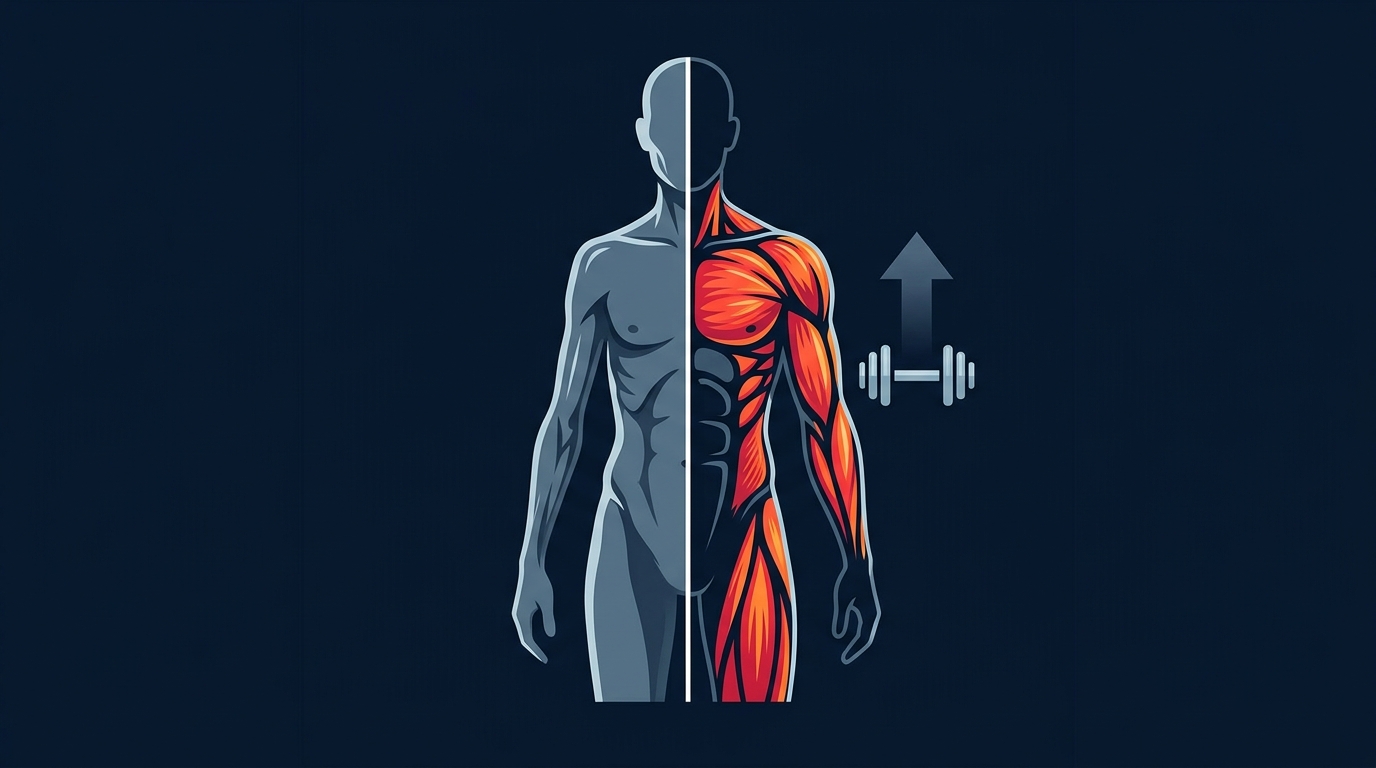
GLP-1 medications like semaglutide (Ozempic, Wegovy) and tirzepatide (Mounjaro, Zepbound) work by quieting appetite, and they work extremely well. The scale drops. The problem is what the scale does not tell you: a meaningful share of that loss is lean tissue, not just fat.
A 2024 review by Prado et al. in Lancet Diabetes & Endocrinology found that roughly a quarter to 40% of the weight lost during medically induced weight loss can come from lean mass, including skeletal muscle. The 2025 SEMALEAN study of semaglutide 2.4 mg saw lean mass drop about 3 kg in the first seven months. The encouraging part of SEMALEAN: when people kept moving, grip strength actually improved and the rate of sarcopenic obesity fell from 49% to 33% over the year.
That is the whole game. The medication controls appetite. Your job is to give your body a reason to hold onto muscle, and there are only two levers that reliably do it:
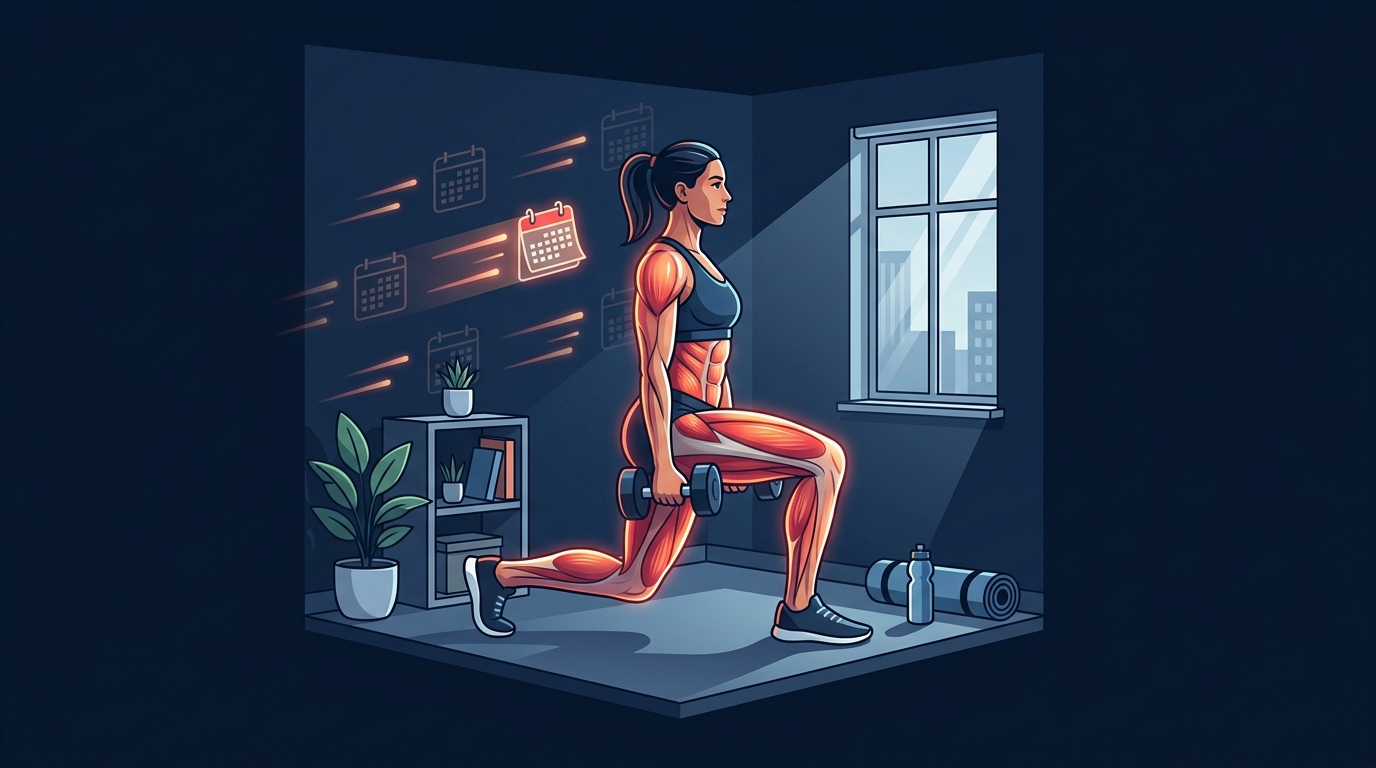
- Resistance training. Lifting tells your body the muscle is still needed. Without that signal, unused muscle is the first thing to go. Codella et al. (2025) frame exercise as the single most important lifestyle addition to GLP-1 therapy.
- Adequate protein. Research presented at ENDO 2025 by Haines et al. found higher protein intake mitigated muscle loss in people on semaglutide. Because these drugs kill your appetite, hitting a protein target takes real intention.
So the "best fitness app for GLP-1 users" is not the one with the flashiest workout library. It is the one that gets you to actually resistance train two to four times a week, and helps you eat enough protein while you are barely hungry. We ranked the apps through that lens. For the deeper science, see our breakdown of muscle loss on GLP-1 medications and the practical Ozempic and exercise protocol.
What to Look for in a GLP-1 Fitness App
A few things matter far more than the rest when you are training through medication-driven weight loss:
- Real strength programming. Progressive resistance work, not just cardio or step counting. Cardio is great for your heart. It does not preserve muscle.
- Consistency support. GLP-1 side effects (nausea, fatigue, low energy) make skipping easy. The app has to help you show up on the rough days, not just hand you a workout.
- Home and low-energy friendly. A lot of people on GLP-1s don't feel like commuting to a gym. Bodyweight, dumbbell, and band options matter.
- Protein and nutrition awareness. Either built in, or easy to pair with a dedicated tracker.
- Form guidance. If you're new to lifting, you need to see how a movement is done, not guess.
The Rankings
1. FitCraft: Best Overall for Muscle-Preserving Consistency
Price: Free version available, premium ~$9.99/mo | Equipment: Adapts to what you have | Platforms: iOS & Android
FitCraft ranks first because it targets the exact failure point for GLP-1 users: not knowing what to do, and not sticking with it. When you start, a diagnostic assessment maps your goals, fitness level, schedule, and available equipment, then AI coach Ty builds a strength-forward plan and adapts it as you go.
Ty is not a static video library. Ty is a 3D coach who talks to you, calls you by name, and demonstrates every exercise with interactive 3D models you can rotate, pinch, and zoom to check your form from any angle. For someone learning to resistance train alone at home while low on energy, that removes the guesswork that makes people quit.
The reason it wins for GLP-1 specifically is the gamification. You earn XP, level up, collect cards, and build streaks for showing up. That sounds like a gimmick until you look at the data: a 2022 meta-analysis by Mazeas et al. in the Journal of Medical Internet Research found gamified interventions produced roughly 500 to 1,400 extra steps per day and, importantly, the effect persisted after the study ended. On a GLP-1, adherence is the whole ballgame, and adherence is what FitCraft is built to protect. We cover the evidence in depth on our gamification and fitness statistics page.
The honest catch: FitCraft is not a GLP-1 app. It will not track your injection schedule, dose, or side effects, and it does not offer built-in macro logging as detailed as a dedicated nutrition tracker. If you want medication-aware features, pair it with one of the tools below.
Best for: GLP-1 users who need to build a strength habit at home and have quit fitness apps before.
Not sure how to train while on a GLP-1?
Take the free 2-minute assessment. AI coach Ty builds a muscle-preserving plan around your energy, schedule, and equipment, so rapid weight loss does not cost you your strength.
Take the Free Assessment Free · 2 minutes · No credit card2. Fitbod: Best for Gym-Based Progressive Overload
Price: Subscription model | Equipment: Dumbbells to full gym | Platforms: iOS & Android
If you have gym access and want a no-nonsense strength log that handles progressive overload for you, Fitbod is excellent. It generates strength workouts based on your available equipment, tracks your lifts, and manages recovery so you train muscle groups on the right schedule. For preserving muscle on a GLP-1, that progressive-overload engine is exactly the stimulus you need.
Why it is great: Best-in-class at the actual mechanics of strength training, with clean logging and smart equipment adaptation.
The catch: It is a workout generator, not a coach. There is no motivational layer, no medication awareness, and no built-in help staying consistent when GLP-1 fatigue hits. It assumes you already want to train.
3. Hevy: Best for Tracking Your Own Lifts
Price: Free tier available, Pro subscription | Equipment: Dumbbells to full gym | Platforms: iOS, Android, Apple Watch, web
Hevy is one of the most popular workout loggers around, and its free tier is genuinely generous: unlimited workout logging, a 200-plus exercise library with demo videos, and progress charts that show your previous numbers so you can add weight or reps over time. For a GLP-1 user, that last part is the point. Progressive overload is the signal that tells your body to keep the muscle, and Hevy makes tracking it effortless.
Why it is great: A clean, fast log with a strong free tier and no ads. If you already know what program you want to run, Hevy is the simplest way to record it and watch your lifts climb week to week. The optional Hevy Trainer feature can even auto-generate and progress a program for you on the paid tier.
The catch: It is a tracker, not a coach. You bring the workout; it logs it. There is no medication awareness, no nutrition side, and no motivational system beyond your own streak, so on the low-energy days it will not do much to get you off the couch.
4. Caliber: Best Free Structured Strength Coaching
Price: Free tier available, paid coaching upgrade | Equipment: Home or gym | Platforms: iOS & Android
Caliber offers a genuinely useful free tier with structured strength programs and a strong exercise library with technique videos. For a GLP-1 user who wants a real strength plan without paying up front, it is a solid starting point, and you can add human coaching later if you want accountability.
Why it is great: Serious strength programming on a free tier, with good form instruction.
The catch: The free experience leans on you to drive it. Without the paid coach there is no adaptive motivation system, so the same consistency gap that trips up most free-app users applies here too.
5. Sweat: Best Guided Programs for Structure Seekers
Price: Subscription model | Equipment: Varies by program | Platforms: iOS & Android
Sweat offers structured, trainer-led multi-week programs including dumbbell strength work through its PWR programs. If you like following a clear preset plan with a community around it, Sweat delivers structure that many people find easier to stick to than an open-ended library.
Why it is great: Well-produced, clearly structured programs with strong community accountability.
The catch: Programs are preset rather than personalized to your progress, there is no AI adaptation, and it is one of the pricier options. It also does not account for the energy swings that come with GLP-1 medications.
How we ranked these apps
Every app on this page was scored on the same four criteria:
- Evidence for adherence features. Does the app have a built-in answer for the day you want to skip, such as streaks, rewards, scheduled sessions or a coach, and is that mechanism backed by behavior research rather than a marketing page?
- Coaching quality. Is the programming designed by qualified professionals, does it teach form, and does it progress you instead of repeating the same session?
- Price transparency. Is there a genuinely usable free tier or trial, and is the cost of the full experience clear before you commit?
- Breadth. How much of this reader's real situation the app covers, from equipment and space to time available and restarting after a missed week.
Feature and tier claims were checked against each app's own current store listing and documentation, and where a competitor is the better pick we say so. FitCraft Studios publishes this site and makes FitCraft; the ranking above reflects the criteria described here, and the fairest way to judge any of these apps, ours included, is to run their free trials yourself.
The Protein Piece You Cannot Skip
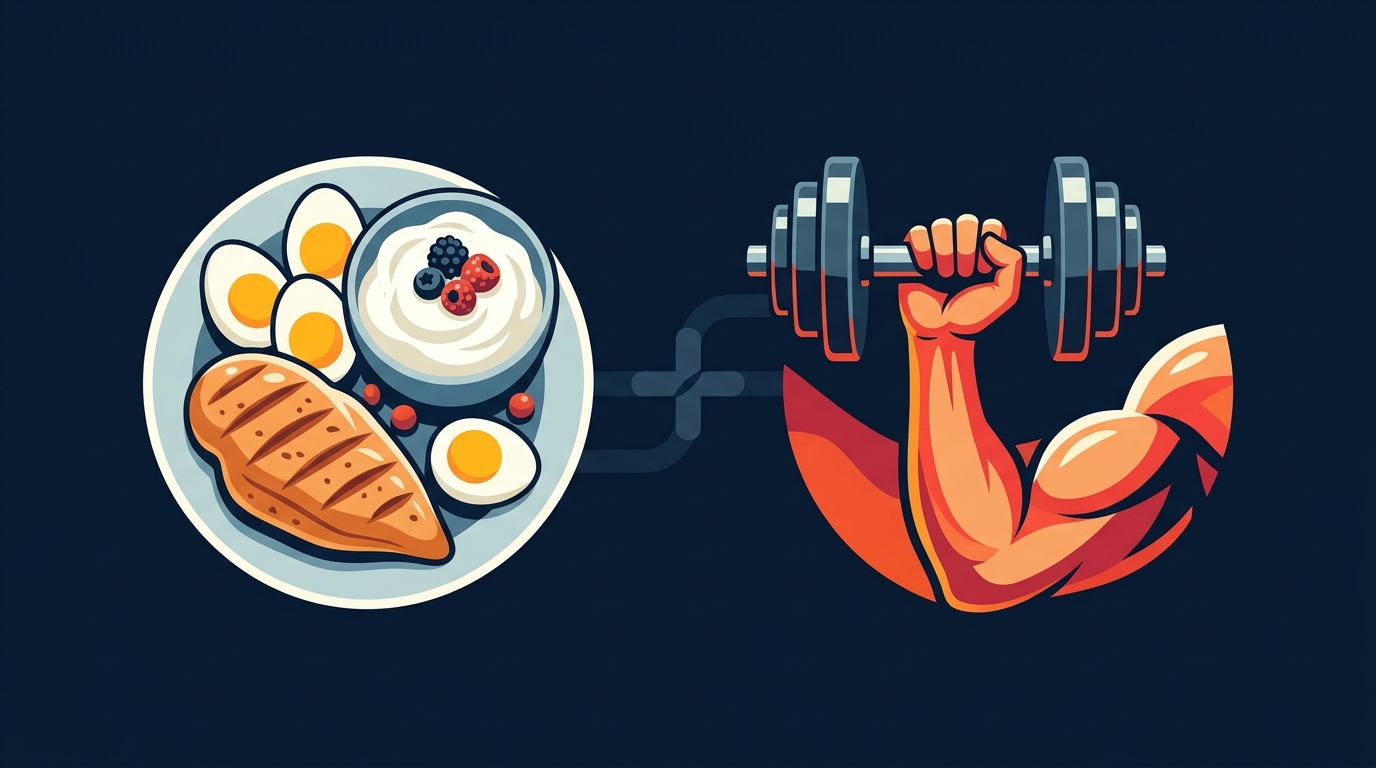
Even the best training app cannot outwork a protein deficit. On a GLP-1, appetite suppression is the point, and it is also the trap. If you are eating 40% less food, you are almost certainly eating less protein, and low protein plus weight loss is a recipe for muscle loss no matter how well you train.
The research target most experts land on for preserving muscle during weight loss is roughly 1.2 to 2.0 grams of protein per kilogram of body weight per day, paired with resistance training. For a 75 kg (165 lb) person, that is around 90 to 150 grams a day, often when you do not feel like eating at all. This is why so many GLP-1 users run two apps: one to keep them training (FitCraft, Fitbod) and one to keep protein on target (MacroFactor). The training app protects the muscle; the nutrition app feeds it.
How to Choose by Your Situation
There is no single winner for everyone. Match the app to your reality:
- You have quit fitness apps before and train at home: FitCraft. The gamification and AI coaching exist specifically to get past the point where you usually stop.
- You have a gym and want the app to build the workout for you: Fitbod.
- You already have a program and just want to track your lifts for free: Hevy.
- Your biggest gap is protein, not workouts: a nutrition tracker like MacroFactor, paired with any training app above.
- You want structure without paying up front: Caliber's free tier.
- You like preset, guided programs: Sweat.
Whatever you choose, the pattern that actually preserves muscle is the same: lift two to four times a week, eat enough protein, and keep it up for the whole time you are losing weight. That last part, keeping it up, is where most people fail, and it is the reason a consistency-first app matters more here than in almost any other context. Our guide on consistency over intensity explains why. Losing weight without medication? Our broader ranking of the best workout apps for weight loss applies the same adherence-first lens.
The Bottom Line
The Verdict
The best fitness app for GLP-1 users is the one that keeps you strength training, week after week, while the medication handles your appetite. FitCraft is our top overall pick because it attacks the real problem: it uses AI coach Ty and a gamification system to make consistent resistance training automatic, which is exactly what protects muscle during rapid weight loss.
For gym-based lifters, Fitbod nails progressive overload. Caliber is the best free place to start, and Sweat is strong if you like guided preset programs. No matter which training app you pick, pair it with a protein tracker like MacroFactor, because you cannot preserve muscle you are not feeding.
Here is the honest truth: the medication is doing the weight-loss work. What you do in the gym and kitchen decides whether you come out the other side lean and strong, or smaller and weaker. Pick the app that will actually get you to show up, and keep showing up.
Frequently Asked Questions
What is the best fitness app to use while on Ozempic or Wegovy?
For most GLP-1 users, the best fitness app is one that keeps you strength training consistently, because muscle is what you lose alongside fat. FitCraft is the top pick for adaptive strength training at home with gamification that keeps you showing up. Fitbod is best when you want the app to build your workouts, Hevy is best for logging your own lifts, and Caliber is the best free option.
Why do you lose muscle on GLP-1 medications?
Any rapid weight loss pulls from both fat and lean tissue. Research on semaglutide shows roughly a quarter to 40% of the weight lost can come from lean mass, including muscle. Appetite suppression also makes it hard to eat enough protein, and without a resistance-training stimulus the body has no reason to keep muscle it is not using.
Do I need a special GLP-1 app, or will a normal fitness app work?
You do not need a GLP-1-specific app to protect muscle. What matters is progressive resistance training two to four times a week plus adequate protein. A GLP-1-specific app can add dose reminders and side-effect tracking, but a strong general fitness app like FitCraft that keeps you consistent with strength work covers the part that actually preserves muscle.
How much protein should I eat on a GLP-1 to preserve muscle?
Most research on muscle preservation during weight loss points to roughly 1.2 to 2.0 grams of protein per kilogram of body weight per day, paired with resistance training. Because GLP-1 medications suppress appetite, hitting that target often takes deliberate planning, which is why a protein-tracking app is a useful companion to a training app.
Is FitCraft a weight-loss drug or telehealth app?
No. FitCraft does not prescribe or sell GLP-1 medications and is not a telehealth service. It is a fitness app that builds you a personalized strength and movement plan through AI coach Ty, designed to protect muscle and keep you consistent while your medication handles appetite. Always follow your prescribing clinician's guidance on the medication itself.