- For most active adults, aim for about 1.6 grams of protein per kilogram of body weight per day. That's roughly 0.7 g per pound, or 115 g for a 160 lb person.
- The useful range runs from 1.2 g/kg (sedentary maintenance) to 2.2 g/kg (lean lifters in a cut), based on a 2018 meta-analysis of 49 RCTs (Morton et al., BJSM).
- Hit the daily total with food first. One chicken breast (~28 g), one large egg (~6 g), one cup of Greek yogurt (~17 g). Powder is a convenience tool, not a requirement.
- Spread it across 3 to 4 meals of 25 to 40 g each. Recovery happens on rest days too, so keep your daily protein steady whether you trained or not.
Walk into any gym in 2026 and you'll hear the same number repeated like scripture. One gram of protein per pound of body weight. Old-school lifters say it. Influencer reels say it. Your buddy who just started creatine says it. The trouble? It's mostly wrong, and the actual research has been telling us so for the better part of a decade.
The honest answer is more useful and a little less heroic. For most adults who train a few times a week, you need closer to 0.7 grams per pound, or about 1.6 grams per kilogram of body weight per day. That's the sweet spot where adding more protein stops adding more muscle, recovery, or fullness. For a 160-pound adult, that's around 115 grams. Not 160. The extra 45 grams a day buys you nothing but a sore wallet and a fuller fridge.
This article walks through where that 1.6 g/kg number actually comes from, what real food looks like in grams, whether you need a protein powder, and how to spread the daily total across meals so your body can use it. By the end you'll know your number, your plate, and your minimum effective dose.
How Much Protein Should You Eat?
Start with the question everyone is asking. The single most-cited answer in modern sports nutrition comes from Morton and colleagues, a 2018 meta-analysis of 49 randomized controlled trials in 1,863 people, published in the British Journal of Sports Medicine. They tracked the effect of protein intake on muscle mass and strength gains during resistance training. The dose-response curve flattened at 1.6 g/kg/day. Above that point, more protein produced almost no additional benefit on muscle growth. Below it, gains were measurably smaller.
So 1.6 g/kg is your default if you lift. The ISSN position stand on protein and exercise (Jäger et al., 2017, JISSN) lands in the same neighborhood. Their range for active adults is 1.4 to 2.0 g/kg/day, with the higher end reserved for people training hard or eating in a calorie deficit.
The Practical Range, in Pounds
Most people think in pounds. The 1.6 g/kg target translates roughly to 0.73 g per pound. Round up to 0.7 to 0.8 if you want easy math. Here's what that looks like across common body weights:
- 120 lb (54 kg): 87 grams a day
- 140 lb (63 kg): 102 grams a day
- 160 lb (73 kg): 117 grams a day
- 180 lb (82 kg): 131 grams a day
- 200 lb (91 kg): 145 grams a day
- 220 lb (100 kg): 160 grams a day
If you want a target tailored to your goal (general health, building muscle, losing fat, endurance), our free protein calculator handles the math for you. It's built on the same Morton 2018 meta plus the ISSN position stand and the older-adult PROT-AGE consensus.
When You Need More (and When You Don't)
Two situations push the number higher. First, eating in a sustained calorie deficit. Helms and colleagues (2014, JISSN) reviewed natural bodybuilding contest prep and recommended 2.3 to 3.1 g/kg of fat-free mass when cutting hard, to spare muscle while losing fat. For most lean lifters that lands around 2.0 to 2.2 g/kg of total body weight. Higher protein in a deficit isn't about building more muscle, it's about losing less of the muscle you have. Protein also does the most obvious day-to-day work on appetite, which is why it sits near the top of the checklist in our piece on why you get so hungry after working out.
Second, getting older. The PROT-AGE consensus (Bauer et al., 2013) recommends 1.0 to 1.2 g/kg/day for adults over 65, climbing to 1.2 to 1.5 g/kg if they're physically active or recovering from illness. Aging muscle responds less aggressively to a given dose of protein, a phenomenon called anabolic resistance. The fix isn't gimmicky. It's just a bit more protein, evenly distributed.
Now the situations that don't change the number. Training day vs. rest day. Cardio day vs. lift day. Time of day. The total still matters more than the timing. If you're curious about timing specifically, we wrote a whole piece on the anabolic window myth, which a 2025 meta-analysis quietly buried.
How Much Protein Is in Common Foods?
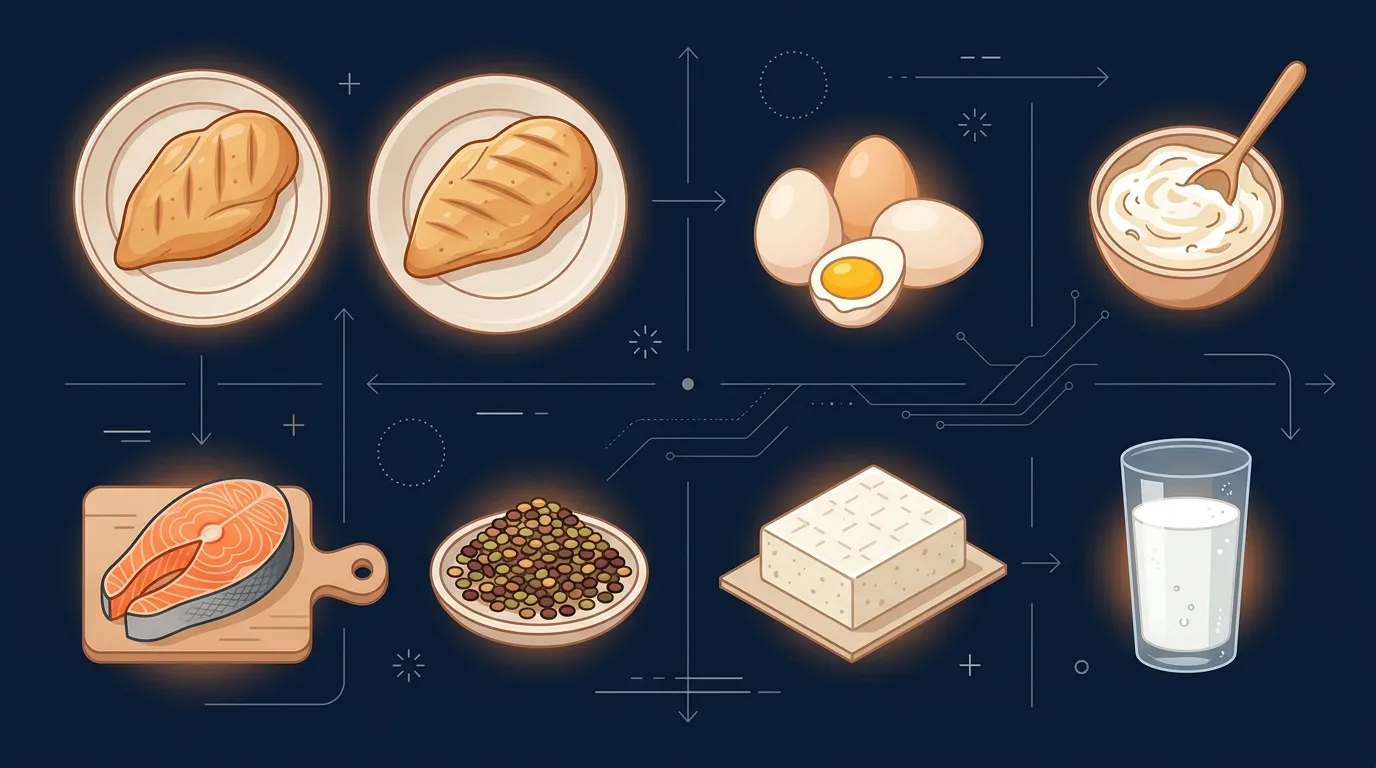
The grams-per-day target only matters if you can connect it to your plate. So here's a reality check on the foods most people eat. The numbers below are for cooked weight unless noted. Protein content shifts a little by brand and prep, but the ballpark is solid.
| Food | Serving | Protein |
|---|---|---|
| Chicken breast (cooked) | 4 oz / 113 g | ~28 g |
| Lean ground beef (90/10, cooked) | 4 oz | ~26 g |
| Salmon (cooked) | 4 oz | ~25 g |
| White fish (cod, tilapia, cooked) | 4 oz | ~22 g |
| Canned tuna (in water) | 1 can / 142 g | ~28 g |
| Large egg (whole) | 1 egg | ~6 g |
| Egg whites | 3 whites | ~10 g |
| Greek yogurt (plain, 0%) | 1 cup / 227 g | ~17 g |
| Cottage cheese (low-fat) | 1 cup | ~24 g |
| Milk (2%) | 1 cup | ~8 g |
| Tofu (firm) | 4 oz | ~12 g |
| Tempeh | 4 oz | ~21 g |
| Lentils (cooked) | 1 cup | ~18 g |
| Black beans (cooked) | 1 cup | ~15 g |
| Whey protein powder | 1 scoop / 30 g | ~24 g |
Three quick patterns to notice. Animal foods are dense. A 4-ounce chicken breast does most of a meal's work on its own. Eggs are lower than people expect. One egg is six grams, not 12 or 15. To anchor a meal on eggs you usually need three or four. And legumes are decent, not amazing. A cup of cooked lentils is solid, but you'll want to pair it with another protein source (tofu, dairy, or a scoop of plant powder) to hit the per-meal threshold most adults need to fully trigger muscle protein synthesis.
The Per-Meal Math
A separate 2018 paper by Schoenfeld and Aragon (JISSN) put a useful number on the per-meal side of the equation. The body responds best to about 0.4 g/kg of protein per meal across 4 meals, which lands around 25 to 40 grams for most adults. That's a chicken breast, three eggs and a yogurt, or a meat-and-rice bowl. Below that per-meal dose, you don't fully turn on muscle protein synthesis. Above it, the extra protein largely gets oxidized for energy or stored as something else. We dig deeper into this mechanism in our companion piece on the leucine threshold, which explains why some sources of protein flip the muscle-building switch faster than others.
Ready to put this into practice?
Take the free FitCraft assessment and get a personalized strength and nutrition plan based on behavioral science, not willpower.
Take the Free Assessment Free • 2 minutes • No credit cardDo You Need to Take Protein Powder?
The short answer. No. The honest answer. Probably not, but it depends on your kitchen and your schedule.
The Morton 2018 meta-analysis is clear on the question of supplements specifically. Protein supplementation modestly improved resistance-training outcomes (lean mass, leg press strength), but the benefit shrank as habitual dietary protein climbed. Once total daily protein crossed about 1.6 g/kg, the source basically stopped mattering. Whey, casein, soy, beef, eggs, chicken, lentils paired with rice. The body cares about the daily total of high-quality amino acids, not where they came from.
So powder isn't magic. It's logistics.
The Real Case for a Scoop
Powder shines for three reasons:
- Speed. A scoop of whey in water is 24 grams of protein in 90 seconds. Cooking a chicken breast is 25 minutes.
- Cost per gram. Whey runs roughly 50 to 90 cents per 24-gram scoop. Most lean meats run ,1.40 to ,2.00 per 24 grams. For people on a budget, powder is the cheapest high-quality protein on the shelf.
- Convenience around training. If you train in the morning before work or right after, a scoop in milk lands faster than a full meal. You don't need it for muscle protein synthesis to occur (the daily total still rules), but it's a clean way to get protein in when you're not hungry.
The Case for Food First
Whole-food protein brings extras that powder doesn't: fiber, micronutrients, satiety, and the actual experience of eating. A chicken breast keeps you full for 3 hours. A scoop of whey keeps you full for 30 minutes. If you're managing weight, that gap matters. We cover this dynamic in detail in our piece on body recomposition at home, where the protein rule is the engine that makes the whole protocol work.
Plus, eating real meals teaches your kitchen and your habits to support a high-protein lifestyle long-term. A daily shake doesn't.
Should You Take Protein on Rest Days?
Yes. Same total, every day. Muscle protein synthesis is elevated for 24 to 48 hours after a hard training session, which means rest days are when most of the actual rebuilding happens. Skipping protein because "I didn't lift today" is the equivalent of pouring out fresh paint the night before you finish a wall. The 'training-day-only protein' habit is a holdover from outdated bodybuilding folklore. Steady total intake. Three to four meals. Whether or not the gym was on the calendar.
What About Every Day Long-Term?
Daily protein powder use is fine for healthy adults. The 2017 ISSN position stand reviewed long-term safety data and concluded that intakes up to 2.5 to 3.0 g/kg/day, including from supplements, show no adverse effects in healthy people. The kidney concern shows up in people with pre-existing kidney disease, where high-protein diets can accelerate progression. If you've ever been told you have any kind of kidney issue, talk to your doctor before adding daily powder.
How to Build a Daily Protein Plan
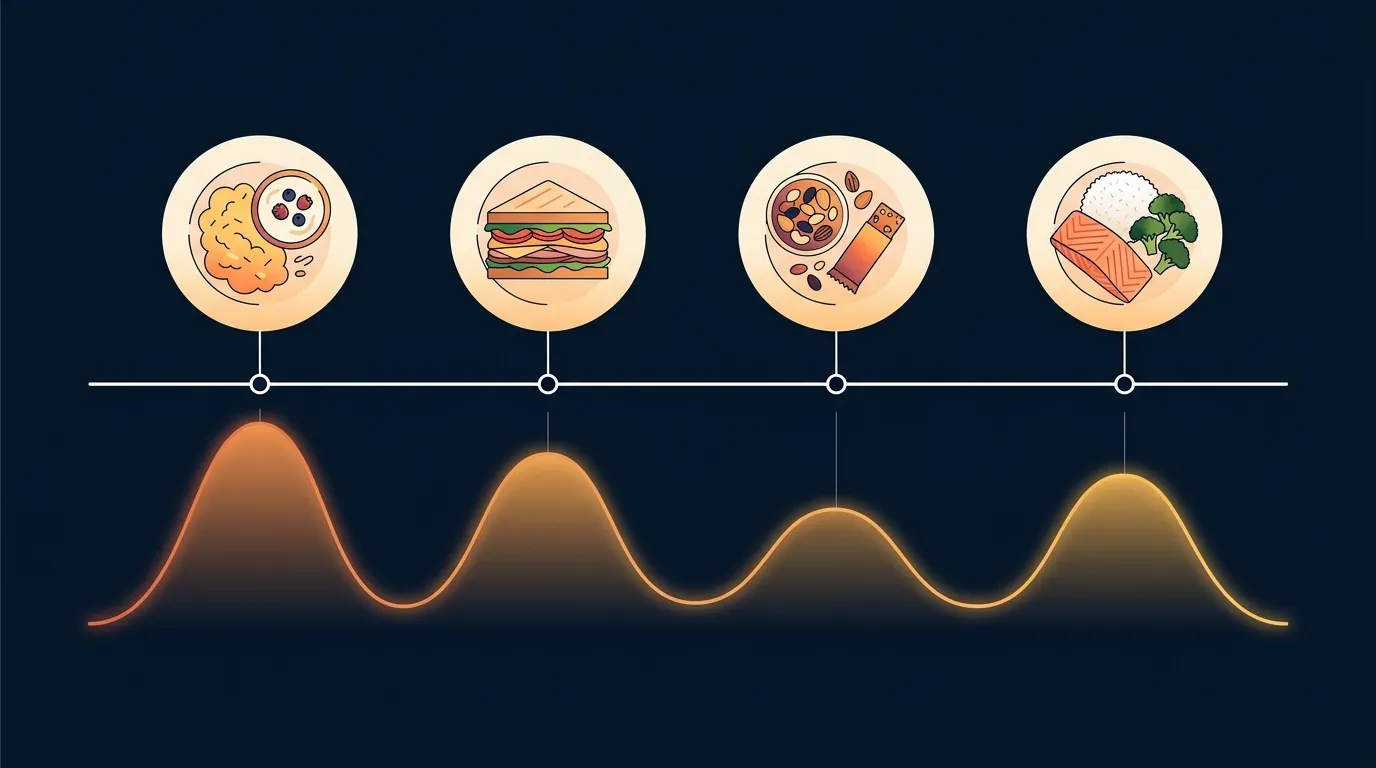
Here's the simplest workable framework. Pick a daily target. Hit it across 3 to 4 meals of 25 to 40 grams each. Default to food. Use powder to plug gaps, not to anchor your nutrition.
The 3-Meal Template (for a 160 lb / 73 kg adult, target ~115 g)
- Breakfast: 3 eggs + 1 cup of Greek yogurt = ~35 g
- Lunch: 4 oz chicken + ¾ cup quinoa + a side of vegetables = ~32 g
- Dinner: 5 oz salmon + roasted potatoes + greens = ~32 g
- Optional snack: cottage cheese, jerky, or a scoop of whey if the daily total is short
Total lands at ~99 g from those three meals. Add an afternoon Greek yogurt or a single scoop and you clear the 115-gram target without trying.
The 4-Meal Template (cleaner per-meal math)
- Breakfast: 3 eggs + 1 slice cheese on toast = ~27 g
- Lunch: 4 oz turkey + cheese sandwich + side = ~30 g
- Snack/Pre-train: Greek yogurt + berries OR a whey shake = ~20-25 g
- Dinner: 4 oz lean beef + rice + vegetables = ~28 g
The 4-meal split is what most lifters drift toward once they actually start counting. It hits the per-meal threshold cleanly without any single sitting needing to be huge. We laid out the same 4-meal framing across protein, fat, and carbs in our macro calculator if you want goal-aware numbers for the whole plate, not just the protein.
What This Means for You
Pick your daily number first. Most adults will land somewhere between 90 and 150 grams. Then aim for the per-meal threshold of 25 to 40 grams across 3 to 4 sittings. That's the entire game.
Don't obsess over animal vs. plant, whey vs. casein, or the timing of any specific meal. Once your daily total is locked in and you're hitting the per-meal floor most days, you're capturing roughly 90% of the available muscle, recovery, and satiety benefit that protein offers. The remaining 10% is the optimization rabbit hole that consumes the corners of fitness Twitter. It's optional. The total isn't.
And honestly? The biggest reason people fail at protein isn't intake math. It's adherence. The protein habit, like every fitness habit, breaks somewhere around week 3 when meal prep gets boring. The fix isn't a stricter calculator. It's a structure that builds the habit for you. That's the problem FitCraft was built to solve. Ty, our 3D AI trainer, ties your training and your daily routine together in a single program, motivates you by name, and adapts your weekly plan as you progress. Free version available — take the assessment at getfitcraft.com to get started.
Lock in the daily total. Spread it across the day. Eat the chicken or skip it for tofu. Keep showing up. That's the recipe.
Frequently Asked Questions
How much protein should I eat per day?
For most active adults, the sweet spot is roughly 1.6 grams of protein per kilogram of body weight per day, or about 0.7 grams per pound. That's based on a 2018 meta-analysis of 49 randomized trials in 1,863 people by Morton and colleagues, published in the British Journal of Sports Medicine. The useful range runs from about 1.2 g/kg (sedentary maintenance) up to roughly 2.2 g/kg (lean lifters cutting fat). For a 160 lb (73 kg) adult who lifts a few times a week, that's around 115 grams of protein a day.
How much protein is in one egg?
One large egg has roughly 6 grams of protein. The white contributes about 3.5 grams and the yolk contributes the rest, plus the fat-soluble vitamins. Two large eggs put you near 12 grams, which is still below the 25-to-30-gram per-meal target most adults need to maximally trigger muscle protein synthesis. Eggs are a high-quality protein source, but a typical breakfast usually needs another anchor (Greek yogurt, cottage cheese, or a third egg) to hit the per-meal threshold.
How much protein is in a chicken breast?
A standard 4-ounce (113 g) raw chicken breast cooks down to about 26 to 28 grams of protein. A larger 6-ounce breast lands closer to 40 grams. That makes one chicken breast enough to anchor a complete meal on its own for most adults. Other lean meats are similar by weight: 4 oz of cooked turkey breast, lean beef, or white fish each land in the 25-to-30-gram range.
Do I need to take protein powder?
No. Protein powder is convenient, not required. The Morton 2018 meta-analysis found that supplementing protein modestly improved resistance training outcomes, but the effect plateaued once total daily protein crossed about 1.6 g/kg, regardless of whether the protein came from food or powder. If you can hit your daily target with whole food (chicken, fish, eggs, dairy, legumes, tofu), you don't need a scoop. If you can't, a scoop of whey or a plant blend is a fast and cheap way to close the gap.
Should I take protein powder every day, including rest days?
Yes, if you use it as a daily-target tool. Muscle protein synthesis happens on rest days too. In fact, recovery and rebuilding peak in the 24 to 48 hours after a training session. Skipping protein on rest days because "I didn't lift today" undercuts the adaptation you trained for. Take the same daily total whether you trained or not, and split it across 3 to 4 meals. The 'training-day-only' protein habit is a holdover from outdated bodybuilding folklore.
Is too much protein bad for your kidneys?
For people with healthy kidneys, no. Multiple long-term studies, including reviews summarized in the 2017 ISSN protein position stand by Jäger and colleagues, show that protein intakes up to about 2.5 to 3.0 g/kg/day are safe in healthy adults with no signs of kidney harm. The kidney concern is real for people who already have chronic kidney disease, where high-protein diets can accelerate progression. If you have any diagnosed kidney issue, work with your doctor before pushing protein intake.