- Most weight-loss side effects are temporary. Hair shedding, mood dips, fatigue, and feeling cold typically resolve within 3 to 6 months once weight stabilizes.
- Loose skin is the only side effect that can be permanent. The risk goes up with larger losses, faster losses, age over 40, and how long you carried the weight.
- Hair shedding 2 to 4 months after starting a deficit is telogen effluvium, not balding. It is one of the most-Googled weight loss side effects and one of the most reversible.
- Metabolic adaptation is real but smaller than headlines suggest. Fothergill and colleagues (2016) found Biggest Loser contestants burned about 500 calories less per day than predicted six years later, but that was an extreme protocol most readers will never replicate.
- The two best protective moves: keep the deficit moderate (no more than 1 percent of body weight per week), and pair it with strength training plus 1.6 to 2.2 grams of protein per kilogram.
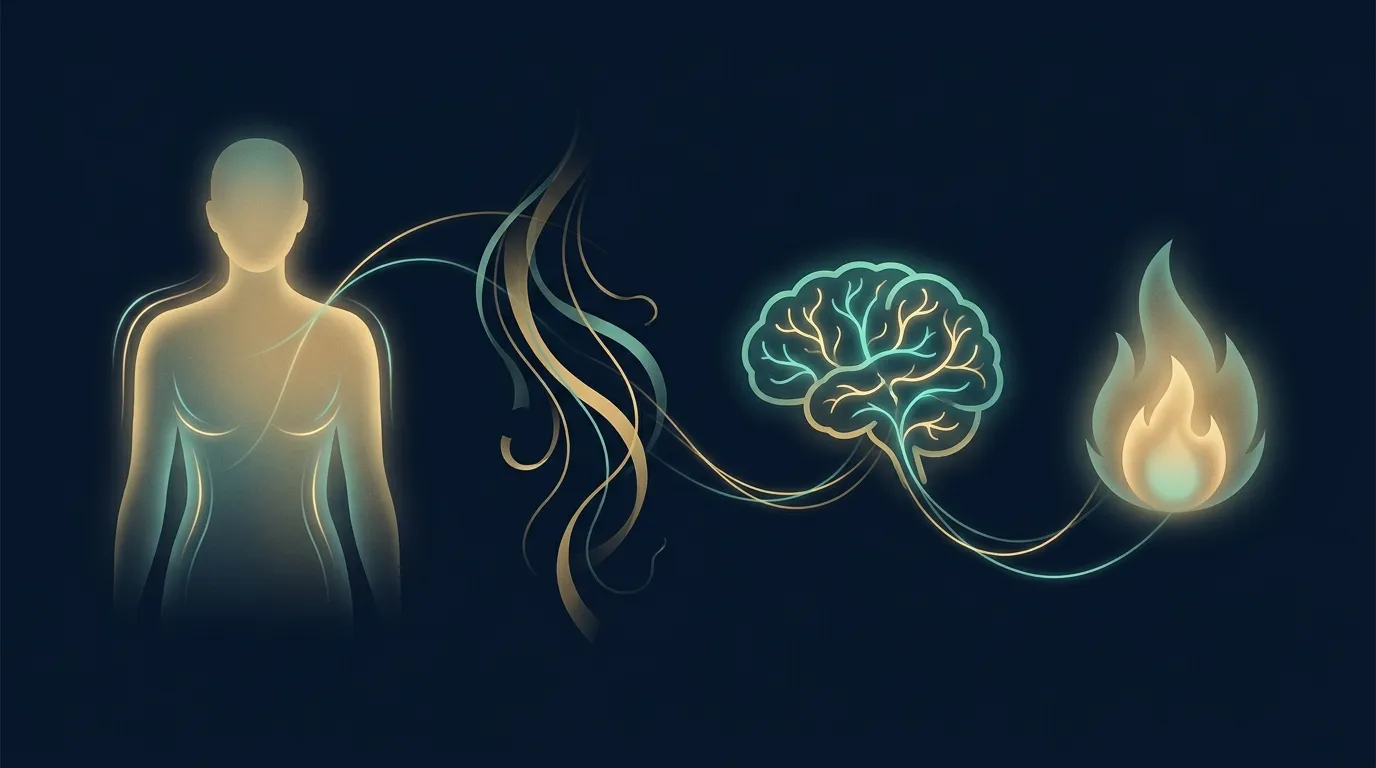
You start a weight-loss plan. You lose weight. You feel proud. Then something weird starts happening. Your hair feels thinner in the shower drain. Your skin doesn't snap back the way you expected. You're cold all the time. You snap at your partner over nothing. None of the before-and-afters showed any of this. The face is usually the first place a weight change shows, and our guide to how to lose face fat covers why, and how much of that early change is fluid rather than fat.
The original Reddit thread that pushed this question to the top of r/loseit (over 13,000 upvotes) is full of people saying the same thing: nobody told them about any of this. The transformation content sold them the result. The fine print got skipped.
Here's the actual list. What's normal, what's temporary, what's reversible, and what isn't. With the research where it exists, and an honest answer where the research is thin.
What Happens to Your Body When You Lose Weight
Sustained weight loss is a coordinated stress response. Your body doesn't know it's a planned deficit. From its perspective, you're in a famine, and it triggers every adaptation evolved for that situation: lower energy expenditure, blunted thyroid output, higher hunger hormones, lower fullness hormones, and a shift in how the body uses fuel.
Sumithran and colleagues (2011, New England Journal of Medicine) tracked 50 overweight adults through a 10-week very-low-calorie diet. A year after the diet ended, ghrelin (the hunger hormone) was still elevated. Leptin (the satiety hormone) was still suppressed. Several other appetite-regulating hormones were still pushing toward weight regain. The body had not "moved on." It was still trying to get the lost weight back, twelve months later.
This isn't a personal failing. It's a feature of a system that kept our ancestors alive through real food shortages. Knowing it changes how you think about side effects: many of them are not bugs in your body. They're the body doing its job a little too well.
Loose Skin After Weight Loss
This is the most-asked question in the entire weight-loss conversation, and the most honest answer is: it depends.
Skin is not a passive bag that shrinks to fit. It is connective tissue with elastic fibers (mostly elastin and collagen) that stretches when fat expands underneath it. When the fat is removed quickly, especially in larger amounts, the elastic recoil can be incomplete. Three factors decide how much your skin will retract.
- How much weight you lost. Losses under about 50 pounds usually retract well. Losses over 100 pounds, especially after bariatric surgery or aggressive deficits, frequently leave excess skin.
- How long you carried the weight. Skin stretched for 5 to 10 years often retracts. Skin stretched since childhood or for 20-plus years has lost much of its elastic capacity.
- Your age. Collagen production drops sharply after about age 30 and again after 50. Younger skin retracts much faster than older skin at the same loss size.
What Actually Helps With Loose Skin
Most of what's marketed for loose skin doesn't work. Topical creams cannot reach the dermis where the elastic fibers live. Cellulite massages do not reorganize collagen. The two interventions with reasonable evidence are slower weight loss (allowing skin time to adapt as you go) and building muscle to fill the envelope underneath.
That second piece matters more than people realize. A pound of fat takes up roughly 18 percent more volume than a pound of muscle. Replacing fat with muscle in the same body weight noticeably tightens the visual envelope, even when actual skin laxity hasn't changed. This is one of the strongest arguments for resistance training during a fat-loss phase. For more on this, see our guide to body recomposition at home.
For very large losses (typically 100-plus pounds), surgical body contouring is the only way to fully remove redundant skin. Kitzinger and colleagues (2012) surveyed 252 gastric bypass patients and found that 96% developed surplus skin, and that 75% of the women and 68% of the men wanted body contouring surgery. It's a personal decision, often a financial one, and not the failure of any diet or exercise program.
Ready to put this into practice?
Take the free FitCraft assessment and get a personalized plan built around behavioral science. The kind that protects the lean tissue, not just the scale number.
Take the Free Assessment Free • 2 minutes • No credit card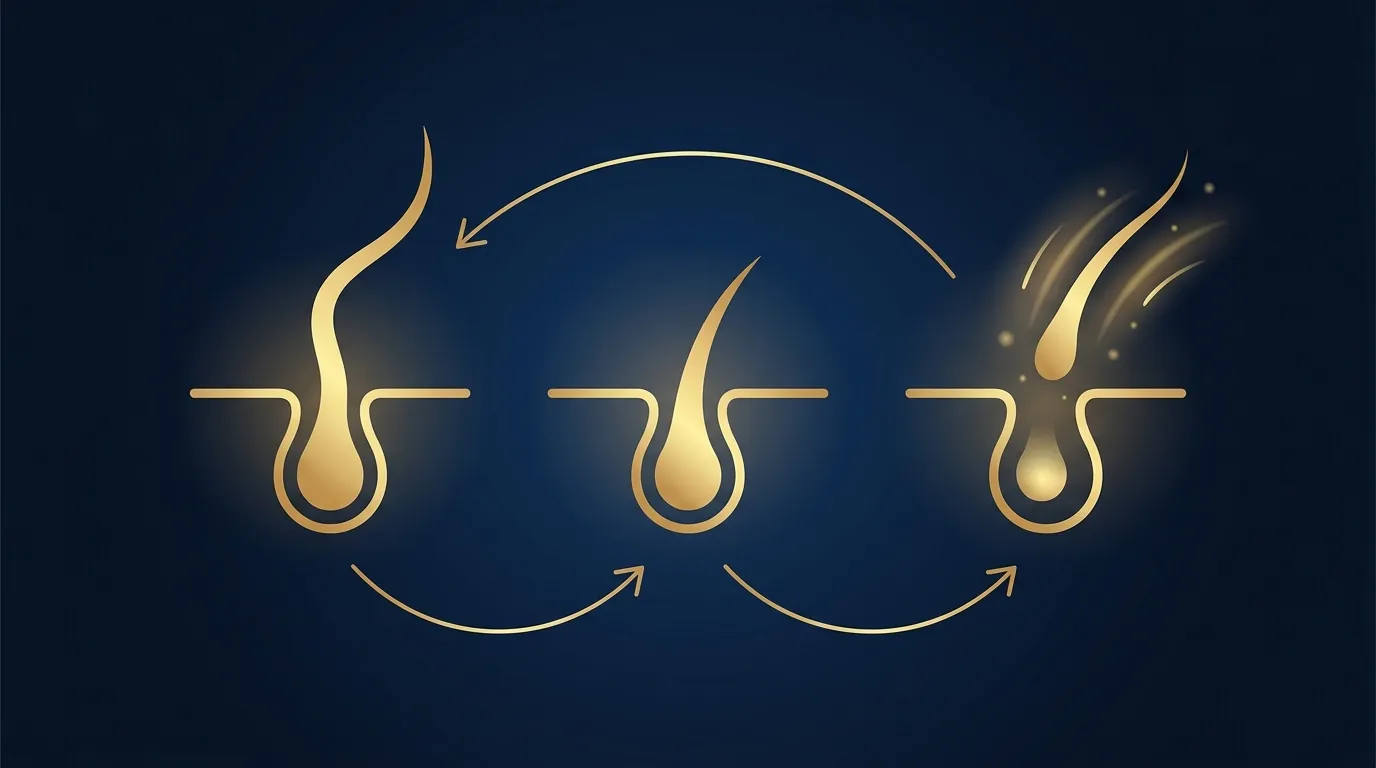
Hair Loss From Weight Loss (Telogen Effluvium)
Roughly 2 to 4 months after starting a sustained calorie deficit, a noticeable share of people experience increased hair shedding. Hair on the pillow. More in the brush. A wider parting. The clinical name is telogen effluvium, and it has a specific mechanism that explains both the timing and the recovery.
Hair grows in cycles. Most follicles are in the growth phase (anagen). A small fraction are in a resting phase (telogen) and will shed in a few months. A sudden physiological stressor (rapid weight loss, low protein intake, iron or zinc deficiency, illness, childbirth) shifts a wave of follicles from growth into resting all at once. Two to four months later, that whole wave sheds together. It looks alarming because the timing is concentrated, not because the underlying balding has accelerated.
Guo and Katta (2017, Dermatology Practical & Conceptual) reviewed the dietary contributors to hair loss in detail. The strongest signals: severe calorie restriction, very low protein intake (under about 0.8 grams per kilogram of body weight), and deficiencies in iron, zinc, and vitamin D. Crash diets hit several of these at once.
How to Minimize Weight-Loss Hair Shedding
- Keep the deficit moderate. No more than about 1 percent of body weight per week. For a 180-pound person, that's about 1.8 pounds per week, not 4.
- Hit protein at 1.6 to 2.2 grams per kilogram. Helms and colleagues (2014, Journal of the International Society of Sports Nutrition) recommend 2.3 to 3.1 grams of protein per kilogram of fat-free mass during sustained deficits to spare lean tissue. Same logic protects hair follicles.
- Get iron, zinc, and vitamin D checked. A simple blood panel from a doctor can identify a deficiency that's contributing.
- Wait it out. If you've been shedding for 8 to 16 weeks and your weight has now stabilized, the shedding usually stops within another 3 months and full regrowth follows over 6 to 12 months. The follicles haven't died. They've just synced their schedule.
If shedding lasts more than 6 months past weight stabilization, or you see widening parts, see a dermatologist. That pattern can point to androgenetic alopecia, thyroid issues, or other causes that aren't telogen effluvium.
Mood Crashes, Irritability, and the "Diet Brain"
"Hangry" is a real physiological state, and a sustained calorie deficit creates a low-grade version of it that runs in the background of your day for weeks or months. People notice it first as a shorter fuse with kids, partners, and coworkers. Then as fatigue. Then as flatter mood, less interest in things that normally feel rewarding, and a creeping food preoccupation.
Tomiyama and colleagues (2010, Psychosomatic Medicine) ran a controlled study of 121 healthy young women. Three weeks of either calorie restriction, food monitoring without restriction, or normal eating. Just three weeks. The calorie-restriction group had significantly higher cortisol levels and significantly higher perceived stress than the other two groups. Caloric restriction itself was a stressor, even at moderate intensity, even in healthy people, even short-term.
That cortisol elevation isn't just unpleasant. It works against the goal. Chronically elevated cortisol can drive water retention (masking real fat loss on the scale), increase appetite, and impair sleep, which further raises hunger hormones the next day. For a deeper read on this loop, our piece on cortisol and exercise covers the related side of the equation.
What "Diet Brain" Actually Is
Reduced energy availability impairs prefrontal cortex function. That's the part of the brain you use for decision-making, impulse control, and long-range planning. Functionally: it gets harder to resist food cues, easier to skip workouts, and harder to think clearly at work. This is why white-knuckling a steep deficit usually fails. You're trying to use the same brain region a deficit weakens, to maintain that deficit. The structural fix is to keep the deficit moderate so the prefrontal cortex stays online.
Why Weight Loss Gets Harder Over Time (Metabolic Adaptation)
You lose weight. The same routine that worked stops working. The scale stalls. You cut calories further. The scale moves a little, then stalls again. This isn't your imagination. It's metabolic adaptation, and it's been measured in detail.
The most-cited study is Fothergill and colleagues' six-year follow-up of 14 contestants from The Biggest Loser (2016, Obesity). Six years after the show ended, those participants were burning roughly 500 fewer calories per day than would be predicted from their body composition. Most had regained substantial weight. Their resting metabolic rate had not fully recovered. The depressed metabolism wasn't just from being smaller. It was an adaptation that had outlasted weight regain by years.
That study gets misused in two directions. The doom version: "your metabolism is permanently broken after dieting." The dismissive version: "metabolic adaptation is a myth." Both are wrong.
Müller and Bosy-Westphal (2013, Obesity) reviewed adaptive thermogenesis in humans and concluded that some adaptation is real and consistent (around 50 to 100 calories per day below predictions for moderate losses), but the larger numbers seen in extreme protocols like the Biggest Loser are partly an artifact of the very steep deficit and high-volume cardio those protocols use. For the average person doing a sane 0.5 to 1 percent body weight per week, adaptation is in the modest range and largely reverses during a maintenance break.
The practical answer: build maintenance phases into long fat-loss runs. Two to four weeks at calorie maintenance every 8 to 12 weeks of deficit. Hormones partially renormalize. Adherence improves. Long-term results are better.
Weight Loss Side Effects in Females
Some side effects appear more often or more severely in women. The mechanisms are mostly hormonal.
Menstrual Cycle Disruption
Sustained calorie deficits, especially combined with high training volume, can cause menstrual cycles to lengthen, lighten, or stop entirely. The clinical term is functional hypothalamic amenorrhea. The threshold varies by individual but tends to appear with body fat below 18 to 22 percent in lean women, or with energy availability under about 30 calories per kilogram of fat-free mass per day. This is not a sign that the diet is "working harder." It's a signal that the body has classified the situation as a famine and shut down a metabolically expensive function (reproduction). Cycles usually return within 1 to 6 months after restoring calories and slowing training volume.
Postmenopausal Bone Density
Postmenopausal women lose bone density faster during weight loss than premenopausal women, in part because of declining estrogen and in part because adipose tissue contributes to peripheral estrogen production. The mitigation is the same as the broader bone-health protocol: heavy resistance training and impact loading. Our guide on bone density exercises at home covers the LIFTMOR-style protocols that hold up best in postmenopausal populations.
The Visible Side Effects Read Differently
Hair shedding shows up faster in long hair. Loose skin around the breasts and inner arms tends to be more visible in women's clothing than men's. Mood and energy shifts get attributed to the menstrual cycle when they're actually deficit-driven. None of this means weight loss is more dangerous for women. It does mean the standard "just eat less and move more" advice doesn't address the side-effect profile women actually experience.
What This Means for You
If you're losing weight right now and noticing one or more of these side effects, the news is mostly good. Almost all of them are temporary. Almost all of them have a known mitigation. And almost all of them are signals, not failures.
Hair shedding 3 months in is not balding. Mood crashes at week 6 are not depression. Cold hands at month 4 are not a thyroid disease (though it's worth ruling out). The scale stall at month 5 is not your metabolism breaking. Each of these is a fingerprint of a body adapting to a deficit.
The two interventions that prevent the worst of all this aren't sexy. Slow the deficit (no more than 1 percent of body weight per week, often less). Lift weights two to three times per week and hit your protein. That's most of the protective effect, in two sentences.
And the meta-lesson, the one almost no transformation post talks about: losing weight is the easy part of weight loss. Holding it after the side effects pile up, after metabolism shifts down, after motivation fades, after the hormonal pressure to regain kicks in, that is the real challenge. The people who keep it off aren't the ones with the most willpower. They're the ones who built a sustainable system, and who treated the side-effect phase as data, not as a verdict.
Frequently Asked Questions
What are the most common side effects of losing weight?
Loose or sagging skin, increased hair shedding (telogen effluvium) about 2 to 4 months in, mood swings and irritability, fatigue, feeling cold, hunger and food preoccupation, menstrual irregularities in women, and metabolic adaptation that makes further loss harder. Most resolve within 3 to 6 months once weight stabilizes. The main exception is loose skin after very large losses, which can be permanent.
Why am I losing hair after losing weight?
Sustained calorie deficits, low protein intake, low iron, low zinc, and rapid weight changes can shock follicles into a resting phase. About 2 to 4 months later, those resting hairs shed together. The clinical term is telogen effluvium. It almost always reverses on its own. Shedding usually stops within 3 to 6 months of weight stabilization, and full regrowth follows over the next 6 to 12 months. Eating 1.6 to 2.2 grams of protein per kilogram and getting iron, zinc, and vitamin D checked all help.
Is loose skin after weight loss permanent?
It depends on the size of the loss, the speed, your age, and how long you carried the extra weight. Losses under 50 pounds in younger adults usually retract within 12 to 18 months. Losses over 100 pounds, in people over 40, or in people who carried the weight for many years, often leave permanent laxity that only body contouring surgery fully corrects. Building muscle underneath improves the visual outcome significantly even when actual skin tightness hasn't changed.
Why does dieting make me so irritable and tired?
A sustained calorie deficit raises cortisol, alters thyroid hormone signaling, and shifts hunger hormones (ghrelin up, leptin down). Tomiyama and colleagues (2010, Psychosomatic Medicine) showed that even three weeks of moderate restriction in healthy women raised cortisol and self-reported stress. The fix is not to push harder. Keep the deficit moderate, prioritize sleep, and break long deficits with maintenance weeks every couple of months.
Are weight loss side effects different for women?
Some are. Hair shedding tends to be more visible because of longer hair. Menstrual cycles can lengthen or stop with steep deficits or low body fat (functional hypothalamic amenorrhea). Postmenopausal women lose bone density faster during weight loss. The mitigation is the same in every case: keep the deficit moderate, hit protein at 1.6 to 2.2 grams per kilogram, lift weights, and avoid stacking high-volume cardio on top of a steep deficit.
How can FitCraft help me lose weight without the worst side effects?
FitCraft is a fitness app, not a calorie tracker. It pairs the 3D AI trainer Ty (who demos every exercise on interactive 3D models, talks to you by name, and adapts your workouts as you progress) with multi-week strength and cardio programs that protect lean tissue during a fat-loss phase. The gamification (XP, streaks, collectible cards) is built to keep you consistent through the boring middle weeks where most people give up. Take the free assessment to get a starting program matched to your goals.