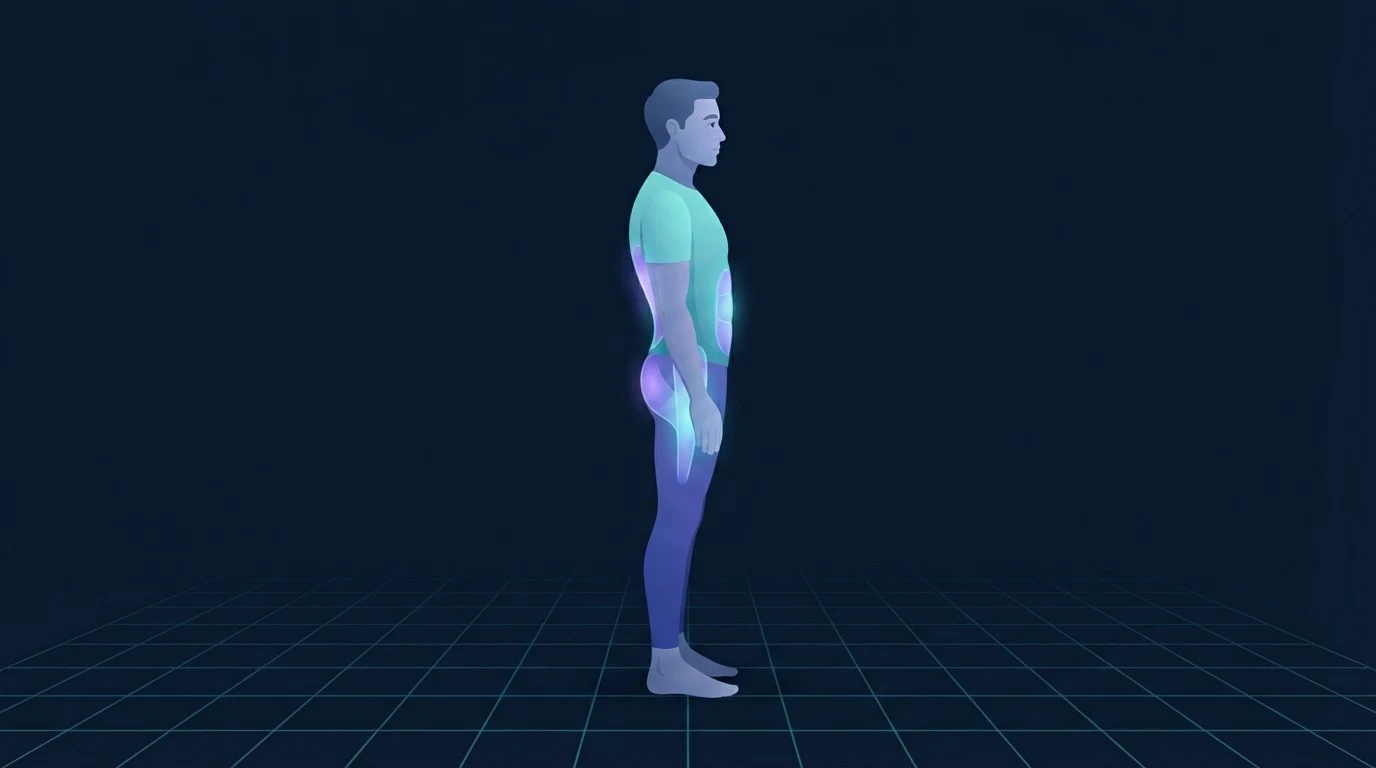
Search this term and you get the same answer everywhere: your hip flexors and lower back are tight, your abs and glutes are weak, stretch the first pair and strengthen the second, and the tilt goes away. That model has a name, lower-crossed syndrome, and it comes from clinical observation in the 1970s rather than from trials. It is worth knowing before you commit twelve weeks to it that the two things it assumes, that anterior tilt is abnormal and that it causes pain, have both been tested and neither held up cleanly.
None of that means you should do nothing. It means the program you run should be aimed at strength and symptoms, which respond, rather than at a resting angle, which mostly does not.
Do You Actually Have Anterior Pelvic Tilt?
Start here, because the answer is usually yes and that is the point. Herrington (2011), writing in Manual Therapy, measured pelvic angle in 120 healthy, pain-free adults with a palpation meter. He found 85 percent of the men and 75 percent of the women stood in anterior pelvic tilt. Only 9 percent of men and 18 percent of women measured neutral. Anterior tilt is not a deviation from the population. It is the population.
Measuring it on yourself is harder than the internet suggests. Suits (2021), in the International Journal of Sports Physical Therapy, reviewed the clinical measures and found caliper inclinometers hold up against radiographs, while visual assessment has no reliability or validity evidence supporting it at all. Normative values in asymptomatic adults ran from roughly minus 4.5 degrees to 27 degrees. That is an enormous healthy range to eyeball from a bathroom mirror.
Then there is the problem that undermines the measurement itself. Preece et al. (2008) measured 30 cadaver pelves, each fixed in the same anatomical reference position, and found the angle between the front and back bony landmarks varied from 0 to 23 degrees across specimens, with a mean of 13. Side-to-side asymmetry within a single pelvis reached 11 degrees. Every one of those pelvises was in the identical position. The number you would read off them differs by more than 20 degrees because of bone shape alone. A large part of your measured tilt is skeleton, and no program changes skeleton.
| Assessment method | What the evidence says | Use it? |
|---|---|---|
| Caliper inclinometer or palpation meter | Reliable, and valid against radiographic measures | Yes, in a clinic |
| Handheld inclinometer | Moderate to excellent reliability, no validity studies | With caution |
| Smartphone app | High repeatability, no validity studies | For tracking yourself only |
| Looking in a mirror or a photo | No reliability or validity evidence for pelvic tilt | No |
| Can you control it under load? | Not a posture measure, but it is the question that changes what you train | Yes, start here |
That last row is the useful test at home. Lie on your back with your knees bent, press your lower back gently into the floor, then slowly straighten one leg. If your back arches off the floor the moment the leg extends, you have a trunk control problem you can train. If you can hold the position, your standing tilt is cosmetic and you can stop worrying about it.
Is Anterior Pelvic Tilt Actually Causing Your Back Pain?
This is where the popular model runs into trouble. Laird et al. (2014), in BMC Musculoskeletal Disorders, pooled 43 studies comparing lumbo-pelvic movement in people with and without low back pain. Standing lumbar curvature came out effectively identical between groups, with a pooled standardised mean difference of 0.01. Standing pelvic tilt showed a small, non-significant lean toward more anterior tilt in the pain group. Neither reached significance.
Chun et al. (2017), in The Spine Journal, pooled 13 studies on lumbar curvature and back pain and found the lumbar lordotic angle was on average smaller in people with pain. Smaller, not larger. That is the opposite direction from what the anterior tilt theory predicts, and it makes the "arched back equals painful back" story hard to sustain.
What did separate the groups in the Laird review was movement, not posture. People with back pain had reduced range of motion in flexion, extension, side bending and rotation, moved substantially more slowly, and had notably poorer position sense. Those are trainable. A frozen standing photograph is not where the difference lives, and treating it as the target sends you after the wrong variable. Our review of the exercise evidence for lower back pain goes deeper into what does move those outcomes.
Find out what's really holding you back
FitCraft, our mobile fitness app, pairs you with an AI coach who builds you a personalized plan around your goals, schedule, and fitness level. Every FitCraft program is designed by Domenic Angelino, MPH (Brown University) and NSCA-CSCS, with research published in the Journal of Strength and Conditioning Research and Medicine & Science in Sports & Exercise.
Take the Free Assessment Free • 2 minutes • No credit card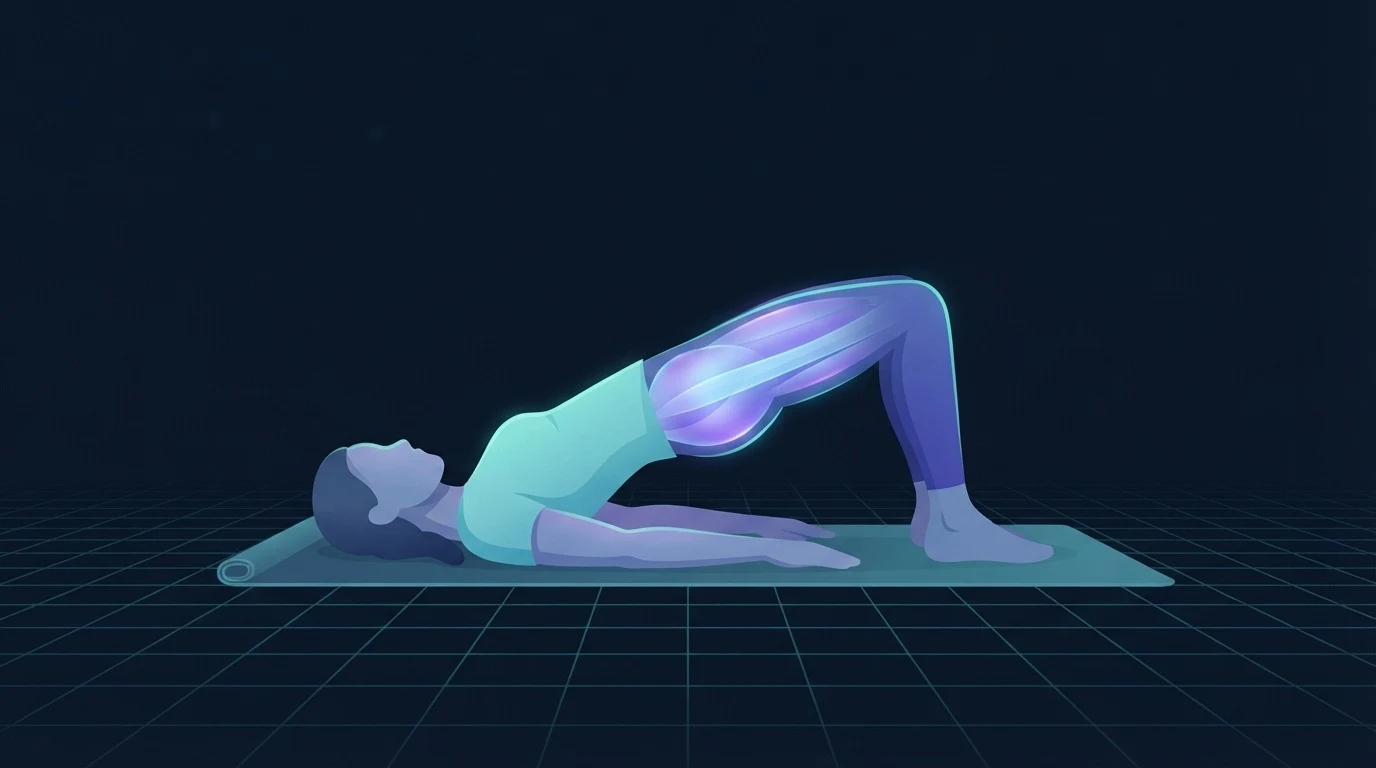
What Actually Changes Pelvic Tilt?
The standard prescription is stretch-and-strengthen. Half of it has been tested directly and failed. Warneke, Lohmann and Wilke (2024), in Sports Medicine Open, pooled 23 controlled trials with 969 participants on whether stretching or strengthening changes spinal and lumbopelvic posture. Chronic stretching produced nothing: an effect of d = -0.19 overall, and d = -0.04 at the lumbar spine and pelvis specifically. Strengthening did better in a direct comparison, d = 0.81 in its favour, but its benefit landed in the thoracic and cervical spine, d = -1.04, and not in the lumbar spine and pelvis, where the result was d = -0.23 and not significant.
Their conclusion is blunt. Stretching tight muscle to improve posture lacks scientific evidence at moderate certainty, and strengthening weak antagonists worked in the upper back and neck but not the lower back. If the front of the hip is the part that actually feels locked, our guide to tight hip flexors covers what that stiffness usually is and what moves it.
There is a counterweight worth reporting honestly. Dimitrijevic et al. (2022), in the International Journal of Environmental Research and Public Health, pooled 10 studies with 482 participants on corrective exercise programs and found a moderate effect on lumbar lordotic angle, SMD 0.550, with a larger effect in younger participants. So structured multi-week programs can shift lumbar curvature. What has not been shown is that stretching drives that shift, or that the shift is what makes anyone feel better.
| Common claim | Evidence status | What to do |
|---|---|---|
| Tight hip flexors pull the pelvis forward | Mechanically plausible, but stretching them changed lumbopelvic posture by d = -0.04 | Train hip flexors through range, do not just stretch them |
| Weak glutes and abs let the pelvis tip | Strengthening beat stretching overall, but not significantly at the lumbar spine or pelvis | Do it anyway, for strength and symptoms |
| The tilt causes low back pain | 43-study meta-analysis found no group difference in standing tilt or curvature | Chase movement quality instead |
| Corrective programs change the angle | Supported: 10 studies, 482 people, SMD 0.550 on lumbar lordotic angle | Run a real program for 8 to 12 weeks |
| You can see your tilt in the mirror | No reliability or validity data, and bone shape alone spans 23 degrees | Stop measuring by eye |
What Should the Program Actually Look Like?
Aim at strength, control through range, and how you feel after two hours on your feet. Those are the outcomes that respond. The exercise selection below overlaps heavily with what a network meta-analysis of 118 trials and 9,710 participants, Fernandez-Rodriguez et al. (2022) in JOSPT, ranked highest for chronic low back pain: Pilates, strength and core-based training all beat control on pain and disability, while stretching alone did not reduce pain.
| Block | Exercise | Dose | What it is for |
|---|---|---|---|
| 1. Anti-extension | Dead bugs, then front plank | 3 x 8 per side, 3 x 30 to 45 s | Holding the trunk still while the legs move |
| 2. Loaded hip extension | Glute bridges, progressing to hip thrusts | 3 x 10 to 12, add load weekly | The strength side of the standard model |
| 3. Hinge | Romanian deadlift, light and slow | 3 x 8, controlled lowering | Hamstring strength through range |
| 4. Hip flexor strength | Half-kneeling march or standing knee raise | 3 x 10 per side | Strength through range beats stretching alone |
| 5. Lateral trunk | Side plank, or a suitcase carry | 3 x 20 to 30 s per side | Frontal-plane control most programs skip |
Three sessions a week, eight to twelve weeks, and add a little load or a little time every week. That last part is the whole thing. Without progressive overload this becomes a warm-up you repeat forever, which is how most corrective routines quietly stop working around week three. None of it needs a gym, which is why a home workout app with no equipment covers the whole list except the loaded hinge.
Keep hip flexor stretching if you like it. Just put it before training rather than treating it as the intervention, and read the static versus dynamic stretching evidence before you decide how long to hold anything.
When Does Anterior Pelvic Tilt Actually Matter?
Three cases are worth taking seriously, and they are narrower than the internet implies.
You cannot get out of it under load
Standing in anterior tilt is normal. Being stuck there is different. If you cannot hold a neutral trunk in a plank, cannot squat without your lower back arching hard at the bottom, or cannot press overhead without your ribs flaring, that is a control problem. It shows up as the movement deficits Laird found, not as a posture score, and it responds to exactly the training in the table above.
You sprint or play a sprinting sport
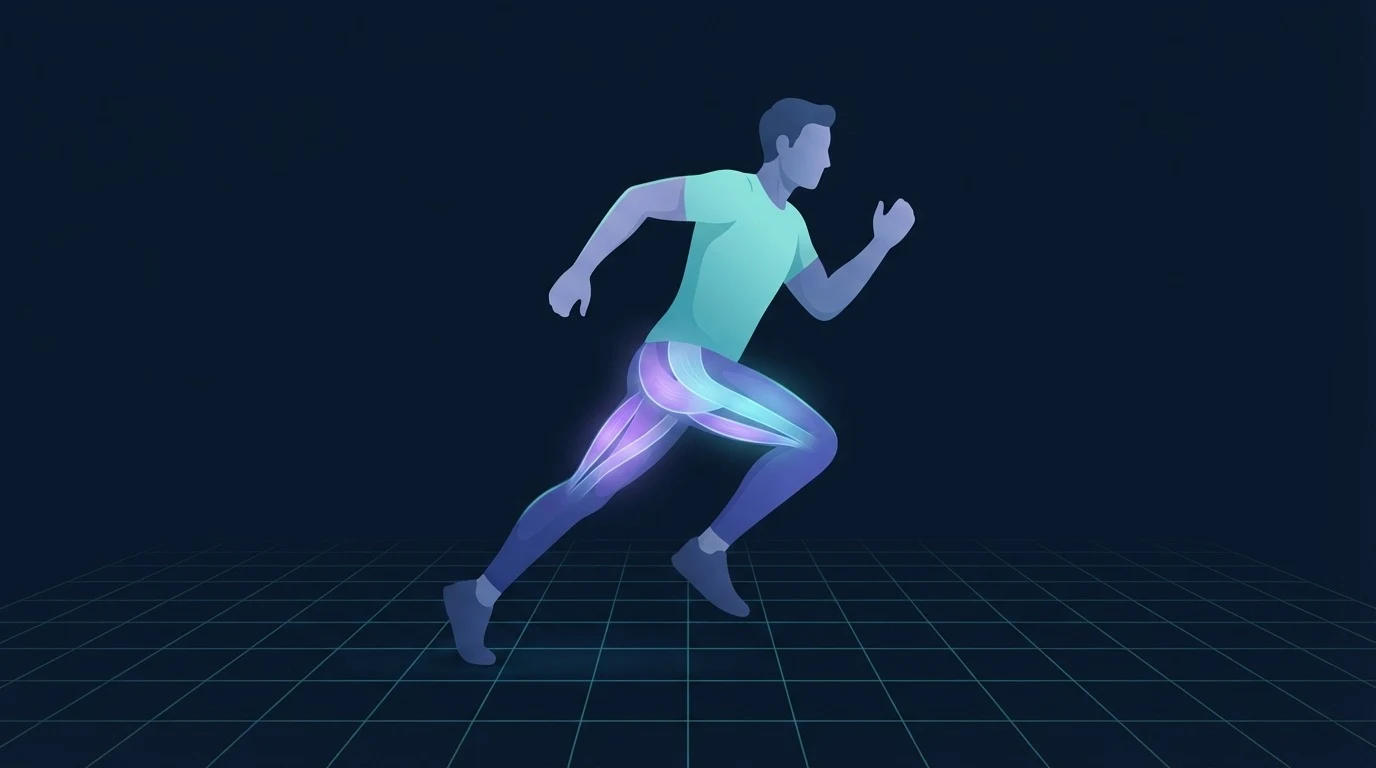
The hamstrings originate on the pelvis, so anterior tilt places them nearer their length limit during the late swing phase of a sprint, when hamstring strains happen. This is a mechanical argument rather than a settled outcome, and it applies to people running fast, not to people sitting at desks. If you sprint, hamstring strength through long ranges is worth the effort regardless of what your pelvis measures.
It hurts, or something new is happening
Pain that tracks with holding the position, pain that wakes you, numbness, weakness or anything down a leg is a reason to see a clinician, not a reason to add another stretch. A home program is the wrong tool for a new neurological symptom. If your symptoms change clearly with position rather than tracking a pelvis angle, our guide to McKenzie exercises explains how to test which direction actually helps before you commit to a program. Deep one-sided buttock pain that builds after twenty minutes of sitting is its own presentation rather than a tilt problem, and our piriformis stretch guide covers the self-check, the hip angles that actually lengthen the muscle, and the red flags that separate it from a nerve root.
Cases where it does not matter
If you have no pain, you can control your trunk under load, and you simply do not like how your profile looks in a photo, you are looking at a cosmetic preference. That is a legitimate thing to want, and body composition and glute and abdominal development will change how it reads far more than any postural cue will. Sitting is worth interrupting anyway for reasons that have nothing to do with your pelvis, which is what the desk worker research is really about.
How Long Does It Take, and What Should Change First?
Eight to twelve weeks before you judge anything, and judge the right things. Strength climbs first, usually inside four to six weeks. Symptoms, if you had any, tend to move next. Standing angle moves last, moves least, and sometimes does not move at all, because a chunk of it is the bone geometry Preece measured.
So set your markers accordingly. Can you hold the dead bug for another rep on each side? Has your hip thrust load gone up? Is your back less stiff after an hour of standing? Those are wins. A photo that looks identical is not a failure, because the photo was never a reliable measure in the first place.
The bigger risk is not picking the wrong exercise. It is stopping. Corrective routines are boring, the feedback is slow, and nothing visible happens for weeks, which is a near-perfect recipe for quitting in week three. Whatever program you run, the version you actually repeat three times a week beats the theoretically optimal one you abandon.
Frequently Asked Questions
How do you fix anterior pelvic tilt?
Train the hips and trunk hard for eight to twelve weeks and stop treating the tilt itself as the target. Loaded glute and hamstring work, anti-extension core work such as dead bugs and planks, and full-range hip flexor training will make you stronger and often reduce symptoms. A meta-analysis of corrective exercise programs found a moderate effect on lumbar curvature, so the angle can shift, but a separate review found stretching changed posture in no measurable way. Strength is the lever. Stretching alone is not.
Is anterior pelvic tilt bad?
For most people it is a normal variation rather than a fault. Herrington measured 120 healthy pain-free adults with a palpation meter and found 85 percent of men and 75 percent of women stood in some anterior pelvic tilt. A 43-study meta-analysis by Laird and colleagues then found no difference in standing pelvic tilt or standing lumbar curvature between people with and without back pain. If the most common posture in pain-free adults were the cause of pain, those numbers would look very different.
Does anterior pelvic tilt cause lower back pain?
The evidence does not support a direct causal link. Laird and colleagues pooled 43 studies and found standing lumbar curvature was effectively identical between groups. Chun and colleagues pooled 13 studies and found the lumbar lordotic angle was actually smaller in people with back pain, which is the opposite of what the tilt theory predicts. What the same review did find is that people with back pain move less far, move more slowly and have poorer position sense. Movement quality separates the groups. Standing posture does not.
How do I know if I have anterior pelvic tilt?
Looking in a mirror will not tell you, and neither will a photo. A review of clinical pelvic tilt measures found caliper inclinometers such as the palpation meter are reliable and valid against radiographs, while visual assessment has no supporting reliability or validity data at all. There is a deeper problem too. Preece and colleagues measured 30 cadaver pelves in a fixed neutral position and found the landmark angle ranged from 0 to 23 degrees between individuals, so bone shape alone can make two identically positioned pelvises measure 20 degrees apart.
Do hip flexor stretches fix anterior pelvic tilt?
On their own, no. Warneke and colleagues pooled 23 trials with 969 participants and found chronic stretching produced no change in posture overall and no change at the lumbar spine and pelvis specifically. Strengthening beat stretching in a direct comparison, though its benefit showed up in the upper back and neck rather than the lower back. Hip flexor stretching is fine if it feels good before you train. Treating it as the fix is the mistake.
How long does it take to fix anterior pelvic tilt?
Give any program eight to twelve weeks before judging it, and judge it on the right thing. Strength and symptom changes arrive first, usually inside four to six weeks. Measurable changes in resting pelvic angle are slower, smaller and sometimes never appear at all, because part of your angle is bone shape you cannot train. If you have less back stiffness after long standing and your hip strength is climbing, the program is working even if the mirror looks unchanged.
When does anterior pelvic tilt actually matter?
Three situations are worth attention. First, if you cannot get out of the tilt under load, meaning you cannot hold a neutral position in a plank, a squat or an overhead press, that is a control problem worth training. Second, if the tilt is painful to hold or comes with new leg symptoms, that needs a clinician rather than a home program. Third, sprinting athletes have a plausible mechanical reason to care, because the hamstrings attach to the pelvis and a forward tilt lengthens them under load. For a general adult with no symptoms, the honest answer is that it does not matter much.
What exercises help most for anterior pelvic tilt?
Anti-extension core work, loaded hip extension and full-range hip flexor strength. That means dead bugs, front and side planks, glute bridges progressing to hip thrusts, Romanian deadlifts, and a hip flexor exercise trained through range rather than only stretched. This is close to what a network meta-analysis of 118 trials and 9,710 participants ranked highest for chronic back pain, where Pilates, strength and core-based training all beat control and stretching alone did not reduce pain.