You don't have time to work out. Or your back hurts, or the gym is a thirty-minute round trip you'll never make, or you've simply never enjoyed a single minute of it in your life. And every weight-loss article you open opens with a workout plan.
So you put it off. Another year of meaning to start, and the quiet assumption that until you become a person who exercises, nothing is going to change.
That assumption is wrong, and it's costing you. The scale responds to energy balance, and the food side of that equation has always been the bigger lever. What follows is what to do with it, in the order that makes it easiest to actually start.
Diet Was Always Doing Most of the Work
Here's the number that reframes everything. A brisk 30-minute walk burns somewhere around 150 calories for most adults. One large muffin is 450. You cannot outrun a kitchen, and the research on exercise as a standalone weight-loss tool reflects that.
Swift and colleagues (2014), reviewing the exercise and weight-loss literature in Progress in Cardiovascular Diseases, concluded that exercise training on its own produces only modest weight loss, well below what the energy expenditure would predict, and that its best-documented value shows up in weight maintenance after the loss and in improving fitness and metabolic health independent of the scale.
That's not a case against exercise. It's a case against treating exercise as the entry fee. If you want the scale to move, start with the levers below and add training later if and when you feel like it.
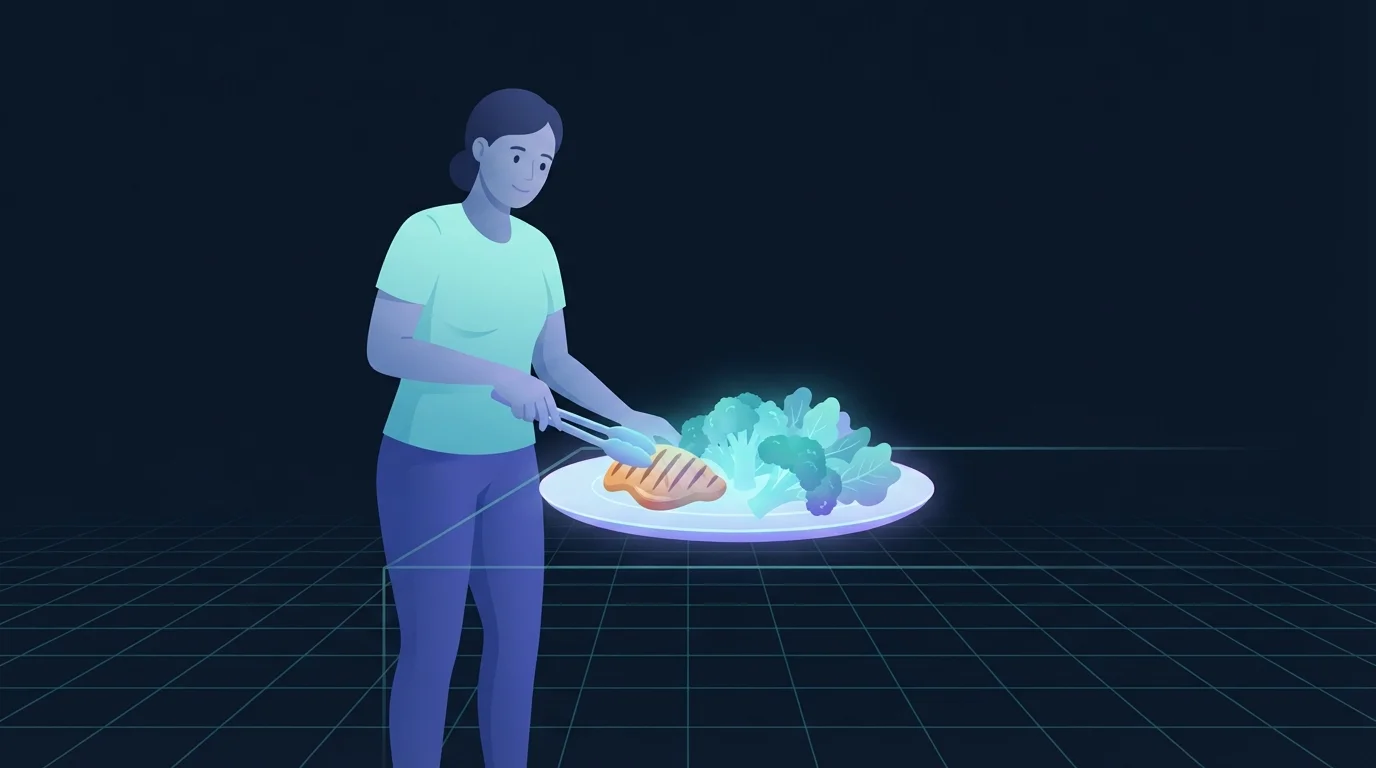
Lever 1: Put Protein at the Front of Every Meal
This is the single highest-return change, because it works through appetite rather than willpower.
Weigle and colleagues (2005), in the American Journal of Clinical Nutrition, ran 19 participants through sequential diet phases. When protein rose from 15 to 30 percent of calories with fat held constant and food available without limit, people spontaneously ate 441 fewer calories a day. Over 12 weeks of that ad libitum high-protein phase, body weight fell by about 4.9 kg and fat mass by about 3.7 kg. Nobody was told to eat less. They just did.
What that looks like on a plate:
- Every meal starts with a palm-sized protein. Eggs, Greek yogurt, cottage cheese, chicken, fish, tofu, lentils, a protein shake if the morning is chaotic.
- Eat it first. Protein and vegetables before the starch on the same plate. The order matters because fullness arrives late.
- Breakfast is where most people are short. A typical cereal or toast breakfast lands near 8 grams. Aim for 25 to 30 and the whole day gets easier.
- Don't drink your calories. Liquid calories barely register on appetite, which makes them the cheapest thing to cut.
Lever 2: Add Fiber and Volume Before You Subtract Anything
Most diets start with a list of things you can't have. Reverse that. Add first, and the subtraction takes care of itself.
The trial worth knowing here is deliberately unglamorous. Ma and colleagues (2015), in Annals of Internal Medicine, randomised 240 adults with metabolic syndrome to either a single dietary goal, eat 30 grams of fiber a day, or the full multicomponent American Heart Association diet. At 12 months, the fiber-only group had lost 2.1 kg and the AHA group 2.7 kg, a difference of 0.6 kg. One instruction got most of the result of a complicated one.
That's the practical point. A rule you'll follow beats an optimal plan you'll abandon in nine days.
- Half the plate is vegetables or fruit, by volume. Not by calories.
- Swap refined for whole in one category at a time. Bread this month, then rice, then pasta. All three at once is how people quit.
- Beans and lentils are the highest-fiber, highest-protein cheat code. A cup of lentils is 16 grams of fiber and 18 of protein.
- Start dinner with a bowl of soup or a salad. Volume before density is the oldest trick there is, and it still works.
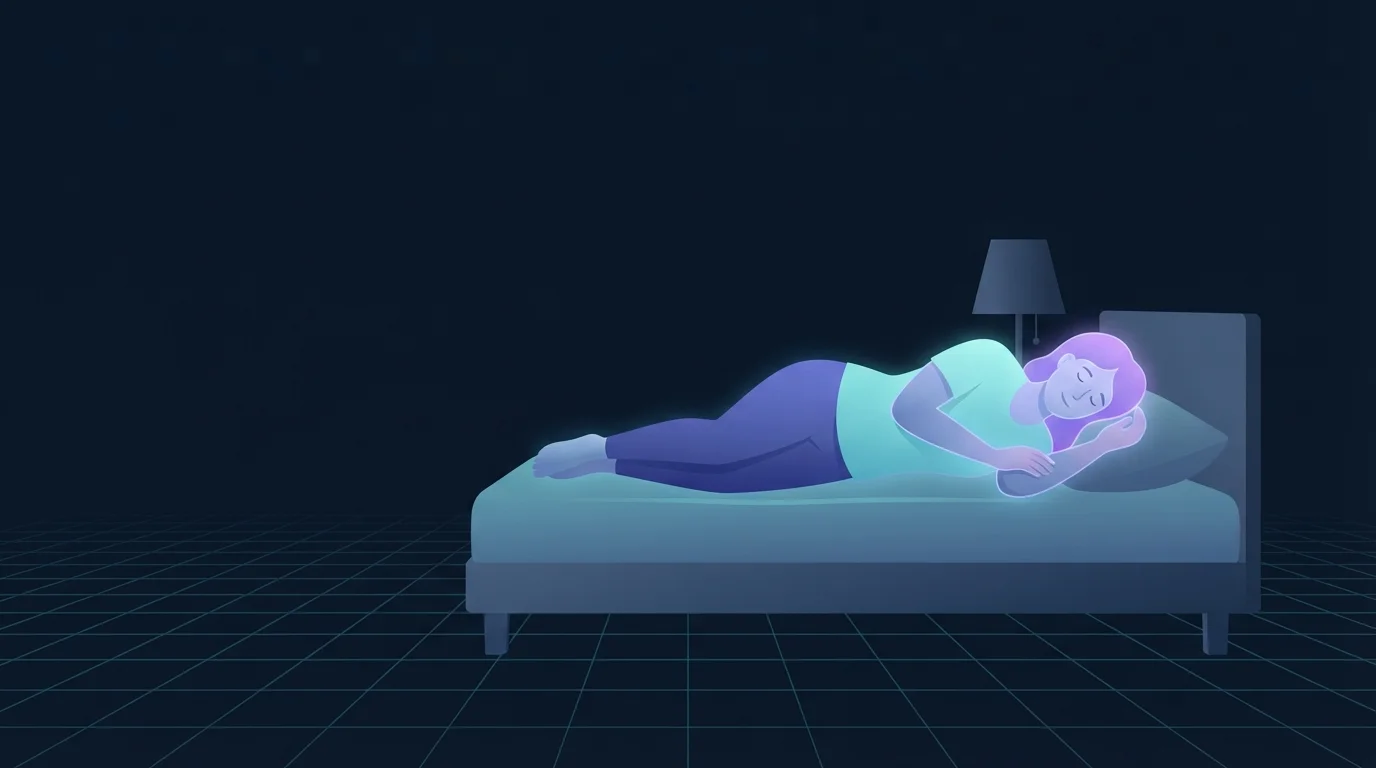
Lever 3: Protect Your Sleep Like It's a Meal
Sleep is the lever people skip because it doesn't feel like a diet intervention. It's the one with the cleanest recent trial.
Tasali and colleagues (2022), in JAMA Internal Medicine, randomised 80 adults with overweight who habitually slept less than 6.5 hours. One group got a single personalised sleep-hygiene session aimed at extending time in bed. Nobody was given any diet instruction at all. Measured with doubly labelled water in their normal lives, the sleep extension group ate 270 fewer calories a day than the control group, and the more their sleep lengthened, the further intake fell.
Short sleep also changes what you lose. Nedeltcheva and colleagues (2010), in Annals of Internal Medicine, put 10 overweight adults through two 14-day periods of identical calorie restriction, once with 8.5 hours in bed and once with 5.5. Total weight loss matched. The split didn't. On 8.5 hours they lost 1.4 kg of fat and 1.5 kg of fat-free mass. On 5.5 hours they lost 0.6 kg of fat and 2.4 kg of fat-free mass. Same deficit, worse outcome.
You don't need a perfect routine. A consistent wake time, a dark room, and a hard stop on screens and caffeine get most people most of the way.
Find out what's really holding you back
FitCraft, our mobile fitness app, pairs you with an AI coach who builds you a personalized plan around your goals, schedule, and fitness level. Every FitCraft program is designed by Domenic Angelino, MPH (Brown University) and NSCA-CSCS, with research published in the Journal of Strength and Conditioning Research and Medicine & Science in Sports & Exercise.
Take the Free Assessment Free • 2 minutes • No credit cardLever 4: Move More Without Calling It Exercise
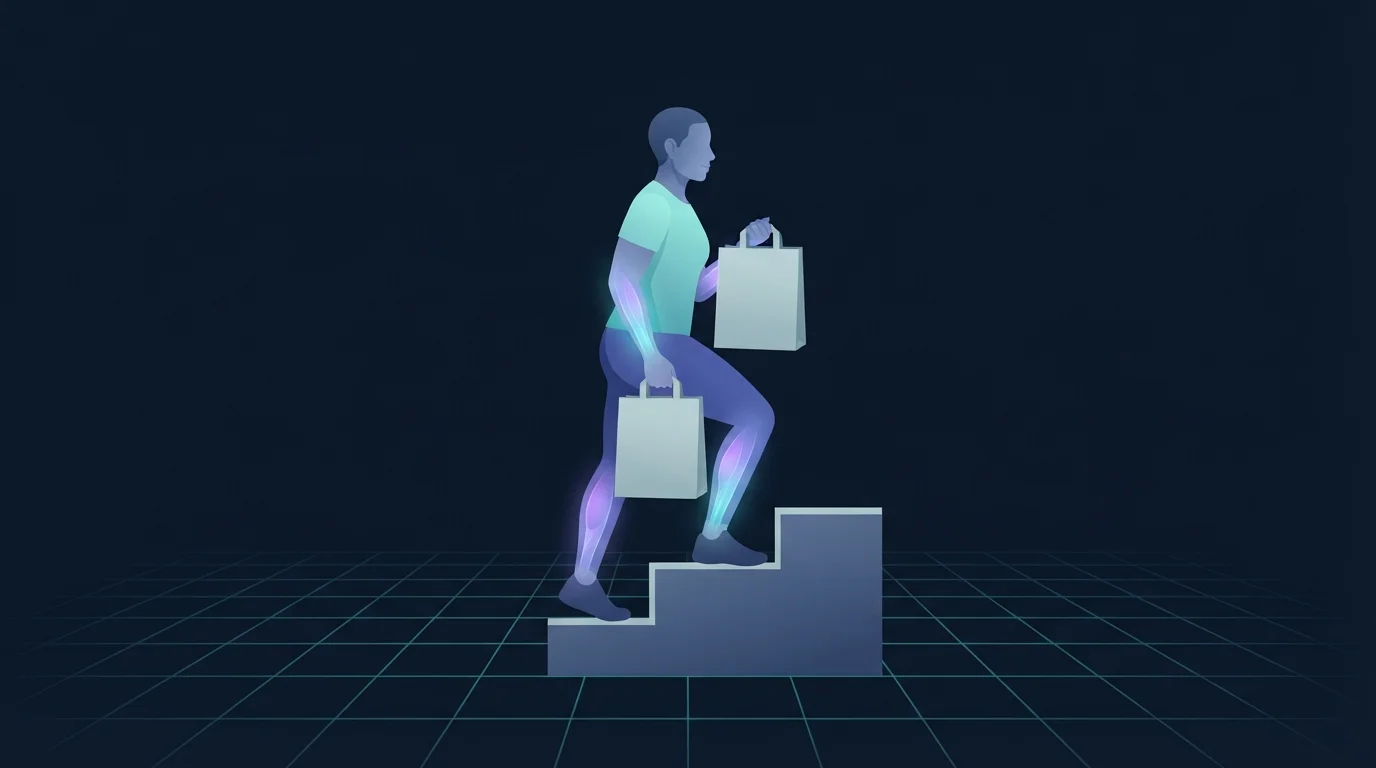
There's a category of movement that isn't exercise and isn't nothing. Walking to the shop, standing on a call, taking the stairs, fidgeting, carrying things. Physiologists call it NEAT, non-exercise activity thermogenesis, and it varies enormously between people.
Levine, Eberhardt and Jensen (1999) demonstrated how much it matters in a famous Science paper. They overfed volunteers by 1,000 calories a day for eight weeks and measured where the energy went. Two-thirds of the increase in total daily energy expenditure came from non-exercise activity thermogenesis, and the people whose NEAT rose the most gained the least fat. The differences between individuals were large enough to explain why two people eating the same surplus end up in very different places.
The reason this belongs in a no-exercise plan is that NEAT is the part of your TDEE that quietly falls when you cut calories. Protect it deliberately:
- Anchor a walk to something you already do. After lunch, after the school run, after the last call of the day. Not "I'll walk more".
- Make the default the longer version. Park at the far end. Get off a stop early. Take the stairs for one or two flights, not six.
- Stand for phone calls. Free, invisible, and it adds up over a working week.
- Watch for the drop. If you're two weeks into a deficit and suddenly sitting more, that's the physiology doing its job. Naming it is most of the fix.
Track Something. Anything.
Self-monitoring is the least exciting predictor of weight loss and one of the most consistent. Burke, Wang and Sevick (2011), reviewing the self-monitoring literature in the Journal of the American Dietetic Association, found a consistent association between self-monitoring of diet, weight or activity and weight-loss outcomes, while noting that study methods varied widely.
It doesn't have to be a food diary. Pick one:
- Weigh daily, judge weekly. Record every morning, compare seven-day averages. Daily readings swing two to four pounds on water alone.
- Photograph your plates for a week. Lower friction than logging and it catches the things people forget.
- Log one variable only. Protein grams, or fiber grams, or steps. One number you'll actually record beats four you won't.
- Take a waist measurement every two weeks. It moves when the scale is being stubborn.
Why You Might Not Be Losing Weight in a Calorie Deficit
Nearly every stall traces back to one of four things, and only one of them is physiological.
- The deficit isn't the size you think. Cooking oil, drinks, tastes while cooking, and weekends that don't get logged. This is the most common answer by a distance.
- Water is hiding the loss. Fluid shifts from sodium, carbohydrate intake, stress and menstrual cycles routinely mask two to three weeks of real fat loss.
- Daily movement fell. The NEAT drop above. It's silent and it's real.
- Adaptation over a long diet. Genuine, but slower and smaller than the internet suggests, and it mostly shows up after substantial loss.
Our troubleshooting post on why am I not losing weight in a calorie deficit works through each of these with the numbers, and the weight loss plateau guide covers what to do when a stall runs past four weeks.
Can You Lose Face Fat Without Exercise?
Yes, and also no, depending on what you're asking.
You can lose face fat, because the face gets leaner as overall body fat falls. What you can't do is target it. Fat loss is systemic, and no facial exercise, gua sha routine or chewing gum regimen redirects it. The face often changes early for some people and late for others, and that ordering isn't something you control.
Two things change facial appearance faster than fat loss does: sodium and alcohol, both of which drive short-term fluid retention around the eyes and jaw. Cutting either can visibly change a face in 48 hours, and it has nothing to do with fat. Our guide on how to lose face fat goes through the spot-reduction evidence and the puffiness question in detail.
What You Give Up by Skipping Exercise
This is the part most "lose weight without exercise" articles leave out, and you deserve it straight.
More of the loss comes from muscle. Miller and colleagues (2018), in the International Journal of Sport Nutrition and Exercise Metabolism, randomised 40 premenopausal women to resistance training only, diet only, both, or neither. Every intervention group lost fat. The diet plus resistance training group got the best body-composition outcome. Losing weight without training still works, it just costs you a larger share of lean tissue on the way down. Our guide to losing fat without losing muscle covers the protein and training side of that problem.
Keeping it off is harder. Wing and Phelan (2005), summarising the National Weight Control Registry in the American Journal of Clinical Nutrition, reported that roughly 90 percent of people who had maintained a loss of 30 pounds or more for at least a year reported exercising regularly, averaging about an hour a day. That's observational, not causal. It's still the most consistent signal in the maintenance literature.
Adaptation is real at the far end. Fothergill and colleagues (2016), in Obesity, followed 14 Biggest Loser contestants for six years and found resting metabolic rate remained suppressed well below what their body size predicted. That's an extreme case of extreme weight loss, and the practical takeaway is modest: the faster and larger the loss, the more defended the new weight becomes.
None of this means you should wait for a gym membership before changing anything. It means the eventual goal is adding two short strength sessions a week once the food side is running on its own, and that they can be bodyweight sessions in your living room. When you get to that point, our roundup of the best workout apps for weight loss compares the options for people who want the programming handled for them.
A Four-Week Plan With No Workouts In It
One change per week. That's the whole design, and it's deliberate: piling all four levers on at once is why last time lasted eleven days.
| Week | The one change | How you know it's working |
|---|---|---|
| Week 1 | Protein at every meal, starting with breakfast at 25 to 30 grams | You're less interested in an afternoon snack |
| Week 2 | Keep week 1. Add vegetables or fruit to half of every plate, by volume | Meals take longer and you finish them less often |
| Week 3 | Keep weeks 1 and 2. Set a fixed wake time and a screen cutoff | Evening snacking drops without you deciding anything |
| Week 4 | Keep all three. Anchor one 15-minute walk to an existing daily event | The walk happens on a bad day, not just a good one |
Weigh yourself every morning from day one and only look at the seven-day average. Expect the first week to overstate progress, because part of it is water. By the end of week four you should be seeing half a pound to a pound and a half a week. If you're not, go back to the first bullet in the stall list: the deficit is almost certainly smaller than you think.
The Bottom Line
You can lose weight without exercise. Protein first, volume and fiber second, sleep third, daily movement fourth, and one number tracked honestly. Those five things will move the scale whether or not you ever set foot in a gym.
What training buys you is the composition of the loss and the odds of keeping it off. So treat it as the thing you add in month three, not the ticket you need before you're allowed to start.
You were never failing at weight loss because you weren't working out. You were being handed the wrong first step.
Frequently Asked Questions
Can you actually lose weight without exercise?
Yes. Weight loss is driven by energy balance, and diet change is the lever that moves it most. A review of the exercise and weight-loss literature concluded that exercise alone produces only modest weight loss, while its strongest role is in keeping weight off afterward (Swift et al., 2014). You can lose weight with food, sleep and daily movement changes alone. What you cannot do without resistance training is control how much of the loss comes from muscle.
How fast can you lose weight without working out?
Roughly half a pound to one and a half pounds a week for most people, which is the same range you'd expect with workouts added, because the deficit is what sets the pace. Expect the first week to look faster than that on the scale, since some of it is water and glycogen. Judge progress on a four-week average rather than a daily reading.
Why am I not losing weight in a calorie deficit?
Usually because the deficit is smaller than it looks. Intake gets underestimated, weekends get excluded, cooking oil and drinks go uncounted, and daily movement drops quietly as calories fall. Water retention can also hide four to six pounds of real fat loss for weeks at a time. Weigh a full week of intake honestly before deciding the deficit has stopped working.
Can you lose face fat without exercise?
You can lose face fat, but not on purpose and not before the rest of you. Fat loss is systemic, so the face gets leaner as overall body fat falls, and no facial exercise or massage routine targets it. Two things that change how the face looks faster than fat loss does are sodium and alcohol, both of which drive short-term fluid retention around the eyes and jaw.
What should I eat to lose weight without exercise?
Build meals around a palm-sized protein source, a large volume of vegetables or fruit, and a measured portion of starch or fat. In a controlled feeding trial, raising protein from 15 to 30 percent of calories led people to spontaneously eat 441 fewer calories a day and lose about 4.9 kilograms over 12 weeks with no instruction to restrict anything (Weigle et al., 2005). High-fiber foods do similar work through fullness and volume.
Does losing weight without exercise cost you muscle?
Some of it, yes. In a randomized trial in premenopausal women, every group lost fat, but the combination of diet and resistance training produced the best body-composition result (Miller et al., 2018). Sleep matters here too: under identical calorie restriction, cutting sleep from 8.5 to 5.5 hours shifted the loss toward lean mass, with fat loss dropping from 1.4 kg to 0.6 kg and fat-free mass loss rising from 1.5 kg to 2.4 kg (Nedeltcheva et al., 2010).