Quick Comparison
| App | Best for | Its role in weight loss | Cost model | The honest catch |
|---|---|---|---|---|
| FitCraft | Staying consistent with training | Adherence and muscle | Free version available | No food logging. Pair it with a nutrition app |
| MyFitnessPal | Tracking the calorie deficit | The deficit itself | Free tier, paid upgrade | Barely a workout app. Crowdsourced food data |
| Noom | Changing why you eat | The deficit and the habits behind it | Paid only | Light on real training. Daily lessons take time |
| Nike Training Club | Free all-round training | Energy expenditure and muscle | Fully free | You pick the workouts. Nothing adapts to you |
| Peloton App | Instructor-led variety | Energy expenditure | Paid only | Class library, not a progressive plan |
| Future | Human accountability | Adherence and muscle | Paid only | The most expensive option here by a wide margin |
| Caliber | Structured strength on a budget | Muscle preservation | Free tier, paid coaching upgrade | The free tier leans on you to drive it |
What exercise actually does for weight loss, and what it does not
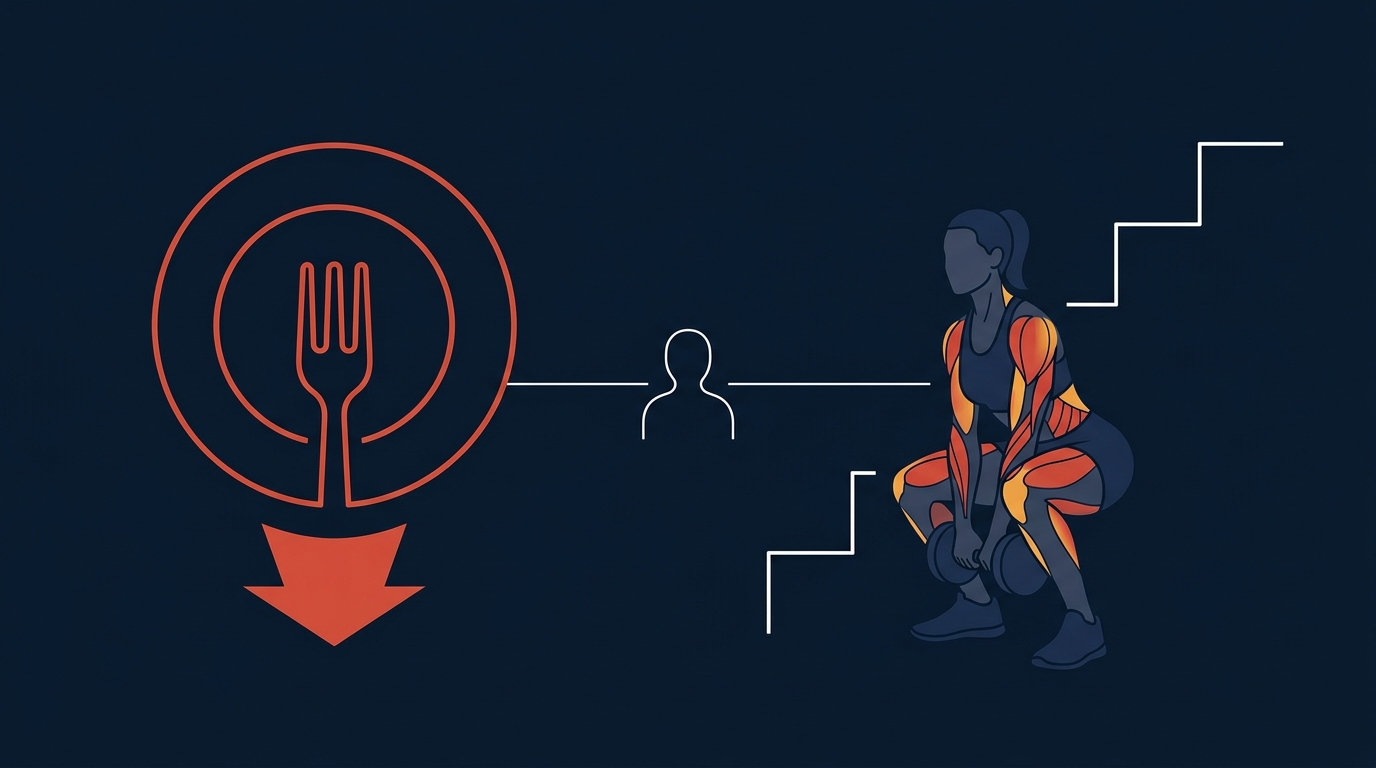
Start here, because almost every "best workout app for weight loss" list gets this backwards. Exercise is not the lever that creates a calorie deficit. Food is.
A systematic review of 14 randomized trials covering 1,847 people, published by Thorogood et al. (2011) in The American Journal of Medicine, found that six-month aerobic exercise programs without any dietary change produced an average of 1.6 kg of weight loss. Twelve-month programs managed 1.7 kg. The authors' own conclusion was blunt: isolated aerobic exercise is not an effective weight-loss therapy, although it works well in combination with diet.
Part of the reason is that your body quietly pushes back. Careau et al. (2021), working with data on 1,754 adults in Current Biology, found that energy compensation averages about 28%. Roughly a quarter of the calories you burn in a workout get clawed back the same day through lower NEAT, more sitting, and a nudge in appetite. Your TDEE doesn't rise by the full amount the treadmill claims.
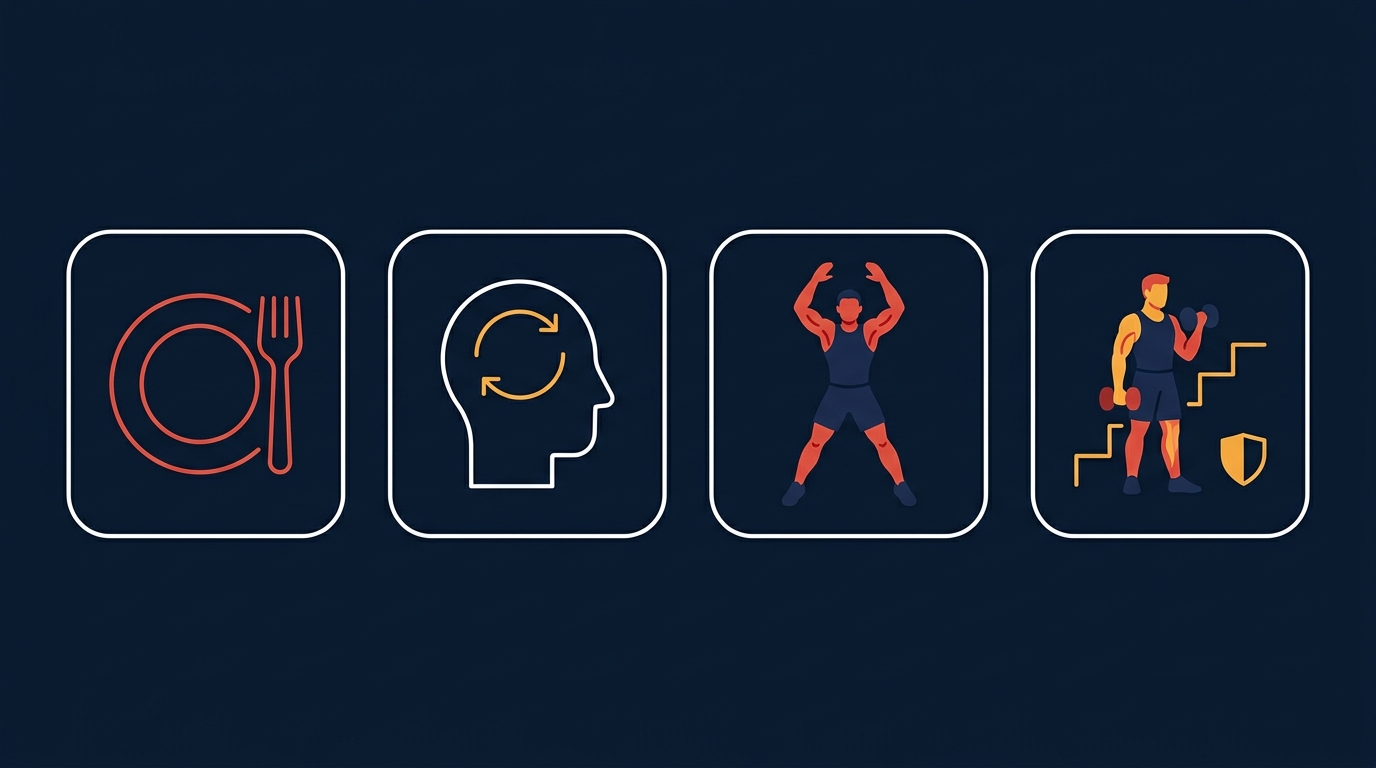
So what's exercise for? Three things, and they are the reason this page exists:
- Adherence. Weight loss is a months-long project, and finishing it is the whole game. In the Dansinger et al. (2005) JAMA trial, four popular diets were compared head to head. Weight loss was similar across all four. What predicted results was not which diet people were assigned, it was how well they stuck to it. Training builds the daily structure that makes sticking to anything easier.
- Muscle preservation. Weight you lose comes from fat and lean tissue both. Resistance training is the signal that tells your body to keep the muscle, and it changes what the scale drop actually means.
- Energy expenditure. Compensation is partial, not total. Training still adds real output, and it's the strongest behavioral predictor of keeping weight off once you have lost it.
That's the lens we ranked through. If an app helps you show up, keep muscle, and move more, it earns its place. If your real problem is that you have never once looked at what you eat, skip to the nutrition picks, because that's where your first ten pounds live. Our guide to the weight loss plateau covers what happens when the deficit stops working, and healthy habits that quietly sabotage weight loss covers the ways this goes sideways.
Which workout app is best for weight loss in 2026?
1. FitCraft: best overall for staying consistent
Role: adherence and muscle | Equipment: adapts to what you have | Platforms: iOS and Android
FitCraft ranks first because it targets the failure point, not the workout. Most people don't fail at weight loss because their program was wrong. They fail because they stopped. A 2025 systematic review of mobile apps in obesity management by Pujia et al. in the Journal of Medical Internet Research put a number on it: roughly 75% of users abandon a health app shortly after starting, and among those who stayed active, 53% hit clinically significant weight loss of 5% or more, compared with 20% of inactive users. Same apps. The difference was whether people kept using them.
FitCraft is built around that gap. A free assessment maps your goals, schedule, and equipment, then an AI coach builds a plan and the workouts adapt as your progress does. The coach is a 3D character who talks to you and demonstrates every movement on an interactive model you can rotate, pinch, and zoom, which matters when you're learning to lift in a living room with nobody watching your form. On top of that sits the game layer: XP, levels, collectible cards, calendar rewards, and streaks for showing up.
That layer isn't decoration. A 2022 meta-analysis by Mazeas et al. in the Journal of Medical Internet Research found gamified interventions raised physical activity by roughly 500 to 1,400 extra steps per day, and the effect held after the studies ended. Our gamification and fitness statistics page has the full breakdown, and the workout adherence statistics page shows what the dropout numbers look like without something holding the habit in place.
The honest catch: FitCraft doesn't log your food, count calories, or track macros, and weight loss is mostly a food problem. It's also not a barbell logbook, so if you want to record every working set and watch a one-rep-max curve climb, this is the wrong tool. Pair it with MyFitnessPal and you have both halves covered.
Best for: people who have quit fitness apps before, train at home, and need the training habit to survive past week three. If that's you, the gamified workout app and workout app that keeps you motivated pages go deeper on how the reward system works.
See what FitCraft would build for you
FitCraft, our mobile fitness app, pairs you with an AI coach who builds you a personalized plan around your goals, schedule, and fitness level. Every FitCraft program is designed by Domenic Angelino, MPH (Brown University) and NSCA-CSCS, with research published in the Journal of Strength and Conditioning Research and Medicine & Science in Sports & Exercise.
Take the Free Assessment Free • 2 minutes • No credit card2. MyFitnessPal: best for tracking the calorie deficit
Role: the deficit itself | Equipment: none | Platforms: iOS, Android, web
If you're only going to install one app and you've never tracked your food, install this one. MyFitnessPal is the default calorie and macro tracker for a reason: an enormous food database, barcode scanning, recipe import, and a free tier that does the core job. Logging is also a behavior change in itself. People eat differently when they know they have to write it down.
Why it earns the spot: it's the only app here that directly addresses the mechanism that actually causes weight loss. Every training app on this list is downstream of the deficit.
The honest catch: it's barely a workout app. The exercise side is a calorie-burn log rather than programming, and the burn estimates it credits you tend to run high, which quietly undoes part of your deficit. The food database is crowdsourced, so entries vary in accuracy and you have to spot-check the ones you use often. See our FitCraft vs MyFitnessPal breakdown for where the two overlap and where they don't.
3. Noom: best for changing why you eat
Role: the deficit and the habits behind it | Equipment: none | Platforms: iOS and Android
Noom takes the psychology route. Alongside food logging it delivers short daily lessons drawn from cognitive behavioral therapy, plus a colour-coded food system and human coach check-ins. For people whose problem is emotional eating, evening snacking, or a decade of yo-yo cycles rather than ignorance about calories, that framing genuinely helps.
Why it earns the spot: it's the best app here at the question of why you eat what you eat, which is the part willpower advice never touches.
The honest catch: the training side is thin. Noom will nudge you to move and log steps, but it doesn't build you a progressive resistance program, so it leaves the muscle-preservation job undone. It's also paid only, and the daily lessons take real time on days you have none. Our FitCraft vs Noom page walks through pairing the two rather than choosing between them.
4. Nike Training Club: best free workout app for weight loss
Role: energy expenditure and muscle | Equipment: bodyweight to dumbbells | Platforms: iOS and Android
Nike Training Club went free in 2020 and never went back. The whole library is open: strength, HIIT, cardio, mobility, and yoga sessions, plus multi-week programs, all led by Nike Master Trainers with production quality that most paid apps can't match. For someone who wants to start moving today without spending anything, it's the best free workout app on this list.
Why it earns the spot: genuinely free with no locked tier, broad enough to cover cardio and strength, and the programs give you structure rather than a pile of loose classes.
The honest catch: nothing adapts to you. NTC hands you an excellent library and leaves the choosing, sequencing, and progressing to you, which is exactly the decision load that ends most home-training streaks. There's no progressive overload logic tracking whether last week was too easy. Our FitCraft vs Nike Training Club comparison covers that difference in detail, and the best free workout apps roundup ranks the wider free field.
5. Peloton App: best instructor-led variety
Role: energy expenditure | Equipment: none required, bike and tread optional | Platforms: iOS, Android, web, TV
You don't need the bike. The Peloton App on its own is one of the deepest instructor-led class libraries anywhere: running, walking, strength, cycling, HIIT, yoga, and meditation, with instructors people genuinely form habits around. If what gets you moving is a person on screen who makes the next 30 minutes feel like an event, this is the strongest option here.
Why it earns the spot: class quality and instructor pull are real adherence mechanisms, and the cardio volume adds meaningful energy expenditure.
The honest catch: it's a library, not a plan. You choose every class, and the strength content doesn't progress you the way a structured program would. It's paid only, and its free tier is gone. See FitCraft vs Peloton for how a class library compares with an adaptive plan.
6. Future: best human accountability
Role: adherence and muscle | Equipment: home or gym | Platforms: iOS, Android, Apple Watch
Future pairs you with an actual certified human coach who writes your program week by week, watches your logged sessions, and messages you when you go quiet. That's a fundamentally different accountability mechanism from anything an app can simulate, and for a certain kind of person it's the only thing that has ever worked.
Why it earns the spot: a real human noticing you skipped Tuesday is the strongest adherence lever on this list. The programming is properly individualized too.
The honest catch: it costs several times what any other app here does, which puts it out of reach for most people trying to lose weight. It also depends heavily on coach fit, and it assumes you'll log honestly. Our FitCraft vs Future page covers who the human-coach model is genuinely worth it for.
7. Caliber: best structured strength on a free tier
Role: muscle preservation | Equipment: home or gym | Platforms: iOS and Android
Caliber gives you real strength programming, a solid exercise library with technique videos, and progress tracking without paying anything up front, with optional human coaching if you want to add accountability later. For a dieter who wants the muscle-preservation piece handled properly on a budget, it's the best free structured strength option here.
Why it earns the spot: serious, progressive strength work on a free tier is rare, and strength work is the part of weight loss most people skip.
The honest catch: without the paid coach, the free experience relies on your own motivation to drive it. There's no reward system, no adaptive nudging, and no help on the days you don't feel like it, which is the same consistency gap that sinks most free apps. See FitCraft vs Caliber for the tradeoff, or the best strength training apps roundup for the wider field.
Why strength training belongs in a weight loss plan
Most people trying to lose weight do cardio and skip lifting. That choice decides what the scale drop is made of.
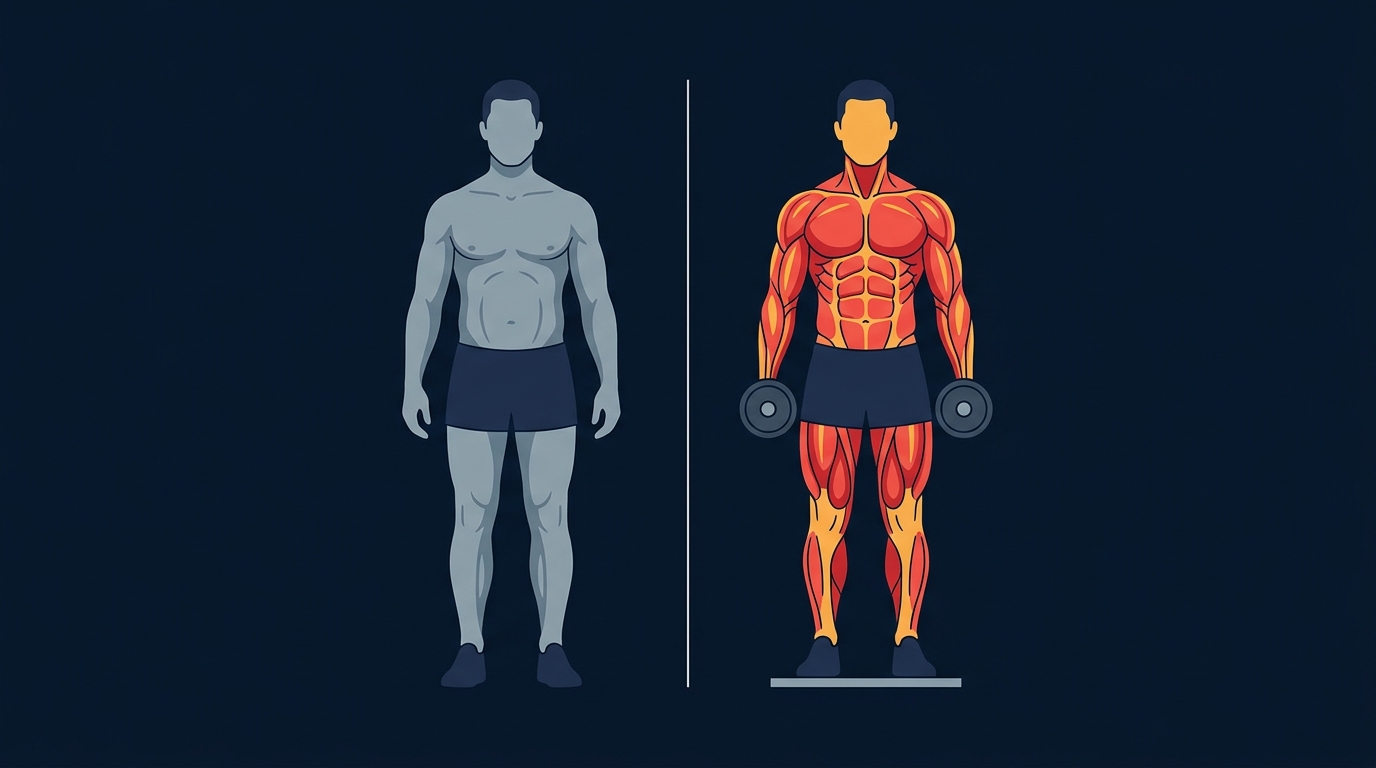
When you eat in a deficit, your body pulls energy from fat and from lean tissue both. Resistance training is what tips that ratio. A 2018 meta-analysis by Sardeli et al. in Nutrients found resistance training prevented 93.5% of the lean body mass loss caused by calorie restriction. Not some of it. Almost all of it.
The broader picture agrees. Lopez et al. (2022) pooled 114 trials and 4,184 participants in Obesity Reviews and found that resistance training combined with calorie restriction was the most effective approach for reducing body fat percentage and whole-body fat mass, while lean mass was maintained. And Murphy and Koehler (2022) add a useful nuance: an energy deficit blunts your ability to build new muscle, but it doesn't stop you getting stronger. You won't add much size while dieting. You will absolutely hold onto what you have and get better at using it.
Two things follow. Two to four resistance sessions a week is the target most of this research uses, and it doesn't require a gym: dumbbells, bands, or bodyweight all provide the signal. And cardio doesn't have to kill your gains if you keep the strength work in place. Doing both is the answer.
If you're on a GLP-1, the same rules apply harder
Semaglutide and tirzepatide have changed what weight loss looks like for a lot of people, and they change the app calculus too. When appetite suppression is doing the deficit work for you, a calorie tracker matters less and a training app matters more, because rapid medically driven weight loss pulls a meaningful share of its total from lean mass. The muscle-preservation argument above isn't optional in that context, it's the whole assignment, and hitting protein targets while barely hungry takes deliberate planning. We ranked the field separately for that audience in the best fitness app for GLP-1 users, which covers the body-composition research and the protein side in depth.
How we evaluated
These are commercial apps, so here's exactly what this ranking is and is not. We assessed each app against public feature documentation, current app store listings, and hands-on use of the free tiers as of August 2026. We didn't run a controlled multi-week trial of all seven, and we're not going to claim we did.
The criteria, in the order we weighted them:
- Does it survive a bad week? Whether the app has any mechanism for getting you back after a missed stretch, rather than assuming you arrive motivated.
- Does it cover strength? Progressive resistance work, not just cardio and step counts, because that is the muscle-preservation lever.
- Does it handle the deficit, or admit it does not? Apps that quietly imply exercise alone will do it were marked down.
- Decisions required per session. How much choosing, sequencing, and planning the app leaves on you, which is the load that ends most home-training habits.
- Honest cost model. Whether a genuinely useful version exists without paying, stated as free, free tier, or paid only rather than with prices that go stale.
FitCraft Studios publishes this site and makes FitCraft; the ranking on this page reflects the criteria above, and the fairest way to judge any of these apps, ours included, is to run their free trials yourself.
Which should you choose?
- You've never tracked what you eat: MyFitnessPal, first, before any training app. That's where your first results are.
- You know what to eat but can't stop eating it: Noom. The psychology content is the best on this list.
- You keep starting and quitting workouts: FitCraft. Removing decisions and rewarding every session is the entire design.
- You want to spend nothing: Nike Training Club for training, MyFitnessPal's free tier for food.
- You want a real human watching: Future, if the price is genuinely workable for you.
- You want structured strength without paying: Caliber's free tier.
- You need instructors to make you show up: Peloton App.
- You're losing weight on a GLP-1: prioritize a strength app plus protein tracking, and see our GLP-1 fitness app rankings.
One more thing worth saying plainly. If you're new to all of this and the gym itself is the barrier, start at home with the smallest thing you'll repeat. Our home workout app with no equipment page and the best fitness apps for beginners roundup are built for exactly that starting point.
The bottom line
The Verdict
The best workout app for weight loss is the one you're still using in month three. Nutrition creates the calorie deficit. Exercise decides how much of that loss comes out of muscle, adds real energy expenditure, and builds the structure that keeps the whole thing going. FitCraft is our top overall pick for the training half because it attacks adherence directly, which is the variable that separates people who finish from people who restart every January.
If your honest gap is food, MyFitnessPal or Noom will do more for you this month than any workout app will. Nike Training Club is the best free training option, Caliber is the best free structured strength option, Future is the pick if a human watching is what finally works, and Peloton App wins on instructors.
Most people who actually lose the weight run two apps: one that keeps the deficit honest and one that keeps them training. Pick the pair you'll still be opening when the novelty is gone.
Frequently Asked Questions
What is the best workout app for weight loss?
The best workout app for weight loss is the one you keep opening, because adherence is what separates people who lose weight from people who do not. FitCraft is our top overall pick for that reason: it removes the planning, adapts as you progress, and uses game rewards to keep training alive past the point where most people quit. If your bigger gap is what you eat rather than whether you train, MyFitnessPal or Noom will move the needle faster, since nutrition is what creates the calorie deficit.
What is the best free workout app for weight loss?
Nike Training Club is the best free workout app for weight loss. Its full library of strength, HIIT, cardio, mobility, and yoga sessions plus multi-week programs is available at no cost with no locked tier. Caliber is the better free pick if you specifically want structured strength programming, and MyFitnessPal has a free tier for tracking calories alongside either one.
Can a workout app alone help me lose weight?
A workout app alone usually produces modest weight loss. A meta-analysis of 14 randomized trials found that six-month aerobic exercise programs without dietary change produced about 1.6 kg of weight loss on average, and the authors concluded isolated aerobic exercise is not an effective weight-loss therapy on its own. Exercise still matters a great deal, because it protects muscle, raises energy expenditure, and strongly predicts whether weight stays off, but the calorie deficit comes from what you eat.
Do I need a calorie tracking app as well as a workout app?
If you have never tracked what you eat, a nutrition app will change your results faster than any workout app. Most people who lose weight successfully run two apps: one that keeps them training and one that keeps the deficit honest. MyFitnessPal is the standard free pick for logging food, and it pairs cleanly with any training app on this list.
Should I do cardio or strength training to lose weight?
Do both, and do not skip strength training. Cardio burns more calories per session, but resistance training is what keeps the weight you lose from coming out of muscle. A 2018 meta-analysis found resistance training prevented 93.5% of the lean mass loss caused by calorie restriction, which is the difference between finishing a diet lean and strong or smaller and weaker.
How many days a week should I work out to lose weight?
Two to four sessions a week is the range most weight-loss research uses, with at least two of those being resistance training to protect muscle. Consistency across months matters more than the exact number, so pick a frequency you can hold on a bad week rather than the one that looks best on a good week.