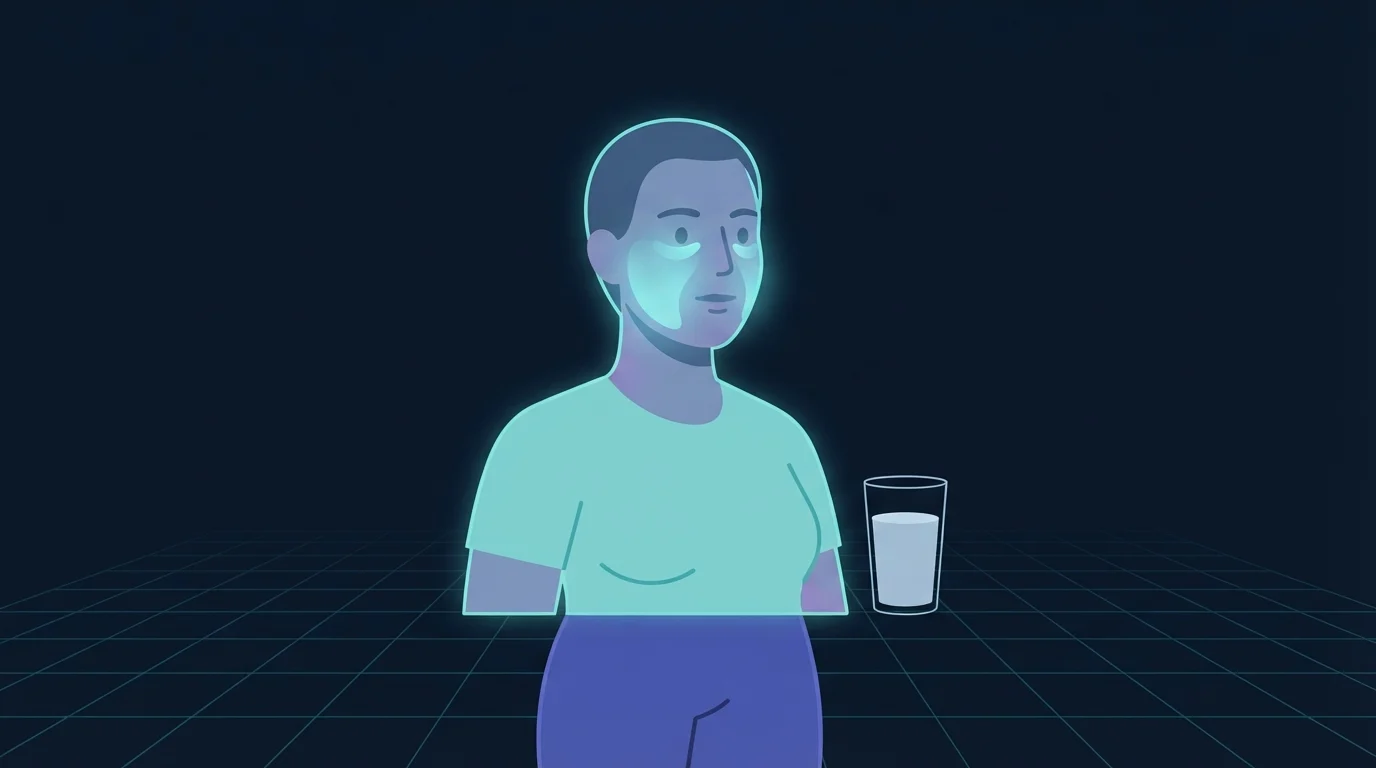
The face is the one part of the body you cannot avoid auditing. You see it in the morning, in every video call, in every photo someone else takes at a bad angle. So it gets more scrutiny than any other body part and, predictably, more bad advice.
Here's the thing nobody tells you: the face is also the single most volatile part of the body. It can look meaningfully different on Tuesday than it did on Sunday, and that has almost nothing to do with fat, which cannot move that fast.
Untangling which of the three components you're actually looking at is most of the work. Once you know, the plan is short.
Is It Fat or Is It Fluid?
Facial tissue is unusually good at holding water. The skin around the eyes is the thinnest on the body, the connective tissue underneath is loose, and there is very little mechanical pressure holding fluid out of it. So a small shift in whole-body fluid balance shows up in the face before it shows up anywhere else.
Sodium is the main lever, though not in the way it's usually described. In a tightly controlled study of ten men during two long-duration space flight simulations, Rakova and colleagues (2017) found that raising salt intake increased osmolyte excretion but reduced free-water clearance, meaning the body conserved water rather than flushing it, and participants actually drank less. Higher salt intake also shifted the mineralocorticoid and glucocorticoid rhythms that govern fluid handling. A high-salt day doesn't just add water to your tissues, it changes how tightly your kidneys hold on to it, which is why the puffiness lags the salty meal by a day.
Three other fluid inputs matter and are easy to miss:
- Lying flat. Eight hours horizontal lets interstitial fluid pool in the face instead of draining toward your feet. That's the entire explanation for morning puffiness, and it resolves within an hour or two of standing up and moving.
- Under-drinking. Mild dehydration raises vasopressin and makes the body cling to sodium and water. Drinking too little makes puffiness worse, not better, which is the opposite of what most people assume.
- Carbohydrate swings. Every gram of stored glycogen holds roughly three grams of water. A weekend of high-carb eating after a low-carb week can add a kilogram of water weight, some of which is visible in your face.
If your face looks different on a three-day cycle, the variable is fluid. Fat does not move that fast, and neither does bone.
What Alcohol and Short Sleep Do to a Face
These two deserve their own section because they hit the face harder than almost anything else, and they usually arrive together.
Alcohol is a vasodilator and a short-term diuretic, which produces a rebound: fluid is flushed while blood alcohol is high, then retained aggressively as it clears. It also wrecks the second half of the night. In their review of the controlled literature, Ebrahim and colleagues (2013) found that at every dose alcohol shortens sleep onset and consolidates the first half of the night, then increases sleep disruption in the second half. So you get the fluid rebound and the sleep debt in the same package.
The sleep half of that package has been measured on faces directly. Sundelin and colleagues (2013) had 40 observers rate photographs of ten people taken after normal sleep and after 31 hours of sleep deprivation. The sleep-deprived faces were rated as having more hanging eyelids, redder eyes, more swollen eyes, darker circles, paler skin, more fine lines and more droop at the corners of the mouth. Every one of those is something people misread in their own mirror as having gained weight in the face.
Which is why the single highest-yield thing most people can do for their face in one week has nothing to do with food. It's a week of real sleep with no alcohol in it. Our review of exercise and sleep research covers the other direction of that relationship, where training improves sleep quality rather than the reverse.
Facial Fat Sits in Compartments, and Age Moves Them
This is the piece almost nobody explains, and it changes what a realistic goal looks like.
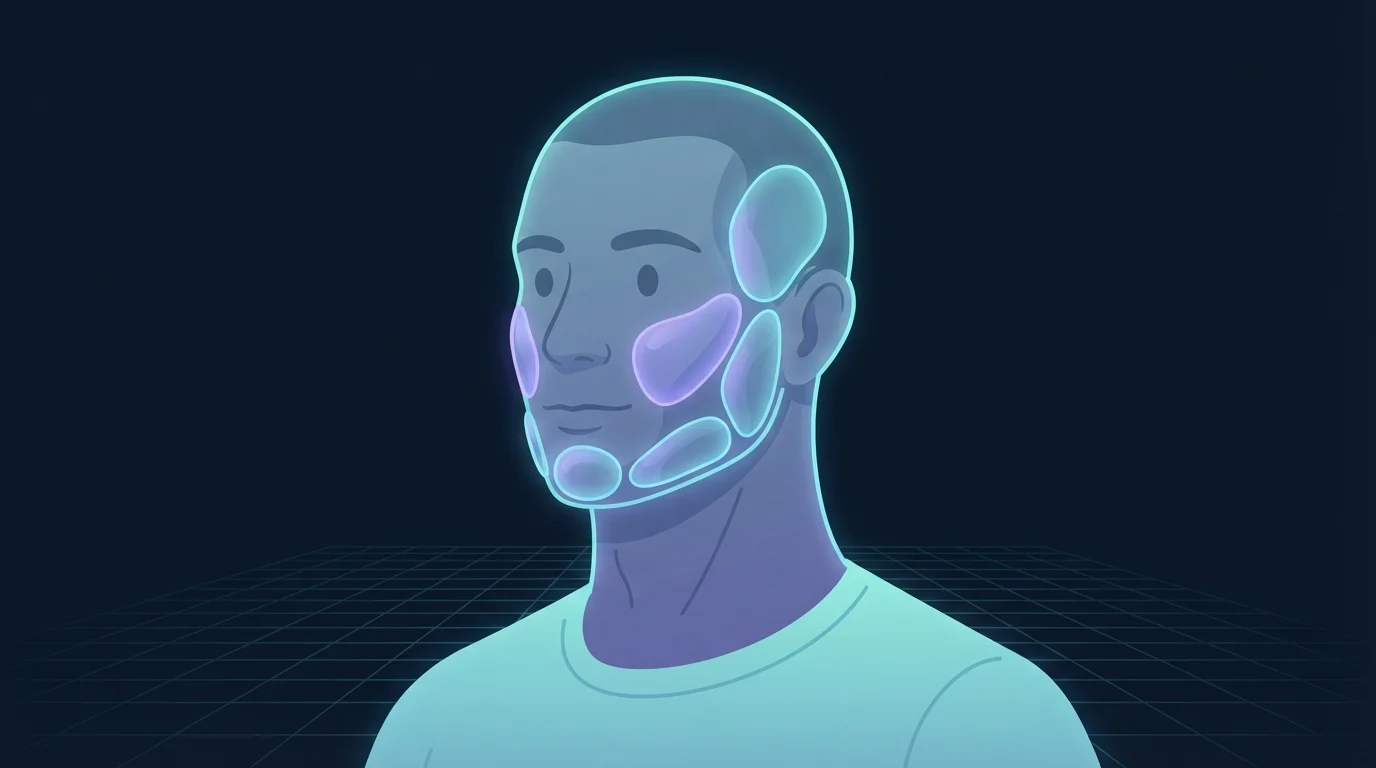
Facial subcutaneous fat isn't a uniform blanket. Rohrich and Pessa (2007), working from cadaver dissections in Plastic and Reconstructive Surgery, showed that it exists in multiple independent anatomical compartments separated by connective tissue septa. The malar region alone has three distinct units. The forehead has three. Orbital fat divides into three more.
Two consequences follow from that, and both are useful.
First, these compartments don't empty at the same rate or in the same order, and the order is largely genetic. That's why one person loses 10 kilograms and their jawline appears while another loses the same 10 kilograms and their under-eye hollows out first. You can control the total. You cannot control the sequence.
Second, a lot of what reads as "face fat" after 35 is actually redistribution rather than accumulation. Compartments deflate in the midface and descend at the jawline, so the lower face looks heavier while the total volume of facial fat has fallen. Aggressive dieting in that situation tends to make the midface look more tired without much improving the jaw, which is exactly the outcome nobody wants.
Find out what's really holding you back
FitCraft, our mobile fitness app, pairs you with an AI coach who builds you a personalized plan around your goals, schedule, and fitness level. Every FitCraft program is designed by Domenic Angelino, MPH (Brown University) and NSCA-CSCS, with research published in the Journal of Strength and Conditioning Research and Medicine & Science in Sports & Exercise.
Take the Free Assessment Free • 2 minutes • No credit cardTotal Body Fat Is the Lever
When the fat in your face does change, it changes because the fat everywhere changed. And the link is tight enough to be measured.
Coetzee and colleagues (2010) quantified which facial measurements track body weight and found that width-to-height ratio, perimeter-to-area ratio and cheek-to-jaw-width ratio all correlated significantly with BMI, and that observers use those cues to judge weight across sexes and ethnicities. Earlier work from the same group, Coetzee, Perrett and Stephen (2009), found perceived facial adiposity predicted both perceived health and measured cardiovascular health markers. Your face is not a separate variable. It's a readout of the one you already have.
The practical upshot is that the face often gives the earliest visible return on a fat-loss effort. Facial fat pads are thin in absolute terms, so a small reduction is proportionally large and reads clearly on a photograph. Most people notice their own face changing somewhere around 3 to 5 percent of body weight lost, and other people usually start commenting around 5 to 8 percent.
The corollary is uncomfortable and worth saying plainly. If you are already lean and the face still looks fuller than you want, more dieting is unlikely to fix it, and it's very likely to cost you muscle and sleep quality. At that point you're up against structure and compartment anatomy, not adiposity.
Do Face Exercises Work? What the 2018 Trial Actually Found
Face yoga has a real study behind it, which is more than most cosmetic claims can say. It just does not say what the marketing says it says.
Alam and colleagues (2018), publishing in JAMA Dermatology from Northwestern, enrolled 27 women aged 40 to 65 in a 20-week facial exercise program: 32 distinct exercises, 30 minutes daily for the first eight weeks, then every other day through week 20. Sixteen women completed it. Blinded dermatologists rating before and after photographs estimated participants at 50.8 years at baseline, 49.6 at week eight and 48.1 at week 20, and the significant changes were in upper and lower cheek fullness.
Read that outcome carefully. The improvement was increased cheek fullness, consistent with hypertrophy of the underlying facial muscles filling out a deflating midface. That's a legitimate anti-aging result and it is the exact opposite of losing face fat. If your complaint is a round face, building the muscles under it is not the intervention you want.
Three limitations also deserve stating, because honest reporting is the point. There was no control group, so normal variation and better photography cannot be ruled out. Eleven of 27 participants dropped out, which selects for the people it was working for. And the outcome was perceived age from photographs rather than any direct measure of facial fat.
The same logic kills the adjacent claims. Chewing gum trains the masseter, and training a muscle makes it bigger, so heavy gum chewing widens the lower face and is a known contributor to jaw pain. Tongue-posture routines have no controlled evidence for changing adult facial fat or bone.
The One Rule You Cannot Train Around
Nothing you do to a body part removes the fat above it. Trials that trained one leg, one arm or the abdomen alone and then imaged the result all found the same thing: the fat came off the whole body, not the trained region. That's why there's no facial equivalent of a crunch, and why every face-slimming device sold on the internet is selling a mechanism that has been tested and failed. Our guide to the best exercises to lose belly fat carries the full evidence on spot reduction, including the one honest complication in it.
A Two-Week Reset for a Puffy Face
This is for fluid, not fat, and it's deliberately short because fluid responds fast.
| Change | What to do | When you see it |
|---|---|---|
| Sodium | Move toward a normal intake rather than a low one. Cut the obvious outliers: takeaway, cured meat, packaged sauces, restaurant meals. | 2 to 4 days |
| Alcohol | None for 14 days. This is usually the single biggest change in the list. | 3 to 5 days |
| Sleep | Seven to nine hours, with a consistent wake time. Wake time matters more than bedtime. | 2 to 3 days |
| Water | Drink to thirst and keep urine pale straw. Under-drinking makes retention worse. | 2 to 4 days |
| Morning routine | Get upright and move within 20 minutes of waking. A short walk drains facial fluid faster than anything you can apply to your skin. | Same morning |
| Training | Three to five sessions a week, any mode. Movement moves lymph, and it's the fat-loss engine for the longer game. | Weeks |
If two weeks of that changes nothing at all, you're looking at fat or structure, and the timeline is longer. That's the point at which a structured fat-loss plan is the answer rather than another tweak. Our roundup of the best workout apps for weight loss compares how the main options handle a deficit phase, and our guide to losing fat without losing muscle covers the part that protects your strength while you do it.
How Long Until Your Face Actually Changes?
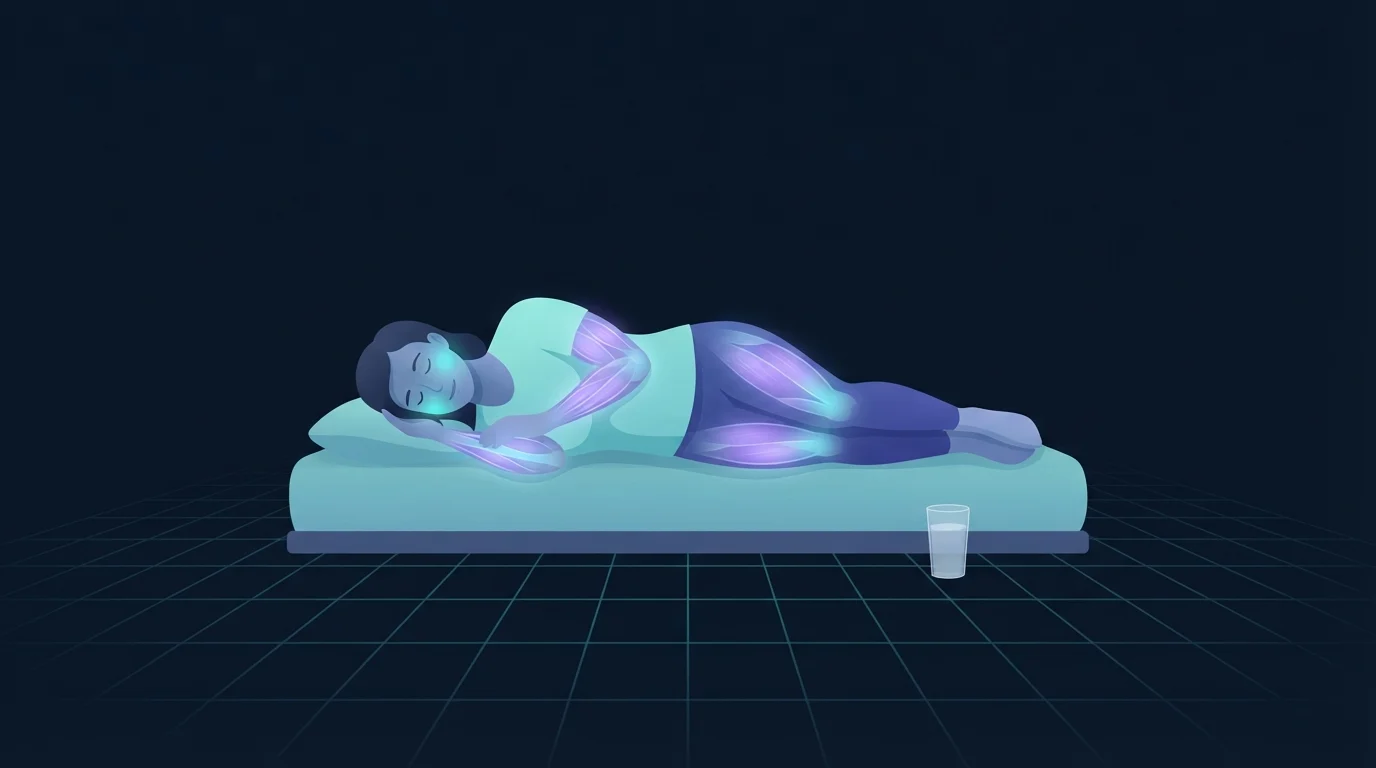
Days one to seven is fluid. Remove alcohol, normalise sodium, sleep properly and the under-eye area and cheeks settle. This is the change people describe as looking "less bloated", and it's real.
Weeks two to six is the first fat change. At 0.5 to 1 percent of body weight a week you've lost enough by week four for the jaw and cheekbone line to sharpen slightly. You'll see it before anyone else does, and side-by-side photographs in the same light are the only reliable way to check.
Weeks six to twelve is where other people notice. Somewhere past 5 percent of body weight the face reads as visibly different in photographs, and this is the range in which most people get the comment they were hoping for.
Past twelve weeks, returns diminish. Facial fat is thin, so there's less of it left to lose than there is on your hips, and continuing to cut past the point where the face stops changing buys you muscle loss and worse sleep rather than a better jawline.
When a Swollen Face Is Medical
Most facial puffiness is boring and behavioural. Some is not, and the pattern usually gives it away.
- Swelling that doesn't resolve by mid-afternoon, or that comes with swollen ankles, shortness of breath or a change in urine output.
- Rapid onset with lip, tongue or throat involvement. That's an emergency, not a fluid issue.
- Face fullness plus unexplained weight gain, easy bruising, purple stretch marks, muscle weakness or high blood pressure, which is the pattern that prompts a cortisol workup.
- Puffiness plus fatigue, cold intolerance, dry skin, constipation or hair thinning, which is worth a thyroid panel.
- New facial swelling after starting a medication, particularly corticosteroids, some blood pressure drugs and some antidepressants.
None of that is a reason to worry by default. It's a reason to get a blood test rather than a stricter diet, because dieting harder against a medical cause simply doesn't work and you'll conclude you're failing at something you were never going to win.
The Bottom Line
If you want to know how to lose face fat, start by working out whether you have any to lose. Fix the fluid first, because it's fast, free and responsible for most of the week-to-week variation you see in the mirror. Then, if there's genuinely fat to shift, shift it the only way anyone ever has, which is a moderate whole-body deficit with enough protein and enough training to hold on to your muscle.
What you shouldn't do is buy a device, chew your way to a wider jaw, or diet past the point where your face stops improving. Faces are honest about your sleep and your sodium long before they're honest about your body fat.
Frequently Asked Questions
How do you lose face fat fast?
The fastest visible change in a face is almost never fat loss, it's fluid loss. Dropping sodium toward a normal intake, skipping alcohol, sleeping seven to nine hours and drinking enough water can visibly de-puff a face inside three to seven days. Actual facial fat follows whole-body fat loss, which runs at roughly 0.5 to 1 percent of body weight a week, so a genuinely leaner face is a four to twelve week project rather than a weekend one.
Do face exercises or face yoga reduce face fat?
They don't remove fat, and the best-known trial didn't claim they do. In a 2018 JAMA Dermatology study from Northwestern, 27 women aged 40 to 65 started a 20-week facial exercise program and 16 finished it. Blinded dermatologists rated the after photographs as roughly three years younger, driven by increased upper and lower cheek fullness. Fuller cheeks come from building the muscle underneath, which is the opposite of what most people mean by losing face fat. The study also had no control group.
Why is my face puffy in the morning?
Lying flat for eight hours lets interstitial fluid settle in the loose tissue around the eyes and cheeks, because gravity is no longer pulling it toward your feet. Salt, alcohol, crying, allergies and a short night all amplify it. Morning puffiness normally resolves within one to two hours of being upright and moving. Puffiness that's still there by mid-afternoon, or that comes with swollen ankles, is worth a conversation with a doctor rather than a stricter diet.
Does drinking water reduce face fat?
Water doesn't touch fat, but chronic mild dehydration does make facial puffiness worse, not better. When fluid intake drops, the body raises vasopressin and holds on to sodium and water more tightly. Drinking to thirst, on a normal sodium intake, tends to reduce visible puffiness rather than add to it. Treat water as a tool for fluid balance and skin appearance, never as a fat-loss intervention.
How much weight do you need to lose for your face to change?
Most people notice their own face changing somewhere around 3 to 5 percent of body weight lost, and other people usually notice around 5 to 8 percent. Faces carry proportionally thin fat pads, so a small absolute change reads as a large visible one, which is why the face is often the first place friends comment on. Research quantifying facial cues to body weight found that width-to-height and cheek-to-jaw-width ratios track BMI closely enough that observers judge weight from a face alone.
Can chewing gum or mewing slim your face?
Chewing gum trains the masseter, the thick jaw muscle you can feel when you clench. Training it makes it bigger, which widens the lower face rather than narrowing it, and heavy gum chewing is a known contributor to jaw pain. Tongue-posture routines marketed as mewing have no controlled evidence for changing adult facial fat or bone. Neither one removes fat, because no exercise removes fat from the tissue directly above the muscle being worked.