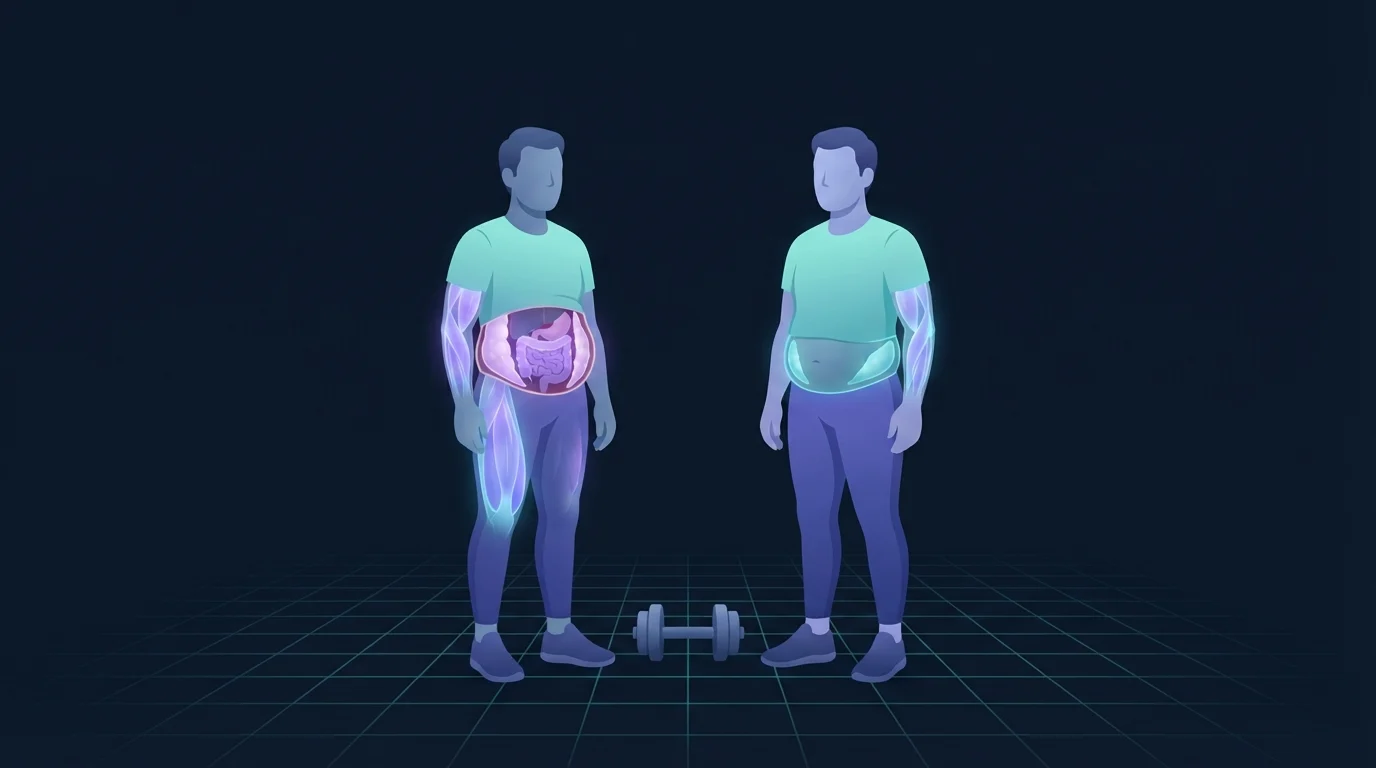
Everyone has been sold the same promise in a slightly different package: do this move, hold this plank, buy this belt, and the fat over your abdomen will leave while the rest of you stays exactly as it is. It's a satisfying story because it matches how effort feels. You work the area, the area burns, the burn must be doing something local.
It isn't. And the research showing it isn't is unusually clean, because the design is obvious: train one side of the body, leave the other alone, then image both.
That doesn't make training pointless for your midsection. It means the mechanism is different from the one you were sold, and once you understand the real one, the plan writes itself.
Why Spot Reduction Does Not Work
Three studies cover this well enough that you don't need a fourth.
The first trained one leg. Ramirez-Campillo and colleagues (2013), publishing in the Journal of Strength and Conditioning Research, had healthy adults perform twelve weeks of high-repetition leg press with one leg only, roughly 1,000 repetitions per session. If localised work stripped localised fat, the trained leg should have lost more than the untrained one. It didn't. Fat mass fell in the trunk and the arms, regions that were never trained, and the trained leg showed no advantage over its own untrained twin.
The second trained one arm. Kostek and colleagues (2007) put 104 adults through twelve weeks of resistance training of the non-dominant arm and measured subcutaneous fat in both arms with MRI and with skinfold calipers. The MRI data showed generalised subcutaneous fat loss independent of sex. Skinfolds hinted at a small local effect in men, which the authors flagged carefully, because two measurement techniques disagreed on the same participants.
The third trained the abdomen directly. Vispute and colleagues (2011) randomised 24 sedentary adults to six weeks of seven abdominal exercises, five days a week, with food intake held steady. Abdominal muscular endurance improved substantially. Body weight, body fat percentage and android fat percentage did not change at all.
There's one honest complication, and skipping it would be dishonest. Stallknecht and colleagues (2007) measured blood flow and lipolysis directly in the fat sitting over a working muscle during single-leg knee extension, and found both were higher next to contracting muscle than next to resting muscle. So "spot lipolysis" is real at the level of a single fat cell. The amount is just trivial. You're talking about a few extra grams of fatty acid release from a depot that holds kilograms, and those fatty acids enter the general circulation anyway. A real effect too small to see in the mirror is still too small to plan around.
Visceral Fat vs Subcutaneous Fat: Two Different Problems
"Belly fat" is two tissues with different biology, and conflating them is why people give up.
Subcutaneous fat is the layer you can pinch. It sits between skin and abdominal wall, it's what love handles are made of, and it's what you see. It's also relatively inert, mostly a storage depot, and slow to shift.
Visceral fat sits behind the abdominal wall, packed around the liver, intestines and other organs. You can't pinch it. It's what makes a firm, protruding belly on a person who isn't especially heavy. It is metabolically loud: it drains into the portal vein, releases free fatty acids and inflammatory signals straight to the liver, and behaves less like storage and more like an active endocrine organ.
That difference isn't academic. In 3,001 participants from the Framingham Heart Study imaged by CT, Fox and colleagues (2007) found visceral adipose tissue was more strongly associated with metabolic risk factors than subcutaneous fat was, and stayed associated with metabolic syndrome after adjusting for BMI and waist circumference. Two people with the same waist measurement can carry very different amounts of it, and their risk profiles differ accordingly.
Here's the good news buried in that. Visceral fat is also the most training-responsive fat you have. It mobilises early, it responds to exercise even without a diet change, and it's the reason your bloodwork often improves weeks before your jeans do.
What Aerobic Exercise Actually Does to Visceral Fat
This is where the evidence gets specific enough to build a week around.
Vissers and colleagues (2013) pooled 15 studies covering 852 overweight adults in PLOS ONE and concluded that aerobic training of moderate or high intensity has the highest potential to reduce visceral adipose tissue, and that an aerobic program without a hypocaloric diet can produce meaningful reductions inside twelve weeks. Resistance training alone performed less well on this specific outcome. That doesn't make it optional, it makes it a different tool.
The dose question was answered more recently and more usefully. Recchia and colleagues (2023) in the British Journal of Sports Medicine meta-analysed 40 randomised controlled trials with 2,190 participants, comparing exercise and caloric restriction head to head for visceral adiposity. Both worked. The interesting part is the shape of the curve: exercise showed a dose-response relationship, so more training produced more visceral fat loss, while caloric restriction did not. Cutting harder didn't strip more visceral fat. Training more did.
That single finding reorganises the whole plan. If you want the deep fat gone, the variable to push is weekly training volume, not how aggressive the deficit is.
Does HIIT Burn Belly Fat Faster Than Steady Cardio?
Per hour, yes. Per week, it depends on whether you can keep doing it.
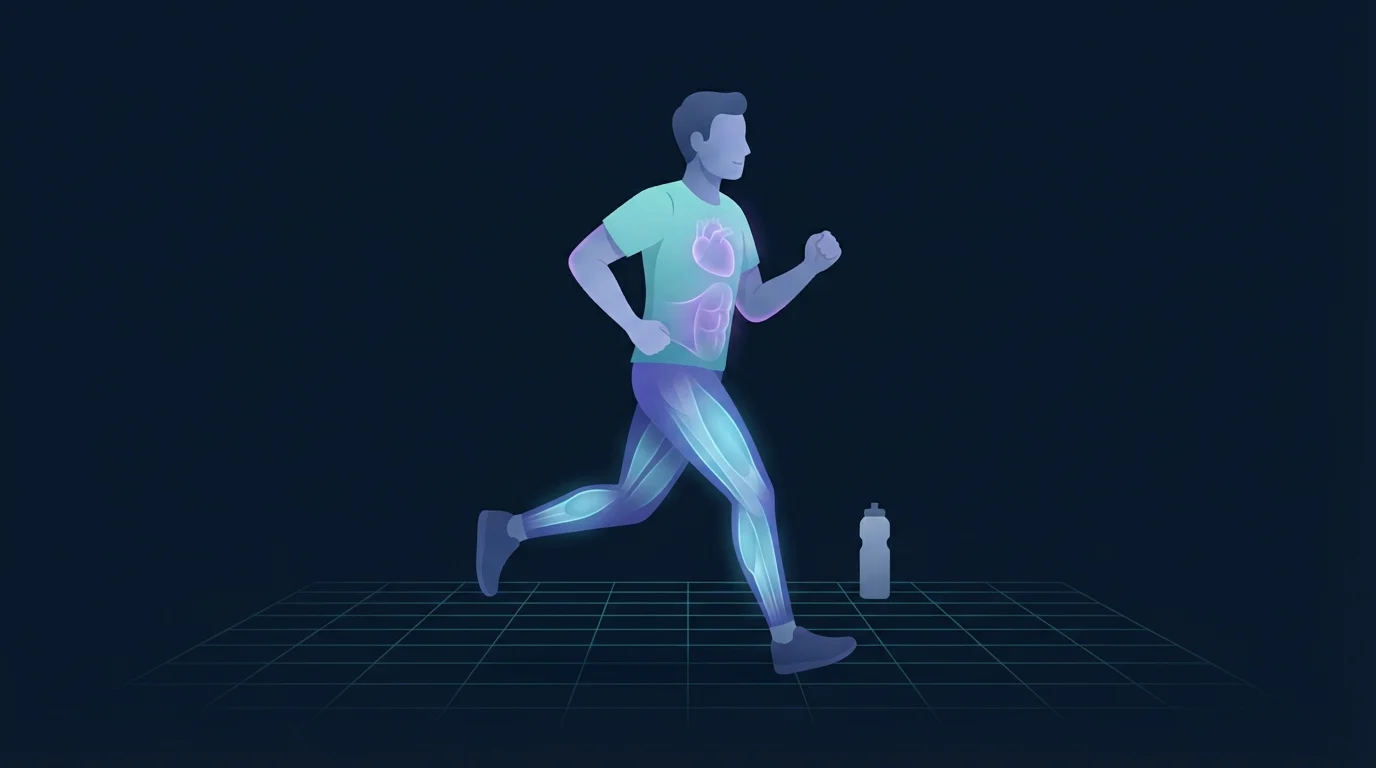
Maillard, Pereira and Boisseau (2018) meta-analysed 39 studies with 617 participants in Sports Medicine and found high-intensity interval training significantly reduced total, abdominal and visceral fat mass, with no difference between men and women. Running-based intervals outperformed cycling-based intervals for total and visceral fat. Efforts above 90 percent of peak heart rate did more for overall adiposity, while slightly lower intensities did more for abdominal and visceral fat specifically.
The practical translation is boring and important. HIIT is time-efficient, not magic. One or two genuinely hard sessions a week sit on top of an easy aerobic base. Three or four hard sessions a week is how beginners end up injured, sleep-deprived and back on the couch in month two, with a training volume of zero, which is the only number that reliably fails. Our review of HIIT versus steady-state cardio covers where each one wins.
Find out what's really holding you back
FitCraft, our mobile fitness app, pairs you with an AI coach who builds you a personalized plan around your goals, schedule, and fitness level. Every FitCraft program is designed by Domenic Angelino, MPH (Brown University) and NSCA-CSCS, with research published in the Journal of Strength and Conditioning Research and Medicine & Science in Sports & Exercise.
Take the Free Assessment Free • 2 minutes • No credit cardDoes Walking Help You Lose Belly Fat?
More than its reputation suggests, and for a specific reason: walking is the only training most people will actually do six days a week for a year.
Hong and colleagues (2014) put obese women through twelve weeks of walking at 50 to 60 percent of VO2 max, three days a week, 50 to 70 minutes a session, targeting about 400 kilocalories per session. Both subcutaneous and visceral abdominal fat fell significantly against a non-exercising control group. That's a modest prescription by any standard, and it moved the deep fat.
Walking also protects the rest of the plan. It adds training volume without adding much recovery cost, so it stacks on top of your hard sessions instead of competing with them. And it quietly raises NEAT, the energy you spend on everything that isn't formal exercise, which is the single most variable component of daily energy expenditure between two people of the same size.
The honest limit: a walk is not a large energy expenditure per session. Our breakdown of whether you can lose weight by walking works through the arithmetic, including why step-count targets beat time targets for most people.
How to Lose Love Handles: Why the Best Exercises for Love Handles Are Not Side Bends
Love handles are subcutaneous fat sitting over the external and internal obliques at the top of the hip, plus a little over the upper glute. That one sentence answers most of the question.
Because that tissue is subcutaneous, it follows total fat loss and nothing else. The obliques underneath respond to training exactly like any other muscle: they get stronger and, with enough volume, slightly thicker. Side bends with a heavy dumbbell are a reasonable oblique exercise and a completely useless fat-loss exercise. There's even a version of this where adding oblique mass makes the waist look wider rather than narrower.
Vispute's abdominal training trial is the direct test. Six weeks of targeted work, five days a week, produced a significant improvement in muscular endurance and no change whatsoever in abdominal fat. If a dedicated abdominal program held for six weeks does nothing to abdominal fat, a set of side bends at the end of a session won't either.
So train the obliques for what they actually do, which is resisting rotation and side-bending forces so your spine stays stable under load. Carries, side planks and anti-rotation work earn their place. Then let the deficit and the weekly training volume handle the layer on top. The same logic runs the six-pack question, which we cover in how to get abs.
The Cortisol and Sleep Angle
Chronic stress does associate with central fat, and the association is real, small and frequently oversold. Cortisol reactivity tracks with abdominal fat in observational work, ongoing life stress raises long-term cortisol exposure, and the field's own reviews describe the evidence as inconclusive rather than settled. What almost never holds up is the commercial version, where a supplement lowers cortisol and the belly follows.
We've taken that literature apart in our review of cortisol belly research, including where the effect is genuine (Cushing's syndrome, where the mechanism is unambiguous) and where it's marketing.
The part worth acting on is sleep, because short sleep hits this problem from three directions at once. It raises hunger and blunts satiety signalling. It flattens the next day's spontaneous movement, so your NEAT drops. And it shifts the composition of what you lose in a deficit away from fat and toward lean tissue. Seven to nine hours isn't a wellness nicety here. It's part of the intervention.
The Part Exercise Cannot Do
Exercise alone moves visceral fat. Total fat loss still runs through energy balance, and the fastest way to waste twelve weeks of training is to eat back every session.
Three things do most of the work, and all three are covered properly in our guide to losing fat without losing muscle, so this is the short version.
- A moderate deficit. Roughly 0.5 to 1 percent of body weight per week. Bigger deficits don't strip more visceral fat, per Recchia's dose-response finding, and they cost you more muscle and more adherence.
- Protein high enough to matter. In Longland and colleagues (2016), young men in a 40 percent energy deficit who trained hard and ate 2.4 grams of protein per kilogram gained lean mass and lost more fat than those eating 1.2 grams per kilogram over the same four weeks. Same deficit, different body composition outcome.
- Strength training you actually progress. Two or three full-body sessions a week is the signal that tells your body to keep the muscle it has while you run a deficit. Without it, a meaningful share of what you lose is lean tissue, and lean tissue is what keeps daily energy expenditure from sliding.
The Best Exercises to Lose Belly Fat: A Home Routine
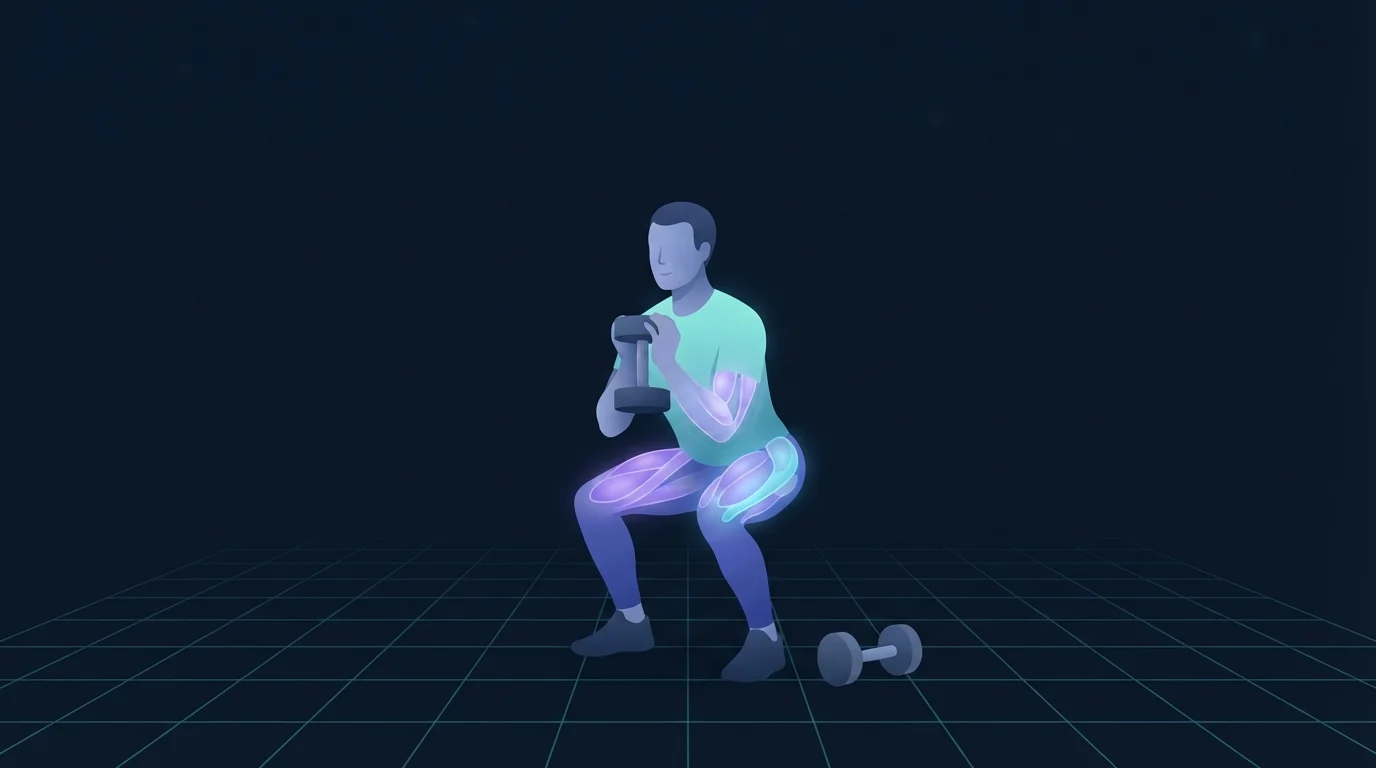
Nothing below needs a gym, a barbell or a machine. One pair of adjustable dumbbells covers all of it, and most of it works with bodyweight alone.
| Day | Session | What it's doing |
|---|---|---|
| Monday | Full-body strength, 40 min | Goblet squats, dumbbell rows, push-ups, Romanian deadlifts, overhead press. 3 sets of 6 to 10. |
| Tuesday | Easy aerobic, 40 to 50 min | Brisk walk, incline treadmill or easy cycle. Conversational the whole way. |
| Wednesday | Intervals, 25 min total | Warm up, then 6 rounds of 1 minute hard and 2 minutes easy. Bike, rower or hill. |
| Thursday | Easy aerobic, 40 min | Same as Tuesday. This is volume, not a test. |
| Friday | Full-body strength, 40 min | Split squats, floor press, inverted rows, hip hinges, carries and side planks. |
| Saturday | Long easy walk, 60 to 75 min | The biggest single block of weekly volume, at the lowest recovery cost. |
| Sunday | Off or gentle mobility | Recovery is where training becomes adaptation. |
Three rules run the whole block. Add a little each week to one variable only, either load or duration, never both. Keep the easy sessions genuinely easy so the hard one stays hard. And if a week goes badly, repeat it rather than skipping ahead, because progressive overload is bookkeeping before it's anything else.
If you'd rather not build and track the progression yourself, our roundup of the best workout apps for weight loss compares how the main options handle deficit-phase programming and whether they protect strength work while you're eating less.
How Long Does It Take?
Weeks one to four are invisible, and that's normal. Glycogen and water shifts move the scale in both directions, training makes you retain a little fluid, and nothing about your waist looks different yet.
Weeks four to eight is when visceral fat starts giving ground. Blood pressure, fasting glucose and triglycerides often improve here. The belly may feel firmer without looking much smaller, because the deep compartment shrank and the pinchable layer didn't.
Weeks eight to sixteen is where subcutaneous fat follows, and where most people quit right before it happens. Waist measurements move, clothes fit differently, and the change becomes visible to other people.
Beyond that it's maintenance and patience. Fat loss in the last stretch is slower per week than in the first, not because anything is broken but because you're smaller and the same effort buys less.
The Bottom Line
The best exercises to lose belly fat are the ones you'll repeat 200 times this year. No move drains the fat over your abdomen, and three well-designed trials have gone looking. What exists instead is a dose-response curve between total training and visceral fat, which is a better deal than the myth, because it means every session counts regardless of which body part it hit.
Walk most days. Lift twice a week. Push one session hard. Eat enough protein, sleep enough to recover, and keep the deficit small enough that you're still doing this in March. Your belly isn't a separate project. It's the last thing to change on a body that's changing everywhere.
Frequently Asked Questions
What are the best exercises to lose belly fat?
The best exercises to lose belly fat are the ones that let you accumulate the most weekly training you can actually recover from, because belly fat responds to the total dose and not to the body part you train. In practice that means three to five aerobic sessions a week (brisk walking, cycling, rowing, running or incline treadmill work) plus two full-body strength sessions. A 2023 meta-analysis of 40 randomised trials found a clean dose-response between exercise volume and visceral fat loss. Crunches did not make the list because they build the muscle underneath without removing what sits on top.
Does sweating burn belly fat?
No. Sweat is thermoregulation, not fat metabolism. What you lose in a sauna suit or a hot studio is water and electrolytes, and the ACSM's fluid replacement position stand describes how quickly that weight returns once you rehydrate. Two sessions can burn the same energy with completely different sweat rates depending on room temperature, humidity, clothing and how heat-acclimated you are. Sweat measures how hard your body is working to stay cool, not how much fat you used.
How do you lose love handles?
Love handles are subcutaneous fat sitting over the obliques at the top of the hip, so the lever is whole-body fat loss, not oblique work. Six weeks of dedicated abdominal training in a 2011 randomised trial improved muscular endurance and changed nothing about abdominal fat or body fat percentage. Side bends and twists will make the muscle underneath stronger and slightly thicker, which is not what most people are asking for. Train the obliques for trunk strength, and let the deficit and the weekly training volume handle the layer on top.
Do crunches burn belly fat?
No, and this has been tested directly. In a randomised trial, 24 sedentary adults did seven abdominal exercises five days a week for six weeks with food intake held steady, and there was no significant change in body weight, body fat percentage or abdominal fat. The abdominal muscles got measurably better at their job. The fat over them didn't move, because the fat you burn during a set is drawn from the whole body, not from the skin above the working muscle.
How long does it take to lose belly fat?
Visceral fat starts moving early, often within eight to twelve weeks of consistent training, and it frequently moves before your waist measurement or the scale shows much. Subcutaneous belly fat, the part you can pinch, is slower and tracks total fat loss, which for most people runs at roughly 0.5 to 1 percent of body weight a week. Expect the health markers to improve first and the mirror to follow, which is the opposite order from the one most people want.
Can you lose belly fat without changing what you eat?
You can lose visceral fat with exercise alone. A 2013 meta-analysis of 15 trials found that aerobic training of moderate or high intensity reduced visceral adipose tissue in overweight adults even without a calorie-restricted diet. Total body fat is a different question, because it's much easier to eat back an hour of training than to train off an extra day of eating. Exercise alone is a real lever for the fat that matters most for health, and a weak one for the number on the scale.