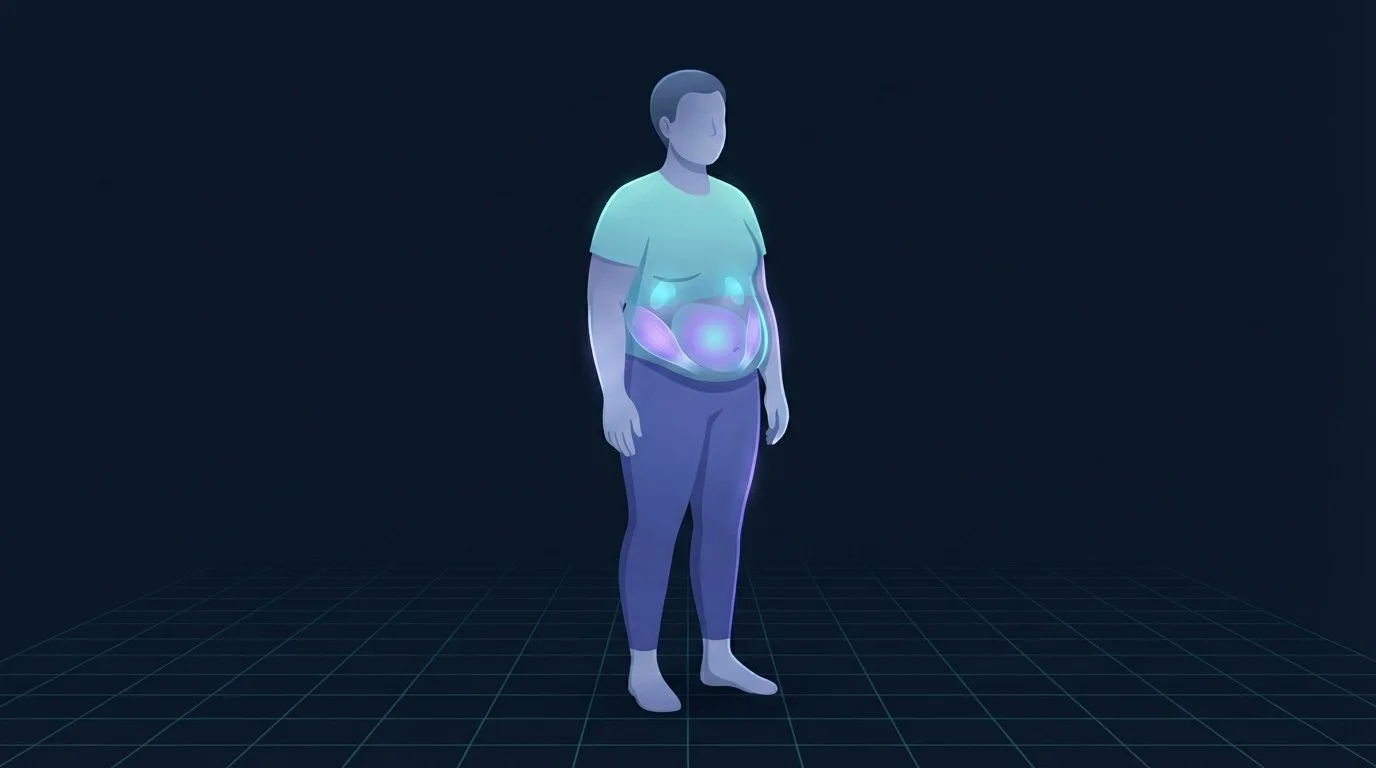
Search "cortisol belly" and you will find a confident story. Chronic stress raises cortisol, cortisol drives fat to your midsection, and the fix is a cortisol protocol: adaptogens, breathwork, no more hard cardio, a supplement that "balances" your stress hormone. The story is coherent, it explains a frustrating problem, and it sells extremely well. It is also stitched together from a much messier body of research than the confident version admits.
Cortisol is real, it does interact with fat tissue, and there is a genuine medical condition where excess cortisol reliably produces central fat gain. All of that is true. What is not established is that ordinary life stress raises cortisol enough, in enough people, to be the reason their waist measurement has crept up. The strongest human data show a small, real, inconsistent association, and the field's own systematic reviews say so plainly.
This article walks through what the primary literature actually reports: the observational work linking cortisol reactivity to central fat, the large hair-cortisol samples, the systematic reviews that failed to find a consistent pattern, the rare disease that is the true version of this story, and the interventions that do have clean experimental data. If you have been told your belly is a cortisol problem, this is the evidence to weigh before you buy the protocol.
Is "Cortisol Belly" a Real Diagnosis?
No. There is no clinical entity called cortisol belly. It does not appear in the ICD, it has no case definition, no diagnostic threshold and no validated test. It is a folk category, and like most folk categories it packages a real observation (some people carry fat centrally and also feel chronically stressed) with an unproven causal claim (the stress is why the fat is there).
The label also gets applied to two anatomically different things. Subcutaneous abdominal fat sits under the skin and is what you can pinch. Visceral fat sits deeper, wrapped around the organs, and is the depot most strongly linked to metabolic risk. Photographs used to illustrate "cortisol belly" almost always show the first. The mechanistic claims almost always describe the second. That mismatch is worth noticing, because the two respond to interventions differently.
A related confusion is body shape versus body size. Some people at a perfectly ordinary body weight carry a disproportionate share of their fat centrally, which is the pattern we cover in our skinny fat research review. Central distribution at normal weight has genetic, hormonal, sex and age determinants that have nothing to do with how stressful your job is.
The Research: What Studies Show
Epel 2000: Stress Reactivity Tracks With Central Fat
The paper most often cited as proof of cortisol belly is Epel, McEwen, Seeman, Matthews, Castellazzo, Brownell, Bell, and Ickovics (2000) in Psychosomatic Medicine. The design was careful. 59 healthy premenopausal women, 30 with a high waist-to-hip ratio and 29 with a low one, attended four consecutive laboratory sessions: three stress sessions and one rest session. Cortisol and psychological responses were sampled throughout.
Women with a high waist-to-hip ratio rated the challenges as more threatening, performed worse on them, reported more chronic stress, and secreted significantly more cortisol during the first stress session. The most striking finding was in the lean subgroup: lean women with a high waist-to-hip ratio failed to habituate, still pumping out more cortisol on days two and three when the tasks were familiar and no longer novel. If you want to see where your own shape sits, our guide to waist to hip ratio walks through the WHO measuring protocol and the cut-offs for men and women. To work out your own ratio against the WHO cut-offs, use our waist to hip ratio calculator.
That is a genuinely interesting result and it is why the hypothesis exists at all. It is also cross-sectional. The authors said so, framing it as support for the hypothesis that stress-induced cortisol secretion may contribute to central fat. Nothing in the design rules out the reverse direction, that central fat alters the stress axis, or a third factor driving both.
Jackson 2017: The Association Is Real and Small
Hair cortisol changed the field, because scalp hair integrates cortisol exposure over months rather than capturing a single moment. Jackson, Kirschbaum, and Steptoe (2017), published in Obesity, applied it at scale: 2,527 men and women aged 54 to 87 in the English Longitudinal Study of Ageing, with hair cortisol taken from the 2 centimetres of hair nearest the scalp and height, weight and waist measured objectively.
Hair cortisol was positively correlated with weight (r equals 0.102), BMI (r equals 0.101) and waist circumference (r equals 0.082), all statistically significant. It was elevated in people with obesity and in people with a raised waist circumference, and it was associated with the persistence of obesity over the preceding four years, which is the most interesting part of the paper.
Read the effect sizes honestly. A correlation of 0.082 means long-term cortisol explains well under 1 percent of the variance in waist circumference across this sample. The association is real and it replicates. It is nowhere near large enough to make cortisol the explanation for an individual person's midsection. There is a midsection story with effect sizes an order of magnitude larger, and it is hormonal without being adrenal: our review of menopause belly works through the SWAN imaging data, where visceral fat accelerated to 6.24 percent per year across the transition.
Stalder 2017: Ongoing Stress Raises Long-Term Cortisol by 43 Percent
The best available synthesis of what actually moves hair cortisol is Stalder, Steudte-Schmiedgen, Alexander, Klucken, Vater, Wichmann, Kirschbaum, and Miller (2017) in Psychoneuroendocrinology, a meta-analysis of 124 subsamples from 66 independent studies totalling 10,289 people.
Groups exposed to chronic stress showed 22 percent higher hair cortisol overall. The effect concentrated almost entirely in people whose stressor was still ongoing at the time of measurement (43 percent higher). Groups whose stress had ended showed 9 percent lower hair cortisol, which was not statistically significant. The meta-analysis also reported positive associations between hair cortisol and both BMI and waist-to-hip ratio, supporting the anthropometric link.
Two things follow. Chronic, currently active stress does measurably raise long-term cortisol, so the premise is not fantasy. And the effect fades once the stressor resolves, which argues against the idea of permanent stress-hormone damage that requires a special protocol to undo.
Incollingo Rodriguez 2015: The Field Calls Itself Inconclusive
The most important paper for anyone weighing this claim is Incollingo Rodriguez, Epel, White, Standen, Seckl, and Tomiyama (2015), a systematic review in Psychoneuroendocrinology that examined every relevant cortisol parameter (awakening response, diurnal slope, total daily output, stress reactivity, feedback sensitivity, long-term output, and 11-beta-HSD1 expression) against generalised and abdominal obesity.
Their summary: a general pattern emerged in which greater abdominal fat was associated with a more responsive stress axis, seen in the morning awakening response and in acute stress reactivity, "but some studies did show underresponsiveness". Overall obesity looked related to a hyperresponsive axis in many but not all studies. Their stated conclusion was that the literature to date is inconclusive, with numerous inconsistencies and contradictions in methods, samples and results that prevented any clear pattern from being established.
One finding was clean, and it is the mechanism worth knowing. Inside fat cells themselves, cortisol output is clearly upregulated in obesity through greater expression of the enzyme 11-beta-HSD1, which regenerates active cortisol locally from an inactive precursor. This is local, tissue-level cortisol, and it does not necessarily show up in your blood or saliva. In hepatic tissue the same review found the enzyme downregulated.
The animal work behind that mechanism is striking. Masuzaki, Paterson, Shinyama, Morton, Mullins, Seckl, and Flier (2001), in Science, engineered mice to overexpress 11-beta-HSD1 selectively in fat tissue. Those mice developed visceral obesity and the metabolic syndrome despite normal circulating cortisol. That is a mouse model, not a human trial, and it should not be read as a result about people. It does explain why measuring blood cortisol may not capture what cortisol is doing where it matters.
van der Valk 2018: Why It Works for Some People and Not Others
The most useful reconciliation of the conflicting data comes from van der Valk, Savas, and van Rossum (2018) in Current Obesity Reports. Their argument is that the inconsistency is the finding. Increased long-term cortisol measured in scalp hair is strongly related to abdominal obesity, but not everyone with obesity has elevated cortisol. What varies between people is glucocorticoid sensitivity, which is partly genetically determined. Two people can be exposed to the same amount of cortisol and get very different amounts of glucocorticoid action out of it.
On that reading, stress plays a major role in developing and maintaining obesity specifically in people with increased glucocorticoid exposure or sensitivity, and a much smaller role in everyone else. That is a far more defensible claim than "stress causes belly fat", and it is also much less useful as a marketing hook, which is probably why you rarely see it.
When Cortisol Genuinely Causes Central Fat: Cushing's Syndrome
There is a version of this story that is unambiguously true. In Cushing's syndrome, prolonged exposure to excess glucocorticoids produces a characteristic pattern: central weight gain with relatively thin limbs, a rounded face, a fat pad between the shoulders, purple stretch marks, easy bruising, proximal muscle weakness, high blood pressure and bone loss. Cortisol excess causes central fat, definitively, in this condition.
It is also rare. Sharma, Nieman, and Feelders (2015), in Clinical Epidemiology, report an incidence of roughly 0.7 to 2.4 cases per million people per year, drawing on population studies from Denmark (two cases per million per year) and Spain (2.4 cases per million per year). Their review considered whether to screen people with obesity and uncontrolled diabetes, noted that two small studies had found rates of 2 to 3.3 percent in that narrow high-risk group, noted the findings were not consistently replicated, and concluded that widespread screening for Cushing's syndrome in overweight individuals or people with type 2 diabetes is not recommended. A case-finding approach in people with other features of the syndrome is what they endorse instead.
If you do have those other features, testing is specific and worth pursuing. The Endocrine Society guideline by Nieman, Biller, Findling, Newell-Price, Savage, Stewart, and Montori (2008) recommends one of three validated first-line tests: late-night salivary cortisol, 24-hour urinary free cortisol, or a low-dose dexamethasone suppression test. Note what is absent from that list: a single daytime blood draw, and any direct-to-consumer saliva kit. Cortisol is supposed to swing across the day, peaking shortly after you wake and bottoming out overnight, so one number taken at one moment tells a clinician almost nothing.
Why This Matters for Your Fitness
The practical cost of the cortisol belly story is not that it is wrong. It is that it redirects effort. If you believe your midsection is a hormone problem, the sensible response is to hunt for the hormone fix, and the things that actually work start to look beside the point. Worse, some versions of the advice tell people to stop training hard, because exercise raises cortisol. Exercise does raise cortisol acutely, which we cover in detail in our review of cortisol and exercise, and that acute rise is a normal, adaptive part of the training response rather than something to avoid.
The second cost is time. Abdominal fat responds to a familiar and slightly boring set of inputs, and every month spent on a cortisol protocol is a month not spent on them. If your progress has genuinely stalled despite doing those things, the more likely explanations are the ones in our weight loss plateau guide: drifting portion sizes, reduced spontaneous movement, and an energy deficit that closed without you noticing. Those inputs are laid out session by session in our guide to the best exercises to lose belly fat, including the dose-response data on visceral fat.
Get an evidence-based plan built for you
FitCraft, our mobile fitness app, pairs you with an AI coach who builds you a personalized plan around your goals, schedule, and fitness level. Every FitCraft program is designed by Domenic Angelino, MPH (Brown University) and NSCA-CSCS, with research published in the Journal of Strength and Conditioning Research and Medicine & Science in Sports & Exercise.
Take the Free Assessment Free • 2 minutes • No credit cardWhat Actually Reduces Abdominal Fat?
Here is the same question asked of the interventions rather than the hormone. Each row below is graded on the quality of the human evidence that it moves abdominal or visceral fat specifically, not on how good it sounds.
| Lever | Best evidence | What it does to abdominal fat | Priority |
|---|---|---|---|
| Regular aerobic exercise | Verheggen 2016, 117 studies, n equals 4,815 | Cuts visceral fat 6.1 percent even with zero weight loss | High |
| Adequate sleep | Covassin 2022, randomized crossover, n equals 12 | Short sleep raised visceral fat area about 11 percent in 14 days | High |
| Sustained energy deficit | Verheggen 2016, diet arm | Largest total weight loss, reliable visceral fat loss alongside it | High |
| Resistance training | Broad hypertrophy and body-composition literature | Preserves lean mass in a deficit, so more of the loss is fat | High |
| Stress management | Daubenmier 2011, randomized, n equals 47 | No group-level effect. Individual improvement tracked fat loss | Supporting |
| Abdominal exercises | Spot reduction literature | Builds the muscle underneath. Does not preferentially burn the fat over it | Low |
| Cortisol supplements | None of adequate quality | No demonstrated effect in people without endocrine disease | None |
Exercise Beats the Scale on Visceral Fat
The single most useful number in this article comes from Verheggen, Maessen, Green, Hermus, Hopman, and Thijssen (2016) in Obesity Reviews, a meta-analysis of 117 studies covering 4,815 participants in which visceral fat was quantified by radiographic imaging rather than estimated.
Both exercise and hypocaloric dieting reduced visceral fat. Dieting produced more total weight loss. Exercise trended toward a larger visceral fat reduction. And in the subset of trials where body weight did not change at all, exercise was still associated with a 6.1 percent decrease in visceral fat, while diet alone produced 1.1 percent, effectively nothing. The authors' own conclusion is that total body weight loss does not necessarily reflect changes in visceral fat and may be a poor marker for judging a lifestyle intervention.
For anyone whose scale has not moved in six weeks, that is the most encouraging finding in the literature. The depot that matters most for health can be shrinking while the number you are checking every morning stays flat.
Sleep Is the Underrated Lever
The cleanest experimental evidence that anything moves visceral fat over weeks comes from sleep. Covassin, Singh, McCrady-Spitzer, St Louis, Calvin, Levine, and Somers (2022), in the Journal of the American College of Cardiology, ran a 21-day inpatient randomized controlled crossover trial in 12 healthy non-obese adults: 4 days of acclimation, 14 days of either a 4-hour or a 9-hour sleep opportunity with free access to food, then 3 days of recovery.
On restricted sleep, participants consumed about 308 more calories per day, took in more protein and fat, and showed no compensating change in energy expenditure. They gained about half a kilogram more body weight. Total body fat did not differ between conditions. But total abdominal fat rose only during sleep restriction, with significant increases in both subcutaneous and visceral depots, and visceral fat area rose about 11 percent. Fourteen days of short sleep did not simply add fat. It relocated it.
The sample was small and short, and these were young healthy adults in a metabolic ward rather than people living normal lives. Even with those limits, this is the most direct experimental evidence in the whole area, and it points at a lever most people can actually pull.
Stress Work Helps, Just Not the Way It Is Sold
The honest result here is a null one. Daubenmier, Kristeller, Hecht, Maninger, Kuwata, Jhaveri, Lustig, Kemeny, Karan, and Epel (2011), in the Journal of Obesity, randomized 47 women with overweight or obesity (mean BMI 31.2) to a four-month mindfulness program for stress eating or to a waitlist, measuring abdominal fat by DXA and cortisol by awakening response.
The treatment group improved on mindfulness, anxiety and externally cued eating. The groups did not differ on average cortisol awakening response, weight or abdominal fat. Within the subgroup with obesity, treatment participants reduced their cortisol awakening response and held their weight while controls kept theirs flat and gained. And across everyone, improvements in mindfulness, chronic stress and cortisol awakening response were associated with reductions in abdominal fat.
That is a proof-of-concept result, and the authors labelled it as such. The reasonable interpretation is that stress work earns its place by protecting the behaviours that reduce abdominal fat, sleep quality, appetite regulation and training consistency, rather than by melting fat through a hormonal channel of its own.
Common Misconceptions
Misconception 1: "A high cortisol reading explains my belly."
Cortisol is designed to swing. It peaks within roughly 30 to 45 minutes of waking and falls to a trough overnight, so a single measurement taken at an arbitrary time is close to meaningless without a reference for that time of day. The Endocrine Society first-line tests (Nieman 2008) are late-night salivary cortisol, 24-hour urinary free cortisol and dexamethasone suppression precisely because each one controls for that rhythm. A consumer kit that returns one number and a colour-coded verdict is not doing that.
Misconception 2: "Cortisol blocking supplements reduce belly fat."
No supplement marketed as a cortisol blocker, balancer or detox has evidence of reducing abdominal fat in people without an endocrine disease. The claim has a documented history of regulatory trouble in the United States, where the Federal Trade Commission has taken enforcement action against marketers of cortisol-blocking weight loss products over unsupported claims. The compounds that genuinely suppress cortisol action are prescription treatments for Cushing's syndrome, carry real side effects, and are not something to reach for because your waistband feels tight.
Misconception 3: "Stop doing hard workouts, they spike cortisol."
Training raises cortisol acutely, and that is part of how training works. The acute rise mobilises fuel and is followed by recovery and adaptation. There is no human evidence that normal training volumes produce the sustained cortisol elevation seen in disease states, and the intervention data run the other way: Verheggen (2016) found exercise reduced visceral fat more reliably than the scale suggested. Genuine overreaching from very high volume with poor sleep and inadequate food is a real thing, but the answer there is better recovery, not less training.
Misconception 4: "Crunches will fix it."
Spot reduction does not work. Training a muscle does not preferentially oxidise the fat lying over it. Abdominal work builds the muscle underneath, which is worthwhile for trunk strength and posture and will make a leaner midsection look better, but the fat comes off in a pattern set largely by genetics and sex hormones. Whole-body training plus an energy deficit is the mechanism, and patience is the rest of it.
Misconception 5: "If cortisol is the problem, diet does not matter."
Even in Cushing's syndrome, where cortisol excess is unambiguous, fat accumulation still requires energy. In the general population the picture from van der Valk (2018) is that cortisol modifies susceptibility rather than replacing the energy balance mechanism. Nothing in the literature supports the idea that a person can gain abdominal fat without an energy surplus because their stress hormone is elevated.
What the Research Suggests Going Forward
Stack the evidence up and a defensible position emerges. Chronic, ongoing stress does raise long-term cortisol measurably, by about 43 percent in stress-exposed groups (Stalder 2017). Long-term cortisol does correlate with abdominal fat, weakly but repeatably, at around r equals 0.08 for waist circumference in a sample of 2,527 adults (Jackson 2017). Some people appear far more susceptible than others because glucocorticoid sensitivity varies (van der Valk 2018). Inside fat tissue, cortisol is regenerated locally by 11-beta-HSD1 in a way that circulating measures miss (Incollingo Rodriguez 2015). And the whole field's own systematic review calls the human data inconclusive.
What is still open:
- Direction of causation remains unresolved. Almost all of the human evidence is cross-sectional or observational, and abdominal fat plausibly alters the stress axis as much as the reverse.
- No randomized trial has tested whether lowering cortisol in people without endocrine disease reduces abdominal fat. The Daubenmier trial is the closest attempt and it was null at the group level in 47 women.
- Individual susceptibility is the most promising thread and the least developed. If glucocorticoid sensitivity is partly genetic, a subgroup may respond to stress reduction far more than the average, but nobody can currently identify that subgroup in a clinic.
- Hair cortisol is the best long-term measure available and is still affected by hair washing frequency, hair treatment, oral contraceptive use, age and sex, all of which Stalder (2017) flagged as covariates future work must handle.
- The sleep evidence is the strongest experimental signal in the area and rests on 12 participants over 14 days. Larger and longer trials of sleep extension, with imaging of visceral fat, would be the highest-value study anyone could run here.
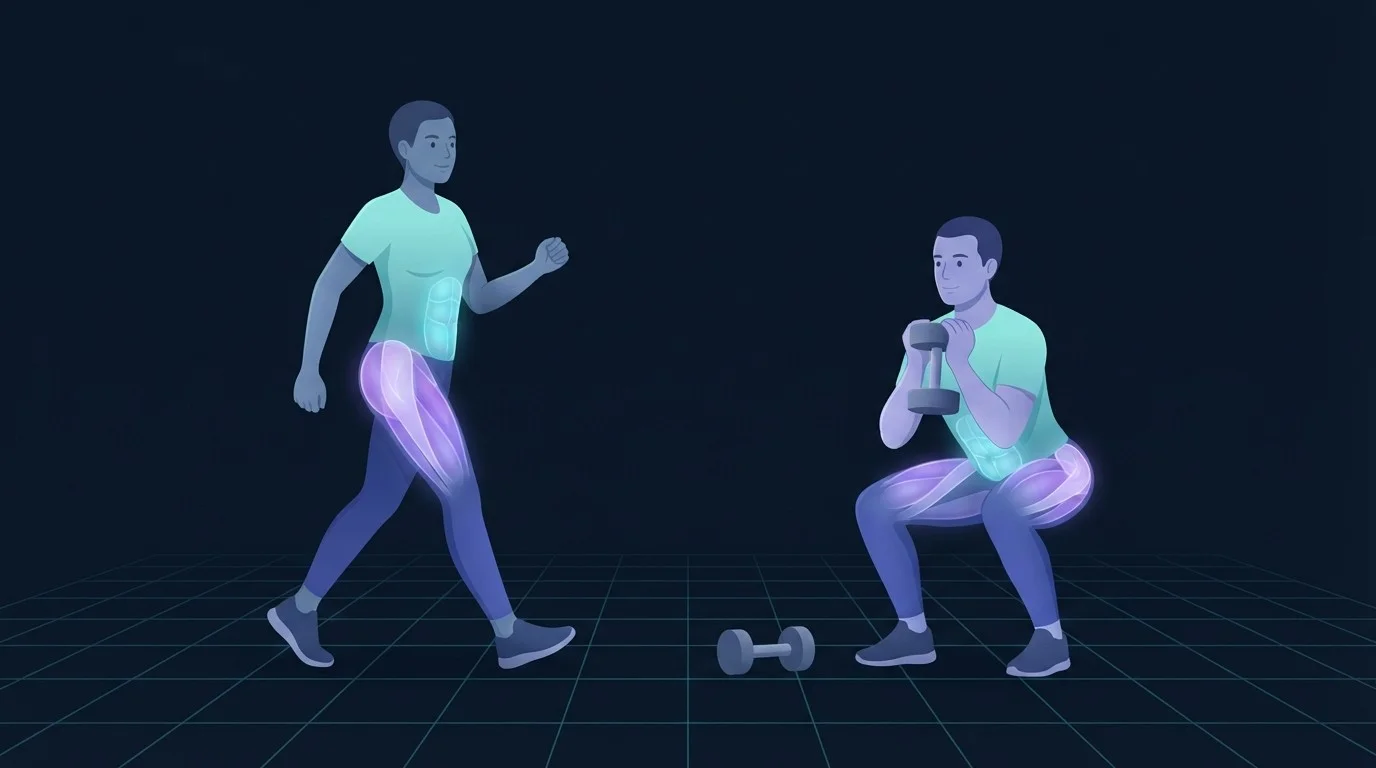
The practical bottom line: treat "cortisol belly" as a description of a pattern, not an explanation of it. Get seven or more hours of sleep, because that is where the cleanest fourteen-day experimental effect lives. Train regularly, because exercise shrinks visceral fat even when the scale refuses to move. Hold a modest, sustainable energy deficit if fat loss is the goal, and keep resistance training in the plan so the weight you lose is fat rather than muscle. Do stress work because it protects those three behaviours and because life is better for it. If you also have easy bruising, wide purple stretch marks, unexplained muscle weakness or new bone loss, stop reading fitness articles and see a doctor, because that combination is what actual cortisol excess looks like.
Choosing a structure you will repeat matters more than choosing the theoretically optimal one, which is the whole argument behind our roundup of the best workout apps for weight loss. The most consistent finding across every fat-loss literature is that adherence, not protocol design, separates the people who change their body composition from the people who do not.
References
- Epel ES, McEwen B, Seeman T, Matthews K, Castellazzo G, Brownell KD, Bell J, Ickovics JR. "Stress and body shape: stress-induced cortisol secretion is consistently greater among women with central fat." Psychosom Med. 2000;62(5):623-632. doi:10.1097/00006842-200009000-00005
- Jackson SE, Kirschbaum C, Steptoe A. "Hair cortisol and adiposity in a population-based sample of 2,527 men and women aged 54 to 87 years." Obesity (Silver Spring). 2017;25(3):539-544. doi:10.1002/oby.21733
- Stalder T, Steudte-Schmiedgen S, Alexander N, Klucken T, Vater A, Wichmann S, Kirschbaum C, Miller R. "Stress-related and basic determinants of hair cortisol in humans: a meta-analysis." Psychoneuroendocrinology. 2017;77:261-274. doi:10.1016/j.psyneuen.2016.12.017
- Incollingo Rodriguez AC, Epel ES, White ML, Standen EC, Seckl JR, Tomiyama AJ. "Hypothalamic-pituitary-adrenal axis dysregulation and cortisol activity in obesity: a systematic review." Psychoneuroendocrinology. 2015;62:301-318. doi:10.1016/j.psyneuen.2015.08.014
- van der Valk ES, Savas M, van Rossum EFC. "Stress and obesity: are there more susceptible individuals?" Curr Obes Rep. 2018;7(2):193-203. doi:10.1007/s13679-018-0306-y
- Sharma ST, Nieman LK, Feelders RA. "Cushing's syndrome: epidemiology and developments in disease management." Clin Epidemiol. 2015;7:281-293. doi:10.2147/CLEP.S44336
- Nieman LK, Biller BMK, Findling JW, Newell-Price J, Savage MO, Stewart PM, Montori VM. "The diagnosis of Cushing's syndrome: an Endocrine Society clinical practice guideline." J Clin Endocrinol Metab. 2008;93(5):1526-1540. doi:10.1210/jc.2008-0125
- Masuzaki H, Paterson J, Shinyama H, Morton NM, Mullins JJ, Seckl JR, Flier JS. "A transgenic model of visceral obesity and the metabolic syndrome." Science. 2001;294(5549):2166-2170. doi:10.1126/science.1066285
- Covassin N, Singh P, McCrady-Spitzer SK, St Louis EK, Calvin AD, Levine JA, Somers VK. "Effects of experimental sleep restriction on energy intake, energy expenditure, and visceral obesity." J Am Coll Cardiol. 2022;79(13):1254-1265. doi:10.1016/j.jacc.2022.01.038
- Verheggen RJHM, Maessen MFH, Green DJ, Hermus ARMM, Hopman MTE, Thijssen DHT. "A systematic review and meta-analysis on the effects of exercise training versus hypocaloric diet: distinct effects on body weight and visceral adipose tissue." Obes Rev. 2016;17(8):664-690. doi:10.1111/obr.12406
- Daubenmier J, Kristeller J, Hecht FM, Maninger N, Kuwata M, Jhaveri K, Lustig RH, Kemeny M, Karan L, Epel E. "Mindfulness intervention for stress eating to reduce cortisol and abdominal fat among overweight and obese women: an exploratory randomized controlled study." J Obes. 2011;2011:651936. doi:10.1155/2011/651936
Frequently Asked Questions
Is cortisol belly a real medical condition?
No. Cortisol belly is a popular label, not a diagnosis. It appears in no diagnostic manual, has no agreed definition, no diagnostic criteria and no test that confirms it. There is a real endocrine disease in which sustained cortisol excess drives central fat gain, and it is called Cushing's syndrome, but Sharma, Nieman and Feelders (2015) put its incidence at roughly 0.7 to 2.4 cases per million people per year and the same review advises against screening overweight people for it in the absence of other features. What the research does support is a modest statistical association between long-term cortisol exposure and abdominal fat in the general population, which is a much weaker claim than the label implies.
Does high cortisol actually cause belly fat?
The honest answer is that cortisol appears to influence where fat is stored more than whether fat is gained, and even that link is modest in size. Jackson, Kirschbaum and Steptoe (2017) measured hair cortisol in 2,527 adults aged 54 and older and found it correlated with waist circumference at r equals 0.082 and with BMI at r equals 0.101, both statistically significant and both small. Incollingo Rodriguez and colleagues (2015) reviewed the wider literature and concluded it was inconclusive, with some studies showing an overactive stress axis in abdominal obesity and others showing an underactive one. Fat gain still requires an energy surplus. Cortisol is best understood as one modifier of fat distribution and appetite among many, not the cause.
How do you know if your cortisol is actually high?
Only a clinician can tell you, and the tests are specific. The Endocrine Society guideline by Nieman and colleagues (2008) recommends starting with one of three validated tests: late-night salivary cortisol, a 24-hour urinary free cortisol collection, or a low-dose dexamethasone suppression test. Testing is recommended for people with features suggestive of Cushing's syndrome, such as easy bruising, purple stretch marks wider than one centimetre, proximal muscle weakness and unexplained bone loss, rather than for abdominal fat alone. Single-point-in-time home saliva or blood kits are not diagnostic, because cortisol swings across the day by design, peaking shortly after waking and falling to a trough overnight.
Do cortisol supplements or cortisol detox plans reduce belly fat?
There is no good evidence that a supplement marketed as a cortisol blocker, cortisol balancer or cortisol detox reduces abdominal fat in people without an endocrine disease. The US Federal Trade Commission has previously taken enforcement action against marketers of cortisol-blocking weight loss products over unsupported claims. The drugs that genuinely lower cortisol action are prescription treatments for Cushing's syndrome with real side effects, not consumer supplements. If a plan improves your sleep, your food quality and your training consistency, it can help your waistline, but the mechanism is behaviour rather than the pill.
What kind of exercise reduces belly fat the fastest?
The evidence favours regular aerobic work supported by resistance training, and the effect on deep abdominal fat is larger than the scale suggests. Verheggen and colleagues (2016) pooled 117 studies covering 4,815 participants and found that exercise and hypocaloric dieting both reduce visceral fat. Dieting produced more total weight loss, but exercise trended toward a larger reduction in visceral fat specifically, and in trials where body weight did not change at all, exercise still reduced visceral fat by 6.1 percent while diet alone produced almost none. There is no such thing as spot reduction, so no amount of abdominal exercise preferentially burns abdominal fat. Train the whole body, keep the volume repeatable, and let the deep fat come off first.
Does sleep affect belly fat?
Yes, and this is one of the strongest experimental findings in the area. Covassin and colleagues (2022) ran a 21-day inpatient randomized crossover trial in the Journal of the American College of Cardiology in which 12 healthy non-obese adults spent 14 days on either a 4-hour or a 9-hour sleep opportunity with free access to food. On short sleep, participants ate about 308 extra calories per day with no change in energy expenditure, gained about half a kilogram more body weight, and increased visceral abdominal fat area by roughly 11 percent. Total body fat did not differ between conditions. Short sleep did not just add fat, it moved fat inward.
Can you lose belly fat while you are still under a lot of stress?
Yes. Stress makes it harder, mostly through sleep loss, appetite changes and missed training, but it is not a lock. Daubenmier and colleagues (2011) randomized 47 women with overweight or obesity to a four-month mindfulness program for stress eating or a waitlist, and found no difference between groups in average abdominal fat, weight or cortisol awakening response. What they did find is that individual improvements in mindfulness, chronic stress and cortisol awakening response were associated with reductions in abdominal fat. The practical reading is that stress work supports the behaviours that reduce belly fat rather than melting fat on its own, so it belongs alongside training, food and sleep, not instead of them.