
A cramp hits without warning. Your calf locks up in the last mile of a run, or your foot curls into a claw at 3 a.m., and someone hands you a cup of pickle brine. Does pickle juice help with cramps, or is it locker-room folklore? It's one of the few cramp remedies with a controlled trial behind it, and it's common on the sidelines: about a quarter of athletic trainers use pickle juice to treat cramping, according to Kevin Miller's research group, which has run most of the pickle juice studies (McKenney and colleagues, 2015).
The frustrating part of a cramp is how helpless it feels. You can't will the muscle to let go, and the usual advice to drink more water or eat a banana does nothing in the moment. This guide covers what the pickle juice trials actually found, why the effect is too fast to be about electrolytes, how much to drink, how much sodium you're swallowing, who should skip it, and what works when there's no jar nearby.
Does Pickle Juice Help With Cramps? What the Trials Found
Yes, in both randomized trials that have tested it, though each tested a narrow situation.
The lab trial: cramps ended about 37% faster
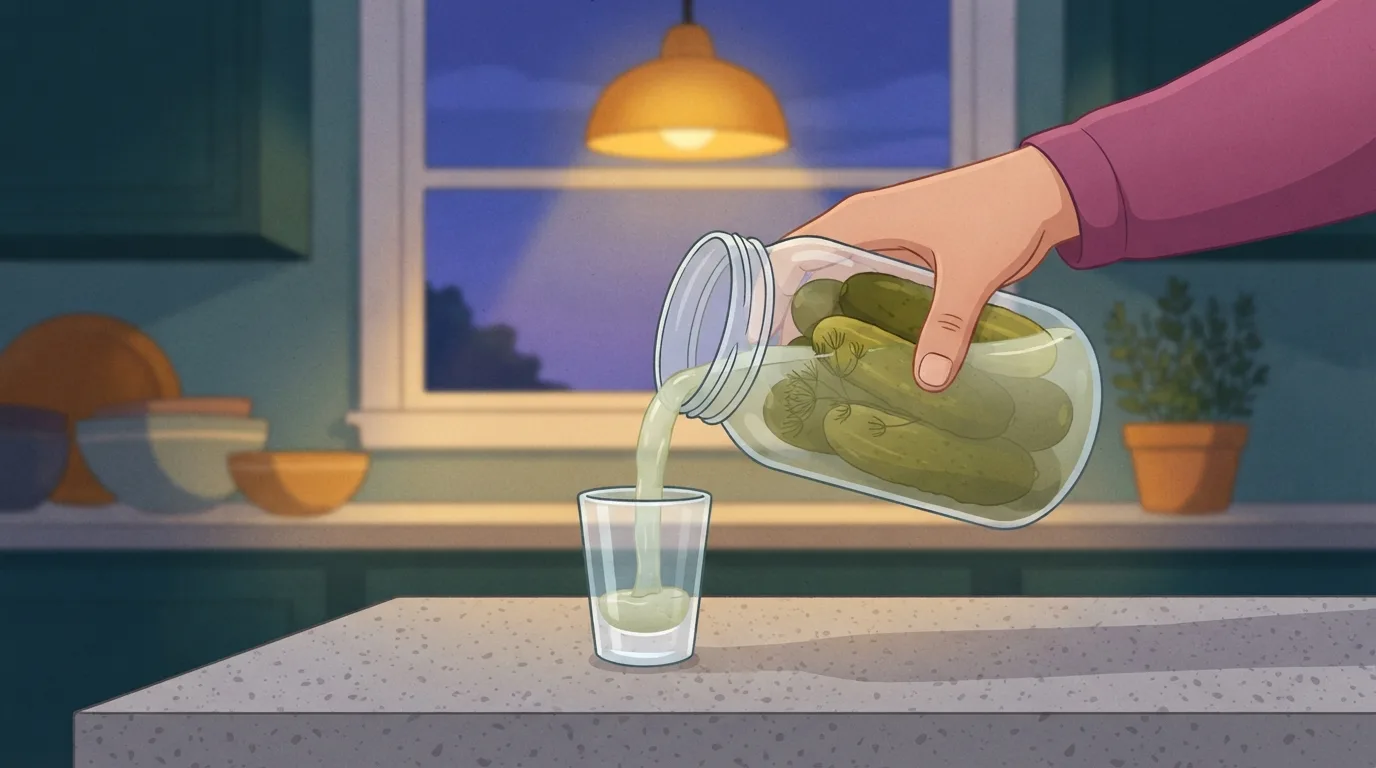
Miller and colleagues first dehydrated a group of men by about 3% of their body weight. They then used electrical stimulation of the tibial nerve to trigger a cramp in the flexor hallucis brevis, a small muscle under the big toe. Half an hour later they triggered a second cramp and had the men drink either 1 mL per kg of body weight of pickle juice or the same amount of deionized water. That came to about 74 mL, or 2.5 oz, on average.
Without any drink, the first cramps lasted about the same on both test days, roughly 152 seconds. With a drink, the cramp lasted about 134 seconds after water and about 85 seconds after pickle juice. That's 49 seconds shorter, or roughly 37% faster by our arithmetic. Muscle activity during the cramp didn't differ between drinks, and blood taken 5 minutes after drinking had barely changed.
The patient trial: milder cramps over four weeks
The second trial tested real cramps in daily life. Tapper and colleagues (2022) randomized 82 people with liver cirrhosis who had more than four muscle cramps a month to take sips of dill pickle brine or tap water whenever a cramp started. Each sip was about a tablespoon. After 28 days, cramp severity on a 0 to 10 scale had fallen by about 2.3 points with pickle juice and by about 0.4 points with water. The share of cramp days rated below 5 out of 10 and overall quality of life didn't differ significantly, and the team reported no adverse events.
Why 85 seconds is the important number
The speed in the lab trial is the clue to how it works. In a separate study of resting men, Miller and colleagues (2009) took blood samples for an hour after the same 1 mL per kg dose and found no change in blood sodium, magnesium, calcium, osmolality or plasma volume. A 2010 gastric emptying study from the same group found that after the first 5 minutes, pickle juice stopped leaving the stomach, while water kept emptying. A cramp that eases within a minute and a half isn't being fixed by salt reaching the muscle.
What the trials can't tell you
The lab cramps were triggered by electricity in a small foot muscle, in dehydrated men. That's a model of a cramp, not the calf that seizes late in a match. The patient trial tested natural cramps, but in people with liver disease, whose cramps may behave differently from an athlete's or from the night cramps of a healthy older adult. No trial has yet tested pickle juice on cramps during sport. And because pickle juice tastes so strong, nobody in either trial could be fully blinded to which drink they'd had. The results are promising and real, but they rest on a narrow base.
Why Does Pickle Juice Help With Cramps? The Reflex Theory
Miller's team suspects the brine triggers a reflex that starts in the mouth and throat and dampens the firing of the motor nerves that keep the cramping muscle contracted. The strong sour and salty taste is the likely trigger. No study has pinned down which ingredient matters most, the vinegar or the salt.
That theory fits what researchers now think causes most exercise cramps. Schwellnus (2009) reviewed the evidence and found the dehydration and electrolyte explanations rest mainly on anecdotes and case reports. The stronger evidence points to altered neuromuscular control: in a tired muscle, the reflex loop that tells it to contract gets stuck in the on position. A study of 210 Ironman triathletes (Schwellnus and colleagues, 2011) backed that up. The 43 who cramped had the same blood electrolytes and body weight losses as those who didn't. A faster race pace and a history of cramping were the only independent predictors. Our review of magnesium and muscle cramps covers why the mineral-depletion story fails for supplements too.
Drinks that target receptors in the mouth point the same way. Craighead and colleagues (2017) had 39 people drink 50 mL of a beverage with capsicum, cinnamon and ginger extracts, or the same drink without them, 15 minutes before trying to trigger a calf cramp with a hard contraction. With the spicy drink, people held the contraction longer before the cramp started, about 37 seconds against 28, and the cramp's electrical activity was roughly halved. Pickle juice wasn't part of that study, and one author later joined a related company's scientific advisory board, though the paper states no such tie existed when the experiments ran. Treat it as support for the reflex idea rather than proof.
Find out what's really holding you back
FitCraft, our mobile fitness app, pairs you with an AI coach who builds you a personalized plan around your goals, schedule, and fitness level. Every FitCraft program is designed by Domenic Angelino, MPH (Brown University) and NSCA-CSCS, with research published in the Journal of Strength and Conditioning Research and Medicine & Science in Sports & Exercise.
Take the Free Assessment Free • 2 minutes • No credit cardHow Much Pickle Juice Stops Leg Cramps?
The trial dose was 1 mL of pickle juice per kg of body weight, which is about 2 to 3 oz (60 to 90 mL) for most adults. Athletic trainers commonly give 1 to 2 oz (30 to 60 mL), and some told the researchers they have athletes drink 2 oz. No study has compared doses, so there's no evidence that more works better, and more brine means more sodium. The cirrhosis trial is a useful hint here: its patients sipped only about a tablespoon (15 mL) per cramp and still reported milder cramps than with water.
| Body weight | Trial dose (1 mL per kg) | Sodium in that dose |
|---|---|---|
| 120 lb (54 kg) | 54 mL (1.8 oz) | about 520 to 1,040 mg |
| 150 lb (68 kg) | 68 mL (2.3 oz) | about 650 to 1,300 mg |
| 180 lb (82 kg) | 82 mL (2.8 oz) | about 780 to 1,560 mg |
| 210 lb (95 kg) | 95 mL (3.2 oz) | about 910 to 1,820 mg |
| 240 lb (109 kg) | 109 mL (3.7 oz) | about 1,040 to 2,080 mg |
Sodium range by our arithmetic from the two dill brines the Miller group measured, about 9.5 and 19 mg per mL. Your jar may sit outside that range.
Here's how to use it:
- Drink the shot at the first sign of a cramp. In the trial, people drank it right as the cramp began.
- Stretch the muscle gently at the same time. The drink and the stretch don't compete, and stretching is the better-proven of the two.
- One repeat is reasonable. McKenney and colleagues gave exercising men two 1 mL per kg doses, one before and one 30 minutes into hard cycling in the heat, and found no meaningful change in blood sodium or potassium.
Does drinking pickle juice before exercise prevent cramps?
There's no evidence it does. About 1 in 5 athletic trainers give pickle juice ahead of time to prevent cramps, according to Peikert and colleagues (2014). They tested 2 mL per kg before a run to exhaustion in the heat and found it didn't change running time, core temperature or sweat volume compared with water. No trial has measured whether it stops cramps from starting.
How Much Sodium Is in Pickle Juice?
A lot, and it varies by brand and recipe. Two of Miller's studies reported the sodium in the dill brine they used. One batch worked out to about 415 mmol per liter and the other measured about 830, which by our arithmetic is roughly 280 to 570 mg of sodium per ounce. A 2 oz shot is then about 570 to 1,150 mg. That's 25 to 50% of the 2,300 mg daily limit in the FDA's guidance on sodium, which also notes that diets higher in sodium are linked to a higher risk of high blood pressure.
Pickle juice isn't a rehydration drink. In Miller's 2014 study, volunteers sweated out about 2 liters of fluid during 2 hours of exercise in the heat, and a shot of about 79 mL didn't come close to replacing it. It doesn't stop you from rehydrating either. After a shot of pickle juice, volunteers in a 2013 study by Allen and colleagues drank about as much water over the next hour as they did after plain water or salt water. That eased an old worry that the brine blunts thirst.
Is pickle juice healthy to drink?
For most healthy adults, an occasional shot is fine. As a daily drink, it's mostly salt and vinegar. Its potassium is low, about 0.7 mg per mL in the batch Miller measured in 2014, so it doesn't replace potassium either. Its acidity can bother people with reflux. If you sweat heavily and lose a lot of salt in long sessions, salty food or an electrolyte drink with your water is a better plan, and our guide to why you sweat so much when you work out shows how to estimate your losses.
Who Should Avoid Pickle Juice for Cramps?
Skip the brine, or ask your doctor first, if any of these apply:
- High blood pressure. One shot can carry half a day's sodium limit.
- Kidney disease, liver disease or heart failure. All three often come with sodium or fluid limits. In the cirrhosis trial, patients on a sodium limit were capped at 3 tablespoons of brine a day under the trial's protocol.
- Any diet your doctor has told you to keep low in sodium.
- Reflux, heartburn or stomach ulcers. A shot of vinegar brine can make them worse.
- Frequent or unexplained cramps. These deserve a medical look rather than a home remedy, as the last section explains.
What Else Works for Cramps?
Stretch the cramping muscle
Stretching is still the treatment with the most support. A 2022 evidence-based review by Miller and colleagues concluded that an acute exercise cramp should be treated with gentle static stretching until it eases. For a calf cramp, straighten your knee and pull your toes toward your shin, or stand and lean into a wall with the heel down. For a hamstring cramp, straighten the leg and hinge forward from your hips. For a foot cramp, pull your toes up and back. Our list of the best stretches for runners shows the standing calf stretch, which you can hold for 30 to 60 seconds once the cramp lets go.
For night cramps, try stretching before bed
The evidence here is mixed. In a trial by Hallegraeff and colleagues (2012), 80 adults over 55 took part, and those who stretched their calves and hamstrings every night before sleep for 6 weeks had fewer and less painful night cramps than those who didn't stretch. An earlier trial by Coppin and colleagues (2005) in 191 people taking quinine for night cramps found that advice to do calf stretches made no difference. A few minutes of stretching costs nothing, so it's worth a 6-week try.

Night cramps become more common with age, and so does the value of a regular routine that keeps your calves and hamstrings both stretched and strong. If you'd rather not plan that yourself, our roundup of the best fitness apps over 50 compares the options. FitCraft includes yoga and mobility workouts alongside dumbbell and bodyweight strength, with a 3D AI coach who demonstrates every move.
Bananas, magnesium and mustard
- Bananas. Miller (2012) fed men one or two servings of banana after exercise in the heat. Blood potassium rose only slightly, stayed within the normal range and took 30 to 60 minutes to move, which is far too slow to stop a cramp in progress.
- Magnesium. Pooled trials found no benefit for the common night cramps of older adults. Our magnesium review above has the details.
- Mustard. No trial has tested it on a cramp. To match the sodium in one pickle juice shot, Miller's 2014 study needed about 135 grams of yellow mustard, far more than the few small packets athletes usually take.
For exercise cramps, look at pace and conditioning
Because fatigue and pace predict exercise cramps better than salt does, the most useful prevention is training for the effort you'll actually make. Build up to race pace in training, keep strength work for your calves and thighs in your week, and notice the conditions in which you've cramped before. The 2022 review recommends prevention tailored to each person's own risk factors over generic advice like drinking more fluids.
When a Cramp Needs a Doctor
Most cramps are harmless, if painful. See a doctor if your cramps:
- come often, keep you awake, or don't ease with stretching
- come with leg swelling, redness or warmth, which can signal a blood clot
- come with muscle weakness, numbness or tingling
- started after you began a new medication
- follow very hard exercise and come with dark urine, which needs urgent care
The Bottom Line
Pickle juice for cramps is a reasonable thing to try. A shot of about 2 oz shortened lab-triggered cramps by about 37%, small sips eased cramp severity in a patient trial, and the effect probably comes from a reflex rather than electrolytes. It won't prevent cramps, it carries a lot of sodium, and stretching the muscle still comes first. If cramps keep interrupting your training, the longer fix is a routine you keep: regular stretching and strength work, built up gradually, so tired muscles cramp less often.
That routine is the hard part, and it's a design problem, not a willpower one. As Katie put it after finally sticking with a plan: "I've tried everything. This is the first time I've stuck with something past two weeks."
Frequently Asked Questions
Can pickle juice cure leg cramps?
Pickle juice can shorten a cramp and make it milder, but it doesn't cure the tendency to cramp. In a lab trial, a shot ended a triggered cramp in about 85 seconds, against about 134 seconds after water, and in a trial in people with cirrhosis, sips at each cramp eased cramp severity more than tap water. No trial shows that drinking it beforehand prevents cramps.
How does pickle juice work for cramps?
The leading theory is a reflex. The strong sour and salty brine seems to stimulate receptors in the mouth and throat, which send a signal that calms the overactive nerves keeping the muscle contracted. It isn't the electrolytes: blood sodium and potassium don't change for an hour after a shot, yet the cramp eases within about a minute and a half.
How much pickle juice stops leg cramps?
The trial dose was 1 mL per kg of body weight, about 2 to 3 oz (60 to 90 mL) for most adults. Athletic trainers commonly give 1 to 2 oz, and in a patient trial even a tablespoon per cramp helped. No study shows a larger dose works better, and every ounce adds roughly 280 to 570 mg of sodium, so start small.
What drink makes cramps go away?
No drink reliably stops a cramp on its own. Pickle juice has the best trial evidence for shortening one, and drinks with spicy plant extracts such as capsicum, cinnamon and ginger have made lab-induced cramps milder. Water and sports drinks don't change blood electrolytes fast enough to stop a cramp in progress. Gently stretching the muscle is still the first thing to do.
Does pickle juice help with period cramps?
There's no evidence that it does. Period cramps come from the uterus contracting, which is a different process from a leg muscle cramping, and no trial has tested pickle juice for them. Heat and anti-inflammatory pain relievers have much better support, and a pharmacist or doctor can advise on which suits you.
Can you use mustard instead of pickle juice for cramps?
Not on the evidence so far. No trial has tested mustard on a cramp. When researchers matched the sodium in a shot of pickle juice, it took about 135 grams of yellow mustard, far more than the few small packets athletes usually take, and neither the brine nor the mustard changed blood sodium or potassium within an hour.
Is pickle juice healthy to drink every day?
Not as a daily habit for most people. Pickle juice is mostly salt and vinegar, with roughly 570 to 1,150 mg of sodium in a 2 oz shot, which is 25 to 50% of the 2,300 mg daily limit. An occasional shot for a cramp is fine for most healthy adults, but skip it if you have high blood pressure, kidney disease or a sodium-restricted diet.
How do you make pickle juice for cramps?
The trials used brine poured straight from a jar of dill pickles, so that's the simplest option. A homemade mix of water, vinegar, salt and dill follows the same idea, but no study has tested one, and homemade brines vary widely in salt. Keep the shot small either way.