- Grip strength predicts death better than blood pressure. The PURE study (139,691 adults, 17 countries) found every 5 kg decrease in grip strength raised all-cause mortality risk by 16% and cardiovascular death risk by 17%.
- The relationship holds across all major causes of death. A 2022 meta-analysis of 48 studies and 3.1 million participants confirmed that weaker grip independently predicts all-cause, cardiovascular, and cancer mortality.
- Your brain is connected too. Low grip strength is associated with a 99% higher risk of cognitive decline and a 54% higher risk of dementia.
- You can test it right now. A hand dynamometer costs under $30. Average grip for men in their 30s is about 50 kg (110 lbs); for women, about 30 kg (66 lbs).
- It improves at any age. Adults over 60 can increase muscular strength by 25-30% within 12 weeks of progressive resistance training.

Here's something that might surprise you: a doctor can learn more about your risk of dying in the next 10 years from how hard you squeeze a device than from taking your blood pressure. That's not a fitness influencer talking. That's what a study of nearly 140,000 adults across 17 countries found when it was published in The Lancet.
Grip strength sounds too simple to matter this much. It's literally just squeezing a handle. But researchers have spent the last two decades proving that this one measurement captures something profound about your body's overall condition. It reflects your total muscular strength, your nervous system's health, your nutritional status, and even how well your brain is aging. And unlike most health markers, you can test it yourself, at home, for under $30.
Let's look at what the research actually shows, how to test yourself, and what you can do about it if your numbers aren't where you'd want them.
The Study That Changed the Conversation
The PURE Study: 139,691 Adults, 17 Countries, One Clear Finding
In 2015, The Lancet published results from the Prospective Urban Rural Epidemiology (PURE) study, one of the largest investigations of grip strength and health outcomes ever conducted. Led by Darryl Leong and colleagues, the study enrolled 139,691 adults from 17 countries (ranging from high-income nations like Canada and Sweden to low-income countries in Africa and South Asia). Participants ranged in age from 35 to 70 years.
After a median follow-up of 4 years, the results were striking. Every 5 kg decrease in grip strength was linked to:
- 16% higher risk of death from any cause (HR 1.16, 95% CI 1.13-1.20)
- 17% higher risk of cardiovascular death (HR 1.17, 95% CI 1.11-1.24)
- 7% higher risk of heart attack (HR 1.07, 95% CI 1.02-1.11)
- 9% higher risk of stroke (HR 1.09, 95% CI 1.05-1.15)
The finding that grabbed headlines: grip strength was a stronger predictor of all-cause and cardiovascular death than systolic blood pressure. Your doctor checks your blood pressure at every visit. Almost nobody checks your grip strength. The PURE researchers argued that should change. If that number is the reason you are here, our guide on how to increase grip strength turns it into a six-week plan built from hangs, carries and pinch holds.
Citation: Leong DP, Teo KK, Rangarajan S, et al. Prognostic value of grip strength: findings from the Prospective Urban Rural Epidemiology (PURE) study. The Lancet. 2015;386(9990):266-273.
The 2022 Meta-Analysis: 3.1 Million People Confirm It
Individual studies can have quirks. When you pool 48 studies and over 3.1 million participants, the quirks wash out and you're left with the signal. That's exactly what Lopez-Bueno and colleagues did in their 2022 systematic review published in Ageing Research Reviews.
Their dose-response meta-analysis found a clear, nearly linear inverse relationship between grip strength and all-cause mortality for grip values between 26 and 50 kg. Stronger grip, lower death risk. No tricks, no fine print. The association also held for cardiovascular mortality (significant risk reduction between 24 and 40 kg) and cancer mortality (significant between 16 and 33 kg).
What makes this meta-analysis particularly convincing: participants ranged from 35 to 85 years old, 49.6% were women, and the studies spanned multiple countries and healthcare systems. This isn't a finding that only applies to young, healthy men in Western countries. It applies broadly.
Citation: Lopez-Bueno R, Andersen LL, Calatayud J, et al. Thresholds of handgrip strength for all-cause, cancer, and cardiovascular mortality: A systematic review with dose-response meta-analysis. Ageing Res Rev. 2022;82:101778.
Why Does Squeezing a Handle Predict Death?
On the surface, this seems absurd. Why would hand-squeezing power tell you anything about whether your heart will give out or whether cancer will kill you? The answer is that grip strength isn't really about your hands. It's a window into your entire body.
Grip Strength Reflects Total-Body Muscle Mass and Function
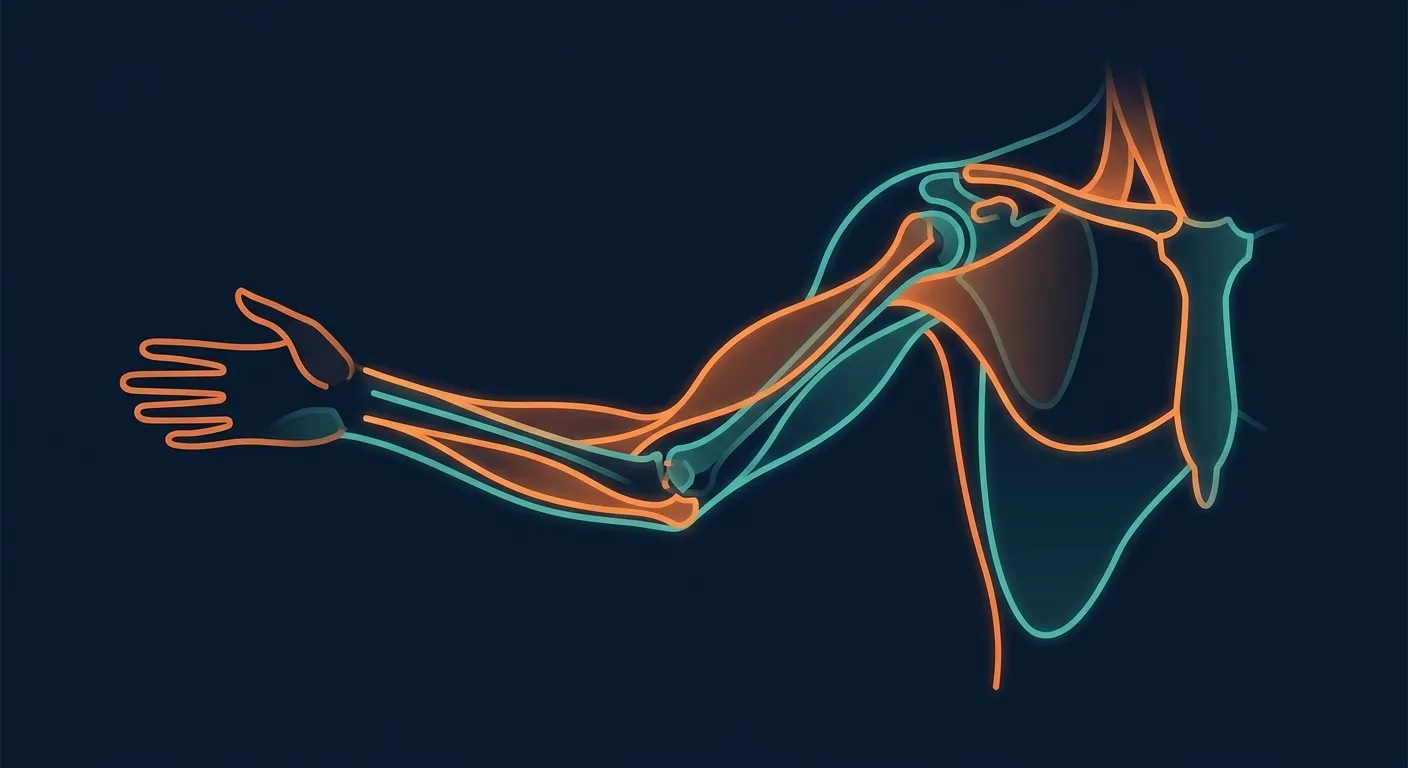
Your grip doesn't exist in isolation. The muscles in your forearms connect to a chain that runs through your wrists, up your arms, across your shoulders, and into your core. Grip strength correlates strongly with total-body muscular strength. When your grip weakens, it's usually not because your forearms got weaker in isolation. It's because your whole system is losing muscle mass and function.
This matters because muscle mass is metabolically active tissue. It regulates blood sugar, stores amino acids, produces anti-inflammatory myokines during contraction, and provides the reserve your body draws on during illness or injury. Losing it accelerates the cascade of chronic disease that drives most mortality in adults over 40.
It's a Biomarker of Biological Aging
Research published in Aging Cell and other journals has shown that lower grip strength correlates with faster DNA methylation age acceleration. Translation: people with weak grips tend to be biologically older than their birth certificates suggest. Their cells are aging faster. This helps explain why grip strength predicts such a wide range of outcomes. It's not specific to any single disease. It captures something about how quickly your body is wearing out overall.
Beyond Heart Disease: What Else Grip Strength Predicts
The mortality data alone would be enough to take grip strength seriously. But the research goes further.
Cognitive Decline and Dementia
A 2021 systematic review and meta-analysis in Frontiers in Aging Neuroscience pooled 15 longitudinal studies and found that lower grip strength was associated with nearly double the risk of cognitive decline (HR 1.99, 95% CI 1.71-2.32) and a 54% higher risk of dementia (HR 1.54, 95% CI 1.32-1.79). That includes Alzheimer's disease specifically (HR 1.41).
A UK Biobank study of over 190,000 adults confirmed these findings at scale. Each 5 kg drop in grip strength predicted higher dementia incidence over a 10-year follow-up. The connection likely runs through shared mechanisms: neurodegeneration reduces motor neuron firing (weakening grip), while the same inflammatory and vascular pathology that shrinks muscle also damages brain tissue.
Citation: Cui M, Zhang S, Liu Y, et al. Grip Strength and the Risk of Cognitive Decline and Dementia: A Systematic Review and Meta-Analysis. Front Aging Neurosci. 2021;13:625551.
Cancer Mortality
The Lopez-Bueno 2022 meta-analysis found a significant dose-response relationship between grip strength and cancer mortality, with the sharpest risk reduction occurring between 16 and 33 kg. A separate meta-analysis by Garcia-Hermoso and colleagues (Archives of Physical Medicine and Rehabilitation, 2018) analyzed data from approximately 2 million men and women and found that higher muscular strength was associated with a reduced risk of cancer death in the general population.
The proposed mechanism: stronger individuals tend to have lower levels of chronic systemic inflammation, better insulin sensitivity, and higher concentrations of cancer-fighting immune cells. Muscle tissue itself produces myokines during contraction that have been shown to inhibit tumor growth in laboratory studies.
Citation: Garcia-Hermoso A, Cavero-Redondo I, Ramirez-Velez R, et al. Muscular Strength as a Predictor of All-Cause Mortality in an Apparently Healthy Population. Arch Phys Med Rehabil. 2018;99(10):2100-2113.
Disability and Independence in Aging
If the mortality and dementia data feel abstract, this one hits home. Low grip strength predicts loss of independence: difficulty carrying groceries, opening jars, getting up from a chair, recovering from a fall. A 2019 umbrella review published in the Journal of Sport and Health Science found "convincing" evidence linking low grip strength to increased risk of fractures, falls, and functional disability. It's not just about living longer. It's about being able to live on your own terms.
Citation: Bohannon RW. Grip Strength: An Indispensable Biomarker For Older Adults. Clin Interv Aging. 2019;14:1681-1691.
How to Test Your Grip Strength
This is the part that makes grip strength different from most health biomarkers. You don't need a lab, a blood draw, or an appointment. You need a $25-30 hand dynamometer (available on Amazon) and 60 seconds.
The Standard Protocol
- Stand up straight with your arm at your side, elbow bent at about 90 degrees.
- Hold the dynamometer in your dominant hand. Adjust the grip width so the handle sits comfortably in your fingers (not your palm).
- Squeeze as hard as you can for 3-5 seconds. Don't jerk it. Steady, maximum effort.
- Record the number in kilograms. Rest 60 seconds.
- Repeat twice more. Take the highest of your three attempts.
- Test your other hand. Your dominant hand is usually about 10% stronger.
Where Do You Stand? Grip Strength by Age and Sex
Based on normative data from the NHANES and international population studies, here are rough benchmarks (dominant hand, in kg):
| Age | Men (average) | Women (average) |
|---|---|---|
| 20-29 | 46-51 kg | 27-31 kg |
| 30-39 | 47-50 kg | 28-30 kg |
| 40-49 | 44-49 kg | 26-29 kg |
| 50-59 | 40-45 kg | 24-27 kg |
| 60-69 | 35-40 kg | 21-25 kg |
| 70+ | 28-35 kg | 18-22 kg |
If you're below average for your age group, that's not a diagnosis. It's a starting point. The good news is that grip strength is one of the most trainable fitness qualities at any age. More on that below.
Want to build strength that actually predicts how long you'll live?
FitCraft's AI trainer Ty builds adaptive strength workouts based on your current level and adjusts as you progress. Every session trains the kind of functional strength that research links to longevity.
Take the Free Assessment Free · 2 minutes · No credit cardHow to Improve Your Grip Strength (and Total-Body Strength)
The research on grip strength and mortality doesn't just tell you to worry about a number. It points to something actionable. Grip strength is improvable. Significantly. At any age. And because it reflects total-body strength, the training that improves your grip tends to improve everything the research says matters.
Exercises That Build Grip Strength
You don't need to buy a bunch of hand squeezers (though those work fine as a supplement). The best grip builders are compound movements that load your hands while training your entire body:
- Dead hangs: Grab a pull-up bar and hang with straight arms. Start with 10-15 seconds and work toward 60 seconds. This builds grip endurance and decompresses your spine as a bonus.
- Farmer's carries: Pick up two heavy dumbbells and walk. Keep your shoulders back and your core tight. This trains grip, core stability, and cardiovascular conditioning simultaneously.
- Dumbbell rows: Pull a dumbbell to your hip from a bent-over position. Your grip has to hold the weight while your back muscles do the pulling. Two-for-one.
- Bodyweight pulling movements: Pull-ups, chin-ups, and inverted rows all demand serious grip work while building your back, biceps, and core.
- Resistance band work: Loop a band around your fingers and open your hand against resistance. This trains the extensors (the muscles that open your hand), which most people neglect entirely.
The Research on Strength Training at Any Age
If you're over 50 and wondering whether it's too late, the research is clear: it's not. A 2022 meta-analysis in Sports Medicine found that adults over 60 can increase muscular strength by 25-30% within just 12 weeks of progressive resistance training. That's not a typo. A quarter to a third stronger in three months.
The key word is progressive. Your body adapts to the stress you place on it. If you do the same workout with the same weights for months, you'll plateau. The training needs to gradually increase in difficulty as you get stronger. This is exactly what the fitness-mortality research supports: your body responds to progressive challenge at every age, and the benefits keep accumulating.

Why Your Doctor Probably Doesn't Test This
If grip strength predicts death better than blood pressure, why isn't it part of every checkup? A few reasons, and none of them are good.
First, the medical system is built around pharmaceutical interventions. Blood pressure is tested because there's a pill for high blood pressure. Cholesterol is tested because there's a pill for high cholesterol. There's no pill for low grip strength. The "treatment" is exercise, and the healthcare system has been historically terrible at prescribing exercise as medicine.
Second, grip strength testing isn't yet included in most clinical practice guidelines. The American Heart Association has called for cardiorespiratory fitness to be treated as a vital sign, and researchers have made similar arguments for grip strength. But clinical adoption is slow. The equipment costs $200-500 for a medical-grade dynamometer, and testing adds time to an already rushed appointment.
Third, most doctors simply weren't trained on this. Exercise science research and medical education have existed in separate worlds for decades. That's gradually changing, but the gap remains wide. When was the last time your doctor asked you how much you can carry?
The Bigger Picture: Muscular Strength and Mortality
Grip strength isn't the only measure of muscular strength that predicts mortality. It's just the easiest to measure. Garcia-Hermoso's 2018 meta-analysis of approximately 2 million men and women found that overall muscular strength (measured by grip, leg press, bench press, and other methods) independently predicted all-cause mortality in apparently healthy adults. The relationship held after controlling for age, sex, BMI, and cardiovascular fitness.
This creates an important distinction. Cardiorespiratory fitness (how well your heart and lungs deliver oxygen) predicts mortality. Muscular strength (how much force your muscles can produce) also predicts mortality. And they're partially independent. Someone who runs but never lifts is missing half the equation. Someone who lifts but never does cardio is missing the other half.
The research says you need both. And the evidence on fitness app effectiveness shows that programs combining strength and cardiovascular training produce the best overall health outcomes.
Honest Limitations of This Research
The grip strength data is compelling, but it's not perfect. Here's what you should keep in mind.
Correlation Is Not Causation
Nearly all the grip strength research is observational. Researchers measured grip strength, then tracked who died. They didn't randomly assign people to have strong or weak grips and see what happened. It's possible that low grip strength is simply a marker of other problems (chronic illness, malnutrition, inactivity) rather than a cause of mortality itself. The dose-response relationship and biological plausibility make a causal link likely, but it's not proven the way a randomized trial would prove it.
Confounding Variables
People with strong grips tend to exercise more, eat better, smoke less, and have fewer chronic diseases. The major studies adjust for these factors, but residual confounding is always possible. Some of the "grip strength effect" might actually be a "healthy lifestyle effect" that grip strength happens to capture.
Testing Variability
Grip strength depends on hand size, hand dominance, time of day, fatigue, motivation, and the specific dynamometer used. A single measurement on a single day isn't definitive. Trends over time are more meaningful than any single number.
Limited Intervention Data
We know that low grip strength predicts bad outcomes. We know that resistance training improves grip strength. What we don't yet have is a large randomized trial showing that improving grip strength through training directly reduces mortality. The logical chain is strong, but the direct evidence isn't there yet.
What to Do With This Information
Here's the practical version of everything above, distilled into actions you can take this week.
- Test your grip strength. Buy a hand dynamometer or ask your doctor to test you. Know your number. Repeat every 3-6 months to track the trend.
- Start resistance training if you don't already. Two to three sessions per week. Focus on compound movements that challenge your grip naturally: rows, carries, hangs, push-ups, squats with dumbbells. You don't need a gym. Bodyweight and a pair of dumbbells will get you there. Our roundup of the best exercises for longevity ranks these movements by the evidence behind them.
- If you're over 50, start now. Not next month. The research on strength training after 60 shows dramatic gains are possible in as little as 12 weeks. The window doesn't close.
- Track your progress. Grip strength is one of the few longevity biomarkers you can measure at home. Watching your numbers climb is motivating in a way that abstract health advice never is.
- Don't neglect cardio. Muscular strength and cardiovascular fitness predict mortality through partially independent pathways. You want both. The ideal program includes strength training and some form of cardio, scaled to your current level and progressively challenging.
How FitCraft Helps You Build Functional Strength
Grip strength research points to a clear conclusion: the kind of strength that predicts longevity comes from progressive, whole-body resistance training. That's exactly what FitCraft is designed to deliver.
- AI-adaptive workouts that adjust to your current strength level and increase difficulty as you improve. Ty, your 3D AI coach, builds each session around compound movements that challenge your grip, core, and major muscle groups together.
- Multiple training modalities including bodyweight, dumbbells, and resistance bands. You train with whatever equipment you have, and the programming adapts to match.
- Gamification that keeps you consistent. XP, leveling, collectible cards, and calendar rewards use the same psychological principles that research shows maintain long-term adherence. Grip strength only improves if you actually train.
- Interactive 3D exercise demos with pinch-and-zoom camera control so you can examine form from every angle. Proper form on pulling and carrying movements is what makes them effective grip builders.
We can't promise that using FitCraft will extend your life. Nobody honestly can. What we can say is that every program Ty builds is grounded in the same progressive resistance training principles that the longevity research consistently supports.
Medical disclaimer: This article summarizes published research for educational purposes. It is not medical advice. Grip strength measurements should be interpreted in context with other health markers. If you have concerns about your strength, mobility, or health risks, consult a qualified healthcare provider before starting any new exercise program.
Frequently Asked Questions
How does grip strength predict mortality?
Grip strength serves as a proxy for total-body muscular strength and overall physiological reserve. The PURE study (Lancet, 2015) followed 139,691 adults across 17 countries and found that every 5 kg decrease in grip strength was associated with a 16% higher risk of all-cause mortality, a 17% higher risk of cardiovascular death, and a 7% higher risk of heart attack. A 2022 dose-response meta-analysis of 48 studies and 3.1 million participants confirmed these associations across all-cause, cardiovascular, and cancer mortality.
Is grip strength really a better predictor of death than blood pressure?
Yes. The Prospective Urban Rural Epidemiology (PURE) study, published in The Lancet in 2015, directly compared grip strength to systolic blood pressure as predictors of mortality. Grip strength was a stronger predictor of both all-cause and cardiovascular death. The authors concluded that grip strength measurement is a simple, inexpensive risk-stratifying method that outperforms blood pressure for predicting mortality.
What is a good grip strength for my age?
Grip strength peaks in your 30s and gradually declines with age. For men aged 30-39, the average is roughly 50 kg (110 lbs); for women in the same age range, about 30 kg (66 lbs). By age 60-69, averages drop to around 38 kg for men and 24 kg for women. You can test your grip with a hand dynamometer (available for under $30 online), or ask your doctor to measure it at your next visit.
Can you improve grip strength at any age?
Absolutely. Resistance training produces significant strength gains at any age. A 2022 meta-analysis in Sports Medicine found that adults over 60 can increase muscular strength by 25-30% within 12 weeks of progressive resistance training. Grip strength specifically responds well to exercises like dead hangs, farmer's carries, dumbbell holds, and bodyweight pulling movements. Even simple daily activities like carrying groceries without a cart contribute to grip strength over time.
Does grip strength predict dementia risk?
Yes. A systematic review and meta-analysis published in Frontiers in Aging Neuroscience (2021) found that lower grip strength was associated with a 99% higher risk of cognitive decline (HR 1.99) and a 54% higher risk of dementia (HR 1.54). A UK Biobank study of over 190,000 adults confirmed that each 5 kg reduction in grip strength predicted higher dementia risk over a 10-year follow-up period.