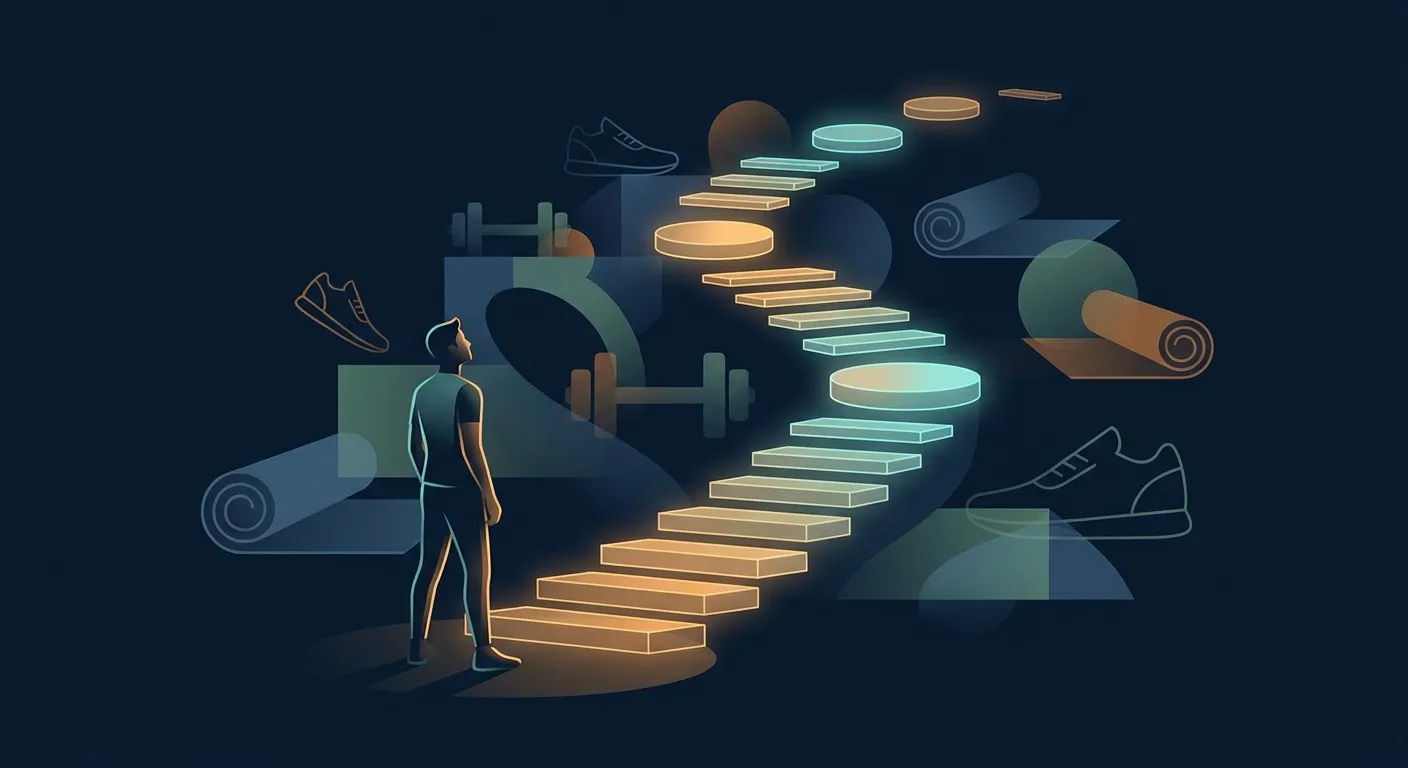
So you stopped working out. Maybe it was a few weeks. Maybe a few months. Maybe you honestly can't remember the last time you did anything that made you sweat on purpose.
And now you're sitting here, somewhere between "I really need to start again" and "I've lost everything I built." That guilt is loud. It tells you that you wasted all that effort, that you're basically starting from zero, that you should've just kept going.
Here's what that guilt isn't telling you: your body remembers. The science on this is genuinely encouraging. Your muscles have a built-in comeback mechanism that most people don't know about, and it means you're closer to where you left off than you think.
Let's talk about what actually happens when you stop training, what the research says about coming back, and how to restart without wrecking yourself in the process.
What Happens When You Stop: The Science of Detraining
First, the honest truth about what you've probably lost. Understanding this isn't about making you feel worse. It's about setting realistic expectations so you don't do something dumb on day one.
If you want the actual numbers behind that, our post on how long it takes to lose muscle lays out what the MRI studies measured and how little an ordinary break costs.
The First 2-3 Weeks Off
Not much, actually. Strength losses are minimal in the first two weeks. You might notice you're a bit more winded climbing stairs, and your cardiovascular fitness starts to dip. But muscle mass? Barely touched. A review by Mujika and Padilla in Sports Medicine (2000) found that short-term detraining of less than four weeks had relatively modest effects on muscle strength in trained individuals.
4-12 Weeks Off
Now things start to shift. VO2 max (your aerobic capacity) can drop 6-20% depending on the duration and your training history. Muscle strength declines more noticeably, though it doesn't disappear. You'll likely retain 50-75% of your gains even after two to three months off. Your progressive overload numbers will take a hit, but the foundation is still there.
3+ Months Off
Significant detraining. Cardiovascular fitness drops substantially, and you'll feel it. Muscle mass decreases, though not to pre-training baseline if you had years of training history. But here's what matters: the cellular infrastructure your muscles built during training doesn't fully disappear. And that's where the comeback story gets interesting. If you want the full schedule for a rebuild, our breakdown of how long it takes to get in shape puts the strength, cardio and body composition clocks side by side.
Muscle Memory Is Real, and It's on Your Side
This isn't some feel-good metaphor. Muscle memory is a documented biological phenomenon, and it's the single most encouraging piece of science for anyone making a comeback.

Here's how it works: when you train regularly, your muscle fibers acquire additional nuclei (called myonuclei) to support the increased protein synthesis needed for growth. These nuclei are like little control centers inside each muscle fiber.
The key finding, published in The Journal of Physiology by Egner et al. (2013) and later confirmed in human subjects, is that these extra myonuclei don't disappear when you stop training. Your muscles shrink, yes. But the nuclei stick around. They're waiting.
When you start training again, those retained nuclei can immediately ramp up protein synthesis without the slow process of creating new ones first. It's like reopening a factory that still has all its workers. You just need to turn the lights back on.
A 2018 study by Seaborne et al. in Scientific Reports added another layer: they found that skeletal muscle retains epigenetic modifications from previous training. Your DNA literally carries a molecular "bookmark" of your training history. This epigenetic memory means your muscles don't just remember being bigger. They remember how to get bigger, and they can do it faster the second time around.
The practical takeaway? Retraining is roughly 30-40% faster than the original training period. If it took you 12 weeks to build a certain level of fitness, you can typically rebuild it in 7-8 weeks. You're not starting from zero. You're starting from a cellular head start.
The 5 Rules for a Smart Comeback
Knowing that muscle memory exists doesn't mean you should walk into the gym and try to pick up exactly where you left off. That's how people get hurt, get extremely sore, and quit again within a week. Here's how to do it right.
Rule 1: Cut Everything in Half
Whatever you were doing before, cut the weight, the distance, the volume, and the intensity by 50%. This feels frustrating. You'll think "I used to be able to do so much more." That's true. And you will again. But not today.
If you were squatting 200 pounds, start with 100. If you were running 5 miles, start with 2. If you were doing 4 sets of everything, start with 2. Your ego will protest. Your joints will thank you. And you'll progress back to your old levels much faster by starting conservatively than by starting aggressively and getting injured.
Rule 2: Frequency Before Intensity
The biggest mistake people make is trying to make each comeback workout "count" by going all-out. Instead, prioritize showing up over showing off. Three moderate sessions per week beats one brutal session followed by five days of being too sore to function.
The first two weeks are about rebuilding the habit, not rebuilding the muscle. The muscle will come. The habit is what keeps you from taking another break in three weeks.
Rule 3: Expect Soreness (But Not Pain)
Delayed onset muscle soreness (DOMS) after your first few sessions is normal and expected. Your muscles are recalibrating to a stimulus they haven't experienced in a while. This is fine.
What's not fine: sharp pain, joint pain, or soreness so severe you can't function for three days. That means you went too hard. Scale it back. There's no award for suffering the most during week one.
Rule 4: Follow a Program (Don't Wing It)
The temptation when restarting is to just "do something": hop on a treadmill, do some push-ups, maybe try a random YouTube video. This approach feels productive but leads nowhere because there's no progression plan.
You need a structured program that starts where you are right now, not where you were six months ago, and builds you back up systematically. This is where AI-adapted programming has a real advantage: it can meet you at your current level and progress you at the right pace without the ego-driven shortcuts.
Rule 5: Make It Easy to Start, Hard to Skip
The hardest part of a comeback isn't the workout. It's the moment between thinking about working out and actually starting. Every bit of friction gives your brain another excuse to bail: driving to the gym, figuring out what to do, hunting down your gear.
Reduce the friction. Lay out your workout clothes the night before. Have your program queued up on your phone. Make the first workout so short and easy that skipping it feels ridiculous. Once you're moving, momentum takes over. The streak effect is real: once you've got three or four days in a row, you won't want to break the chain.
Ready to put this into practice?
Take the free FitCraft assessment and get a personalized comeback plan from Ty, your 3D AI coach, based on where you are now, not where you used to be.
Take the Free Assessment Free • 2 minutes • No credit cardWhy Most Comebacks Fail (And How to Break the Cycle)
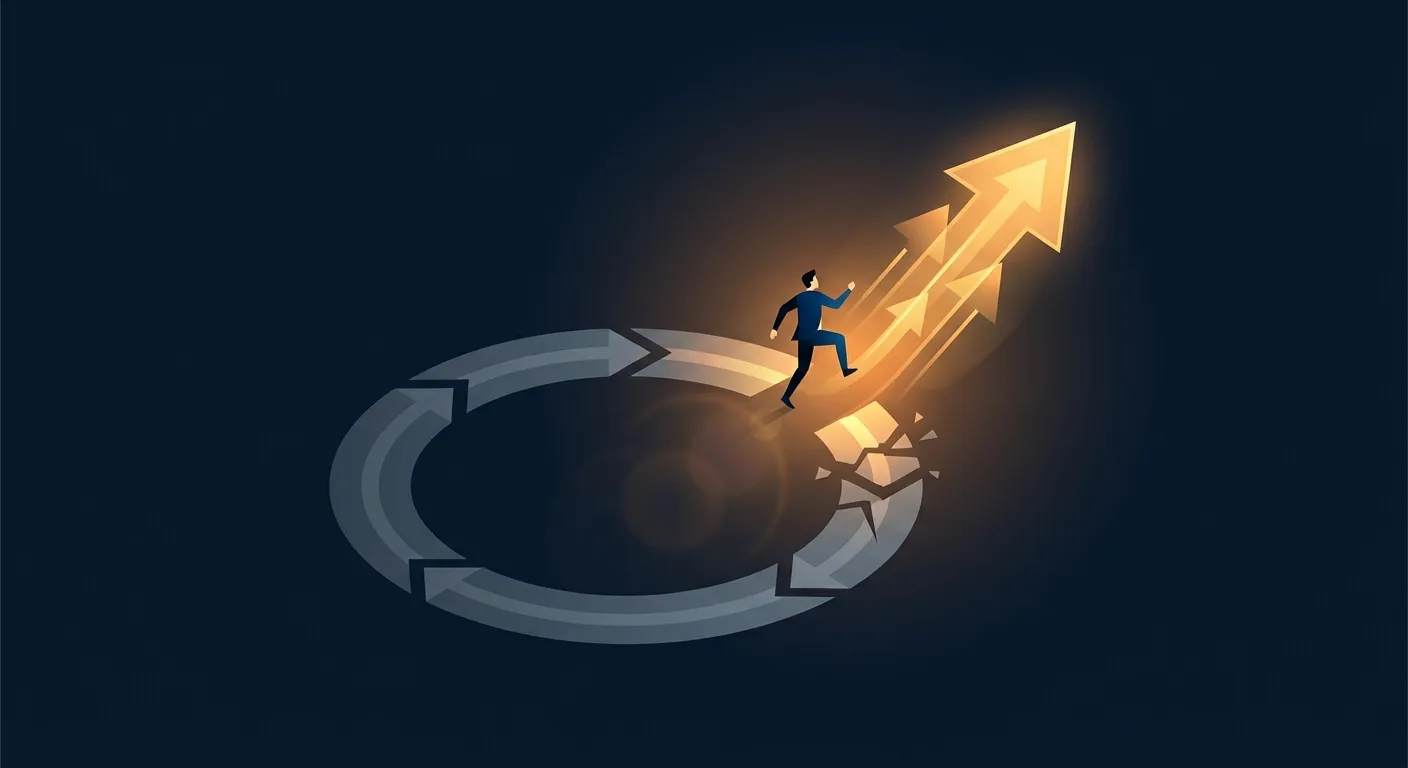
You've probably done this before. Started strong on a Monday. Felt amazing for a week. Got sore. Missed a day. Missed another day. And then three weeks later you're right back where you started, except now with a fresh layer of guilt on top.
That cycle isn't a discipline problem. It's a design problem. Here's what's actually going wrong:
The Intensity Trap
You go too hard because you feel behind. The workout destroys you. You're so sore you can barely sit down. You associate exercise with suffering. You skip the next session. The gap grows. Sound familiar?
The fix: your first week back should feel almost too easy. If you finish thinking "I could've done more," perfect. You're exactly where you should be. Progressive overload will catch up. Give it time.
The Motivation Myth
Waiting for motivation to strike is like waiting for the dishes to wash themselves. Motivation is unreliable, especially during a comeback when you're comparing your current self to your former self and coming up short every time.
What works instead: systems. Streaks. Gamification. External accountability. Something that makes you show up on the days when motivation is nowhere to be found. The people who stay consistent long-term aren't more motivated than you. They have better systems.
The All-or-Nothing Mindset
"If I can't do my full workout, I might as well skip it." This thinking kills more comebacks than anything else. A 10-minute workout is infinitely better than no workout. A walk around the block counts. Something beats nothing, every single time.
How FitCraft Meets You Where You Are
This is exactly the scenario FitCraft was built for. Not for the person who's been training consistently for five years. For the person who stopped. The person who feels behind. The person scrolling through their old workout logs feeling a mix of nostalgia and dread.
FitCraft's AI coach Ty starts with a diagnostic assessment that identifies your current fitness level, not where you used to be. The program Ty builds factors in your available equipment, your schedule, your goals, and your starting point right now. Every workout includes 3D exercise demonstrations so you don't have to guess about form, even if it's been a while.
The gamification layer, including streaks, quests, collectible cards, and avatar progression, exists specifically to solve the motivation gap. It turns "I should work out" into "I don't want to break my streak." Programs designed by Domenic Angelino, an Ivy League-trained exercise scientist (MPH, Brown University) and NSCA-certified strength coach, ensure the programming is evidence-based and progressive.
As Katie put it: "I've tried everything. This is the first time I've stuck with something past two weeks." That's not a coincidence. It's by design.
The free version gives you personalized workouts with full 3D coaching from Ty. No credit card. No commitment. Just a starting point that actually meets you where you are.
What This Means for You
Here's the short version of everything above:
- You haven't lost everything. Muscle memory is real. Your comeback will be faster than you expect.
- Start at 50% and build. Your first week should feel easy. That's the point.
- Consistency over intensity. Three moderate sessions beat one brutal one. Every time.
- Get a system. Willpower fades. Streaks, gamification, and structured programming don't.
- Drop the guilt. The break happened. Dwelling on it changes nothing. Starting changes everything.
You've done this before. Your muscles know it. Your joints know it. The only thing that doesn't know it yet is that voice in your head telling you it's too late.
It's not too late. It's actually the perfect time.
Frequently Asked Questions
How long does it take to get back in shape after a break from working out?
Research suggests retraining is roughly 30-40% faster than the original training period. If you built your fitness over 12 weeks, you can typically regain it in 7-8 weeks. Muscle memory plays a major role: your muscle fibers retain extra nuclei from previous training, which accelerates recovery.
Will I lose all my muscle if I stop working out for a month?
No. Significant muscle loss typically begins after 3-4 weeks of complete inactivity, but even then, strength losses are modest in the first month. A 2013 study in the Journal of Physiology found that previously trained muscles retain extra myonuclei for months, which means your muscles are primed to rebuild faster than they originally grew.
Should I do the same workout I was doing before my break?
Not right away. Start at roughly 50% of your previous intensity and volume. If you were squatting 200 pounds, start with 100. If you were running 5 miles, start with 2-3. Jumping straight back to your old routine is the fastest path to injury and burnout. Build back up over 2-4 weeks.
How does FitCraft help people restart their fitness routine?
FitCraft's AI coach Ty builds your comeback plan based on a diagnostic assessment that factors in your current fitness level, not where you used to be. The gamification system (streaks, quests, and collectible cards) makes the early days feel rewarding instead of punishing. The free version includes personalized workouts with 3D exercise demonstrations.
Is it normal to feel guilty about taking a break from exercise?
Completely normal, and completely unproductive. Guilt keeps people stuck in the "I should be working out" loop without actually doing anything. Research shows that self-compassion is a stronger predictor of exercise adherence than self-criticism. The break happened. What matters now is what you do next.