
You crossed the finish line, and now the stairs are the hardest part of your day. By Wednesday your legs feel almost normal, and the itch to run starts. Most marathon recovery mistakes happen right there, in the gap between feeling recovered and being recovered.
This page covers what the race does to your body in the first 48 hours, why full recovery after a marathon takes weeks rather than days, how many days to rest, a week-by-week post-marathon recovery plan with your first easy runs, when to lift again, what to eat, how sleep fits in, and the warning signs that mean something more than tired legs.
Marathon Recovery Timeline at a Glance
Here's how recovery after a marathon usually unfolds for a healthy runner who trained for the race. Treat the weeks as a guide and let your legs set the pace.
| When | What's happening in your body | What to do |
|---|---|---|
| Days 1 to 3 | Soreness peaks, muscle damage markers are at their highest and stored carbohydrate is low | Walk, eat, drink and sleep. No running. |
| Days 4 to 7 | Soreness fades, but leg strength and power are still below normal | Daily walks. Optional easy swim or bike ride of 20 to 30 minutes. Gentle mobility. |
| Week 2 | Most blood markers are back to normal, while the muscle is still repairing | Two to four easy runs of 20 to 30 minutes. Light bodyweight and dumbbell strength. |
| Week 3 | Repair continues and energy returns | Build easy running toward about half your usual weekly distance. Normal strength sessions. |
| Week 4 and after | Most runners are fully recovered | Return to your usual easy volume, add strides, then workouts once your legs feel springy. |
The old rule of thumb of one easy day for every mile raced, about 26 days, lands in the same place. It's a rough guide. A first-timer who ran for five hours and a seasoned runner who ran for three won't heal on the same clock, and a race that went badly costs more than one that went to plan. The rule's real value is that it stops you racing or training hard again too soon.
What Happens to Your Body in the 48 Hours After a Marathon?
A marathon stresses almost every system you have. Most of it is temporary and clears on its own, but knowing what's going on explains why the first two days feel the way they do.
Your muscles are damaged and inflamed
Tens of thousands of strides, many of them on tired legs, leave small areas of damage in the muscle fibers of your calves and thighs. Hikida and colleagues (1983) took calf muscle biopsies from marathon runners before the race and for 7 days after. They found dead and damaged fibers and inflammatory cells, most often 1 and 3 days after the race and still present at day 7. Some of that damage was already there before the start, left over from training. The inflammation is a big part of the soreness you feel, which usually peaks on day 1 or 2.
Your legs lose strength and spring
Petersen and colleagues (2007) tested eight elite runners who averaged 2 hours 35 minutes. Right after the race, the maximum strength of their thigh muscles was down 22 percent and their calves 17 percent. Their jumping power fell 13 percent after the race, was 18 percent down on day 2 and was still 12 percent down on day 5. If elite runners still hadn't recovered their spring after five days, a recreational runner who was on their feet for much longer shouldn't expect to.
Your fuel tanks are nearly empty
In a classic study, Sherman and colleagues (1983) measured glycogen, the stored carbohydrate in muscle, in the calves of trained runners. It fell from a carb-loaded 196 units before the race to 25 after it, a drop of about 87 percent. A week later it was back to 141 in runners who rested and 109 in runners who kept running, both still below the race-morning level.
Sodium, kidneys and heart markers shift for a day or two
- Sodium. At the 2002 Boston Marathon, 13 percent of runners tested at the finish had low blood sodium, called hyponatremia, and 0.6 percent had a dangerously low level, according to Almond and colleagues (2005). Gaining weight during the race from drinking more than you sweat and finishing in over four hours raised the risk. After the race, drink to thirst and eat salty food rather than forcing down large amounts of plain water.
- Kidneys. Mansour and colleagues (2019) tested 23 runners at the Hartford Marathon and found that 55 percent met the standard criteria for acute kidney injury right after the race, linked to the salt and water lost in sweat. It's short-lived in healthy runners, but it's a good reason to skip ibuprofen and similar painkillers until you're eating, drinking and peeing normally again.
- Heart markers. Fortescue and colleagues (2007) found that 68 percent of 482 Boston finishers had some rise in troponin, a protein released from heart muscle. In the Bernat-Adell study, the sensitive troponin test was back to normal by day 4, with a second, smaller rise on day 8. In healthy runners it's thought to be a temporary response rather than heart damage, though researchers still debate what it means. Chest pain after a race is never something to wait out.
Why Full Recovery After a Marathon Takes 3 to 4 Weeks
The soreness is gone in a few days, so why does recovery take weeks? Because soreness is only the loudest signal. The repair underneath runs on a longer clock.
The clearest evidence comes from muscle biopsies. Warhol and colleagues (1985) examined calf muscle from 40 male marathon runners at different points after a race and compared it with muscle from 12 men who didn't run. In the first 1 to 3 days they saw swelling, broken-down muscle filaments and damaged mitochondria, the parts of the cell that make energy. That damage repaired gradually over 3 to 4 weeks. Signs of new fiber growth were still visible at 8 to 12 weeks. Veteran runners also showed extra connective tissue between fibers, which the authors read as a scarring response to repeated injury.
Blood tests tell a similar story, each marker on its own timeline. In the 86 runners Bernat-Adell and colleagues (2021) followed, creatine kinase, which leaks out of damaged muscle, was back to normal by day 6. Lactate dehydrogenase, another muscle enzyme, took until day 8. C-reactive protein, a general marker of inflammation, was still above its pre-race level on day 8.
Put the evidence together and the pattern is clear. Soreness tells you about the first three days. Blood markers cover the first week. The muscle itself needs three to four weeks to finish the job. That's why a hard workout in week 2 so often feels terrible, even when your legs felt fine on the walk to work.
Why You Catch a Cold After a Marathon
Getting sick after race day is common enough that runners joke about it. Nieman and colleagues (1990) surveyed runners from the Los Angeles Marathon. Of 1,828 finishers who were healthy before the race, 12.9 percent reported a cold or similar illness in the week after it, against 2.2 percent of 134 similarly trained runners who signed up but didn't race.
The reason is less certain than the old "open window" idea suggests. The Nieman data were self-reported symptoms. When Spence and colleagues (2007) swabbed athletes who reported cold symptoms, they found an infection in fewer than 30 percent of episodes, so many post-race "colds" may be irritated airways rather than a virus. Campbell and Turner (2018) argue that the drop in immune cells in the blood after hard exercise mostly reflects those cells moving into the tissues, not an immune system that's been switched off. Our review of exercise and immune function covers that debate in detail.
Either way, the practical advice is the same. Sleep well, eat enough, wash your hands after the race crowds and travel, and don't run at all while you have a fever.
What to Eat and How to Sleep After a Marathon
Post-marathon recovery food
In the first hour or two, aim for carbohydrate, some protein, fluid and salt: chocolate milk, a sandwich, a bagel with eggs, soup with bread, or whatever your stomach will take. Then eat normal meals for the next few days with plenty of carbohydrate, such as rice, potatoes, pasta, bread and fruit, plus a palm-sized portion of protein at each meal and lots of vegetables. The Sherman (1983) data show that refilling muscle glycogen takes days, so the week after a marathon is a bad time to start a diet.
Tart cherry juice has one marathon-specific trial behind it. Howatson and colleagues (2010) gave 20 recreational marathon runners tart cherry juice or a placebo drink for five days before the race, on race day and for two days after. The cherry group got their strength back faster and had lower inflammation markers, while the other markers of muscle damage didn't differ. It's a small study, and the juice is optional. Our review of tart cherry juice for recovery covers the wider evidence. Alcohol is the opposite: a celebratory drink is fine, but a big night delays rehydration and sleep.
Compression socks
The evidence here is thin but positive. Armstrong and colleagues (2015) had 33 runners wear below-knee compression socks or placebo socks for 48 hours after a marathon. Two weeks later, the compression group lasted 2.6 percent longer on a treadmill test than before the race, while the placebo group lasted 3.4 percent less. If you own a pair, wearing them for the first two days costs nothing.
Sleep
Sleep is where most of the repair happens, and it's often the first thing to go. Sore legs, late celebrations, travel and leftover adrenaline can make the first night or two restless. Fullagar and colleagues (2015) reviewed the research on sleep loss in athletes and found it raises inflammatory signals, may weaken immune defenses and tends to slow thinking and sport performance. Give yourself early nights for the first week, take naps when you can, and keep caffeine to the morning.

Knowing what to do is the easy part.
FitCraft, our mobile fitness app, pairs you with an AI coach who builds you a personalized plan around your goals, schedule, and fitness level. Every FitCraft program is designed by Domenic Angelino, MPH (Brown University) and NSCA-CSCS, with research published in the Journal of Strength and Conditioning Research and Medicine & Science in Sports & Exercise.
Take the Free Assessment Free • 2 minutes • No credit cardHow Many Days Should I Rest After a Marathon?
Take at least 3 to 7 days with no running, and a full week if it was your first marathon or the race went badly. The best evidence for resting comes from a second study by Sherman and colleagues (1984). Ten trained men ran personal bests in a marathon and were then split into two groups for the following week. One group rested completely. The other ran 20 to 45 minutes a day at an easy effort, about 50 to 60 percent of their maximum aerobic capacity.
The rest group's leg work capacity was back to normal by day 3. The running group's was still below normal on day 7, and their strength stopped improving on days 5 to 7 after their longer runs. Easy jogging in the first week didn't speed anything up, and it held the recovery back. It's a small study from a long time ago, but nothing since has shown that running in the first week helps.
Rest doesn't mean the couch. Walking is the best thing you can do in the first days, because it keeps blood moving through sore legs and helps the stiffness ease. From about day 4, an easy swim or bike ride of 20 to 30 minutes is fine if it feels good. The rule is simple: nothing that hurts, and nothing that leaves you more tired than when you started.
A Week-by-Week Post-Marathon Recovery Plan
Coaches often call this a reverse taper: the mirror image of the two or three weeks you spent cutting back before the race. If you followed our marathon training guide, it's the taper run backward, from almost nothing back up to normal.
Don't worry about losing fitness along the way. Spiering and colleagues (2021) reviewed the research on minimal training doses and found that endurance can be held for up to 15 weeks on as little as two sessions a week, as long as some of the effort stays hard. Three easy weeks after a marathon cost you very little.
Week 1: walk, sleep and eat
- Walk 20 to 40 minutes a day at an easy pace.
- From day 4, add an easy swim, bike ride or elliptical session of 20 to 30 minutes if your legs feel up to it.
- Gentle mobility or yoga for the hips, calves and back. No hard stretching of sore muscles.
- No running.
Week 2: when can you run again after a marathon?
Most runners can start running in the second week, once walking down stairs no longer hurts. Keep it short and easy:
- Two to four runs of 20 to 30 minutes, with a rest or cross-training day between them.
- A conversational pace on flat ground. You should be able to speak in full sentences.
- Stop and walk home if you start limping or a pain changes the way you run.
- No speed work, no hills and no long run.
Week 3: build gently
- Four or five easy runs, building toward about half your usual weekly distance.
- One longer run of up to about an hour.
- A few relaxed strides at the end of one or two runs if your legs feel springy.
Week 4 and after: back to normal
- Return to your usual easy volume.
- Add your first steady or tempo workout at the end of week 4 or in week 5, once easy runs feel easy again.
- Wait at least 6 to 8 weeks before racing another marathon hard. A 5K or 10K for fun is reasonable after about a month.
If your next goal is a shorter race, our half marathon training plan picks up neatly from week 4 of this plan.
Strength Training After a Marathon: When Can You Lift Again?
Strength work comes back in stages, and it's one of the most useful things to rebuild after a marathon. Blagrove and colleagues (2018) reviewed 24 studies of strength training in middle- and long-distance runners. Running economy, how much energy you use at a given pace, improved by 2 to 8 percent in most of the studies that measured it, and time trial and sprint performance also tended to improve. The weeks after a marathon, when your running is light anyway, are the easiest time to make strength a habit.
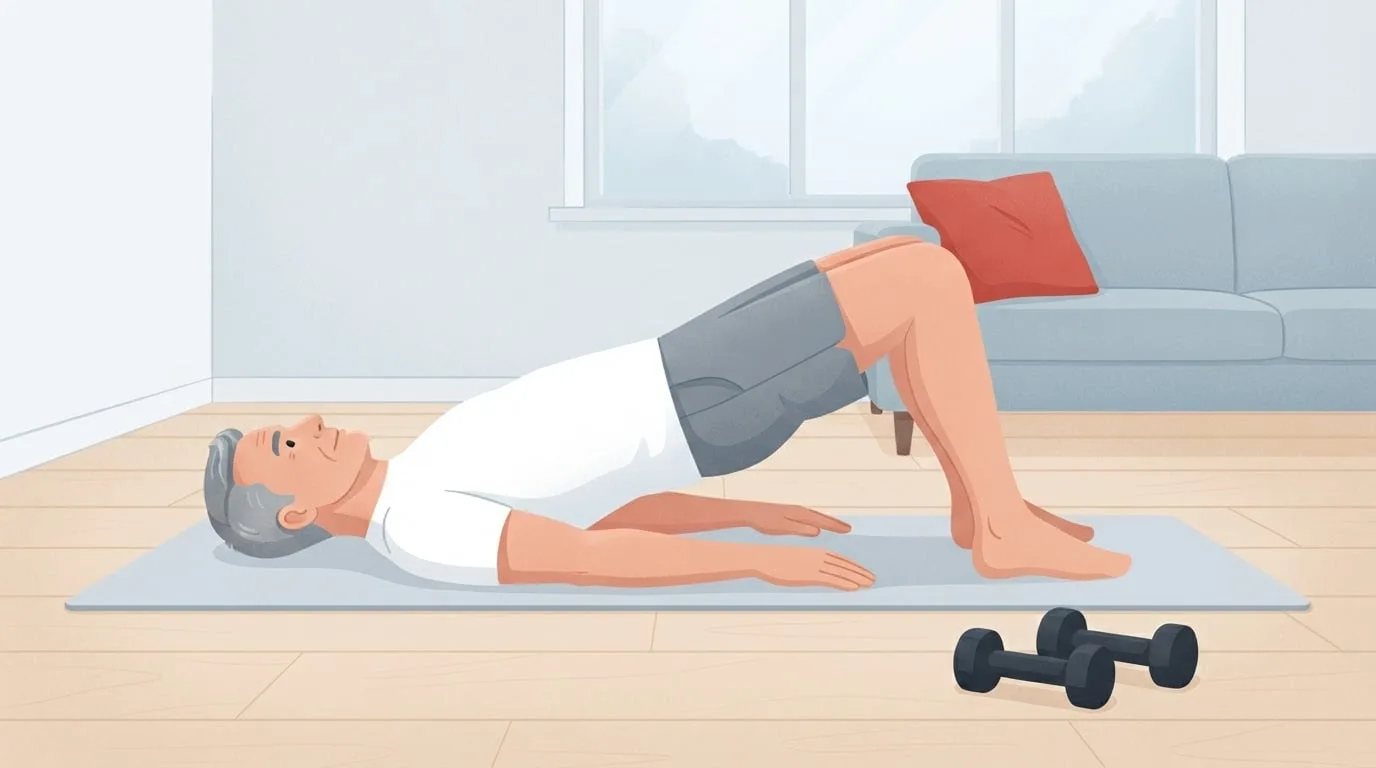
- Days 4 to 7: gentle bodyweight work only. Glute bridges, dead bugs, side planks, bird dogs and calf raises without weight.
- Week 2: one or two light dumbbell sessions. Goblet squats, dumbbell Romanian deadlifts, step-ups, one-arm rows and push-ups, two sets each, stopping three or four reps short of failure. Skip jumping and heavy lunges, which load the muscle as it lengthens and add to the soreness.
- Weeks 3 and 4: back to your normal routine, two sessions a week, with heavier dumbbells and single-leg work.
If you'd like guided sessions for that rebuild, our roundup of the best strength training apps compares the options. FitCraft is one of them: its dumbbell and bodyweight programs are led by a 3D AI coach who demonstrates each exercise and says your name during the workout, and it also has mobility and yoga sessions for the easy first week.
Warning Signs That Your Marathon Recovery Is Off Track
Most post-marathon fatigue is normal and fades with easy weeks. These symptoms are different and need attention:
- Dark, cola-colored urine or very little urine in the day or two after the race. This can signal severe muscle breakdown or kidney trouble. Get medical care the same day.
- Chest pain, fainting, a racing or irregular heartbeat, or unusual breathlessness. Seek emergency care. Don't explain it away as race fatigue.
- Confusion, a pounding headache, vomiting or swollen hands and feet in the hours after the race. These can be signs of low blood sodium and need urgent care.
- Pain in one spot on a bone, such as the shin, the top of the foot or the hip, that gets worse with each step or aches at night. That pattern can mean a stress fracture. Stop running and get it checked.
- A fever or a chest infection. Don't run until the fever has gone, and ease back in gently.
- Heavy legs, poor sleep, a resting heart rate that stays high and runs that keep feeling hard beyond about four weeks. That's a sign you need more easy weeks, and a doctor's visit if it doesn't lift.
Low mood is common too. Many runners feel flat after a marathon, sometimes called the post-marathon blues, because the goal that organized months of their life is suddenly over. It usually lifts once easy running starts and a new goal is on the calendar. If it lasts more than two weeks or gets in the way of daily life, talk to a doctor.
What This Means for You
Recovery is the last part of your marathon training block, not a break from it. Three or four patient weeks protect the next year of running, while a rushed comeback is how many runners pick up the injury that costs them a season.
The bigger risk for most people is the drift. A week off becomes a month, the routine that carried you through training slips away, and starting again feels harder every week. Give your recovery a shape instead: walks in week 1, easy runs in week 2, and two short strength sessions a week from week 2 onward. Those sessions can happen in your living room with a pair of dumbbells. As one FitCraft user, Matt, put it: "The real win is I actually want to work out now. That's never happened before."
Frequently Asked Questions
How many days should I rest after a marathon?
Take at least 3 to 7 days with no running, and a full week if it was your first marathon or the race went badly. Walking, easy cycling and swimming are fine. In a 1984 study, runners who rested for the week after a marathon got their leg work capacity back by day 3, while runners who jogged every day were still below normal on day 7.
What happens to your body in the 48 hours after a marathon?
Your leg muscles have small areas of damage and inflammation, so soreness usually peaks on day 1 or 2. Leg strength is down by about a fifth, stored carbohydrate in the muscles is mostly used up, and blood markers of muscle, heart and kidney stress are raised for a day or more. Most of these markers settle within a week in healthy runners.
When can I run again after a marathon?
Most runners can start with short easy runs of 20 to 30 minutes in the second week, once walking down stairs is pain-free. Keep every run at a conversational pace for the first two to three weeks, and save speed work and long runs until week 4 or later, when your legs feel springy again.
How long after a marathon can I lift weights?
Gentle bodyweight work such as glute bridges, dead bugs and side planks can start within the first week. Light dumbbell sessions fit in week 2, stopping each set well short of failure and skipping jumps and heavy lunges. Most runners are back to their normal strength routine by week 3 or 4.
How long does it take to recover from a half marathon?
Recovery from a half marathon usually takes about 1 to 2 weeks. Most runners take 2 to 4 days of no running or very easy running, then run easily for the rest of the first week and return to workouts in the second week. A hard race effort or a first half can take a little longer.
Why do I feel depressed after a marathon?
Many runners feel flat or low in the weeks after a marathon. Months of training gave each day a purpose, and the race is suddenly over while your body is tired and your routine is gone. It usually lifts as you start easy running and pick a next goal. If low mood lasts more than two weeks or gets in the way of daily life, talk to a doctor.
Is it normal to still feel tired weeks after a marathon?
Some heaviness in the legs is normal for 2 to 3 weeks, because muscle repair continues well after the soreness has gone. Tiredness that lasts beyond about 4 weeks, poor sleep, a resting heart rate that stays higher than usual, or runs that keep feeling hard are signs to keep training easy for longer and to see a doctor if they persist.
Will I lose fitness while I recover from a marathon?
Very little over 2 to 3 easy weeks. A 2021 review found that endurance can be kept for up to 15 weeks on as little as two sessions a week, as long as some effort stays hard. Your first workout back may feel rusty, but the fitness from months of training doesn't disappear in a recovery block.