
You signed up. The date is sitting in your calendar, the confirmation email is in your inbox, and 13.1 miles looks like a number from someone else's life. Right now three miles is a decent day. The gap between those two numbers is where most people start googling at eleven at night.
The fear underneath it is rarely the distance itself. It's turning up at the start line underprepared, or worse, not turning up at all because something in your knee went sideways in week seven and the whole project quietly evaporated. That's the outcome worth designing against.
Here's the thing about first half marathons. They don't usually fail at mile 12. They fail in week five or week eight, at the point where enthusiasm outruns tissue. The distance isn't the hard part. The rate of change is.
What a Half Marathon Actually Asks of You
Thirteen point one miles takes most first-timers somewhere between 1 hour 50 and 2 hours 45. That's a long time to be upright and moving, which means the thing you're really training is durability, not speed. Your lungs are almost never the limiter on race day. Your feet, calves, shins and patellar tendons are, along with how much fuel you have left at mile 10.
The honest prerequisite for this plan is being able to run about three miles, or 30 minutes, continuously and comfortably. Not fast. Not without being tired at the end. Just continuously. If you're not there yet, that's a two-month problem rather than a dealbreaker: work through our 8-week beginner 5K training plan first, then come back to this page with a base under you.
That prerequisite isn't gatekeeping. It's injury math. A 2015 systematic review and meta-analysis by Videbaek and colleagues in Sports Medicine pooled prospective data and found novice runners sustained 17.8 running-related injuries per 1000 hours of running (95% CI 16.7 to 19.1), against 7.7 per 1000 hours (95% CI 6.9 to 8.7) in experienced recreational runners. Starting a half marathon build with no base means spending your highest-risk hours on your highest-mileage weeks. Do the base first and the same 12 weeks cost you far less.
The 12-Week Half Marathon Training Plan
Four runs a week, on non-consecutive days where you can manage it. Distances are in miles, and everything except the quality session runs at easy conversational pace. Weeks 4, 8 and 11 are deliberately smaller.
| Week | Easy run | Quality session | Easy run | Long run | Week total |
|---|---|---|---|---|---|
| 1 | 3 mi | 3 mi with 6 x 20s strides | 3 mi | 4 mi | 13 mi |
| 2 | 3 mi | 3.5 mi with 2 x 5 min tempo | 3 mi | 5 mi | 14.5 mi |
| 3 | 3.5 mi | 4 mi with 3 x 5 min tempo | 3 mi | 6 mi | 16.5 mi |
| 4 (cutback) | 3 mi | 3 mi easy with strides | 3 mi | 4 mi | 13 mi |
| 5 | 4 mi | 4 mi with 15 min continuous tempo | 3 mi | 7 mi | 18 mi |
| 6 | 4 mi | 4 mi with 6 x 60s hills or 18 min tempo | 3.5 mi | 8 mi | 19.5 mi |
| 7 | 4 mi | 4.5 mi with 20 min continuous tempo | 4 mi | 9 mi | 21.5 mi |
| 8 (cutback) | 3 mi | 4 mi easy with strides | 3 mi | 6 mi | 16 mi |
| 9 | 4 mi | 5 mi with 2 x 12 min tempo | 4 mi | 10 mi | 23 mi |
| 10 | 4 mi | 5 mi with 25 min continuous tempo | 4 mi | 11 mi | 24 mi |
| 11 (taper) | 4 mi | 4 mi with 15 min tempo | 3 mi | 8 mi | 19 mi |
| 12 (race week) | 3 mi | 3 mi with 4 x 20s strides | 2 mi easy | Race: 13.1 mi | 21.1 mi |
Running three days a week instead of four? Drop the second easy run and keep everything else. You'll lose a little aerobic volume and gain a rest day, which for a lot of people over 40 or with a demanding job is the better trade. Cross-train on one of the freed-up days with cycling, rowing or an elliptical if you want the aerobic time without the impact.
Strides are 20-second accelerations to roughly the pace you could hold for a mile, with a full walk back. They aren't a workout. They're a reminder to your legs that turnover exists.
Tempo means comfortably hard: about 7 or 8 out of 10, roughly the pace you could race for an hour, four or five words at a time rather than a full sentence. Our tempo run guide walks through three field methods for finding that pace without a lab. In week 6 you can swap the tempo for short hill efforts, which build the same force with less impact per stride.
How the Long Run Should Progress
The long run climbs 4, 5, 6, back to 4, then 7, 8, 9, back to 6, then 10, 11, back to 8, then the race. That shape is deliberate. It rises for three weeks, drops for one, and never adds more than about a mile at a time.
Three rules make it work.
- Run it slow. Sixty to 120 seconds per mile slower than goal race pace, at an effort where you can hold a conversation the whole way. The long run trains time on your feet, fat oxidation and connective tissue tolerance. None of that needs speed, and adding speed costs you the next four days.
- Cap it by time, not distance. If a long run is taking you past about 2 hours 30, stop at 2:30 regardless of the number in the table. Time on feet is both the stimulus and the injury risk. A slower runner covering 11 miles is doing considerably more work than a faster one covering 11 miles.
- Walk breaks are allowed and they aren't a downgrade. Taking 60 seconds of walking every mile keeps heart rate lower, spreads the load and gets most beginners further with less soreness. Use them freely in weeks 1 to 8 and taper them out later if you want to.
The peak long run is 11 miles, not 13.1, and that isn't a compromise. Taper freshness, race-day adrenaline, other runners around you and the simple fact that you've never been this rested reliably cover the last two miles. Running the full distance in training adds fatigue and injury exposure without adding fitness you'll use.
Why Mileage Jumps End More Half Marathon Builds Than Anything Else
This is the most important section on this page, and it's the one beginners skip.
A 2014 prospective study by Nielsen and colleagues in the Journal of Orthopaedic and Sports Physical Therapy followed 874 novice runners for a year using GPS-verified training data. Runners who increased weekly distance by more than 30 percent over a two-week period developed more distance-related injuries than those who progressed by less than 10 percent. The injuries were the boring predictable ones: patellofemoral pain, iliotibial band syndrome, medial tibial stress syndrome, patellar tendinopathy. Nothing exotic. Just tissue asked to adapt faster than tissue adapts.
Your heart and lungs respond to training in weeks. Tendon, bone and fascia respond over months. A half marathon plan that satisfies your cardiovascular system will outrun your connective tissue every time, and the connective tissue is what ends the build.
Two practical rules fall out of that.
Measure the jump peak to peak. Week 5 in the table above is 18 miles against week 4's 13, which looks like a 38 percent jump and isn't one. Week 4 is a deliberate cutback. The comparison that matters is week 5 against week 3, the previous peak: 18 against 16.5, about 9 percent. Every rise in this plan is single digits measured that way.
Hold when something hurts rather than pushing through. Repeating a week is free. A stress reaction in your tibia costs six weeks and the race. If something hurts on two consecutive runs, hurts worse as the run goes on, or changes the way you move, repeat the previous week at the same volume and see what happens. Almost nothing in this plan is improved by one more mile.
Find out what's really holding you back
FitCraft, our mobile fitness app, pairs you with an AI coach who builds you a personalized plan around your goals, schedule, and fitness level. Every FitCraft program is designed by Domenic Angelino, MPH (Brown University) and NSCA-CSCS, with research published in the Journal of Strength and Conditioning Research and Medicine & Science in Sports & Exercise.
Take the Free Assessment Free • 2 minutes • No credit cardPacing by Goal Time
Pick a goal time, then work backwards. A first half marathon for most people lands between 2:00 and 2:45, and the honest advice is to pick the slower end and beat it.
| Goal finish | Race pace per mile | Race pace per km | Easy and long run pace per mile |
|---|---|---|---|
| 2:45 | 12:36 | 7:49 | 14:00 to 14:40 |
| 2:30 | 11:27 | 7:07 | 12:55 to 13:30 |
| 2:15 | 10:18 | 6:24 | 11:50 to 12:20 |
| 2:00 | 9:10 | 5:41 | 10:40 to 11:10 |
| 1:45 | 8:01 | 4:59 | 9:30 to 10:00 |
| 1:30 | 6:52 | 4:16 | 8:20 to 8:50 |
Two things to do with that table. Run your easy and long runs at the right-hand column, not the second one, because the gap between those two columns is the whole plan. And use the second column only on race day and inside tempo work, and even then start below it.
The case for starting conservatively comes from the fastest people in the world. Hanley (2015) analysed split times for 491 men and 347 women across six IAAF World Half Marathon Championships and found the best athletes largely held their speed between 5 km and 15 km, while slower athletes began losing speed from 5 km onwards. If elite fields blow up by going out too hard, a first-timer surrounded by adrenaline and a start-line crowd isn't going to beat that tendency by feel. Run the first two miles 15 to 20 seconds per mile slower than goal pace and spend whatever's left after mile 10.
Fueling Runs Over 75 Minutes
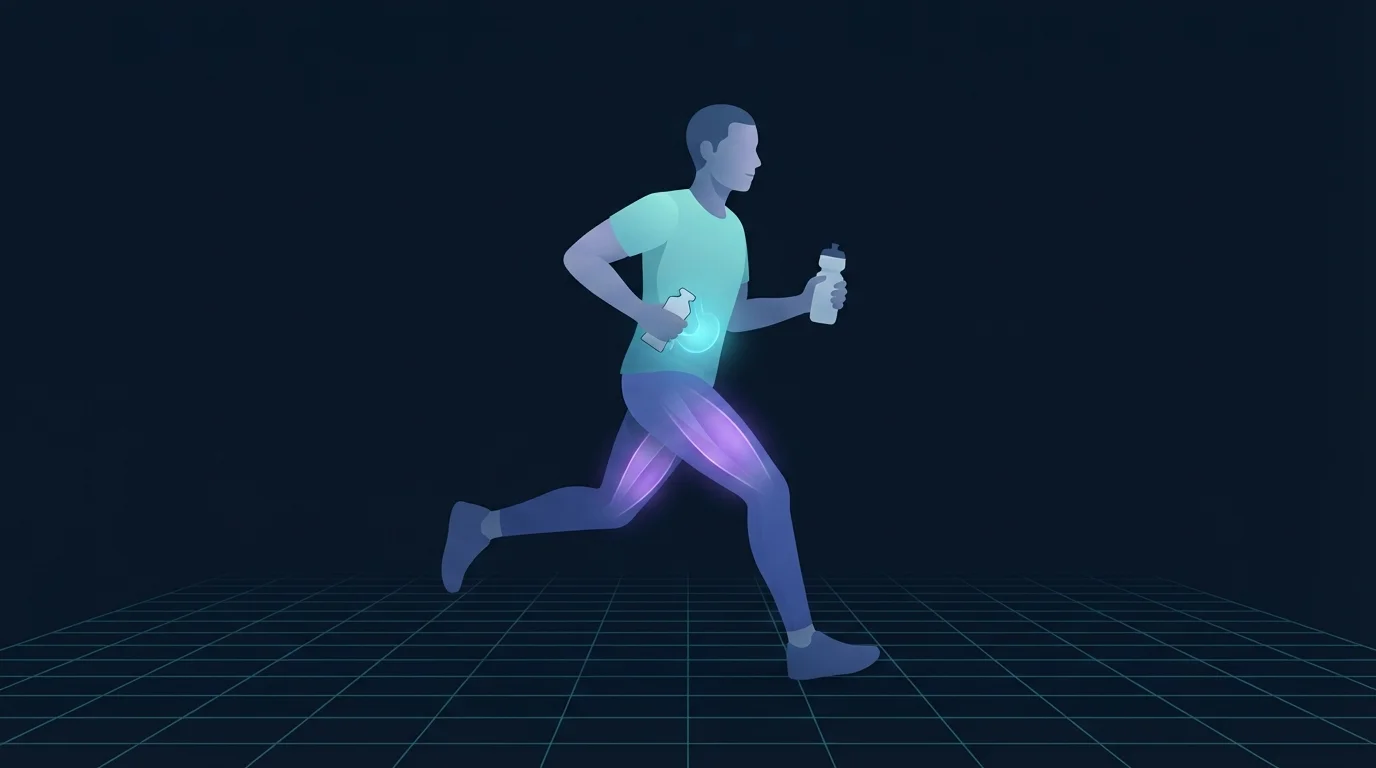
Below about 75 minutes, water and whatever you ate earlier is genuinely enough. Past 75 minutes, muscle glycogen starts running down faster than it can be spared, and the wall half marathoners hit around mile 10 is usually a fueling failure rather than a fitness one.
Jeukendrup's 2014 review in Sports Medicine set out duration-based carbohydrate guidance that has held up well: around 30 grams an hour for efforts of roughly one to two hours, and around 60 grams an hour for efforts of two to three hours, since a single carbohydrate source oxidises at up to about 60 grams an hour. A half marathon sits squarely in that window for nearly everyone.
What that looks like in practice:
- Every long run of 75 minutes or more is a fueling rehearsal. Same gel, same chew, same drink, same timing you plan to use on race day. Your gut adapts to absorbing carbohydrate during exercise the way your legs adapt to distance, and it takes weeks.
- Take it on a schedule, not by feel. Something at 45 minutes, then every 30 to 40 minutes after that. By the time you feel empty you're 20 minutes behind.
- Take it with water rather than sports drink unless you've tested that combination in training. Concentrated carbohydrate on top of concentrated carbohydrate is how a stomach rebels at mile 9.
- Race morning, eat 2 to 3 hours before the gun. Mostly carbohydrate, low fibre, low fat, and something you've eaten before a long run at least three times.
- Drink to thirst. Overdrinking across a two-hour race is a real risk and a genuinely dangerous one. Thirst regulates this distance well.
Strength Work Twice a Week, With Dumbbells and Bodyweight
Runners skip this and then wonder why their hips ache in week nine. Two sessions a week, 20 to 30 minutes each, is the highest-return non-running thing in the plan.
A 2018 systematic review by Blagrove, Howatson and Hayes in Sports Medicine found that strength training improved running economy, time-trial performance and maximal sprint speed in middle- and long-distance runners of all abilities, with two to three sessions a week as the effective dose. VO2 max and body composition were unaffected, which is exactly the point. Strength work makes each stride cost less oxygen without touching your aerobic ceiling.
The injury side is even more compelling. A meta-analysis of randomised controlled trials by Lauersen, Bertelsen and Andersen (2014) in the British Journal of Sports Medicine, covering 26,610 individuals and 3,464 injuries, reported that strength training reduced sports injuries to less than a third and nearly halved overuse injuries. Stretching was the one intervention that showed no consistent benefit.
Here's the session. Everything uses one or two dumbbells or nothing at all, and you can do it in a bedroom.
| Exercise | Sets and reps | Why it's here |
|---|---|---|
| Goblet squat | 3 x 8-10 | Loads quads and glutes through range, builds hill tolerance |
| Dumbbell Romanian deadlift | 3 x 8-10 | Hamstrings and glutes, the pair that protects the knee |
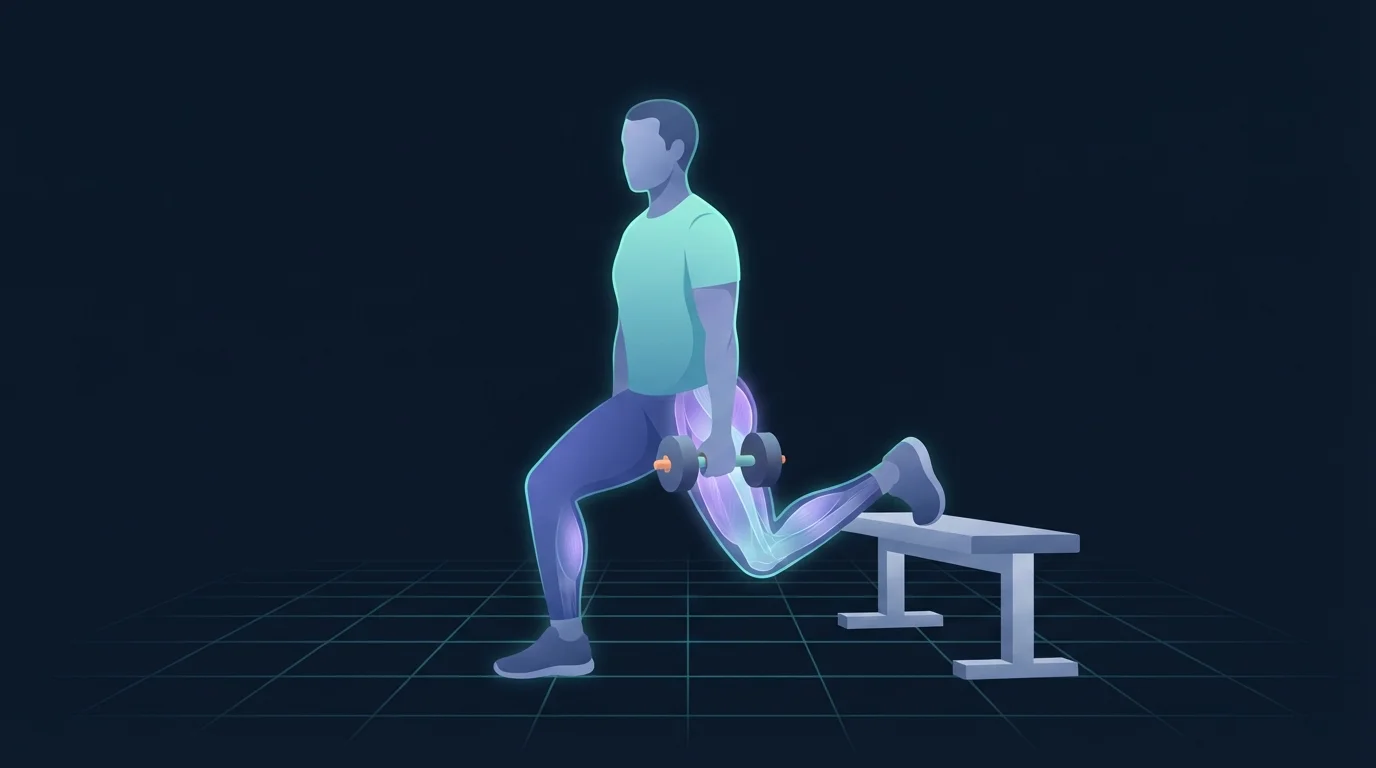
| Rear-foot-elevated split squat | 2 x 8 each side | Running is a single-leg sport, so train it that way |
| Single-leg calf raise | 3 x 12-15 each side | The Achilles and soleus take the biggest load per stride |
| Single-leg glute bridge | 2 x 10 each side | Hip stability, which is where IT band pain usually starts |
| Side plank | 2 x 30-40s each side | Stops the pelvis dropping when you tire late in a long run |
| Dead bug | 2 x 8 each side | Trunk control without loading the spine before a long run |
Schedule both sessions on easy-run days or straight after the quality session, never the day before a long run. Stop each set two or three reps short of failure. You're training to run, and sore legs on Saturday morning defeat the point.
The Taper: The Last Two Weeks
The taper is where the fitness you built turns into performance you can actually use. It's also where people panic and ruin it.
A 2023 systematic review and meta-analysis by Wang and colleagues in PLOS ONE found that in endurance athletes the largest performance effect came from tapers of 8 to 14 days with a 41 to 60 percent reduction in training volume. Cutting less than 40 percent or more than 60 percent produced smaller effects, and tapering improved time-trial and time-to-exhaustion performance without changing VO2 max or movement economy. You aren't getting fitter in these two weeks. You're getting rested enough to spend what you already have.
Three rules for the taper.
- Cut volume, keep intensity. The quality session stays in, just shorter. Dropping hard running entirely leaves your legs feeling flat and unfamiliar on race day.
- Keep the frequency. Same number of runs, each one shorter. Going from four runs to two in race week is a bigger change than your body wants that close to the start.
- Expect to feel awful. Phantom aches, heavy legs, broken sleep and total conviction that you've lost all your fitness are so common in taper weeks that runners have a name for them. They mean nothing. Do not add a panic long run in week 12.
Race Day Rules
- Nothing new. Not the shoes, not the socks, not the shirt, not the breakfast, not the gel, not the caffeine. Race day is for repeating what already worked.
- Start 15 to 20 seconds per mile slower than goal pace for the first two miles. You'll feel held back. That's the feeling of doing it right.
- Fuel on the clock. First gel around 45 minutes, then every 30 to 40 minutes. Set a watch alert if you know you'll forget.
- Dress for 10 to 20 degrees Fahrenheit warmer than the thermometer says. You'll be cold at the start and correct by mile two.
- Walk the aid stations if it keeps your pace even. Ten seconds of walking to actually drink beats 400 metres of choking on a paper cup.
- Know the course profile. One look at the elevation chart tells you where to spend and where to sit still. Hills in the last 5 km change how you run the first 5.
- Run the second half on what you saved. Feeling strong at mile 10 is your green light. Mile 3 is not.
What to Expect, Week by Week
Weeks 1 to 3. The running feels manageable and the soreness sits mostly in your calves and the arches of your feet. That's normal and it settles. The long run is the only session that feels like a commitment.
Weeks 4 to 7. Your Saturday reorganises itself around the long run. Around week 6 or 7 most people hit a stretch where everything feels heavy at once, usually because cumulative load has finally caught up. The cutback in week 8 exists for exactly this. If you're fading inside the run itself, our guide on how to breathe while running covers the mechanics that cost beginners the most energy.
Weeks 8 to 10. Double digits happen, and the first 10-miler changes how the race feels in your head. This is also the window where a small niggle turns into a real injury if you ignore it. Peak weeks are where discipline about easy pace matters most.
Weeks 11 to 12. Everything gets smaller and you feel worse. See the taper section. Trust the plan.
The Bottom Line
A half marathon training plan is four sessions a week held together by two decisions: run the easy runs genuinely easy, and raise the long run slowly enough that your tendons keep up with your enthusiasm. Everything else on this page, the pacing table, the fueling, the strength work, the taper, exists to protect those two decisions. The aerobic side of a half marathon is well within reach for most people in 12 weeks. The structural side is what needs the patience.
You don't need to be a runner to finish a half marathon. You need 12 weeks of showing up, a long run that climbs one mile at a time, and the discipline to be slower than you want to be on Tuesday so you can be faster than you expected on race day. If building a week that holds together is the part you keep getting wrong, a personalized training program builds the schedule around your week instead of the other way round. And if general endurance rather than a specific race is what you're after, how to increase stamina covers the same physiology without the start line.
Frequently Asked Questions
How long does it take to train for a half marathon?
Twelve weeks is the standard build for a first half marathon if you can already run about three miles without stopping. If you're starting from nothing, add eight to ten weeks of run-walk work first, which puts the whole project at about five months. Shorter builds exist, but they compress the long run progression into fewer weeks, and that compression is where beginners get hurt.
Do I need to run 13 miles before race day?
No. A peak long run of 10 to 11 miles is enough for a first half marathon. The taper, a rested body and race-day conditions reliably cover the last two miles, and running the full distance in training adds fatigue and injury risk without adding fitness. Almost no beginner plan asks you to cover 13.1 before the start line.
How many days a week should I run for a half marathon?
Four runs a week is the sweet spot for a first half: two easy runs, one tempo or interval session, and one long run. Three runs a week works if your schedule is tight, and you keep the long run and the quality session and drop one easy run. Five or more runs a week raises weekly volume faster than a beginner's tendons adapt.
What should I eat during a half marathon?
Anything past about 75 minutes needs carbohydrate, roughly 30 to 60 grams an hour from gels, chews, sports drink or real food, taken on a schedule rather than when you feel empty. Jeukendrup's 2014 review in Sports Medicine puts about 30 grams an hour on efforts of one to two hours and about 60 grams an hour on efforts of two to three hours. Practise the exact product on your long runs, because race day is the worst possible time to learn how your stomach handles it.
How fast should my long runs be in a half marathon plan?
Roughly 60 to 120 seconds per mile slower than your goal race pace, slow enough that you could hold a conversation the whole way. The long run trains time on your feet, fat oxidation and connective tissue tolerance, and none of those need speed. Running long runs near race pace is the most common reason a build falls apart in week eight.
How much should weekly mileage increase in a half marathon plan?
About 10 percent from one peak week to the next, with a cutback week every fourth week where volume drops by roughly a quarter. A 2014 study of 874 novice runners found that raising weekly distance by more than 30 percent over a two-week period was associated with more distance-related injuries such as runner's knee, IT band syndrome and shin splints. Measure the jump peak to peak, not against the easy week you just took.