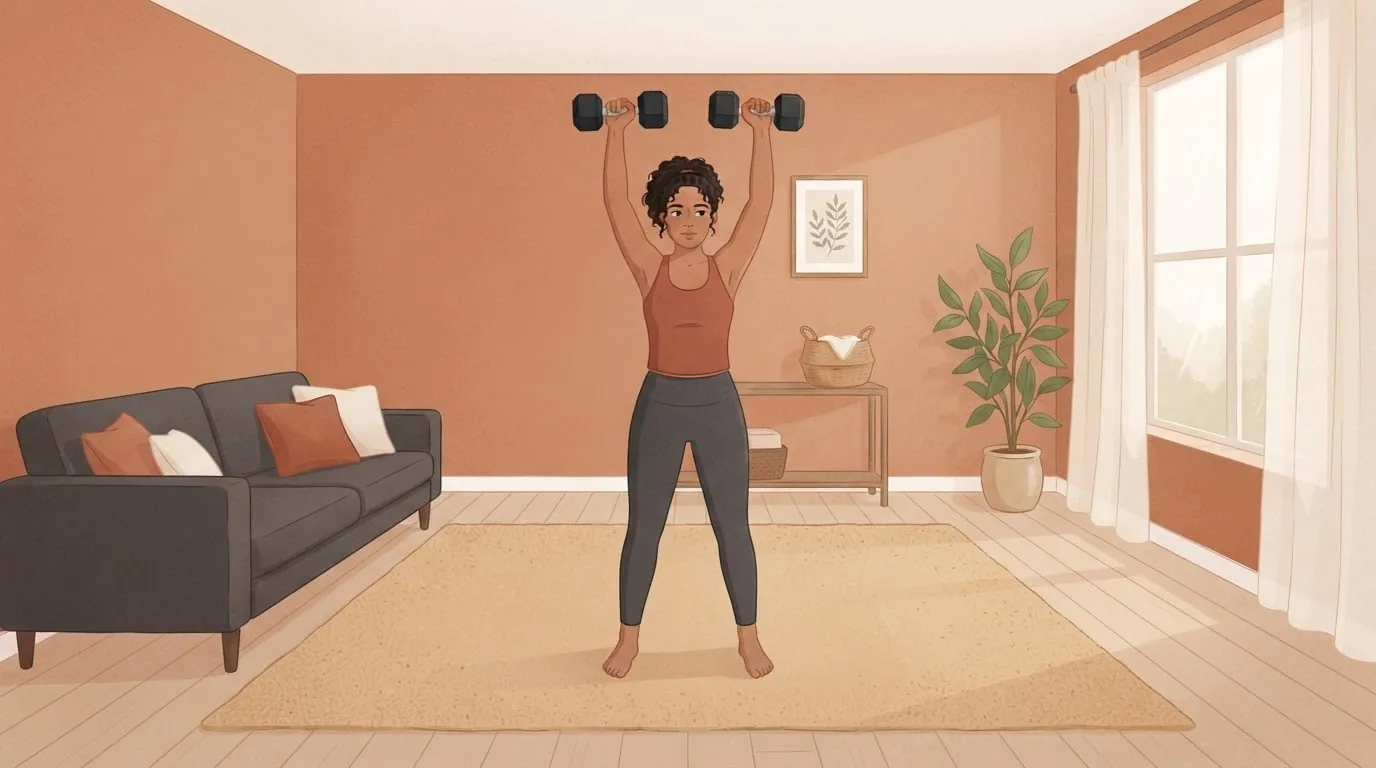
A month into a new program, most people step on the scale looking for proof. Maybe it's up three pounds, maybe it hasn't moved, and neither number tells you much about muscle. That's a frustrating place to be after a month of showing up.
Real muscle gain is slower than transformation photos suggest, and it's also more predictable. Researchers have scanned thousands of people before and after training programs, so there are solid numbers for what a month is worth to a beginner, an experienced lifter, a woman, a man and an adult over 50.
This page turns those trials into per-month figures, explains why your weight and your muscle drift apart, answers how long it takes to build muscle you can see, and lays out a four-week dumbbell and bodyweight plan to make the month count.
How Much Muscle Can You Gain in a Month Naturally?
Drug-free training trials put a typical beginner's gain at around half a kilogram of lean mass a month. The table converts each study's result into a per-month figure by dividing the gain by the length of the training period.
| Who | Study | Measured gain | Per month |
|---|---|---|---|
| Untrained young men | Benito 2020: 111 studies, about 10 weeks on average | 1.5 kg fat-free mass | About 0.6 kg (1.4 lb) |
| Resistance-trained men | Benito 2020: trained subgroup | 1.0 kg fat-free mass | About 0.4 kg (0.9 lb) |
| Men with about 4 years of training | Morton 2016: 12 weeks, 4 sessions a week | 1.2 kg lean mass | About 0.4 kg (1 lb) |
| Untrained young women | Josse 2010: 12 weeks, 5 sessions a week | 1.1 to 1.9 kg lean mass | About 0.4 to 0.7 kg (0.9 to 1.5 lb) |
| Adults aged 50 to 83 | Peterson 2011: 49 studies, about 20 weeks on average | 1.1 kg lean mass | About 0.25 kg (0.5 lb) |
The biggest pooled dataset comes from Benito and colleagues (2020), who combined 111 studies and 1,927 men with an average age of about 24. Untrained men gained 1.54 kg of fat-free mass over programs that lasted about 10 weeks on average, and trained men gained 0.98 kg. The per-month figure for trained men assumes their programs ran a similar length.
Two caveats apply to every row. Lean mass on a scan is everything that isn't fat or bone, including water and stored glycogen. So part of each gain isn't muscle protein. In Benito's analysis, the studies that estimated skeletal muscle mass itself found a smaller average gain, 1.1 kg, than the studies that measured fat-free mass, 1.6 kg. And these are averages: individual responses to the same program vary enormously, as our research review on how long it takes to build muscle shows.
Beginner vs experienced lifter
The longer you've trained, the less each month tends to add. Trained men in Benito's analysis gained less fat-free mass on average than untrained men, 0.98 kg against 1.54 kg, though the difference wasn't statistically significant. Men with about four years of lifting in a trial by Morton and colleagues (2016) gained 1.2 kg of lean mass in 12 weeks, but it took four full-body sessions a week with every set taken to failure. That still works out to about 0.4 kg a month. The faster early rate is what people call newbie gains.
How Much Muscle Can a Man or a Woman Gain in a Month?
Men and women add a similar percentage to their muscle when they follow the same program. Roberts, Nuckols and Krieger (2020) pooled 10 hypertrophy studies that trained both sexes together and found no significant difference in relative growth, while women made larger relative gains in upper-body strength.
In kilograms, men usually gain more because they start with more muscle. For untrained men, the trials above work out to about 0.6 kg (1.4 lb) a month. Young women in a trial by Josse and colleagues (2010) trained five days a week for 12 weeks and gained 1.1 to 1.9 kg of lean mass, about 0.4 to 0.7 kg (0.9 to 1.5 lb) a month, with the larger gain in the group that drank fat-free milk after training. So a realistic month for a woman starting out is close to a pound of muscle, and a little more for a man.
How Much Muscle Can You Gain in a Month After 50?
You'll gain less than you would at 25, but still a real amount. Across 49 studies and 1,328 people aged 50 to 83, Peterson, Sen and Gordon (2011) found that resistance training added 1.1 kg of lean mass on average over programs lasting about 20 weeks. That's roughly a quarter of a kilogram, or half a pound, a month. Each extra year of age predicted a slightly smaller gain, and programs with more sets predicted a bigger one.
Part of the gap is anabolic resistance: each workout and each protein-rich meal does less for older muscle, which our article on how muscles grow explains with the studies. The answer at 60 is the same as at 30, with a little more of each ingredient: hard sets, more weekly sets as you adapt, protein at every meal and a few extra months of patience.
Knowing what to do is the easy part.
FitCraft, our mobile fitness app, pairs you with an AI coach who builds you a personalized plan around your goals, schedule, and fitness level. Every FitCraft program is designed by Domenic Angelino, MPH (Brown University) and NSCA-CSCS, with research published in the Journal of Strength and Conditioning Research and Medicine & Science in Sports & Exercise.
Take the Free Assessment Free • 2 minutes • No credit cardWhat Is the Difference Between Fat Loss and Muscle Gain?
Fat loss and muscle gain are two separate changes, and your bathroom scale adds them together with water, food and glycogen. That's why a good month of training can barely move your scale weight, or move it the wrong way, while your lean mass climbs.
The women in the Josse trial show how far apart the two can drift. The group that gained the most lean mass, 1.9 kg, also lost 1.6 kg of fat, so their weight barely moved, up just 0.5 kg in 12 weeks. The comparison group gained less lean mass, 1.1 kg, but put on more weight, 0.86 kg.
Water and glycogen move the scale too
Each gram of glycogen stored in muscle comes with at least 3 grams of water, a ratio Fernández-Elías and colleagues (2015) confirmed in muscle biopsies. Resistance training itself makes muscles store more of it: five months of heavy training raised resting glycogen in the triceps by 66 percent in a study by MacDougall and colleagues (1977). So part of an early jump in weight, and part of the lean mass a scan reports, is glycogen and water rather than new muscle protein. It works in reverse as well, which is why cutting carbohydrates hard produces fast early weight loss that isn't fat (Kreitzman and colleagues, 1992).
Eating more doesn't speed it up much
A bigger calorie surplus mostly adds fat. Helms and colleagues (2023) put trained lifters on maintenance calories, a 5 percent surplus or a 15 percent surplus for eight weeks, and faster weight gain went with more skinfold fat rather than more muscle. A review by Iraki and colleagues (2019) suggests gaining about 0.25 to 0.5 percent of body weight a week for newer lifters, and less for advanced ones. Our guide to a lean bulk covers how to set that surplus.
How Long Does It Take to See Muscle Growth?
Most people start to see muscle growth after two to three months of steady training, and friends tend to notice later than you do. One month of beginner gains, around half a kilogram spread across every muscle you train, adds only a little to any single one, less than the everyday swings in water and food you carry. Strength comes first, often within the first couple of weeks. For the week-by-week research timeline, including why early scans overstate growth, see our review of how long it takes to build muscle.
How to Measure a Month of Muscle Gain
Because a month's gain is small, measure it with tools that can pick up small changes, and keep the conditions identical each time.
- Keep a training log. Note the weight, the reps and roughly how many reps you had left on each set. More reps with the same dumbbells at the same effort is the earliest reliable sign that a program is working, though early strength also comes from your nervous system learning the moves.
- Take tape measurements every four weeks. Measure your upper arm, chest, thigh and waist at the same spot and the same time of day. Arms and thighs creeping up while your waist holds steady points to muscle rather than fat.
- Take photos once a month. Use the same light, distance and pose, and compare the first month with the third rather than one week with the next.
- Average your weigh-ins. Weigh yourself on a few mornings each week and compare weekly averages. In daily weight records from 80 adults, Orsama and colleagues (2014) found a regular pattern of weight rising at weekends and falling through the week.
- Ignore the smart scale's muscle reading. When Frija-Masson and colleagues (2021) checked three bathroom smart scales against DXA scans in hospital patients, body weight was accurate to within about 0.3 kg, but the median errors for muscle mass ran from 2.2 to 4.4 kg, several times a month's real gain.
- Standardize any DXA scan. In a study by Nana and colleagues (2012), eating breakfast or going about a normal day before a scan shifted lean mass readings substantially. Book scans for the morning, fasted and rested, and compare scans two or three months apart.
How to Build Muscle Faster in Your First Month
You can't make muscle grow several times faster than the trials above, but you can make sure your month lands near the top of their range. The trials with the biggest gains had people training hard several times a week and eating plenty of protein. This four-week plan does the same with dumbbells and your body weight.
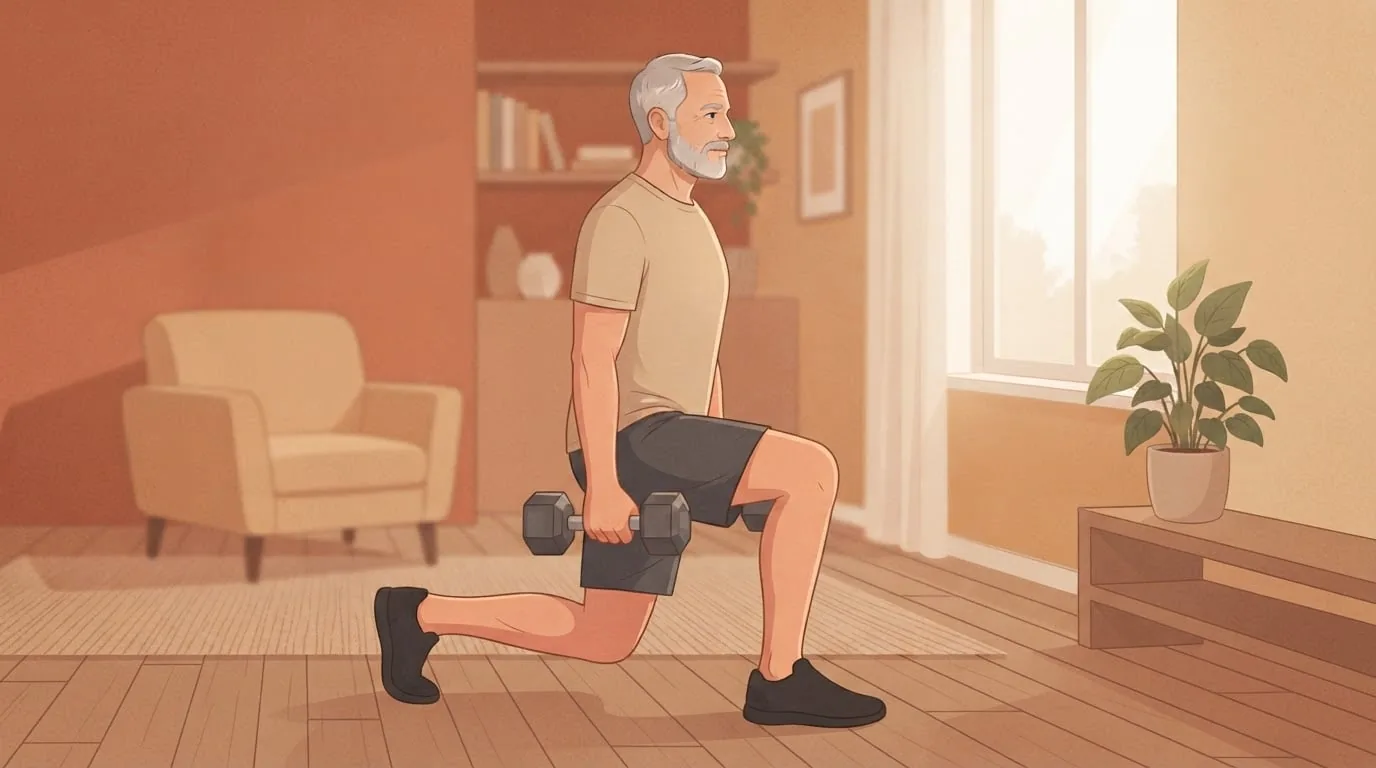
Train three days a week on non-consecutive days, with the same six exercises each session: goblet squat, one-arm dumbbell row, push-up (on your knees or with your hands raised if needed), dumbbell Romanian deadlift, dumbbell shoulder press and reverse lunge. Pick dumbbells you can lift for 8 to 15 reps, or more reps if your dumbbells are light.
| Week | Sets per exercise | Reps left at the end of each set | What changes |
|---|---|---|---|
| Week 1 | 2 | 3 | Learn each movement and find your working weights. |
| Week 2 | 3 | 2 | Keep the same weights and add a set to each exercise. |
| Week 3 | 3 | 1 to 2 | Add a rep to each set, or slow the lowering to three seconds. |
| Week 4 | 3 | 1 to 2 | Move up a dumbbell size on any exercise where you reached the top of your rep range. |
From week 2, every major muscle gets at least 9 hard sets a week, spread over three sessions. Have some protein with each meal, eat enough in total, and protect your sleep. The habits that stall gains fastest, from missed weeks to short sleep and heavy drinking, are covered in our article on how muscles grow.
If you'd like a plan like this built and progressed for you, a dumbbell workout app takes care of it. FitCraft builds its strength workouts from dumbbell and bodyweight exercises. A 3D AI coach shows you each move and calls you by name as you train, the workouts adjust as you advance, and streaks and leaderboards give you a reason to keep the month going.
What This Means for You
Half a kilogram of muscle in a month doesn't sound like much, and in the mirror it isn't yet. But it's real tissue, and it stacks. After two or three months of it, your tape measurements and your clothes start to agree with the effort you've put in.
The month that matters most is often the one where nothing seems to change. That's when most people quit. Mike, 23, kept going for four months with FitCraft and ended up visibly stronger. His explanation was simple: "The streak system got me hooked. I didn't want to break my chain." Log your reps, measure once a month, and let the months add up.
Frequently Asked Questions
How long does it take to see muscle growth?
Most people can see muscle growth after about two to three months of consistent training, and other people usually notice it later than you do. A month of beginner gains, around half a kilogram spread over every muscle you train, is smaller than everyday swings in water weight, so the first month shows up in your training log before the mirror. FitCraft's research review on how long it takes to build muscle has the week-by-week timeline.
How fast does muscle grow?
In beginners, muscle grows at roughly 0.1 to 0.15 kg, or a quarter to a third of a pound, a week, based on lean mass gains in training trials. The rate is highest in the first months of training and slows as you gain experience and as you get older. Strength rises faster than size at the start, because your nervous system learns each movement quickly.
Can you gain 10 pounds of muscle in a month?
No, not naturally. Ten pounds is about 4.5 kg, roughly seven times the average month for untrained men in training trials, and even men given high doses of testosterone while lifting gained about 6 kg of fat-free mass over 10 weeks (Bhasin and colleagues, 1996). A 10-pound jump on the scale in a month is mostly water, glycogen, food and fat.
How much muscle can you gain in a year?
A beginner can expect a few kilograms of muscle in a first year of steady training, and less in each year after that. Most trials last weeks or months rather than a year, and the rate per month tends to fall with experience: in a meta-analysis of 111 studies, trained men gained less on average than untrained men (0.98 kg against 1.54 kg), though the difference wasn't statistically significant. Multiplying your first month by 12 will likely overestimate your first year.
Should I lift heavy to build muscle?
You don't have to. A meta-analysis of 21 studies found that light loads of 60 percent of max or less built about as much muscle as heavy loads when sets were taken to failure, while heavy loads built more maximal strength (Schoenfeld and colleagues, 2017). With dumbbells at home, pick a weight you can lift for about 8 to 30 reps and end each set within a rep or two of failure.