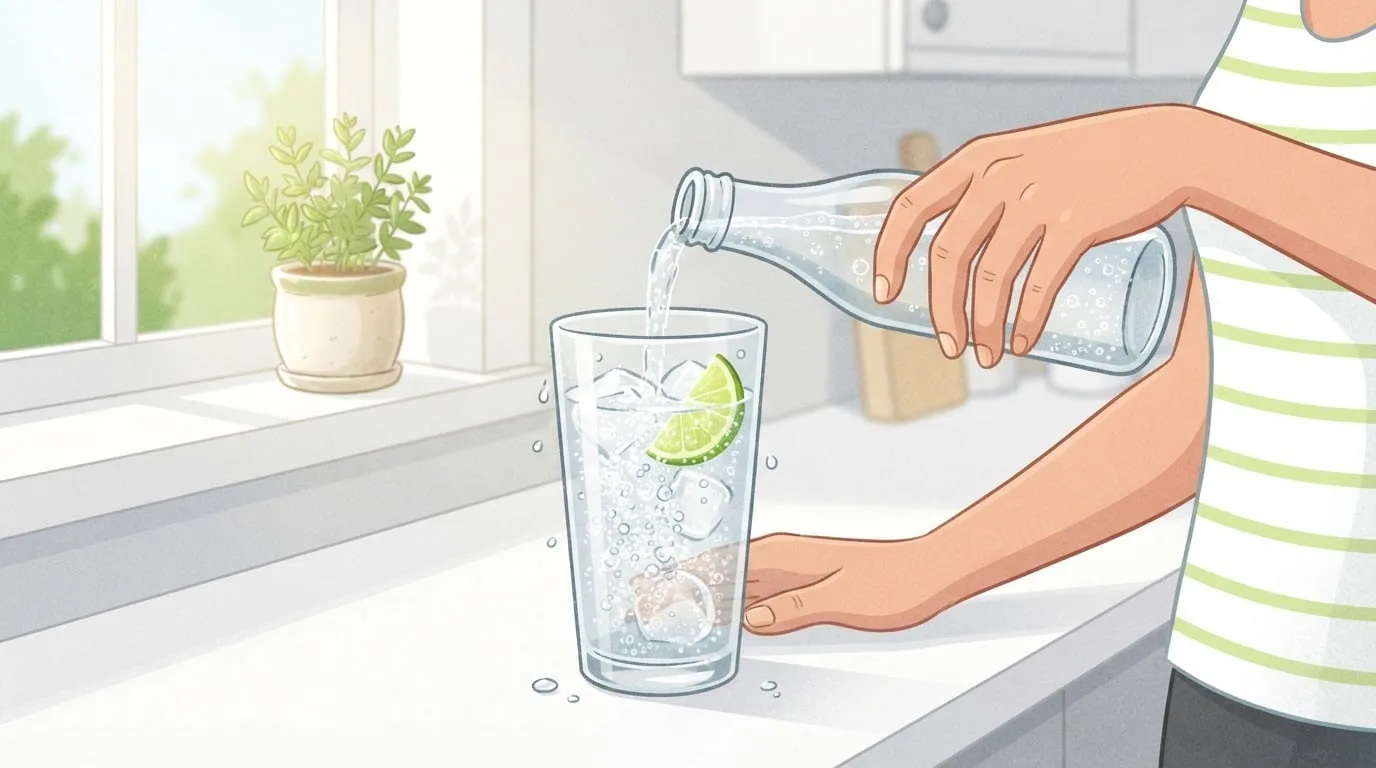
For a lot of people who quit soda, sparkling water became the replacement. The cans are everywhere and the flavors keep multiplying. Somewhere along the way you've probably also heard that the bubbles wear down your teeth, pull calcium out of your bones or bloat your stomach.
That's the frustrating part of trying to drink better. You make a good swap, and then someone tells you the replacement is bad too. It's hard to build a habit when every choice comes with a warning. Most of those warnings don't hold up once you read the studies, and the ones that do are easy to work around.
This page covers what counts as sparkling water, whether it hydrates as well as still water, the benefits of carbonated water, the enamel studies on plain and flavored versions, bloating and reflux, the cola and bones confusion, digestion, fullness and the sugar hiding in some flavored cans.
What Is Sparkling Water?
Sparkling water is water with carbon dioxide dissolved in it under pressure. Some of the gas forms carbonic acid, a weak acid that gives the drink its bite and makes it slightly more acidic than still water. The name covers several drinks that aren't quite the same:
- Seltzer. Plain water with carbon dioxide added and nothing else.
- Club soda. Carbonated water with mineral salts such as sodium bicarbonate added, so it carries some sodium. Check the sodium line if you're watching it.
- Sparkling mineral water. Under the FDA's bottled water standard (21 CFR 165.110), mineral water comes from a protected underground source and must contain at least 250 parts per million of dissolved solids, with no minerals added. Sparkling bottled water has to keep the same amount of carbon dioxide it had when it left the source. The standard doesn't cover drinks labeled seltzer, soda water, sparkling water or tonic water.
- Tonic water. Carbonated water with quinine and sugar. A 336-gram bottle has 29.6 grams of sugar in USDA FoodData Central, about 7 teaspoons, so it belongs with soft drinks.
- Flavored sparkling water. Usually seltzer with natural flavors and often citric acid. Unsweetened versions have no sugar or calories. Others add sugar, juice or non-sugar sweeteners.
- Homemade. A home soda maker carbonates your own tap water, which makes it seltzer. The flavor syrups are where sugar comes back in.
Is Sparkling Water as Hydrating as Still Water?
Yes. Carbonation doesn't change how well water hydrates you. The clearest test is the beverage hydration index study by Maughan and colleagues (2016). On separate days, 72 men drank a liter of one of 13 drinks over 30 minutes, still water included, and the researchers collected their urine for the next four hours. After still water the men passed an average of 1,337 grams. After sparkling water the output was statistically no different, so the fizzy version stayed in the body just as well. Only the two milks and an oral rehydration solution held on to more.
So every glass of sparkling water counts toward your daily fluid. Coconut water hydrates about as well too, with calories and potassium added, as our page on whether coconut water is good for you explains.
Drinking sparkling water during and after exercise
The bubbles do matter in one situation: when you need to drink a lot, fast. In a study by Passe and colleagues (1997), 52 adults exercised for 30 minutes and then drank a 6 percent carbohydrate sports drink carbonated to one of four levels. The two fizziest versions burned the throat more, felt less thirst-quenching, and people drank less of them. That study tested a sports drink rather than plain water, but the lesson carries over. After a long or very sweaty session, still water is easier to get down in quantity. For a normal workout, drink whichever you'll actually finish.
Benefits of Carbonated Water
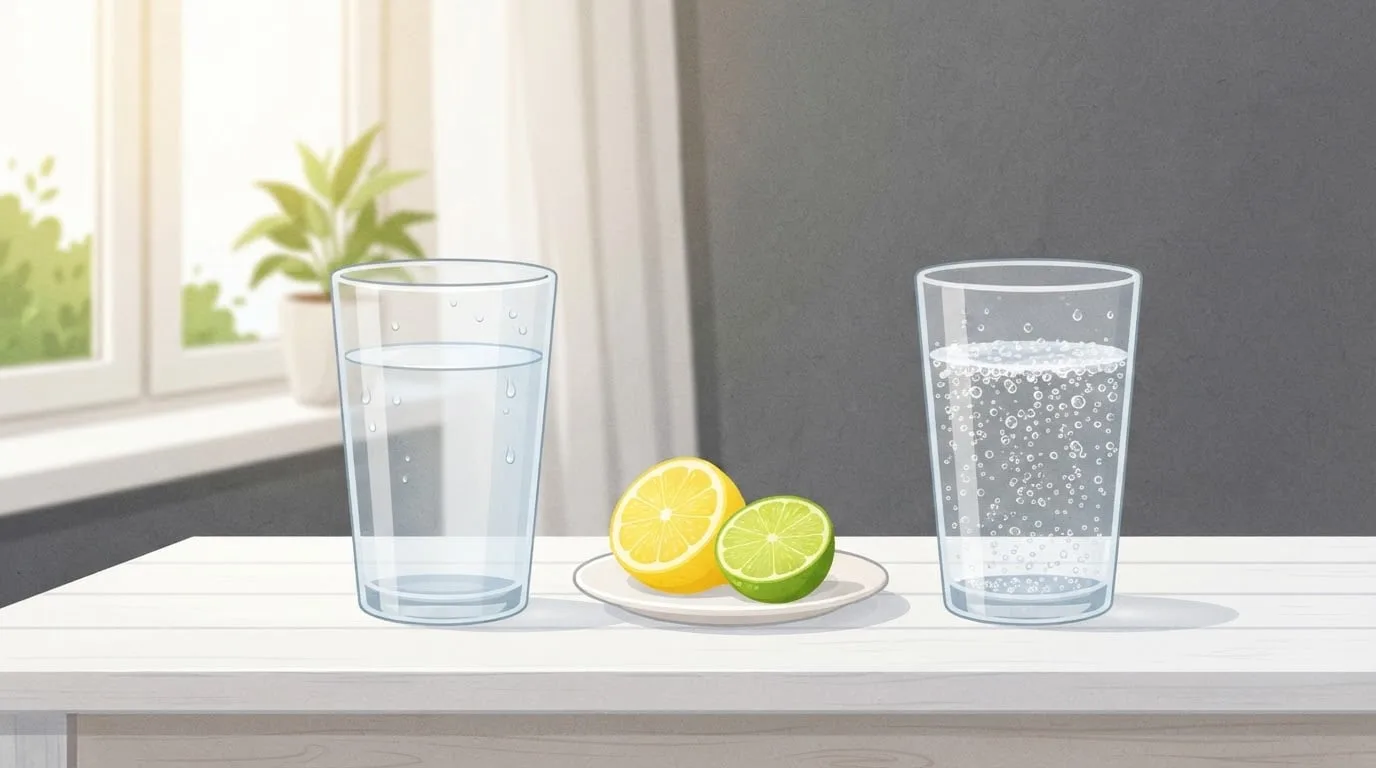
The benefits of carbonated water are real but modest. Here's what the evidence supports:
- It hydrates like still water. That makes it a full substitute for plain water.
- It replaces soda without the sugar. A 12-ounce can of cola carries about 155 calories in USDA's data, and plain sparkling water carries none. Swapping sugary drinks for calorie-free ones is where the weight evidence is strongest, as our page on whether drinking water helps you lose weight explains.
- It may ease indigestion and constipation. One small trial found this, covered in the digestion section below.
- It can make you feel fuller for a short while. One small study found this, covered in the section on fullness below.
Knowing what to do is the easy part.
FitCraft, our mobile fitness app, pairs you with an AI coach who builds you a personalized plan around your goals, schedule, and fitness level. Every FitCraft program is designed by Domenic Angelino, MPH (Brown University) and NSCA-CSCS, with research published in the Journal of Strength and Conditioning Research and Medicine & Science in Sports & Exercise.
Take the Free Assessment Free • 2 minutes • No credit cardIs Sparkling Water Bad for Your Teeth?
Plain sparkling water is only slightly more acidic than still water, and in lab studies it barely touched tooth enamel. The American Dental Association points to a study with donated extracted teeth in which sparkling water affected enamel about the same as regular water. In an earlier lab study, Parry and colleagues (2001) found that sparkling mineral waters dissolved slightly more tooth mineral than still ones but about 100 times less than soft drinks. Removing the gas lowered it further, and calcium in the water was protective.
Flavored versions are where the risk sits. A survey of 380 drinks sold in the US by Reddy and colleagues (2016) sorted them by pH, where lower means more acidic and anything under 4.0 counts as erosive. Ninety-three percent of the drinks fell below 4.0.
| Drink | pH measured | Erosion risk |
|---|---|---|
| Plain bottled still water | 5.03 to 6.11 | Minimal |
| Plain sparkling mineral water and club soda | 4.96 to 5.25 | Minimal |
| Orange juice | 3.73 to 4.09 | Erosive to minimal |
| Fruit-flavored sparkling drinks | 3.01 to 3.28 | Erosive |
| Sports drinks | 2.73 to 3.21 | Erosive to extremely erosive |
| Colas, regular and diet | 2.32 to 3.10 | Erosive to extremely erosive |
Ranges from Reddy and colleagues (2016), Journal of the American Dental Association. Categories: under 3.0 extremely erosive, 3.0 to 3.99 erosive, 4.0 and above minimally erosive.
Flavored sparkling waters were tested directly by Brown and colleagues (2007), using products on sale in the UK. Every one was acidic, at pH 2.74 to 3.34, and in a lab test they dissolved tooth mineral at 89 to 143 percent of the rate of orange juice. Teeth soaked in them for 30 minutes showed early erosion under the microscope. The authors argued these drinks should be treated as acidic drinks rather than as water.
So the advice is simple. Drink plain sparkling water as often as you like. Drink citrus or fruit-flavored ones with a meal or in one sitting, as the ADA suggests, instead of sipping them all afternoon. Any version with added sugar is a sweetened drink, and fluoridated tap water is still the best drink for your teeth. Sports drinks sit at the acidic end of that table, which our page on whether Gatorade is good for you looks at in more detail.
Does Sparkling Water Cause Bloating or Reflux?
It can cause burping and bloating. The NIDDK lists carbonated drinks among the habits that make you swallow more air, along with chewing gum and eating or drinking quickly, and swallowed air is one of the two sources of gas in your gut. Sip rather than gulp, and let a glass go a little flat if fizz leaves you uncomfortable.
Reflux is less clear-cut. A 2010 systematic review by Johnson and colleagues found that carbonated drinks may briefly lower the pressure of the valve at the bottom of the esophagus and cause a very short drop in pH inside it. It found no direct evidence that they cause or worsen reflux disease, and none that they damage the esophagus or lead to cancer.
Your own gut still gets a vote. If you have reflux or IBS and fizzy drinks seem to set you off, drink still water. Even a 2025 analysis by Takahashi that explored whether carbonated water could aid weight loss warned that it can cause bloating and gas and may worsen symptoms in people with sensitive stomachs.
Is Sparkling Water Bad for Your Bones?
No. The bone worry comes from cola. In the Framingham Osteoporosis Study, Tucker and colleagues (2006) measured bone mineral density in 1,413 women and 1,125 men. Women who drank cola every day had about 3.7 percent lower density at the hip than women who drank less than one serving a month, and diet cola showed a similar pattern. Other carbonated drinks showed no link, and neither did cola in men.
The bubbles themselves don't pull calcium out of your bones. Heaney and Rafferty (2001) gave women aged 20 to 40 four carbonated drinks: with and without caffeine, and made with phosphoric or citric acid. Only the caffeinated ones raised the calcium in their urine, by about 0.25 millimoles, roughly 10 milligrams, the same effect as caffeine alone. The body makes up for that later in the day, so the authors judged the net effect negligible and pointed to a likelier culprit: cola crowding milk out of the diet.
Some mineral waters may even help. In a four-week trial by Wynn and colleagues (2009), 30 young women ate the same calcium-adequate diet and drank 1.5 liters a day of one of two calcium-rich mineral waters. The bicarbonate-rich water lowered parathyroid hormone and a blood marker of bone breakdown. The acidic, sulfate-rich water didn't. Mineral content varies hugely between brands, so check the label on yours.
Does Sparkling Water Help With Digestion?
It might, at least for indigestion and constipation. In a double-blind trial by Cuomo and colleagues (2002), 21 adults with chronic indigestion (functional dyspepsia) and constipation drank carbonated water or tap water for about 15 days. In the carbonated water group the indigestion score fell from 7.9 to 5.4 and the constipation score from 16.0 to 12.1, while the tap water group barely changed. Their gallbladders also emptied better, and they could eat more before feeling full. That last point counts as relief for people whose indigestion makes them feel full too early.
It was a small, short trial in people with symptoms, so it can't tell you whether sparkling water changes digestion in a healthy gut. If a glass with meals makes you feel better, there's no reason not to drink it.
Does Sparkling Water Fill You Up?
A little, for a short while. In a crossover study by Suzuki and colleagues (2017), 13 young women drank 250 milliliters of carbonated or plain water after an overnight fast. Drinking the carbonated water raised fullness and lowered hunger, and even swishing it and spitting it out had a brief effect, so the authors credited the bubbles' effect in the mouth. That's a short-term feeling, and nobody has turned it into a weight-loss result.
There's a small counterweight. In a study by Eweis and colleagues (2017), rats given carbonated drinks for about a year ate more and gained weight faster than rats given flat drinks or tap water, with higher levels of the hunger hormone ghrelin. Twenty young men in the same paper also had higher ghrelin after carbonated drinks. It's one study, mostly in rats, and no long human trial has repeated it.
Is sparkling water good for weight loss?
Only through what it replaces. Swap a daily can of cola for plain sparkling water and you cut about 155 calories a day without giving up the fizz. The 2025 analysis by Takahashi proposed that the carbon dioxide might slightly speed up how red blood cells use glucose, reasoning from what happens to blood during kidney dialysis. It was a theoretical paper with no new trial, and the author concluded that carbonated water alone is unlikely to make a meaningful difference to weight.
Is Flavored Sparkling Water Good for You?
Unsweetened flavored sparkling water is fine, with one caveat: its tartness usually comes from citric acid, which is what makes those cans harder on enamel. The ingredient list tells you the rest. Check it for three things:
- Added sugar or juice. The CDC counts sweetened waters as sugar-sweetened beverages, the same category as regular soda, and frequent intake of that category is linked with weight gain, type 2 diabetes, heart disease, liver disease, tooth decay and gout.
- Quinine and sugar. Tonic water looks like sparkling water but has about 7 teaspoons of sugar per bottle.
- Non-sugar sweeteners. Sucralose, aspartame and stevia keep the calories near zero. The World Health Organization's 2023 guidance doesn't recommend them as a weight-control tool for people without diabetes, though it rates that advice as conditional.
If you're weaning yourself off soda, a flavored can is a good bridge on the way to plain. Our guide to reducing sugar cravings covers the first few weeks.
Is sparkling water good for you if you have diabetes?
Plain and unsweetened flavored sparkling water have no carbohydrate, so they don't raise blood sugar. Sweetened versions and tonic water do. The WHO's sweetener guidance doesn't apply to people who already have diabetes, so ask your care team about zero-calorie sweetened drinks.
What This Means for You
Plain sparkling water is one of the best things you can drink. It hydrates like still water, has no sugar, and the scary stories about bones mostly trace back to cola. Choose plain or unsweetened versions most of the time, drink citrus-flavored ones with meals rather than sipping all afternoon, and switch to still water if the bubbles bloat you or set off reflux. If you like the fizz, I see no reason to give it up.
The drink was never the hard part, though. Swapping soda for seltzer is a habit change, and so is training three times a week, and most people find the second one harder to keep. When it slips, that usually says more about the plan than about you. Mike, 23, put it this way: "The streak system got me hooked. I didn't want to break my chain." Our page on finding a workout app that keeps you motivated shows how FitCraft handles that part. Your 3D AI coach demonstrates each bodyweight and dumbbell exercise and says your name while you train, and streaks, leaderboards and a new quest every month give you a reason to come back tomorrow.

Frequently Asked Questions
Is it OK to drink sparkling water every day?
Yes. Plain sparkling water hydrates as well as still water and has no calories, so it can be part of your daily fluid. If you drink several cans a day, choose plain or unsweetened ones, drink flavored cans with meals rather than sipping them all day to spare your enamel, and keep some still water in the mix if the bubbles bloat you.
Can I drink sparkling water in the morning?
Yes. There's nothing harmful about drinking sparkling water first thing, and a morning glass counts toward your fluid like still water. If carbonation on an empty stomach makes you burp or feel bloated, or you're prone to reflux, start the day with still water instead.
What are the potential downsides of drinking carbonated water?
The main downsides are burping and bloating from the gas, a possible flare of symptoms in people with reflux or IBS, and enamel wear from flavored versions, which tested about as erosive as orange juice in the lab. Sweetened versions and tonic water add sugar, and some club sodas and mineral waters add sodium.
What organ is affected by carbonated drinks?
Plain carbonated water mainly affects your mouth and stomach: its mild acidity touches tooth enamel, and the gas can make you burp or feel bloated. Sugary carbonated drinks reach much further, since the CDC links sugar-sweetened beverages with type 2 diabetes, heart disease, liver disease, tooth decay and gout.
Is sparkling mineral water good for you?
Yes. Sparkling mineral water hydrates like any water, and under FDA rules mineral water comes from a protected underground source and carries at least 250 parts per million of dissolved minerals. Some brands supply useful calcium, magnesium or bicarbonate while others carry a lot of sodium, so read the mineral list on the label.
Is sparkling water from a home soda maker better for you?
It's the same thing as store-bought seltzer: your tap water with carbon dioxide added, so it has no calories or sugar. The flavor syrups are what change it, because the sweetened ones turn it back into a sugary soft drink. Use them sparingly, or flavor the water with a slice of fruit.
Is sparkling water good for your stomach?
For most people it's fine, and in a small trial carbonated water eased indigestion and constipation. The gas can cause burping and bloating, though, so if fizzy drinks leave you uncomfortable or set off reflux, drink still water instead.