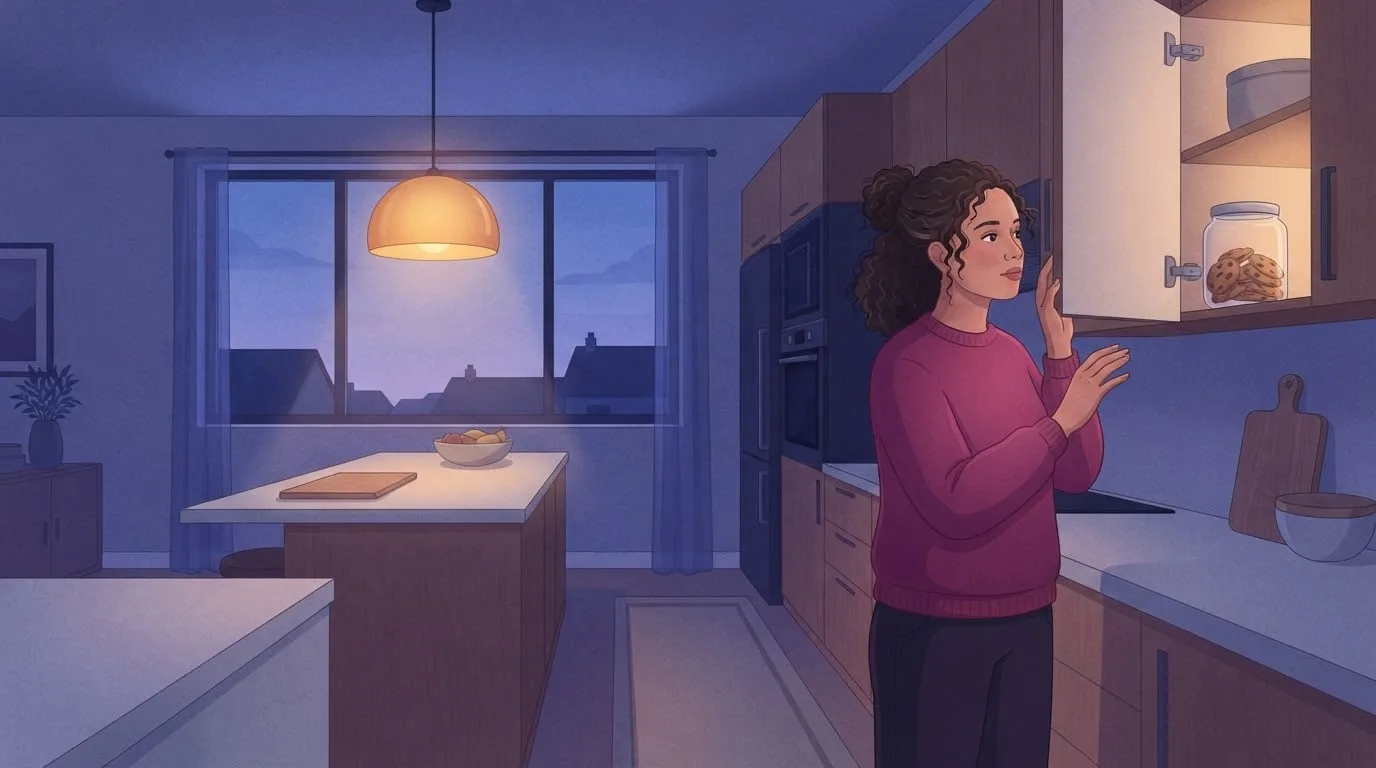
It's 3 p.m. and the vending machine is calling. Or it's 9:30 at night, the house is quiet, and you're standing in front of the cupboard telling yourself you'll have just one. One turns into four, and then comes the familiar voice: why can't you control yourself?
If you've tried to cut sugar before, you've probably tried the willpower route. Clear out the cupboards, swear off dessert, white-knuckle it for a week, then crack on a hard day and eat more than you would have if you'd never started. That cycle isn't a character flaw. Most sugar cravings are learned responses to cues, short sleep, stress and hunger, and willpower is a poor tool against all four.
The good news is that anything learned can be unlearned, and the triggers are fixable. Below you'll find why cravings happen, how to curb sugar cravings with 8 steps that have real studies behind them, what to do in the moment, a 2-week plan, and when cravings point to something a doctor should check.
Why Do You Crave Sugar? The 5 Most Common Triggers
A craving is an intense desire for a specific food, and it isn't the same as hunger. You can be full and still crave chocolate. Knowing which trigger drives yours tells you which steps to start with.
1. Habits and Cues
Much sugar eating runs on autopilot, set off by a place, a time or a feeling. In two field experiments by Neal and colleagues (2011), people with a strong cinema-popcorn habit ate as much stale popcorn as fresh popcorn in a cinema, even though they didn't like it. Their hunger and taste barely mattered. The setting did the work. Researchers think food cravings form the same way: a cue gets paired with a sweet food often enough that the cue alone sets off the wanting. The 3 p.m. slump, the drive home and the sofa after dinner are all classic cues.
2. Short Sleep
Sleep loss turns up the volume on sweet food. In a small but well-known study, Spiegel and colleagues (2004) restricted the sleep of 12 healthy young men for two nights. Their fullness hormone leptin fell 18%, their hunger hormone ghrelin rose 28%, and their appetite for sweets, salty snacks and starchy foods rose by 33% to 45%. Brain scans tell the same story. After a night without sleep, people in a study by Greer and colleagues (2013) showed less activity in the frontal areas that weigh choices and more in the amygdala, and they wanted high-calorie foods more.
3. Stress
Stress pushes many people toward sweet food. Epel and colleagues (2001) put 59 women through a stressful lab session on one day and a calm one on another. Women whose cortisol rose most under stress ate more calories after the stressful session and ate more sweet food overall. In a community sample of 619 adults, Chao and colleagues (2015) found that food cravings partly explained the link between chronic stress and higher body weight.
4. Under-Eating and Too Little Protein
Long gaps without food and meals light on protein set you up for snacking later. When Gosby and colleagues (2011) lowered the protein in lean adults' diets from 15% to 10% of calories, they ate 12% more calories in total, mostly from snacks between meals. Those were mainly savory snacks, which shows the effect isn't limited to sugar. Skipping breakfast matters too: in a small crossover study by Hoertel and colleagues (2014), eating breakfast instead of skipping it reduced cravings for both sweet and savory foods afterwards.
The type of carbohydrate plays a part. In Lennerz and colleagues (2013), 12 men ate test meals with the same calories but a high or low glycemic index. Four hours after the fast-digesting meal, their blood sugar was lower, they were hungrier, and a brain region tied to reward and craving was more active. If your cravings peak in the evening, under-eating earlier in the day is often the reason, as our article on why you overeat at night explains.
5. Strict Food Bans
Forbidding a food can make you want it more. Polivy and colleagues (2005) asked 103 young women to avoid chocolate, avoid vanilla or eat normally for a week. Afterwards, chocolate-deprived women who were habitual strict dieters ate more chocolate food than anyone else. The effect showed up mainly in people who already dieted rigidly, which is exactly who tends to try a total sugar ban.
How to Reduce Sugar Cravings: 8 Steps With Evidence
Start with the steps that match your triggers. If your cravings hit at night after a light lunch, steps 1 and 2 come first. If they hit after bad nights, start with step 3.
| Step | What to do | Best evidence |
|---|---|---|
| 1. Protein and fiber at every meal | About 25 to 30 g of protein per meal, plus fruit, vegetables, beans or whole grains | Breakfast trials and a crossover study |
| 2. Don't get too hungry | Regular meals, no long gaps | Controlled feeding study |
| 3. Sleep at least 7 hours | Protect a regular bedtime | Randomized trial of 80 adults |
| 4. Walk, and move most days | 15-minute brisk walk at craving times | Three randomized crossover and lab studies |
| 5. Sweets out of sight and reach | Closed cupboards, high shelves, not on the desk | Cochrane review of 24 studies |
| 6. An if-then plan for your top cue | "If it's 3 p.m., then I'll..." | Meta-analysis of 23 studies |
| 7. Eat sweets less often, without banning them | Planned sweets a few times a week | 2-year weight-loss trial |
| 8. A non-food plan for stress | A walk, a call, a shower, slow breathing | Lab and community studies |
1. Eat Protein and Fiber at Every Meal, Starting With Breakfast
A filling breakfast is the cheapest craving fix there is. A review of breakfast trials by Gwin and Leidy (2018) found the biggest effects on appetite and fullness came from solid breakfasts with at least 30 grams of protein and at least 350 calories. Two or three eggs with whole-grain toast and fruit, Greek yogurt with oats and berries, or a tofu scramble with beans all get you close.
Fiber does a similar job from the carbohydrate side. Whole fruit, beans, lentils, oats and vegetables digest more slowly than white bread, sweet cereal or juice, which avoids the late dip in blood sugar and the extra hunger seen after fast-digesting meals in the Lennerz study. Aim for about 25 to 30 grams of protein at lunch and dinner as well, with a vegetable or whole grain on the plate.
2. Don't Let Yourself Get Too Hungry
Skipping lunch to "save" calories usually backfires by late afternoon. Eat at regular times, and if the gap between meals runs past 4 or 5 hours, plan a snack with protein, such as yogurt, a cheese stick and an apple, or a handful of nuts. The goal isn't to eat more overall. It's to stop arriving at 4 p.m. or 9 p.m. so hungry that sugar wins every argument.
3. Sleep at Least 7 Hours
This step is the most underrated. In a randomized trial by Tasali and colleagues (2022), 80 adults with overweight who usually slept less than 6.5 hours got one sleep-habits counseling session. They slept about 1.2 hours more per night and ate about 270 fewer calories a day, without any diet advice. Set a bedtime that allows at least 7 hours, keep screens out of the last half hour, and keep caffeine to the morning and early afternoon.
4. Take a Brisk Walk, and Move Most Days
Short bouts of exercise reliably blunt sweet cravings in the lab. Taylor and Oliver (2009) had 25 regular chocolate eaters skip chocolate for 3 days, then either walk briskly for 15 minutes or sit quietly. The walk reduced their urges for chocolate. Ledochowski and colleagues (2015) repeated the test in 47 overweight adults with sugary snacks and found the same thing, even when people were then stressed and handed sweets. In Oh and Taylor (2012), 78 chocolate eaters did a computer task with a bowl of chocolates beside them. Those who had walked for 15 minutes first ate less of it.
The lesson is to schedule a walk for the time your cravings usually hit: after lunch if the 3 p.m. slump gets you, after dinner if the evening does. Regular workouts help too, because they improve sleep and mood, two of the triggers above. The hard part is keeping exercise going after the first few weeks, which is what our comparison of the best workout apps for weight loss looks at. FitCraft is one of the options: a 3D AI coach demonstrates each exercise, says your name during the workout, and keeps a streak and leaderboard going so there's a reason to show up tomorrow. As one user, Matt, put it: "The real win is I actually want to work out now. That's never happened before."
Find out what's really holding you back
FitCraft, our mobile fitness app, pairs you with an AI coach who builds you a personalized plan around your goals, schedule, and fitness level. Every FitCraft program is designed by Domenic Angelino, MPH (Brown University) and NSCA-CSCS, with research published in the Journal of Strength and Conditioning Research and Medicine & Science in Sports & Exercise.
Take the Free Assessment Free • 2 minutes • No credit card5. Get Sweets Out of Sight and Out of Reach
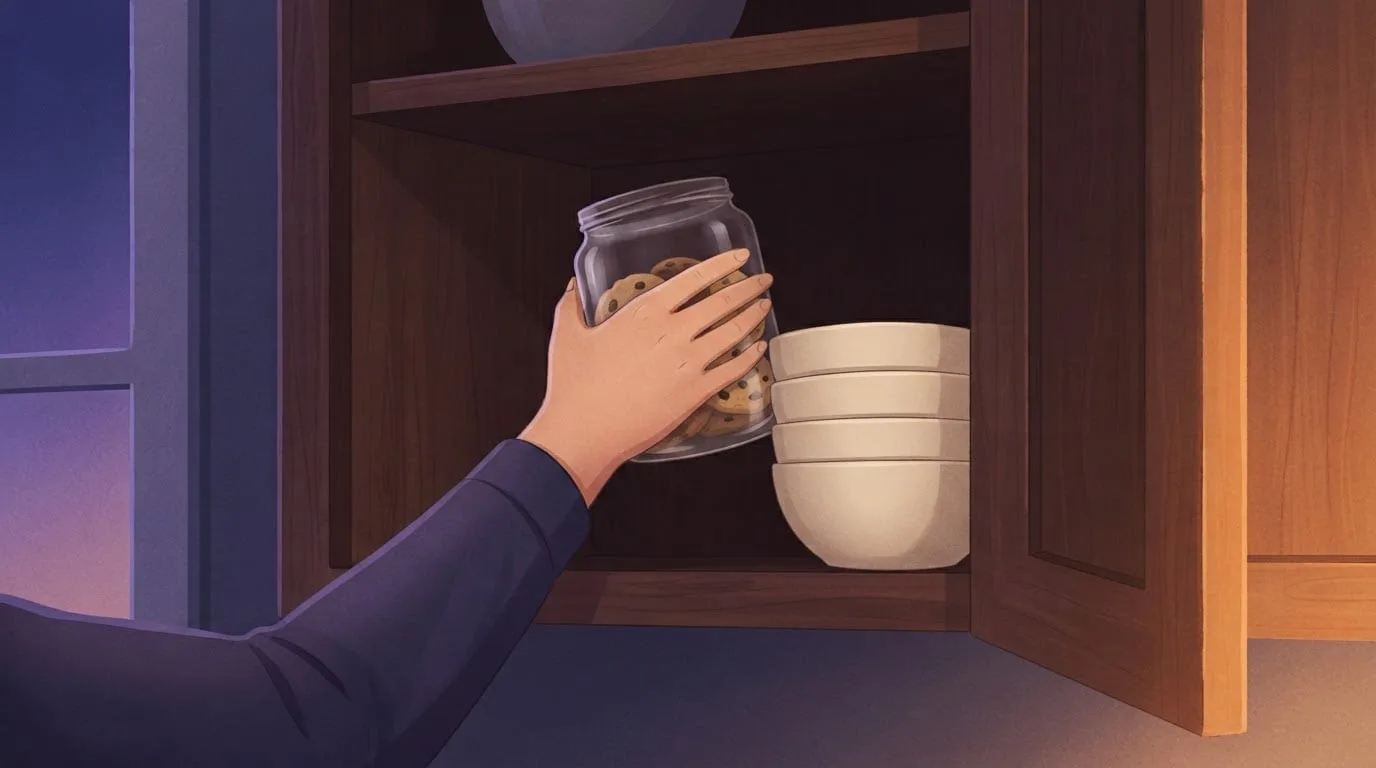
Distance works better than willpower. A Cochrane review by Hollands and colleagues (2019) pooled 12 studies with 1,098 people and found that placing a food farther away led to a moderate drop in how much of it people ate, and the effect grew with distance. Most of the studies were small and lab-based, so the evidence is rated low certainty, but the direction is consistent and the change costs nothing.
- Keep sweets in a closed cupboard, on a high or back shelf, or in opaque containers.
- Take the candy bowl off your desk and the cookies off the counter.
- Put fruit, nuts or yogurt where the sweets used to be, at eye level.
- Buy treats in single portions rather than family packs.
6. Make an If-Then Plan for Your Biggest Cue
Because cravings are tied to cues, plan your response to the cue in advance. Psychologists call these implementation intentions, and they're simple "if X, then Y" sentences. A meta-analysis by Adriaanse and colleagues (2011) of 23 studies found they work better for adding healthy foods than for cutting unhealthy ones. So write plans that add something:
- "If it's 3 p.m. at work, then I'll eat my yogurt and walk to the far end of the building."
- "If I finish dinner, then I'll make a cup of tea and leave the kitchen."
- "If I get home stressed, then I'll change clothes and take a 10-minute walk before I open the fridge."
Changing the setting helps too. The popcorn habit in the Neal study was strongest in the cinema itself, so eating your afternoon snack away from the vending machine, or watching TV in a different chair, breaks the cue.
7. Eat Sweets Less Often, Without Banning Them
This is where most advice gets it wrong, and the research points to a middle path. In the 2-year POUNDS Lost weight-loss trial of 367 adults, Apolzan and colleagues (2017) found that people who ate a craved food less often came to crave it less. Eating smaller amounts of it didn't change cravings at all. A meta-analysis by Kahathuduwa and colleagues (2017) of 8 studies found that cravings for sweet foods fell over at least 12 weeks of calorie restriction rather than rising.
Yet the Polivy study showed that total bans backfire in strict dieters. Large surveys by Westenhoefer and colleagues (1999) found that rigid, all-or-nothing control went with more binge eating and higher body weight, while flexible control went with lower body weight and more successful weight loss. Our review of flexible dieting research covers that work in more depth.
Put together, the plan is simple. Pick 2 or 3 planned sweets a week, decide when they happen, sit down and enjoy them, and stop treating sugar as a daily automatic snack. For a sense of scale, the American Heart Association (Johnson and colleagues, 2009) suggests keeping added sugar to about 100 calories a day for most women and 150 for most men, roughly 6 and 9 teaspoons. If you slip, go back to the plan at the next meal. Our guide on how to stick to a diet covers what to do after a slip so one cookie doesn't become a lost week.
8. Have a Non-Food Plan for Stress
If stress is your trigger, food is the fastest relief you know, so you need a substitute that's nearly as easy. Pick two you can do in under 10 minutes: a walk around the block, a call to a friend, a hot shower, slow breathing with a longer out-breath, or writing down what's bothering you. The walking studies in step 4 found the walk also softened the craving response to stress, which makes it a good first choice.
What Kills Sugar Cravings Fast? How to Deal With Cravings in the Moment
Steps 1 to 8 make cravings rarer. For the one you're having right now, use this order:
- Check if you're hungry. If you haven't eaten in more than 4 hours, eat a real snack with protein. A craving on an empty stomach is mostly hunger, and a proper snack fixes it.
- Walk for 15 minutes. It's the in-the-moment method with the most direct evidence, from the three studies in step 4.
- Give your eyes and mind a 3-minute task. Cravings run on vivid mental pictures of the food. In a lab study by Skorka-Brown and colleagues (2014), playing a block-stacking puzzle game for a few minutes lowered craving strength and vividness. A week-long field study by the same team (Skorka-Brown and colleagues, 2015) found 3 minutes of play cut craving strength by about 14 points on a 100-point scale, for food and other cravings.
- Change the setting. Leave the kitchen or the break room. The cue is often the place.
- If you still want it, have it on purpose. Take one portion, put the rest away, sit down and eat it slowly. Then move on without guilt.
Two mindfulness techniques, urge surfing and cognitive defusion, have also been tested on chocolate cravings. Our guide on how to stop eating late at night walks through both.
A 2-Week Plan to Curb Sugar Cravings
This plan adds one change every few days so nothing feels like a crash diet. Keep each change once you've added it.
| Days | Focus | What to do |
|---|---|---|
| 1 to 2 | Notice | Write down every craving: the time, the place, what you were doing and how you felt. Don't change anything yet. |
| 3 to 4 | Breakfast | Eat a breakfast with about 30 g of protein every day, plus fruit or a whole grain. |
| 5 to 6 | Sleep | Set a bedtime that allows at least 7 hours and a screen-off time 30 minutes before it. |
| 7 | Environment | Move every sweet into a closed cupboard or out of the house, and put fruit and yogurt in view. |
| 8 to 9 | Movement | Add a 15-minute brisk walk at your most common craving time from your notes. |
| 10 to 11 | If-then plans | Write one if-then plan for each of your two biggest cues and stick them where you'll see them. |
| 12 to 13 | Planned sweets | Choose 2 or 3 times this week for a sweet you love. Eat it sitting down, in one portion. |
| 14 | Review | Log your cravings for a day and compare them with days 1 and 2. Keep what helped most. |
Expect the first few days to feel harder, not easier, because you're noticing cravings you used to act on without thinking. Most people find cravings come less often and feel weaker by the end of the second week. The bigger shift in taste takes longer, as the next section explains.
What Are the Symptoms of Sugar Detox?
"Sugar detox" isn't a medical term, and there's no defined sugar withdrawal syndrome in humans. When people cut back, the usual complaints are stronger cravings and irritability for a few days, which fade as the new routine sets in. If you also cut sodas, energy drinks or sweet coffee drinks, a headache and tiredness are more likely to come from missing caffeine than from missing sugar.
Your sense of sweetness does adjust, slowly. In a 5-month study by Wise and colleagues (2016), adults who cut their sugar intake for 3 months rated sweet puddings about 40% sweeter than a control group did by the third month. Only 13 people completed the low-sugar diet, and their liking for sweet foods didn't change, but they did taste sugar more strongly. Give it weeks to months, not days.
Is Sugar Addiction Real?
Sugar can feel addictive, but the science doesn't support calling it an addiction in the drug sense. A review by Westwater and colleagues (2016) found little evidence of sugar addiction in humans. In animals, addiction-like bingeing appeared only when access to sugar was intermittent, meaning periods of restriction followed by free access. That pattern looks a lot like the ban-and-binge cycle in step 7.
That doesn't mean feeling out of control isn't real. If you often eat large amounts in a short time while feeling unable to stop, eat in secret, or feel distressed afterwards, talk to a doctor or a therapist who treats eating disorders. Binge eating disorder is common and treatable. Peer support groups for compulsive eating exist and some people find them helpful, but the research behind them is limited, so use them alongside professional care rather than instead of it.
People in recovery from alcohol often notice a stronger sweet tooth. A review by Kampov-Polevoy and colleagues (1999) found that people with alcohol dependence tend to prefer sweeter tastes, and that sweets can reduce alcohol intake in both animals and people. In early recovery, work on sugar gradually and with your treatment team.
When Sugar Cravings Need a Doctor
Most sugar cravings come from the everyday triggers above. A few situations deserve a medical check:
- Shakiness, sweating or confusion with a sudden urge for sugar, especially if you take insulin or certain diabetes pills. That can be low blood sugar, and you should follow the treatment plan your doctor gave you.
- Cravings together with constant thirst, frequent urination, tiredness or unexplained weight loss. These can be signs of diabetes.
- Cravings that started with a new medicine. Some medicines increase appetite, so ask your doctor or pharmacist.
- Cravings alongside low mood, poor sleep or loss of interest in things you used to enjoy, which can be signs of depression.
- Cravings during pregnancy are common, but talk to your midwife or doctor before cutting foods or calories.
What Doesn't Help
- Banning sugar outright, if you tend to diet strictly. The ban-and-binge cycle is the pattern the research warns about.
- Eating sweets every day in smaller portions. In the POUNDS Lost data, how often people ate a craved food mattered and the amount didn't.
- Swapping everything for diet versions. In 2023 the World Health Organization advised against using non-sugar sweeteners for weight control. Sweeteners keep the sweet habit going even if the calories drop.
- Waiting for more willpower. Cravings respond to sleep, food, cues and stress. Fix those and the willpower problem mostly disappears.
The Bottom Line
To reduce sugar cravings, fix the triggers before you fight the craving. Eat protein and fiber at every meal, starting with breakfast, don't let yourself get very hungry, sleep at least 7 hours, keep sweets out of sight, and plan a few sweets a week instead of eating them on autopilot or banning them. When a craving hits, walk for 15 minutes or give your mind a 3-minute visual task, and if you still want the treat, have one portion on purpose.
Cravings come from learned habits, so they fade the same way they formed: through repetition. Give the 2-week plan a fair try, and expect the biggest changes over the following months.
Frequently Asked Questions
How do you stop sugar cravings instantly?
Nothing stops a craving instantly, but a few things shrink it within minutes. A 15-minute brisk walk reduced urges for sugary snacks in controlled studies, and 3 minutes of a visual puzzle game lowered craving strength in a week-long field study. If you haven't eaten in more than 4 hours, eat a real snack with protein first, because hunger makes every craving stronger.
What are the symptoms of sugar detox?
There's no medically defined sugar withdrawal syndrome in humans. When people cut back on sugar, they commonly report stronger cravings and some irritability for the first few days, which usually ease as new habits form. Headaches and tiredness often come from cutting caffeine at the same time, for example by dropping sodas or sweet coffee drinks.
What are three signs of sugar addiction?
There's no validated three-sign test, and a 2016 review found little evidence that sugar is addictive in humans the way drugs are. Signs that your eating deserves professional help are regularly eating large amounts in a short time while feeling unable to stop, eating in secret, and feeling distressed or ashamed afterwards. Those can point to binge eating disorder, which is common and treatable.
Is there an AA for sugar?
Yes, there are 12-step and other peer support groups for compulsive eating, and some people find the community helpful. The research behind them is limited. If you feel out of control around food, start with a doctor or a therapist who treats eating disorders, because binge eating disorder has proven treatments.
Why do recovering addicts crave sugar?
Sugar and alcohol act on overlapping reward systems in the brain. A review of animal and human studies found that people with alcohol dependence tend to prefer sweeter tastes, and that sweets can reduce alcohol intake. In early recovery, a sweet tooth is common and usually the lesser concern, so work on it gradually with your treatment team rather than cutting sugar hard.
What deficiency causes sugar cravings?
No specific vitamin or mineral deficiency has been shown in trials to cause sugar cravings. The shortfalls that do drive them are more ordinary: too little sleep, too little food or protein earlier in the day, and ongoing stress. If cravings come with constant thirst, frequent urination or unexplained weight loss, see a doctor to check for diabetes.
What should I eat when I'm craving sweets at night?
If you're actually hungry, pick something sweet with protein or fiber, such as Greek yogurt with berries, an apple with a little peanut butter, or a small bowl of cottage cheese with fruit. If you ate a full dinner, a cup of herbal tea and leaving the kitchen often works better. Night cravings usually mean you ate too little earlier in the day or slept too little the night before.