Chia seeds have a reputation that's bigger than they are. Social feeds promise that a spoonful in water melts belly fat, curbs every craving and turns breakfast into a weight-loss tool. Then you try it for a few weeks, the scale doesn't move, and it feels like one more thing that worked for everyone except you.
It isn't you. The seeds do something real, just smaller than the claims, and how you use them matters more than how many you buy. Below are the trials that tested chia seeds for weight loss, what the seeds actually do in your stomach, the nutrition numbers per tablespoon, recipes that put them to work, and the people who should go carefully.
Do Chia Seeds Help With Weight Loss?
A little, and not reliably. Only a handful of randomized trials have measured body weight with chia, and they split between a small benefit and none at all.
The trial that found a benefit
Vuksan and colleagues (2017) ran a double-blind trial in Nutrition, Metabolism and Cardiovascular Diseases with 77 adults who had overweight or obesity and type 2 diabetes. Everyone followed a reduced-calorie diet for six months. One group added about 30 grams of chia for every 1,000 calories they ate, and the other added a similar amount of an oat-bran control.
- Body weight: down 1.9 kilograms (about 4.2 pounds) with chia, against 0.3 kilograms with the control.
- Waist: down 3.5 centimeters with chia, against 1.1 centimeters.
- Inflammation: C-reactive protein fell by 39 percent with chia, against 7 percent.
That's a real difference, about 3.5 pounds over half a year, in people who were already dieting. It's also one trial, in one group of people, with a fairly large daily dose.
The trials that found nothing
Nieman and colleagues (2009) randomized 90 adults with overweight or obesity, 76 of whom finished, to 25 grams of chia or a placebo stirred into water before their first and last meal each day for 12 weeks. That's 50 grams a day. Body mass and body composition, measured by DXA scan, didn't differ from placebo, and neither did blood pressure, cholesterol or inflammation markers.
A follow-up by Nieman and colleagues (2012) gave 62 postmenopausal women with overweight 25 grams of whole chia, milled chia or poppy seed each day for 10 weeks. Body composition didn't change in any group. Milled chia did raise blood levels of the omega-3 fat ALA by 58 percent, while whole seeds didn't, which matters if omega-3 is part of why you eat them.
What the reviews say
Pooled analyses land in the same place. Teoh and colleagues (2018) reviewed 12 trials in Nutrition Reviews and found no significant differences in the pooled results apart from a few higher-dose subgroups, such as lower blood sugar after meals. It rated the quality of all the evidence low or very low. The most recent meta-analysis, by Karimi and colleagues (2024), pooled 10 trials in people with overweight and found no change in BMI. It did find a waist about 2.82 centimeters smaller, systolic blood pressure about 3.3 points lower and lower C-reactive protein.
Taken together, the trials show chia seeds are a useful food that may trim your waist slightly when you're already eating less. They won't create weight loss on their own.
How Do Chia Seeds Help You Lose Weight?
Through fullness, mostly. Chia's fiber is largely the soluble, gel-forming kind. In liquid, each seed builds a clear coat of gel, and a spoonful of seeds turns a glass of water into something closer to a thin pudding. That thickness slows how fast a meal moves through your stomach and how quickly its sugar reaches your blood.
Three short studies measured the effect directly:
- Chia against flax. In Vuksan and colleagues (2017b), 15 healthy adults drank a glucose drink alone or mixed with ground chia or ground flax. The chia drink was about 20 times thicker than the flax drink (49.9 against 2.5 Pa·s), and it lowered the desire to eat and overall appetite scores more than flax did over the next two hours.
- Chia in yogurt. Ayaz and colleagues (2017) gave 24 healthy adults a mid-morning yogurt with no chia, 7 grams or 14 grams. On chia days they rated themselves less hungry, wanted fewer sugary foods, and ate fewer calories at an all-you-can-eat lunch.
- Chia in bread. Vuksan and colleagues (2010) baked 0, 7, 15 or 24 grams into white bread for 11 healthy adults. The more chia in the bread, the lower the blood sugar rise, and appetite stayed lower for up to two hours.
These are effects measured over hours, not months, and Nieman's 12-week trial shows a fuller morning doesn't automatically become a smaller body. Chia works best when it replaces something less filling, such as a pastry or a sugary cereal, rather than when it's added on top of what you already eat.
Chia Seeds Nutrition Facts per Tablespoon
Chia is calorie-dense for its size, because about a third of its weight is fat. The table uses USDA FoodData Central values for dried chia seeds (FDC 170554), with a level tablespoon taken as 10.5 grams from USDA's weight of 168 grams per cup.
| Amount | Calories | Fiber | Protein | Fat (omega-3 ALA) |
|---|---|---|---|---|
| 1 level tablespoon (10.5 g) | 51 | 3.6 g | 1.7 g | 3.2 g (1.9 g) |
| 2 level tablespoons (21 g) | 102 | 7.2 g | 3.5 g | 6.5 g (3.7 g) |
| 1 ounce (28 g) | 138 | 9.8 g | 4.7 g | 8.7 g (5.0 g) |
| 100 grams | 486 | 34.4 g | 16.5 g | 30.7 g (17.8 g) |
Two practical points come out of those numbers. First, chia is one of the richest fiber sources per calorie you can buy: two tablespoons cover about a quarter of a typical adult's daily fiber target. Our ranking of the best sources of fiber shows how it compares with beans, oats and raspberries, and our look at whether fiber is good for weight loss covers the wider trial evidence for fiber in general.
Second, the calories count. Three heaping tablespoons a day can add 200 calories without your noticing, which is enough to cancel out the fullness benefit. Package labels also vary in how they define a tablespoon, so weigh a spoonful once if you track food closely. An ounce of chia also brings about 179 milligrams of calcium, a useful bonus if you don't eat much dairy.
Find out what's really holding you back
FitCraft, our mobile fitness app, pairs you with an AI coach who builds you a personalized plan around your goals, schedule, and fitness level. Every FitCraft program is designed by Domenic Angelino, MPH (Brown University) and NSCA-CSCS, with research published in the Journal of Strength and Conditioning Research and Medicine & Science in Sports & Exercise.
Take the Free Assessment Free • 2 minutes • No credit cardHow to Use Chia Seeds for Weight Loss
The best way to eat chia seeds for weight loss is soaked, in a measured amount, in place of a less filling food. Four rules cover most of it.
- Start with one tablespoon a day. Move to two after a week if your stomach is fine. Jumping from little fiber to a lot at once is the usual cause of bloating and gas.
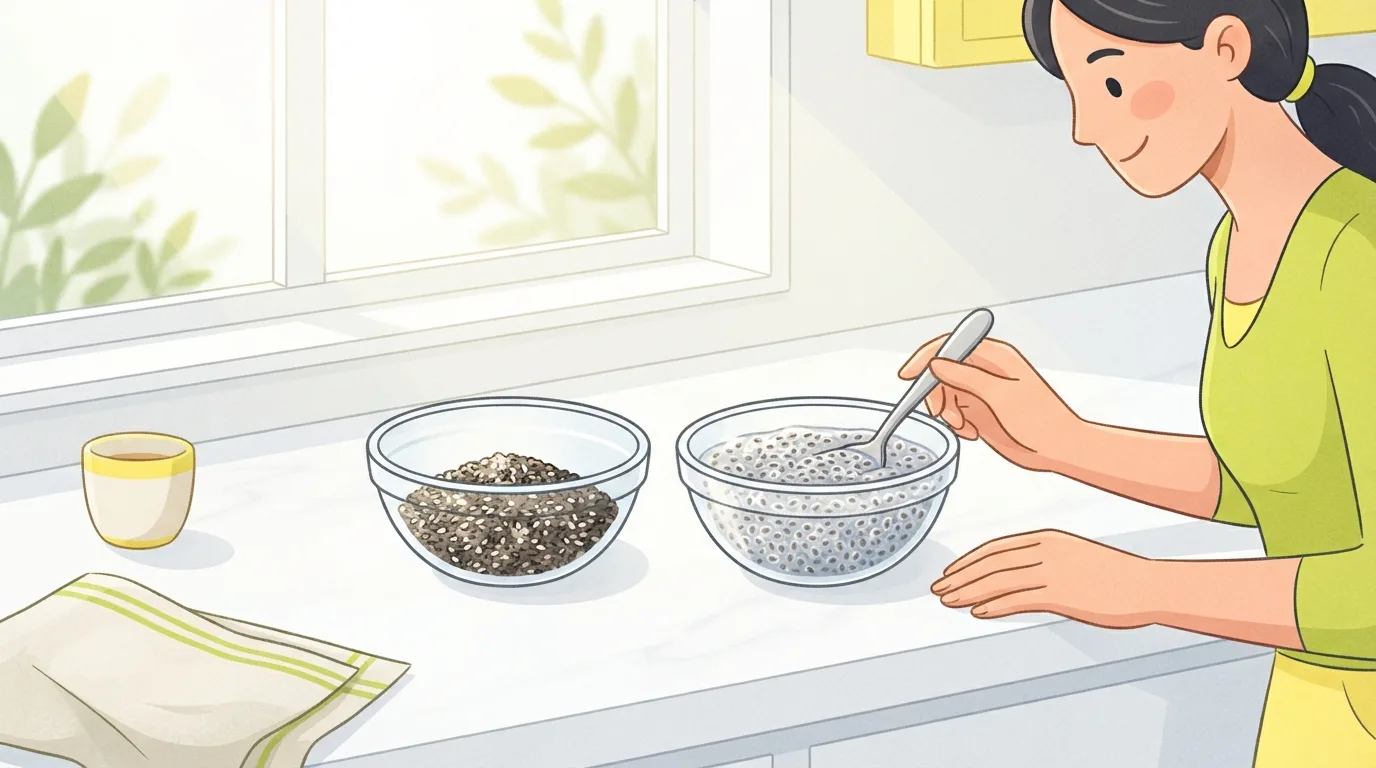
- Always soak them. Give the seeds at least 15 minutes in liquid, or overnight in the fridge for a thick pudding. Use roughly four to six parts liquid to one part seeds.
- Swap, don't stack. Put chia into a meal that replaces something less filling, such as a muffin or a sweet cereal, rather than adding it to your usual breakfast.
- Drink enough. Fiber needs fluid to move through comfortably, so add a glass of water to your day when you add chia.
Chia seed recipes for weight loss
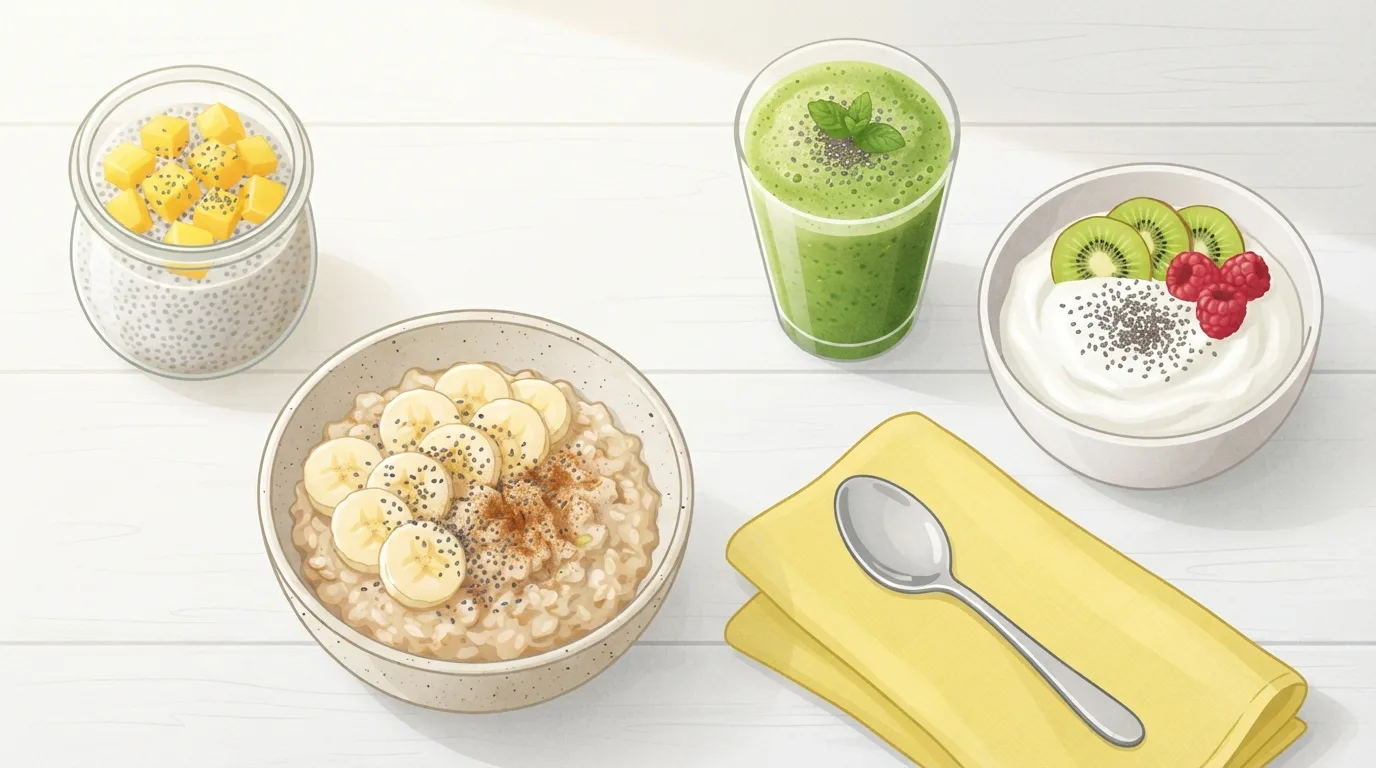
- Overnight chia pudding. Stir 2 tablespoons of chia into 1/2 cup of milk or unsweetened soy milk with a splash of vanilla. Refrigerate overnight, then top with fruit. Mixing in a scoop of plain Greek yogurt adds protein, which does more for fullness than the chia alone.
- Chia water. This is the simplest way to drink chia seeds for weight loss. Stir 1 tablespoon into 1 cup of water, add a squeeze of lemon or lime, wait at least 15 minutes and stir again before drinking. Hot water doesn't make it work any better for weight loss.
- Yogurt bowl. Sprinkle 1 tablespoon over plain yogurt with fruit and let it sit for 10 minutes. This is close to the setup Ayaz and colleagues tested, and it makes a solid mid-morning snack.
- Oatmeal or a smoothie. Stir a tablespoon into oatmeal as it cooks, or blend it into a smoothie and let it stand for a few minutes before drinking.
As for timing, no trial has compared chia at different times of day. Use it at the meal where you're most likely to snack afterwards, which for many people is breakfast or the mid-morning gap.
Can Chia Seeds Reduce Belly Fat?
Not directly. The waist results above are real but small: 3.5 centimeters against 1.1 in the Vuksan trial, and about 2.8 centimeters across the 2024 meta-analysis. In the Vuksan trial that came alongside general weight loss on a reduced-calorie diet. No food takes fat from one part of the body, and drinking chia water won't shrink your stomach by itself.
Belly fat responds to an overall calorie deficit and to exercise, and visceral fat in particular responds well to regular training. Our guide to the best exercises to lose belly fat covers that evidence. Chia can help you stay full while you run that deficit, which is a supporting role, not the main one.
Who Should Be Careful With Chia Seeds
Chia is safe for most people in normal food amounts. A few groups should take more care.
- Anyone with swallowing problems. Dry seeds swell fast. Simmelink and colleagues (2017) reported a man who ate about a tablespoon of dry chia, drank water, and needed emergency endoscopy to clear the gel blocking his esophagus. He likely had eosinophilic esophagitis, a condition that narrows the esophagus. Always soak chia first, and talk to a doctor before eating it if food ever sticks when you swallow.
- People on blood pressure medicine. In Toscano and colleagues (2014), 35 grams of chia flour a day for 12 weeks lowered blood pressure in adults with hypertension, including those already on medication. That's good news, but it can add to the effect of your pills.
- People on diabetes medicine. Chia slows the rise in blood sugar after meals, as the studies above show. If you take insulin or other glucose-lowering medicine, watch your readings when you start eating it regularly.
- People on blood thinners. Memorial Sloan Kettering's guide to chia notes that high amounts of omega-3 fats could change bleeding and clotting times. It's a theoretical concern, but worth mentioning to your doctor.
- People with seed allergies. Allergic reactions to chia are rare but have been reported, so stop eating it if you notice swelling, a rash or trouble breathing.
Where Chia Seeds Fit in a Weight-Loss Plan
Chia is a supporting player. The things that move the scale are eating a little less than you burn, enough protein to keep you full and protect muscle, and regular strength training so the weight you lose comes mostly from fat. Chia can make the first of those easier by turning a light breakfast into one that lasts until lunch.
If you log food in an app, our comparison of FitCraft vs MyFitnessPal explains how a food tracker and a workout coach split the job. FitCraft covers the training side: your AI coach is a 3D character who demonstrates every exercise and says your name while you work, and a streak gives you a reason to show up again tomorrow.
The Bottom Line
Chia seeds for weight loss are a small help, not a solution. The best trial found about 3.5 pounds of extra loss over six months on a reduced-calorie diet, another found nothing at 50 grams a day, and the reviews call the evidence low quality. The seeds are worth eating for their fiber, their omega-3 fat and the fullness they add, as long as you soak them, keep to one or two level tablespoons, and let them replace something rather than add to your day.
Simple habits are the ones that last. As Stacy, 41, said after losing 22 pounds in four months: "After my second kid, I needed something stupidly simple."
Frequently Asked Questions
How much chia seed per day for weight loss?
One to two tablespoons a day is a sensible amount: about 51 to 102 calories and 3.6 to 7.2 grams of fiber. The trial that found extra weight loss used about 30 grams per 1,000 calories eaten, which is 45 grams or more on most reduced-calorie diets, but a trial of 50 grams a day found no effect, so more isn't clearly better.
Are chia seeds good for an empty stomach?
They're fine on an empty stomach once soaked, but there's no evidence that timing makes them work better. In Nieman and colleagues (2009), overweight adults drank 25 grams in water before their first and last meals for 12 weeks and their weight didn't change. Start with one tablespoon if extra fiber tends to upset your stomach.
Is it okay to drink chia seeds?
Yes, once they've soaked into a gel. Stir about one tablespoon into a cup of water or milk and let it sit for 15 minutes or more before drinking. Never swallow dry seeds and chase them with water: a published case report describes a man who needed emergency endoscopy after dry chia swelled in his esophagus.
What are the benefits of soaking chia seeds overnight?
Soaking lets the seeds form their full gel, which makes them safer to swallow and thick enough to eat as a pudding. Soaking doesn't change the calories or fiber. If you want the omega-3 fat, grinding matters more than soaking: in Nieman and colleagues (2012), milled chia raised blood ALA by 58 percent over 10 weeks while whole seeds didn't.
What should you not mix chia seeds with?
No everyday food is known to react badly with chia. The cautions are about how you take it: not dry with a water chaser, not in large amounts on top of other fiber supplements without extra fluid, and not without asking your doctor if you take blood thinners or medicine for blood pressure or diabetes.
How long can chia seeds sit in water before going bad?
Keep soaked chia covered in the fridge and eat it within a few days. Chia pudding made with milk or yogurt is a perishable food, so follow the USDA rule of not leaving it at room temperature for more than 2 hours, or 1 hour above 90 degrees Fahrenheit. Throw it out if it smells sour or looks moldy.
Can you lose weight with chia seeds in 7 days?
Not because of the chia. Two tablespoons add about 100 calories, and the trials that measured weight ran from 10 weeks to six months, with the shorter ones finding no change. Any drop in a week comes from your overall calorie intake, and much of a first week's loss is water.