The most reliable way to boost testosterone naturally is to lose excess body fat, protect a full night of sleep and train regularly, because those are the changes that raised it in controlled studies. If you're asking how to increase testosterone, start with weight: across 24 studies, diet-driven weight loss raised total testosterone by 2.87 nmol/L, about 83 ng/dL (Corona 2013). One week of five-hour nights cut daytime levels 10 to 15 percent in young men (Leproult 2011). Lifting causes a short spike that doesn't drive muscle growth, while months of steady activity raise resting levels in men who start low. Vitamin D and zinc help only when you're deficient, and only 24.8 percent of T-booster supplements had any data showing a rise (Clemesha 2020).
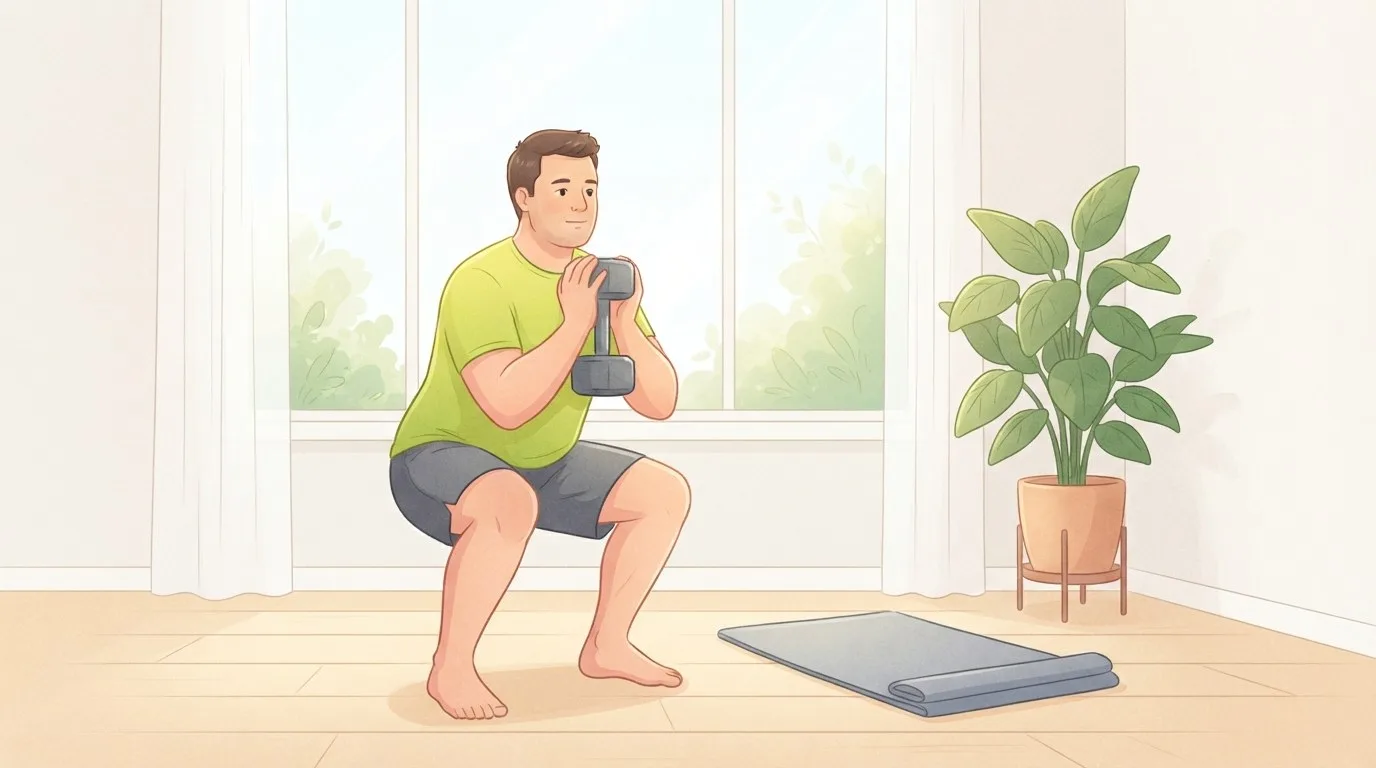
Ten healthy men in their mid-twenties spent eight nights in a sleep lab with five hours in bed each night. By the end of the week, their daytime testosterone had dropped 10 to 15 percent, and their vigor scores fell night after night. Nobody took a pill or changed their diet. They just slept less. That small study says a lot about how to increase testosterone: the biggest levers are ordinary ones, and most of them are already in your week.
Search for how to boost testosterone naturally and you'll find long lists of foods, herbs and capsules. The controlled studies point somewhere else. Losing excess body fat, sleeping enough, staying active and drinking less all move testosterone in measurable amounts. Most booster ingredients have never been tested on testosterone at all.
This page walks through what the trials measured, what normal looks like at your age, how exercise and testosterone actually interact, which nutrients matter only when you're short on them, and when a low number is a medical question for a doctor rather than a lifestyle project.
How to Increase Testosterone Naturally: Six Changes With Evidence
Here's the short list, ranked by the size and quality of the evidence behind each one. Every item gets its own section below.
- Lose excess body fat. Diet-driven weight loss raised total testosterone by about 83 ng/dL in pooled studies, and men who lost more weight saw bigger rises.
- Protect your sleep. Five-hour nights for a week cut daytime testosterone 10 to 15 percent in young, healthy men.
- Move every day and lift two or three times a week. In overweight men, the ones who added the most daily steps saw the largest testosterone gains.
- Keep alcohol moderate. About three drinks a day for three weeks lowered testosterone 6.8 percent in a diet-controlled trial.
- Don't cut dietary fat too low. Low-fat diets produced modestly lower testosterone than higher-fat diets across six intervention studies.
- Fix a real deficiency, and only that. Vitamin D and zinc raised testosterone in deficient men and did nothing measurable in men who already had enough.
What Are Normal Testosterone Levels by Age?
Testosterone is measured in a morning blood sample, reported in nanograms per deciliter (ng/dL) in the US or nanomoles per liter (nmol/L) in most other countries. To convert nmol/L to ng/dL, multiply by about 28.8.
Travison et al. (2017) in the Journal of Clinical Endocrinology & Metabolism cross-calibrated the lab assays from four cohorts covering 9,054 men in the US and Europe, so that one set of ranges could apply across labs. In healthy nonobese men aged 19 to 39, the harmonized normal range ran from 264 to 916 ng/dL, with a median of 531. Their model-based estimates by age look like this:
| Age | Median, nonobese men (ng/dL) | Low end of normal, nonobese men (ng/dL) | Median, all men (ng/dL) |
|---|---|---|---|
| 19 to 39 | 531 | 267 | 507 |
| 40 to 49 | 481 | 235 | 461 |
| 50 to 59 | 477 | 219 | 446 |
| 60 to 69 | 477 | 218 | 446 |
| 70 to 79 | 477 | 218 | 446 |
| 80 to 99 | 476 | 157 | 446 |
Two patterns stand out. In nonobese men, the median dips between the 30s and the 40s and then barely moves for four decades, so a steady slide isn't inevitable. And at every age, the median for all men sits below the median for nonobese men. Body fat accounts for that gap. The low-end column is the 2.5th percentile, the cutoff labs typically use for the bottom of the normal range. These modelled values differ by a few ng/dL from the 264 to 916 headline range, which came straight from the measured data.
Individual men do drift down over time. The Massachusetts Male Aging Study (Feldman et al., 2002) followed 1,156 men for 7 to 10 years and found total testosterone falling about 1.6 percent a year within each man, with bioavailable testosterone falling 2 to 3 percent a year. Men in apparent good health, with no chronic illness, prescription medication, obesity or excessive drinking, had androgen levels 10 to 15 percent higher than the rest. Our workout plan for men over 40 covers what that decline means for how you train.
How Does Obesity Affect Testosterone?
Excess body fat is the strongest modifiable link to low testosterone in the population data. The European Male Aging Study (Wu et al., 2008) measured 3,200 men aged 40 to 79 across eight countries. Compared with men at a BMI under 25, men with a BMI of 30 or more had total testosterone 5.09 nmol/L lower, about 147 ng/dL. Overweight men, with a BMI of 25 to 30, were 2.32 nmol/L lower, about 67 ng/dL.
That gap is bigger than a decade of aging at the rate Feldman measured. The pattern of the other hormones matters too. In the heavier men, luteinizing hormone, the pituitary signal that tells the testes to make testosterone, was unchanged or lower. That points to suppression upstream in the brain and pituitary rather than worn-out testes, and it's why the problem is often reversible.
The intervention data show the reversal. Corona et al. (2013) pooled 24 studies of weight loss in men in the European Journal of Endocrinology. A low-calorie diet raised total testosterone by 2.87 nmol/L (about 83 ng/dL), and bariatric surgery, which produces far more weight loss, raised it by 8.73 nmol/L (about 252 ng/dL). The degree of weight loss was the best predictor of how much testosterone rose. Younger men, men without diabetes and men who started heavier gained the most.
If you carry extra weight, this is the change with the largest payoff, and it's the one most booster marketing skips because it can't be sold in a bottle.
Sleep Restriction and Testosterone
Leproult and Van Cauter (2011) in JAMA ran the cleanest test of sleep and testosterone in healthy men. Ten men with a mean age of 24 spent three nights with 10 hours in bed, then eight nights with 5 hours in bed. Daytime testosterone fell about 10 percent overall and about 13 percent between 2 pm and 10 pm, from 17.9 to 15.5 nmol/L. Their self-rated vigor dropped from 28 after the first short night to 19 after the seventh.
The authors put the size in context. Normal aging lowers testosterone by about 1 to 2 percent a year, and one week of short nights produced a drop of 10 to 15 percent. Plenty of men live on five or six hours for months at a time, and they never get the chance to see what their baseline looks like rested.
Total sleep loss hits harder still. Our review of sleep and muscle growth covers a crossover trial in which a single night without sleep lowered next-morning testosterone 24 percent. If you're trying to raise testosterone, the cheapest move is the one most men skip: a consistent bedtime that leaves room for seven or more hours in bed.
If you give yourself enough time in bed and still wake up exhausted, snore loudly or have been told you stop breathing at night, see a doctor. Those symptoms deserve their own diagnosis.
Get an evidence-based plan built for you
FitCraft, our mobile fitness app, pairs you with an AI coach who builds you a personalized plan around your goals, schedule, and fitness level. Every FitCraft program is designed by Domenic Angelino, MPH (Brown University) and NSCA-CSCS, with research published in the Journal of Strength and Conditioning Research and Medicine & Science in Sports & Exercise.
Take the Free Assessment Free • 2 minutes • No credit cardExercise and Testosterone: The Short Spike vs the Long-Term Level
Exercise and testosterone have a more complicated relationship than gym lore suggests. A hard resistance session, especially a big lower-body one, raises testosterone for a short time afterward. The real question is whether that spike does anything, and whether training changes the resting level your doctor would measure.
The post-workout spike doesn't build the muscle
West et al. (2010) in the Journal of Applied Physiology trained 12 young men for 15 weeks with a clever design. Each man trained one arm on its own, which kept hormones flat, and trained the other arm followed by a heavy leg session that raised testosterone, growth hormone and IGF-1 immediately afterward and 15 and 30 minutes later. Muscle size grew 12 percent in the low-hormone arm and 10 percent in the high-hormone arm, and strength gains didn't differ between them.
A larger follow-up by West and Phillips (2012) tracked 56 young men through 12 weeks of training. The size of each man's post-workout free testosterone response had no relationship with his gains in lean mass or leg strength. The spike is real, it's brief, and it doesn't explain who grows.
Steady activity raises resting levels in men who start low
The resting level is what matters for health, and it moves with overall activity and body fat. Kumagai et al. (2016) put 41 overweight and obese men through a 12-week program of aerobic training and calorie restriction. Testosterone rose across the group, and the men who increased their daily steps the most finished with significantly higher testosterone than the men who increased them least. How hard they cut calories made no such difference, and the change in steps correlated with the change in testosterone.
Age doesn't close that door. In Hayes et al. (2017), 22 lifelong sedentary men with an average age of about 62 trained for 12 weeks. Total testosterone rose about 17 percent, and most of that gain, roughly 10 percent, arrived in the first six weeks of basic conditioning before any high-intensity work began.
What activities drop testosterone?
Too much training on too little food can push testosterone down. In his review of exercising men, Hackney (2020) describes low resting testosterone in men doing heavy endurance training, tied to low energy availability or excessive training load and usually reversible once food and rest catch up. A smaller group of long-term endurance athletes shows a lasting pattern he calls the exercise-hypogonadal male condition. Most men are far more at risk of doing too little than too much. Still, stacking long cardio sessions on top of a steep calorie cut is the combination to avoid.
A testosterone-friendly training week at home
None of this requires a barbell. The programs that moved resting testosterone used general training and more daily movement, and dumbbells and bodyweight cover that well:
- Two or three full-body strength sessions a week. Goblet squats, dumbbell Romanian deadlifts, push-ups, dumbbell rows and lunges, 2 to 4 sets of 8 to 15 reps, stopping each set with one or two good reps left.
- A daily walking habit. Step count was the variable that tracked testosterone in the Kumagai trial, so build the habit first and add to it over the weeks.
- One or two easier days. Mobility work or an easy walk keeps you moving without piling up fatigue.
- Enough food to recover. If you're losing weight, keep the deficit moderate so your training doesn't run on empty.
If you'd rather not build that week yourself, FitCraft's 3D AI coaches demonstrate the dumbbell and bodyweight moves in interactive 3D and adjust your workouts as you progress. Our comparison of the best workout apps for men shows how it stacks up against the other options.
Alcohol, Diet and Testosterone
Sierksma et al. (2004) ran a diet-controlled crossover trial in Alcoholism: Clinical and Experimental Research. Ten middle-aged men drank beer with dinner for three weeks, about 40 grams of alcohol a day or roughly three standard drinks, and alcohol-free beer for another three weeks. The researchers supplied the whole diet in both periods. Testosterone was 6.8 percent lower after the alcohol weeks.
That's a modest effect from a steady, moderate intake, and heavier drinking only adds to it. A big night after training brings other costs as well, which our review of alcohol and muscle recovery covers in detail.
Diet composition matters at the edges. Whittaker and Wu (2021) pooled six intervention studies with 206 men comparing low-fat and higher-fat diets. Total and free testosterone were modestly lower on the low-fat diets, and the effect was stronger in European and North American men. The authors asked for larger trials before anyone draws firm conclusions. The practical read is simple. There's no testosterone reason to cut fat to the bone, and a varied diet with fish, eggs, nuts, olive oil and plenty of plants covers the bases.
Vitamin D and Zinc Help Only If You're Deficient
Pilz et al. (2011) analyzed 54 overweight men from a year-long weight-loss trial. Everyone started vitamin D deficient, with testosterone at the low end of normal. Men given daily vitamin D saw total testosterone rise from 10.7 to 13.4 nmol/L, while the placebo group didn't change.
A larger, cleaner trial then came back flat. Lerchbaum et al. (2019) randomized 100 middle-aged men with low testosterone to vitamin D or placebo for 12 weeks and measured testosterone by mass spectrometry. Vitamin D had no effect on total testosterone or on any other hormone they measured. Their average vitamin D level at the start was insufficient rather than deeply deficient, which may be the difference.
Zinc follows the same pattern. Prasad et al. (1996) restricted dietary zinc in four young men for 20 weeks and watched testosterone fall from 39.9 to 10.6 nmol/L. In nine older men who were marginally zinc deficient, six months of supplementation raised it from 8.3 to 16.0 nmol/L. But in 14 regularly exercising men who already ate enough zinc, a high-dose zinc and magnesium product changed neither total nor free testosterone (Koehler et al., 2009).
So test before you guess. A blood test shows whether your vitamin D is low, and a doctor can judge whether your diet or health puts you at risk of low zinc. Several booster products carry zinc above the US upper limit, which is one more reason not to self-dose.
Do Natural Testosterone Boosters Work?
Mostly no, and the evidence was never there to begin with. Clemesha et al. (2020) in the World Journal of Men's Health approached the market the way a shopper would. They found 50 natural testosterone booster products through a Google search and checked every ingredient against the published research. The products held 109 unique ingredients, 8.3 per product on average, and 90 percent of the labels claimed to boost testosterone.
Only 24.8 percent of the supplements had published data showing a testosterone increase. Another 10.1 percent had data showing a decrease, 18.3 percent had data showing no change, and 61.5 percent had no data on testosterone at all. Many packed vitamins and minerals far above daily needs, with a median of 1,291 percent of the recommended intake for vitamin B12 and 272 percent for zinc, and 13 products exceeded the US upper limit for zinc, vitamin B3 or magnesium.
The herbal ingredients that fill booster labels tell the same story when they're tested one at a time. Our review of ashwagandha research shows how one small positive trial turned into years of marketing while other trials found no testosterone effect. If a product promises a big rise, ask for the human trial. It usually doesn't exist.
Any supplement can interact with medications, and none of them replaces a diagnosis. If you suspect low testosterone, get the blood test before you buy anything.

Can Testosterone Affect Your Mood?
Yes. Low testosterone is linked with low energy and low mood, though that link is weaker than the link with sexual symptoms. In the European Male Aging Study analysis of 3,369 men aged 40 to 79 (Wu et al., 2010), poor morning erections, low sexual desire, erectile dysfunction, trouble with vigorous activity, depression and fatigue all tracked testosterone levels. Only the three sexual symptoms clustered tightly enough to define a syndrome.
In Leproult's sleep study, vigor fell alongside testosterone. And in men treated for low testosterone, a meta-analysis of 27 placebo-controlled trials with 1,890 men found a small reduction in depressive symptoms (Walther et al., 2019). Low mood has many causes, though. A testosterone number never replaces talking to a doctor about how you feel, and if you're struggling, that conversation is worth having now.
When Low Testosterone Is a Medical Issue
Lifestyle changes help men whose levels are low-normal or pushed down by weight, short sleep or drinking. They don't fix a medical cause, and only a doctor can tell the two apart.
The Endocrine Society's guideline (Bhasin et al., 2018) recommends diagnosing low testosterone only in men who have symptoms and unequivocally, consistently low levels. The test should be a fasting morning total testosterone, repeated to confirm, with free testosterone checked when the total sits near the lower limit. The guideline also calls for finding the cause before any treatment. The European Male Aging Study proposed a practical threshold: at least three sexual symptoms together with total testosterone below 11 nmol/L (about 320 ng/dL) and free testosterone below 220 pmol/L.
See a doctor rather than self-treating if you notice any of these:
- Low sexual desire, fewer morning erections or erection problems that persist
- Fatigue, low mood or lost strength that doesn't improve with better sleep and regular training
- Breast tenderness or growth, shrinking testes or loss of body hair
- A single low test result, which needs a repeat morning test before anyone acts on it
Testosterone therapy is a prescription treatment with real risks and specific reasons not to use it, including plans to have children in the near future. That decision belongs with your doctor, and this page doesn't cover dosing or treatment.
Common Misconceptions
Misconception 1: "Heavy lifting spikes testosterone, and that spike builds the muscle"
The spike happens, and it doesn't drive the gains. In West's 15-week trial, the arm trained with a large hormone surge grew no more than the arm trained without one, and across 56 men the size of the post-workout response didn't predict lean mass or strength. Lift for the training effect. Choose exercises because they train the muscles you want, not because they promise a hormone response.
Misconception 2: "Testosterone falls off a cliff after 30"
The harmonized data don't show a cliff. In nonobese men the median falls from 531 ng/dL in the 19 to 39 group to 481 in the 40s and then holds near 477 into the 70s. Individual men do decline gradually, about 1.6 percent a year in the Massachusetts study, and men in good health without obesity or heavy drinking ran 10 to 15 percent higher. Much of what gets blamed on age is weight, illness and lifestyle.
Misconception 3: "A booster can fix what lifestyle can't"
Most booster ingredients have no testosterone data at all, and the nutrients with real effects only work in men who are deficient. Zinc did nothing in men who ate enough of it, and vitamin D did nothing in a randomized trial of men with low testosterone. Weight loss, by comparison, raised total testosterone in every pooled analysis.
What the Research Suggests Going Forward
The strongest evidence sits with body weight. The population link is large and consistent, the weight-loss studies show a dose-response pattern, and the mechanism is reversible suppression rather than permanent damage. Sleep comes next, with a clear experimental effect in young men. The case for lifting comes indirectly, through body composition and overall activity, rather than through the hormone spike.
The limits are real. Several key studies are tiny: ten men in the sleep study, four in the zinc restriction arm, ten in the alcohol trial. Many trials ran only weeks, most studied young men or men with obesity, and few measured symptoms alongside the hormone. Testosterone also varies from morning to afternoon and day to day, which is why one blood test is never enough to judge where you stand.
Three things to actually do. Make sleep a fixed appointment with at least seven hours in bed. If you carry extra weight, put your effort into losing it with daily walking and two or three strength sessions a week. And if symptoms point to low testosterone, get two morning blood tests and a doctor's read before you spend money on any product.
References
- Corona G, Rastrelli G, Monami M, et al. "Body weight loss reverts obesity-associated hypogonadotropic hypogonadism: a systematic review and meta-analysis." European Journal of Endocrinology 168.6 (2013): 829-843. DOI: 10.1530/EJE-12-0955
- Leproult R, Van Cauter E. "Effect of 1 week of sleep restriction on testosterone levels in young healthy men." JAMA 305.21 (2011): 2173-2174. DOI: 10.1001/jama.2011.710
- Travison TG, Vesper HW, Orwoll E, et al. "Harmonized reference ranges for circulating testosterone levels in men of four cohort studies in the United States and Europe." Journal of Clinical Endocrinology & Metabolism 102.4 (2017): 1161-1173. DOI: 10.1210/jc.2016-2935
- Wu FC, Tajar A, Pye SR, et al. "Hypothalamic-pituitary-testicular axis disruptions in older men are differentially linked to age and modifiable risk factors: the European Male Aging Study." Journal of Clinical Endocrinology & Metabolism 93.7 (2008): 2737-2745. DOI: 10.1210/jc.2007-1972
- Feldman HA, Longcope C, Derby CA, et al. "Age trends in the level of serum testosterone and other hormones in middle-aged men: longitudinal results from the Massachusetts Male Aging Study." Journal of Clinical Endocrinology & Metabolism 87.2 (2002): 589-598. DOI: 10.1210/jcem.87.2.8201
- West DW, Burd NA, Tang JE, et al. "Elevations in ostensibly anabolic hormones with resistance exercise enhance neither training-induced muscle hypertrophy nor strength of the elbow flexors." Journal of Applied Physiology 108.1 (2010): 60-67. DOI: 10.1152/japplphysiol.01147.2009
- West DW, Phillips SM. "Associations of exercise-induced hormone profiles and gains in strength and hypertrophy in a large cohort after weight training." European Journal of Applied Physiology 112.7 (2012): 2693-2702. DOI: 10.1007/s00421-011-2246-z
- Kumagai H, Zempo-Miyaki A, Yoshikawa T, et al. "Increased physical activity has a greater effect than reduced energy intake on lifestyle modification-induced increases in testosterone." Journal of Clinical Biochemistry and Nutrition 58.1 (2016): 84-89. DOI: 10.3164/jcbn.15-48
- Hayes LD, Herbert P, Sculthorpe NF, Grace FM. "Exercise training improves free testosterone in lifelong sedentary aging men." Endocrine Connections 6.5 (2017): 306-310. DOI: 10.1530/EC-17-0082
- Hackney AC. "Hypogonadism in exercising males: dysfunction or adaptive-regulatory adjustment?" Frontiers in Endocrinology 11 (2020): 11. DOI: 10.3389/fendo.2020.00011
- Sierksma A, Sarkola T, Eriksson CJ, et al. "Effect of moderate alcohol consumption on plasma dehydroepiandrosterone sulfate, testosterone, and estradiol levels in middle-aged men and postmenopausal women: a diet-controlled intervention study." Alcoholism: Clinical and Experimental Research 28.5 (2004): 780-785. DOI: 10.1097/01.alc.0000125356.70824.81
- Whittaker J, Wu K. "Low-fat diets and testosterone in men: systematic review and meta-analysis of intervention studies." Journal of Steroid Biochemistry and Molecular Biology 210 (2021): 105878. DOI: 10.1016/j.jsbmb.2021.105878
- Pilz S, Frisch S, Koertke H, et al. "Effect of vitamin D supplementation on testosterone levels in men." Hormone and Metabolic Research 43.3 (2011): 223-225. DOI: 10.1055/s-0030-1269854
- Lerchbaum E, Trummer C, Theiler-Schwetz V, et al. "Effects of vitamin D supplementation on androgens in men with low testosterone levels: a randomized controlled trial." European Journal of Nutrition 58.8 (2019): 3135-3146. DOI: 10.1007/s00394-018-1858-z
- Prasad AS, Mantzoros CS, Beck FW, Hess JW, Brewer GJ. "Zinc status and serum testosterone levels of healthy adults." Nutrition 12.5 (1996): 344-348. DOI: 10.1016/s0899-9007(96)80058-x
- Koehler K, Parr MK, Geyer H, Mester J, Schänzer W. "Serum testosterone and urinary excretion of steroid hormone metabolites after administration of a high-dose zinc supplement." European Journal of Clinical Nutrition 63.1 (2009): 65-70. DOI: 10.1038/sj.ejcn.1602899
- Clemesha CG, Thaker H, Samplaski MK. "'Testosterone Boosting' supplements composition and claims are not supported by the academic literature." World Journal of Men's Health 38.1 (2020): 115-122. DOI: 10.5534/wjmh.190043
- Wu FC, Tajar A, Beynon JM, et al. "Identification of late-onset hypogonadism in middle-aged and elderly men." New England Journal of Medicine 363.2 (2010): 123-135. DOI: 10.1056/NEJMoa0911101
- Walther A, Breidenstein J, Miller R. "Association of testosterone treatment with alleviation of depressive symptoms in men: a systematic review and meta-analysis." JAMA Psychiatry 76.1 (2019): 31-40. DOI: 10.1001/jamapsychiatry.2018.2734
- Bhasin S, Brito JP, Cunningham GR, et al. "Testosterone therapy in men with hypogonadism: an Endocrine Society clinical practice guideline." Journal of Clinical Endocrinology & Metabolism 103.5 (2018): 1715-1744. DOI: 10.1210/jc.2018-00229
Frequently Asked Questions
What is the #1 testosterone killer?
Excess body fat is the biggest modifiable one in the population data. In the European Male Aging Study of 3,200 men aged 40 to 79, men with a BMI of 30 or more had total testosterone about 147 ng/dL lower than men with a BMI under 25, a bigger gap than a decade of normal aging produces. Short sleep is a close second for younger men: one week of five-hour nights cut daytime testosterone 10 to 15 percent.
How can a man get his testosterone back?
Start with a repeated fasting morning blood test to confirm the level is actually low, and ask a doctor to look for a medical cause. If excess weight is part of the picture, losing it is the best-supported fix: across 24 studies, the more weight men lost, the more their testosterone rose. Protecting sleep, staying active most days and drinking less add to that. Hormone treatment is a medical decision for your doctor, not a self-help step.
How can you increase testosterone levels quickly?
Sleep is the fastest lever the research points to: one week of short nights lowered daytime testosterone 10 to 15 percent in young men, so if you're short on sleep, fixing it is the quickest change you can make. Weight loss works over weeks to months. A hard workout raises testosterone for about half an hour, but that spike didn't change muscle or strength gains in training studies, so it isn't a meaningful boost.
What are normal testosterone levels?
In healthy nonobese men aged 19 to 39, the harmonized normal range is 264 to 916 ng/dL, with a median of 531, based on 9,054 men in four US and European cohorts. In nonobese men the median dips to about 481 in the 40s and then stays near 477 into the 70s. Labs use slightly different ranges, so read your result against the range printed on your report and confirm a low value with a second morning test.
Do bananas drop testosterone?
No. No human study has shown that bananas lower testosterone, and they aren't on any list of foods tested for that effect. The dietary changes with measurable effects on testosterone are much bigger ones: losing excess body fat, avoiding very low-fat diets and keeping alcohol moderate.
Can home workouts with dumbbells and bodyweight help testosterone?
Yes, as far as the evidence goes. The studies that raised resting testosterone used general training and more daily movement, not maximal barbell lifting, and the extra steps men added tracked their testosterone gains. Two or three full-body dumbbell and bodyweight sessions a week plus a daily walking habit covers what those programs did, and it supports the weight loss that has the largest effect.