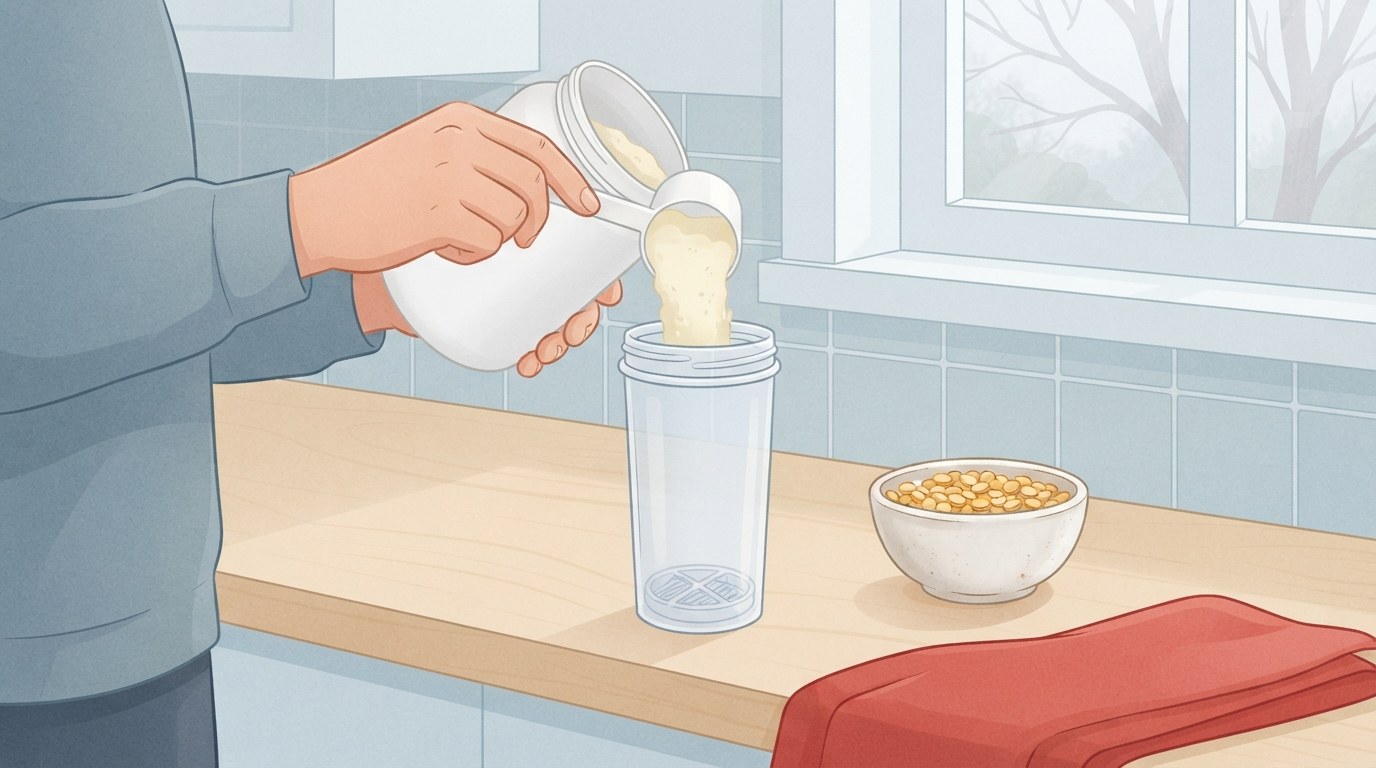
Pea protein used to be the thing you bought when you couldn't have dairy. Now it's in bars, plant milks and a large share of the powders on the shelf, with a pile of claims attached: hypoallergenic, complete, as good as whey, good for your heart. Some of those hold up in controlled trials. Some only hold up in a lab dish.
If you avoid dairy, or you've gone plant-based, the worry is usually simple. You're putting in the training, and you don't want to find out a year from now that your protein was quietly holding you back. That worry deserves numbers rather than marketing.
This review stays on pea protein specifically: what it's made of, its amino acid profile and digestibility score, the trials that tested it against whey, what it does for fullness, digestion and blood markers, its real drawbacks and how to dose it. For the wider question of animal versus plant protein, including soy and the pea-rice blends, our review of whey vs plant protein research covers that literature in full.
What Is Pea Protein Made Of?
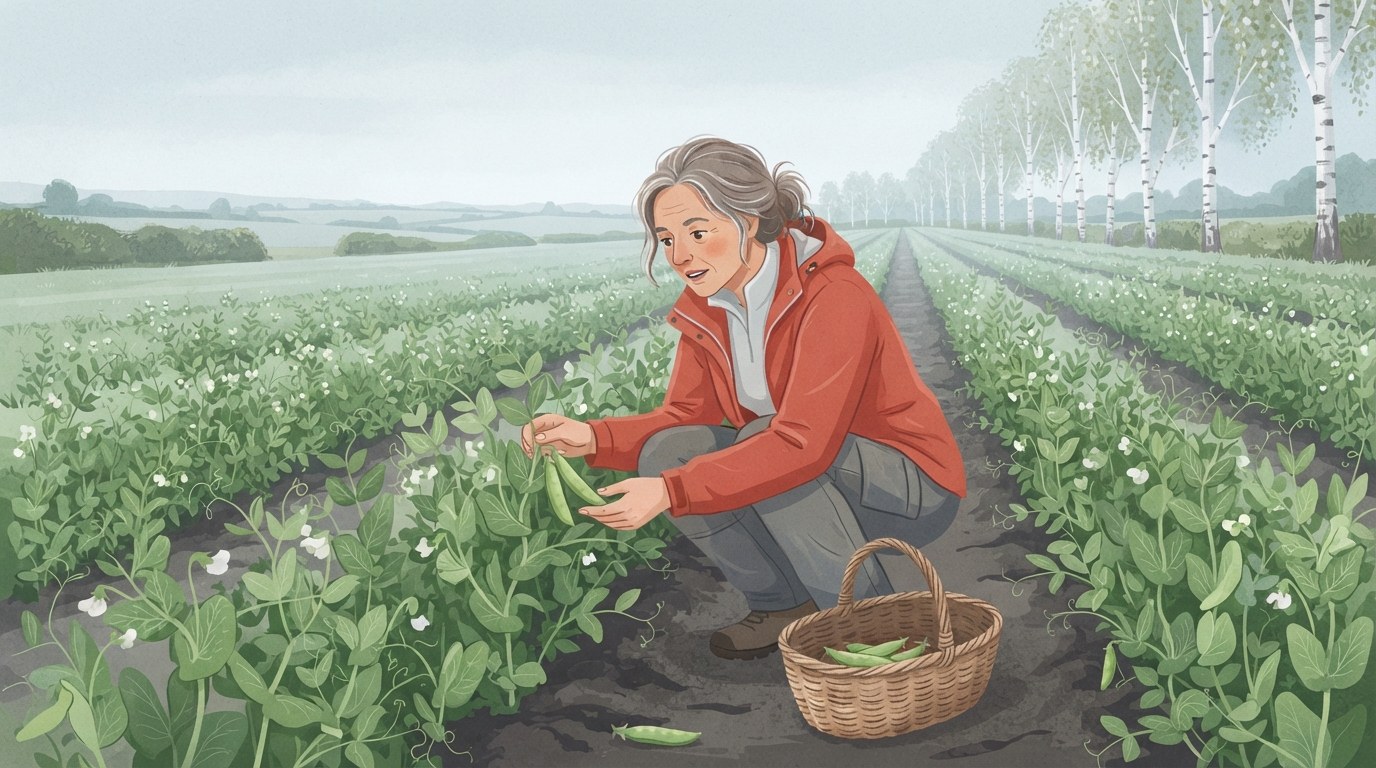
Pea protein comes from dried yellow split peas, the same Pisum sativum peas used for soup. The peas are milled into flour, and the protein is separated from the starch and fiber, usually by dissolving it in water at a controlled pH, pulling it back out and drying it into powder. Three forms show up on labels:
- Pea protein isolate. The most refined form and the one most powders use. In Gorissen and colleagues' 2018 analysis of commercial isolates, the pea samples were 77 to 81 percent protein by weight, so a 30-gram scoop carries roughly 24 grams of protein.
- Pea protein concentrate. Less refined, with more of the pea's starch and fiber left in. It's cheaper and lower in protein per scoop.
- Hydrolyzed pea protein. Isolate that has been partly broken into shorter peptides with enzymes. It digests a little faster and is mostly used in research and specialist products.
So do peas have protein? Yes, though far less than the powder. Cooked green peas carry about 5 grams of protein per 100 grams in USDA FoodData Central, which works out to about 8 grams in a cup. That's a decent amount for a vegetable, and it comes with fiber and carbohydrate. The powder exists because you'd need about three cups of peas to match one scoop.
Is Pea Protein a Complete Protein?
Yes. Pea protein contains all nine essential amino acids. It isn't evenly balanced, though, and the shape of its profile explains most of what the trials found.
The amino acid profile
Gorissen's team measured amino acids in three commercial pea isolates. Working from their table, roughly 30 percent of pea protein is essential amino acids, against 43 percent for whey. The pea profile has three features worth knowing:
- Leucine is moderate. Pea isolate had 5.7 grams of leucine per 100 grams of powder. At 80 percent protein, that's about 7 percent of the protein. Leucine is the amino acid that switches on muscle building after a meal, which is where the leucine threshold idea comes from.
- Lysine is high for a plant. About 5.9 percent of the protein, which is why pea pairs so well with grains, which are low in lysine.
- Methionine is low. About 0.4 percent, against an average of 2.5 percent for the animal proteins in the same analysis. This is pea's weak point.
Pea is also unusually rich in arginine, at 5.9 grams per 100 grams of isolate against 1.7 grams in whey. No trial has shown that the extra arginine changes training results.
Digestibility: the PDCAAS and DIAAS scores
Protein quality scores combine the amino acid profile with how much of the protein the gut actually absorbs. In Rutherfurd and colleagues' 2015 study in the Journal of Nutrition, pea protein concentrate scored 0.89 on PDCAAS, the older score, and 0.82 on DIAAS, the newer and stricter one. Whey protein isolate scored 1.00 and 1.09. Soy protein isolate scored 0.98 and 0.90. Rice protein concentrate scored only 0.42 and 0.37.
A DIAAS of 0.82 means pea protein's most limiting amino acids, methionine plus cysteine, cover about 82 percent of the reference requirement gram for gram. That's a good score for a plant protein. The scores were measured in growing rats, though, so treat the number as a ranking rather than a precise figure. And a protein score describes one food eaten alone. Across a day of mixed meals, other foods fill the methionine gap.
On amino acids alone, a 25-gram serving of pea protein delivers about 1.8 grams of leucine, while the same serving of whey delivers closer to 2.75 grams. The useful finding is what happened when researchers measured muscle directly.
The Research: What Studies Show
Babault 2015: 161 men, 12 weeks, pea vs whey vs placebo
The largest training trial of pea protein is Babault and colleagues (2015) in the Journal of the International Society of Sports Nutrition. They randomized 161 men aged 18 to 35 to pea protein, whey or a placebo, 25 grams twice a day, during 12 weeks of upper-body resistance training. Biceps thickness was measured with ultrasound, and strength on an isokinetic machine.
Across everyone, biceps thickness rose from 24.9 to 27.3 millimeters, with only a trend toward a difference between groups (P = 0.09). In the weakest participants at the start, the gap became significant: thickness rose 20.2 percent with pea, 15.6 percent with whey and 8.6 percent with placebo. Pea beat placebo, and whey sat in between with no significant difference from either. Strength rose in all three groups with no difference between them.
Pea protein built muscle at least as well as whey in this trial, and the benefit over placebo showed most clearly in people new to training. The study was run with a pea protein manufacturer that employed three of the authors, so independent replication matters more than usual.
Banaszek 2019: a small pilot in high-intensity functional training
Banaszek and colleagues (2019) in Sports followed 15 men and women through eight weeks of high-intensity functional training, four sessions a week. They took 24 grams of whey or pea protein before and after each session and between meals on rest days. Both groups improved their one-rep max back squat and deadlift, and there were no differences between groups for any measure, including body composition and muscle thickness. With eight people in one group and seven in the other, this pilot can't rule out small differences, but it points the same way as Babault.
West 2023 and McKendry 2024: muscle protein synthesis measured directly
The leucine arithmetic says 25 grams of pea should fall a little short. Two tracer studies tested that directly, using biopsies to measure muscle protein synthesis rather than estimating it from amino acids.
West and colleagues (2023) in the American Journal of Physiology: Endocrinology and Metabolism had 33 resistance-trained young adults do a whole-body workout and then drink 25 grams of protein from pea, mycoprotein or a blend of the two. Muscle-building rates over the next four hours were 0.087 percent per hour with pea, 0.076 with mycoprotein and 0.085 with the blend, with no significant differences. The authors concluded that pea's low methionine may not limit the immediate muscle-building response.
McKendry and colleagues (2024) in the American Journal of Clinical Nutrition tested the group that most needs good protein: 31 men averaging 72 years old, who respond less to protein than younger adults. After a week on a diet at the recommended dietary allowance, they added 50 grams a day of whey, pea or collagen protein, 25 grams at breakfast and 25 at lunch. Daily muscle protein synthesis rose to 1.59 percent per day with whey and 1.59 with pea. Collagen didn't raise it at all.
Korzepa 2025: a pea-based diet in adults aged 50 to 70
Korzepa and colleagues (2025), also in the American Journal of Clinical Nutrition, compared whole diets rather than single drinks. Twenty-seven adults aged 50 to 70 ate 1.0 gram of protein per kilogram of body weight a day for 10 days, either from an animal-focused diet with whey or a plant-focused diet with pea protein, and trained one leg every other day. Muscle protein synthesis was higher in the trained leg in both groups (1.50 versus 1.34 percent per day on the pea diet), with no difference between diets. Worth noting: a whey producer funded this trial, and pea still came out level.
Nieman 2020: recovery after muscle-damaging exercise
One trial looked at recovery rather than growth. Nieman and colleagues (2020) in Nutrients put 92 untrained men aged 18 to 55 through a 90-minute muscle-damaging workout, then gave them whey, pea protein or water for five days, with the protein at 0.9 grams per kilogram a day in three doses. Whey lowered blood markers of muscle damage compared with water, with large effects on days four and five. Pea had an intermediate effect that didn't reach significance, and pea and whey didn't differ significantly from each other. Neither protein reduced soreness or changed performance tests. This trial was also funded by a pea protein manufacturer, which makes the modest result more credible rather than less.
Get an evidence-based plan built for you
FitCraft, our mobile fitness app, pairs you with an AI coach who builds you a personalized plan around your goals, schedule, and fitness level. Every FitCraft program is designed by Domenic Angelino, MPH (Brown University) and NSCA-CSCS, with research published in the Journal of Strength and Conditioning Research and Medicine & Science in Sports & Exercise.
Take the Free Assessment Free • 2 minutes • No credit cardPea Protein Benefits Beyond Muscle
Fullness and appetite
Pea protein's satiety reputation comes mostly from one study. Abou-Samra and colleagues (2011) in Nutrition Journal gave 32 men a drink with 20 grams of casein, whey, pea protein, egg albumin or maltodextrin, or plain water, 30 minutes before a buffet meal. Only casein and pea cut food intake compared with water. The researchers measured caloric compensation, meaning how much less people ate at the meal to make up for the drink's calories. It was 110 percent for casein, 103 percent for pea and 62 percent for whey. People also reported feeling fuller after casein and pea.
The effect depended on timing. In the same paper's second study, drinking the protein as a starter at the start of the meal made no difference to how much people ate. And Lang and colleagues (1998) in the American Journal of Clinical Nutrition found that swapping the protein type inside a full mixed lunch, pea included, didn't change satiety or food intake over the next 24 hours. So a pea shake half an hour before a meal may take the edge off your appetite. Pea protein mixed into a normal meal behaves like any other protein.
Cholesterol and blood pressure
The heart claims are thinner than the labels suggest. In the Korzepa trial above, non-HDL cholesterol fell from 3.89 to 3.37 mmol/L on the pea-based diet and didn't change on the whey diet. That's a 10-day result in 27 people on a whole diet, so it's a signal rather than proof.
The blood pressure claim traces back to Li and colleagues (2011) in the Journal of Agricultural and Food Chemistry. They used a pea protein hydrolysate broken down with an enzyme into small peptides. Over three weeks it cut systolic pressure by 5 to 6 mmHg compared with placebo in seven people, while ordinary pea protein isolate had no blood pressure effect in the rat experiments. A regular powder isn't the product that was tested.
Digestion, bloating and FODMAPs
Many people switch to pea protein because whey upsets their stomach, usually from lactose. Pea isolate contains no lactose, which is a genuine advantage for them. Whole peas are high in FODMAPs, the fermentable carbohydrates that bloat people with irritable bowel syndrome, and isolates remove most of that carbohydrate. How much is left varies. In 2024 the FODMAP team at Monash University tested a range of retail "100% pea protein" products, found significant variability in FODMAP content between brands and decided not to list pea protein as a generic food in their app. If your gut is sensitive, judge one product at a time.
What Is the Drawback of Pea Protein?
Pea protein has four real drawbacks, and none of them is a reason for most people to avoid it.
- It isn't hypoallergenic. Pea isn't one of the nine major allergens US labels must call out, which is where the "allergen-friendly" reputation comes from. A 2024 review by Abu Risha and colleagues in Current Allergy and Asthma Reports lists pea among the legumes now recognized as allergen sources, notes that severe reactions have been described particularly for peas and lupine, and points to cross-reactions with peanut. If you're allergic to peanuts or other legumes, ask your allergist before using pea protein.
- It's low in methionine and moderate in leucine. This matters if pea is most of your protein and the rest of your diet is narrow. A varied diet covers the methionine, and a few extra grams per shake cover the leucine.
- Heavy metals are a fair question for any powder. Testing groups have found measurable lead, cadmium and arsenic in many protein powders. Bandara and colleagues (2020) in Toxicology Reports modelled one to three servings a day from the published measurements and found the levels stayed below US EPA hazard thresholds, with whey powders lowest. A powder carrying an independent third-party testing seal is the simplest filter.
- Taste and texture. Pea isolate is earthier and grittier than whey. It mixes better into smoothies, oats and baking than into water.
How to Use Pea Protein: Dose and Timing
The trials give a clear working range, so start there rather than with the label's suggested serving.
- Per serving, aim for 25 to 35 grams of pea protein. Every positive trial above used about 25 grams at a time, once or twice a day. If you're over 60, or pea is your only protein at that meal, lean toward the top of the range to make up for its lower leucine.
- Per meal across the day, about 0.4 grams per kilogram of body weight. That's the target Schoenfeld and Aragon (2018) proposed for muscle building, spread across at least four meals. For a 75-kilogram adult, that's about 30 grams per meal.
- Per day, the total matters most. How much protein to eat across the day depends on your body weight and goal, and our guide to how much protein per day works through the numbers. Pea protein is one way to reach the target, not a replacement for it.
- Timing is flexible. The trials dosed protein around training and at breakfast and lunch. If appetite control is the goal, the satiety study suggests a shake about 30 minutes before a meal rather than with it.
- Pair it with grains when you can. Oats, rice or bread in the same meal cover pea's low methionine, while pea covers the grains' low lysine.
Protein supports the training. It doesn't replace it. Every trial on this page paired the powder with resistance training, and Babault's biggest gains showed up in people new to lifting. If you still need the training half, our roundup of the best strength training apps compares the options for lifting at home or in a gym.
Is Pea Protein Better for the Planet?
On greenhouse gases, by a wide margin. Poore and Nemecek (2018) in Science pooled data from about 38,700 farms. In their dataset, as published through Our World in Data, peas came in at about 0.44 kilograms of CO2-equivalent per 100 grams of protein, against about 9.5 for milk, 10.8 for cheese and 49.9 for beef from beef herds. Peas also fix their own nitrogen from the air with the help of soil bacteria, so they need little or no nitrogen fertilizer.
Two caveats. Those figures are for whole peas, and turning them into an isolate adds processing energy. And whey is a by-product of cheesemaking, so how much of the dairy footprint it should carry is a matter of accounting. The gap is still large enough that pea protein comes out well ahead on carbon.
Common Misconceptions
Misconception 1: "Pea protein is incomplete, so it can't build muscle"
It contains all nine essential amino acids, and its weak point, methionine, didn't stop it matching whey in Babault's training trial or in McKendry's synthesis study in older men. A low methionine content is a reason to eat a varied diet. It isn't a reason to expect smaller gains.
Misconception 2: "Pea protein is inflammatory"
No controlled human trial we found shows pea protein raising inflammation in people who aren't allergic to it. The Korzepa trial tracked kidney function and blood lipids on a pea-based diet for 10 days and found no harm, while non-HDL cholesterol fell.
What the Research Suggests Going Forward
The pea protein literature is promising and small, with three limits worth keeping in mind.
First, funding. Several key pea studies were funded or co-authored by ingredient manufacturers. That doesn't make them wrong, and in the Nieman and Korzepa trials the sponsor's product didn't come out ahead, but independent trials would help. Second, size and length. Babault is the only large training trial, and it ran 12 weeks in young men. Most tracer studies measured hours or days, and long-term data in women and older lifters is thin. Third, the health claims rest on a 10-day diet study and a seven-person trial of a special hydrolysate. They're leads, not reasons to take pea protein for your heart.
What's solid is enough to act on. Pea protein is a well-absorbed, nearly complete protein that built muscle as well as whey in the trials that compared them at around 25 grams a serving. It suits people who avoid dairy or soy, it may blunt appetite before a meal, and its carbon cost is a small fraction of dairy's. The bigger question for your results is usually whether you keep training long enough to use it.
References
- Babault N, Païzis C, Deley G, Guérin-Deremaux L, Saniez MH, Lefranc-Millot C, Allaert FA. "Pea proteins oral supplementation promotes muscle thickness gains during resistance training: a double-blind, randomized, Placebo-controlled clinical trial vs. Whey protein." J Int Soc Sports Nutr. 2015;12(1):3. doi:10.1186/s12970-014-0064-5
- Banaszek A, Townsend JR, Bender D, Vantrease WC, Marshall AC, Johnson KD. "The Effects of Whey vs. Pea Protein on Physical Adaptations Following 8-Weeks of High-Intensity Functional Training (HIFT): A Pilot Study." Sports (Basel). 2019;7(1):12. doi:10.3390/sports7010012
- West S, Monteyne AJ, Whelehan G, et al. "Ingestion of mycoprotein, pea protein, and their blend support comparable postexercise myofibrillar protein synthesis rates in resistance-trained individuals." Am J Physiol Endocrinol Metab. 2023;325(3):E267-E279. doi:10.1152/ajpendo.00166.2023
- McKendry J, Lowisz CV, Nanthakumar A, MacDonald M, Lim C, Currier BS, Phillips SM. "The effects of whey, pea, and collagen protein supplementation beyond the recommended dietary allowance on integrated myofibrillar protein synthetic rates in older males: a randomized controlled trial." Am J Clin Nutr. 2024;120(1):34-46. doi:10.1016/j.ajcnut.2024.05.009
- Korzepa M, Quinlan JI, Marshall RN, et al. "Resistance training increases myofibrillar protein synthesis in middle-to-older aged adults consuming a typical diet with no influence of protein source: a randomized controlled trial." Am J Clin Nutr. 2025;122(1):122-136. doi:10.1016/j.ajcnut.2025.04.019
- Nieman DC, Zwetsloot KA, Simonson AJ, et al. "Effects of Whey and Pea Protein Supplementation on Post-Eccentric Exercise Muscle Damage: A Randomized Trial." Nutrients. 2020;12(8):2382. doi:10.3390/nu12082382
- Gorissen SHM, Crombag JJR, Senden JMG, et al. "Protein content and amino acid composition of commercially available plant-based protein isolates." Amino Acids. 2018;50(12):1685-1695. doi:10.1007/s00726-018-2640-5
- Rutherfurd SM, Fanning AC, Miller BJ, Moughan PJ. "Protein digestibility-corrected amino acid scores and digestible indispensable amino acid scores differentially describe protein quality in growing male rats." J Nutr. 2015;145(2):372-379. doi:10.3945/jn.114.195438
- Abou-Samra R, Keersmaekers L, Brienza D, Mukherjee R, Macé K. "Effect of different protein sources on satiation and short-term satiety when consumed as a starter." Nutr J. 2011;10:139. doi:10.1186/1475-2891-10-139
- Lang V, Bellisle F, Oppert JM, et al. "Satiating effect of proteins in healthy subjects: a comparison of egg albumin, casein, gelatin, soy protein, pea protein, and wheat gluten." Am J Clin Nutr. 1998;67(6):1197-1204. doi:10.1093/ajcn/67.6.1197
- Li H, Prairie N, Udenigwe CC, et al. "Blood pressure lowering effect of a pea protein hydrolysate in hypertensive rats and humans." J Agric Food Chem. 2011;59(18):9854-9860. doi:10.1021/jf201911p
- Abu Risha M, Rick EM, Plum M, Jappe U. "Legume Allergens Pea, Chickpea, Lentil, Lupine and Beyond." Curr Allergy Asthma Rep. 2024;24(9):527-548. doi:10.1007/s11882-024-01165-7
- Bandara SB, Towle KM, Monnot AD. "A human health risk assessment of heavy metal ingestion among consumers of protein powder supplements." Toxicol Rep. 2020;7:1255-1262. doi:10.1016/j.toxrep.2020.08.001
- Poore J, Nemecek T. "Reducing food's environmental impacts through producers and consumers." Science. 2018;360(6392):987-992. doi:10.1126/science.aaq0216
- Schoenfeld BJ, Aragon AA. "How much protein can the body use in a single meal for muscle-building? Implications for daily protein distribution." J Int Soc Sports Nutr. 2018;15:10. doi:10.1186/s12970-018-0215-1
Frequently Asked Questions
Is pea protein as good as whey for building muscle?
For most people who lift, yes. Babault and colleagues (2015) gave 161 men 25 grams of pea protein, whey or a placebo twice a day for 12 weeks of training and found no difference between pea and whey in biceps thickness or strength. McKendry and colleagues (2024) found that an extra 50 grams a day of pea or whey raised daily muscle protein synthesis by the same amount in men aged around 72. Whey still has more leucine per gram, so pea protein needs a slightly bigger serving to deliver the same amount.
Is pea protein a complete protein?
Yes. Pea protein contains all nine essential amino acids, but it's low in methionine. In Gorissen and colleagues' 2018 analysis, methionine made up about 0.4 percent of pea protein against about 2.5 percent for animal proteins. That shortfall is why pea protein concentrate scores 0.82 rather than 1.0 on DIAAS, the current protein quality score. Eating other foods across the day, such as grains, covers the gap.
Does pea protein contain iron?
Usually, yes, because peas are an iron-containing legume and some of that iron stays with the protein during extraction. The amount varies a lot between products, so read the nutrition label rather than assuming a number. Plant iron is non-heme iron, which the body absorbs less efficiently than the heme iron in meat, and eating it with a source of vitamin C improves absorption.
Is pea protein ok for SIBO?
There are no trials of pea protein in people with SIBO, so nobody can promise it's safe for you. Whole peas are high in fermentable carbohydrates, and an isolate removes most of them, but Monash University's FODMAP researchers found so much variation between retail pea protein products in 2024 that they decided not to include a generic entry in their app. If you have SIBO or IBS, test one product at a time with your dietitian or doctor.
Is there an arginine-free protein powder?
No. Arginine is one of the amino acids every whole protein is built from, so any protein powder contains some. Pea protein is one of the richest sources: Gorissen and colleagues (2018) measured about 5.9 grams of arginine per 100 grams of pea protein isolate against about 1.7 grams in whey. If you've been told to limit arginine, whey is the lower-arginine choice of the common powders, and your doctor can tell you how strict to be.
What is the healthiest protein powder?
There isn't a single healthiest protein powder. The best one is the one that suits your digestion and diet and carries an independent third-party testing seal. Whey has the most leucine per gram and the lowest arginine. Pea suits people who avoid dairy or soy and has a much smaller carbon footprint. Both build muscle in trials when daily protein intake is adequate, and food can cover the same needs if you prefer it.