
It sounds too simple to work: a powder from your baking cupboard that lets you push harder. Sodium bicarbonate has a formal position stand from the International Society of Sports Nutrition behind it, so taking baking soda before a workout is more than a social media trend.
It also gave about 3 in 10 people stomach symptoms in the running trials, and one dose holds more sodium than you should eat in a day. Before you try it, it helps to know which workouts it can help, which ones it can't and how much the studies actually used.
Is Baking Soda Good to Take as a Pre-Workout?
It can be for hard efforts of about 1 to 10 minutes, and there's little reason to take it for strength work or easy training. The ISSN position stand (Grgic and colleagues, 2021) says the benefits are mostly established for high-intensity tasks of 30 seconds to 12 minutes. The IOC consensus statement (Maughan and colleagues, 2018) puts the gain at about 2% in sprints of around 60 seconds, and says the benefit shrinks once efforts pass 10 minutes.
How Does Baking Soda Work During Exercise?
Hard exercise fills working muscle with hydrogen ions, which makes it more acidic. Bicarbonate can't cross into muscle cells, so it works from outside them. It raises the bicarbonate level and pH of your blood, and that steeper gradient helps move hydrogen ions and lactate out of the muscle (ISSN). Across 189 articles, buffering supplements raised blood bicarbonate by an average of 5.2 mmol/L (de Oliveira and colleagues, 2022).
That makes it a different tool from beta-alanine, which builds up a buffer inside the muscle over several weeks.
The Research: What Studies Show
The ISSN position stand
The 2021 stand concludes that doses of 0.2 to 0.5 g/kg improve muscular endurance, several combat sports, and high-intensity cycling, running, swimming and rowing. It reports benefits in men and women, and in single and repeated bouts. It also says part of the effect appears to be placebo.
What the meta-analyses found
The overall effect against placebo is small, with a standardized effect size of 0.17 for buffering supplements as a group (de Oliveira, 2022). It changes a lot with the type of exercise. In the table, an effect size of 0.2 to 0.5 counts as small.
| Exercise | Review | What it found |
|---|---|---|
| Single 1-minute sprint | Carr, Hopkins and Gore 2011 | About 1.7% better at a dose near 0.3 g/kg in male athletes, with an uncertainty range that includes zero |
| Efforts of 45 seconds to 8 minutes | Christensen 2017 (25 studies) | Effect size 0.40 |
| 2,000 m rowing | Turnes 2019 | About 2.6% better |
| Cycling time trials | Lopes-Silva 2023 (18 studies) | Effect size 0.22 for time and 0.42 for power |
| 200 to 400 m swimming | Grgic and Mikulic 2022; Huang 2025 | 1.3% faster in the first; no significant change at 200 m in the second |
| Yo-Yo intermittent running test | Grgic 2020 | About 16% better (effect size 0.36) |
| Team sports | Ge 2026 (20 studies) | Effect size 0.23, low certainty |
| Continuous running | Miller 2025 (11 trials) | Effect size 0.32, falling to 0.18 and not significant after correction |
| Single 30-second sprint | Grgic 2022 | No effect on the first test (0.02), some effect on later repeats |
| Combat sports | Miranda 2022 (8 studies) | No significant change in power or sport-specific tests |
| Muscular endurance | Grgic 2020 (13 studies) | Effect size 0.37 |
| Maximal strength | Grgic 2020 (11 studies) | No effect (-0.03) |
Why newer reviews are more cautious
The position stand lists running and combat sports among the winners, and the 2022 to 2026 reviews have narrowed that. Miller and colleagues (2025) pooled 11 trials of continuous running lasting 1 to 30 minutes. The raw effect was 0.32. After adjusting for people who dropped out with stomach problems and for publication bias, it fell to 0.18 and lost significance, which the authors called negligible in a mixed-sex population. It stayed larger in men (0.40), and with so few women in the trials, that gap is only a lead for now.
For baking soda before running, then, expect a small gain at best and weigh it against your stomach. In team sports, the benefit was small and the authors wrote that it "should not be regarded as universally ergogenic" (Ge, 2026). The combat sports review disagrees with the position stand on performance, although it did find higher blood lactate. Swimming reviews disagree with each other, too.
Two more findings shrink the headline. About 25% of the benefit of buffering supplements looks like placebo (Marticorena and colleagues, 2021). And side effects can cancel the gain. In 21 men, 0.3 g/kg didn't significantly improve cycling capacity until the four who had stomach discomfort were removed from the analysis (Saunders and colleagues, 2014).
Why Do Bodybuilders Eat Baking Soda?
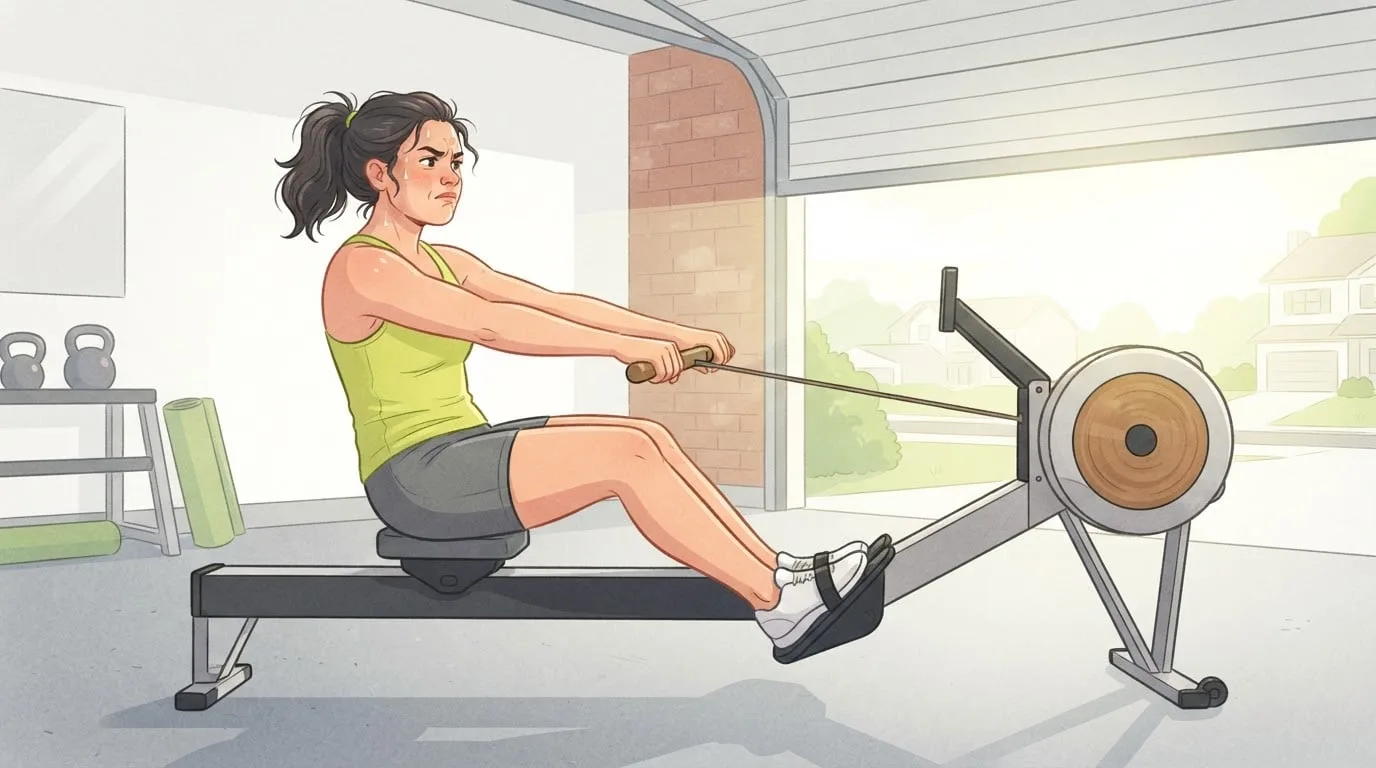
Bodybuilders use it to squeeze a few more reps out of long, hard sets. In a trial of 12 resistance-trained men, 0.3 g/kg taken 60 minutes before a leg session produced 139.8 total reps across squats, leg presses and knee extensions, against 134.4 with placebo (Carr and colleagues, 2013). That fits the meta-analysis above: a small gain in muscular endurance and none in maximal strength.
The results aren't consistent. A 2025 trial of 12 trained adults found no significant gain in chest press or knee extension reps at the same dose (Williams and colleagues, 2025). Extra reps haven't been shown to add up, either. In a small study of eight lifters, repeated use across 10 weeks of training added nothing to their explosive power or their training adaptations (Siegler and colleagues, 2018).
One 2026 trial in 20 active men did report more quadriceps growth over 8 weeks, but it combined bicarbonate with beta-alanine, so bicarbonate's own share can't be separated (Pouresmaeili and colleagues, 2026).
Get an evidence-based plan built for you
FitCraft, our mobile fitness app, pairs you with an AI coach who builds you a personalized plan around your goals, schedule, and fitness level. Every FitCraft program is designed by Domenic Angelino, MPH (Brown University) and NSCA-CSCS, with research published in the Journal of Strength and Conditioning Research and Medicine & Science in Sports & Exercise.
Take the Free Assessment Free • 2 minutes • No credit cardHow Many Teaspoons of Baking Soda for Pre-Workout?
The trials didn't use teaspoons. They weighed sodium bicarbonate in grams per kilogram of body weight, so a teaspoon count can't tell you what they tested. The ISSN sets the minimum effective dose at 0.2 g/kg and the best single dose at 0.3 g/kg. Doses of 0.4 and 0.5 g/kg added no benefit and brought more side effects, so there's no reason to go above 0.3 g/kg.
| Body weight | 0.2 g/kg (ISSN minimum) | 0.3 g/kg (ISSN best dose) | Sodium in the 0.3 g/kg dose |
|---|---|---|---|
| 130 lb (59 kg) | 12 g | 18 g | About 4.8 g |
| 150 lb (68 kg) | 14 g | 20 g | About 5.6 g |
| 180 lb (82 kg) | 16 g | 25 g | About 6.7 g |
| 200 lb (91 kg) | 18 g | 27 g | About 7.5 g |
These are the amounts studied, not a recommendation, and the table is our own arithmetic. Sodium makes up about 27% of baking soda's weight (22.99 of 84.01 g/mol, or about 274 mg per gram). A 0.3 g/kg dose for a 70 kg adult is 21 g of baking soda with about 5.7 g of sodium. That's about 2.5 times the 2,300 mg daily limit the CDC cites, in one drink. As an antacid, the package dose is half a teaspoon in water (Hughes and colleagues, 2016), so the sports doses are far above normal use.
Timing is more forgiving than it sounds. The ISSN gives 60 to 180 minutes before exercise. Blood bicarbonate typically peaks at 60 to 70 minutes, though peak times ranged from about 10 to 240 minutes between people. With capsules at 0.3 g/kg, modeling showed more than 80% of people stayed at least 5 mmol/L above baseline from 75 to 240 minutes after the dose (de Oliveira and colleagues, 2020).
Baking Soda Pre-Workout Side Effects
Stomach trouble is the main cost. The ISSN lists bloating, nausea, vomiting and abdominal pain as the most common problems, and diarrhea is common too. In the running review, 29.5% of people reported stomach symptoms on bicarbonate against 2.6% on placebo, and 8.7% dropped out because of them, against 1.6%. A 2026 review of 101 investigations found that 21 of 35 single-dose studies recorded significantly more symptoms than placebo (Winter and colleagues, 2026). Diarrhea hit 10 of 11 trained adults in one trial of a 0.3 g/kg dose (Kahle and colleagues, 2013). In a test of eight ways of taking it, symptoms were most common 90 minutes after a 0.3 g/kg solution (Carr, Slater and colleagues, 2011).
Bicarbonate releases carbon dioxide when it meets stomach acid, which is the likely source of the bloating (Antonio and colleagues, 2026). Serious harm is rare, and it's still worth knowing about. Stomach rupture has been reported after sodium bicarbonate, and a 1986 paper described one case and reviewed seven others (Lazebnik and colleagues, 1986). In 192 symptomatic cases of baking soda misuse reported to California poison control, mostly as an antacid, 12 people were admitted to hospital with electrolyte problems, metabolic alkalosis or slowed breathing (Al-Abri and Kearney, 2014).
How to Reduce the Stomach Problems
- Use a smaller dose and take it earlier. The ISSN lists 0.2 or 0.3 g/kg and about 180 minutes before exercise, and the 2026 symptom review suggests that 0.2 g/kg may reduce severity.
- Take it with carbohydrate. In the eight-protocol test, taking it with a high-carbohydrate meal gave the fewest symptoms, and the authors suggested taking it 120 to 150 minutes before exercise.
- Stage the dose. The IOC lists split doses over 30 to 180 minutes. In 12 of 17 tested split-dose studies, symptoms didn't differ significantly from placebo (Winter, 2026).
- Load over several days. The ISSN describes 0.4 or 0.5 g/kg a day, split across meals, for 3 to 7 days. It may spare your stomach on competition day, but it adds even more sodium.
- Use coated capsules. Delayed-release capsules cut symptom incidence by 45% compared with a solution (Hilton and colleagues, 2019). In a 4 km cycling test, 3 of 11 riders had symptoms with enteric-coated capsules and 7 of 11 with gelatin ones, with similar gains of 8.5 and 9.6 seconds (Hilton and colleagues, 2020). Enteric coating raised blood bicarbonate less in another trial (Hilton and colleagues, 2020), and an athlete of 70 to 75 kg may need 20 to 25 capsules (Antonio, 2026).
- Hydrogel delivery. Mini-tablets in a carbohydrate hydrogel caused fewer symptoms than capsules in 12 resting cyclists (Gough and Sparks, 2024). In 14 trained cyclists, they cut 54 seconds, or 1.4%, off a 40 km time trial with no more symptoms than placebo (Shannon and colleagues, 2024). The maker funded the first study and supplied the product for both, and one author of the second now works for it.
The 2026 symptom review found no direct comparisons of these strategies against each other, so they can't be ranked yet.
Who Should Avoid Baking Soda Before a Workout?
Talk to a doctor before you try it, especially if any of these apply. Most of the warnings come from MedlinePlus, the US National Library of Medicine's drug guide, and they were written for antacid doses, which are much smaller than the sports doses above.
- High blood pressure, heart failure or kidney disease. MedlinePlus asks you to tell your doctor about all three before using it. A typical dose expands plasma volume by about 6 to 8%, and high sodium may increase the kidneys' workload (Antonio, 2026). In 11 trained adults, a single 0.3 g/kg dose left systolic pressure unchanged and raised diastolic pressure by 3.3 mmHg, which the authors didn't consider clinically important (Kahle, 2013). That result says nothing about people who already have high blood pressure.
- A low-sodium diet. It raises the sodium in your body, so check with your doctor first.
- Pregnancy or breastfeeding. Tell your doctor. The poison control authors list pregnant women among the groups most at risk from misuse.
- Regular medication. Tell your doctor or pharmacist first. MedlinePlus says to take it at least 2 hours apart from other medicines.
- Children under 12. It's only for them if a doctor directs it.
- Long-term use. The ISSN warns that regular use at 0.3 g/kg may push sodium above the upper limit and says the effects on kidney function aren't yet known. A 2026 trial found no difference from placebo in urine markers of kidney injury after a single 0.2 g/kg dose, but it covered only 10 trained people (Specht and colleagues, 2026).
Common Misconceptions
Misconception 1: "If 0.3 g/kg works, more works better"
The ISSN found no added benefit from 0.4 or 0.5 g/kg over 0.3 g/kg, only more frequent and more severe side effects. Keep single doses inside the studied range, and only with your doctor's approval.
Misconception 2: "Mixing it with vinegar or lemon juice makes it work better"
We found no trial of that mix. Acids react with bicarbonate and release carbon dioxide, so you'd be using up some of the bicarbonate before you swallow it.
What the Research Suggests Going Forward
The firmest case is for trained athletes in events of about 1 to 10 minutes who've tested it in training first, which is what the IOC advises. Women need more research: only 20% of bicarbonate studies included them, and the pooled effect of 0.37 has an uncertainty range that crosses zero (Saunders and colleagues, 2022). The hydrogel results need independent repeats, and the long-term effects of repeated sodium loads are still unknown.
If you train at home with dumbbells and bodyweight, you're mostly outside the window where baking soda has helped, and a few extra reps aren't worth the stomach risk or the sodium. If you're looking at supplements, our reviews of caffeine and exercise performance and pre-workout safety are a better place to start.
What moves results for most people is training consistently, and that's a habit a supplement can't build for you. An AI personal trainer app can help with that part. FitCraft's 3D AI coaches guide you through each workout, demonstrate the exercises and adapt your plan as you progress, with streaks and leaderboards to keep you coming back.
References
- Grgic J, Pedisic Z, Saunders B, et al. "International Society of Sports Nutrition position stand: sodium bicarbonate and exercise performance." Journal of the International Society of Sports Nutrition 18 (2021): 61. doi:10.1186/s12970-021-00458-w
- Maughan RJ, Burke LM, Dvorak J, et al. "IOC consensus statement: dietary supplements and the high-performance athlete." British Journal of Sports Medicine 52.7 (2018): 439-455. doi:10.1136/bjsports-2018-099027
- de Oliveira LF, Dolan E, Swinton PA, et al. "Extracellular buffering supplements to improve exercise capacity and performance: a comprehensive systematic review and meta-analysis." Sports Medicine 52.3 (2022): 505-526. doi:10.1007/s40279-021-01575-x
- Carr AJ, Hopkins WG, Gore CJ. "Effects of acute alkalosis and acidosis on performance: a meta-analysis." Sports Medicine 41.10 (2011): 801-814. doi:10.2165/11591440-000000000-00000
- Christensen PM, Shirai Y, Ritz C, Nordsborg NB. "Caffeine and bicarbonate for speed: a meta-analysis of legal supplements potential for improving intense endurance exercise performance." Frontiers in Physiology 8 (2017): 240. doi:10.3389/fphys.2017.00240
- Turnes T, Cruz RSO, Caputo F, De Aguiar RA. "The impact of preconditioning strategies designed to improve 2000-m rowing ergometer performance in trained rowers: a systematic review and meta-analysis." International Journal of Sports Physiology and Performance 14.7 (2019): 871-879. doi:10.1123/ijspp.2019-0247
- Lopes-Silva JP, Correia-Oliveira CR. "Acute effects of sodium bicarbonate ingestion on cycling time-trial performance: a systematic review and meta-analysis of randomized controlled trials." European Journal of Sport Science 23.6 (2023): 943-954. doi:10.1080/17461391.2022.2071171
- Grgic J, Mikulic P. "Ergogenic effects of sodium bicarbonate supplementation on middle-, but not short-distance swimming tests: a meta-analysis." Journal of Dietary Supplements 19.6 (2022): 791-802. doi:10.1080/19390211.2021.1942381
- Huang D, Wang X, Takagi H, et al. "Effects of sodium bicarbonate on 200 m time trial performance and physiological responses in swimmers: a systematic review and meta-analysis of randomized controlled trials." Research in Sports Medicine 33.3 (2025): 291-307. doi:10.1080/15438627.2025.2456630
- Grgic J, Garofolini A, Pickering C, Duncan MJ, Tinsley GM, Del Coso J. "Isolated effects of caffeine and sodium bicarbonate ingestion on performance in the Yo-Yo test: a systematic review and meta-analysis." Journal of Science and Medicine in Sport 23.1 (2020): 41-47. doi:10.1016/j.jsams.2019.08.016
- Ge X, Sun H, Wu C, Liu S. "Effects of acute or short-term oral sodium bicarbonate supplementation on high-intensity intermittent exercise performance and physiological responses in team-sport athletes: a systematic review and meta-analysis." Frontiers in Nutrition 13 (2026): 1936178. doi:10.3389/fnut.2026.1936178
- Miller LE, Bhattacharyya R, Katz SJ, Bhattacharyya M, Herbert WG. "Negligible benefit of single-dose sodium bicarbonate on continuous running performance: a systematic review and meta-analysis." Journal of the International Society of Sports Nutrition 22.1 (2025): 2538606. doi:10.1080/15502783.2025.2538606
- Grgic J. "Effects of sodium bicarbonate ingestion on measures of Wingate test performance: a meta-analysis." Journal of the American Nutrition Association 41.1 (2022): 1-10. doi:10.1080/07315724.2020.1850370
- Miranda WAS, Barreto LBM, Miarka B, et al. "Can sodium bicarbonate supplementation improve combat sports performance? A systematic review and meta-analysis." Current Nutrition Reports 11.2 (2022): 273-282. doi:10.1007/s13668-022-00396-2
- Grgic J, Rodriguez RF, Garofolini A, et al. "Effects of sodium bicarbonate supplementation on muscular strength and endurance: a systematic review and meta-analysis." Sports Medicine 50.7 (2020): 1361-1375. doi:10.1007/s40279-020-01275-y
- Marticorena FM, Carvalho A, Oliveira LF, et al. "Nonplacebo controls to determine the magnitude of ergogenic interventions: a systematic review and meta-analysis." Medicine & Science in Sports & Exercise 53.8 (2021): 1766-1777. doi:10.1249/mss.0000000000002635
- Saunders B, Sale C, Harris RC, Sunderland C. "Sodium bicarbonate and high-intensity-cycling capacity: variability in responses." International Journal of Sports Physiology and Performance 9.4 (2014): 627-632. doi:10.1123/ijspp.2013-0295
- Carr BM, Webster MJ, Boyd JC, Hudson GM, Scheett TP. "Sodium bicarbonate supplementation improves hypertrophy-type resistance exercise performance." European Journal of Applied Physiology 113.3 (2013): 743-752. doi:10.1007/s00421-012-2484-8
- Siegler JC, Marshall PWM, Finn H, Cross R, Mudie K. "Acute attenuation of fatigue after sodium bicarbonate supplementation does not manifest into greater training adaptations after 10-weeks of resistance training exercise." PLoS ONE 13.5 (2018): e0196677. doi:10.1371/journal.pone.0196677
- de Oliveira LF, Saunders B, Yamaguchi G, Swinton P, Artioli GG. "Is individualization of sodium bicarbonate ingestion based on time to peak necessary?" Medicine & Science in Sports & Exercise 52.8 (2020): 1801-1808. doi:10.1249/mss.0000000000002313
- Centers for Disease Control and Prevention. "About Sodium and Health." 2026. cdc.gov/salt/about
- Hughes A, Brown A, Valento M. "Hemorrhagic encephalopathy from acute baking soda ingestion." Western Journal of Emergency Medicine 17.5 (2016): 619-622. doi:10.5811/westjem2016.6.30713
- Winter IP, Sarac P, Wilson PB. "Gastrointestinal symptoms associated with sodium bicarbonate supplementation protocols: a systematic review." European Journal of Sport Science 26.8 (2026): e70225. doi:10.1002/ejsc.70225
- Carr AJ, Slater GJ, Gore CJ, Dawson B, Burke LM. "Effect of sodium bicarbonate on [HCO3-], pH, and gastrointestinal symptoms." International Journal of Sport Nutrition and Exercise Metabolism 21.3 (2011): 189-194. doi:10.1123/ijsnem.21.3.189
- Lazebnik N, Iellin A, Michowitz M. "Spontaneous rupture of the normal stomach after sodium bicarbonate ingestion." Journal of Clinical Gastroenterology 8.4 (1986): 454-456. doi:10.1097/00004836-198608000-00015
- Al-Abri SA, Kearney T. "Baking soda misuse as a home remedy: case experience of the California Poison Control System." Journal of Clinical Pharmacy and Therapeutics 39.1 (2014): 73-77. doi:10.1111/jcpt.12113
- Hilton NP, Leach NK, Sparks SA, et al. "A novel ingestion strategy for sodium bicarbonate supplementation in a delayed-release form: a randomised crossover study in trained males." Sports Medicine - Open 5.1 (2019): 4. doi:10.1186/s40798-019-0177-0
- Hilton NP, Leach NK, Hilton MM, Sparks SA, McNaughton LR. "Enteric-coated sodium bicarbonate supplementation improves high-intensity cycling performance in trained cyclists." European Journal of Applied Physiology 120.7 (2020): 1563-1573. doi:10.1007/s00421-020-04387-5
- Hilton NP, Leach NK, Craig MM, Sparks SA, McNaughton LR. "Enteric-coated sodium bicarbonate attenuates gastrointestinal side-effects." International Journal of Sport Nutrition and Exercise Metabolism 30.1 (2020): 62-68. doi:10.1123/ijsnem.2019-0151
- Gough LA, Sparks SA. "The effects of a carbohydrate hydrogel system for the delivery of bicarbonate mini-tablets on acid-base buffering and gastrointestinal symptoms in resting well-trained male cyclists." Sports Medicine - Open 10 (2024): 17. doi:10.1186/s40798-024-00684-x
- Shannon ES, Regnier A, Dobson B, Yang X, Sparks SA, Mc Naughton LR. "The effect of sodium bicarbonate mini-tablets ingested in a carbohydrate hydrogel system on 40 km cycling time trial performance and metabolism in trained male cyclists." European Journal of Applied Physiology 124.12 (2024): 3671-3682. doi:10.1007/s00421-024-05567-3
- MedlinePlus. "Sodium Bicarbonate." US National Library of Medicine. Revised April 15, 2017. medlineplus.gov/druginfo/meds/a682001.html
- Saunders B, Oliveira LF, Dolan E, et al. "Sodium bicarbonate supplementation and the female athlete: a brief commentary with small scale systematic review and meta-analysis." European Journal of Sport Science 22.5 (2022): 745-754. doi:10.1080/17461391.2021.1880649
- Chen X, Tu W, Wang J. "The effects of combined caffeine and sodium bicarbonate supplementation on exercise performance, physiological responses, and gastrointestinal tolerability: a systematic review and meta-analysis." Nutrients 18.19 (2026): 3171. doi:10.3390/nu18193171
- Curran-Bowen T, Guedes da Silva A, Barreto G, Buckley J, Saunders B. "Sodium bicarbonate and beta-alanine supplementation: is combining both better than either alone? A systematic review and meta-analysis." Biology of Sport 41.3 (2024): 79-87. doi:10.5114/biolsport.2024.132997
- Antonio B, Shannon ES, Candow DG, et al. "Common questions and misconceptions of sodium bicarbonate as an ergogenic aid: what does the science really show?" Journal of the International Society of Sports Nutrition 23.1 (2026): 2724103. doi:10.1080/15502783.2026.2724103
- Williams MLA, Barrett CME, Lawson E, et al. "No ergogenic effect of caffeine or sodium bicarbonate on resistance exercise performance: a double-blind crossover study with sex-based analysis." Sports 13.12 (2025): 427. doi:10.3390/sports13120427
- Pouresmaeili JJ, Aboodarda SJ, Rajabi H. "Eight weeks of resistance training supplemented with beta-alanine and sodium bicarbonate increased muscle cross-sectional area." International Journal of Exercise Science 19.2 (2026): 2005. doi:10.70252/ijes2026205
- Specht JW, Ramirez M, Raef J, et al. "Effect of sodium bicarbonate on performance and markers of kidney and gastrointestinal injury during repeated sprints in the heat." European Journal of Applied Physiology 126.8 (2026): 4253-4267. doi:10.1007/s00421-026-06266-x
- Kahle LE, Kelly PV, Eliot KA, Weiss EP. "Acute sodium bicarbonate loading has negligible effects on resting and exercise blood pressure but causes gastrointestinal distress." Nutrition Research 33.6 (2013): 479-486. doi:10.1016/j.nutres.2013.04.009
Frequently Asked Questions
How long before a workout should you take baking soda?
The ISSN position stand gives 60 to 180 minutes before exercise for a single dose. If your stomach is the concern, it suggests about 180 minutes, or taking the dose with a high-carbohydrate meal.
Will baking soda reduce belly fat?
No. We found no human trial showing that baking soda reduces belly fat or body weight. It's a buffer that works on acid during hard exercise, and it doesn't burn fat.
Can you take baking soda before every workout?
It isn't a good idea without medical advice. The ISSN position stand says regular use may help some training adaptations, but it also notes that long-term use at 0.3 g/kg may push sodium above the upper limit and that the effects on kidney function aren't yet known. MedlinePlus says not to use sodium bicarbonate for more than 2 weeks unless a doctor tells you to.
Can you take baking soda with caffeine or beta-alanine?
Adding caffeine hasn't been shown to help. A 2026 review of 13 trials found no established benefit over either one alone. With beta-alanine, a 2024 review found a significant effect for the combination, but it didn't differ significantly from either supplement alone.
Does baking soda give you a better pump?
We found no trial that measured muscle pump after baking soda. The extra reps seen in some trials are put down to its buffering effect.