Beta-alanine sits in a strange spot in the supplement aisle. It is one of only four ergogenic aids the International Society of Sports Nutrition has issued a formal position stand on for performance (alongside creatine, caffeine, and sodium bicarbonate), and yet most people who buy it use it wrong. They dump it in a pre-workout scoop, get the pins-and-needles tingle a few minutes later, and never see a benefit because the mechanism does not care what you do 30 minutes before you lift. It cares what you do for 4 straight weeks.
The science underneath is unusually clean for a supplement. Beta-alanine is the rate-limiting substrate the body uses to make carnosine, a dipeptide that sits in high concentration inside skeletal muscle and buffers the hydrogen ions produced during hard glycolytic work. More beta-alanine in the blood over weeks means more muscle carnosine. More muscle carnosine means more pH buffering during 30-second to 10-minute all-out efforts. And more pH buffering means slightly more work done before the fiber fails.
The short version, in case you skip the rest: 4 to 6 grams per day, split into 0.8 to 1.6 gram servings, for at least 2 to 4 weeks (longer is better), aimed at training that lives in the 30-second to 10-minute high-intensity zone. Do not expect a caffeine-style acute kick. Do not expect a creatine-style strength jump. Expect a small percentage more reps on your rep-out set, a slightly later fade on the last interval of a hard session, one more round in the ring. That is what the meta-analyses show and that is what you should buy it for.
The Research: What Studies Show
Hobson 2012: The First Meta-Analysis
The paper that gave the field its first meta-analytic footing is Hobson, Saunders, Ball, Harris, and Sale (2012), published in Amino Acids. They screened the human literature through 2011, identified 15 randomized placebo-controlled trials, and pooled 360 participants (174 in the beta-alanine arm, 186 in placebo) across 57 outcome measures spread over 23 different exercise tests. Doses across the included trials ranged from 1.6 to 6.4 grams per day for 4 to 10 weeks, with a median cumulative intake of 179 grams of beta-alanine per participant.
The pooled effect on exercise outcomes was statistically significant (p=0.002) with an overall effect size of 0.374, translating to a median performance improvement of 2.85 percent versus placebo. Two subgroup findings shaped how the field talks about beta-alanine ever since. First, the effect was clearly present for exercise capacity (time-to-exhaustion tests, where subjects work at a fixed intensity until they cannot continue) with an effect size around 0.5. Second, the effect was much smaller and less consistent for performance tests (time trials with a fixed workload). Third, and most useful for practice, the improvement was concentrated in exercise lasting 60 to 240 seconds and beyond 240 seconds; efforts under 60 seconds showed no benefit at all. That duration signature is a mechanistic fingerprint: it is exactly the window where anaerobic glycolysis dominates and where hydrogen ion accumulation is the primary limiter.
Saunders 2017: The Larger Update
Five years later the field had generated enough new data to run a much bigger synthesis. Saunders, Elliott-Sale, Artioli and colleagues (2017), publishing in the British Journal of Sports Medicine, screened three databases through PRISMA methodology and pooled 40 randomized trials covering 1,461 participants. The overall effect size dropped to roughly 0.18, about 2.1 times smaller than the Hobson estimate.
That shrinkage is not a scandal. It is what happens when a field's small early trials get diluted by larger, better-controlled work. The 2017 update is now the reference for what the true effect probably looks like, and the direction and duration window held. Saunders and colleagues confirmed that the ergogenic window is high-intensity exercise lasting 30 seconds to 10 minutes, and that the effect is strongest in exercise-to-exhaustion protocols rather than fixed-distance or fixed-workload time trials. Beta-alanine buys you the ability to hold a hard pace slightly longer before failure. It does not buy you a faster pace.
What the 2017 meta-analysis added was scale. With 1,461 participants, subgroup contrasts became sharper. Training status did not moderate the effect (p=0.559), meaning trained and untrained participants both responded. The strongest moderator was exercise duration itself (p=0.004): capacity measures inside the ergogenic window showed effect sizes around 0.50 while performance measures showed around 0.11, matching the mechanism prediction that beta-alanine helps you hold a hard pace longer more than it helps you go faster at a fixed workload.
Rezende 2020: The Muscle Carnosine Ceiling
To understand why the exercise effect looks the way it does, it helps to look at what beta-alanine is actually doing inside the muscle. Rezende, Swinton, de Oliveira and colleagues (2020), publishing in Frontiers in Physiology, ran a Bayesian E-max meta-analysis on 575 participants (486 men, 89 women) and asked the underlying pharmacokinetic question: how much muscle carnosine does a given amount of beta-alanine actually add?
Their model estimated that essentially every participant (99.3 percent) responds to supplementation. Individual data showed an average muscle carnosine increase of 16.0 mmol/kg dry muscle over placebo after standard loading, with continued gains of roughly 0.5 mmol/kg per week beyond the initial 4-week block. The ED50 (dose producing 50 percent of the maximum possible increase) was estimated at 377 grams of cumulative intake. Practically, that means an ISSN-standard 6 g/day protocol produces its biggest muscle carnosine gains in the first month, keeps adding meaningfully for another one to two months, and then approaches saturation somewhere around 12 to 24 weeks of continuous dosing. Nearly nobody in the general population has ever taken beta-alanine long enough to saturate.
Once loading stops, carnosine washes out slowly. Prior work (not from Rezende) shows a washout half-life of roughly 6 to 15 weeks depending on the initial loading depth. That is unusually long for a supplement and it means you do not need to be perfectly consistent day-to-day once you are loaded. Missing a week does not undo the block.
Trexler 2015: The ISSN Position Stand
The clinical and practical synthesis is Trexler, Smith-Ryan, Stout and colleagues (2015), published as the official International Society of Sports Nutrition position stand in the Journal of the International Society of Sports Nutrition. Position stands are field consensus documents; they carry more weight than any single trial because they weigh the totality of the evidence, weigh study quality, and are written to guide practice.
The ISSN's summary conclusions: beta-alanine improves exercise performance in high-intensity, mostly-glycolytic tasks lasting 1 to 4 minutes. The recommended dose is 4 to 6 grams per day, split into servings of 0.8 to 1.6 grams every 3 to 4 hours, for a minimum of 2 to 4 weeks. Longer loading periods produce larger muscle carnosine increases (consistent with the Rezende model). Paresthesia (the tingle) is the only reported side effect and it can be attenuated by splitting the dose or using a sustained-release formulation. Safety in healthy populations is well established at recommended doses. Stacking with creatine may confer additional benefits, though the evidence for that specific combination is weaker than for either supplement alone.
Ong 2025: The Strength and Power Question
The most recent word on the strength-and-power side of the equation is Ong, Chen, and Chien (2025), publishing in the Journal of the International Society of Sports Nutrition. Their systematic review focused specifically on whether beta-alanine helps strength and power outcomes, where the earlier meta-analyses had left the picture messy. They pooled 9 studies covering 197 participants.
Their conclusion is narrow and worth quoting in spirit: daily doses of 4 to 6.4 grams delivered in fragmented protocols (0.8 grams per serving, multiple times per day) show the clearest benefit, but the effect on strength and power is inconsistent across studies that do not enforce proper dosing and do not push the exercise into a metabolically stressful window. In plainer language: beta-alanine is not a strength supplement. It can help a set of 12 to 15 reps taken close to failure because those sets tip into glycolytic territory, and it can help back-to-back sets with short rest for the same reason. It will not move a 3-rep max.

How Beta-Alanine Actually Works
Beta-alanine is a non-essential amino acid. It differs from ordinary alpha-alanine by the position of its amino group (the beta rather than alpha carbon), and that structural quirk gives it a specific fate: inside muscle fibers, beta-alanine combines with the amino acid histidine to form carnosine, a dipeptide that sits at concentrations several times higher inside muscle than almost any other tissue. Adults get some beta-alanine from meat and fish (chicken breast, beef, pork), and the body makes small amounts endogenously. Neither source produces the muscle carnosine spike that supplementation does.
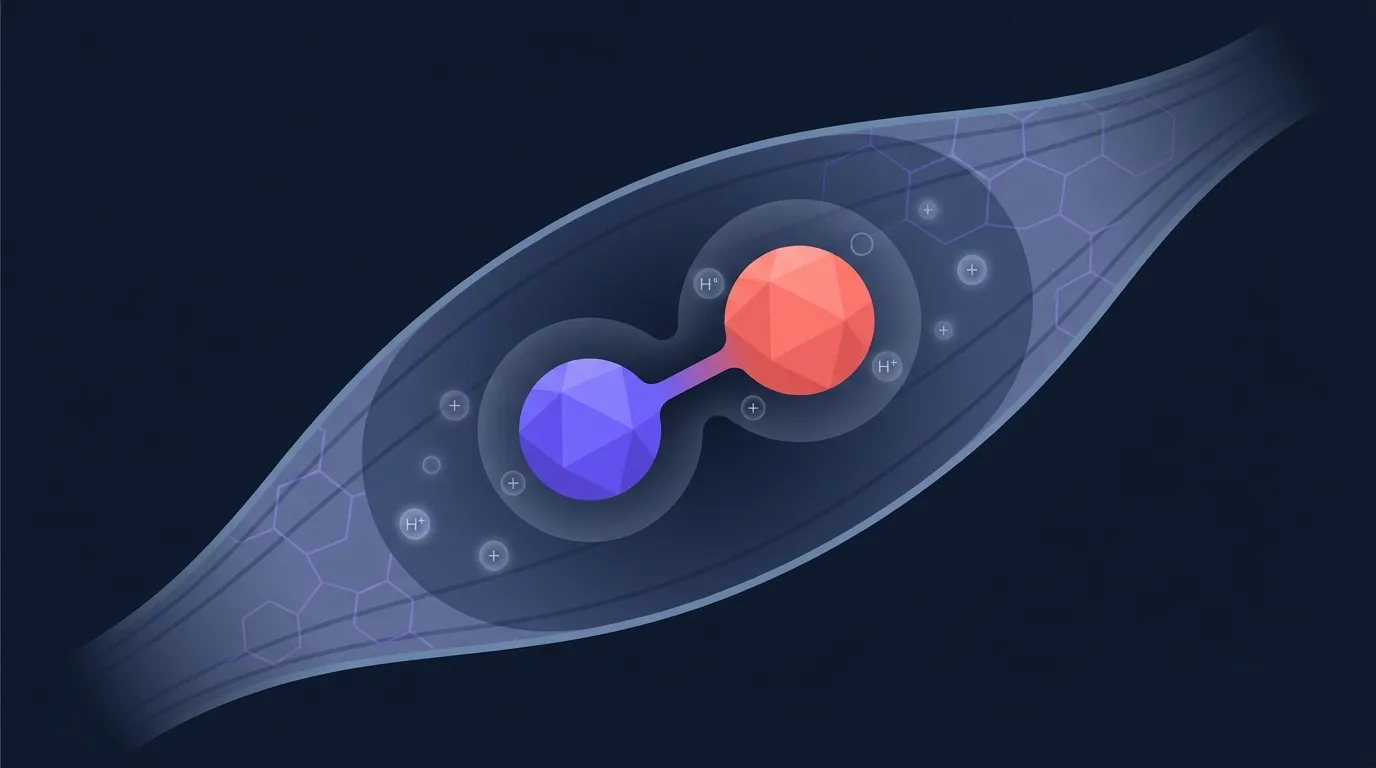
Inside skeletal muscle, carnosine does one thing that matters for exercise: it grabs hydrogen ions. When you sprint, do intervals, push a set of 15 close to failure, or fight a hard round, anaerobic glycolysis churns out ATP and dumps lactate and hydrogen ions into the fiber. The pH drops. That falling pH interferes with the enzymes that keep contraction going and, at the extreme, causes the fiber to fail. Carnosine acts as a chemical sponge for those hydrogen ions inside the specific pH range where fatigue happens, buying the fiber a few extra seconds to a few extra reps before shutdown.
That mechanism is why the duration signature in the meta-analyses looks the way it does. Under 30 seconds, the alactic phosphocreatine system is doing most of the work and glycolysis is not the limiter, so more buffering does nothing. Over 10 minutes, oxidative phosphorylation takes over, hydrogen ion accumulation stops being the primary limiter, and central and cardiovascular fatigue set in first. The 30-second to 10-minute window is the exact interval where glycolysis is the dominant energy pathway and where a small buffering boost translates to slightly more work.
Because the effect depends on chronic tissue accumulation, not on a peak blood level, when you take a dose matters far less than how many doses you take. This is the opposite of caffeine. A single serving of caffeine 30 to 60 minutes pre-workout raises plasma caffeine, blocks adenosine receptors, and produces an immediate performance and perception effect that fades within hours. A single serving of beta-alanine 30 minutes pre-workout raises plasma beta-alanine for a few hours, contributes almost imperceptibly to that day's muscle carnosine, and does nothing distinguishable to that day's workout. It is the 30th daily serving in a row that starts to matter.
Why This Matters for Your Fitness
The realistic upside for a recreational lifter or interval runner is a small ergogenic edge on high-intensity glycolytic work, and only on high-intensity glycolytic work. If your training is heavy on hard intervals, rep-out sets in the 8-to-15 range, cardio conditioning circuits, martial arts rounds, or rowing pieces of 500 to 2000 meters, beta-alanine is one of the highest-evidence supplements you can add. The percentage improvement in the Hobson and Saunders meta-analyses is small (roughly 2 to 3 percent) but that is the average across trained and untrained participants and it applies specifically to the tasks where the fatigue mechanism carnosine buffers actually operates.
Where beta-alanine will not move the needle: your top-end strength, your steady-state easy runs, your walk after dinner, your yoga class, and your body composition. It is not anabolic. It is not a stimulant. It is not thermogenic. It does not blunt appetite. The clean thing about the mechanism is also the constraining thing about the mechanism. You get one specific benefit in one specific exercise window, and you get nothing outside that.
Where beta-alanine stacks well is alongside creatine, and (with much weaker evidence) alongside sodium bicarbonate for events that tip into severe metabolic acidosis. Creatine works on a different fatigue mechanism (rapid ATP resynthesis via the phosphocreatine system) and hits the 0-to-30-second window that beta-alanine misses, which is why the two are commonly combined in evidence-based pre-workout products. The two supplements complement rather than overlap.
What beta-alanine will not fix is inconsistent training. The Hobson and Saunders meta-analyses ran controlled trials with prescribed loading and prescribed exercise tests, which is very different from real-world use where people take one pre-workout scoop when they remember to. If you are averaging 2 sessions per week when you meant to hit 4, no supplement closes that gap. The biggest predictor of fitness outcomes over months and years is whether you keep stringing workouts together, and that is a behavior problem, not a chemistry problem.
Get an evidence-based plan built for you
FitCraft, our mobile fitness app, pairs you with an AI coach who builds you a personalized plan around your goals, schedule, and fitness level. Every FitCraft program is designed by Domenic Angelino, MPH (Brown University) and NSCA-CSCS, with research published in the Journal of Strength and Conditioning Research and Medicine & Science in Sports & Exercise.
Take the Free Assessment Free • 2 minutes • No credit cardHow to Use Beta-Alanine in Practice
Translating the evidence into a workable protocol:
- Target 4 to 6 grams per day. That covers the ISSN's recommended range and matches what the meta-analyses used. Going higher does not produce proportionately larger muscle carnosine gains and will make the tingle much worse. Going lower (under about 3.2 g/day) does not reliably move muscle carnosine.
- Split the daily total into 3 to 5 servings across the day. Roughly 0.8 to 1.6 grams every 3 to 4 hours. This is the single change that separates people who benefit from people who do not. Splitting keeps plasma beta-alanine steadily available for muscle uptake and holds each peak below the tingle threshold. A pre-workout scoop that hits 3.2 g at once causes an intense flush and delivers no more carnosine than the same 3.2 g split across the day.
- Take it with food when you can. Co-ingestion with a meal (particularly one containing carbohydrate) modestly improves muscle uptake, likely via insulin-mediated transport into the fiber.
- Give it at least 4 weeks before judging the effect. The Hobson and Saunders trials all ran 4 to 10 weeks of daily loading before running the performance test. Two weeks is not long enough for the muscle carnosine change to translate into a testable performance change.
- Keep loading past 4 weeks if you can. Rezende and colleagues showed carnosine keeps rising for months. If you use it, use it for a training block, not for a week.
- Do not bother taking a "pre-workout dose." The mechanism does not work acutely. What you do 30 minutes before the session does not matter; what you did every day for the previous month does. If your favorite pre-workout stack contains 3.2 g of beta-alanine and gives you a pins-and-needles rush, that rush is not the ergogenic effect; it is a signal that you took too much at once.
- Use it around training that lives in the ergogenic window. Rep-out sets in the 8-to-15 rep range, interval sessions of 30 seconds to 5 minutes per interval, combat sports rounds, rowing pieces, hard cycling efforts, high-rep bodyweight circuits. If your training is only heavy 3-to-5-rep strength work or only easy zone 2, the benefit will be smaller.
- Consider stacking with creatine. The two supplements have the most peer-reviewed backing of anything on the shelf, target complementary fatigue mechanisms, and combine safely. There is no reason to pick one over the other if your training uses both energy systems.
Is beta alanine safe?
Yes. Beta alanine is safe for healthy adults at the studied doses of up to 6.4 grams a day for up to 24 weeks, and the only side effect the trials report is a harmless, temporary skin tingle. A systematic risk assessment by Dolan and colleagues (2019) pooled 101 human and 50 animal studies. Paresthesia was the only side effect reported, people taking beta-alanine dropped out of trials at the same rate as people on placebo, and the authors concluded that supplementation within the studied doses doesn't harm the people taking it. The honest limit is that most trials were built to test performance, not safety, a point a 2014 evidence review commissioned by the US Department of Defense (Ko and colleagues) also made. The questions worth answering are the tingle, long-term use, taurine, and who falls outside the healthy adults the trials studied.
The Tingle (Paresthesia)
The pins-and-needles feeling, often on the face, neck, arms or trunk, is called paresthesia. In Dolan's analysis, people taking beta-alanine were about nine times as likely to report it as people on placebo (odds ratio 8.9). It comes from nerves in the skin, not from anything going wrong. Liu and colleagues (2012) showed in mice that beta-alanine switches on a receptor called MrgprD in a group of sensory nerves that supply only the skin, and in people, beta-alanine injected into the skin caused itch without the redness or swelling of an allergic reaction. The sensation follows the rise and fall of beta-alanine in the blood, so it peaks shortly after a dose and fades as blood levels drop.
Split Doses and Sustained-Release Tablets
Two changes keep the tingle down. The first is smaller doses. Tingling becomes common above about 800 mg in a single dose, which is why the ISSN position stand recommends splitting the daily total into 0.8 to 1.6 gram servings taken 3 to 4 hours apart. The second is a sustained-release form. In a randomized trial by Décombaz and colleagues (2012), 11 adults took 1.6 grams of beta-alanine as a plain drink, as slow-release tablets, or a placebo. With the plain drink, pins and needles on the arms and trunk peaked about 15 minutes after the dose. The tablets cut the peak blood level by about two thirds (82 against 248 micromoles per liter), kept slightly more of the dose in the body, and produced sensations the participants couldn't tell apart from placebo. The 24-week trial below used a sustained-release form at 6.4 grams a day, and none of its participants reported side effects.
Long-Term Data: 24 Weeks and the Taurine Question
Most beta-alanine trials last 4 to 10 weeks, so the longest controlled data matter most. Saunders and colleagues (2020) gave 25 healthy men 6.4 grams a day of sustained-release beta-alanine or a placebo for 24 weeks. Blood tests every 4 weeks for kidney, liver and muscle markers, including creatinine, estimated kidney filtration and liver enzymes, showed no effect of the supplement, and nobody reported side effects.
The same trial addressed the taurine concern. Beta-alanine and taurine share a transporter into cells, and very high doses can lower muscle taurine in rodents. In Saunders' trial, muscle biopsies at 0, 12 and 24 weeks showed no drop in taurine. Dolan's meta-analysis of the human data agreed: beta-alanine had no effect on muscle taurine or histidine, and the rodent taurine losses only appeared when beta-alanine made up 3% or more of their drinking water, far beyond anything a person would take. The one blood change Dolan found was a small rise in the liver enzyme ALT, with average values staying well within normal clinical ranges.
Kidneys, Heart and Blood Pressure
In the evidence available, beta-alanine isn't hard on the kidneys: creatinine and estimated kidney filtration stayed flat across 24 weeks of daily use in Saunders' trial. It isn't a stimulant either, and paresthesia was the only side effect across the 101 human studies in Dolan's review. If your heart races or your blood pressure climbs after a pre-workout drink, the caffeine and other stimulants in the same scoop are the likelier cause. Those trials enrolled healthy people, though, so they can't speak for anyone with heart or kidney disease.
Who Should Ask a Doctor First
- Pregnant or breastfeeding: there's little reliable safety data, so the trials can't vouch for it.
- Under 18: the research is almost entirely in adults.
- Kidney or liver disease: the trials studied healthy people, and Dolan found a small ALT rise even in them.
- Heart disease or prescription medicines: interactions haven't been studied well, because the trials enrolled healthy volunteers.
- Peripheral neuropathy or another nerve condition: the tingle can be hard to tell apart from symptoms you're already watching.
Individual Variation: Who Responds Most
Training Modality
The clearest signal in every meta-analysis is on high-intensity, glycolytic tasks in the 30-second to 10-minute window. Interval athletes (400 to 1500 m runners, 500 to 2000 m rowers, cyclists doing 1 to 5 minute intervals, combat sports competitors doing 3 to 5 minute rounds) get the cleanest benefit. Lifters doing sets in the 8-to-15 rep range with short rest between sets also fit the window because those sets tip into significant glycolytic contribution. Endurance runners on easy-paced runs, powerlifters training singles and doubles at 90 percent-plus 1RM, and steady zone 2 cardio work are outside the ergogenic window.
Diet
Habitual meat-eaters and vegetarians respond similarly to beta-alanine supplementation, because dietary carnosine (from meat) is broken down before it reaches muscle and does not raise muscle carnosine much. Beta-alanine is the rate-limiting substrate regardless of what you eat. Vegans and strict vegetarians will have slightly lower baseline muscle carnosine on average, so the relative rise from supplementation is slightly larger, though the absolute performance benefit is similar.
Sex and Age
Men and women respond similarly to beta-alanine in the aggregate meta-analytic data, though most trials have been run in young to middle-aged men and the female data set is smaller. Older adults (60+) tend to have somewhat lower baseline muscle carnosine and may respond well to supplementation in absolute terms, though the ergogenic literature in older adults specifically is thin. Basic safety and dosing recommendations apply the same way across age.
Common Misconceptions
Misconception 1: "The tingle means it is working."
It does not. Paresthesia is a peripheral nerve sensation triggered by beta-alanine binding to sensory neurons in the skin. It is triggered by peak blood levels, not by muscle uptake. A single 3.2 g dose taken all at once produces a strong tingle and delivers the same amount of muscle carnosine over the day as the same 3.2 g split into three 1.1 g servings, which produce almost no tingle. If anything, the tingle is a signal you took too much at once and could split the dose to make the protocol more comfortable and equally effective.
Misconception 2: "Beta-alanine is a pre-workout stimulant."
It is not a stimulant, does not raise heart rate, does not sharpen focus, and does not produce a subjective "kick." The pre-workout feeling that most people associate with a beta-alanine-containing scoop comes from the caffeine and other ingredients in the same product. Beta-alanine is a chronic-loading supplement that happens to get sold in acute-dose form because the pre-workout industry runs on the tingle as a marketing feature.
Misconception 3: "More is better."
Beyond about 6 grams per day, additional dose does not proportionately raise muscle carnosine, and it dramatically worsens the tingle. The ISSN position stand caps recommended dose at 6 g/day for exactly this reason. Aiming for 10 or 12 grams per day is not a shortcut to a bigger effect; it is a shortcut to more paresthesia and gastrointestinal complaints without more muscle carnosine.
Misconception 4: "Beta-alanine builds muscle or burns fat."
It does neither. Beta-alanine has no direct anabolic action, does not activate the mTOR pathway the way leucine does, and does not raise growth hormone or testosterone meaningfully. It has no direct effect on resting energy expenditure, appetite, or fat oxidation. Any body composition change associated with beta-alanine use in the literature is downstream of being able to do slightly more high-intensity work per session, not a direct effect of the molecule.
What the Research Suggests Going Forward
The beta-alanine literature is in about as good a shape as any supplement literature gets. The direction (small ergogenic effect on high-intensity, mostly-glycolytic exercise in the 30-second to 10-minute window) is consistent across two large meta-analyses covering 55 trials and roughly 1,800 participants. The mechanism (rate-limiting substrate for muscle carnosine, which buffers hydrogen ions during glycolytic fatigue) is well characterized. The pharmacokinetic story (roughly 4 weeks to a meaningful muscle carnosine increase, continued gains for months, slow washout after stopping) is clean. Safety at the recommended dose range is well established over decades of use.
What is still open:
- Whether ultra-long loading periods (6+ months) produce ergogenic benefits meaningfully larger than the 4-to-12-week benefit, or whether the exercise effect plateaus even as muscle carnosine keeps rising.
- Whether the sodium bicarbonate + beta-alanine + creatine "buffering stack" produces additive benefits over any single component in the tasks where they should theoretically stack (e.g., 400 m sprints, 500-1500 m rows), or whether the individual effects overlap more than expected.
- Whether older adults with lower baseline muscle carnosine respond more strongly in absolute terms, and whether beta-alanine has any role in preserving high-intensity capacity through the age-related decline in glycolytic power.
- Whether sustained-release formulations, which reduce tingle at any given daily dose, offer a materially better muscle carnosine outcome than split-dose standard beta-alanine at the same total daily grams.
The takeaway for someone deciding whether to try it: beta-alanine is one of the cheapest, safest, and most evidence-backed supplements you can add to a training block, provided your training actually lives in the ergogenic window and provided you take it correctly. If you race intervals, fight rounds, run 400s and 800s, row 2ks, or lift with a heavy volume of moderate-rep work, a 4 to 6 g/day split-dose protocol for 8 to 12 weeks is a defensible investment. If you are training for a 1-rep max, running easy miles, or hoping for a body composition change, the evidence does not currently support the spend.
And if you are not training consistently in the first place, no supplement changes that. Building the habit is a bigger lever than any pill, and it costs nothing.

References
- Trexler ET, Smith-Ryan AE, Stout JR, et al. "International society of sports nutrition position stand: Beta-Alanine." J Int Soc Sports Nutr. 2015;12:30. doi:10.1186/s12970-015-0090-y
- Hobson RM, Saunders B, Ball G, Harris RC, Sale C. "Effects of beta-alanine supplementation on exercise performance: a meta-analysis." Amino Acids. 2012;43(1):25-37. doi:10.1007/s00726-011-1200-z
- Saunders B, Elliott-Sale K, Artioli GG, et al. "beta-alanine supplementation to improve exercise capacity and performance: a systematic review and meta-analysis." Br J Sports Med. 2017;51(8):658-669. doi:10.1136/bjsports-2016-096396
- Rezende NS, Swinton P, de Oliveira LF, et al. "The Muscle Carnosine Response to Beta-Alanine Supplementation: A Systematic Review With Bayesian Individual and Aggregate Data E-Max Model and Meta-Analysis." Front Physiol. 2020;11:913. doi:10.3389/fphys.2020.00913
- Ong SW, Chen WL, Chien KY, Hsu CW. "Dosing strategies for beta-alanine supplementation in strength and power performance: a systematic review." J Int Soc Sports Nutr. 2025;22(1):2566368. doi:10.1080/15502783.2025.2566368
- Dolan E, Swinton PA, Painelli VS, et al. "A Systematic Risk Assessment and Meta-Analysis on the Use of Oral β-Alanine Supplementation." Adv Nutr. 2019;10(3):452-463. doi:10.1093/advances/nmy115
- Saunders B, Franchi M, de Oliveira LF, et al. "24-Week β-alanine ingestion does not affect muscle taurine or clinical blood parameters in healthy males." Eur J Nutr. 2020;59(1):57-65. doi:10.1007/s00394-018-1881-0
- Décombaz J, Beaumont M, Vuichoud J, Bouisset F, Stellingwerff T. "Effect of slow-release β-alanine tablets on absorption kinetics and paresthesia." Amino Acids. 2012;43(1):67-76. doi:10.1007/s00726-011-1169-7
- Liu Q, Sikand P, Ma C, et al. "Mechanisms of itch evoked by β-alanine." J Neurosci. 2012;32(42):14532-14537. doi:10.1523/JNEUROSCI.3509-12.2012
- Ko R, Low Dog T, Gorecki DK, et al. "Evidence-based evaluation of potential benefits and safety of beta-alanine supplementation for military personnel." Nutr Rev. 2014;72(3):217-225. doi:10.1111/nure.12087
Frequently Asked Questions
Does beta-alanine actually improve exercise performance?
Yes, in a specific window. Hobson and colleagues (2012, Amino Acids) pooled 15 studies covering 360 participants and reported a median performance improvement of 2.85 percent with a summary effect size of 0.374. Saunders and colleagues (2017, British Journal of Sports Medicine) then pooled 40 studies covering 1,461 participants and found a smaller but still significant overall effect (roughly 0.18), with the strongest and most consistent signal on high-intensity efforts lasting 30 seconds to 10 minutes. The effect is smaller than creatine's and smaller than caffeine's, but it is real and it is specific to a well-defined exercise window.
How much beta-alanine should I take, and for how long?
The ISSN position stand (Trexler et al., 2015) recommends 4 to 6 grams per day, split into servings of 0.8 to 1.6 grams every 3 to 4 hours, for at least 2 to 4 weeks before meaningful benefit shows up. Muscle carnosine keeps rising for months of continued dosing (Rezende et al., 2020), so the 4-week mark is a floor, not a ceiling. Once you stop, carnosine drops back toward baseline over about 6 to 15 weeks.
Why does beta-alanine make my skin tingle?
That is paresthesia, a harmless flushing/tingling sensation caused by beta-alanine binding to peripheral sensory neurons in the skin. It kicks in above roughly 800 mg per single dose in a non-sustained-release form. The ISSN position stand notes the tingle is attenuated by splitting the daily total into smaller servings (around 1.6 g each) or using a sustained-release formula. It is uncomfortable but not dangerous and it fades within about an hour.
Does beta-alanine build muscle or help with heavy lifting?
Not directly, no. Beta-alanine is not anabolic and does not add measurable muscle mass on top of a resistance program. It also does not meaningfully raise a 1-rep max. The 2025 dosing-strategy review by Ong and colleagues found that strength and power effects only show up when the dose is high enough (4 to 6.4 g/day) and delivered in fragmented servings, and even then the signal is inconsistent. The clearest wins are on set-extending, high-intensity, glycolytic work (rep-out sets, intervals, sprints, combat sports rounds), not on top-end strength.
Should I take beta-alanine before a workout, or does timing not matter?
Timing barely matters. Unlike caffeine, beta-alanine does not work acutely. The performance benefit comes from a slowly accumulating rise in muscle carnosine, which takes weeks of daily dosing to build up. A single pre-workout scoop does nothing on the day you take it, other than possibly making you tingle. What matters is total daily dose, split across the day to avoid the tingle and to keep plasma levels available for uptake, sustained for at least 2 to 4 weeks. Pre-workout stacks that include a large single-serving beta-alanine dose deliver the tingle without a distinct pre-workout benefit.
Is beta alanine safe?
Yes, for healthy adults at the studied doses. A 2019 risk assessment of 101 human studies (Dolan and colleagues) found paresthesia, a harmless temporary tingle, was the only reported side effect, and a 24-week trial at 6.4 grams a day (Saunders and colleagues, 2020) found no change in kidney, liver or muscle blood markers or in muscle taurine. People who are pregnant, breastfeeding, under 18, or have kidney, liver or heart disease should ask a doctor first, because the trials studied healthy adults.
Is it okay to take beta-alanine every day?
Yes. Beta-alanine only works when you take it daily, because it raises muscle carnosine over weeks, and the longest controlled trial gave 6.4 grams a day for 24 weeks without changes in blood markers of kidney, liver or muscle health. Split the daily total into servings of 0.8 to 1.6 grams, or use a sustained-release form, to keep the tingle down.