
You eat carefully all week. You weigh your chicken, skip dessert and say no to the office donuts. Then Saturday comes, and the "cheat meal" you earned turns into a cheat day, then a cheat weekend. On Monday you feel heavy and guilty and promise to be stricter this week.
Strict, all-or-nothing rules tend to produce exactly that cycle. The idea behind a cheat meal is reasonable: a break from restriction can make a diet easier to stick with. The claims stacked on top of it, that a big meal "resets" your leptin or "boosts" your metabolism, are where things go wrong.
This page covers what a cheat meal is, how it differs from a cheat day, a refeed and a diet break, what the hormone and metabolism research shows, the calorie math, the binge-eating risk, and a sensible way to plan a flexible meal.
What Is a Cheat Meal?
A cheat meal is a single, planned meal where you eat foods outside your usual diet, then return to your plan at the next meal. Common picks are pizza, burgers, fries, burritos and desserts. The term comes from bodybuilding and fitness culture, where a weekly cheat meal is treated as a reward for a week of strict eating.
How big are they in real life? In a national survey of 2,717 Canadian adolescents and young adults, Ganson and colleagues (2022) found that 60.9 percent of men and 53.7 percent of women had eaten a cheat meal in the past year. The most commonly reported size was 1,000 to 1,499 calories, and the average frequency worked out to more than one a week.
Online, they run even bigger. Pila and colleagues (2017) coded 600 images drawn from more than 1.6 million Instagram posts tagged #cheatmeal. In 54.5 percent of them the food came in very large quantities, enough to be rated an objective binge, and 71.3 percent showed calorie-dense foods.
Cheat Meal vs Cheat Day vs Refeed vs Diet Break
These four terms get used as if they mean the same thing. They don't, and they've been tested very differently.
| Term | What it is | How long | Calories | Tested in trials? |
|---|---|---|---|---|
| Cheat meal | One meal of foods outside your plan | One meal | No set target. 1,000 to 1,499 calories for the whole meal was the most common size in one survey | No |
| Cheat day | A higher-calorie day, from planned to no rules at all | One day | Varies, can reach several thousand | Two small, short studies |
| Refeed | Planned higher-calorie days, mostly from carbohydrate | 1 to 2 days | Planned, around or above maintenance | Yes, small trials |
| Diet break | Eating at maintenance between blocks of dieting | 1 to 2 weeks | Planned, at maintenance | Yes |
The key difference is planning. A refeed or diet break has a set calorie target and a set length. A cheat meal or cheat day usually has neither, which is why its size varies so much from person to person.
The best-known study of a planned cheat day came from consumer psychology. Coelho do Vale and colleagues (2016) ran a two-week diet study with 36 people. Those allowed one planned higher-calorie day lost as much weight as those on a steady daily target, and they reported more self-control and motivation. In the same paper's role-play study, the indulgent day came out of the same weekly calorie total. If you want a cheat day, that's the version with some evidence behind it: a planned day paid for inside the week's calorie budget.
Do Cheat Meals Boost Your Metabolism or Reset Leptin?
This is the main claim behind cheat days, so it's worth checking piece by piece.
Leptin does drop when you diet
Leptin is a hormone made by fat cells that tells your brain how much energy you have stored. It falls during dieting. When Hulmi and colleagues (2017) followed 27 women through a contest diet of about 20 weeks, their leptin fell along with their thyroid hormone, testosterone and estradiol. So the starting point of the cheat-meal theory is real.
Overfeeding raises leptin over several days
The question is how much one meal can change. In a study by Dirlewanger and colleagues (2000), 10 lean women spent three days overeating mostly carbohydrate. Their leptin rose 28 percent and their 24-hour energy use rose 7 percent. Three days of overeating fat changed neither.
Chin-Chance and colleagues (2000) found the same pattern in six adults. After three days at 130 percent of their energy needs, leptin was 35 percent above baseline, and it returned to normal only once the extra energy was balanced out. Leptin tracked the running total of surplus and deficit over days. That's why the research on this idea uses refeed days and diet breaks, not single meals.
The metabolism "boost" is small
Your body does burn extra energy digesting a big meal. For a mixed diet, that diet-induced thermogenesis adds up to about 5 to 15 percent of the energy you take in, according to a review by Westerterp (2004). So a 1,500-calorie cheat meal might burn roughly 150 extra calories while you digest it, leaving about 1,350 to be stored or used later. The 7 percent rise in the Dirlewanger study would be about 140 calories a day for someone who burns 2,000.
How much can one meal hold? Hengist and colleagues (2020) fed 14 men pizza twice. Eating until comfortably full, they ate about 1,584 calories. Eating until they couldn't manage another bite, they ate about 3,113, double the amount. Their blood sugar stayed well controlled, but they felt sluggish for hours afterwards.
What the Research on Refeeds and Diet Breaks Shows
Planned breaks from dieting have been tested. The results are mixed, and every trial used planned calories rather than an open-ended feast.
The MATADOR trial: two-week breaks helped
In the MATADOR trial, Byrne and colleagues (2018) randomly assigned 51 men with obesity to 16 weeks of dieting at 67 percent of their maintenance calories. One group dieted continuously. The other alternated two weeks of dieting with two weeks at maintenance, so its diet took 30 weeks in total. Among the men who completed the program as planned, the break group lost 14.1 kg against 9.1 kg, and 12.3 kg of fat against 8.0 kg. Their resting metabolism also fell less once changes in body composition were accounted for.
The ICECAP trial: one-week breaks matched continuous dieting
Peos and colleagues (2021) tested 61 resistance-trained adults over 12 weeks of moderate dieting, either continuously or in four 3-week blocks separated by 1-week breaks at maintenance. Fat loss, lean mass, resting energy use and leptin ended up similar. The break group did report less hunger and less desire to eat, which is a real benefit if hunger is what usually ends your diet.
Two-day refeeds: a small, debated trial
Campbell and colleagues (2020) put 27 resistance-trained adults on a diet about 25 percent below maintenance for 7 weeks. One group added two high-carbohydrate refeed days each week. Fat loss was similar, 2.8 kg in the refeed group and 2.3 kg in the continuous group. The authors reported that the refeed group kept more lean mass, losing 0.4 kg against 1.3 kg, and that their resting metabolism dropped 38 calories against 78. A published reanalysis by Peos and colleagues (2020) found that neither of those gaps between the groups was statistically significant. Only a narrower measure, lean mass with body water left out, differed, so treat this as a hint rather than proof.
A review by Peos and colleagues (2019) sets out the theory behind these breaks. Our review of reverse dieting research covers what happens to metabolism after a diet ends, a related question.
The Calorie Math: How a Cheat Meal Fits Your Week
Here's what different choices do to one week. Say your maintenance is 2,300 calories and you eat 1,800 a day, a 500-calorie daily deficit, or 3,500 a week.
| Choice | Extra calories that week | Weekly deficit left |
|---|---|---|
| No cheat meal | 0 | 3,500 |
| One planned treat meal (700 instead of a 600-calorie dinner) | About 100 | About 3,400 |
| One typical cheat meal (1,400 instead of a 600-calorie dinner) | About 800 | About 2,700 |
| A cheat day (4,000 instead of 1,800) | About 2,200 | About 1,300 |
| A cheat weekend (two days at 4,000) | About 4,400 | None, about 900 over |
Real life looks a lot like the bottom rows. In a year-long study of 48 adults aged 50 to 60, Racette and colleagues (2008) found that people on a calorie-restriction diet lost weight on weekdays but stopped losing on weekends, when they tended to eat more. That helps explain why weight loss in many studies runs slower than expected.
Consistency matters for keeping weight off too. Among 1,429 people in the National Weight Control Registry, those who ate the same way across the week were about 1.5 times as likely to stay within 5 pounds of their weight a year later as those who dieted more strictly on weekdays than on weekends (Gorin and colleagues, 2004). If you want to see the numbers behind your own deficit, our guide on how to count macros walks through a full day.
Knowing what to do is the easy part.
FitCraft, our mobile fitness app, pairs you with an AI coach who builds you a personalized plan around your goals, schedule, and fitness level. Every FitCraft program is designed by Domenic Angelino, MPH (Brown University) and NSCA-CSCS, with research published in the Journal of Strength and Conditioning Research and Medicine & Science in Sports & Exercise.
Take the Free Assessment Free • 2 minutes • No credit cardAre Cheat Meals Actually Good? The Risks
A planned favorite meal can make a diet easier to live with. The risk comes from the way cheat meals are usually framed: strict rules all week, then a reward with no limits.
The link with binge eating
The Ganson survey found that cheat meals in the past year and the past month were linked with more eating disorder behaviors and thoughts, including binge eating, across men, women and gender-diverse young people. That's an association, so it can't show that cheat meals cause binge eating. It does show the two often travel together. The Pila study adds that cheat meals online are often framed as a reward for strict dieting and hard training.
Rigid rules make the swing bigger
All-or-nothing dieting tends to produce all-or-nothing eating. In a study of 223 adults, Smith and colleagues (1999) found that flexible dieting went with less overeating, a lower body mass and less depression and anxiety, while calorie counting and conscious dieting went with overeating when alone and a higher body mass. Our review of flexible dieting research covers the trials that followed.
Who should skip cheat meals
If you have a history of binge eating or another eating disorder, a scheduled "cheat" can trigger the cycle you're trying to escape. Talk to a doctor or a registered dietitian about how to include favorite foods safely. And if your cheat meals regularly end with you feeling sick, guilty or out of control, that's a sign to change the approach, not to try harder.
How to Plan a Flexible Meal Instead
You don't need the word "cheat" to enjoy pizza. Here's a way to fit a favorite meal into your week without undoing it. It matches the advice in our guide on how to stick to a diet: a planned treat meal usually works better than a whole cheat day.
- Pick the meal ahead of time. Choose the day and the food at the start of the week, ideally a social meal you'll enjoy.
- Keep it to one meal. Go back to your usual eating at the very next meal instead of waiting for Monday.
- Start with protein and vegetables. A side salad or some chicken wings before the pizza takes the edge off your hunger.
- Stop at comfortably full. In the Hengist study, "comfortably full" and "couldn't eat another bite" were 1,500 calories apart.
- Eat your normal meals that day. Keep breakfast and lunch as usual so you arrive at the meal hungry but not starving.
- Don't punish yourself after. No extra cardio and no fasting the next day. Just eat your normal breakfast.
How many cheat meals per week?
During a calorie deficit, one planned flexible meal a week is plenty. A meal that adds about 1,000 calories uses up about two days of a 500-calorie daily deficit. If you're at maintenance, you have more room, and the same rules still keep it from spilling into a cheat weekend.
What's a good cheat day meal?
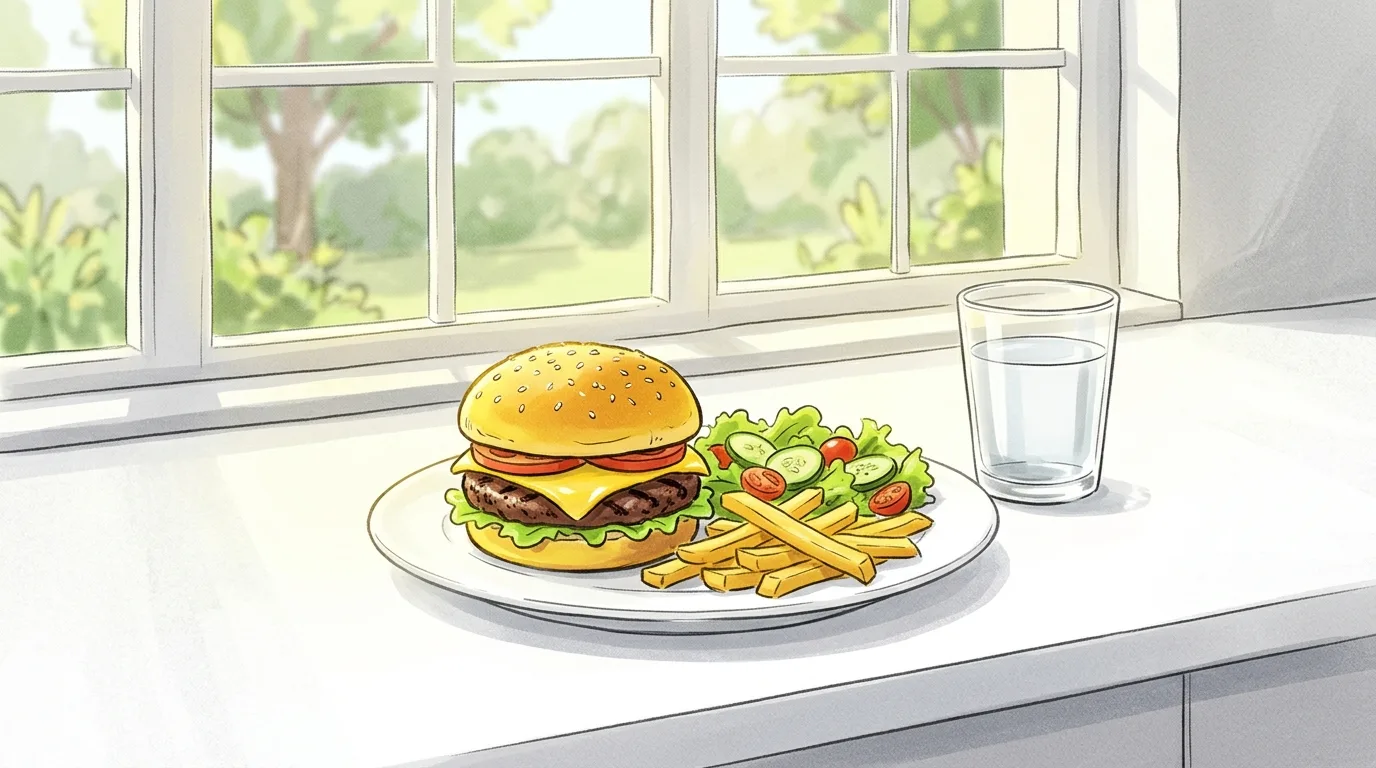
The best pick is the food you've genuinely been missing, in a normal portion. Good options include a burger with a side salad, two or three slices of pizza with a salad, a burrito bowl with extra meat, or a regular-sized dessert after a normal dinner. If you want a whole day off, make it a maintenance day: eat your usual meals with one favorite added, rather than eating everything in sight.
What's the healthiest cheat meal?
The healthiest cheat meal pairs the treat with protein and vegetables and stops at comfortably full. Protein has a strong effect on fullness, according to the Westerterp review. For fast food, choose a single burger or chicken sandwich with a small side and water instead of the large combo and a shake.
What This Means for You
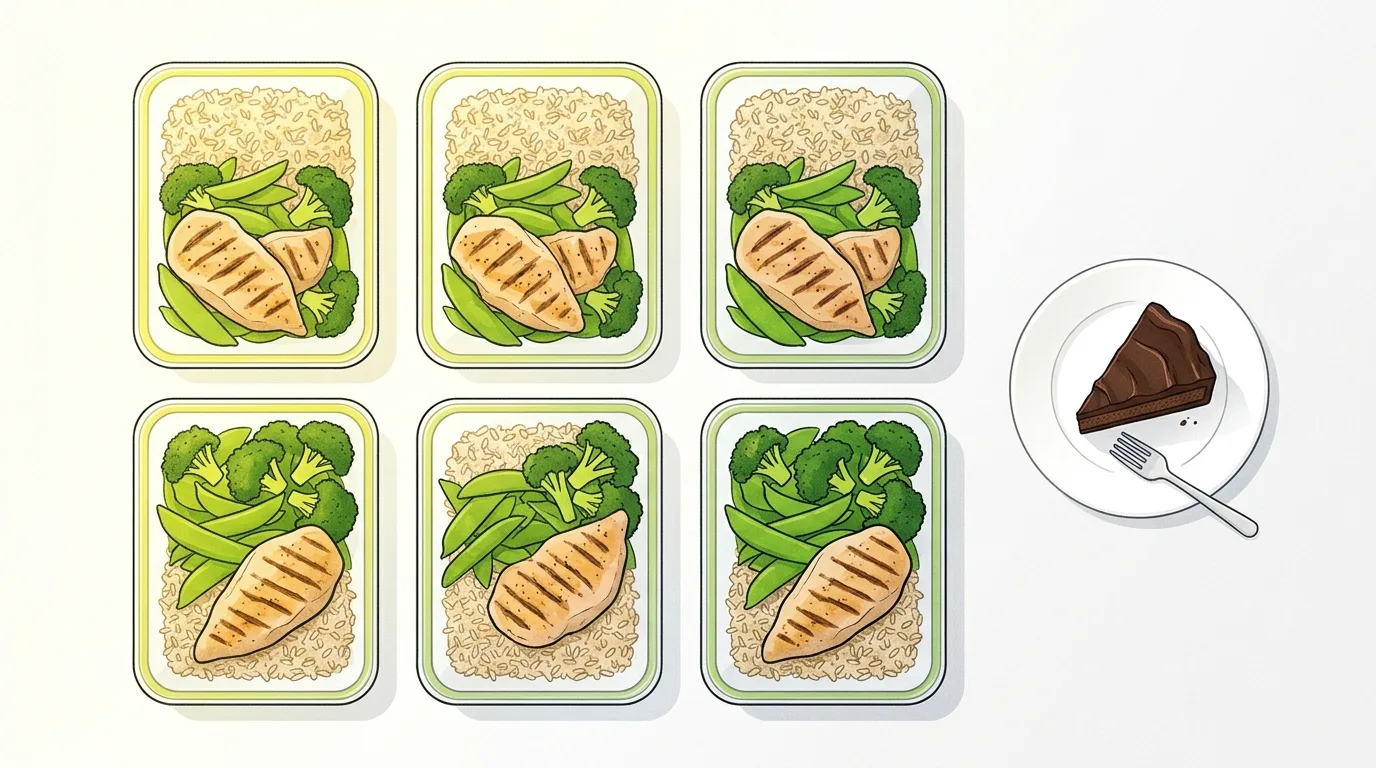
A cheat meal won't reset your hormones or fire up your metabolism, and a cheat day can cancel most of a week's deficit. But wanting your favorite food is normal, and a diet with no room for it rarely lasts. Plan one normal-sized favorite meal a week, enjoy it without guilt, and go straight back to your usual meals. If hunger and fatigue keep building after months of dieting, a planned week at maintenance is the option with trial evidence behind it.
Exercise makes the week easier to manage too. If you'd like a workout app to keep you moving while you diet, our comparison of the best workout apps for weight loss sets out the options. FitCraft pairs you with an AI coach, a 3D character who demonstrates each exercise and says your name while you train, and your workouts adjust as you progress. Streaks and calendar rewards help you keep showing up through a big weekend. Jim, 26, said he kept telling himself he'd start Monday, and FitCraft got him to start on a Wednesday. You can start today, even if you had pizza last night.
Frequently Asked Questions
How many cheat meals per week?
One planned cheat meal a week is about as much as most people can fit while losing weight. A meal that adds 1,000 calories over your normal dinner wipes out about two days of a 500-calorie daily deficit. Two or more a week, or a whole cheat day, can erase most of the week's progress.
Are cheat meals actually good?
A planned, normal-sized favorite meal can make a diet easier to live with, but no trial has shown that cheat meals speed up fat loss. Studies of longer planned breaks are mixed: two-week maintenance breaks helped men lose more fat in one trial (Byrne 2018), while one-week breaks matched continuous dieting in another, with less hunger (Peos 2021). Eating cheat meals is linked with binge eating and other disordered eating (Ganson 2022).
Does a cheat meal boost your metabolism?
Only slightly and briefly. Digesting food uses about 5 to 15 percent of the energy you take in (Westerterp 2004), so a 1,500-calorie meal burns perhaps 150 calories more. Even three full days of carbohydrate overfeeding raised daily energy use by only 7 percent (Dirlewanger 2000).
What's the healthiest cheat meal?
The healthiest cheat meal is the food you actually crave, in a normal portion, with some protein and vegetables alongside it. A burger with a side salad, two or three slices of pizza with a salad, or a regular dessert after a normal dinner all fit. Eat it slowly, stop at comfortably full, and go back to your usual meals at the next one.
What is a good fast food cheat meal?
A good fast food cheat meal is a single burger or chicken sandwich with a small side and water or a diet drink. Skip the large combo, the shake and the extra side, which can double the meal. A meal with real protein in it is more filling than one built on fries and soda.
Will one cheat meal ruin my progress?
No. One meal can't undo weeks of steady eating. A meal 1,000 calories over your needs uses up about two days of a 500-calorie daily deficit, so going straight back to your usual meals keeps the week on track. The real risk is turning one meal into a lost weekend.