
If you've ever felt hungrier the week before your period, you've probably heard that it's because your body is burning more. So do women burn more calories on their period? Do you need more calories on your period, and should you eat more? The answers are smaller and more specific than most of the advice online suggests, and the timing matters more than people expect.
Most of the change happens before your period, not during it. It's driven by progesterone, it's usually worth about 100 calories a day, and appetite tends to rise by more than that. Knowing the real size of it helps you plan your eating and training, so the hungrier week stops feeling like your body is working against you.
This page covers what the calorimeter studies found, how many extra calories that really is, why you eat more before and during your period, whether you need more calories, training on your period, weight changes, what happens when you eat too little, and how to plan around your cycle.
Do You Burn More Calories Before Your Period?
Yes, slightly, in many women. To see why, it helps to know the cycle. In their review of temperature regulation in women, Baker, Siboza and Fuller (2020) describe a cycle that usually lasts 25 to 35 days. The follicular phase starts with your period and runs to ovulation, and it's the part that varies most, from about 10 to 20 days. After ovulation, the empty follicle becomes the corpus luteum, which makes progesterone and estradiol through the luteal phase of about 9 to 17 days. If you don't get pregnant, the corpus luteum breaks down, hormone levels fall and your next period starts.
Progesterone is the part that matters for calories. It raises your core body temperature by 0.3 to 0.7°C in the luteal phase, and studies that find a rise in energy use or basal metabolic rate usually put it at about 5 to 9 percent. Baker's team points out that some studies find no rise, and that part of any increase may simply follow from the warmer body temperature.
The cleanest data come from whole-room calorimeters, where researchers measure the oxygen you use and the carbon dioxide you make around the clock. In one of the first such studies, Webb (1986) kept 10 women in a calorimeter for 36 to 46 hours at a time and found that 8 of them burned 8 to 16 percent more over 24 hours in the luteal phase, which he attributed to progesterone. Bisdee, James and Shaw (1989) measured 8 women on a fixed diet at four points in one cycle. Their sleeping metabolic rate was lowest late in the follicular phase and highest late in the luteal phase, 6.1 percent higher, but the rise in their 24-hour burn wasn't statistically significant.
Two studies from 1992 put numbers on it. Ferraro and colleagues found that women's 24-hour burn in a calorimeter was 106 calories a day higher in the luteal phase. Meijer and colleagues measured a 7.7 percent rise in sleeping metabolic rate after ovulation in 16 women.
Not every woman shows the change. When Henry, Lightowler and Marchini (2003) measured 19 women at least three times a week through a full cycle, resting metabolic rate varied significantly in some women and barely moved in others. A 2020 meta-analysis by Benton, Hutchins and Dawes pooled 26 studies with 318 women and found a small but significant rise in resting metabolic rate in the luteal phase. Of the 30 studies they reviewed, 14 found a rise and 16 found no difference, and in the studies published since 2000 the effect was no longer significant.
| Study | Who was measured | Luteal phase vs follicular phase |
|---|---|---|
| Webb 1986 | 10 women, 36 to 46 hours in a calorimeter | 24-hour burn up 8 to 16% in 8 of the 10 women |
| Bisdee 1989 | 8 women on a fixed diet, four phases | Sleeping metabolic rate up 6.1%; 24-hour rise not significant |
| Ferraro 1992 | Women in a whole-room calorimeter | 24-hour burn up 106 calories a day |
| Meijer 1992 | 16 women, sleeping metabolic rate | Up 7.7% after ovulation |
| Henry 2003 | 19 women, at least 3 times a week for a full cycle | Large swings in some women, almost none in others |
| Benton 2020 | Meta-analysis of 26 studies, 318 women | Small but significant rise; 16 of 30 studies found none |
How Many More Calories Do You Burn on Your Period?
Almost none during the bleeding days themselves. By the time your period starts, the corpus luteum has broken down and progesterone has dropped, so your temperature and resting burn head back toward their follicular baseline. The extra burn belongs to the days before your period, not the days of it.
In the luteal phase, the best single number is about 100 calories a day, close to Ferraro's 106. Webb's 8 to 16 percent would be roughly 150 to 300 calories for a woman burning about 1,900 calories a day, but those were the women who showed a rise, and many studies found none. Over a luteal phase of about 12 days, 100 extra calories a day adds up to roughly 1,200 calories.
That's a real number, but a small one: about the size of one small snack a day. To see the baseline it sits on, our TDEE calculator estimates your total daily burn from your size and activity. On average, the luteal rise adds about 5 percent to that total, and for some women it adds nothing.
Why Do You Eat More Before and During Your Period?
Appetite rises in the luteal phase too, and usually by more than your burn does. Barr, Janelle and Prior (1995) had 42 women chart their basal body temperature through six cycles to confirm ovulation and keep 3-day food records at different points. In ovulatory cycles, the women ate 9.27 megajoules a day in the luteal phase against 8.01 in the follicular phase, a difference of roughly 300 calories a day. In cycles without ovulation, intake didn't change, which points to the hormones of the luteal phase.
A 2023 review by Rogan and Black agreed that intake tends to be lower in the follicular phase than in the luteal phase, with a dip in the days leading up to and including ovulation. They also concluded that the size of the swing can't yet be pinned down, and that it probably differs from woman to woman and from cycle to cycle.
Cravings follow a similar pattern. In a study of 27 young women, Souza and colleagues (2018) found that the desire for foods high in sugar, salt and fat, such as chocolate, pastries and snacks, was higher before the period, even though the amount the women actually ate didn't differ between phases.
Hormones aren't the whole story, though. About half of American women crave chocolate, and about half of those crave it around the start of their period. If hormones were the main cause, those cravings should have fallen by about 38 percent after menopause, but Hormes and Rozin (2009) found a drop of only 13.4 percent. Culture plays a part as well. Hormes and Niemiec (2017) found that women born outside the US were about half as likely to report period chocolate cravings as women with US-born parents, 17.3 versus 32.7 percent.
That's useful, because a craving you understand is easier to plan around. Our guide on how to reduce sugar cravings has practical steps that work in any week of your cycle.
Do You Need More Calories on Your Period?
Not during the bleeding days. In the luteal phase you may need a little more, roughly 100 calories a day on average, and some women need none. So should you eat more on your period? If you're hungrier in the days before it, a planned extra snack is a sensible response that roughly matches the extra burn. Eating 300 or more extra calories a day, the average rise in Barr's study, goes beyond what the higher metabolism covers.
Can You Eat More on Your Period Without Gaining Weight?
A little, yes. About 100 extra calories a day in the luteal phase is roughly what your body burns anyway, so a small daily snack won't change your weight. If appetite pushes you to eat 300 extra calories a day for 12 days, that's about 3,600 calories against roughly 1,200 extra burned. The gap of about 2,400 calories would be about two-thirds of a pound of fat by the old 3,500-calorie rule, unless you eat a bit less in other weeks, as many women naturally do around ovulation.
Calories still count on your period. The cycle shifts the timing a little, but your balance over weeks decides whether you gain, lose or hold steady.
Knowing what to do is the easy part.
FitCraft, our mobile fitness app, pairs you with an AI coach who builds you a personalized plan around your goals, schedule, and fitness level. Every FitCraft program is designed by Domenic Angelino, MPH (Brown University) and NSCA-CSCS, with research published in the Journal of Strength and Conditioning Research and Medicine & Science in Sports & Exercise.
Take the Free Assessment Free • 2 minutes • No credit cardDo You Burn More Calories Working Out on Your Period?
No. A workout costs about the same in any phase of your cycle. In Bisdee's calorimeter study, exercise efficiency, the energy cost of a set amount of work, didn't change across the cycle. A 30-minute dumbbell session or a brisk walk burns about the same on the second day of your period as it does a week before it.
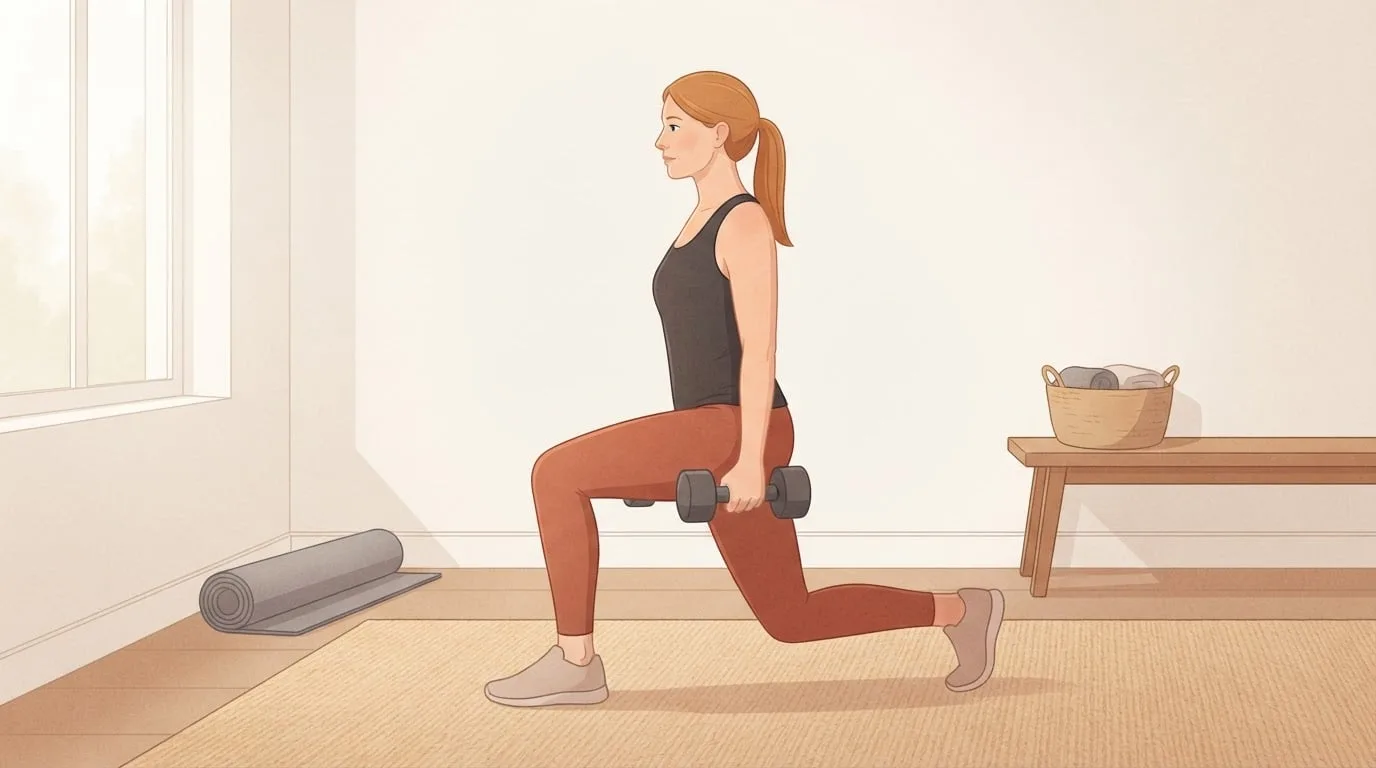
Performance shifts are small too. McNulty and colleagues (2020) pooled 78 studies and found that performance might be trivially lower in the early follicular phase, which includes your period, and our review of whether you should train around your period covers that evidence in detail. Keep training through your cycle, and ease off on days when cramps, fatigue or a heavy flow make a hard session feel wrong. Our guide to exercises during your period has the best moves and a 20-minute session for those days.
Is It Normal to Gain Weight Before Your Period?
Yes, and it's mostly water. Fluid retention builds through the second half of the cycle, and in a year-long diary study by White and colleagues (2011) it peaked on the first day of the period. It eases in the days after bleeding stops, which is when many women see the scale come back down.
So do you lose weight when your period ends? Often a little, as that water leaves, but your body fat is the same as it was the week before. To judge real progress, compare your weight at the same point in each cycle, or average a full cycle of weigh-ins. Our guide to exercises during your period also covers how to train when you feel bloated.
Can Eating Too Little Stop Your Period?
Yes, and this matters far more than any luteal calorie bump. Your reproductive hormones respond to energy availability: the calories you eat minus the calories you burn in exercise, per kilogram of lean body mass. In a lab study of 29 regularly menstruating women, Loucks and Thuma (2003) set energy availability for five days early in the follicular phase. Luteinizing hormone, which drives ovulation, kept its normal pulses at 30 calories per kilogram of lean mass a day. Below that, its pulses became less frequent.
Will eating 1,200 calories make you lose your period? It depends on your size and how much you exercise. A woman with 45 kg (99 lb) of lean mass would need about 1,350 calories a day left over after exercise to stay at that line. If she eats 1,200 calories and burns 300 in workouts, she has 900 left, about 20 per kilogram, which is in the range where hormone pulses changed in the lab. If your periods become irregular or stop while you're dieting or training hard, see a doctor.
Eating more can bring periods back. In the 12-month REFUEL trial, De Souza and colleagues (2021) randomized 76 exercising women with irregular or absent periods to eat more or to keep eating as usual. The group told to eat more added about 330 calories a day, an 18 percent increase, and was nearly twice as likely to get their periods back. In a subgroup analysis, 64 percent of that group improved their menstrual function, against 19 percent of the controls.
How to Plan Around Your Cycle When You're Losing Weight
You don't need a separate diet for each phase. A few small adjustments cover most of what the research shows:
- Track two or three cycles. Note when hunger, cravings and bloating show up, so you can see your own pattern rather than an average one.
- Plan for the hungrier days. Build a small extra snack, around 100 calories, into the days before your period instead of trying to white-knuckle the cravings.
- Keep protein and fiber in every meal. Meals built around them make the hungrier week easier to handle.
- Keep training. Strength work two or three times a week and daily walks count in every phase, and gentler sessions are fine on rough days.
- Judge progress by cycle, not by day. Compare weigh-ins from the same phase, because water swings can hide or exaggerate a week's change.
- Don't cut so hard that your cycle changes. A deficit that makes your periods irregular has gone too far.
Staying consistent across the whole cycle, including the weeks you don't feel like it, is usually the hard part. Our comparison of the best workout apps for weight loss looks at how different apps handle that. In FitCraft, your AI coach demonstrates every exercise on an interactive 3D model, says your name while you train and adjusts your workouts as you progress. Yoga and mobility sessions sit alongside strength and cardio for the days you want something gentler, and calendar tracking and streaks make it easy to see that you kept going.
What This Means for You
Your body isn't secretly burning off hundreds of extra calories during your period, and it isn't working against you either. The real change is small, it happens in the days before your period, and it usually comes with a bigger change in appetite. Once you know that, the hungrier week stops feeling like a failure of willpower and becomes something you can plan for.
Picture your next cycle going differently: a planned snack on the days you know you'll be hungrier, a lighter session or a walk on the first day of your period, and weigh-ins you compare cycle to cycle instead of day to day. As Sarah, a FitCraft user who lost 18 pounds in 3 months, put it: "First app that made exercise feel like something I chose, not forced."

Frequently Asked Questions
Do calories count on your period?
Yes. Your body runs on the same energy balance during your period as in any other week. The only change worth counting is a small rise in resting burn, about 100 calories a day on average, in the week or two before your period, and it has usually faded by the time bleeding starts.
Is it normal to eat more on your period?
Yes. Many women eat more in the days before and at the start of their period: in ovulatory cycles, women in one study ate about 300 more calories a day in the luteal phase than in the follicular phase. Cravings for sweet, salty and fatty foods also tend to rise before a period.
Do you lose weight when your period ends?
Often a little, because fluid retention tends to peak around the first day of your period and ease in the days after bleeding stops. That drop is water rather than fat, so compare weigh-ins taken at the same point in each cycle.
How does menstruation affect hormones?
Menstruation starts because hormones fall. After ovulation, the corpus luteum makes progesterone and estradiol; if you don't get pregnant, it breaks down, both hormones drop and your period begins. Estrogen then climbs again through the follicular phase toward the next ovulation.
What are some good foods to eat during my period?
Regular meals with protein, whole grains, fruit and vegetables keep your energy steady. Iron-rich foods such as lean red meat, beans, lentils and leafy greens help replace the iron lost in menstrual blood, especially if your periods are heavy, and eating a vitamin C food with plant sources helps you absorb it.