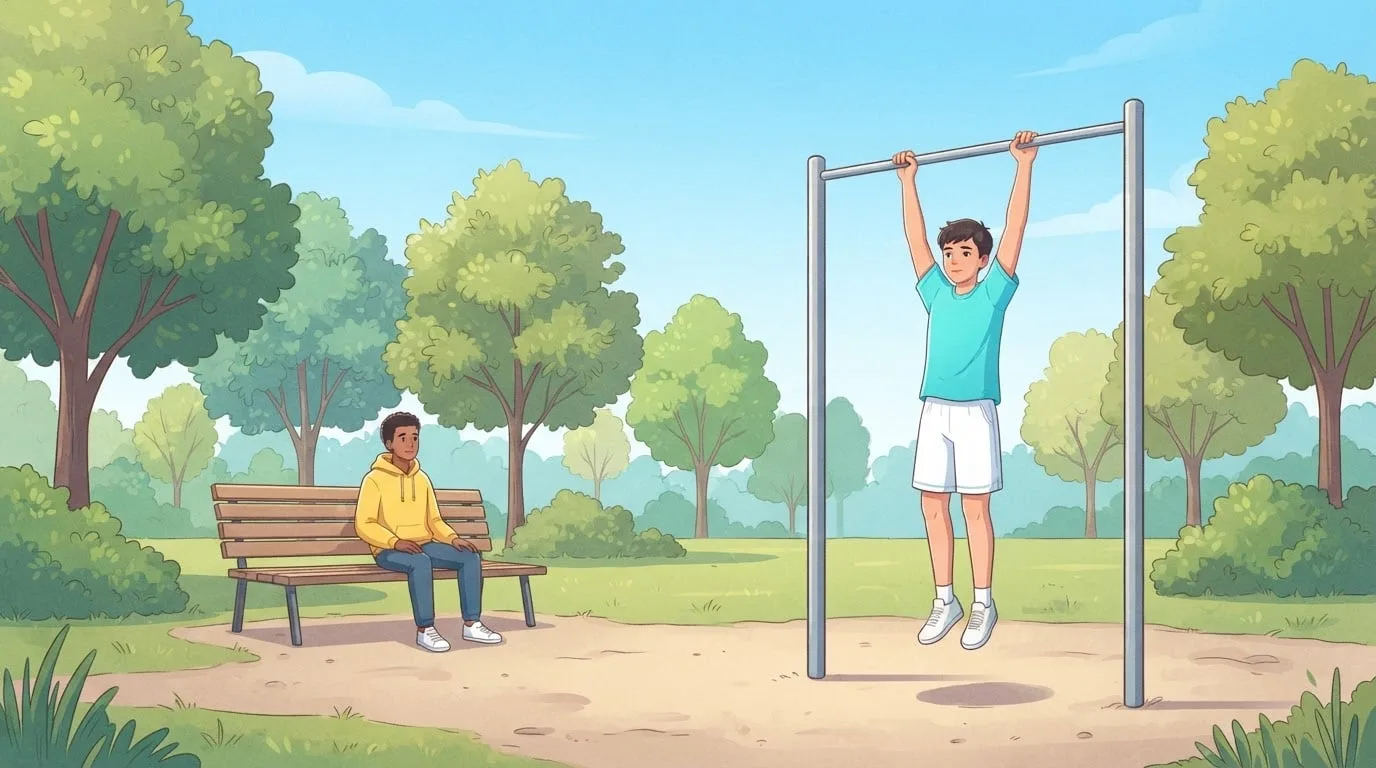
Maybe you're 15 and hoping for two more inches. Maybe you're an adult who measured yourself at the doctor's office and came up shorter than you remembered. Either way, you've seen the videos promising that a stretching routine will make you taller, and you want to know if any of it works. So, can stretching make you taller?
The short answer is no, not in the sense most people mean. Stretching can't add length to your bones, at any age. But that's not the whole story. Your height changes by close to 2 cm every day, slouching can hide some of the height you already have, and posture is something you can actually improve.
Below you'll find what determines adult height, what can and can't change during the teen years, why you're taller in the morning, what hanging and traction really do, how posture affects the height you show, and a short routine that helps you stand tall.
What Determines Your Adult Height?
Your adult height is set by how long your bones grow before your growth plates close. Three things decide it.
Genes do most of the work
Twin studies show how much of height is inherited. Silventoinen and colleagues (2003) analyzed 30,111 pairs of twins in eight countries. Genes explained 87% to 93% of the variation in height among men. Among women the figure was 68% to 84%. Height isn't controlled by one or two genes, either. A genetic study of 5.4 million people found 12,111 common variants linked to height, and together they explain about 40% of the differences in height among people of European ancestry (Yengo and colleagues, 2022).
The environment you grow up in matters too
Genes set a range, and childhood conditions decide where in that range you land. A study of 18.6 million people born between 1896 and 1996 found that South Korean women became 20.2 cm taller on average over that century, and Iranian men 16.5 cm taller (NCD Risk Factor Collaboration, 2016). Genes don't change that fast. Better food, health care and living conditions during childhood do.
Growth plates close, and then bones stop lengthening
Bones grow longer at growth plates, discs of cartilage near their ends. Growth speeds up in early and middle puberty, then stops when estrogen and its receptors close the plates in late puberty (Shim, 2015). In X-rays of 570 young people, the growth plates at the ankle end of the shin had fully fused in every girl by 16 and every boy by 19 (Crowder and Austin, 2005). After that, no stretch, supplement or exercise can make those bones longer.
Height doesn't stay fixed in adulthood, though. In a long-running study of 2,084 adults, people started losing height at about 30. By 70, men had lost about 3 cm and women about 5 cm. By 80, the losses were about 5 cm and 8 cm (Sorkin and colleagues, 1999). Part of that loss happens in the spine, which is where posture comes in.
Can Stretching Make You Taller as a Teenager?
No. While your growth plates are open, you'll keep growing whether you stretch or not, and no study has shown that stretching speeds that up or adds to your final height. Growth during puberty runs on genes, hormones and nutrition. Sleep matters too. Growth hormone is released mostly during deep sleep (Van Cauter and colleagues, 2004), so a regular bedtime does more for a growing teen than any stretch.
The same is true at 14, at 16 and for girls in particular. Girls usually go through puberty earlier, so their growth plates also close earlier. By 16, the ankle growth plates had fused in every girl in Crowder and Austin's study. Stretching at any of these ages is good for flexibility and posture. It just isn't a height treatment.
Lifting doesn't cost height either. Supervised strength training studies in children found no effect on how tall they grew, and our look at whether lifting weights stunts growth covers the evidence and a safe way for teens to start. If you're worried that a child isn't growing as they should, see a pediatrician, who can track growth on a chart and check bone age with an X-ray.
Why You're Taller in the Morning
You're tallest when you wake up and shortest at bedtime. The discs between your vertebrae act like cushions, and under the load of standing and moving they slowly lose fluid. Lying down overnight lets them take it back up.
Tyrrell and colleagues (1985) measured this to the millimeter. Adults lost an average of 19.3 mm between morning and evening, about 1.1% of their height. More than half of the daily loss happened in the first hour after getting up. About 70% came back during the first half of the night. Carrying loads and repeated lifting made people shrink faster.
Exercise does it too, briefly. In a later study, a circuit of weight training shrank the spine by about 5.4 mm and a 6 km run by about 3.25 mm. Twenty minutes of rest afterward didn't bring it back, but a night of sleep did (Leatt and colleagues, 1986).
Astronauts show the extreme version. With no gravity loading the spine, crew members on the International Space Station grew by up to 3% early in their missions, then returned to about their usual height after landing (Young and colleagues, 2023). If you want an accurate measurement, stand against a wall in the morning, and compare morning to morning.
Spinal Decompression: Hanging, Inversion and Traction
Hanging from a bar, inversion tables and traction all do the same thing: they take load off the spine and let the discs expand a little. That's where most claims about stretching to grow taller come from. The effect is real. It's also small and temporary.
The clearest measurement comes from traction. Bridger and colleagues (1990) pulled on the lower backs of 10 healthy young adults with a force of one third of their body weight. After 25 minutes, they were 8.94 mm taller on average, compared with 3.33 mm after 25 minutes of lying with knees bent. The gain was fastest in the first 15 minutes.
Nine millimeters is less than half an inch, and it doesn't last. The moment you're upright again, gravity starts compressing the discs, and the morning studies show more than half of a day's loss happens in the first hour. No study has shown that hanging, inversion or traction adds height that lasts. Hanging is still a decent exercise for grip and shoulders. Just don't expect it to change your height.
Posture: The Height You Already Have
Rounded shoulders, a forward head and a curved upper back can all take a bit off the height you show. Straightening up doesn't add anything new. It shows the height you already have. That's the part of the stretching-for-height idea that holds up.
Posture can change with training, slowly. In the SHEAF trial, Katzman and colleagues (2017) randomized 99 adults aged 60 to 88 with a rounded upper back to six months of spine strengthening and posture training, three one-hour sessions a week, or to health education. The exercise group's upper-back curve improved by 3.0 degrees compared with the control group, and they felt better about how they looked.
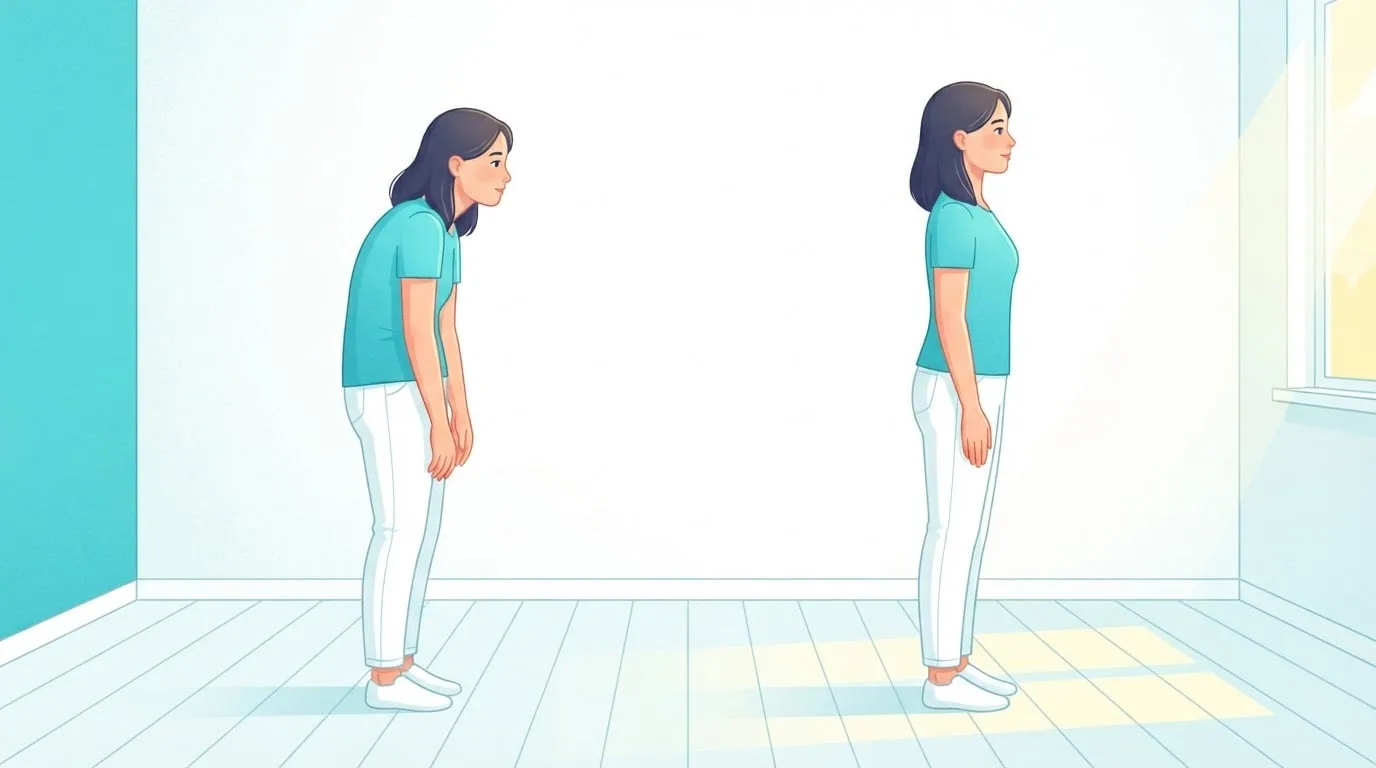
That trial was in older adults with a pronounced curve, and the change was modest. Younger people with a habitual slouch, rather than a spine that has changed shape, usually have more room to improve. The research points to the same combination every time: stretch what's tight in front, strengthen what's weak in back. Our guide to exercises for posture goes through the trials and which moves are worth your time.
Knowing what to do is the easy part.
FitCraft, our mobile fitness app, pairs you with an AI coach who builds you a personalized plan around your goals, schedule, and fitness level. Every FitCraft program is designed by Domenic Angelino, MPH (Brown University) and NSCA-CSCS, with research published in the Journal of Strength and Conditioning Research and Medicine & Science in Sports & Exercise.
Take the Free Assessment Free • 2 minutes • No credit cardWhat Stretching Can and Can't Change
Stretching is useful. It just works differently than most people think. Here's what it does and doesn't do.
- It can't lengthen bone. Not in children, not in adults.
- It can't permanently lengthen your spine. Disc height follows the load on your spine through the day, not your stretching routine.
- It does increase your range of motion. Regular stretching lets you move further into a position.
- It mostly changes how much stretch you tolerate. A review of 26 studies by Freitas and colleagues (2018) found that 3 to 8 weeks of stretching barely changed the structure or stiffness of muscles and tendons. The gains came mainly from people tolerating a greater stretch.
- It can make standing tall feel easier. Loosening tight hip flexors and chest muscles takes away some of the pull toward a slouch.
When and how you stretch matters for performance. Our review of static vs dynamic stretching explains why dynamic moves suit a warm-up and long static holds suit the end of a session.
How does stretching affect muscle growth?
Passive stretching on its own does little for muscle size. Loading a muscle while it's stretched is a different story. Lifting through the deep, stretched part of a movement appears to build more muscle than working only the short range, which our review of stretch-mediated hypertrophy covers.
Does stretching help with back pain?
It can. Sherman and colleagues (2011) randomized 228 adults with chronic low back pain to 12 weekly yoga classes, 12 weekly stretching classes or a self-care book. Yoga beat the book for back function and pain at 12 weeks. Yoga wasn't better than the stretching classes at any point, so regular stretching did about as well as yoga did.
What happens if you stretch every day?
You'll get more flexible, and you'll likely feel looser and move more easily. Your height won't change. Daily stretching is safe for most people as long as you stay in mild tension and skip the bouncing.
How far is too far to stretch?
Stop at a strong but comfortable pull you could hold while breathing slowly. Sharp pain, pain in a joint rather than a muscle, numbness or tingling all mean you've gone too far. Ease off and stretch a little less next time.
A Daily Routine to Stand Taller
This 10-minute routine won't add length to your bones. It works on the two things that pull you into a slouch, tight muscles in front and weak muscles in back, so standing upright starts to feel normal. Do the stretches daily and the strength moves 2 to 3 times a week.
Stretches (hold each for 30 seconds, twice)
- Doorway chest stretch: forearms on the door frame, step through until you feel the stretch across your chest.
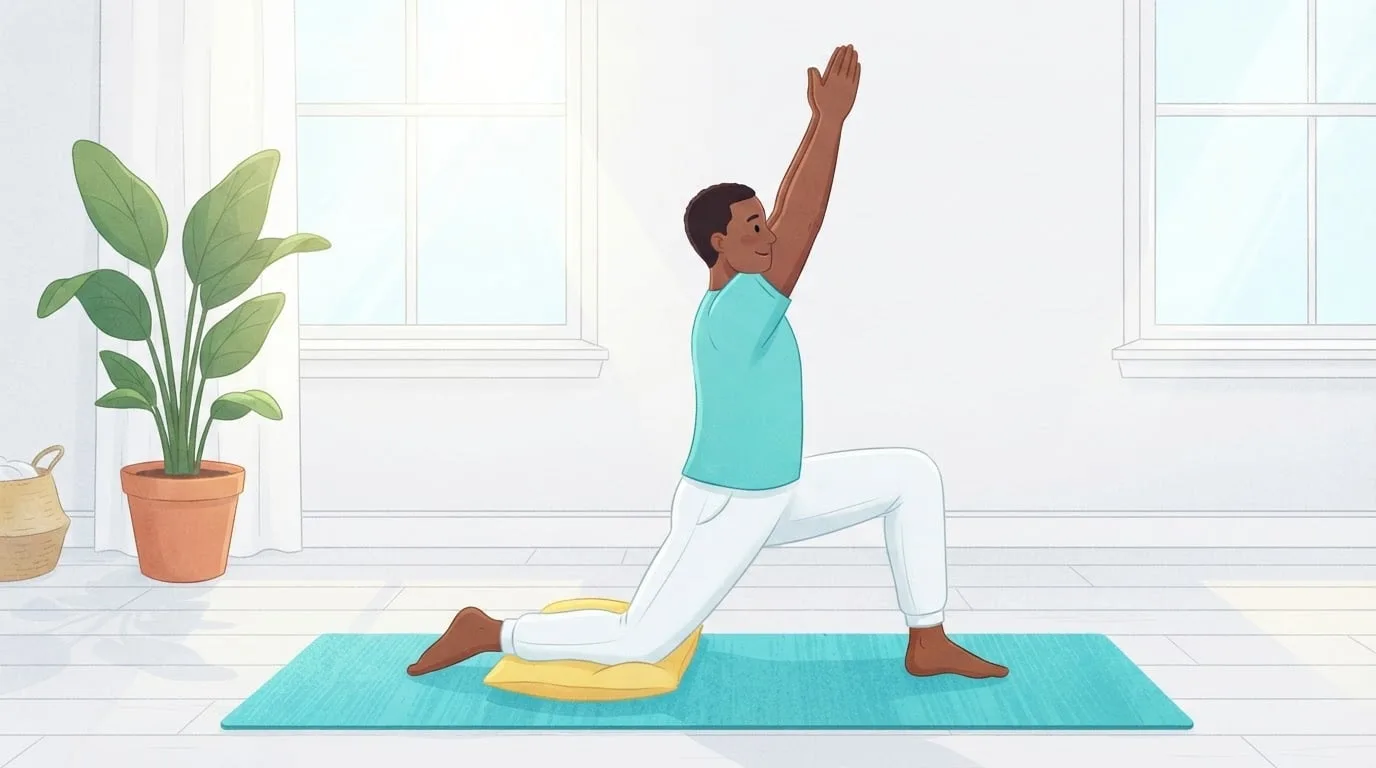
- Kneeling hip flexor stretch: one knee down, squeeze the glute on that side and shift forward with your torso tall.
- Upper-back extension over a rolled towel: lie with the towel across your mid back and let your shoulders relax toward the floor.
- Cat-cow: on hands and knees, slowly round and then arch your back 8 to 10 times.
Strength moves (2 to 3 sets of 10 to 15 reps)
- Chin tucks: draw your chin straight back, hold for 5 seconds.
- Wall angels: back against a wall, slide your arms up and down while keeping contact.
- Dumbbell bent-over row or reverse fly: squeeze your shoulder blades together at the top.
- Glute bridge: strong glutes help you stand without tipping your pelvis forward.
Add a 20 to 30 second dead hang if you have a bar. It's good for grip and shoulders, and your back may feel looser afterward, even though it won't change your height. If you'd like someone to lead you through a routine like this, a home workout app with no equipment needed like FitCraft includes yoga and mobility workouts alongside strength sessions, with a 3D AI coach who demonstrates each move.
Can I Increase My Height From 5'5" to 5'7"?
If you're an adult, not by stretching or exercise. Two inches is about 5 cm, more than double your normal swing between morning and evening. Better posture may show a little height you've been hiding, but it won't add two inches of bone. Changing adult bone length takes limb-lengthening surgery, a major operation with a long recovery.
If you're a teenager who is still growing, you may grow two more inches on your own. Eat enough, sleep well and stay active, and ask a pediatrician if you're worried about how you're growing. An X-ray can show how much growing time is left.
What This Means for You
Stretching won't make you taller, and that's fine, because it was never the right tool for that job. Your height was mostly set by your genes and your childhood. What you can change is how you carry it. A few minutes of stretching a day and some upper-back strength work twice a week will help you stand straighter, move more freely and feel better in your body.
The hard part isn't knowing what to do. It's still doing it in week six, when the novelty is gone. Short routines you actually enjoy beat long ones you skip. As one FitCraft user, Sarah, put it: "First app that made exercise feel like something I chose, not forced."
Frequently Asked Questions
Can stretching make you taller as a teenager?
No. A teenager's growth happens in the growth plates near the ends of the long bones, and it's driven by genes, hormones, nutrition and sleep. No study has shown that stretching speeds that process up or adds to final height. Stretching can help a teen stand up straight, which shows off the height they already have.
Does hanging from a bar make you taller?
Only for a short while. Hanging takes weight off the spine, so the discs between the vertebrae can take up a little fluid, much like traction. In one study, 25 minutes of lumbar traction added about 9 mm of height, and that kind of gain fades within hours once you're upright again. Hanging is still a good grip and shoulder exercise.
Do stretches before bed make you taller?
No. You're already tallest when you wake up, because lying down lets your spinal discs rehydrate overnight, and most of the height lost during the day returns in the first half of the night whether you stretch or not. A few gentle stretches can help you relax before sleep, and sleep matters for a growing child because most growth hormone is released in deep sleep.
Does stretching your legs make you taller?
No. Leg length is bone length, and stretching the hamstrings, calves or hip flexors doesn't change bone. Loosening tight hip flexors can make it easier to stand upright instead of tipping forward at the hips, which helps you stand at your full height.
Do exercises make you taller?
No exercise lengthens bones, in children or adults. Regular exercise supports healthy bones and muscles while a child grows, and strength training doesn't stunt growth. In adults, upper-back strength work and stretching can improve a rounded posture, so you stand at the height you already have.
Why am I shorter at night than in the morning?
Your spinal discs lose fluid under the load of standing and moving. In one study, adults lost an average of 19.3 mm, about 1.1% of their height, between morning and evening, more than half of it in the first hour after getting up. About 70% came back in the first half of the night.