Straight leg kickbacks look like a small glute exercise, but the plank position makes them more demanding than the name suggests. You have to extend one hip while the rest of your body stays quiet.
That is the whole point. The glute gets the moving work. The trunk, shoulders, and hip stabilizers keep you from twisting or dumping into your lower back.
Quick Facts: Straight Leg Kickbacks
- Equipment needed: None; exercise mat optional
- Difficulty: Beginner to Intermediate
- Modality: Mobility and bodyweight strength
- Body region: Glutes, hips, and core
- FitCraft quest category: Mobility
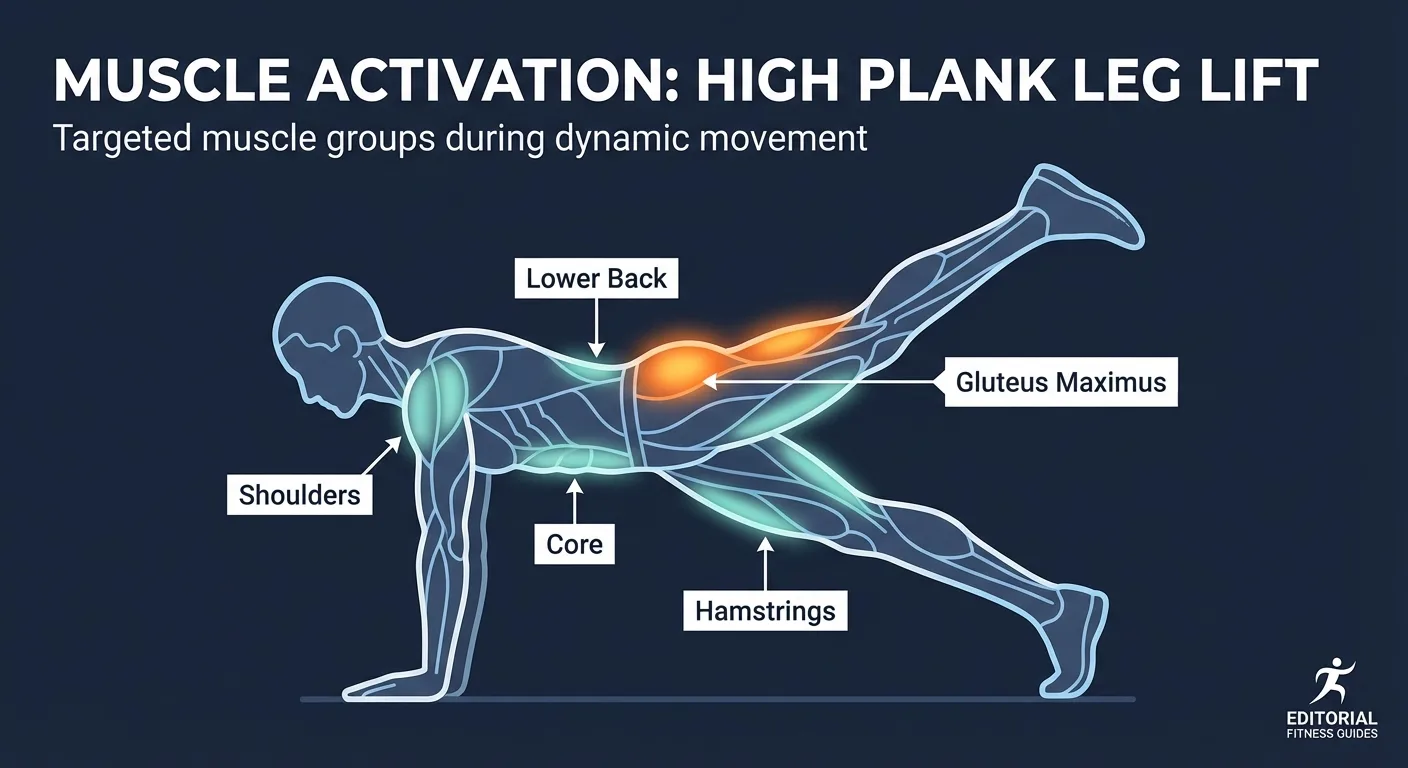
Areas Stretched & Mobilized
Primary movers: the gluteus maximus drives hip extension as the leg lifts. It shortens on the way up and controls the return on the way down, especially if you pause instead of swinging.
Secondary movers: the hamstrings help extend the hip because the knee stays straight. The gluteus medius and deep hip rotators help keep the pelvis from opening toward the side.
Stabilizers: the abdominals, serratus anterior, chest, and shoulders work isometrically to hold the high plank. The standing-side glute and inner thigh also help keep your hips level while one leg leaves the floor.
Mechanism: the straight-leg position creates a longer lever than a bent-knee donkey kick. That longer lever raises the demand on the glute and hamstrings, but it also makes cheating easier. If the leg goes higher because your low back arches, the useful hip-extension range has already ended.
Step-by-Step: How to Do a Straight Leg Kickback
- Set up a high plank. Place your hands directly under your shoulders and step both feet back. Keep your body in a straight line from head to heels, with your eyes on the floor between your hands.
- Brace before you lift. Tighten your abs and lightly squeeze both glutes. Coach Ty's cue: "Lock the ribs and hips together before the leg moves."
- Lift one straight leg. Keep the working knee long and reach the heel back and slightly up. Stop before your low back arches or your hip opens to the side.
- Pause at the top. Hold for a brief count and squeeze the working glute. The pause should feel controlled, not like you are hanging on your lower back.
- Lower with control. Bring the foot back toward the floor slowly. Exhale as you lift, inhale as you lower, and complete all reps on one side before switching.
Get this exercise in a personalized workout
FitCraft, our mobile fitness app, uses its AI coach Ty to program mobility work like this into your plan at the right volume and intensity, based on your level, goals, and equipment. Ty was designed and trained by Domenic Angelino, MPH (Brown University) and NSCA-CSCS, with research published in the Journal of Strength and Conditioning Research and Medicine & Science in Sports & Exercise.
Take the Free Assessment Free • 2 minutes • No credit card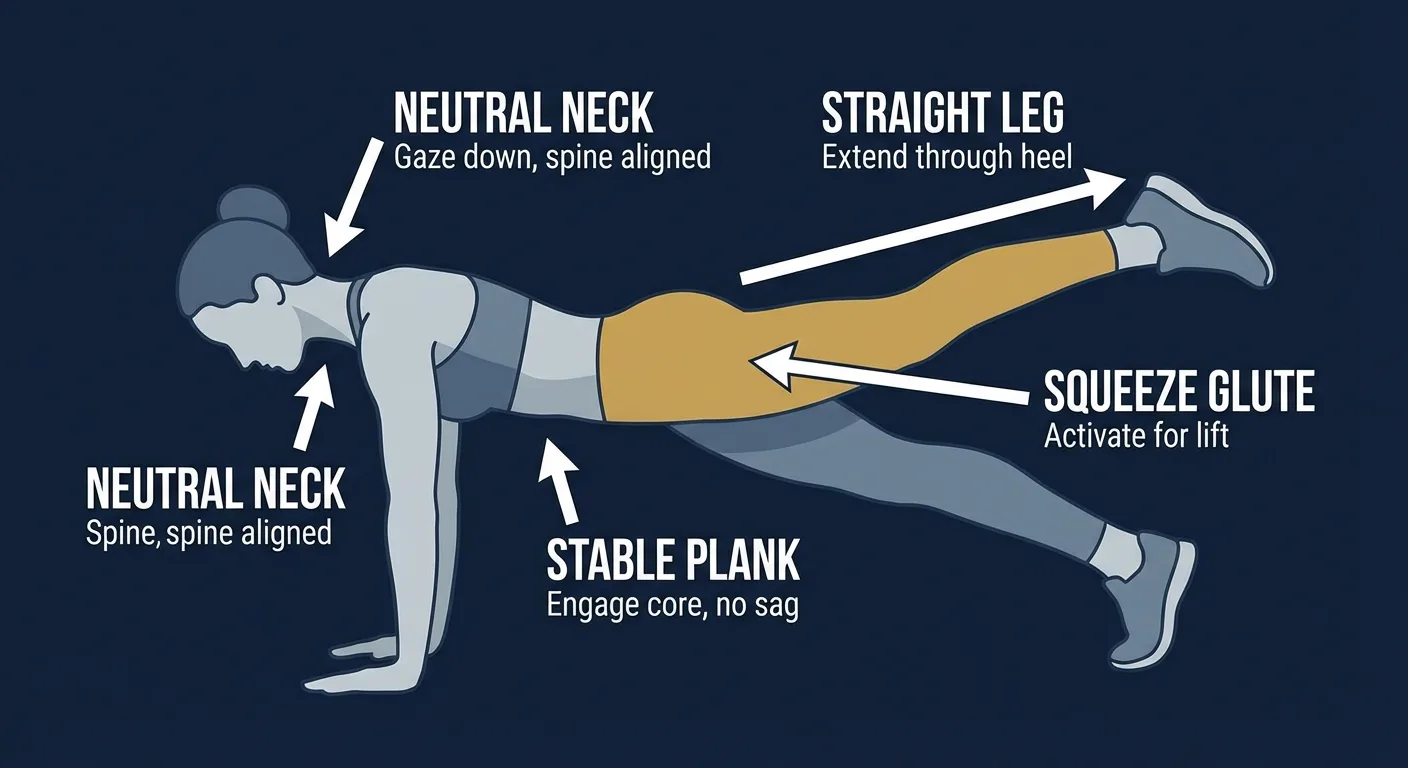
Common Mistakes (and How to Fix Them)
- Arching the lower back. If your belly drops and your ribs flare, your lumbar spine is creating the extra height. Fix it by lowering the leg and bracing before each rep.
- Opening the hip. Turning the working hip outward shifts the movement away from clean hip extension. Keep both hip points facing the floor.
- Bending the knee. Bending the knee turns the drill into a donkey kick. Keep the leg long, even if that means a shorter range.
- Swinging through reps. Momentum makes the rep easier and removes the top-position glute squeeze. Add a one-second pause to slow it down.
- Letting the shoulders drift behind the hands. If your shoulders slide back, the plank gets unstable. Press the floor away and keep shoulders stacked over wrists.
Straight Leg Kickback Variations: Regressions and Progressions
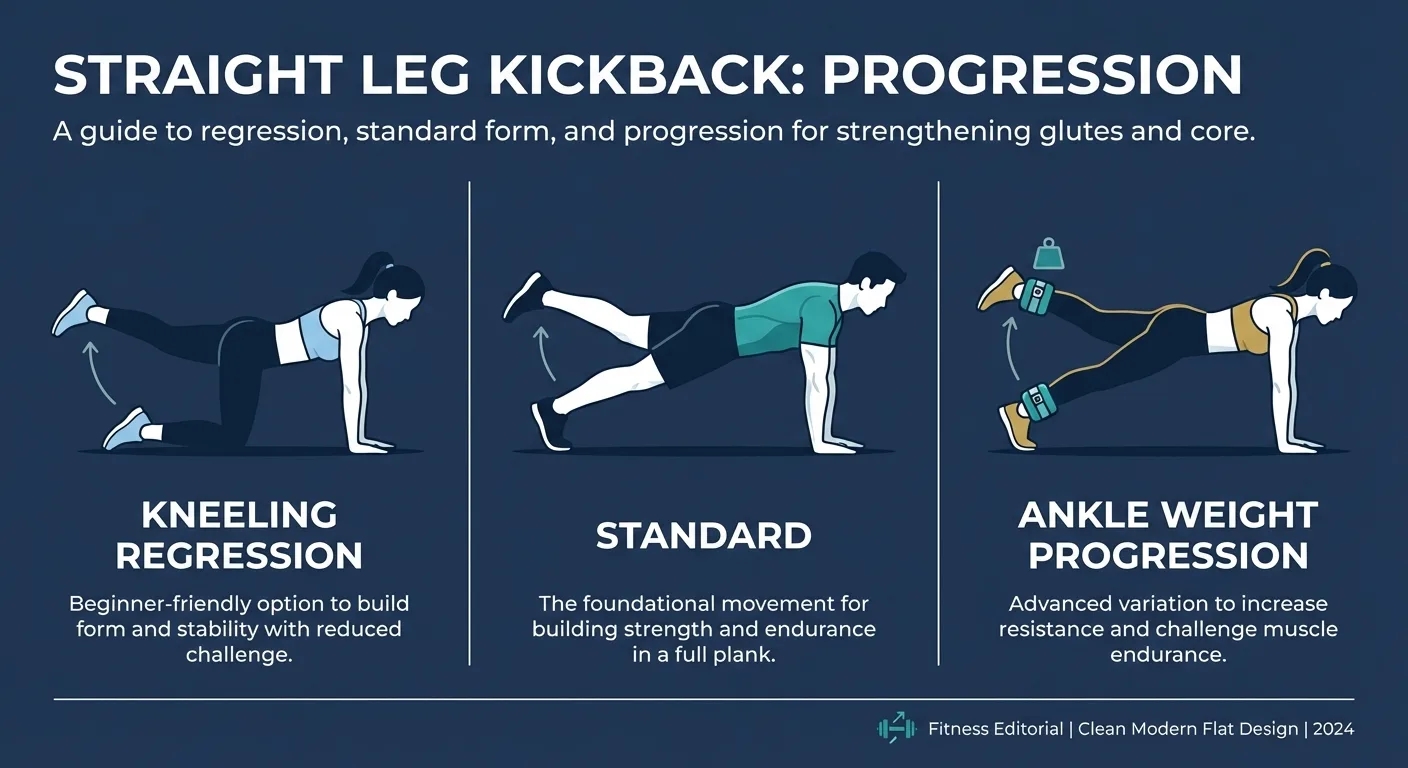
Kneeling Straight Leg Kickback
Start on hands and knees, then extend one leg straight back and lift from the glute. This removes most of the plank demand so you can learn the hip motion first.
Donkey Kicks
Bend the working knee to about 90 degrees and drive the heel toward the ceiling. The shorter lever makes this easier than the straight-leg version.
Pause Rep Straight Leg Kickback
Hold the top position for 2 to 3 seconds on each rep. Use this when the standard version feels controlled and you want more time under tension without adding equipment.
Ankle Weight Straight Leg Kickback
Add a light ankle weight only after you can keep your hips square without it. Start lighter than you think. A long lever makes small loads feel bigger.
When to Avoid or Modify Straight Leg Kickbacks
Straight leg kickbacks are safe for most healthy adults, but a few conditions call for a smaller range, a kneeling setup, or a different drill. Always consult your physician or physical therapist for personalized guidance.
- Lower-back pain with hip extension. If lifting the leg causes pinching or sharp lumbar discomfort, reduce the height or switch to bird-dogs. The glute should drive the motion, while the back stays quiet.
- Wrist or shoulder irritation in plank. Use a kneeling setup, elevate your hands on a sturdy bench, or build tolerance with hand planks and forearm planks.
- Acute hip, hamstring, or glute strain. Skip loaded end-range hip extension until symptoms settle and you have medical clearance to resume strengthening.
- Hypermobility or connective tissue disorders. Avoid chasing a high leg lift. Use active control, shorter ranges, and a slower tempo instead of passive end-range positions.
- Pregnancy or early postpartum training. The plank position can challenge pressure management and pelvic stability. Use a high-incline or kneeling variation and stop if you notice doming, pelvic pressure, or pain.
Related Exercises
If straight leg kickbacks fit your routine, these exercises support the same glute, hip, and trunk-control pattern:
- Same hip-extension pattern: Glute Bridges train glute extension without the plank demand.
- Easier glute isolation: Donkey Kicks use a bent knee and shorter lever.
- Core-control pairing: Bird-Dogs teach opposite-arm and opposite-leg control from a stable trunk.
- Plank foundation: Hand Planks and Forearm Planks build the bracing base this exercise needs.
- Hip mobility support: Cat-Cow and Hip Abductor Stretch pair well when hip stiffness limits clean range.
How to Program Straight Leg Kickbacks
For strength and mobility work, use enough volume to practice control without letting the plank fall apart. The ACSM resistance training position stand gives a useful evidence-based framework for progressing volume and frequency across training levels (Ratamess et al., 2009).
| Level | Sets × Reps | Rest between sets | Frequency |
|---|---|---|---|
| Beginner (kneeling or smaller range) | 1-2 × 6-10 per side | 30-60 seconds | 3-5 sessions/week |
| Intermediate (high plank) | 2-3 × 8-15 per side | 45-75 seconds | 3-5 sessions/week |
| Advanced (pause, band, or ankle weight) | 2-4 × 10-20 per side | 60-90 seconds | 3-6 sessions/week |
Where in your workout: use straight leg kickbacks as a glute activation drill before lower-body training, as a low-equipment accessory after squats or hinges, or in a mobility session after hip-opening work. Keep the reps smooth if you use them before heavier work.
Form floor over rep targets: stop the set when your hips rotate, your low back arches, or the leg starts swinging. Cleaner reps beat a larger number with compensation.
How FitCraft Programs This Exercise
FitCraft uses its AI coach Ty to place mobility and bodyweight strength work inside a balanced plan built around your level, goals, and available equipment.
For a movement like straight leg kickbacks, the useful progression is usually control first, then range, then load. Ty adjusts the variation and volume to match your level, so a kneeling version can become a high-plank version before you add pauses, bands, or ankle weights.
Frequently Asked Questions
What muscles do straight leg kickbacks work?
Straight leg kickbacks primarily train the gluteus maximus through hip extension. The hamstrings assist because the knee stays straight, while the abdominals, shoulders, and hip stabilizers work isometrically to keep the plank steady.
Are straight leg kickbacks good for beginners?
Yes, as long as the plank position is stable. Beginners can start from a kneeling tabletop position, use a smaller leg lift, or switch to donkey kicks before progressing to the high-plank version.
Can I do straight leg kickbacks with lower-back pain?
Modify or skip them if hip extension or plank bracing aggravates your lower back. Use a kneeling version, reduce the height of the leg lift, or build your base with bird-dogs, deadbugs, and forearm planks. If pain persists, get assessed by a qualified clinician.
Why do I feel straight leg kickbacks in my lower back?
You are probably lifting the leg higher than your hip can extend and borrowing motion from your lumbar spine. Lower the leg, brace harder, and think about reaching the heel back instead of throwing it up.
How are straight leg kickbacks different from donkey kicks?
Donkey kicks keep the knee bent, which shortens the lever arm and usually makes the movement easier. Straight leg kickbacks keep the knee long, so the glutes and hamstrings must control a longer lever while the plank stays stable.