The wrist stretch is a beginner-friendly mobility drill for the forearm flexors, forearm extensors, finger flexors, and wrist joint capsule. It takes less than a minute, needs no equipment, and works well before push-ups, planks, downward dog, hand planks, or long typing blocks. Keep the pressure mild: clasp the hands, turn the palms away, press forward gently, and breathe for 15-30 seconds. Scale it from a one-hand desk stretch to tabletop wrist rocks as your range improves.
The wrist stretch is the mobility drill people usually skip until their wrists start complaining. Typing, phones, mouse work, and gripping a steering wheel keep the wrist and finger muscles in short ranges for hours. Then a plank or push-up asks the joint to tolerate body weight in extension.
This drill gives your wrists a simple reset. No floor space. No equipment. Just a gentle forearm stretch that helps your hands feel ready before pressing work, yoga poses, and desk-heavy days.
Quick Facts: Wrist Stretch
- Equipment needed: None
- Difficulty: Beginner
- Modality: Mobility and flexibility
- Body region: Wrists, hands, and forearms
- FitCraft quest category: Mobility
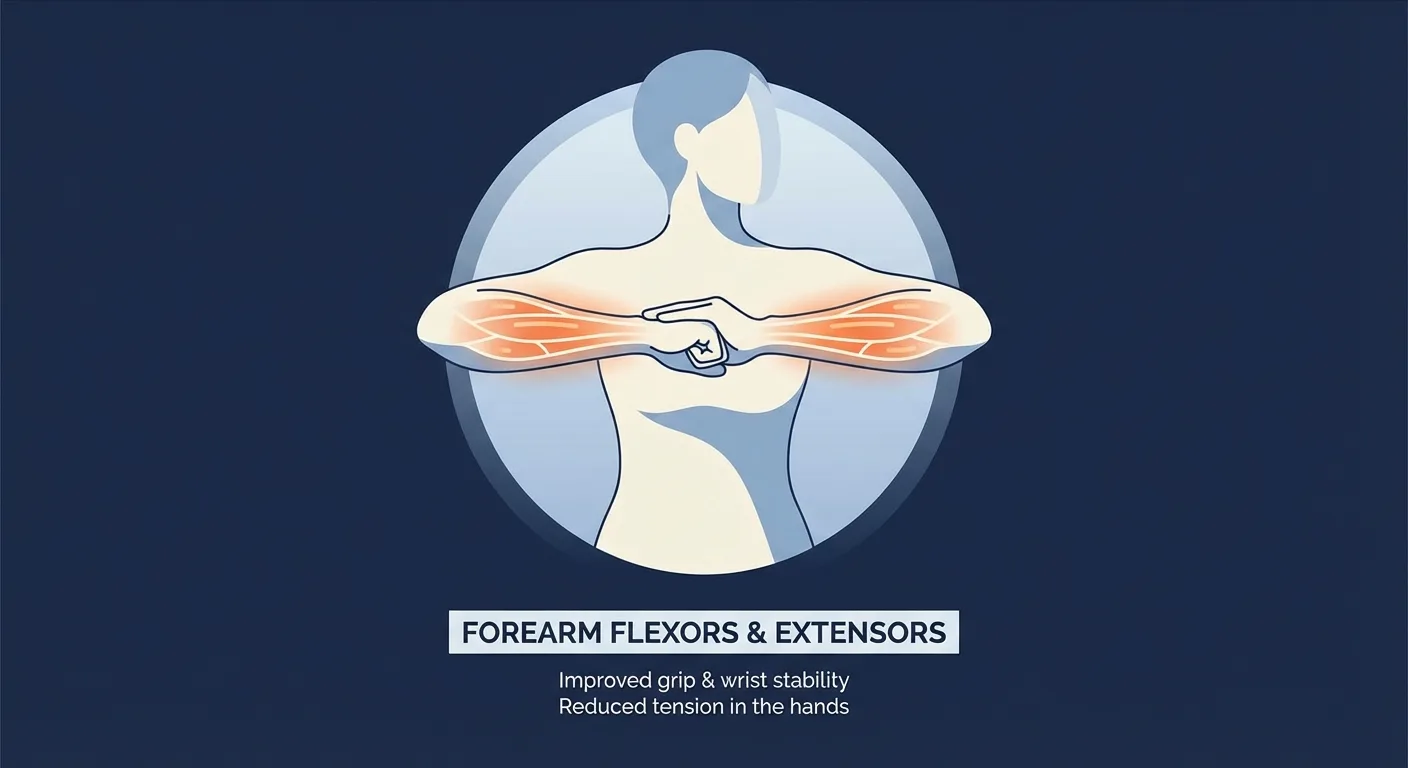
Areas Stretched & Mobilized
The primary tissues lengthened are the forearm flexors and finger flexors along the palm-side forearm, plus the forearm extensors along the back side of the forearm. When you turn the palms outward and press forward, those tissues lengthen through wrist extension, finger extension, and gentle traction across the hand.
Secondary areas include the small hand muscles, the connective tissue around the carpal bones, and the wrist joint capsule. These structures do not "work" like prime movers during a lift. They receive low-load range-of-motion input that can make loaded wrist extension feel less abrupt.
Stabilization demand is low. The shoulders and upper back hold the arms at shoulder height, while the fingers maintain an interlaced grip. If you move to tabletop wrist rocks, the core and shoulder girdle add light support so the wrists can explore range under partial body weight.
No high-confidence EMG or biomechanics citation specific to the wrist stretch is listed in the FitCraft citation library, so the evidence framing stays mechanical. The stretch works by placing the wrist and finger flexor-extensor tissues under gentle, sustained tension and by exposing the wrist joint to controlled extension before more demanding hand-supported exercises.
Step-by-Step: How to Do the Wrist Stretch
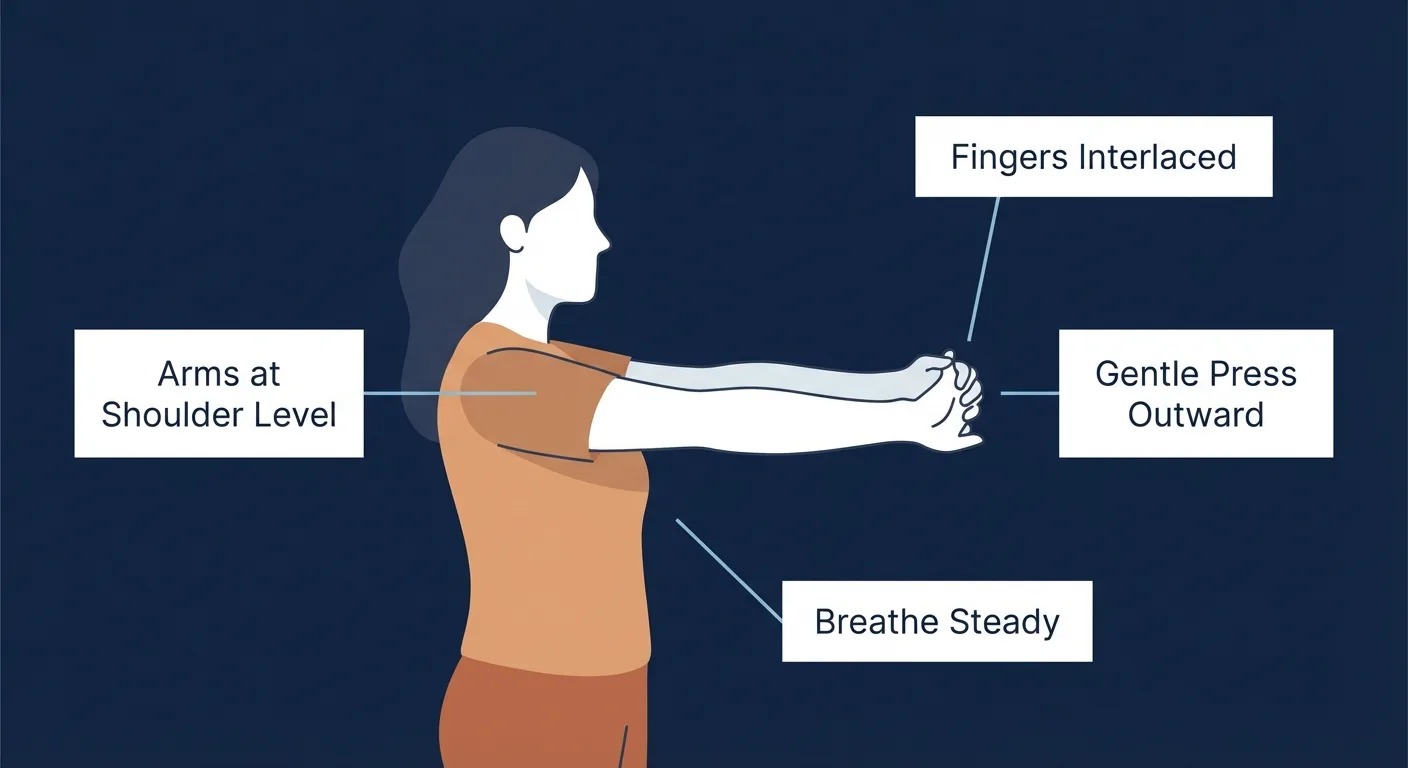
- Set your posture. Stand or sit tall. Keep your arms at shoulder level and think about making one straight line from your shoulder to your clasped fingers.
- Interlace your fingers. Clasp your hands in front of you with palms facing your body. Keep enough tension in your fingers that they don't slip, but don't squeeze your knuckles hard.
- Turn the palms outward. Rotate your clasped hands so your palms face away from you. You should start to feel a light stretch across the wrists and forearms.
- Press forward gently. Extend your arms forward slightly, pressing your palms away from your body. Coach Ty's cue: "Gentle pressure. The wrists are small joints, so a little goes a long way."
- Hold and breathe. Hold for 15-30 seconds while breathing steadily. Release slowly, then repeat with a palms-up or palms-down angle if that feels useful.
Common Mistakes (And How to Fix Them)
Pressing Too Aggressively
What it looks like: Cranking on the stretch and hoping for faster flexibility gains.
Why it's a problem: Aggressive pressure can irritate the small wrist joints and trigger a protective tightening response in the forearm muscles.
The fix: Use just enough pressure to feel a light pull. Pain, numbness, tingling, or sharp pinching means back off.
Dropping the Arms Below Shoulder Level
What it looks like: The arms slowly sag toward the belly button as you hold the stretch.
Why it's a problem: The wrist angle changes mid-hold, and the stretch becomes less consistent from rep to rep.
The fix: Reset the arms to shoulder height. Keep the line from shoulder to fingers steady.
Holding Your Breath
What it looks like: You clasp your hands, press forward, and freeze for the whole hold.
Why it's a problem: Held breath keeps your nervous system guarded, which makes the stretch feel harsher than it needs to be.
The fix: Breathe in, breathe out, and let the exhale soften the forearms without forcing extra range.
Fingers Slipping Apart
What it looks like: Your fingers gradually unhook as you press forward.
Why it's a problem: The stretch becomes uneven across the hand and the wrists no longer receive the same angle.
The fix: Re-clasp the fingers before each hold. Keep the grip secure but relaxed.
Get this exercise in a personalized workout
FitCraft, our mobile fitness app, uses its AI coach Ty to program mobility work like this into your plan at the right volume and intensity, based on your level, goals, and equipment. Ty was designed and trained by Domenic Angelino, MPH (Brown University) and NSCA-CSCS, with research published in the Journal of Strength and Conditioning Research and Medicine & Science in Sports & Exercise.
Take the Free Assessment Free • 2 minutes • No credit cardWrist Stretch Variations: Regressions and Progressions
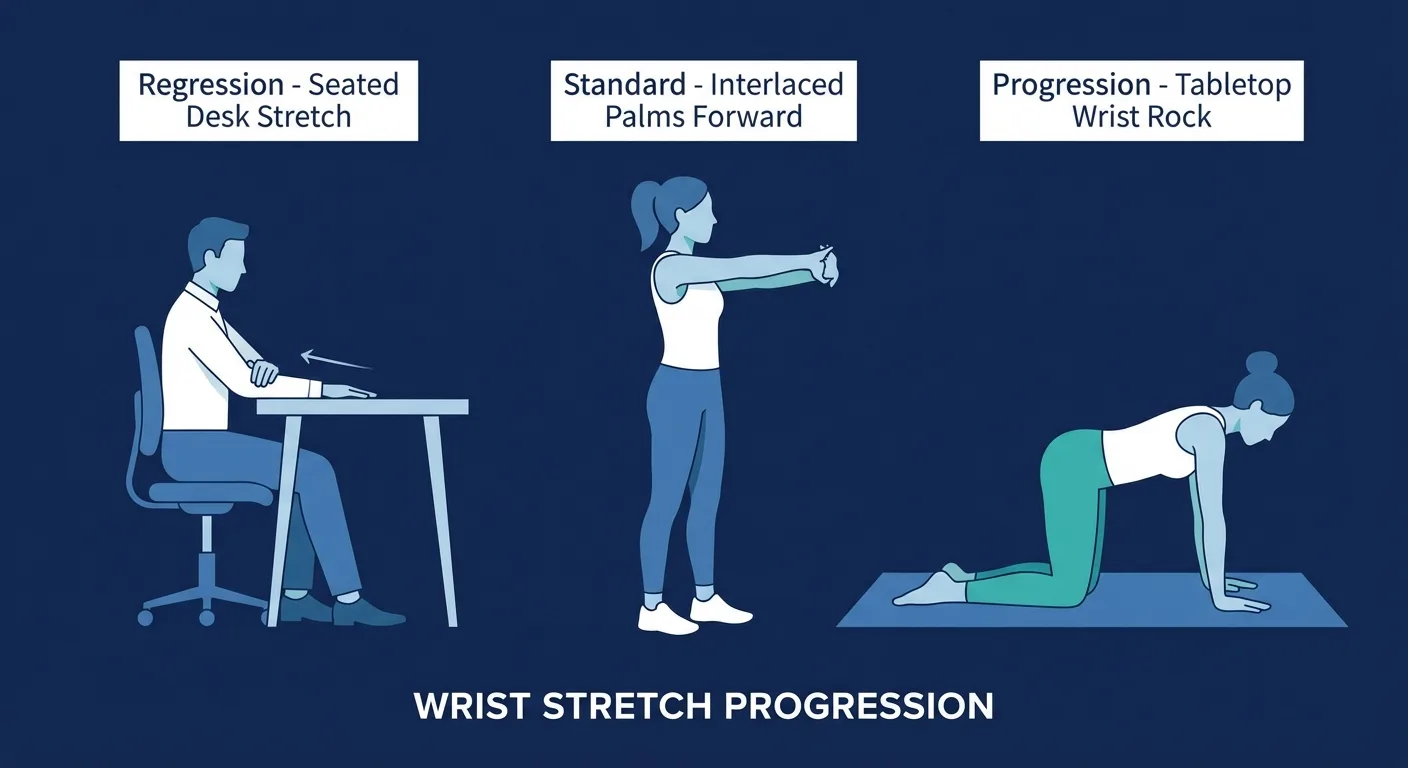
Easier (Regression)
- Single-Hand Wrist Pull. Extend one arm straight in front of you, palm up. With the other hand, gently pull the fingers down and back toward your body. This lets you control one wrist at a time.
- Seated Desk Wrist Stretch. Rest one forearm on a desk with the palm facing up, then use the other hand to gently press the fingers down. The desk keeps the forearm supported.
Harder (Progression)
- Tabletop Wrist Circles. On hands and knees, rotate your wrists slowly in full circles while keeping palms flat. This adds active range and light body-weight loading.
- Quadruped Wrist Rock. In a tabletop position, rock your body gently forward and back while your hands stay planted. Ease in and keep every rep pain-free.
Alternative Exercises
- Namaste. A gentler palms-together mobility position for the wrists, hands, and forearms.
- Downward Dog. A full-body yoga pose that loads and mobilizes the wrists while also stretching the shoulders and posterior chain.
When to Avoid or Modify the Wrist Stretch
The wrist stretch is safe for most healthy adults, but any drill that moves a small joint into end range deserves a little restraint. Always consult your physician or a qualified physical therapist if symptoms are sharp, neurological, persistent, or linked to a recent injury.
- Acute wrist injury or recent wrist surgery. Wait for clearance before stretching. Use pain-free finger motion or clinician-directed mobility first.
- Numbness, tingling, or suspected nerve irritation. Modify the range and get evaluated, especially if symptoms travel into the thumb, fingers, or forearm.
- Hypermobility, Ehlers-Danlos, or connective tissue disorders. Avoid passive end-range stretching. Use controlled active mobility and light strength work instead.
- Acute forearm strain or tendon flare-up. Stretching into pain can worsen irritation. Keep the range mild and return gradually.
- Wrist discomfort during hand-supported exercise. Pair gentle wrist mobility with easier loading options such as forearm planks before returning to hand planks or push-ups.
Related Exercises
- Same area, different stretch direction: Namaste trains a palms-together wrist position with a gentler feel.
- Active mobility pairing: Shoulder rolls pair well with wrist work for a fast desk reset.
- Pressing prerequisite: Push-ups benefit from better wrist extension tolerance.
- Yoga carryover: Downward dog asks the wrists to support body weight in a longer-chain position.
- Upper-body mobility pairing: Rotator cuff stretch helps prepare the shoulders before upper-body training.
How to Program the Wrist Stretch
Mobility work follows different rules than heavy strength training, but consistency still matters. The Ratamess et al., 2009 ACSM position stand supports progressive, individualized training across ability levels. For wrist mobility, that means using holds and frequency that match your tolerance.
| Level | Sets x Reps | Rest between sets | Frequency |
|---|---|---|---|
| Beginner | 1-2 holds of 15-30 seconds | 10-20 seconds | 5-7 sessions/week |
| Intermediate | 2-3 holds of 30-60 seconds | 15-30 seconds | 5-7 sessions/week |
| Advanced | 2-4 holds of 30-90 seconds, or 5-10 active rocks | 20-30 seconds | Daily |
Use the wrist stretch before hand-supported work, after upper-body training, or during short desk breaks. Before strength or power work, keep holds brief and gentle. Save deeper static holds for after training or standalone mobility sessions.
Let the form floor beat the hold target. If your fingers go numb, your wrists pinch, or your shoulders creep toward your ears, reduce the range and finish with a clean, easy hold.
Frequently Asked Questions
What does the wrist stretch do?
The wrist stretch lengthens the forearm flexors and extensors and mobilizes the wrist joint. It helps relieve the tightness that builds up from typing, mouse use, and gripping activities, and it prepares the wrists for load-bearing exercises like push-ups, planks, and yoga poses where you support body weight on your hands.
How often should I do the wrist stretch?
You can do the wrist stretch daily, and multiple times per day if you work at a keyboard. Micro-doses of 15-30 seconds every hour or two can help limit the cumulative tightness that leads to wrist discomfort. It's also a useful pre-workout warm-up before upper-body sessions that include pressing or plank positions.
Can wrist stretches help with carpal tunnel?
Gentle wrist stretching may help some people manage forearm tightness around mild symptoms, but numbness, tingling, night symptoms, or shooting pain need medical evaluation. Use a smaller range and get guidance from a qualified clinician before relying on stretching alone.
Is it normal to feel a stretch in my forearms and not my wrists?
Yes, that's completely normal. The muscles that move your wrists, the forearm flexors and extensors, attach near the elbow, so wrist stretching often creates a noticeable sensation in the forearms. As long as the stretch feels like a gentle pull and not sharp pain, you're in good territory.
Should I avoid the wrist stretch if I have wrist pain?
Modify or skip the wrist stretch if you have acute wrist pain, swelling, recent wrist surgery, numbness, tingling, or sharp pinching. Start with pain-free range only and ask a qualified clinician before loading the wrist in push-ups, planks, or yoga poses.