Shoulder rolls look simple because they are simple. That is the point. A small, controlled circle can wake up the shoulder blades, loosen the upper traps, and give your neck a break before you ask the upper body to train, stretch, or sit through another hour at a screen.
The goal isn't cranking the shoulders as high as possible or spinning through fast reps. Use smooth circles, steady breathing, and enough range to feel the shoulder blades glide. If the movement turns sharp, smaller is better.
Quick Facts: Shoulder Rolls
- Equipment needed: None
- Difficulty: Beginner
- Modality: Mobility
- Body region: Upper body
- FitCraft quest category: Mobility
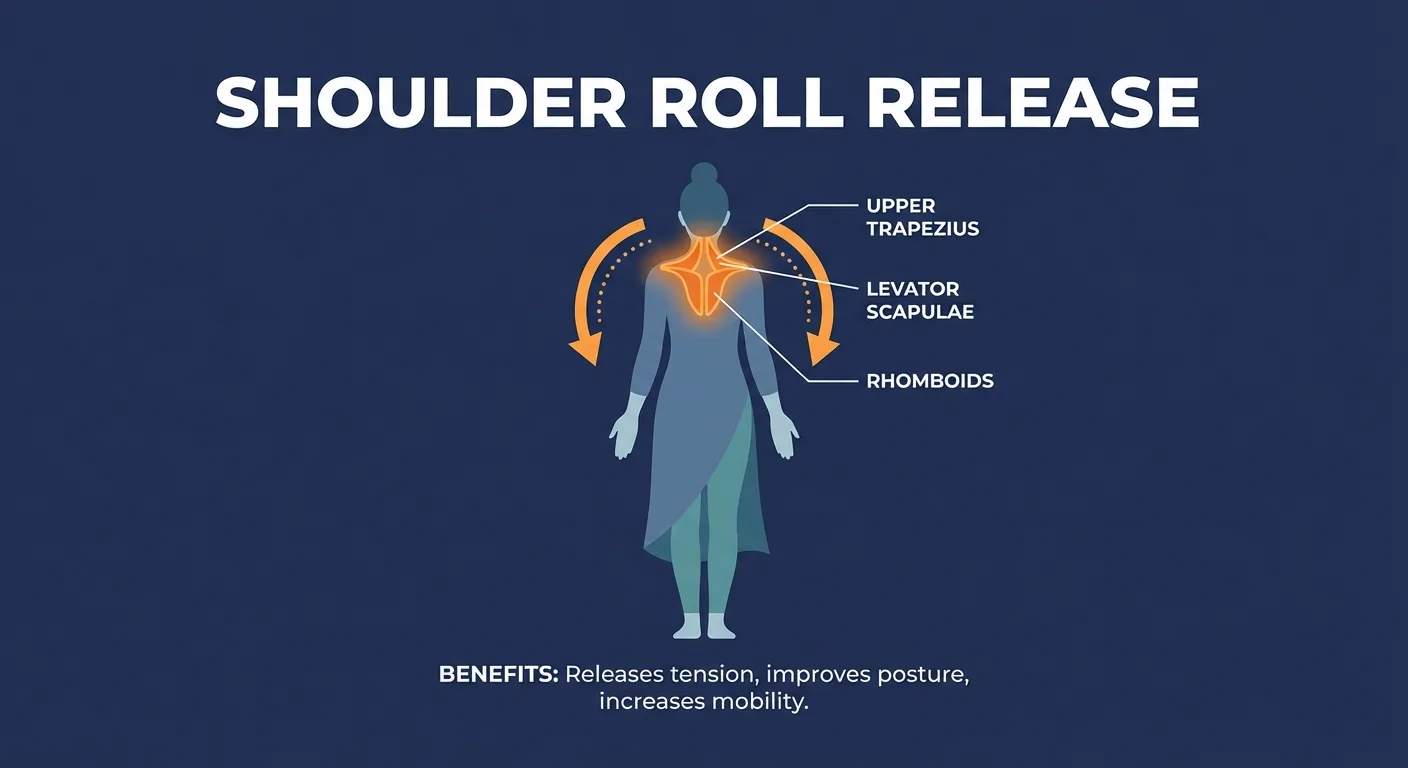
Areas Stretched & Mobilized
Primary movers: the upper trapezius, levator scapulae, rhomboids, serratus anterior, and lower trapezius guide the shoulder blades through the circle. The upward and backward parts use shoulder-blade elevation and retraction. The downward and forward parts use depression and protraction.
Secondary movers: the rotator cuff, posterior deltoid, pectoralis minor, and deep neck muscles assist by keeping the head of the humerus centered while the scapula moves. They don't drive a heavy load here, but they help the shoulder joint stay organized through the range.
Stabilizers: the deep core and spinal extensors hold your rib cage stacked over your pelvis so the drill stays in the shoulder girdle. If the ribs flare or the lower back arches, the circle usually looks bigger while the shoulder itself does less useful work.
Mechanism: shoulder rolls cycle through scapular elevation, retraction, depression, and protraction. That makes them a low-load way to rehearse shoulder-blade control before pressing, pulling, yoga, or a desk-break mobility flow. No exercise-specific PubMed, PMC, or DOI citation is included in the verified FitCraft citation library, so this section uses mechanism-based anatomy rather than a proxy citation.
Step-by-Step: How to Do Shoulder Rolls
Step 1: Stand or Sit Tall
Stand with your feet hip-width apart or sit with both feet flat on the floor. Let your arms hang loose at your sides and relax your jaw.
Coach Ty's cue: "Tall spine, soft shoulders, easy breath."
Step 2: Start the Forward Roll
Lift both shoulders gently toward your ears, then guide them forward. Move slowly enough that the circle feels deliberate instead of jerky.
Coach Ty's cue: "Make the first circle smaller than you think you need."
Step 3: Roll Back and Down
Continue the circle by drawing the shoulders back, then down away from the ears. Lightly squeeze the shoulder blades together at the back of the circle.
Coach Ty's cue: "Glide the shoulder blades. Don't yank them."
Step 4: Complete the Set
Do 8 to 10 slow rolls in the first direction. Keep your head still, your ribs stacked, and your breathing steady.
Coach Ty's cue: "Same speed through the whole circle."
Step 5: Reverse Direction
Reverse the pattern for another 8 to 10 reps. Notice which direction feels tighter and keep the range pain free.
Coach Ty's cue: "The tight side gets patience, not force."
Get this exercise in a personalized workout
FitCraft, our mobile fitness app, uses its AI coach Ty to program mobility work like this into your plan at the right volume and intensity, based on your level, goals, and equipment. Ty was designed and trained by Domenic Angelino, MPH (Brown University) and NSCA-CSCS, with research published in the Journal of Strength and Conditioning Research and Medicine & Science in Sports & Exercise.
Take the Free Assessment Free • 2 minutes • No credit card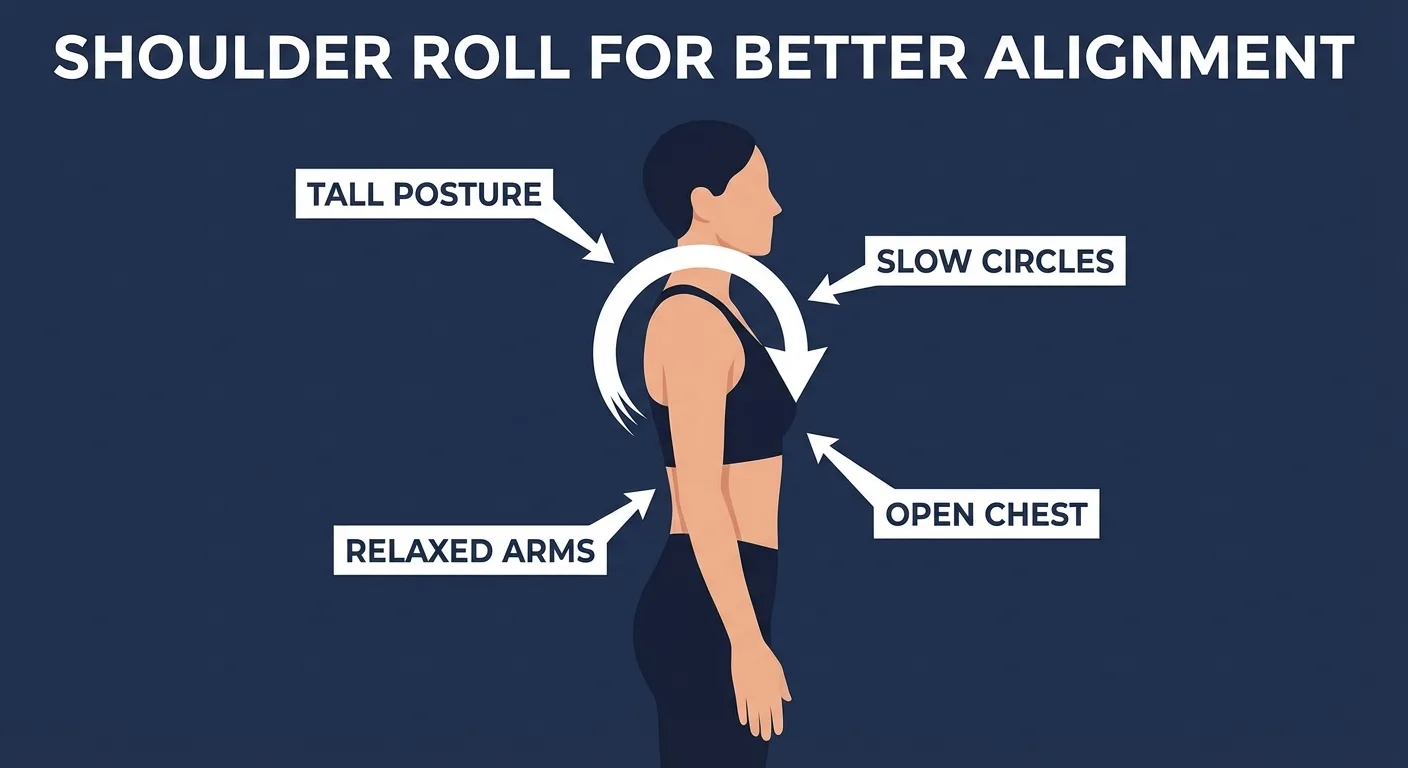
Common Mistakes (and How to Fix Them)
- Rushing the circles. Fast shrugs skip most of the useful range. Fix it by taking about two seconds per roll and feeling each quadrant of the circle.
- Tensing the neck. If your jaw clenches or your head moves forward, the drill turns into a neck strain. Keep the chin gently tucked and the face relaxed.
- Only rolling backward. Backward rolls feel good, but forward rolls train the other half of the shoulder-blade path. Use both directions unless one direction is painful.
- Arching the lower back. Bigger circles from the spine don't improve shoulder mobility. Stack ribs over hips and keep the motion above the rib cage.
- Forcing through pinching. A gentle stretch or mild stiffness is fine. Sharp front-shoulder pinching, nerve symptoms, or pain that increases with reps means you should stop and modify.
- Adding load too early. Light dumbbells can turn the drill into a shrug variation, but load belongs after pain-free bodyweight circles feel smooth.
Shoulder Roll Variations: Regressions and Progressions
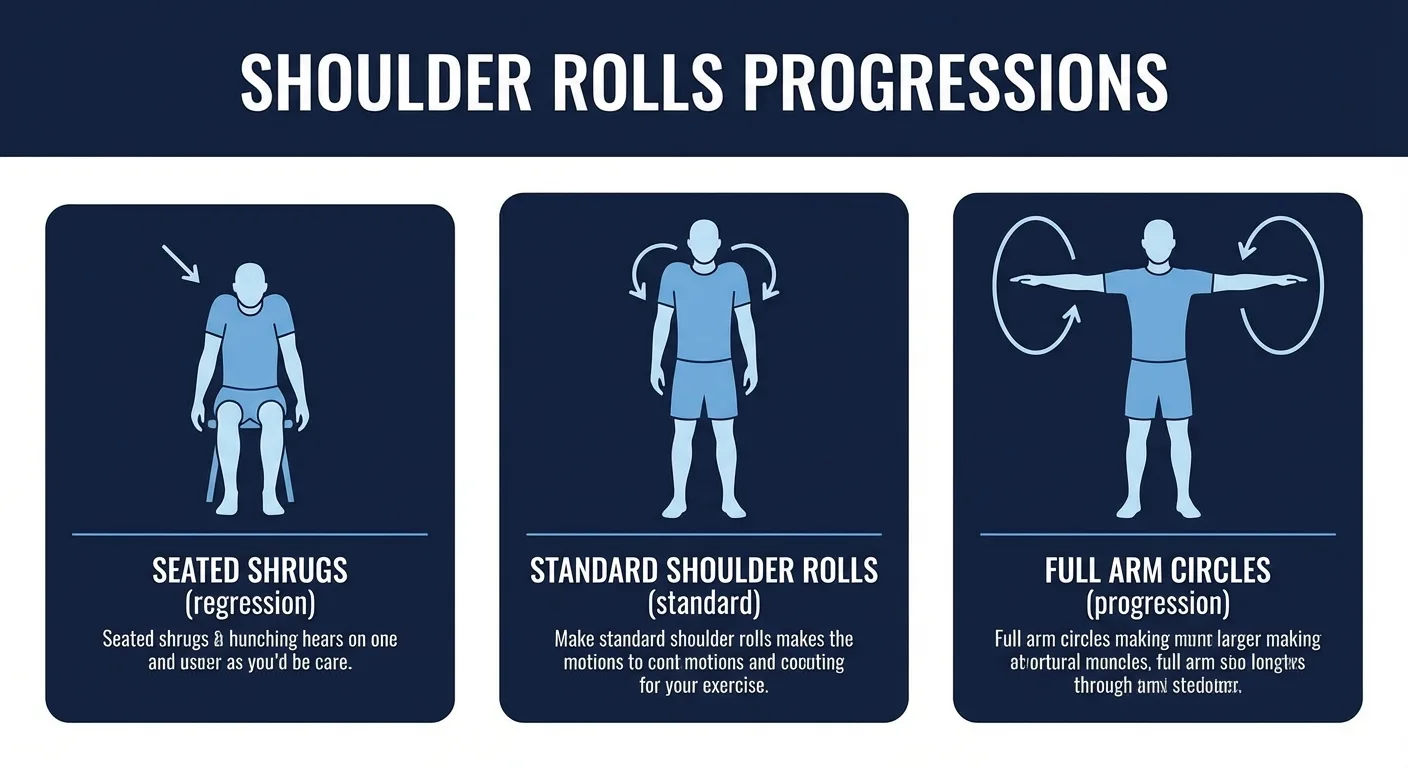
Seated Shoulder Rolls
Sit tall in a chair with both feet on the floor. Use smaller circles and focus on keeping the neck relaxed. This is the best regression for desk breaks or anyone who feels wobbly standing.
Single-Shoulder Rolls
Roll one shoulder at a time. This helps you notice side-to-side differences and makes it easier to keep the movement out of the neck.
Paused Shoulder Rolls
Pause for one second at the top, back, bottom, and front of each circle. The pauses build awareness of each shoulder-blade position and slow down rushed reps.
Arm Circles
Extend the arms to the sides and draw small controlled circles. The longer lever asks more from the deltoids and rotator cuff, so keep the circles small at first.
When to Avoid or Modify Shoulder Rolls
Shoulder rolls are safe for most healthy adults, but the shoulder is sensitive after injury, surgery, or nerve irritation. Use a smaller range, slow the motion down, or swap in a gentler drill when symptoms are active. Always consult your physician or physical therapist for personalized guidance.
- Acute shoulder injury or recent shoulder surgery. Wait for clearance before circling through a healing joint. Start with tiny pain-free rolls or clinician-prescribed scapular setting drills.
- Sharp front-shoulder pinching. Pinching at the front of the shoulder can signal irritation when the humeral head doesn't glide well. Shrink the circle and avoid the painful quadrant.
- Numbness, tingling, or radiating arm symptoms. Nerve symptoms need evaluation, not more mobility reps. Stop the drill and get evaluated before repeating it.
- Hypermobility, Ehlers-Danlos, or generalized ligament laxity. Avoid hanging passively at end range. Use active, small circles and consider pairing with rotator cuff stretch only if it stays comfortable.
- Acute upper-trap, pec, or biceps strain. Keep the movement very small or pause until the acute phase settles. Stretching or circling a fresh strain can keep it irritated.
- Pregnancy-related ligament laxity or dizziness. Seated shoulder rolls are usually the better choice. Keep the breath easy and avoid large fast circles if they make you lightheaded.
Related Exercises
Use these movements to build a simple upper-body mobility sequence around shoulder rolls:
- Same area, different stretch direction: Seated Rear Delt Stretch and Tricep-N-Lat Stretch target the back and side of the shoulder after the joint is warm.
- Rotator cuff pairing: Rotator Cuff Stretch adds more focused shoulder rotation work when basic rolls feel easy.
- Spine mobility pairing: Cat-Cow moves the thoracic spine and rib cage, which helps shoulder motion feel less stuck.
- Yoga warm-up bridge: Cobra Pose and Downward Dog ask the shoulders to move under more bodyweight after gentle mobility work.
- Strength prerequisite: Shoulder Press benefits from controlled scapular movement before the pressing starts.
How to Program Shoulder Rolls
Mobility programming uses frequency, range quality, and consistency more than load. The broader ACSM progression model still applies: adjust training variables to the person and progress only when tolerance is solid (Ratamess et al., 2009).
| Level | Sets x Reps | Rest between sets | Frequency |
|---|---|---|---|
| Beginner (seated or small circles) | 1-2 x 8-10 each direction | 30-45 seconds | 5-7 sessions/week |
| Intermediate (standing full circles) | 2-3 x 10-15 each direction | 30-60 seconds | Daily or as needed for desk breaks |
| Advanced (paused rolls or arm-circle pairing) | 2-4 x 5-10 paused reps each direction | 30-90 seconds | Daily if symptoms stay calm |
Where in your workout: shoulder rolls fit early in an upper-body warm-up, between long desk blocks, before yoga flows, or during cooldowns. They work especially well before pressing, pulling, and poses that load the shoulders.
Form floor over rep targets: end the set when your neck starts helping, your lower back arches, or the circle turns sharp. Smooth pain-free reps matter more than finishing a preset number.
How FitCraft Programs This Exercise
FitCraft uses your assessment to place mobility work where it fits the rest of your plan. Shoulder rolls can show up as a warm-up, desk-break reset, or gentle upper-body mobility block, depending on your goals and equipment.
Ty adjusts the variation and volume to match your level. That might mean seated rolls for a low-key reset, standing rolls before upper-body training, or longer mobility pairings with cat-cow and rotator cuff work once the basics feel easy.
Frequently Asked Questions
What muscles do shoulder rolls work?
Shoulder rolls gently move the upper trapezius, levator scapulae, rhomboids, serratus anterior, and rotator cuff muscles through elevation, retraction, depression, and protraction. They are better understood as a mobility drill than a strength exercise.
Are shoulder rolls good for neck tension?
Shoulder rolls can help mild posture-related neck tension by moving the upper traps and levator scapulae through an easy range. Stop and seek care if pain is sharp, radiates down your arm, causes numbness or tingling, or follows an injury.
How many shoulder rolls should I do?
Start with 8 to 10 slow rolls forward and 8 to 10 slow rolls backward. Repeat for 1 to 3 rounds as a warm-up or desk break, keeping every rep smooth and pain free.
Should shoulder rolls go forward or backward?
Use both directions. Forward rolls emphasize shoulder-blade protraction and elevation, while backward rolls emphasize retraction and depression. Doing both gives the shoulder girdle a more complete mobility pass.
Can I do shoulder rolls with shoulder pain?
Use a smaller pain-free range if your shoulder feels mildly stiff. Skip shoulder rolls and get medical guidance if you have sharp pain, recent shoulder surgery, acute injury, instability, numbness, tingling, or symptoms that worsen as you move.