The tricep-n-lat stretch is a beginner-friendly upper-body mobility drill for the triceps long head, latissimus dorsi, and overhead shoulder range. Reach one arm overhead, bend the elbow behind your head, and use the opposite hand to guide the elbow inward with light pressure. The defining cue is posture: ribs stacked, chin level, and no hard pull on the shoulder. Start with 15 to 30 seconds per side, then progress to longer holds, a seated support option, or a gentle side-bend version once the standard stretch feels smooth.
The tricep-n-lat stretch looks small, but it solves a real overhead-range problem. The long head of the triceps crosses the shoulder, the lat attaches near the upper arm, and both can make reaching, pressing, and overhead yoga positions feel tight. This stretch puts those tissues on length without equipment.
Quick Facts: Tricep-N-Lat Stretch
- Equipment needed: None
- Difficulty: Beginner
- Modality: Mobility and flexibility
- Body region: Upper body
- FitCraft quest category: Mobility
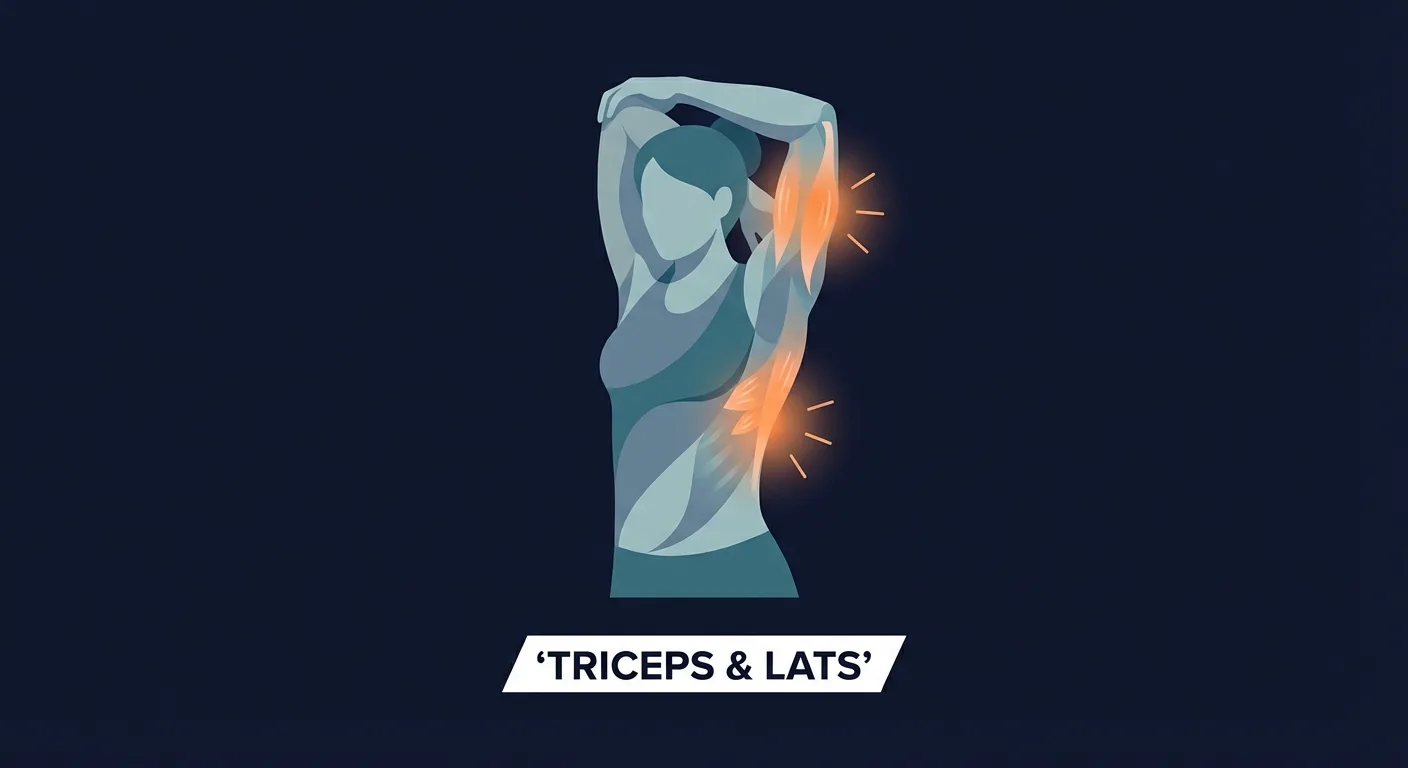
Areas Stretched & Mobilized
Primary areas: the triceps long head and latissimus dorsi take the main stretch. The triceps long head lengthens because the shoulder is flexed overhead while the elbow stays bent. The lat lengthens because the arm is elevated and guided toward the midline.
Secondary areas: the teres major, posterior deltoid, and tissue along the side ribs may also feel tension. A small side bend shifts more of the sensation into the lat and side body, while a more vertical elbow usually makes the triceps sensation clearer.
Stabilizers: this is a low-load mobility drill, so stabilization is mostly about posture. The deep core keeps the ribs from flaring, the neck stays relaxed, and the opposite hand controls pressure instead of yanking the elbow.
Mechanism: the stretch works because it combines shoulder flexion, elbow flexion, and gentle scapular positioning. If the ribs flare or the head drops forward, the body borrows motion from the spine and neck, which reduces the shoulder and lat mobility benefit.
Step-by-Step: How to Do the Tricep-N-Lat Stretch
- Stand or sit tall. Stack your ribs over your hips, lift your chest, and keep your chin level. Coach Ty's cue: "Get tall first, then reach."
- Reach one arm overhead, then bend. Raise your right arm straight up, then bend the elbow so your right hand drops behind your head toward your upper back. Keep your upper arm close to your ear without forcing it.
- Guide the elbow inward. With your left hand, gently draw your right elbow toward the midline. Coach Ty's cue: "Light pressure, steady breath."
- Find the stretch without pinching. You should feel the back of the upper arm and the side of the torso. If the front of the shoulder pinches, reduce pressure or let the elbow move slightly forward.
- Hold, release, and switch sides. Hold for 15 to 30 seconds, breathing slowly. Ease out before switching arms and match the same hold time on the other side.
Get this exercise in a personalized workout
FitCraft, our mobile fitness app, uses its AI coach Ty to program mobility work like this into your plan at the right volume and intensity, based on your level, goals, and equipment. Ty was designed and trained by Domenic Angelino, MPH (Brown University) and NSCA-CSCS, with research published in the Journal of Strength and Conditioning Research and Medicine & Science in Sports & Exercise.
Take the Free Assessment Free • 2 minutes • No credit card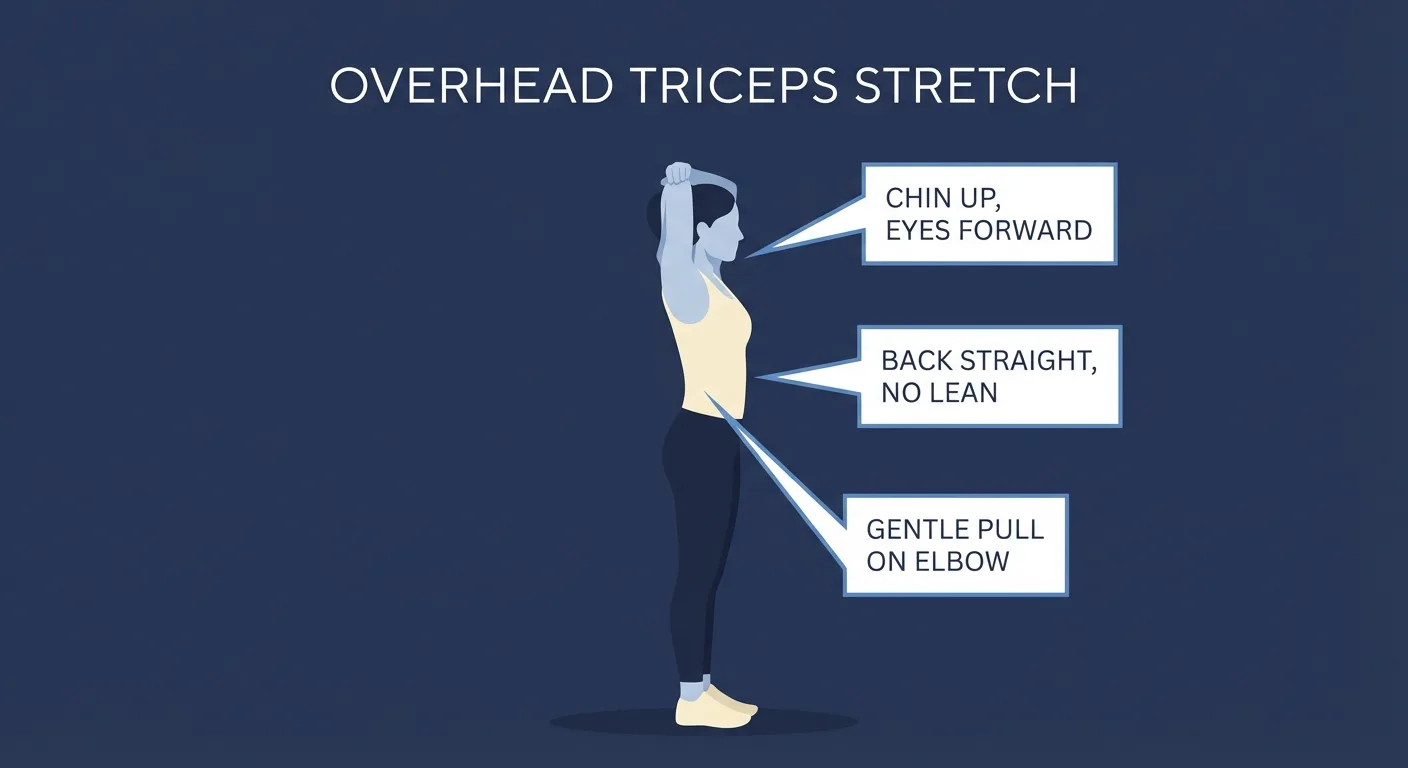
Common Mistakes and How to Fix Them
Leaning Forward
What it looks like: As you pull the elbow, your chest collapses and your head drops forward.
Why it's a problem: The stretch shifts into the neck and upper back instead of staying in the triceps and lat.
The fix: Lift through the crown of your head and keep your ribs stacked. Use less elbow pressure if posture breaks.
Yanking the Elbow
What it looks like: You crank on the elbow until the front of the shoulder pinches.
Why it's a problem: Aggressive pressure can irritate the shoulder and make the nervous system guard the area.
The fix: Use a gentle pull and treat discomfort as a signal to back off. The stretch should feel clear, never sharp.
Letting the Elbow Flare Wide
What it looks like: The bent elbow points sideways instead of mostly upward.
Why it's a problem: A wide elbow shortens the triceps long head and reduces the overhead mobility effect.
The fix: Bring the upper arm closer to your ear within a pain-free range. If it cannot get close, use a towel-assisted version.
Flaring the Ribs
What it looks like: Your lower back arches as the arm moves overhead.
Why it's a problem: Rib flare borrows motion from the spine and hides the shoulder restriction you are trying to improve.
The fix: Exhale, soften the ribs down, and hold a smaller range until the stretch stays in the upper body.
Holding Your Breath
What it looks like: You brace hard and wait out the clock.
Why it's a problem: Breath holding increases tension and makes the stretch feel harsher than it needs to be.
The fix: Use slow nasal inhales and relaxed exhales. If breathing gets stuck, the position is too intense.
Tricep-N-Lat Stretch Variations: Regressions and Progressions
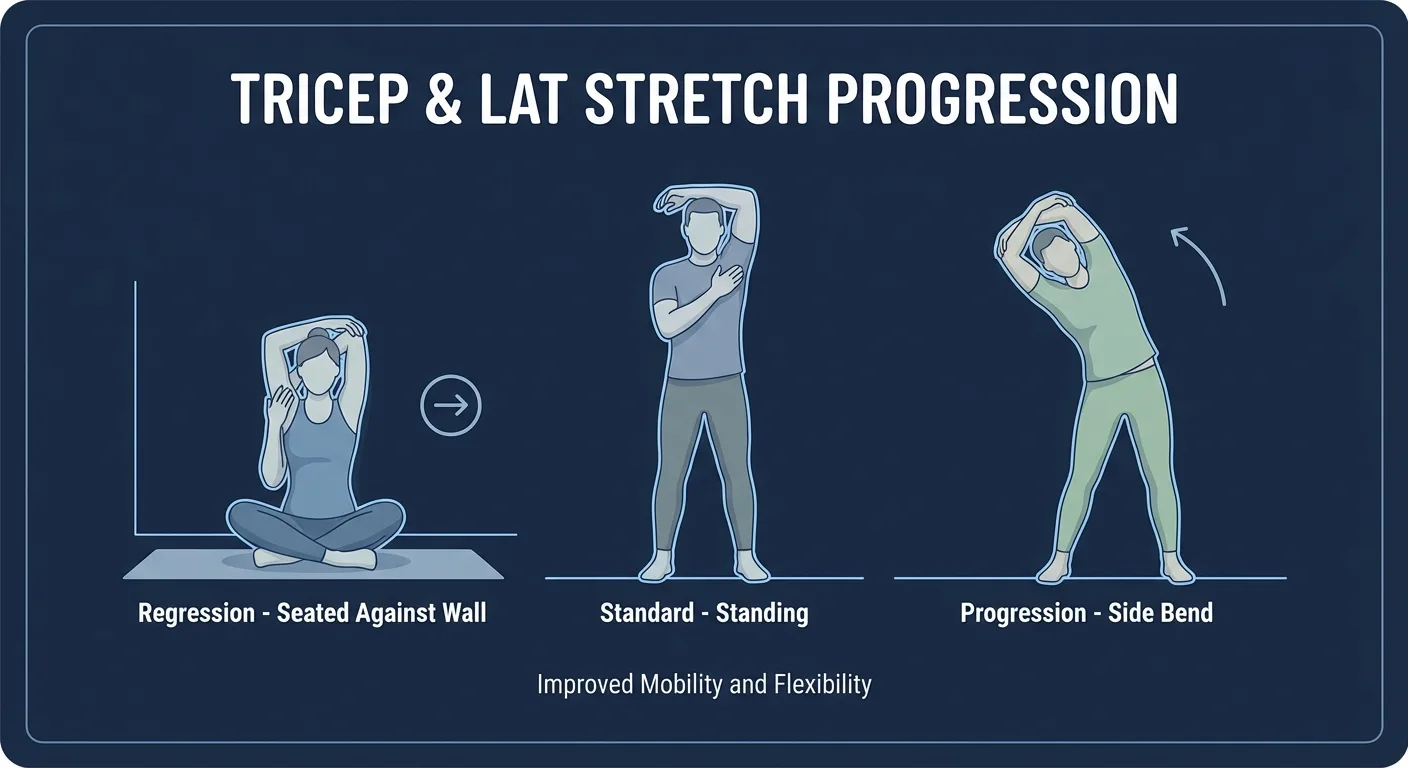
Seated Tricep-N-Lat Stretch
Sit on a chair or the floor so your pelvis is stable. This removes balance demands and makes it easier to feel whether your ribs are flaring.
Towel-Assisted Tricep-N-Lat Stretch
Hold a towel with the overhead hand and use the opposite hand to guide the towel instead of grabbing the elbow. This is the best option if reaching the elbow creates shoulder pinching.
Side-Bend Tricep-N-Lat Stretch
Once the standard hold feels clean, add a small lean away from the stretched side. Keep the chest facing forward and stop before the low back arches.
Bench Lat Stretch
Kneel in front of a bench, place both elbows on the bench, and sink the chest back. This shifts the focus toward the lats and works well after the standard stretch.
When to Avoid or Modify the Tricep-N-Lat Stretch
The tricep-n-lat stretch is safe for most healthy adults, but a few situations call for a smaller range or a different drill. Always consult your physician or physical therapist before stretching through pain, especially after injury or surgery.
- Shoulder pain, acute shoulder injury, or recent shoulder surgery. Skip forced overhead positions until you are cleared. Use shoulder rolls or a very light towel-assisted version instead.
- Elbow pain or triceps strain. Bending the elbow overhead can irritate healing tissue. Wait until the acute phase has settled, then return with short holds and light pressure.
- Hypermobility or connective tissue disorder. Avoid hanging passively at end range. Use active shoulder mobility and stop well before your maximum range.
- Neck symptoms during the stretch. If the neck tightens, reduce the pull and keep the head level. Pair this page with seated rear delt stretch for a gentler posterior-shoulder option.
- Pregnancy or recent postpartum recovery. Relaxed connective tissue can make aggressive stretching risky. Stay in a comfortable range and avoid deep side-bending if it creates rib, back, or pelvic discomfort.
Related Exercises
- Same area, different stretch direction: rotator cuff stretch and seated rear delt stretch target the shoulder from different angles.
- Active mobility pairing: shoulder rolls add low-intensity motion before or after the static hold.
- Spine and rib control pairing: cat-cow helps you practice moving the spine without forcing the shoulder.
- Yoga alternative: downward dog lengthens the lats and shoulders with more full-body demand.
- Strength pattern this supports: shoulder press benefits from enough overhead range to keep the ribs stacked.
How to Program the Tricep-N-Lat Stretch
Mobility programming uses frequency, hold quality, and consistency more than load. Ratamess et al., 2009 gives the broader progression model: dose the work to your current level, progress gradually, and keep form as the limit.
| Level | Sets x Hold | Rest between sets | Frequency |
|---|---|---|---|
| Beginner | 1-2 sets x 15-30 seconds per side | 30-60 seconds | 5-7 sessions/week |
| Intermediate | 2-3 sets x 30-60 seconds per side | 30-60 seconds | 5-7 sessions/week |
| Advanced | 2-4 sets x 30-90 seconds per side or 5-10 active pulses | 30-90 seconds | Daily if symptoms stay calm |
Where in your workout: use short, easy holds after a general warm-up, longer holds during cooldowns, or relaxed holds during desk breaks. Avoid long static holds immediately before max-effort pressing, pulling, or power work.
Form floor over time targets: end the hold when the shoulder pinches, the ribs flare, the neck tightens, or breathing gets stuck. A shorter clean hold beats a longer forced one.
Frequently Asked Questions
What areas does the tricep-n-lat stretch target?
The tricep-n-lat stretch targets the long head of the triceps, the latissimus dorsi, and the side of the shoulder. You may also feel mild tension through the teres major, posterior deltoid, and side ribs depending on your arm angle.
How long should I hold the tricep-n-lat stretch?
Use 15 to 30 seconds per side when you are new to the stretch. Build toward 30 to 60 seconds per side once the position feels comfortable and you can breathe without shoulder pinching.
Should I do the tricep-n-lat stretch before or after workouts?
It works best after upper-body training, during a cooldown, or in a standalone mobility session. Before heavy pressing or pulling, use shorter holds or active shoulder mobility so the stretch does not leave the upper body feeling too relaxed for forceful work.
Why do I feel the tricep-n-lat stretch in my shoulder?
A mild stretch around the back or side of the shoulder is common because the lat and triceps both influence overhead position. Sharp pinching in the front of the shoulder is a sign to reduce pressure, move your elbow slightly forward, or use a towel-assisted version.
Can I do the tricep-n-lat stretch with shoulder pain?
Avoid forcing the tricep-n-lat stretch through shoulder pain, recent surgery, or an acute injury. Use a smaller range, a towel assist, or a gentler shoulder roll instead, and get medical or physical therapy guidance if pain persists.