The Z sit is a seated hip mobility position where one leg folds in front of the body and the other folds behind it. It mobilizes hip external rotation on the front side, hip internal rotation on the back side, and trunk control through a tall seated posture. Use support under the hips if the floor position pulls into the knee or low back. Once you can hold the base position calmly, progress to Z sit bend, Z sit reach, or controlled side-to-side transitions.
The Z sit is a simple floor position with a very clear message from your hips. One side usually feels easy, and the other side tells you exactly where rotation is missing. That makes it useful as a stretch, a posture drill, and a starting point for harder hip mobility work.
Quick Facts: Z Sit
- Equipment needed: Yoga mat, folded blanket, or small cushion
- Difficulty: Intermediate
- Modality: Mobility and flexibility
- Body region: Hips, pelvis, and lower back
- FitCraft quest category: Mobility
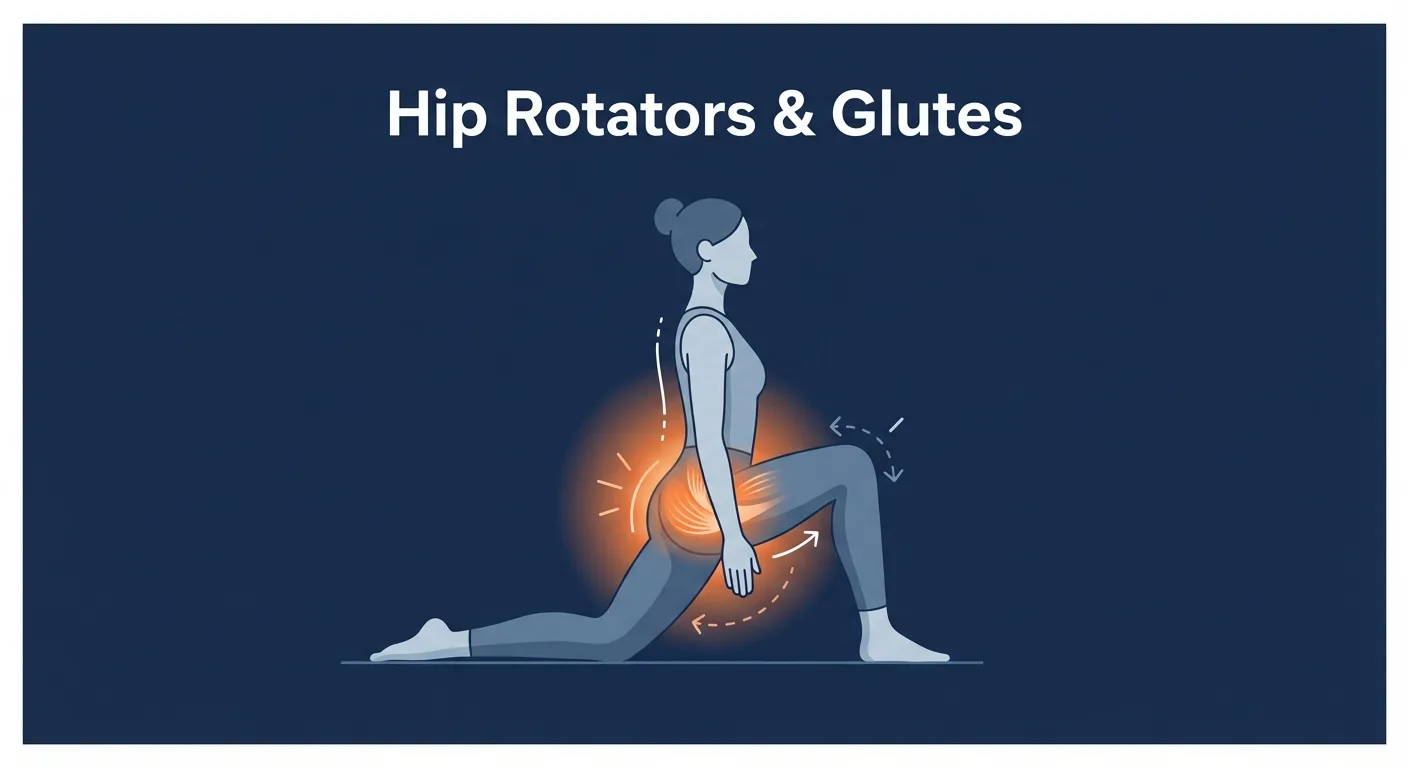
Areas Stretched & Mobilized
Primary targets: The front leg biases the glutes, piriformis, and deep hip external rotators as the thigh turns outward. The back leg biases hip internal rotation and can stretch the tensor fasciae latae, hip flexor region, and outer thigh depending on your exact angle.
Secondary targets: The adductors and inner thigh tissues help control the folded-leg position, especially on the back-leg side. If your pelvis tips backward, the low back and hamstrings may also feel tension because they are trying to compensate for missing hip range.
Stabilizers: The abdominal wall, spinal erectors, and pelvic-floor muscles work lightly to keep the ribs stacked over the pelvis. This should feel like quiet posture control instead of a hard brace.
Mechanism: The stretch works because each hip is placed near end-range rotation in a low-load position. Staying relaxed, supported, and consistent gives the nervous system time to tolerate the range without forcing the knees or low back to take over.
Step-by-Step: How to Do the Z Sit
- Sit on the floor. Start with both legs in front of you. If your pelvis immediately rolls backward, sit on a folded blanket or cushion.
- Pivot into the Z shape. Turn slightly to one side. Fold the front leg across the floor and bend the back leg behind you so the knees point in different directions.
- Support the raised hip. Let both sit bones move toward the floor. If one hip floats, place support under it instead of twisting harder.
- Lift through the torso. Stack your ribs over your pelvis, open your chest, and keep the crown of your head tall. Coach Ty's cue: "Make the spine tall before you ask the hips for more range."
- Breathe and switch sides. Hold for 30 to 60 seconds, then switch the leg position. Match the time on both sides and give the tighter side patient, clean reps.
Get this exercise in a personalized workout
FitCraft, our mobile fitness app, uses its AI coach Ty to program mobility work like this into your plan at the right volume and intensity, based on your level, goals, and equipment. Ty was designed and trained by Domenic Angelino, MPH (Brown University) and NSCA-CSCS, with research published in the Journal of Strength and Conditioning Research and Medicine & Science in Sports & Exercise.
Take the Free Assessment Free • 2 minutes • No credit card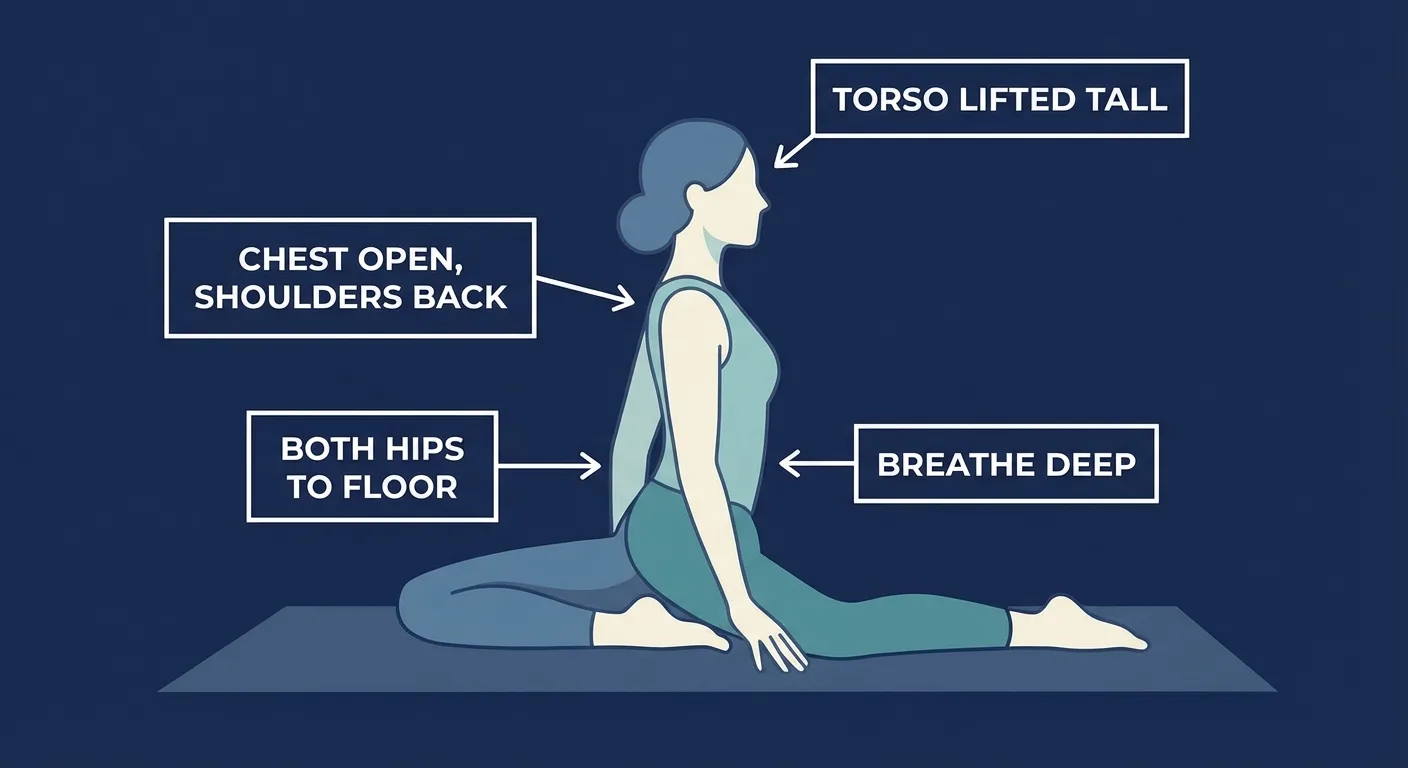
Common Mistakes
Forcing the Back Hip Down
What it looks like: You twist the trunk or shove the knee into the floor to make both hips touch down.
Why it's a problem: The hip is showing you its current range. Forcing the position can push torque into the knee, SI joint, or low back.
The fix: Add a folded blanket under the floating hip and let the support get lower over time.
Collapsing the Chest
What it looks like: The shoulders round, the chest caves in, and the pelvis rolls backward.
Why it's a problem: A slumped torso turns the stretch into a low-back position instead of a clean hip rotation drill.
The fix: Sit taller, lightly press the fingertips into the floor, and reduce the leg angle until the spine can stack.
Ignoring Knee Feedback
What it looks like: You feel pressure inside the front or back knee and try to breathe through it.
Why it's a problem: The Z sit should challenge the hips. Sharp knee pressure means the joint is absorbing rotation the hip cannot currently provide.
The fix: Open the knee angle, raise the hips, or switch to butterfly pose for the day.
Only Training the Comfortable Side
What it looks like: You spend more time on the easy side and rush the side that feels restricted.
Why it's a problem: Hip rotation differences often build from sitting habits, sports stance, and side preference. Skipping the tighter side keeps the gap in place.
The fix: Match hold time on both sides, then add one extra gentle round to the tighter side if it stays pain-free.
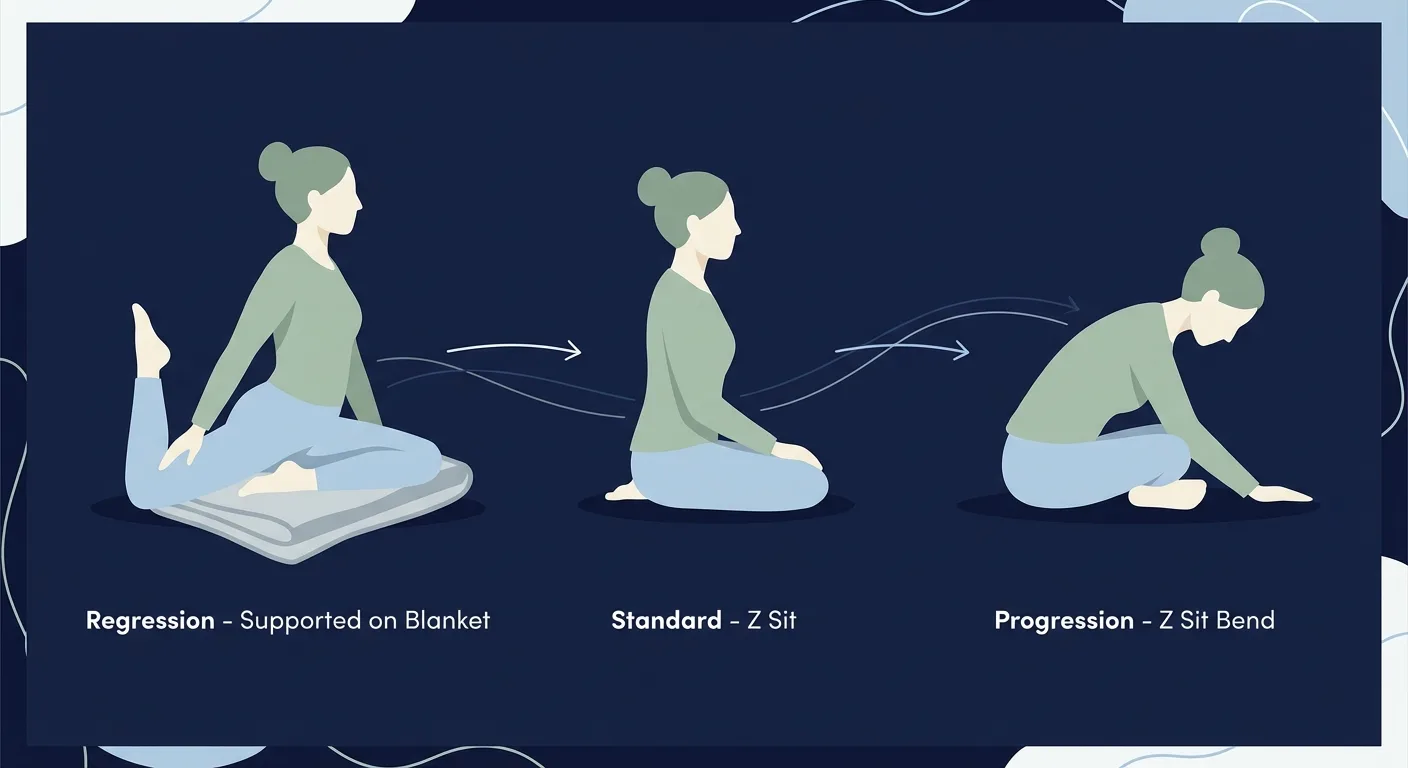
Z Sit Variations: Regressions and Progressions
Supported Z Sit
Sit on a folded blanket or cushion so your pelvis can stay upright. This is the best regression if the standard floor position pulls into the knees or low back.
Modified Z Sit with Both Legs Forward
Keep the back leg more forward and reduce the amount of hip internal rotation. Use this version when the full back-leg position feels too intense.
Z Sit Bend
Once the base position feels steady, hinge gently over the front shin. This deepens the front-hip stretch and adds spinal length without changing the leg setup.
Z Sit Reach
The reach progression adds a long diagonal line through the trunk and shoulder while the hips stay grounded. Use it after the base Z sit and Z sit bend feel controlled.
When to Avoid or Modify the Z Sit
The Z sit is safe for most healthy adults when it feels like hip stretch and postural work. Modify it, skip it, or consult your physician if any of these situations apply.
- Knee pain, meniscus irritation, or ligament history. Keep the knee angles wider, raise the hips on support, or use butterfly pose until rotation feels hip-led.
- Acute hip injury or recent hip surgery. Wait for medical clearance before loading end-range hip rotation.
- Hypermobility or connective tissue disorder. Avoid hanging passively at end range. Use a smaller range and light active control.
- Acute muscle strain around the groin, hip flexors, or glutes. Let the strain settle before returning to longer static holds.
- Pregnancy, especially later trimesters. Keep the position gentle and supported because ligament laxity can make overstretching easier.
- Disc pathology, active sciatica, or SI joint pain. Stay upright, avoid folding forward, and use cat-cow or spinal twist only if those feel comfortable.
Related Exercises
- Same hip area, different angle: Butterfly pose trains a more symmetrical inner-thigh and groin stretch.
- Z sit progression: Z sit bend adds a forward fold once the base shape feels steady.
- Advanced reach pattern: Z sit reach adds trunk and shoulder length to the hip position.
- Spine mobility pairing: Cat-cow helps the pelvis and spine move before deeper hip holds.
- Hip rotation pairing: Hip abductor stretch targets the outside of the hip from a different setup.
How to Program the Z Sit
Mobility work responds best to repeatable, low-threat exposure. The broad progression principles in Ratamess et al., 2009 still apply: start with a level you can control, progress gradually, and keep technique quality ahead of intensity.
| Level | Hold time | Rest between sets | Frequency |
|---|---|---|---|
| Beginner | 1-2 sets of 15-30 seconds per side | 30-45 seconds | 5-7 sessions/week |
| Intermediate | 2-3 sets of 30-60 seconds per side | 20-30 seconds | 5-7 sessions/week |
| Advanced | 2-4 sets of 30-90 seconds per side, or 5-10 controlled transitions | 15-30 seconds | Daily, if pain-free |
Where in your workout: Use the Z sit after lower-body training, during a standalone mobility session, or as a short desk-break reset. For warm-ups, keep the holds brief and active instead of sinking into long passive stretches.
Form floor over hold targets: The set only counts if the hips feel like the main target, the knees stay quiet, and you can breathe without bracing hard. Shorten the hold before you force range.
Frequently Asked Questions
What is the Z sit good for?
The Z sit is useful for hip rotation mobility, seated posture, and preparing for deeper hip openers. It trains one hip in external rotation and the other in internal rotation, so it also shows where your side-to-side restrictions are.
What muscles does the Z sit stretch?
The front leg usually stretches the outer hip, glutes, piriformis, and deep external rotators. The back leg challenges the hip internal rotators, hip flexors, tensor fasciae latae, and nearby adductors while the trunk muscles help you sit upright.
Can I do the Z sit with knee pain?
Modify or skip the Z sit if it creates knee pain, pinching, or twisting pressure, especially after a meniscus or ligament injury. Raise the hips on a cushion, reduce the bend in the back knee, or choose butterfly pose until the position is comfortable.
Why can't I sit flat in the Z sit?
A floating hip usually means your hip rotation range is limited on that side. Support the raised hip instead of forcing it down. Over time, consistent relaxed holds can help the pelvis settle with less support.
How long should I hold the Z sit?
Start with 15 to 30 seconds per side if the position feels intense. Build toward 30 to 60 seconds for two or three rounds, then progress only when you can breathe steadily and keep the spine tall.