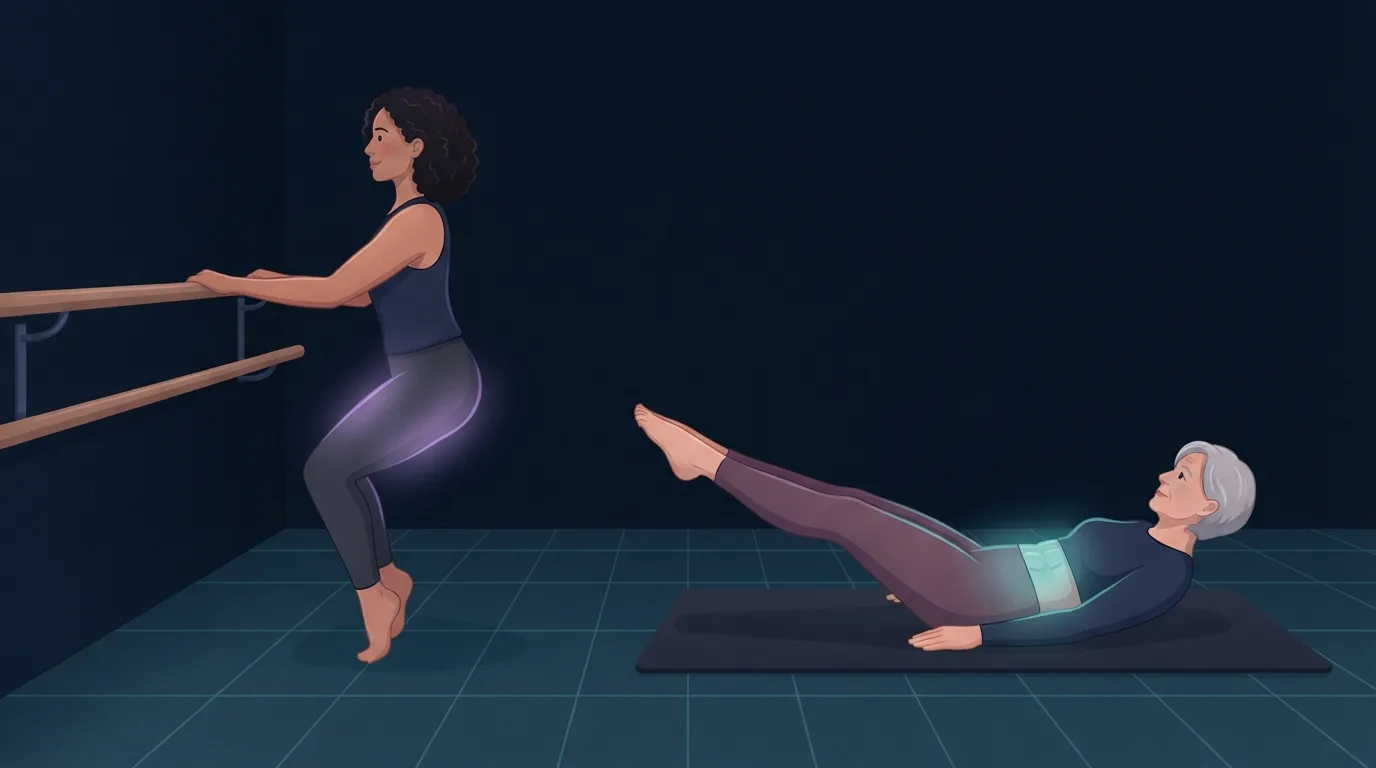
Studio schedules make barre and Pilates sound like the same class. Both promise low impact, a stronger core, better posture and a toned body. Then you try them and they feel nothing alike. Barre has your thighs shaking within ten minutes. Pilates leaves your abs tired and your head busy with breathing cues.
The marketing doesn't help, because neither method tells you what it can't do. That's how people spend a year in classes they enjoy and still struggle to lift a heavy suitcase into an overhead bin. Below you'll find what each method actually trains, what the research shows (for barre, very little), how they compare for calories, toning and difficulty, and how to build a week where either one sits next to the strength work it can't replace.
What's the Difference Between Barre and Pilates?
The difference between barre and Pilates comes down to where the work goes and how it's paced. Barre uses a ballet barre for balance and loads the legs and glutes with tiny, repeated movements and long holds, usually to music and often with light hand weights. Pilates works from the trunk outward, with slower and more controlled exercises timed to the breath, done on a mat or on spring-loaded machines such as the reformer.
| Barre | Pilates | |
|---|---|---|
| Created by | Lotte Berk, a German-born dancer, in London in 1959 | Joseph Pilates, during World War I, then taught in New York from the 1920s |
| Main equipment | A waist-high barre, a mat, 1 to 3 lb hand weights, a small soft ball | A mat, or a reformer and other spring-loaded machines |
| Typical movement | Pulses of an inch or two, dozens of reps, long static holds | Slower reps through a fuller range, one breath per rep |
| Where you feel it | Front of the thighs, glutes, calves, shoulders | Deep abdominals, hips, spine, inner thighs |
| Class atmosphere | Upbeat music, steady burn, little rest | Quieter, precise, lots of cueing and coordination |
| How it progresses | More reps, longer holds, a deeper bend | Longer levers, less support, heavier springs on the reformer |
| Research base | One small randomized trial that we could find | Dozens of randomized trials and a Cochrane review |
Both are low impact, and both lean on muscular endurance more than maximal strength. That shared ground is why studios can blend them so easily. It's also why neither one keeps you progressing for long once your own body weight stops feeling heavy.
Where Barre and Pilates Come From
Pilates is the older of the two by about four decades. Joseph Pilates developed the system he called Contrology during World War I, when he was interned in England and worked with fellow internees, and he later taught it with his wife Clara at a studio in New York. Dancers came to him for conditioning and for rehabilitation after injuries, and the method was built around what he called the powerhouse: the trunk, hips and lower back.
Barre came out of a dancer's injury. Lotte Berk, a German-born dancer living in London, combined exercises at the ballet barre with the rehabilitation movements she used after hurting her back. In 1959 she opened a women-only studio on Manchester Street in London. Lydia Bach, one of her students, bought the rights to the method and opened a Lotte Berk studio in Manhattan in 1971. Boutique chains such as Pure Barre, The Bar Method, Physique 57 and barre3 later turned it into the format most people know today: 45 to 60 minutes, music, small pulses and hand weights.
That history explains the overlap. Berk's original mix borrowed from rehabilitation exercise, and many barre studios now describe their classes as a blend of ballet, Pilates and yoga. Barre took more from Pilates than Pilates ever took from barre.
What Each Class Trains
What barre trains
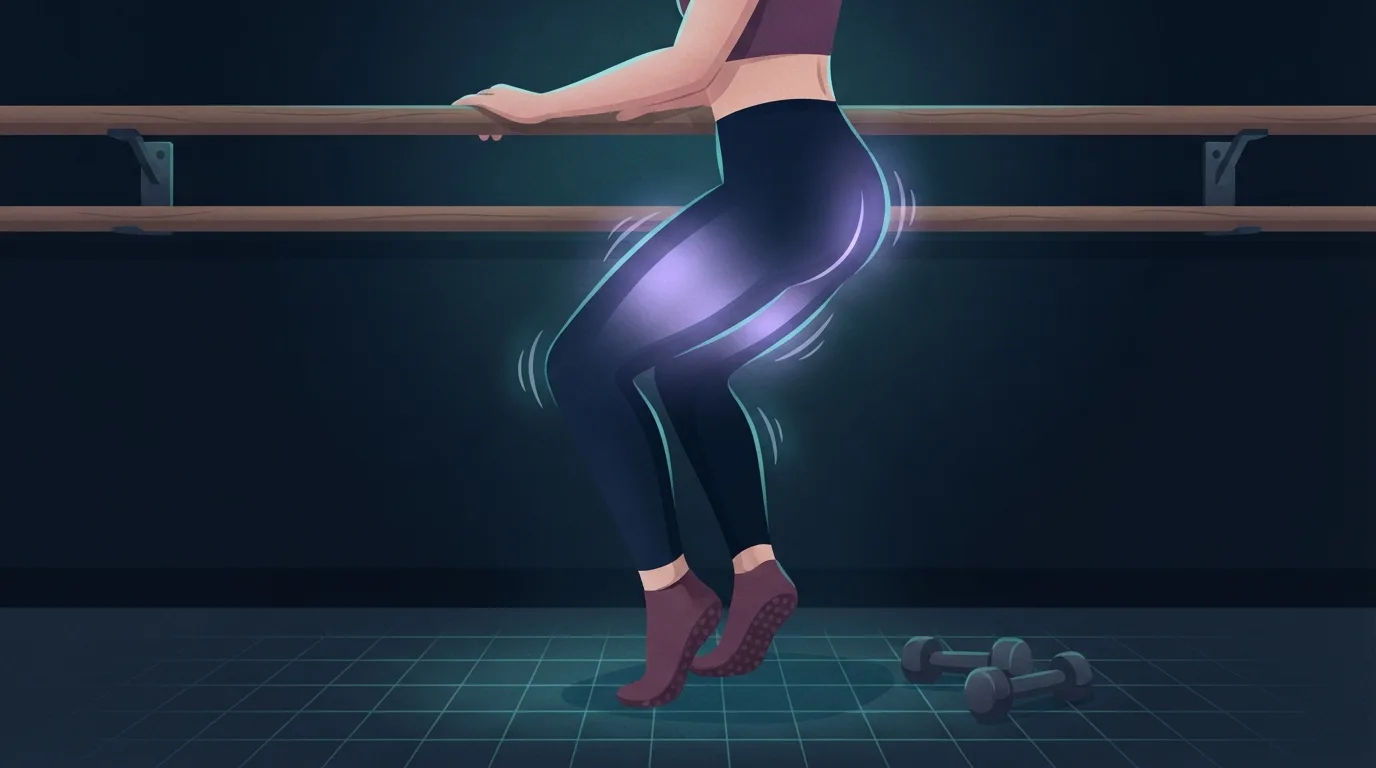
Barre's signature move is the pulse. You lower into a plie, a lunge or a chair position, then move an inch up and an inch down, 20 to 50 times, before holding still at the bottom. Those still holds are isometric work, where the muscle stays under tension without changing length. Most of the class goes to the front of the thighs, the glutes, the inner thighs and the calves. Arm sections use 1 to 3 lb weights for the shoulders and upper back, and the last segment is usually a short core series on the mat.
What all of that trains is local muscular endurance: the ability of a muscle to keep working against a light load. The burn that makes barre feel effective is fatigue building inside the working muscle. It tells you the muscle is tired. It isn't a sign of some special kind of toning.
What Pilates trains
Pilates trains trunk control, which means holding your pelvis and spine where you want them while your arms and legs move. On the mat, the load comes from your own body weight and long levers. On the reformer, springs add resistance in both directions.
A well-cited randomized trial of a standard mat class shows what that buys you. Kloubec (2010), in the Journal of Strength and Conditioning Research, randomized 50 active middle-aged adults to either a 12-week mat program of two one-hour classes a week or a control group. The Pilates group gained abdominal endurance, hamstring flexibility and upper-body muscular endurance. Posture and balance didn't improve more than in the controls. So Pilates mostly trains endurance too, just in different muscles, with some flexibility on top. Whether that counts as strength work is a separate question, and our breakdown of whether Pilates is strength training checks a typical class against the muscle-strengthening guidelines.
What Does the Research Say About Barre and Pilates?
Barre has almost no published research, and that's the most important difference on this page. Search PubMed for barre and most of what comes back is about Guillain-Barré syndrome, a nerve disorder that happens to share the name.
The one randomized trial of a barre program we could find is Parhonlakan and Masodsai (2024), published in the Journal of Sports Science and Health. Thirty sedentary women aged 30 to 45 who worked in offices were split into a barre group and a control group. The barre group trained three times a week for 8 weeks, and the authors reported greater gains in lower-limb and core muscular endurance and strength than in the controls. The published summary gives no effect sizes, the sample was small and the comparison was no exercise at all. It shows barre beats sitting still. Nobody has tested barre against Pilates, against strength training or against any other workout.
Pilates, by contrast, has been studied enough to earn a Cochrane review. Yamato and colleagues (2015) screened 126 trials of Pilates for low back pain and found 10, with 510 people, good enough to include, with low to moderate quality evidence that Pilates reduced pain more than minimal intervention. There's a weight-loss meta-analysis too. Wang and colleagues (2021) pooled 11 randomized trials covering 393 people with overweight or obesity and found about 2.4 kg more weight loss and a body-fat percentage 4.2 points lower than in control groups, with no measurable change in waist size or lean mass. These effects are modest, but they're measured, which is why physical therapists use Pilates and rarely prescribe barre.
None of this makes barre useless. It makes barre unproven. Most of what happens in a barre class, high-repetition body-weight work for the legs, has been studied under other names, so the general rules of endurance training apply. What nobody can tell you yet is whether the barre format adds anything beyond them.
Is Barre or Pilates Better for Weight Loss?
Neither is a strong weight-loss tool, and the difference between them is small. The standard reference for calorie estimates, the 2024 Adult Compendium of Physical Activities (Herrmann and colleagues), lists Pilates but has no entry for barre at all. The closest match for a barre class is light to moderate calisthenics, the body-weight category that covers lunges and planks. Here's how a 50-minute session compares for someone who weighs 150 lb (68 kg).
| 50-minute session | METs | Estimated calories at 150 lb |
|---|---|---|
| Traditional mat Pilates | 1.8 | About 100 |
| Pilates, general | 2.8 | About 160 |
| Barre (estimated as light to moderate calisthenics) | 2.8 to 3.8 | About 160 to 215 |
| Weight training, several exercises, 8 to 15 reps | 3.5 | About 200 |
| Ballet technique class exercises | 6.3 | About 355 |
These totals include resting metabolism and come from the Compendium MET values. The barre row is our estimate, not a measured value.
Barre probably burns a little more than mat Pilates, because the thighs and glutes, your biggest muscles, work almost nonstop. The gap is roughly 50 to 100 calories a class, about one slice of toast. Barre also sits far below a real ballet class, which the Compendium rates at 6.3 METs because a ballet class adds jumps, leaps and big kicks to the plies.
So pilates vs barre for weight loss is close to a tie, and the class matters less than the week around it. Weight loss comes from the total: how many sessions you do, how much you walk on the other days and what you eat. We went through the Pilates weight-loss trials in detail in is Pilates good for weight loss. Barre would probably land in the same modest range, but nobody has measured it.
Find out what's really holding you back
FitCraft, our mobile fitness app, pairs you with an AI coach who builds you a personalized plan around your goals, schedule, and fitness level. Every FitCraft program is designed by Domenic Angelino, MPH (Brown University) and NSCA-CSCS, with research published in the Journal of Strength and Conditioning Research and Medicine & Science in Sports & Exercise.
Take the Free Assessment Free • 2 minutes • No credit cardIs Barre More Difficult Than Pilates?
Barre feels harder in the moment for most beginners. The pulses pile fatigue into your thighs until they shake, and the teacher keeps counting. Pilates is harder to do well. Keeping your lower back still while your legs lower, exhaling on the right beat and rolling up one vertebra at a time all take practice. A reformer class on heavy springs can leave you just as spent as any barre class.
So the useful question is which kind of hard you enjoy. If you like a clear burn and someone counting you through it, barre gives you that from the first class. If you like learning a skill and feeling it get easier each week, Pilates rewards that. For barre vs Pilates for beginners, barre is easier to follow on day one, since most of its moves are versions of a squat, a lunge and a calf raise. Pilates usually takes three or four sessions before the cues stop sounding foreign.
Barre Pilates Classes: What a Hybrid Session Looks Like
Is barre Pilates? No, but the two share enough that many studios now sell barre pilates hybrids under names like barre fusion. A typical hybrid runs 45 to 60 minutes: a warm-up, 15 to 20 minutes of barre leg work, a block of Pilates-style mat exercises for the trunk, then a short stretch. Some reformer studios mount a barre on the wall so you can switch between the two in one session.
Hybrids suit people who get bored quickly and want both the leg burn and the core work. The trade-off is time. A hybrid gives you less of each method, so you progress more slowly in both. If you love the format, keep it, and let your strength days do the job neither half was built for.
Barre vs Mat Pilates vs Reformer Pilates
Barre vs mat Pilates is the closest matchup. Both use body weight, both need almost no equipment and both are easy to do at home. Barre loads the legs, and mat Pilates loads the trunk.
Barre vs reformer Pilates is a bigger gap. The reformer's springs add real resistance that can be made heavier as you get stronger, which makes it the only one of the three where the load can rise meaningfully. Reformer classes need the machine, so they almost always happen in a studio, while barre needs nothing more than a sturdy chair or a kitchen counter at home. If a studio isn't practical, wall Pilates at home uses a wall the way barre uses a barre, as something steady to lean on while you learn the positions.
What Tones You More, Pilates or Barre?
Toning isn't a separate kind of training. It's having enough muscle to see, with little enough body fat over it. No exercise lengthens a muscle or changes its shape, because a muscle's attachments to bone are fixed. What you can change is how big and how strong the muscle is, and how much fat covers it.
Can you get toned from barre?
Yes, especially early on. Light loads can build muscle when the work goes close to failure. Schoenfeld and colleagues (2017) pooled 21 studies and found that low-load and high-load training produced similar muscle growth when sets were taken to failure, though heavy loads built more maximal strength.
That rule has a floor. Lasevicius and colleagues (2018) trained each person's limbs at different intensities for 12 weeks with the total work matched. At 20% of one-rep max, the front thigh grew 8.9% and the upper-arm flexors 11.4%. At 80%, they grew 19.5% and 25%. Barre's 1 to 3 lb arm weights often sit near or below that 20% mark for adults. So barre can firm up a beginner's legs, but the load never rises while you get stronger, and the stimulus fades within a few months.
What body shape does barre give you?
Barre gives you the shape your genes and your body fat allow. The dancer's body in barre advertising belongs to people who were selected for ballet young and trained for hours a day for years. Barre can make your legs firmer and give them more staying power. It can't make them longer or change where your body stores fat.
Is barre or Pilates better for toning?
Barre wins for the thighs and glutes, and Pilates wins for the trunk. For visible change anywhere after the first few months, neither works well on its own, because both keep the load roughly the same while you adapt. That's the gap a pair of dumbbells fills.
Is Barre Bad for Your Hips?
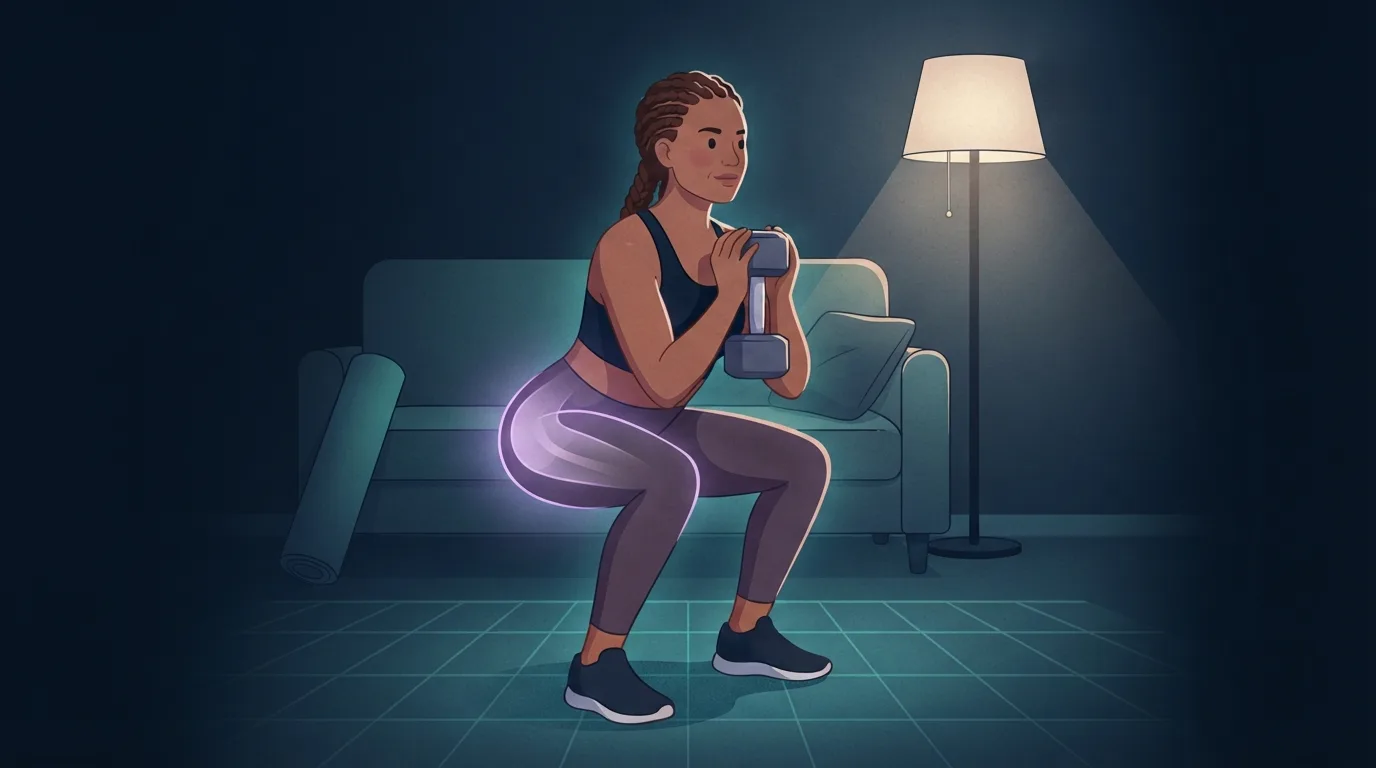
A Reddit thread that ranks for this search argues that Pilates never overworks one area while barre "goes to town on squats" and isn't good for your hips. For most people barre is fine, but the complaint is common enough to take seriously. A barre class can include hundreds of small knee bends, many of them with the feet turned out, and that's a lot of hip bending and rotation near the end of the joint's range. Some hips tolerate it well. Others, especially ones already prone to a pinching feeling at the front, don't.
You don't have to quit to fix it. Ask for parallel feet instead of turned-out ones, stay shallower in the bend, and stop the pulses a few reps early. Older barre styles also cued a hard tuck of the pelvis. Many teachers now prefer a neutral pelvis, so skip the tuck if it makes your lower back or hips complain. Pain that's sharp, catches in the front of the hip or lingers into the next day is a reason to see a physical therapist.
Barre or Pilates: Which Should You Pick?
| If this sounds like you | Pick | Why |
|---|---|---|
| You want a workout that feels hard from the first minute | Barre | Simple moves and a fast, obvious burn |
| Your back is the main reason you're signing up | Pilates | It has back pain trials and a Cochrane review; barre has none |
| You want stronger legs and glutes without impact | Barre | Most of the class targets the thighs, glutes and calves |
| You want to control your spine and pelvis better | Pilates | Every exercise is built around trunk position and breath |
| Deep, repeated squats bother your hips or knees | Pilates | Far fewer knee bends per class |
| You get bored doing one thing | A barre pilates hybrid | Two formats in one session |
| You want muscle you can see | Either, plus dumbbells | Neither adds enough load on its own after the first few months |
If you're still torn, book three classes of each over the next month and notice which one you stop dreading. That preference will predict your results better than any study on this page. If yoga is on your shortlist too, our Pilates vs yoga guide covers that matchup, including the one trial that tested the two head to head.
How Barre or Pilates Fits With Dumbbell Strength Work
Think of your class as the endurance and control part of your week, and your dumbbells as the strength part. Two full-body dumbbell sessions a week is enough to keep strength climbing for most people, and it fits around two classes without crowding anything. Here's a week that works for either method.
- Monday: Dumbbell strength. Goblet squat, Romanian deadlift, one-arm row, floor press and split squat, 3 sets of 8 to 12 reps, stopping each set with one or two reps left in the tank.
- Tuesday: Barre or Pilates class.
- Wednesday: A 30 to 45 minute walk.
- Thursday: Dumbbell strength, same exercises.
- Friday: Rest or an easy walk.
- Saturday: Barre or Pilates class.
- Sunday: Rest.
Three rules keep it working. First, don't put a leg-heavy barre class the day before a lower-body dumbbell session, because tired thighs make for sloppy squats. Pilates is easier to place, since it barely taxes the legs. Second, when you can do 12 clean reps of an exercise with two to spare, move to a heavier pair of dumbbells. That step is the progression barre and mat Pilates can't give you. Third, keep the class you enjoy. It's the session you'll protect when the week gets busy.
If planning the strength days is where you usually stall, our roundup of the best fitness apps for women compares apps that build strength sessions around the classes you already love. FitCraft is one of them: its 3D AI coaches demonstrate each dumbbell and body-weight exercise, it plans yoga and mobility sessions alongside strength days, and a streak and leaderboard give you a reason to show up on the days without a class.
The Bottom Line
Barre vs Pilates comes down to the kind of work you enjoy. Barre builds leg and glute endurance with a strong burn and has almost no research behind it. Pilates builds trunk control and has a real evidence base for back pain and modest weight loss. Both are low impact, both burn modest calories and both train endurance far more than strength.
Practical rule: pick the class you'll attend twice a week, then add two dumbbell days. That combination covers endurance, control and strength, and neither class covers all three alone.
The best version of this decision is the one you stop thinking about after a month because it's simply part of your week. As Sarah, 27, a FitCraft user, put it: "First app that made exercise feel like something I chose, not forced." That's the feeling worth chasing, whichever studio door you walk through.
Frequently Asked Questions
Is barre Pilates?
No. Barre grew out of ballet and was created by the dancer Lotte Berk in London in 1959, while Pilates was developed by Joseph Pilates decades earlier. Many barre classes borrow Pilates-style core exercises, and hybrid barre pilates classes put both into one session, but they remain two separate methods.
Is barre or Pilates better for beginners?
Barre is easier to follow in a first class because most moves are versions of a squat, a lunge and a calf raise done while holding a barre. Pilates asks for more coordination and usually takes a few sessions to click, but it's gentler on the thighs. Either is a reasonable first step for most healthy adults.
Is 20 minutes of Pilates a day enough to lose weight?
On its own, rarely. Twenty minutes of general Pilates burns about 65 calories for a 150-pound person, based on the 2.8 METs the 2024 Compendium of Physical Activities assigns it, so a daily session adds up to roughly 450 calories a week. That helps, but weight loss still depends mostly on eating a little less and moving more during the rest of the day.
Can you do barre and Pilates in the same week?
Yes. Neither is hard enough on the body to need much recovery, so one class of each plus two dumbbell strength days fits most weeks. Leave a day between a leg-heavy barre class and a lower-body dumbbell session so your thighs aren't already tired when you lift.
How does barre compare with yoga and Pilates?
Barre trains leg and glute endurance, Pilates trains trunk control, and yoga trains range of motion, balance and breathing. Pilates and yoga both have far more research behind them than barre does. Choose barre for a leg burn, Pilates for your back and core, and yoga for flexibility and stress.
How do HIIT, Pilates and barre compare for a full-body workout?
HIIT burns the most calories per minute and works the heart and lungs hardest, but it involves impact and needs recovery between sessions. Barre and Pilates are low impact and mainly train muscular endurance and control. A balanced week can include one or two of each alongside two dumbbell strength sessions.