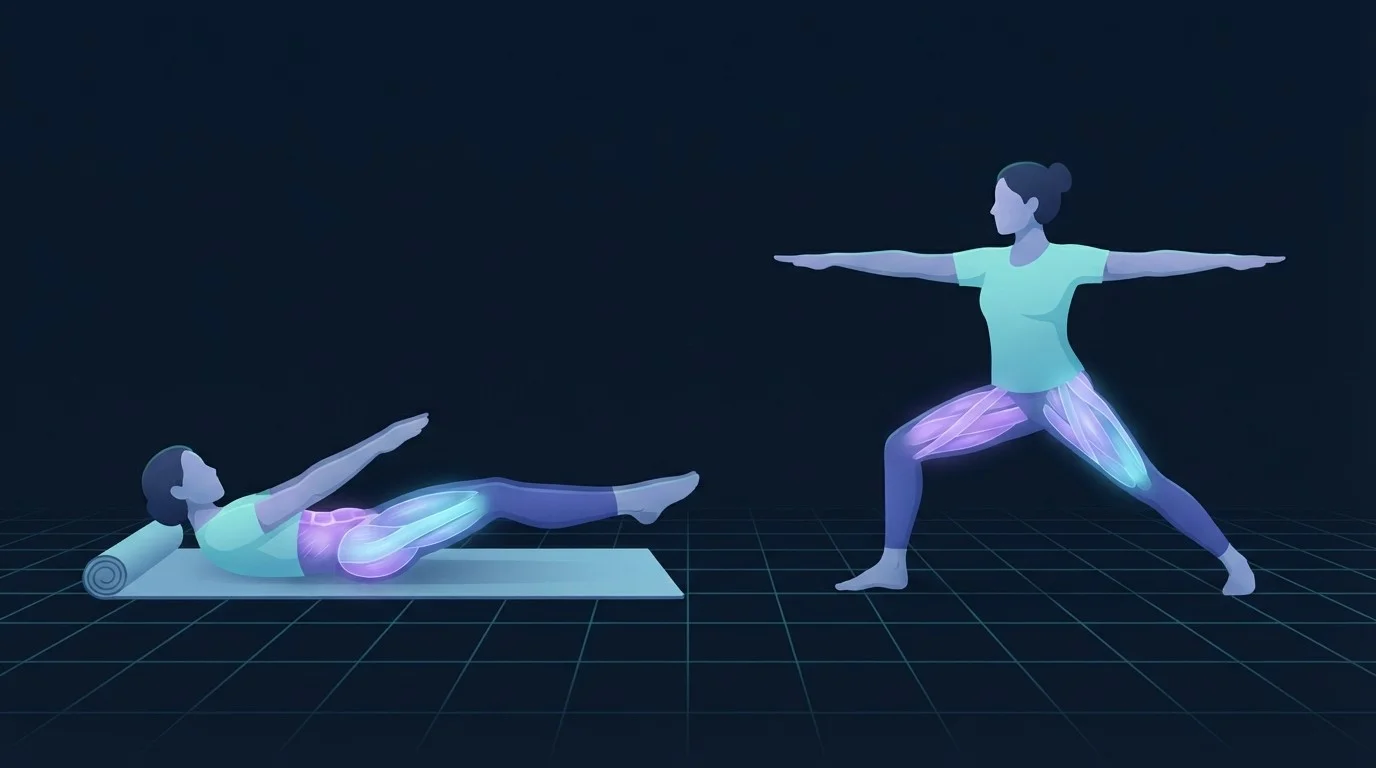
Choose Pilates if you want core strength, posture, balance, or a way back from low back pain. Choose yoga if you want joint range, a calmer nervous system, and something you can do with nothing but a mat. On the outcomes both have actually been tested for, back pain, neck pain and general physical function, they perform about the same. So the real tiebreaker is which one you will still be doing in twelve weeks.
That answer frustrates people, because the two communities talk about each other as if they were opposites. Pilates studios sell precision and control. Yoga studios sell breath and stillness. Both are describing a mat, a body, and about 45 minutes. The differences are real, but they are differences of emphasis rather than of category. Barre is the other class people usually weigh up against Pilates, and our barre vs Pilates guide compares the two on calories, toning and the research behind each.
What Is the Actual Difference Between Pilates and Yoga?
Yoga is roughly 2,500 years old and arrived in the West as a movement practice attached to a philosophical tradition. Pilates is about a century old, invented by Joseph Pilates as a rehabilitation and conditioning system, and it was designed from the start around the trunk. That origin story is why the two feel different in a class even when individual movements overlap.
| Pilates | Yoga | |
|---|---|---|
| Core idea | Controlled movement from a stable trunk | Postures held with the breath |
| What a session looks like | Short, repetitive exercises, 5 to 12 reps, near constant motion | Postures held 30 seconds to several minutes, linked by flows |
| Breathing | Lateral rib breathing timed to each rep | Slow nasal breathing, often the point of the practice |
| Equipment | Mat only, or a reformer with springs, rings and bands | Mat only, sometimes blocks and straps |
| How it gets harder | Longer levers, less support, added spring tension | Deeper range, longer holds, harder balance positions |
| Strongest evidence | Low back pain, trunk strength, balance and falls after 60 | Balance and flexibility, anxiety, sleep quality, mood |
| Weakest claim | "Long, lean muscles" as a distinct kind of muscle | Detoxing, organ realignment, lengthening the spine |
Two claims deserve to be retired. Pilates does not build a different type of muscle tissue than lifting does. And no posture drains toxins from anything. Both practices are good enough on their measurable effects that they never needed the folklore.
Does Pilates or Yoga Build More Strength?
Pilates has the better strength data, and by a reasonable margin in the trunk. A 2021 systematic review and meta-analysis by Fernandez-Rodriguez et al. in Physiotherapy pooled 39 randomized trials in adults aged 60 and over and found a moderate effect on strength (ES 0.63, 95% CI 0.44 to 0.81), plus moderate effects on functionality (0.51), flexibility (0.41) and balance (0.36), and a large effect on fall risk (0.90).
Yoga is not far behind on the general measures. Sivaramakrishnan et al. (2019), a meta-analysis of 22 randomized trials in the International Journal of Behavioral Nutrition and Physical Activity, found yoga improved lower limb strength (ES 0.45), lower body flexibility (0.5) and balance (0.7) against inactive controls in older adults. Against active controls, meaning other forms of exercise, the lower limb strength effect held at 0.49.
Where both hit a wall is progression. Neither has a good mechanism for progressive overload once bodyweight stops feeling heavy. A reformer's springs buy Pilates some headroom, and a mat class buys none. That ceiling is visible in the data. Markovic et al. (2015), writing in Archives of Gerontology and Geriatrics, put 34 women averaging 70 years old through eight weeks of either Pilates or feedback-based balance and core resistance training, three times a week. The resistance group came out ahead on balance in both standard and dual-task conditions, on trunk muscle strength, and on leg power. Pilates worked. Loaded training worked better. If you're deciding whether your classes can stand in for lifting, our post on whether Pilates is strength training checks a typical class against the WHO muscle-strengthening guideline.
If muscle size is the goal, the ceiling is worth understanding before you commit a year to it. We went through the trials in our review of whether Pilates builds muscle. The short version: some, early, then a plateau.
Which Is Better for Back and Neck Pain?
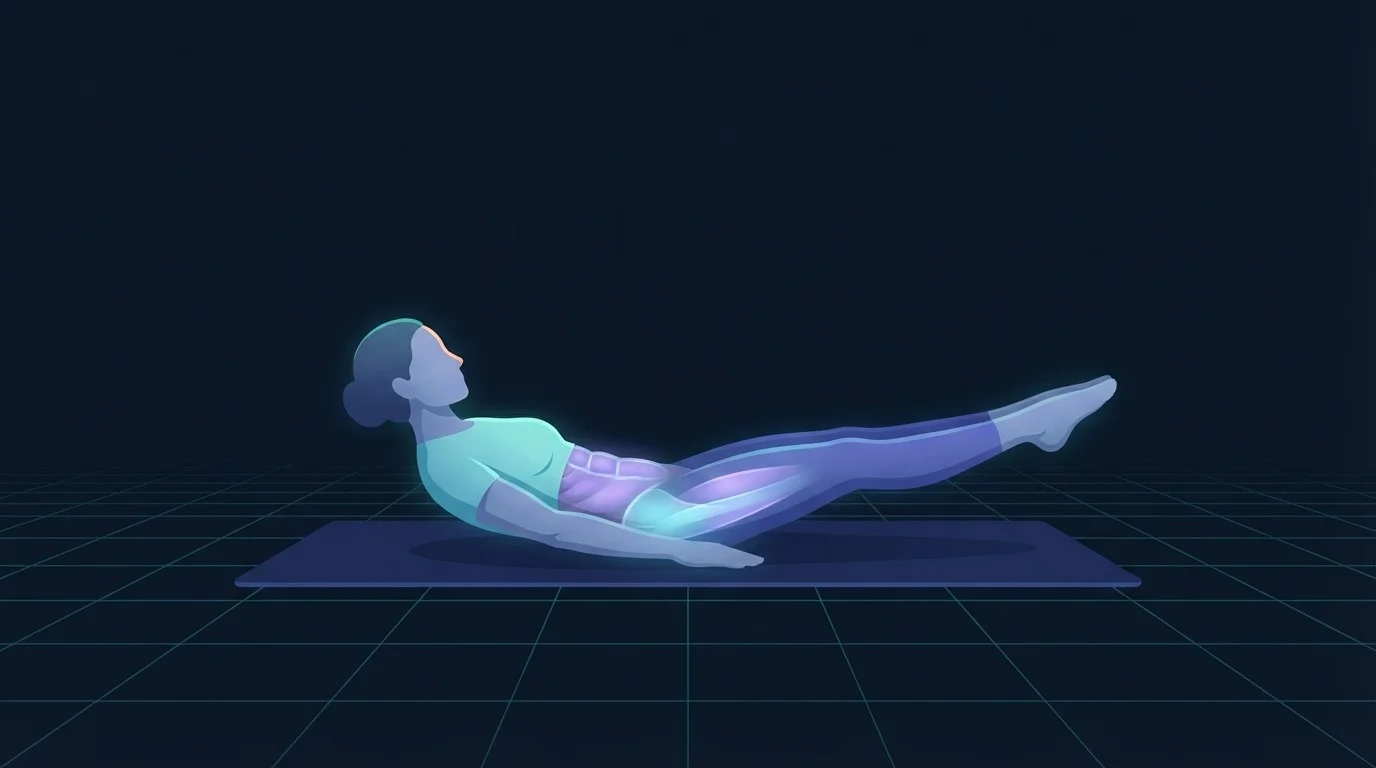
This is the question most people are really asking, and it has the best evidence behind it.
Start with the only direct comparison. Dunleavy et al. (2016) ran a quasi-randomised parallel controlled study in Physiotherapy on 56 adults with chronic neck pain lasting more than three months, splitting them into a control group (17), a Pilates group (20) and a yoga group (19). Both exercise groups completed 12 supervised small-group sessions with modifications and progressions. Neck Disability Index scores fell 4.3 points in the Pilates group and 4.7 points in the yoga group, while the control group did not change. Effect sizes across outcomes ran 0.7 to 1.8. There were no differences in outcomes between the two exercise groups, and no adverse effects in either.
For low back pain, each practice has its own Cochrane review, and they say close to the same thing. Yamato et al. (2015) pooled 10 trials and 510 participants on Pilates and found low to moderate quality evidence that it beats minimal intervention for pain and disability, with results generally similar to other exercise. The reviewers concluded the choice may come down to patient or provider preference and cost. Wieland et al. (2022) pooled 21 trials and 2,223 participants on yoga and landed in the same place: small improvements against no exercise that fall short of clinical importance on their own (mean difference 1.69 points on the Roland Morris Disability Questionnaire), and little to no difference against other exercise.
The largest comparison of exercise types puts Pilates near the front. Hayden et al. (2021) ran a network meta-analysis in the Journal of Physiotherapy across 217 randomized trials and 20,969 participants with chronic low back pain, and Pilates ranked among the most effective exercise types for pain, alongside McKenzie therapy and functional restoration.
One safety note worth reading straight. The 2022 yoga review found more adverse events with yoga than with no exercise at all (risk ratio 4.76 across 8 trials), though the rate was comparable to other back-focused exercise and none of the events were serious. The lesson is not that yoga is risky. Any movement carries more risk than sitting still, and end-range holds are worth easing into.
Find out what's really holding you back
FitCraft, our mobile fitness app, pairs you with an AI coach who builds you a personalized plan around your goals, schedule, and fitness level. Every FitCraft program is designed by Domenic Angelino, MPH (Brown University) and NSCA-CSCS, with research published in the Journal of Strength and Conditioning Research and Medicine & Science in Sports & Exercise.
Take the Free Assessment Free • 2 minutes • No credit cardWhich One Does More for Flexibility and Balance?
Yoga has the edge on flexibility, which surprises nobody. It holds positions at end range for 30 seconds to several minutes, and that is the dose that changes tissue tolerance. Sivaramakrishnan et al. found a lower body flexibility effect of 0.5 against inactive controls, and it survived at 0.28 even against other active exercise. Pilates produced a comparable 0.41 in the Fernandez-Rodriguez pooling, so the gap is narrower than studio marketing implies.
Balance splits differently depending on the comparison. Yoga scored 0.7 against inactive controls, the largest single effect in that review, which makes sense given how much of a yoga class is spent standing on one leg. Pilates scored a more modest 0.36 for balance, but a much larger 0.90 for fall risk, and fall risk is the outcome that actually matters after 65.
A caution on reading those numbers side by side. They come from different reviews, different populations and different control conditions, so that is an indirect comparison rather than a race. The only head-to-head data anyone has is the neck pain trial, and it found a tie.
What About Stress, Mood and Sleep?
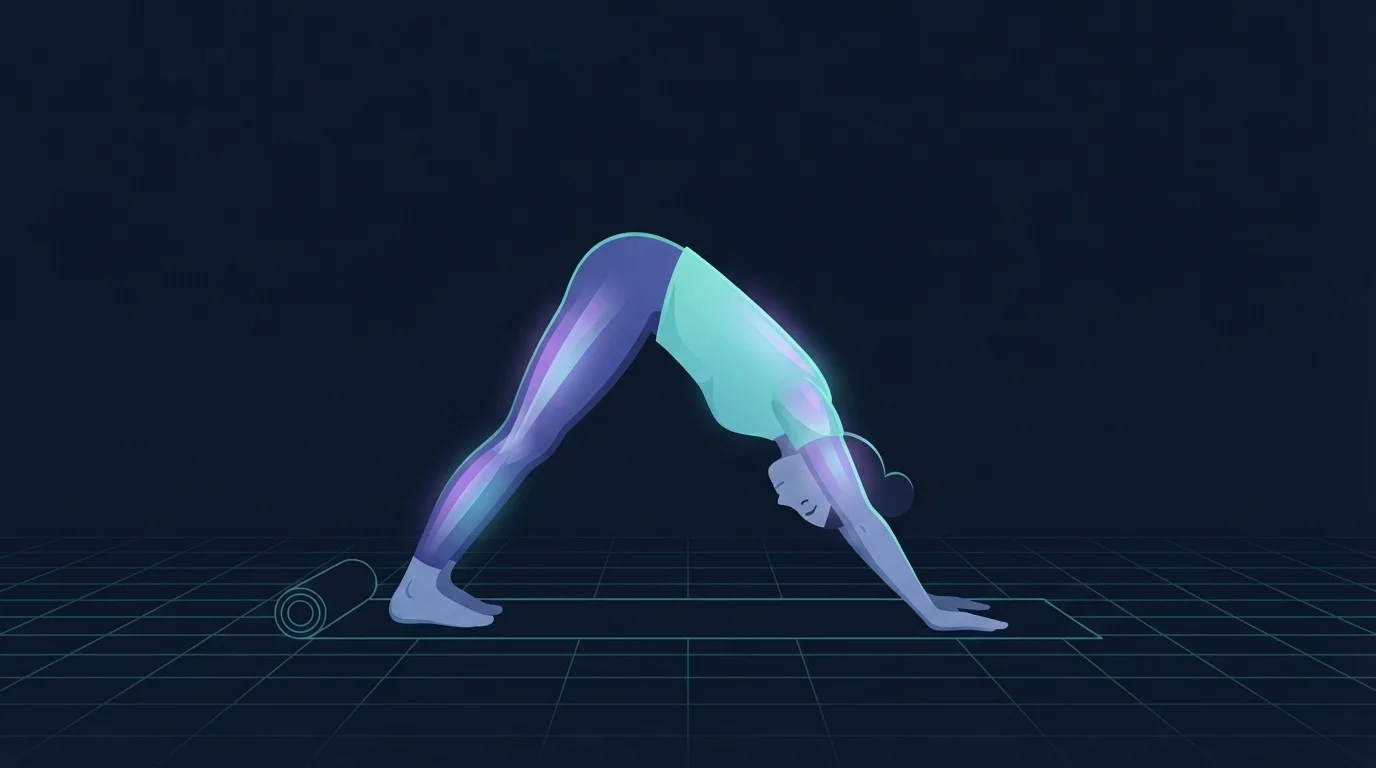
Here yoga has evidence Pilates simply has not gathered. Cramer et al. (2018), writing in Depression and Anxiety, pooled 8 randomized trials with 319 participants and found small short-term effects on anxiety against no treatment (SMD 0.43 in yoga's favour) and large effects against active comparators (SMD 0.86). The benefit showed up for elevated anxiety rather than for clinically diagnosed anxiety disorders, which is an honest limit worth stating out loud.
The older adult review adds more of the same shape. Yoga improved depression scores (ES 0.64), sleep quality (0.65), perceived mental health (0.6) and vitality (0.31) against inactive controls, and depression still favoured yoga at 0.54 against active controls.
Pilates plausibly does some of this too. Nobody has built the same volume of trials for it, so the fair statement is that yoga has the receipts here and Pilates has an argument it has not yet had to defend.
Who Should Choose Pilates, and Who Should Choose Yoga?
| If this is you | Start with | Why |
|---|---|---|
| Recovering from low back pain | Pilates | Ranked among the top exercise types for pain across 217 trials |
| Stiff hips, shoulders or hamstrings | Yoga | Long end-range holds are the dose that changes range of motion |
| Stressed, sleeping badly, wired at night | Yoga | The only one of the two with pooled anxiety, sleep and mood data |
| Over 60 and worried about falling | Pilates | Large pooled effect on fall risk in adults aged 60 and over |
| Postpartum and rebuilding the trunk | Pilates | Graded, low-impact trunk work with obvious regressions |
| Chasing visible muscle | Neither, on its own | Add resistance training and use either one as the supporting act |
| Can't stand repetitive exercise | Yoga | More variety per session and far less counting |
| Want to feel the work immediately | Pilates | The trunk burn arrives in the first five minutes |
If your reason for asking is that your back hurts and getting down to the floor feels intimidating, a wall makes a useful handrail. We wrote up what the research supports in wall Pilates at home, including which parts are evidence and which parts are trend.
How Do You Fit Either One Into a Real Training Week?
Both are supporting acts for most people, which means the schedule matters more than the pick. Here is a week that works whether you land on Pilates, yoga, or both. If you want one flexibility goal to hang that week on, our guide to how to do the splits lays out the front and middle progressions and how long each one honestly takes.
| Goal | Pilates or yoga dose | Rest of the week |
|---|---|---|
| Back pain relief | 2 to 3 Pilates sessions, 30 to 45 min | Daily walking, one light full-body strength day |
| Flexibility and mobility | 2 to 3 yoga sessions, 30 to 60 min | 2 strength days, every movement taken through full range |
| Stress and sleep | 3 to 5 short yoga sessions, 15 to 20 min | 2 strength days, cardio you actually enjoy |
| Strength and muscle | 1 session of either, as recovery work | 3 progressive resistance days |
| Balance after 60 | 2 Pilates sessions plus 1 yoga session | 2 light strength days, daily walking |
The pattern across every trial in this article is the same: 8 to 12 weeks, two or three sessions a week, supervised. Nobody found an effect at once a fortnight. Attendance is the variable that decides your result, and it is also the variable most plans ignore. If keeping a schedule is where you keep failing, the workout type is not your problem. Our rundown of the best fitness apps for women looks at which ones solve the showing-up part rather than the programming part.
You can also run both from a single plan. Yoga and mobility at home covers how to slot mat work around strength days without turning your week into a scheduling puzzle. If yoga wins and you're starting from scratch, our guide to yoga for beginners at home walks you through a first 20-minute routine you can do on your living-room floor.
The Bottom Line
Pilates vs yoga is a false choice for most people. The only head-to-head trial found them equally effective. Pilates has better data for trunk strength, balance and fall risk. Yoga has better data for flexibility, anxiety, mood and sleep. Neither builds much muscle past the first couple of months, and neither does anything at all if you go twice and stop.
Practical rule: if your body hurts, start with Pilates. If your head hurts, start with yoga. If you want both, do two sessions of one and one of the other, and add resistance training on top of either.
The uncomfortable finding hiding in all of this evidence is how modest the differences are compared with the gap between doing something and doing nothing. Every effect size quoted here was measured against a group that turned up for 8 to 12 weeks. Picking the perfect practice and attending three times is worse than picking the wrong one and attending thirty.
Frequently Asked Questions
Is Pilates or yoga better for losing weight?
Neither is a strong weight loss tool on its own, because both burn relatively few calories per session compared with brisk walking, cycling or resistance training. What they do well is make you willing to keep moving. Pick whichever one you will attend three times a week, then let the food side of the equation do the work it was always going to do.
Which is harder, Pilates or yoga?
A beginner Pilates mat class is usually harder in the moment, because the exercises are short, repetitive and deliberately load the trunk. Yoga is harder to hold, since many postures ask for a minute or more of stillness in an end-range position. Neither is inherently more advanced. Both scale from very gentle to genuinely demanding depending on the class.
Can you do Pilates and yoga in the same week?
Yes, and for most people that is the better plan than choosing one. Two Pilates sessions and one yoga session a week, or the reverse, covers trunk control and joint range without much overlap. Neither is taxing enough to need a rest day between them, so you can stack them beside strength or cardio sessions on the same days if your schedule is tight.
Does Pilates or yoga build muscle?
Both build some strength in untrained people, and Pilates builds more of it in the trunk. A 2021 meta-analysis of 39 trials in older adults found a moderate strength effect for Pilates. Neither one keeps building muscle for long, because you run out of ways to add load. Once bodyweight stops being challenging you need external resistance to keep progressing.
Which is better for a bad back, Pilates or yoga?
Both beat doing nothing, and the evidence does not separate them cleanly. A 2015 Cochrane review of 10 Pilates trials found it better than minimal intervention for pain and disability but similar to other exercise. A 2022 Cochrane review of 21 yoga trials reached the same shape of conclusion. A 2021 network meta-analysis of 217 trials put Pilates among the top-ranked exercise types for pain.
How long until Pilates or yoga makes a difference?
Most trials that found meaningful change ran 8 to 12 weeks at two or three sessions a week. You will feel looser and more aware of your posture within two or three sessions, but that is a short-lived effect. Real change in strength, balance and range of motion shows up somewhere around week 6 to week 10, which is well past the point where most people stop.